Rag Doll

A rag doll with button eyes and a patched outfit sitting against a wooden post near pink rose bushes in a garden at dusk.
A well-loved rag doll leans against a wooden post surrounded by blooming roses at twilight.

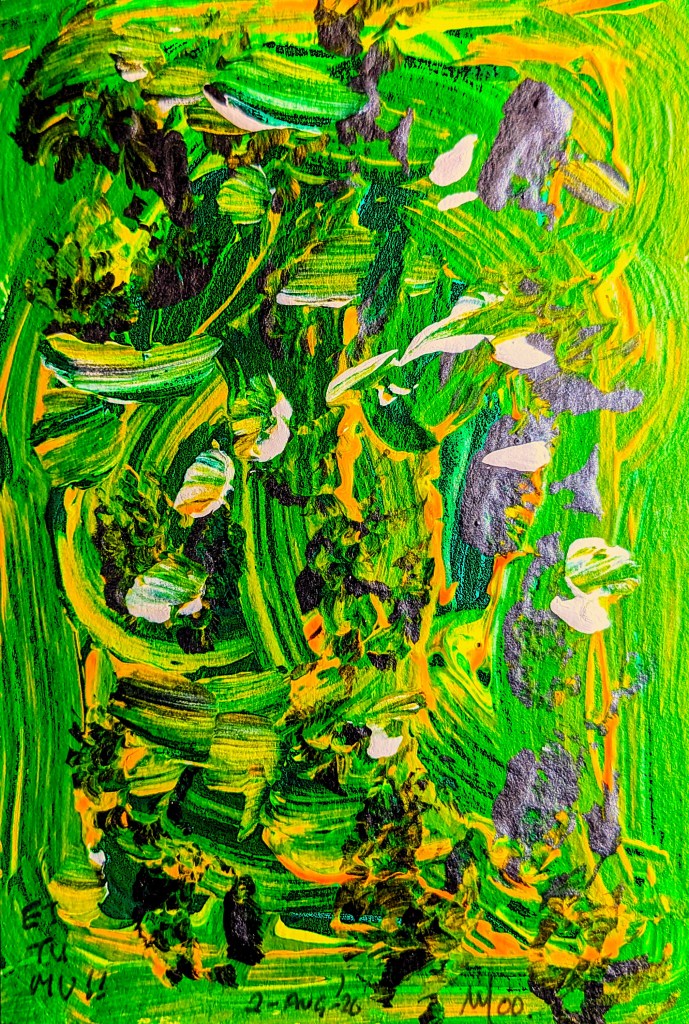
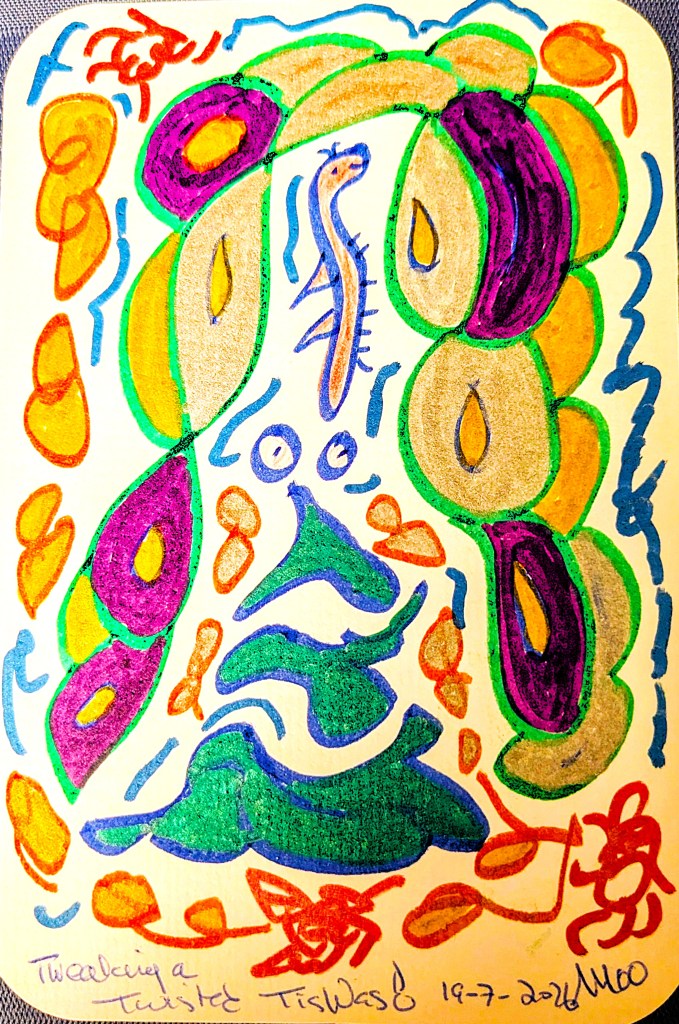
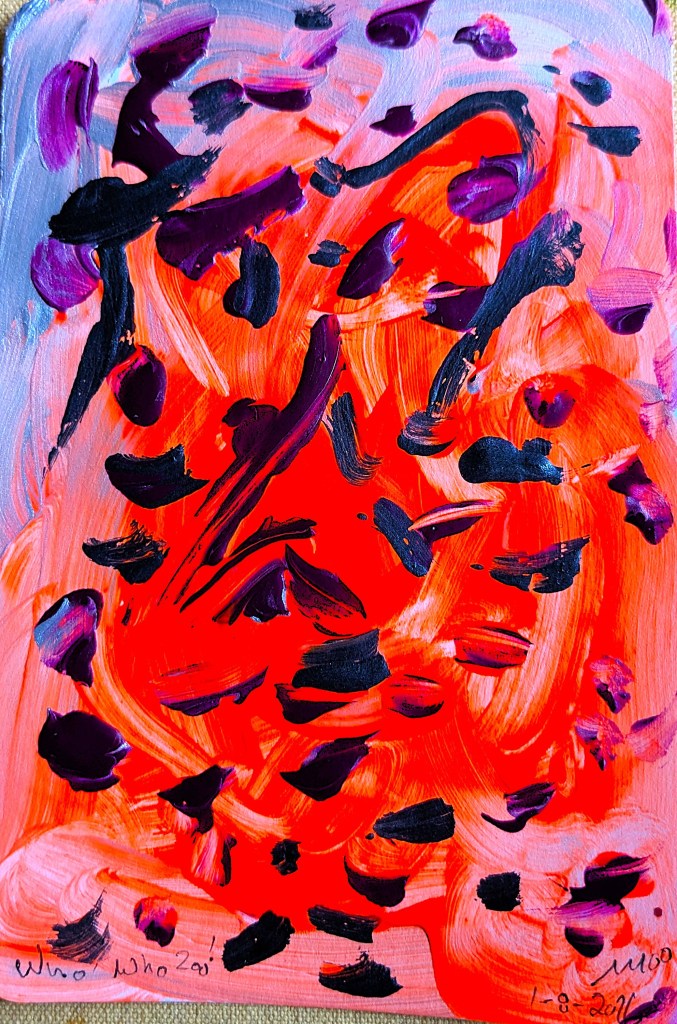
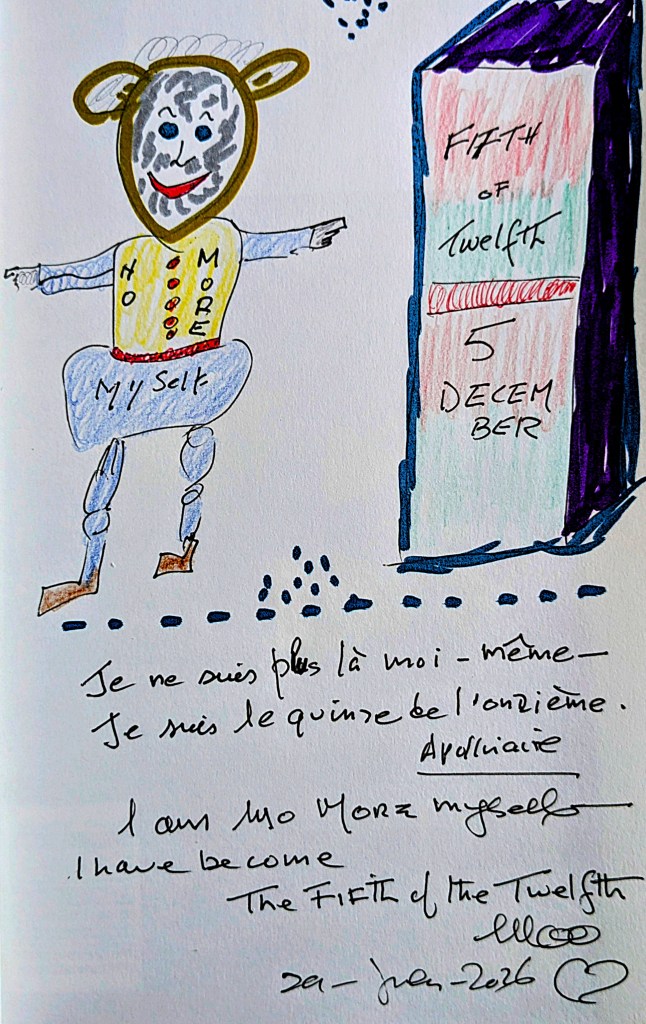
Big Brother read my mind
and painted the picture

Rag Doll

Jack Pine Sonnet

They fought over her
whenever they met
each one holding her
by a leg or an arm

An eternal tug of war
a terrestrial dog fight
with no truce called
and neither giving in

One day they went
a step too far and tore
the doll in two neither happy
with an arm and a leg each

as for the rag doll
torn apart in fury
she was discarded
thrown in the garbage

when nobody was looking
one child returned
rescued the rag doll
sewed her back together
and filled her with love

Comment:

Tragic, really, and really tragic. A reversed Judgement of Solomon in so many ways. An Allegory applicable to so many situations in this tiny, overcrowded world of ours. Every night, on the television, we can watch hour after hour of shows like this – minus the last stanza. Some endings can never be happy.

One night, for the fun of it, I counted all the deaths, shooting and murders on selected shows over a three or four hour period. I saw over 150 violent deaths. What sort of legacy are we leaving our children, our grandchildren. And what will their children learn in their turn? Food for thought to be taken three times a day while avoiding exposure to reality – or is this the alternative reality to which we will all be exposed?

My Love For You

My Love for You

A Jackpine Sonnet

Yesterday fled quickly by
today limps slowly on and on
tomorrow draws near
yet never arrives
if and when it does
it becomes today

As for me I feast on shifting
shadows my story a tapestry
reversed – hanging
back to front unreadable

It is hard to slough your skin
the skin once shed can never
never be donned again

My body white bone grey gristle
no longer wrapped in skin
is bonded together by super glue
made from my love for you

Comment:

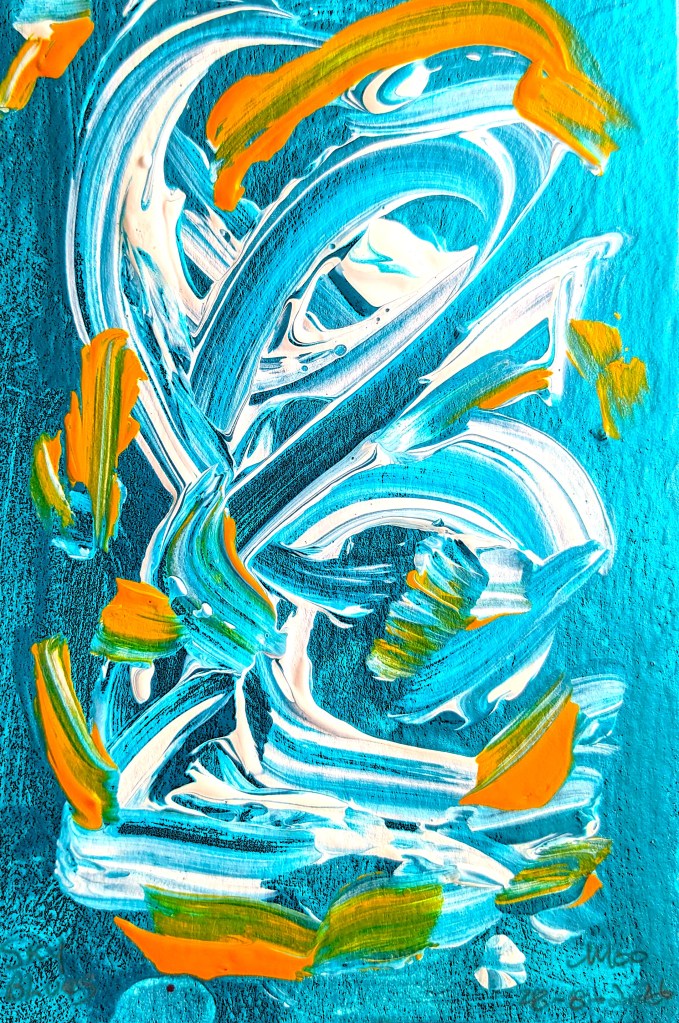
Moo assures me that this painting, unsigned and untitled, is actually his. After yesterday’s doubts, I must believe him. He says it is called U-R-My-Sunshine. He also thinks it would be a great painting to go with this strange little poem that crept somehow out of my head and landed on my page. It reminds me somewhat of the church cat – it crept into the crypt, crapped, and crept out again. “Oh what a naughty pussy cat.” Who U-R is up to the reader / viewer apparently. I doubt that I am his sunshine after what I said about him yesterday. Oh sorry. You didn’t read that blog? Well, shame on you! You’ve got to do your homework if you’re going to keep up with me and Moo.

What is A Jack Pine sonnet, you ask? Well, I don’t have a clue. But now that my other buddy, Ryan, has introduced me to AI, I will ask my AI what such a thing might be. Asking now. Hang on to your seats. It tells me it’s thinking. Aha! Here’s what I think it thinks it thinks.

AI says – A jackpine sonnet is an irregular, spikey poetic form created by Canadian poet Milton Acorn (from neighboring PEI), in the 1970’s. It typically acts as a 14-line sonnet with 7-13 syllables per line, but allows for flexible line counts (e.g., 12, 18, or 20), using internal and consecutive rhymes rather than strict, traditional rhyme schemes.

Key Aspects of the Jackpine Sonnet:

  • Origin: Developed by Milton Acorn, often known as the “People’s Poet,” as a uniquely Canadian, gritty form of expression.
  • Structure: While it aims for roughly 14 lines, it can vary in length based on the needs of the poem.
  • Rhyme and Rhythm: Uses internal rhymes (rhymes within a line) or consecutive end-rhymes (e.g., AABB) rather than standard sonnet structures.
  • Style: It is designed to be “irregular and spikey like a jack pine tree,” focusing on structure and integrity rather than rigid adherence to traditional verse rules.

So, now you know what a Jack Pine sonnet is. But I bet you’ve never heard of Milton Acorn! I have. Here’s the poem I wrote about one of my meetings with him. You can find it in The Nature of Art.

Milton Acorn

“Oy,” he waved strong carpenter’s hands, “Make this
work.” I typed in my code and the machine
came to life. “Go away,” he pushed me out
and slammed the copier room door behind my back.

Later, my secretary came in and caught him,
his face pressed to the glass. He pushed the button,
lights flashed, the machine whirred and copies emerged.

In his hand he held images of his feet,
arms, legs, head, all of his body parts.
“Tape, not masking, clear tape, 3M.”
Flustered she fled, brought Scotch tape,
watched as he stuck himself together.

Over lunch he showed me his work:
a self-portrait, shadowy and cloudy,
whiskered and worn, smelling still of printer’s ink.
That’s how I remember him: unique, stately,
unmistakeable, uncouth, unseemly:
a jack pine growing in its own self-image.

Farewell, my dear friend, Milton.
And that is how I remember you.