Rain

Rain

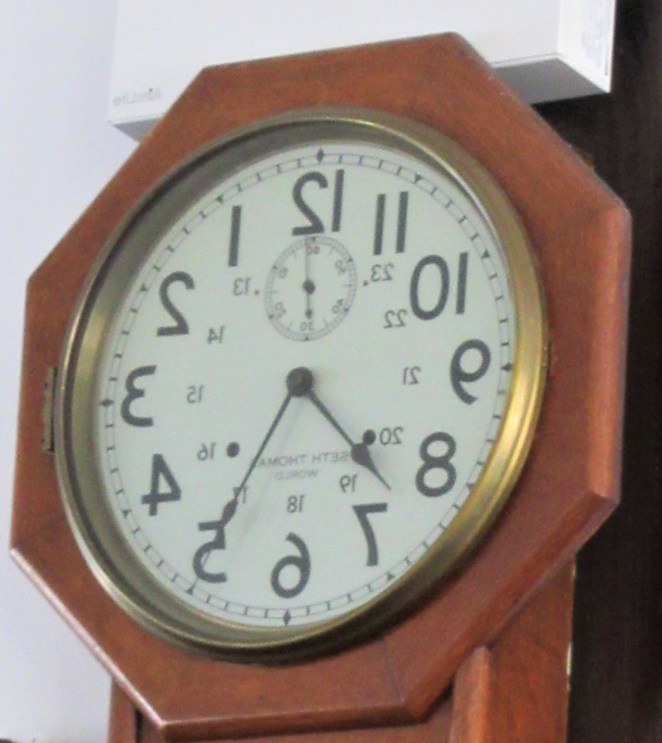
Rain walks thick lines
down the window pane.
The waters below the dam
churn like white shirts
tumbled up and down
in nature’s laundromat.

The radio calls for rain,
more rain, four inches,
they say,
in the next two days.

The moose have already
migrated to higher,
drier ground.
They stand on the highway,
head to head with cars,
stubborn and steaming
in the never-ending rain.

Comment:

It’s raining, it’s pouring, the old man is snoring.
He bumped his head on the top of the bed
and won’t get up until morning.

Bullfight

Los Toros de Guisando

Bullfight

… at the beginning of the end, when more things have gone than are with us and the summer’s sun withers the grass and wrinkles our faces baking us bright red – como un cangrejo te has puesto, hijo mío, en el sol de Somo, como un cangrejo – and — pulpo en un garaje — you grasp at the new words, the new colors, the new delights, your tongue trapped clumsily in your mouth like a red rag doll and the midnight bull charging the spectators who gather and olé, au lait … as the drunken bullfighter climbs the bull and kills the post. The red cape flutters in our memories and to the slaughterhouse we go where the open body hangs loose like a flag and the red meat of him held out for all to see and some to share … and this is his body and this is his blood, sacrificed in a circle of golden sand for our drunken amusement … for whatever I did, I never visited those bull fights when I was sober … at five thirty, they began, and at 3 o’clock we would gather in the city center and slowly wend our way from bar to bar, up the Calle de Burgos, past the street where you lived and upwards, ever upwards, towards the bull ring at the top of the hill, from bar to bar, I say, and the bota, the wine-skin filled and re-filled with that dark red fluid that will set us all baying for the bull’s blood, or the matador’s blood, it doesn’t matter whose blood, as long as someone bleeds and the bull is butchered, torn from this life by a man on horseback, armed with a lance, and he thrusts the heavy blade between the shoulders of the bull, the blood first dripping red, then gushing, a small stream over the rock of the bull’s shoulder, and down the bull’s front legs, to slither on the sand, and the bull still ready to charge the horse, and the bull’s head steadily dropping as the muscles in the back and neck are gashed and torn and there’s no hell like this gaping wound between the bull’s shoulders and the blood flowing freely and vanishing into the sand, the golden sand, once pristine, stained now with blood, and soon to be further blemished with feces and urine, and the picador, his job done, walks his blind-folded, armored horse out of the ring, and the bull, un-armored, un-enamored of the process which turns his torment into a spectacle staged for our drunken delight, as we pass the bota round, and the blood red wine travels from hand to hand, and we squirt the bull’s blood squarely between our lips and it dashes against tongue and teeth and we swallow the body’s sacrifice hook, line, and sinker, as the banderillero runs in, harpoons in hand, waving his banderillas and plunging their arrowed barbs into the gaping wound that flowers on the bull’s back, and the bull stands there, twitching, wriggling, saliva and drool slipping down, sliding stickily into the sand, as the matador doffs his hat, takes his vorpal sword in hand and treads the light fantastique in his laced-up dancing pumps, his waltzing matilda feet so swift, so sure, eluding the lumbering rush of the charging bull, the load of bull, that tumbles down the railway track towards him as he stands there, the matador, poised like a ballerina, as stiff and as steady as a lamp-post around which the bull circles like a drunken man, staggering a bit, but still bemused by the red flag tied to a stick which waves before his eyes and goads him onwards, ever onwards, in his plunge towards a brilliant death, as he pauses, feet together, and the matador makes his move, one, step, then two, and the bull lurching forward to impale himself on three or four feet of curved, immaculate steel, and the matador immaculate in his reception of the bull – and what is happening? What will happen next? Sometimes, the sword pierces the spinal cord and death is instantaneous. Sometimes, the sword pierces the heart, and death is more or less swift, but certainly certain. And sometimes the sword pinches against the bone and flies from the matador’s hand, and the matador must bend, and pick it up, and try, try again, the red rag below the bull’s nose, the bull drawn forward, yet again, to impale himself, yet again, on the sharp end of the sword, and this time, the sword goes in, but the wound is in the lungs and the peones, the pawns, the workers, the drones, the little men who help, turn the bull round and round in ever tighter circles so the sword will open and even larger wound, sever the main arteries perhaps, and the bull, blood spurting through nose and mouth, lurches now, then falls to his knees, and lies there, bleeding, and the matador chooses the descabello, that little sharp sword with the razor blade at the end and he tries to sever the spinal cord, there at the back of the neck, and sometimes he does, and sometimes he doesn’t, and if he can’t then it’s the little men again in their colorful parrot suits all gleaming with sequins and stars and they carry a sharp little instrument, with a pointed end, la puntilla, that short, double-edged, stabbing knife which is plunged into the occipito-atlantal space to sever the medulla oblongata in the evernazione method of mercy killing,  and the puntilla is plunged again and again into the bull’s neck at this atlanto-occipital joint, until it severs the medulla oblongata, and when it is severed, in this glorious neck stab, then finally the bull drops dead, and the show must go on and on, and on, and the horses come in, black funeral horses with bright feathers on their heads and they loop a rope around the bull’s horns and away he goes, trailing blood, and urine, and shit, all across the sand and other little men appear to sweep the sands clean, and my neighbor who wears a large walrus moustache stained red now and purple with the wine that he has splashed about, shakes the wine skin and finds it as not as full as it was, so he sheds a bitter tear, and since the death was slow, the crowd all whistle and boo the matador and his merry men, but when the death is swift and quick then the crowd is aroused and they wave white hankies at the presidential box and the president awards the matador an ear, a salty, smelly, sticky ear which the peones cut off the bull before he is towed away, and then the matador throws the ear in the direction of his current sweet heart, the fairest lady in the crowd although she be as brown as the beauties baking daily on the summer sand where the sea horses dance and there are no bulls, and no bull shit, and no maids with mops, just the scouring sea, and sometimes the president gives away two ears, or two ears and the tail, dos orejas y el rabo, though this I have seldom seen, and what does the bull care that he dies bravely and well, for now he is dead he hasn’t a care in the world, and the butchers in the butcher’s shop are carving him away, carving him to the skeletal nothingness of skin and bone that awaits us all, the nothingness of this more or less glorious death, with our tails cut off and our ears hacked away to be pickled or smoked or otherwise kept in the fridge as the butcher’s trophy … and who now will walk stone cold sober into that magic circle of sun and shade and stand there, unbowed, before the might of the untamed beast, the untamed bestiality that drives us wild as it wanders through our nightmare cities and our wildest dreams … and now the crowd call ¡música, música! and the band strikes up and martial music plays as the bullfighter and his troupe march gaily round the ring, their trophies held high for all to see before they are thrown to the ravening crowd who bay like the dogs they are as they taste fresh, bloodied meat …

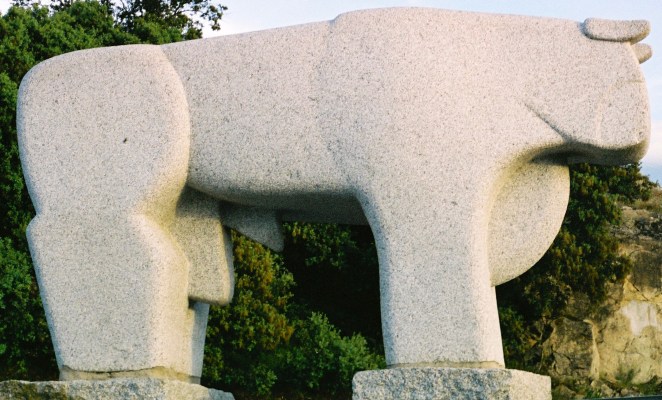
Contemporary stone bull

Mi verraco de Avila
gracias a Juanra

From Stage to Page

An unrolled parchment scroll showing a sunset windmill sketch on a wooden desk with a quill and inkwell.
A beautifully detailed scroll depicting windmills at sunset rests on a classic wooden desk alongside traditional writing tools.

Image generated by AI.

Ryan and Don Roger

4

Stage to Page

            So many questions – so much to say. Let us begin by stating that Cervantes is one of the most original novelists the world has known. Then we can continue by stating that, in spite of that, like Jean-Baptiste Poquelin, aka Molière, he is not above borrowing his material from other writers. When Molière was asked where he found sources for his plays, he replied “Je les prends où je les trouve.” Cervantes might well have said the same thing.

            The source of the first sortie of Don Quixote is a short play, an entremés, called El Entremés de los Romances. These short, entertaining pieces were often installed between acts of a longer pay to keep the audience amused during the breaks. In this particular one, an old man thinks he is a knight and travels forth quoting the old border ballads and ballads of chivalry as if they were historical truth. Mind you, some of them were, or pretty close to it, especially those that carried news of the reconquest, but not all of them were true by a long way. The old man goes too far with his chivalry, gets a beating, and comes back home, draped over his horse which is led by a neighbor. Sound familiar?

            In classical rhetoric, imitation – imitatio in Latin – was the highest compliment one could pay to another author as it meant he was worth imitating. Today, imitation is considered more a scourge to be avoided, although if you follow the crime and spy shows on TV you will know that the same, or very similar, incidents recur again and again, played out in different stories by different actors.

            So, Cervantes starts out by imitating an older stage play and turning it from a play into a short story. This is creativity, beyond imitation, in itself. In this theory, the first story is in fact a short story, meant originally to stand on its own. This is not my theory, incidentally, I have borrowed it from my own teacher, Geoffrey L. Stagg, the man who introduced me to the scientific study of the Quixote. Stagg took as his evidence the first edition of the book in which he discovered an anomaly. The last sentence of Chapter Five ends in a comma (in the original, and certainly not in my translation by J. M. Cohen. I first read this book in 1965 – 61 years later, it is held together by glue and Scotch tape, a bit like Don Quixote’s helmet and armour!). To continue, the first word of Chapter Six begins with a lower-case letter, as if that word were joined to the last in the previous chapter. The heading of Chapter Six also runs smoothly into that first word as if they were joined. This suggested that in fact the two chapters had been united in a single story and had later been separated as the idea of turning the story into a novel dawned on the author.

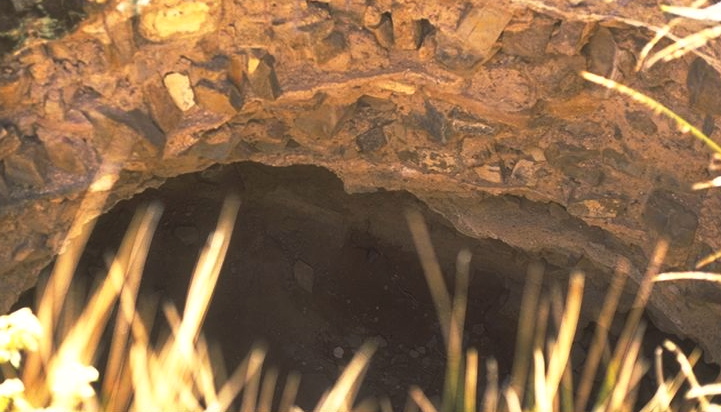
            But who is the author of Don Quixote? Miguel de Cervantes, obviously. But who is the narrator of the story? In the first sentence, this first person narrator states ‘a village in la Mancha that I do not wish to name – de cuyo nombre no quiero acordarme in the original Spanish. AI helps us out here. I quote – “Miguel de Cervantes was likely imprisoned in Argamasilla de Alba (specifically in the Cueva de Medrano) around the turn of the 17th century due to disputes arising from his work as a tax collector, or potentially a local dispute with a nobleman. This confinement, stemming from financial irregularities or local drama, is traditionally believed to be where he began writing Don Quixote.”

No wonder Cervantes, the initial narrator, does not wish to name that particular town. A little later, in an effort to embrace the readers and draw them into the text, the narrator uses the first-person plural- our text, followed by we make take itwe do not depart.

We will return to the narrative structure of the novel on many occasions. For the moment, we will leave the matter there. In narrative structure, the real Cervantes is the author. Cervantes, named or unnamed, is the narrator and becomes a part of the narration. I should add that the 1605 version of Don Quixote contains many short stories, that have nothing, or very little to do, with Don Quixote himself. We will return to these intercalated novels, as they are called, when we meet them later in the text.

Rage, Rage 59

Rage, Rage
59

You cannot hide
when the black angel comes
and knocks on your door.

“Wait a minute,” you say,
“While I change my clothes
and comb my hair.”

But he is there before you,
in the clothes closet,
pulling your arm.
You move to the bathroom
to brush your teeth.

Now,” says the angel.

Your eyes mist over.
You know you are there,
but you can no longer see
your reflection in the mirror.

Comment:

The last poem in the series and Rage, Rage against the dying of the light is over and done. Many of you will recognize the title from Dylan Thomas’s poem Do not go gentle into that dark night. I guess the theme itself has become part of the Welsh culture. And now we have exported it to New Brunswick, Canada, and perhaps beyond.

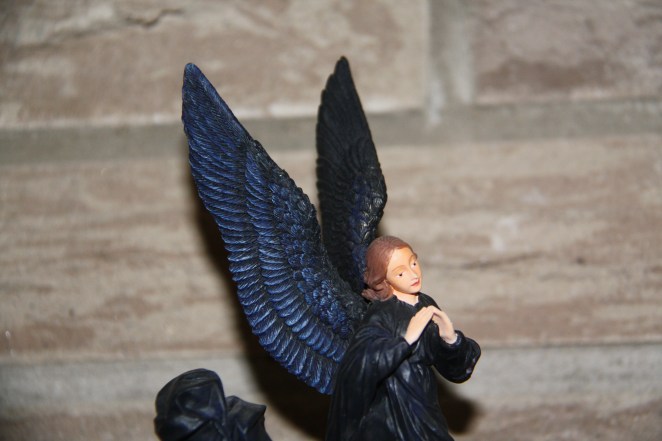
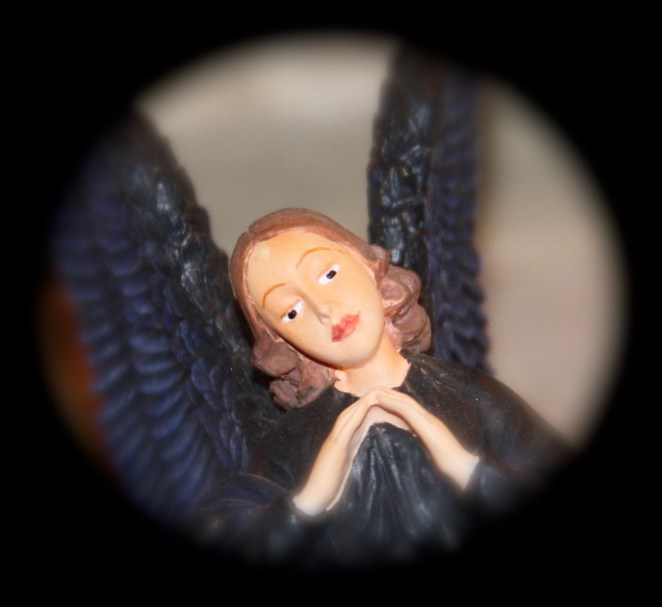
I bought The Black Angel, pictured above, in Avila, Spain. It is a plaster cast of one of the Angels in Roger Van der Leyden’s paintings, if I remember correctly. Here is the angel’s face in close up.

She or he brings a promise of rest and peace, a freedom from earthbound woes and sorrows. She stands on the shelf above the fireplace insert in our sitting room and brings blessings to the house. I look at her every time I light the fire. And she smiles down and blesses me. I think of her as a lady, but her peace and beauty outweigh any formal signs of sex.

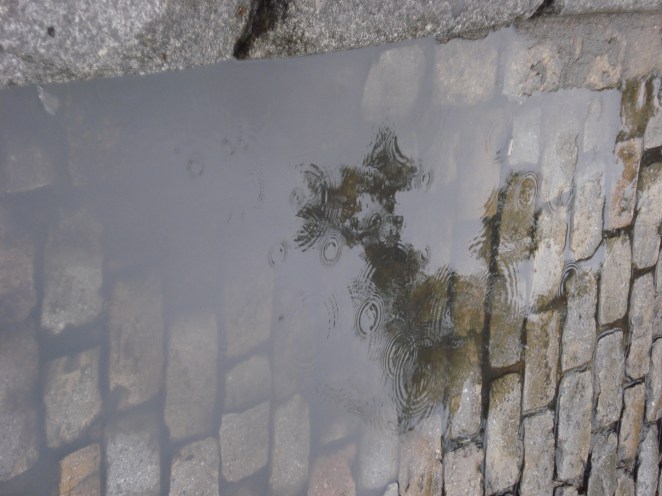
As for that reflection in the mirror, well, I don’t have one of me. But her is a photo to reflect upon:

Raining in Avila and puddles in the street. Now you see me, now you don’t. But I am there, holding the camera, and looking down at the water where —- rain has stopped play. The bails have been removed. Old Father Time has gone back to the Pavilion at Lord’s, and the cricket game is over for the day.

Rage, Rage 55

Rage, Rage
55

I walk on thin ice
at the frayed edge
of my life.

I search for the key
that will re-wind me,
but I fail to find it.

Who will winch up
the pendulums on
my grandfather clock,
resetting it
in spring and fall?

Who will watch
time’s sharp black arrows
as they point the path
of moon change
and the fleeting hours?

Each hour wounds,
or so they say.
Who will tend me
when that last one kills?

Comment:

Omnia vulnerant, ultima necat. / Each one wounds, the last one kills. That’s how the Romans thought about the collection of hours that make up a day. An interesting way of putting it. In lapidarian fashion. Four words that are worth a whole book of philosophical thought.

What is this thing called time? Good question, and one which is being asked more and more. Clearly time does not flow evenly within the human mind, though it is remarkably regular on the clocks we have invented to mark time for us. And remember, there are many types of time – seasonal time – spring time, summer time, autumn time, winter time. Strange that autumn – or fall as I have now learned to call it – is the only one that doesn’t have the word time attached to it.

And what about time changes – spring forward, fall back – when we change our clocks in order to make the most of daylight hours. A tedious process for many of us. I see some provinces are rejecting those changes and sticking to the same time, all the year round, from season to season. Personally, I would prefer life without those time changes, as would many of my friends.

Celestial time also known as sidereal time – the time as showed by the planets as they seem to march around the earth in the terra-centric universe. Rephrased, the positions of the planets as the earth turns slowly round the sun in the helio-centric universe.

Then there is the personal time of individual experience. An hour watching football or rugby on the tv set passes much more quickly than an hour passed in the doctor’s waiting room or the dentist’s chair. Of course, an hour watching a five day cricket test can also be a slow process, unless England are playing Australia in the Ashes. As one friend of mine commented, a long time ago, “I thought those English cricketers were unfit. But I’ve never seen anyone go out to bat and come back to the pavilion so quickly. They must be super-fit.” Alas, their cricketing problem, as usual, was centered on the three cants – can’t bowl, can’t bat, can’t catch.

En fuga irrevocable huye la hora.
La que el mejor cálculo cuenta
en lectura y lección nos mejora.

Irrevocable is the hour’s flight.
The one that counts the most
in learning or reading improves us.

Francisco de Quevedo
(1580-1645)

And remember – the hours fly by and your time is limited – spend it wisely and enjoy each and every day to the full limits of your abilities.

Rage, Rage 49 & 50

Rage, Rage
49

Waiting in the doctor’s office,
I hear two old women
gossiping about friends
and family, the intimate
details all laid out
to fester in my fertile mind.

Never will I be able
to put faces to those girls
with breast cancer,
to the women
weighed down
with diabetes,
to the old men
with their strokes
and heart attacks.

50

“Just one of those things,”
one of them whispers,
“my husband gone
leaving me alone
with the grandkids.”

“Is it four years? Or five?
I remember his name,
but I forget his face.”

“And our fourteen-year-old,
her belly already swelling …”

“You’ll cope somehow …”

Silence wraps its scarf
around their flapping mouths.
I think of all my own lost loves,
buried before their proper time.

Lives and worlds end …
new ones begin.

Comments:

Lives and worlds end … new ones begin. How true it is. The olde order changeth lest one good custom should corrupt the world. Tennyson, I believe, from Idylls of the King. King Arthur and his knights of the round table. Each of them rode into that dark night, some quickly, some more slowly, but all were lost, as so many things are lost.

That was also the heading of the departures section of my old school magazine. At the end of the year, pupils left the school, many graduating, never to return, and the old order did indeed change. The fourth formers moved up to the fifth, the fifth to Transitus, then to the sixth, and finally, the scholarship students arrived in Ichabod. Ichabod, Ichabod, the glory that used to be. I look at old school photos and I wonder what became of so many of my childhood friends. The website for my old school also contains an obituary section. I consult it, every so often, to see who else has passed on. Fewer names than I would expect. Not everybody keeps in touch. I am in contact with few old boys from school, but nobody from my undergraduate university. Ships passing in the night, all of us. Our conversations lost in the mists of time.

The old order changes and the language changes with it too. When I was visiting Spain regularly, my first stop, every year, would be the local barber’s shop. I just sat there and listened while I waited to get my haircut, Spanish style. I listened for the new buzz words, the names that now floated around, the latest jokes, the ideas that were currently in fashion. Change is everywhere.

Covid changed the Spanish language, gave it a whole new set of terms that I do not recognize. The same thing happens with English, French, any language. French is not the same in Moncton, New Brunswick, as it is in Shediac. And the Acadian Peninsula is slightly different. As is the language of Grand Falls, and that of Little Falls, aka Edmundston, the capital of the Republic of Madawaska. The language also changes close to the border of Quebec where Joual can be heard. Same thing along the St. Lawrence river and out from Matane to Mont Albert and beyond. Small changes, sea changes, enormous varieties of change.

I often wonder what is happening in Wales both to Welsh itself and to the English language as it is spoken there. English in Swansea / Abertawe was never the English of Llanelli, nor was it the English of the Rhondda Valleys. How could it be? And Cardiff / Caer Dydd was always different. As was Newport / Cas Newydd. I haven’t been back there since 1988. 38 years of change – friends gone, family gone, nobody left. I couldn’t bear to stay in a hotel in a town where once I lived in my family’s homes.

How does one end a rant like this? In silence, of course. For silence wraps its silken around flapping mouths. I think of all my own lost friends and loves, buried so long ago, many before their proper time.

Rage, Rage 43

Rage, Rage
43

The truth,
unwelcome as it is,
is that the day I was born
I took my first steps
on the path to death,
my own death.

Death –
an inescapable law
that tells me that
body and spirit
will be forced apart.

My flesh will wither
and perish,
and the person
that the world and I
know as me
will no longer be able
to hold together.

Commentary:

“The day I was born I took my first steps on the path to death.” An echo of a line from Francisco de Quevedo, of course.

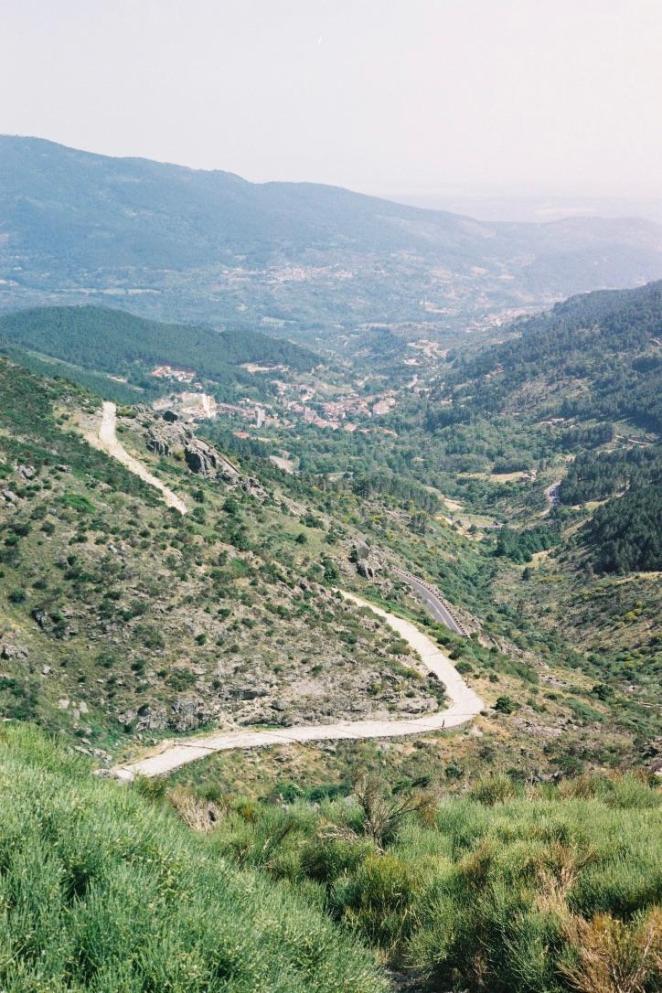
And the photo above? It is the old Roman road that ascends the Puerto del Pico in the Province of Avila. Hard to believe it was laid down nearly 2,000 years ago and still carries the transhumance cattle and sheep from the valleys in winter to the hills in summer. It is also a part of the Camino de la Plata, the silver road that brought precious metals from Spanish America to Madrid after the discovery and conquest of the Incan Empire.

The treasures of the Empire – what joy. Yet what weight around the neck of the Spanish nation. Wealth so abundant, spending so rife, money-lenders always lending, filling in the gaps between the arrival of the treasure convoys from the Colonies. And yet that borrowing became a millstone around the borrowers’ necks. So much money borrowed that there came a moment when each convoy only served to pay off the loan debt of the last set of borrowings.

The cattle and sheep struggle to climb to those heights. Yet it is not difficult to imagine how much easier it was to walk downhill, beside the creaking wagons that held the gold and silver to pay off the monarch’s debts, en route to the king and his court.

Think also of the squeals of anguish heard when the treasure fleet did not arrive. Captured by the English pirates, or hurricane battered and lost in the Caribbean or closer to home. This meant even more borrowing on the back of earlier borrowing and always the cost of living and the lending rates rising higher and higher.

Dydd Dewi Sant Hapus

Dydd Dewi Sant Hapus!

Happy St. David’s Day

Spring in Wales.

Spring in Wales

               Spring in Wales comes very quickly.  Sometimes, if you blink twice, it has gone again. But usually, you take a step outside the door one morning and suddenly there are daffodils everywhere. And they all come so early, crowding together like party-goers, tossing their heads in the bright yellow sunshine, and the whole world green and yellow, like the round yellow eye of this first blackbird, whistling on the garage roof or on a branch of the apple tree which is suddenly covered with a warm green fuzz of threatening leaf …

               … all so early, I say, and the countryside yellow with daffodils by March the First, St. David’s Day, our Dewi Sant, and especially in the Castle Grounds and Blackweir gardens, where the daffs grow wild and cluster beneath the trees, like huge, enthusiastic, rugby crowds, clapping and waving at every passing moment, and all the leaves on all the trees are just starting to sprout and there’s a pale, watery sun, but the wind is still fresh with the daffodils all tossing their heads in sprightly dance …

               … and you can walk the dog in Blackweir Gardens without a winter coat and without your wellington boots, though it’s as well to wear thick socks and good, stout shoes, just in case there are still puddles and the autumn leaves that fell last year may still be wet and soggy and slippery after their winter out in the rain and snow and the Feeder Brook which used to feed the Old Castle Moat, drained now, and no longer a stock pond for trout and carp,  is running strongly and quite fast, all the way down from Taffs Well … and the gurgling weir is beside you as you walk, with the crunch of the gravel beneath your feet, the song birds starting to sing, the nesting birds pairing up and starting to nest, and always the daffodils, the Taffodils as they sometimes call them in Cardiff, Caer Dydd, as they write on the busses, with the river Taff flowing there, just above you, as you climb the embankment and the River Taff flows beneath you now, all black and swift and deep and swollen with the end of the winter rains … and the Taff cradles as it flows the finest of fine coal dust and carries it down to the sea … and the fish and eels are born eyeless, so the fishermen say, as they measure out the length of the whoppers that got away, because nothing can be seen in the River Taff when it’s as black as that … and in places you can walk on it, they say, it’s so laden with coal dust from the worked out seams of the nearby Rhondda, and what use are eyes in a river where the coal dust is impenetrable and the water’s like a dense black stew …

               … and spring is Easter and Easter is when the Barbarians Rugby Football Club make their annual Easter Tour of Wales and the southern part of Wales is rugby mad on Good Friday, and we have just been released from the prison camps of our schools for the Easter Holidays, and in our new found freedom we go to Penarth where the Sea-Siders, as we call them, play against the Baa-Baas, as we call them, and we park the car at the top of the hill near the centre of Penarth, and we walk and half run to the playing fields down at the bottom of the hill, squeeze ourselves like toothpaste, in through the gates, squeeze ourselves small in the gathering crowd and there they are, the mighty Barbarians, 14 internationals from England, Ireland, Scotland, and occasionally France or South Africa,  and standing firm against them, the men from Penarth, 15 average tiny Welshmen, perennial losers, doomed to their annual failure, but not today, as Bernie Templeman, “Slogger” to his friends and intimates, kicks a penalty and drops a goal, and the giants are shunted all round the park and almost off the scoreboard … and we shout ourselves hoarse and it’s Penarth 6 and the Barbarians 3 … and all that international strength and might vanishes, Goliath felled by David on a damp Good Friday night … in the spring time, in my childhood, in Wales …

               … and on Easter Saturday, we stay in Cardiff … and we have tickets for the stand where you don’t have to stand at all, but can actually sit in luxury … and my friend’s dad has a friend who has friends who have season tickets … but they have just won the football pools and they have left Wales and are travelling around the world on a cruise ship, and they have left us their tickets, their wonderful tickets in the stands, and we sit on the half way line and watch this magnificent game where they, the Barbarians, have fourteen internationals and a school boy who will one day be an international, but we have fifteen internationals because this is Cardiff … the best club side in the world … and this is the Capital of Wales … and we are playing at Cardiff Arms Park, at the ground where my father played and my grandfather before him, and we are watching history, and family history, and everyone who plays for Cardiff also plays eventually for Wales, and my father came here, like my grandfather, as a visitor, not part of the home team, and Swansea were the champions back then, not Cardiff, and my grandfather played for Swansea, way before the First World War, and my dad …

               …  well, I don’t know much about him and his rugby because he changed from rugby to soccer because my mother’s family, who all had English and Scottish blood, thought rugby was dangerous and they wanted him to play soccer, so he did, and he broke his ankle playing soccer and never played sports that well again, though he was a great sportsman, more than 6 foot tall, yet I take after my mother and I’m tiny like her, and “much better to have had a girl, with him as small as he is” some neighbours said and others said “Don’t worry; he’ll grow!” but I never did and so I became a runner not a rugger, but my father’s side of the family could never understand why I wasn’t out there, like my father and my grandfather and “A good little ‘un is just as good as a good big ‘un” they used to tell me, so I played occasionally, especially in the spring, and there they were, giants at six and seven foot tall, and there I was a dwarf, a pigmy, at five foot tall, and it’s lies they tell you sometimes, myths and lies, because five foot can never match six or seven in spite of everything they say about a good little ’un … but this is Cardiff and Cardiff always wins and win we do … and we all go home happy …

               … but on the morning of Easter Sunday we set  out for Swansea and the bungalow in Bishopston, where we will spend the night, and we have our knapsacks on our backs and in our knapsacks we have our sandwiches and our snack bars and our bathing trunks, and we’re all ready for that first Easter visit to the beach … and we catch the train at Cardiff General and go from Cardiff General to Swansea High Street, and when we’re in Swansea we run to the bus station and catch the next bus, the next brown and yellow Swan bus, and it takes us out along the Mumbles Road, and up the Mayals, and over Bishopston Common, which is still open land and not the least bit enclosed, and there are skylarks rising early in the morning, and cows, and ponies, and sheep, and sometimes they are found wandering on the road that crosses the common, but not today … and we leave the common and rush through the narrow lanes, at breakneck speed, and the trees lash the bus windows with their branches, inches from our faces, and we duck as the leaves smack the glass in front of us, even though we know the windows are there and the leaves can’t touch us … and at Pyle Corner, we leave the bus and it’s down through the lanes, and it’s out to the bungalow which hasn’t been opened yet, and we’re the first there, so it’s light a fire and warm the place up, and dry the mattresses, and get the damp out of the one bed we’ll sleep in, all of us, and then it’s down to the hard stone beach at Pwll Ddu, and we wander on the shore fully dressed and dare each other to swim as we wander across the pebbles and yes, we decide to do it, to strip, and the wind turns us blue and there’s nobody else there, just us, and it’s Easter Sunday, and the sea-gulls are daring us to take off all our clothes and bathe naked in the naked sea beneath a naked, cloudless sky …

               … and it’s not as warm as we remembered it from last year, and the wind whips our naked flesh and turns it blue and we run up and down trying to keep warm and then we plunge into the icy water and the water must be a degree or two warmer than the land, but it’s still cold in the water and even colder when we come out … and I remember now that my grandfather was a member of the Swansea Polar Bear Club and swam, each Christmas, in the docks at Swansea and also on new Year’s Day and he must have been mad, even if he did join a club of equal nut cases, ‘cos we’re freezing, I tell you, and this is Easter Sunday, not New Year’s Day, though the year is new enough for us and the cycle of the seasons is just beginning, and the old year ends with winter and the new year starts with Easter, and this ritual turning blue as though we were all daubed and tattooed with woad, and the annual, ritual dip lasts for about two seconds, two seconds of total immersion, like baptism, with your hair wet or it doesn’t count and “Watch out!” there’s someone coming down the cliff path and we’re no longer the only ones on this beach and we leap into each other’s clothes just to have something on when the others arrive, whoever they are, these neighbours, these nosy neighbours are … and “Skinny dipping. were you?” they say, “We’ll tell your ma, we will.” “You can’t she’s in Cardiff!” “Well we’ll tell your grandma then, she’s still in Swansea, I saw her at the market yesterday, and she’ll tan your backsides — should be ashamed of yourselves, bathing naked on Easter Sunday.”  “Aw, don’t tell gran; remember: you were young once!” “Yes! I was; but I didn’t run naked on the beach on Easter Sunday!” …

               … and it’s back to the bungalow with everything soon forgotten and the bungalow is warmer now, from the fire and the woodstove, and you know automatically where everything is, the oil lamps, and the wood fire stove, but there’s no electricity and we have forgotten to get water and unless we drink rainwater from the barrel it’s down to the end of the field, with its single tap that feeds and waters the whole field, 26 summer houses and only three of them occupied, two by people who live there all year round, and one by us, now, at Easter, and the neighbours drop in to see we are all right … and we talk and they help us to trim the wicks and set the lights and one of the neighbours comes in and helps us to make a pot of stew on the wood stove, a Welsh stew with potatoes, and cabbage, and onions, and carrots, and a bit of meat they lend us so we will not be tempted to use the piece of old dry smoked bacon left over from last summer, and hanging still from the rafters, out of reach of the mice and the rats who have taken back their empire and scuffle and scrimmage each night, like Barbarians, over the roof and through the walls … and we can hear them at midnight, as they travel the pathways they have built around us …


               … and we can also hear the cows, out in the field all night, as they rub their bodies up and down against the bungalow walls, and there are fresh cow pats where they have sought human company and the warmth of the fire because it’s cold at night even though it’s spring and when Monday dawns, first  it’s breakfast and Brandy Cove, where the beach has changed shape after the winter storms … and all the paths are slightly different, down from the cliffs to the sand, and we are not the first, for there are new paths and footprints and one of our neighbours is there in the cove with his canoe which he paddles all winter, every day, at full tide, in Brandy Cove at first, then out round the headlands to Caswell and Langland, Pwll Ddu and Three Cliffs and we don’t know now that one day he’ll go out on that tide, but he’ll never come back, and they’ll hold a funeral for him, but they’ll never bury him, because they’ll never find his body … and this year, again, he’s all sun tanned and brown and doesn’t look at all like one of us, we white skinned boys, with our sunless winter skins not yet exposed to wind and sand save for that one appearance yesterday that blued us as if we were dyed in woad,  as if we were ancient British warriors and the old Celtic Race was reborn in tattoo and blue … and fearsome we are, we warriors, we blue men, marching up Snowdon with our woad on, never minding if we’re rained or snowed on, and slap us on the chest and we are all bowmen they say, and the spring is here and the summer campaigns can be planned, but first, it’s back to the bungalow, finish up the food, clear everything away, make sure the fires are all out, lock all the doors, and off down the lane, we go to catch the bus back into town, the brown and yellow bus that was once driven by my great-grandfather, not in bus form, but he put a plank in the back of his truck and he gave people lifts, and this was the first informal transport system, ages and ages ago, long before the First World War, and everyone knew him and everyone knows me, but me I have left … and I don’t know anyone any more … but they all know all about me …
              
               … and we get off the bus at the Swansea Recreation Ground and we walk to St. Helen’s for the game, because today Swansea play the Barbarians and my uncle is there and he used to play for Swansea and he’s in his usual place … we know just where to find him … and we stand by him and talk to him and everyone is wearing something white today, because Swansea are the Swans when they play soccer and the All Whites when they play rugby and Cardiff play in Cambridge Blue and Black and I cannot remember the colours worn by Penarth, because we only go there once a year to watch them and nobody in the family ever played for them …

               … and Swansea is great because the stand is low and players can kick the ball over the stand and then the little boys, which is what we are in the eyes of the grown ups, though we think are big and tall and Celtic Warriors, quite capable of bathing at Pwll Ddu on Easter Sunday, with nothing on, which the grown ups would never think of doing, well, we little boys are told to run and get the balls which have been kicked over the grandstand out into the street where the Mumbles Railway still runs, right beside the Cline Valley Line, and all the traffic is stopped because the balls are rolling around and the boys are chasing them and whenever the grown men get tired of playing and need a breather, why, one of them kicks the ball over the pavilion roof and I can remember in the cricket season when a ball was hit over the pavilion roof and it landed in a coal truck that was passing on the railway line and it travelled all the way up to North Wales where it was discovered, lying on the coal, and the grown ups all said that we boys had stolen the ball, until it was discovered, a week later lying on the coal … and I can’t remember whether Swansea won or lost, but I think they won, because I don’t think the Barbarians won anything in Wales that year, and that night after the game it was back to High Street Station and back up to Cardiff General on the train, and the next day was Easter Tuesday ….

               …. and the holidays are almost over … but on Easter Tuesday, the Barbarians play Newport in Newport at Rodney Parade … and nobody in the family likes Newport, because the people from Newport are neither English nor Welsh and they change allegiance and go with whoever’s winning, England or Wales, and they move in and out of Wales, playing for England when the Welsh don’t want them and they can’t get a game with our team … and we don’t like that …  so nobody trusts them and you can see people from Newport playing on the English side, in white, with a red rose on their shirts … but Ken Jones wouldn’t do that … and he’s from Newport … and he’s fast, very fast, and he’s got an Olympic bronze medal for sprinting, and the crowd all sing the Skye Boat Song, except the words are different and  they sing “Speed, bonny boat, like Ken Jones on the wing, onward to score a try!”

               … and although we’re meant to support Ken Jones and the Newport team, we secretly support the Barbarians, but not too loudly, because there are some big, and I mean big, Newport supporters close by us, so we don’t make too much noise … and I can’t remember that game either because Rodney Parade isn’t very nice and nobody from my family would ever think of playing for them …

               … and Wales, as I remember it, was still very tribal … and people in Newport, Cas Newydd,  live on the border, and by the border, and we’re never sure which side of the border they’re fighting on, and that’s totally prejudiced and unfair, and politically incorrect … but that’s also tribal warfare, so there! … and it’s perfectly fair to support the Barbarians against Newport because in the folk lore, of that part of Wales, at that time, well, the people of Newport were Barbarians … and they didn’t know whether they were English or Welsh … and they were mixed breeds, mongrels, Heinz 57’s … and they kept the pubs open on Sundays too …

               … ah well, most of those things happened a long time ago and they’re all forgotten now, the rivalries, the family feuds, but some things you never forget … like Easter and the Barbarians Tour of Wales and the daffodils in the Castle Grounds and Roath Park in Spring and Blackweir Gardens … and suddenly, so suddenly, Easter Tuesday was over … and it was back to school … and the holidays were done … and Easter was done … and those are my memories of Spring … in Wales … where the blackbirds still whistle and sing on the garage roof … and all the world is yellow with gorse and sunshine and all those Taffodils …

Rage, Rage 24

Rage, Rage
24

Breakfast time –
butter-fingers:
slippery tableware
totters and falls

A delicate cup
hovers
over the table cloth,
a flying saucer
poised in flight.

It crashes down
and its broken body
rests in pieces
on table and floor.

Bottle tops
screwed up too tight,
or cold from the fridge,
refuse to undo.

Plastic wrappings,
defy all efforts
of inarticulate,
arthritic fingers

So many slips, now,
between cup, fingertip,
and trembling lip.

Comment:

Moo is sulking. He decided that he had no paintings with grubby little insensitive fingers in. Go find another friend, he told me, if you’ve got one, and we’ll see what that one can do to help. So I checked and found this lovely pair of gloves, photograph by Geoff Slater, himself an established artist – which is more than I can say for Moo. Now, now. Cool down. No point in opening hostilities. Especially at your age. Okay, okay. Sorry, Moo. But I do love Geoff’s photo. It is an example of what my hands feel like when I am in arthritis mode. Or should that be arthwrongus? Those cups and saucers are very unstable. Well, don’t shake the table, and keep your relationship stable. Or you’ll be coughing and stamping like a hoarse.

Puns are the lowest form of wit. So – is arthwrongus a pun? If so, it strikes me as the highest form of neologism-style wit. And yes, arthwrongus certainly is what I feel when I knock things around, spill drinks, and generally make a mess of the table cloth. There doesn’t seem to be anything right about that.

And it’s getting worse. Yesterday, I spilled the ink when I was refilling my fountain pen. The day before, I had a cheap bottle of wine – it lasted three days – but on the third day, I knocked the penultimate glass all over the new table cloth. That was a disaster, for the table cloth, a blessing for me. Good riddance, I said. I threw away the last of that bottle and opened a new one to celebrate. And this time I chose a decent wine.

And I guess that’s the secret of growing old. Turning our disasters into opportunities. I like that idea. Maybe I’ll tell you about some more disasters another. But first, I’ll apologize to Moo and see if I can get him painting again. He doesn’t work well with a sulky paintbrush!

Ice Storm

Ice Storm

This month and my life
are nearly done.

Sun strengthens in the sky
but birds ice up
in spite of feathers,
fluffed like eider downs.

Man alone,
within warm walls,
can bravely laugh
at winter’s squalls.

But oh, if the power fails,
if wires are tumbled
by winter’s gusting gales,
man’s heart no longer
fills with ease.

He sits at home
in the cold and dark
while all around him,
ice covers the land
and even fire dogs
freeze.