Carnival

Carnival:

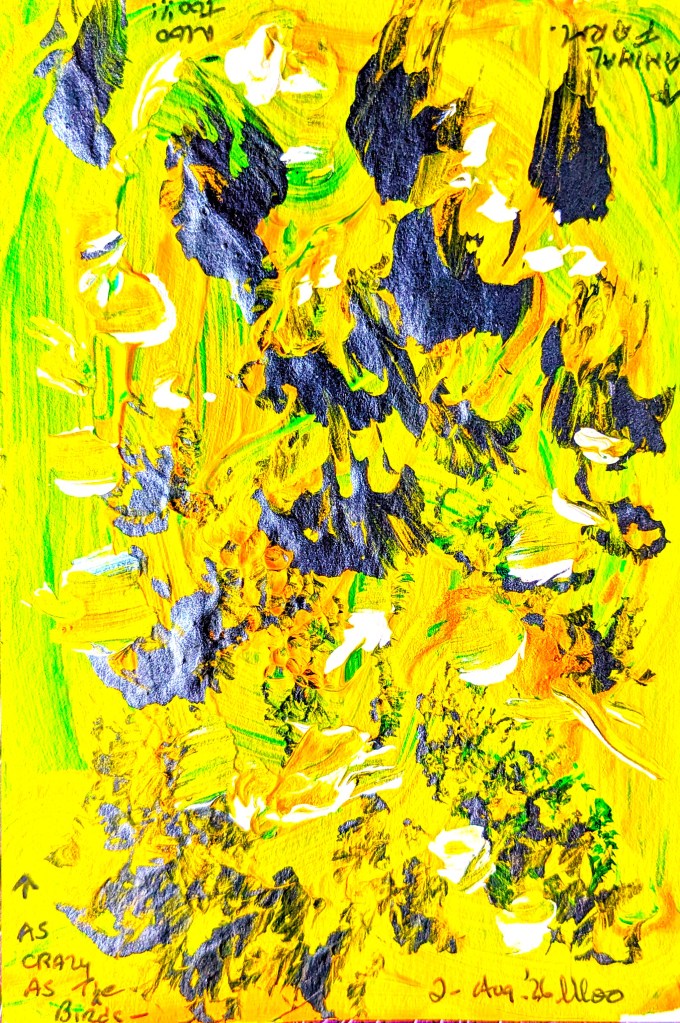
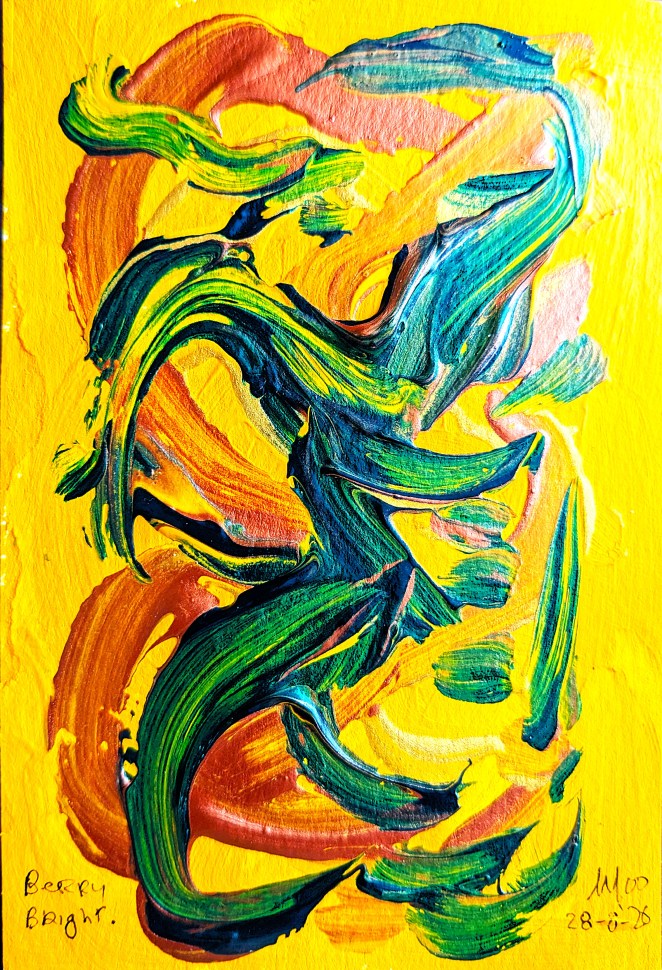
Bakhtin’s Carnival – the world turned upside down and inside out. And here it is. Moo has painted an upside down world. From the above angle, the world is full of birds and is “as crazy as the birds“. Lovely image. There they go, birds of a feather, flocking together, soaring, sinking, doing what birds do when they are as crazy as bat shit – and Moo told me, he nearly gave his painting that name – Crazy as Bat Shit.

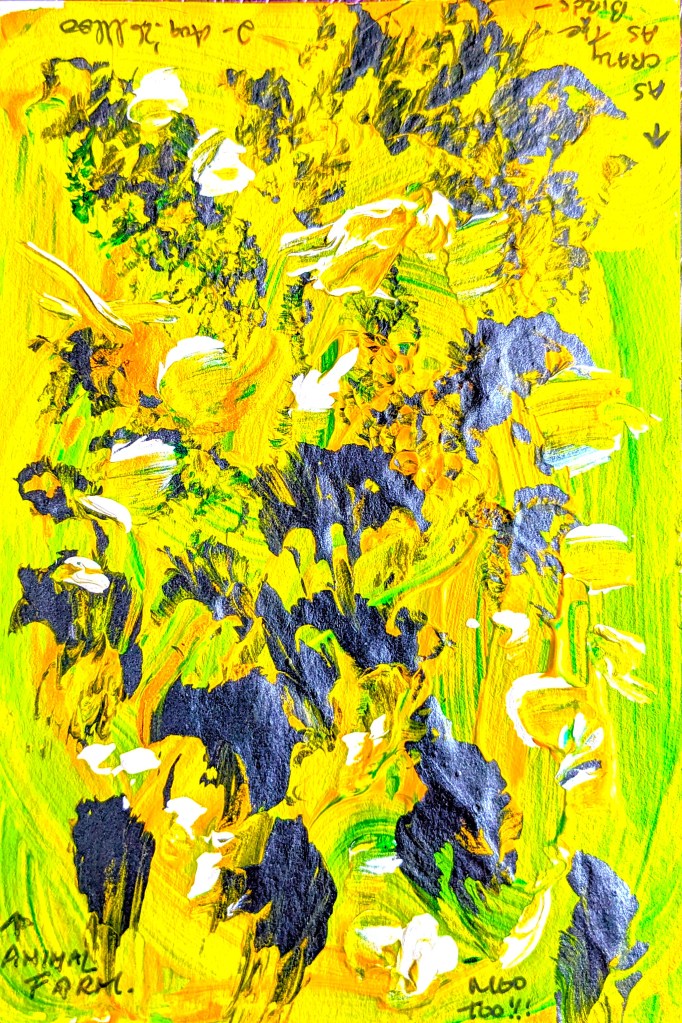
But hang on a moment – if the world is upside down, what happens when you turn Moo’s painting upside down? Let’s try it and see.

Would you believe it – the birds are no longer birds, they have turned into animals. From this point of view, we have Animal Farm. Moo thinks he can sell this painting for double the price now he has discovered it means something different the other way up. Now – what if …. Nope. Let’s leave it there. We are not going to turn it sideways, nor inside out. That’s asking too much of Moo and his painting skills.

But we have a tiny little lesson, and with no poem attached to it. Perspectivism – the same object seen from two different points of view by two different people can elicit different functions and different interpretations.

Think of the Barber’s Basin in Don Quixote. One group of people see it as a barber’s basin. A second group see it as Mambrino’s Helmet, missing a visor. Cervantes resolves the problem by adding yelmo to bacía to give a new word – a baciyelmo. A helmet that serves as a basin and vice-versa. Does such a combination exist in English? Whyever not! We can call it a bassinet, as in a pig-faced bassinet. That is to say, a helmet with a snout that ends in a bassin – well, we can forgive the -ss- if we are generous.

And now we come to the important part of our lesson. Most things can be changed from one meaning to another, if we change our position and our point of view. Birds can become animals. Animals can turn into birds. A good mood can be turned into a bad mood. A bad mood can be turned into a good one.

There is so much depression around us at the current time. “Turn that frown upside down” – and turn the world on its head and inside out. I bet you can do it if you really try. After all, Moo has shown you how and I assure you that Moo – and I know him well – is no genius. However, in spite of that, every so often he stumbles on a tiny truth, just like he has in this painting.

So – don’t get frightened and depressed by the black dog when he leaps out at you from the grandmother clock. Turn him from a dog into a bird and let him fly away into the blue, taking the black dog’s blues along with him. And remember – if Moo can do it, so can you. So “turn that frown upside down” and remake your world in the shape you would like it to be. And remember – if Moo can do it, so can you.

Frustration

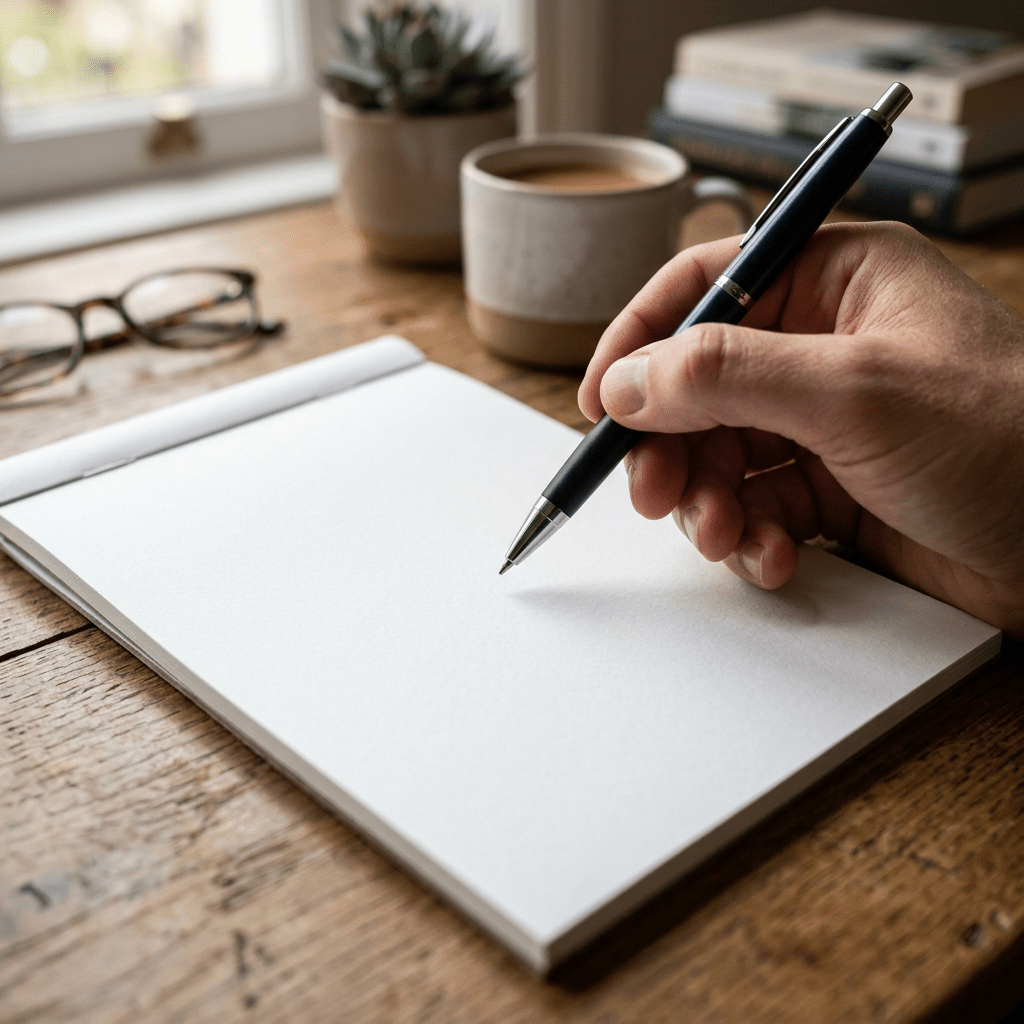
Hand holding pen above blank notepad with coffee cup and glasses on wooden table
A hand holds a pen poised to write on a blank notepad next to a coffee cup
AI generated

Frustration
A Jackpine Sonnet

Hand hovering pen poised
a black shadow hangs over
the blank page threatening
to erase any ink marks
that may emerge

Eyes and mind blank
no butterfly kiss delicate
in its touch of nib to page
a black cloud of nothingness
damns creativity at its source

Who can prise the worm
out from the chrysalis
gift wings to the pupa
change it from slug or snail
into that glorious moment
when sunshine’s beauty
stutters into fluttering flight

Comment:

The top photo, AI generated, was based on the wording of the poem. The bottom one was a Moo choice from his pre-painting selections when he claimed to be a photographer. I like both, but for different reasons.

The first one emphasizes the fear of the blank page, the blank canvas, the blank mind, the overnight snowfall that is awaiting its first foot or hoof print, its first instant of inspiration, its first splash of paint, its first letter or word. And yet, according to many with whom I have spoken, artistic creativity is one per cent inspiration and ninety-nine per cent perspiration. So, why hesitate? Get on with it. Make those first marks. Take that first step. And remember, even the longest journey begins with the first step.

The second photo expresses the duality of creativity. At the front end of the butterfly, its poised, fragile beauty. At the rear end, the fearsome face it assumes if approached in the wrong way from the wrong direction. Front end – the moment of creation. Rear end – the fear of that first step and the consequent sense of frustration.

So – at the moment of creating, we must consider several things – the fear of failure. But the only way to never fail is to never try. Each failure, however bad, is not a crime, it is a stepping stone on the way to ultimate success. The fear of the first step – this ties in with the fear of failure. Will we slip on the first damp stepping stone across the stream? How long will we permit our selves to search for a safer passage? Is there really a bridge around the bend, a bridge that will stop us from getting our toes wet? And what’s wrong with wet toes anyway?

When we dip our toes in the sea, we feel the cold of the water. When we take the plunge, dive in head first, we feel the full force of the ocean. And that ocean is the creative energy that yes, can sweep us away, can carry us up, can pull us down. Is that what we are afraid of, being overwhelmed by the creative powers within us? Of losing the meagre control we hold over our lives? I truly believe that in many cases it is just that element of being swept away by our own unleashed creativity that fills us fear. But if we never take that first step we’ll never know who or what we are, nor will we understand what we are afraid of, nor will we be able to conquer that fear and accept our creativity for what it is.

Enigma Variations

Enigma Variations

Our world is spinning on its edge, placed on
the perimeter of space, going who knows where.

Specks of dust, we float around and contemplate
night’s wonders wondering what might happen.

Out there, in the vastness that surrounds us,
worlds without end will never know we existed.

Bleak and blank our names, our deeds, our status,
the monuments sometimes raised in our praise.

And what of our thoughts, those sparks
of electricity that link us mind to mind?

Is each of our actions determined by a dance
performed by circling planets that shape us?

Are we nothing more than a code
of virtually meaningless dots and dashes?

Are we then pinballs bouncing between
a million trillion strings of flashing lights?

What star god plays trivial games of snakes
and ladders with our lives and names?

Commentary:

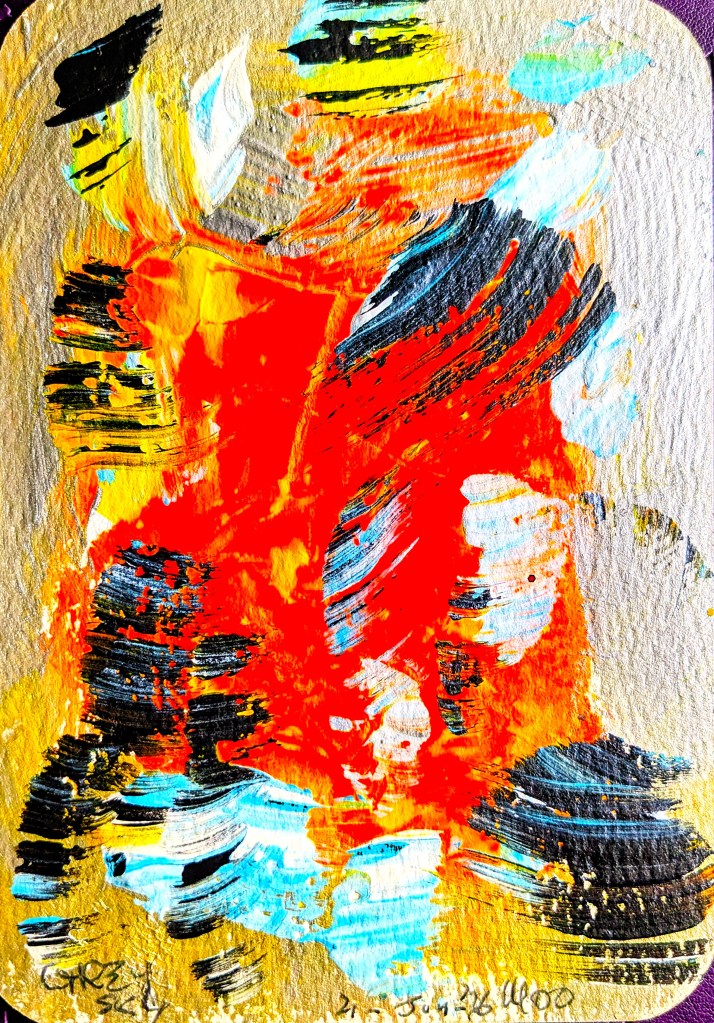
Moo’s painting is called Grey Sky with Bear Claws. He thinks it is a great companion to the poem. Actually, I rather think he likes to have his paintings published online without the necessity of lifting a finger to help. Oh dear – he heard that and just lifted his middle finger in my direction. “I am helping,” he said. “I also lift paint brushes. Remember that, you philistine.”

Philistine? Me? Now why would I be a Philistine? And what is a Philistine anyway? That’s where AI comes in. Thank you, Don Ryan. I wouldn’t know about AI without you. “And you wouldn’t know about painting without me,’ says Moo. “So tell me what a Philistine is,” I said to him. “Go look it up,” he scowled, wagging that finger in a menacing way. So I did.

AI to the rescue. A philistine is a person who is hostile, indifferent, or smugly oblivious to art, culture, and intellectual pursuits. The term typically describes someone whose interests are purely materialistic and practical, lacking any aesthetic refinement or appreciation for high culture.

Well, I don’t think that’s fair. Let’s see – hostile, indifferent, or smugly oblivious to art – no, that’s not me. I love Moo’s art, and he knows I do. I am not hostile to it at all, though I might be just a little teeny weeny bit hostile to him when I think he is lazy and doesn’t appreciate me. More – someone whose interests are purely materialistic and practical, lacking any aesthetic refinement or appreciation for high culture – no. I refuse to accept that. Purely materialistic? I give my poems away, free of charge, to my friends and anyone else who wants to read them. Moo isn’t materialistic either. He gives his paintings away to his friends. I know he does, because I have seen him do it. Come to think of it, I don’t think either of us is practical. We wouldn’t be living in Penury if we were.

Sorry. I won’t go any further. That’s all Isle of Wight Ferry, as they say in Hampshire. Well, I won’t call you a Philistine if you don’t know what they say in Hampshire. Okay – here goes. “What’s hot, black and smelly and comes steaming backwards out of Cowes?” Why, it’s the Isle of Wight Ferry, of course. Well, it was until they replaced it with a hovercraft. Now the joke [Cowes, the port / cows] doesn’t work any more. So, here’s a couple of questions at Philistine 100 level for you – (1) What have Margo and Reg got? If you don’t know, you’ll have to ask Stomping Tom Connors. And (2) what did Reggie give to Margo? Okay, okay. I give in. I’ll tell you.

Answers – (1) Margo’s got the Cargo and Reggie’s got the Rig. (2) A cowsy dungsy clock, of course. Made only in Canada. And you can check that one on AI too. And look up the song on YouTube while you are at it. Canada Day – July 1 – and Stomping Tom Connors is one of the best adverts for Canada. Go, check out his songs.

Avalanche

Avalanche

A single stone
starts the avalanche

The boy in the kitchen
bare legs held to the fire
‘this is what hell will be like’

The cupboard under the stairs
cold dark locked from the outside
an oubliette
the young boy left there
forgotten

Running upstairs
to safety beneath the bed
hands grasping at legs
and ankles
pulling him back down
for appropriate punishment

The belt the stick
the little red brush that cleans
the fireplace
with its foretaste of hell
beating battering
an avalanche of blows
the boy buried beneath them

Commentary:

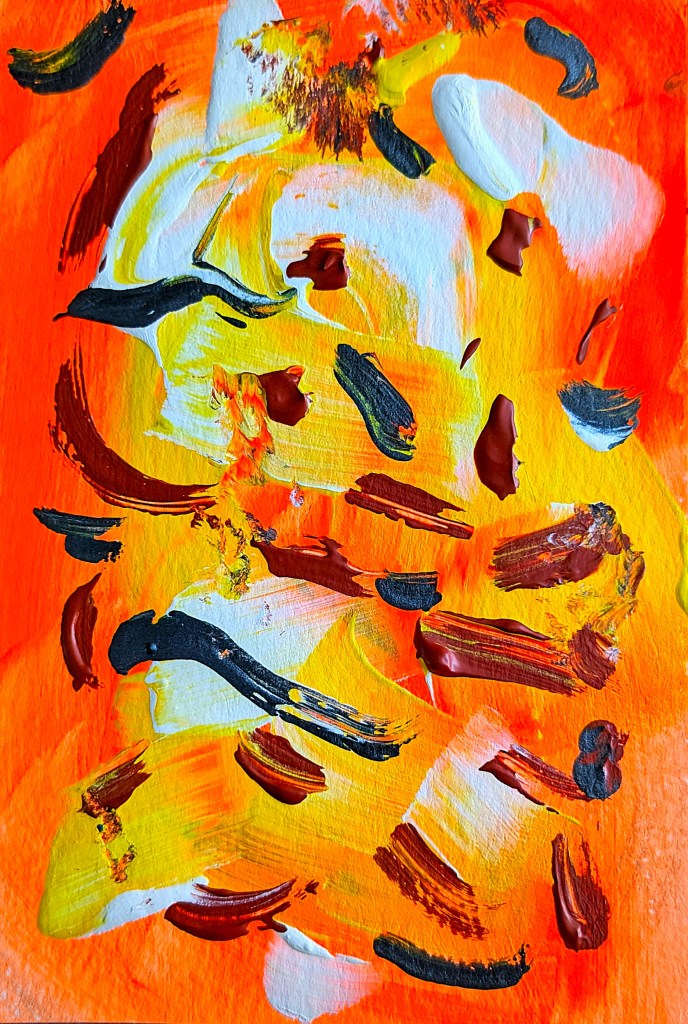
Another unsigned painting by Moo. He told me that he calls this one Orange-U-Happy. Well, it is a happy painting, until you read the poem that goes with it and discover that all the stones of the avalanche are floating around in Moo’s painting, including a nice selection of sticks.

“Sticks and stones will break my bones, but names will never hurt me.” But names do hurt. Names can be cast like stones, and the thrown stone, like the spoken word, can never be recalled. Liar. Cheat. Thief. Little Lord Fauntleroy. Bite the hand that feeds you. Are you laughing at me? I’ll teach you a lesson you’ll never forget. I’ll shake you until your teeth rattle.

Stones can be thrown into ponds. When they are, the ripples reach out, spread further, spread far and wide. Thrown words can enter the soul, ripple through the blood, and they can lodge in heart and brain, forever memories that never fade and never fly away. Heart stones, they are, that strike at the stroke of midnight and leave the victim suffering, gasping for air.

So many silent memories, buried deep, only to rise and parade around in dreams at night, revenants come to haunt and hunt, sharp words made even sharper than flint or obsidian to cut and fracture, and splinter, and slowly, slowly wear down the prey. Words – the jaws that bite, the claws that snatch. Think twice before you throw, speak, wound, injure …. then think again, bite your tongue, stay your hand, drop the stone, think rather of the hand of friendship, of comfort, the feathered wing of the guardian angel that consoles and brings succor.

Succour (or succor in American English) means assistance or support given to someone experiencing grief or hardship. It is a formal, often literary term used to describe help that offers actual relief or comfort to people in difficult situations, such as disaster victims or those struggling emotionally – Wikipedia.

And remember – many words have double meanings – spare – to forbear: deciding not to hurt, destroy, or punish, such as “sparing the life” of a captive or sparing the the rod. Spoil – to indulge: to treat someone, such as a child or pet, with pampering. It can also mean treating oneself to a luxury or relaxing day.

So, what does spare the rod and spoil the child mean? Clearly it is a phrase with a double meaning. Choose which one you will. But remember – “Let us pray” is a better prayer than “Let us prey“.

Poema de Amor – Love Poem

Poema de Amor / Love Poem

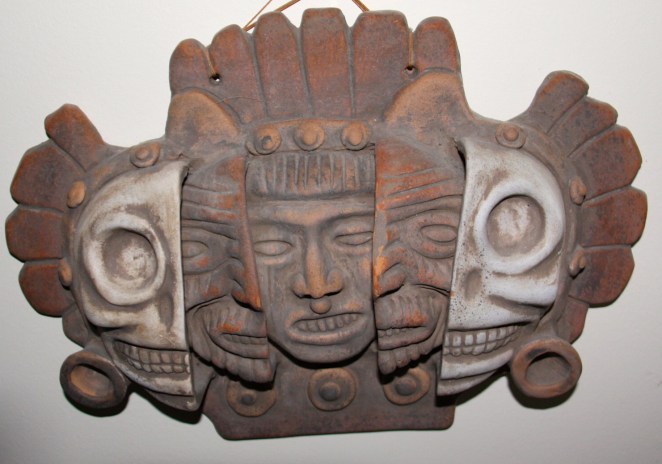
Mitla, Oaxaca, Mexico.


Mitla is a sacred burial place in the Oaxaca Valley.
 The caves in the hills above the town
 are said to lead directly to an underworld from which demons and devils emerge at night and by means of which humans can communicate with the souls of the dead. Mitla, in fact, is often called the city of the dead.
 Legend has it that if you embrace  a certain magic column in the Palace at Mitla, 
the time left for you to live can be measured by the distance 
between your fingers as they reach round the pillar and almost touch.
 The pillar, they say, grows and shrinks according to the length of the seeker’s life. Petrus,  a rock, in Latin, evolves into piedra, 
a rock or stone in Spanish: upon this rock will I build my church.

1
We walk on tiptoe round the garden
peeling free the sunlight cloud by cloud

sometimes the heart is a sacrifice of feathers
bound with blood to an ornate altar

petrus
this rock cold against my chest
piedra
centuries of glyphs alive in your face

if our arms meet round these all too human columns
what will become of us?

2
beneath your skin the woad lies as blue as this evening sky
yellow light bends low in the fields below us
each darkened pool a warrior fallen beneath the scythe

the moon paints a delicate circle
its great round open eye stands out
above the rooftops
tonight it bears an eye lid carved from  cloud

our teeth are diadems of whiteness
we tie shadows to our heels
and dance in triumph through street and square

3
daylight bends itself round rock and turns into shadow
we flourish in blocks of fire

dreaming new selves from roots and branches
we clasp each resurrection with greedy fingers
will the moon rise again tonight and will we watch?

dark angel bodies with butterfly wings
our shadows have eloped together

we can see them sitting side by side
bumping knees at a table in the zócalo

4
church bells gild the barrio‘s rooftops
our fingers reach to the skies and hold back light
we draw shadow blinds to shut out the day
night fills us with stars and silhouettes

we dream ourselves together in a silent movie
closed flesh woven from cobwebs
lies open to a tongue-slash of madness

the neighbor’s dog wakes up on the azotea
he barks bright colors as dawn declares day
and windows and balconies welcome the sun

can anyone see the dew-fresh flowers
growing from our tangled limbs?

your fingers sew a padlock on my lips
“Listen to the crackle of the rising sun!”

Tuseday’s Child

Tuesday’s Child

1

Thursday’s Child has far to go …
so too does Tuesday’s child,
especially this one, when he sets out
on a Tuesday on a long journey.

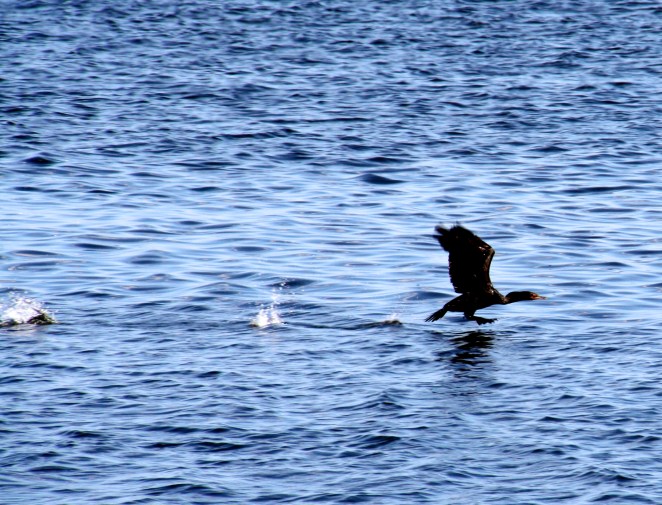
Just by chance, I caught this cormorant.
“Behind you, quick,” said Clare.
I turned and ‘Click!’

2

Such a miracle:
the first steps of flight
taken over water.
That first step heavy,
the second one lighter,
and the third one
scarcely a paint brush
pocking the waves.

3

The need for Tuesday’s Child
to take flight lies deep within me.
Fleeing from what?
Running towards what?
Who knows?

All I know is that the future
lies to the right of this photo
and the past lies to the left,
and I don’t know
what either might contain.

4

But I do remember the words
of Antonio Machado:

‘Caminante, no hay camino,
sólo hay estela sobre la mar.’
traveler, there is no road,
just a wake across life’s sea.

5

We may not know what lies ahead
but, like a ship at sea,
we leave white water behind us
and that wake tells us
where we have been
and what we have done.

Patience

   ‘Paciencia y barajar,” / Patience and shuffle the cards Miguel de Cervantes wrote, a long time ago, in the early seventeenth century. I think of it as watching and waiting. We must learn to observe, to stand still and watch the world around us. Who knows what lies there, just beneath the surface, waiting for us to find it?

We know our work is lonely and we thrive in the loneliness of the blank page, the blank screen. We stare at the water’s surface and wait and watch and then we shuffle the cards, the keys, the letters on the page, and something emerges. What will it be?

IMG_0233


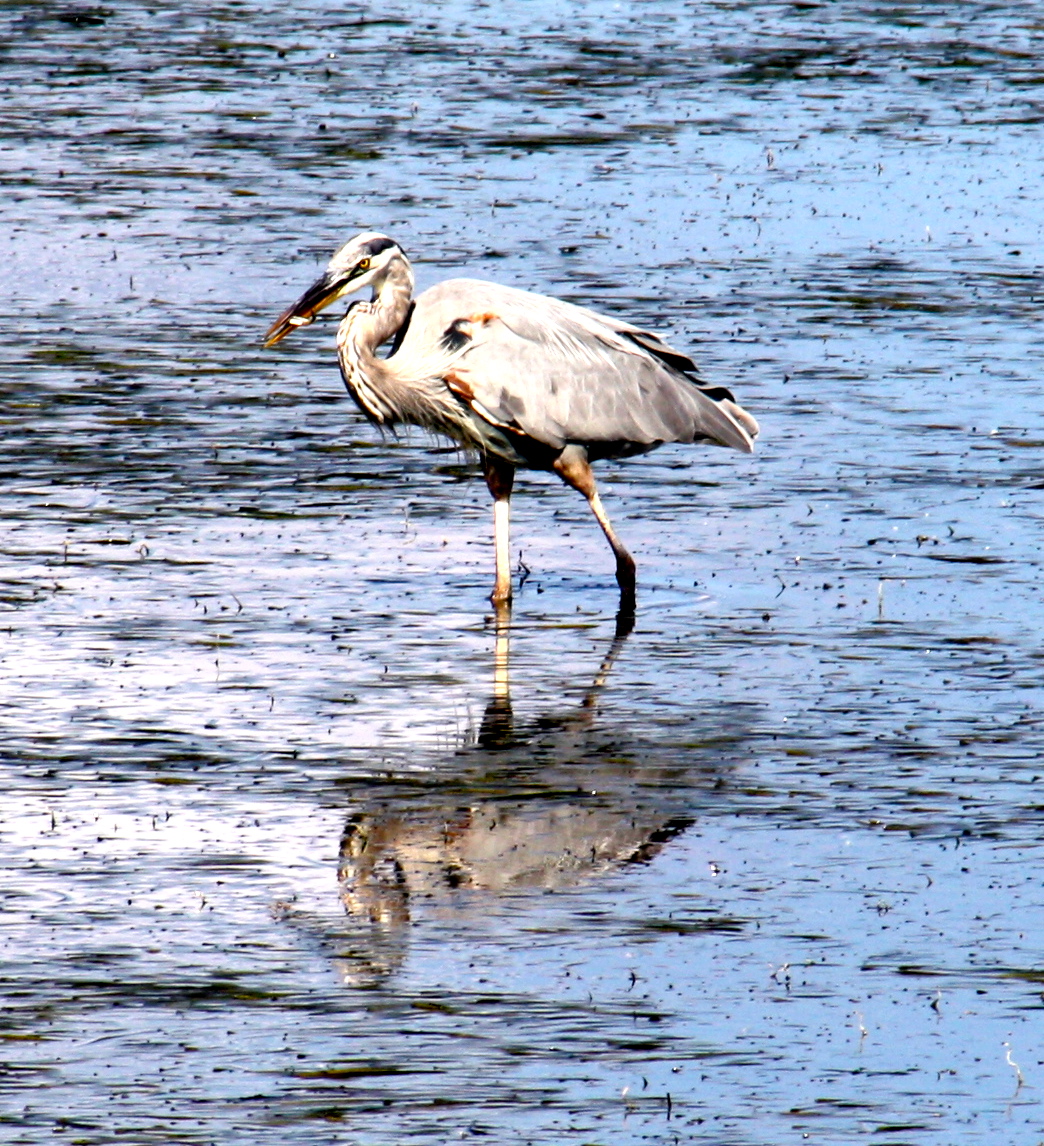
Carpe diem / seize the day: with the moment seized, we have time now to think, to polish, to work at it until it is ready. And yes, there is pride in that amber eye, pride and a sense of satisfaction.
We know our work is never done. We worry at it, work around it, gnaw it as a dog gnaws at a bone. Little children gathered round our grandma’s stove as the cookies cook we ask impatiently “are they ready now?”

Impatience is our enemy. We must wait in silence: wait and watch. Sooner or later that silver flash of inspiration will light up whatever page we happen to be decorating.

All About Angels

039.JPG

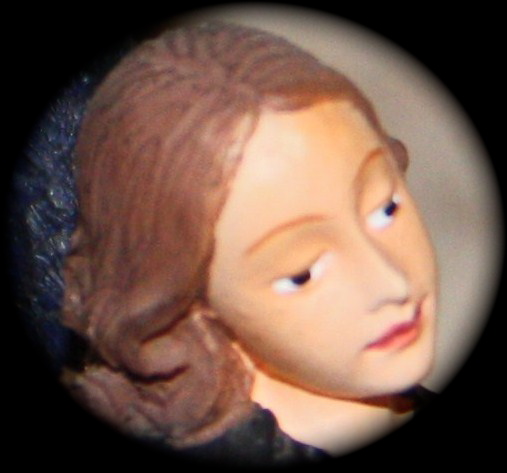
I first saw the Black Angel in Aldebarán’s cultural store in Ávila (2006). She sat there, in the shop window, along with several other angels, and I worshiped her from the distance of the street. Her image was taken from an original painting from Rogier van der Weyden (1399/1400-1464). This was turned into a 3-D image and then converted into the statue I saw in the shop window.

I brought the statue back to Island View, placed it on the shelf above the fireplace, where it still rests, and wrote several poems on the theme of Angels. I gathered them together in a chapbook entitled All About Angels that I self-published in Fredericton in 2009. The chapbook was dedicated to Clare’s great-aunt, D. E. Witcombe who departed this world on October 15, 2008.

All About Angels was also based on a book of a similar title, Sobre los Ángeles, written by Rafael Albertí, one of the poets of Spain’s Generation of 1927. I avoided the ambiguity of the Spanish title — Sobre (in Spanish) can mean Above or Beyond as well as About — by limiting my own title to All About Angels.

All About Angels
Paperback edition

All About Angels
Kindle Edition

For Carl Jung, angels are the messengers sent to inform people of the state of their world. For me, they are also the wild creatures that inhabit the world around me and often take the form of birds and other spiritual creatures. They can be best seen in those moments of solitude when we are most open to the natural world around us. Then, and sometimes only then, we can hear the urgent messages they bring.

Black Angel

You cannot hide
when the black angel comes
and knocks on your door.

“Wait a minute,” you say,
“While I change my clothes
and comb my hair.”

But she is there before you,
in the clothes closet,
pulling your arm.
You move to the bathroom
to brush your teeth.

“Now,” says the angel.
Your eyes mist over.

You know you are there,
but you can no longer see
your reflection in the mirror.

Angel Choir

(on seeing the Northern Lights at Ste. Luce-sur-mer)

listen to the choristers with their red and green voices
light’s counterpoint flowering across this unexpected son et lumière
we tremble with the sky fire’s crackle and roar

once upon another time twinned in our heavenly prisons
we surely flew to those great heights and hovered in wonderment
now our earthbound feet are rooted to the concrete
if only our hearts could sprout new wings and soar upwards together

the moon’s phosphorescent wake swims shimmering before us
the lighthouse’s fingers tingle up and down our spines
our bodies flow fire and blood till we crave light and yet more light
yet when the lights go out we are left in darkness

close up.jpg

 Croaking Angels

Their tunes are one note symphonies,
croaks of joy
moving their fellows to ecstasy,
exhorting them to share
the splendors of ditch life,
in a springtime bonding
that will loft them to the skies.

There’s an ancient magic in this calling:
love and laughter,
moonlight and water,
all the joyous things
one links with spring.

Moonlight swings its cheerful love lamp.
New leaves and buds are also known to sing.

In a country garden …

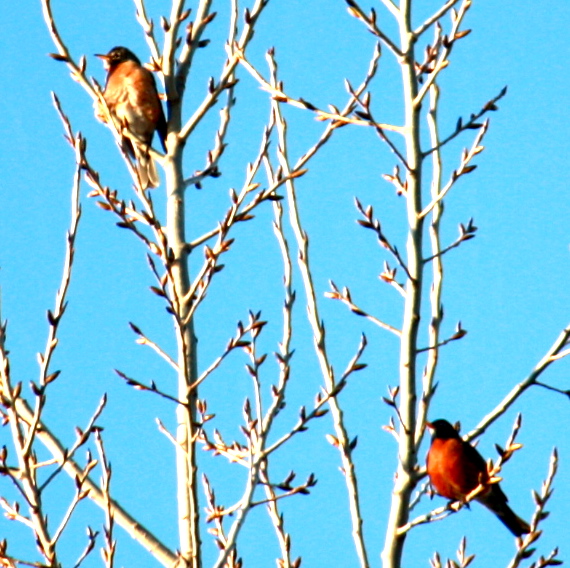
Each day sees another spark of brightness in the grass, in the trees, or at the feeder. Where, I wonder, have they been? In whose back yard did they winter?  Some, stray thoughts perched for a moment on a branch in the mind, fluttered last fall in the falling snow and melted away. Others, I know, stayed here with us and we fed them throughout the short cold days.

IMG_0017.jpg

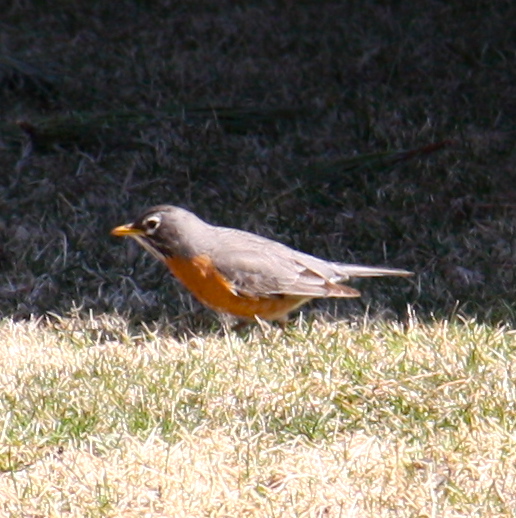
The robins, even though they are not my English robins, are my favorites, perhaps because they remind me of my childhood home. Less bold than those of my youth, they fly when we draw near and do not sit on the spade handle watching for worms as we turn the early earth and shake the garden back to life.

IMG_0033.jpg

Sentry duty: and they march up and down the lawn pacing their quicksteps, then standing to attention. They strut their stuff, turn their heads, listen, and look like guardsmen on parade outside our pastoral palace.

IMG_0014.JPG

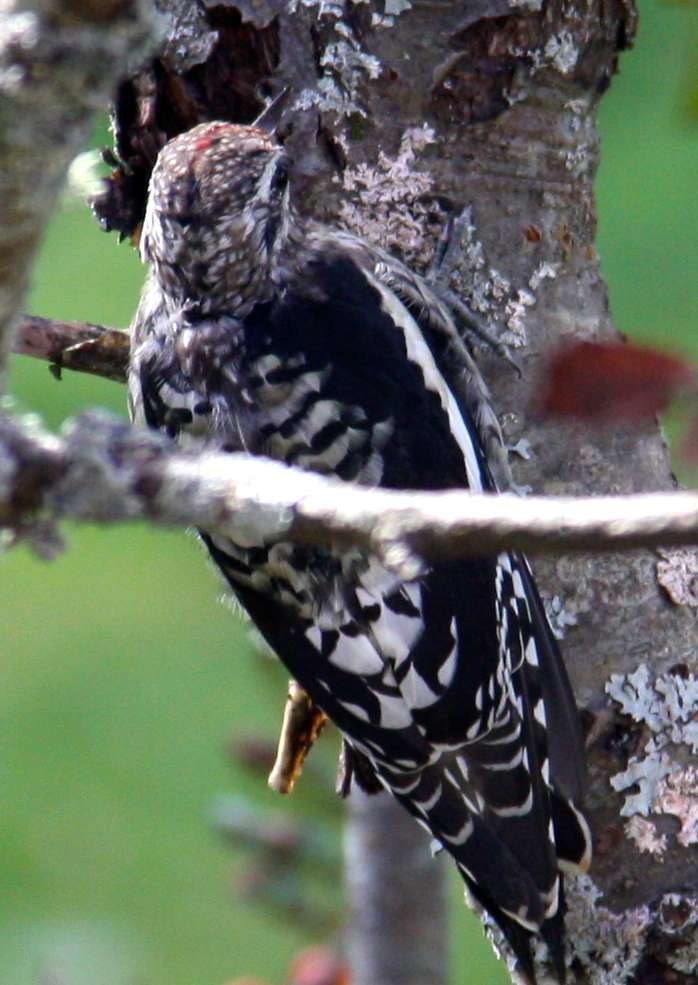
With the guardsmen come the workmen, the busy birds, the ones who tap on the trees in search of insects or to set the juices running. Shy, they turn away and hide behind the trunk. But if we are quick, we can catch them, heads turned, when absorbed in their work, they forget to fear us.

IMG_0063.JPG

And the song-birds, shiest of all, often heard, their melodies, but their quicksilver spirits seldom seen except by chance and the artist’s luck and speed of finger. But listen: other songs throb their melodies on the wind and most days now we wake to music. A calling in the trees in the evening’s glow also tells us the world has turned once more and the birds, the glorious birds, the dwindling flocks of endangered birds, less this year than last year or the year before, are back. We must welcome them and cheer them while they are still with us.  Neither we nor they may  endure much more.

Sometimes

IMG_0130

Sometimes the road seems uphill all the way. Lungs burn. Breath comes hot and hard and chunky in the throat. Legs hang heavy, muscles will not obey the owner’s instructions.

Consult the operating manual: “Take a break,” it says. “Rest now. Don’t push too hard.” But to rest is to give in, to come to an abrupt halt, or to drift backwards down the hill.

What stubborn streak is painted so deep in us that it shouts ‘never surrender’ when our most urgent need seems to be to throw in the towel? Is it the urge to get to the top, to see the lower lands stretched out below us? Or is it the mantra of fight the good fight?

Many things can drive us on: a need, a desire, a whim, an urge, or merely a refusal to stop fighting. Some of us will never give up. We will never lie down and curl up in a corner, a dead leaf to be blown hither and thither by the cold night wind.

Look carefully: there are no drugs, no needles, in the biker’s uniform. There is no small accessory motor hidden in the back wheel to help when times get hard.

The mouth is open, the eyes are set on the target, the legs still move, the sun still shines, and three smiling heart-shaped faces cheer the cyclist on.

Who can they be, these three angels at the road side, who can they be? Yet they are there and we are here and the bike is there and the hill is there and sometimes … yes, sometimes, the road IS uphill all the way.

But we keep the pedals turning and we don’t get off our bikes … and that’s life.