Railway Bridge

Railway Bridge

walking away
from Swansea sands

me crossing the bridge
shaking sand
from my sandals

a rare event
Swansea Bay Station
Cline Valley Line
a train at the platform

the station master
blows his whistle
doors close
slowly the train goes
under the bridge

I stand in a cloud
wrapped up
half-blinded
in huge puffs of smoke

filling my lungs
assaulting nostrils and eyes
with the sting of cinders
the stench of burning coal

sting and stench
and that short sharp whistle

they linger and cling
unforgettable
in my mind’s dark corners

Comment:

Me and my writing buddy also discussed linked poems. This is simply a chain in which each poem links back to another one. Yesterday, we wrote about Swansea Sands and how the poem was generated. Today we can look at the linking between that poem and this one, the old railway bridge that crossed the railway lines by Swansea Bay Station, and led back into Swansea, a town in those days, and the Civic Centre. Note, now, that each of those names could generate further links, further poems in the chain.

When we think of the great chain of being, we think of how all things are linked. From the Great Western Railway (GWR), to the Mumbles Railway, to the Cline Valley Branch line, and beyond. Each poem a railway station along the way. Main line, branch line, express train, goods train … links everywhere, and each link encapsulated in a memory of one kind or another. How could we not write poetry about such things?

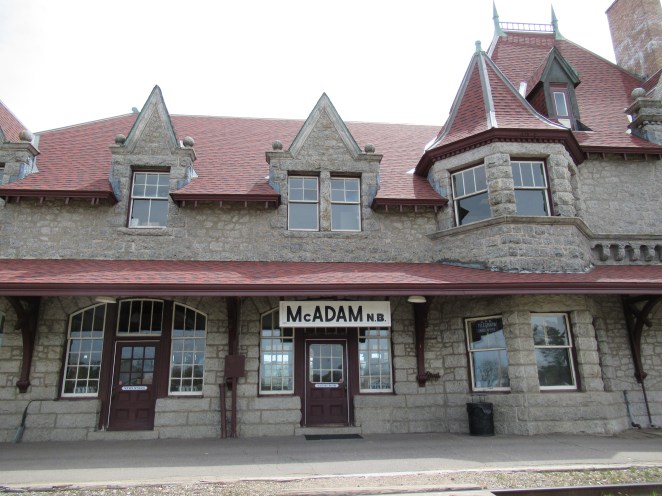
McAdam Railway Station, in New Brunswick, Canada. 60 trains a day used to stop here. Now the station is a landmark, a memory, a place where ghost trains run and shadowy figures run wild up and down the grass grown tracks where the sleepers sleep, their dreams undisturbed. I could write a book of poems about this station. Wait a second, I already have and Geoff Slater, my painting buddy, decorated it for me with his wonderful paintings and drawings. What more can I say? Each link in the chain, a potential poem. Each stop along the way, material enough for a painting, a poem, or a book.

Swansea Sands

Swansea Sands

walking home
over the railway bridge

sand in my hair
sand in my socks

sand in my sandals
sand like sandpaper
sanding me down

tides rise and fall
sea gulls call
the bay so big
and me so small
as tiny as a tiny
grain of sand

Comment:

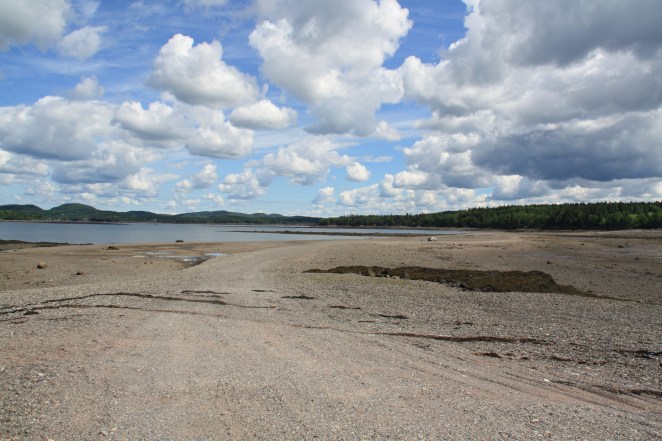
Not Swansea Sands at all, sorry. But a sandy beach all the same, here on the southern shores of New Brunswick, down by St. Andrews. The theme of the poem comes from Blake’s ‘to see the world in a grain of sand’. It might not be Swansea Sands, but there’s a great deal of sand down on the southern shores of NB. I worked on this poem with one of my writing buddies, who visits me regularly. We shared an impromptu creative writing session over the kitchen table in Island View a couple of days ago. Alas, as you probably know, there are no islands in Island View, and there’s not a grain of sea sand in sight. So we improvised.

We started with a central idea – a grain of sand – and from there we talked about how to generate a poem, from scratch so to speak, in three steps.

(1) The first draft.

Write as it comes to you – just write. Just bounce from word to word, line to line, like a supercharged, literate budgie. Take about 3-4 minutes for this. Then read it aloud to partner / writing buddy, checking on sound and rhythm.

(2) Second draft.

– Eliminate words and ideas that do not fit the central image. Remove anything loose or unclear. Then read it aloud to partner / writing buddy, concentrating on sound and rhythm.

(3) Third draft.

Polish and finalize the poem. Sometimes a fourth draft is needed, but in this case we settled with the third draft. At this stage, pay careful attention to the poem’s ending (closure is always difficult). Reorder, add, and polish, as necessary. Then read it aloud to partner / writing buddy, checking on sound and rhythm.

From the initial image – to see the world in a grain of sand – I generated two poems. My partner / writing buddy generated a short story that would fit into their current sequence of childhood memories. Other ideas for further poems also came through.

Conclusions;

  1. Make your poems alive, make them personal, make them an experience! 
  2. Remember rhythm. And never forget the necessity of a live reading or series of readings in which you can feel and hear the words.
  3. An alterative to a live reading with a partner / writing buddy is to record your own voice. The recordings can then be sent to friends who can comment on them.

Pot Holes

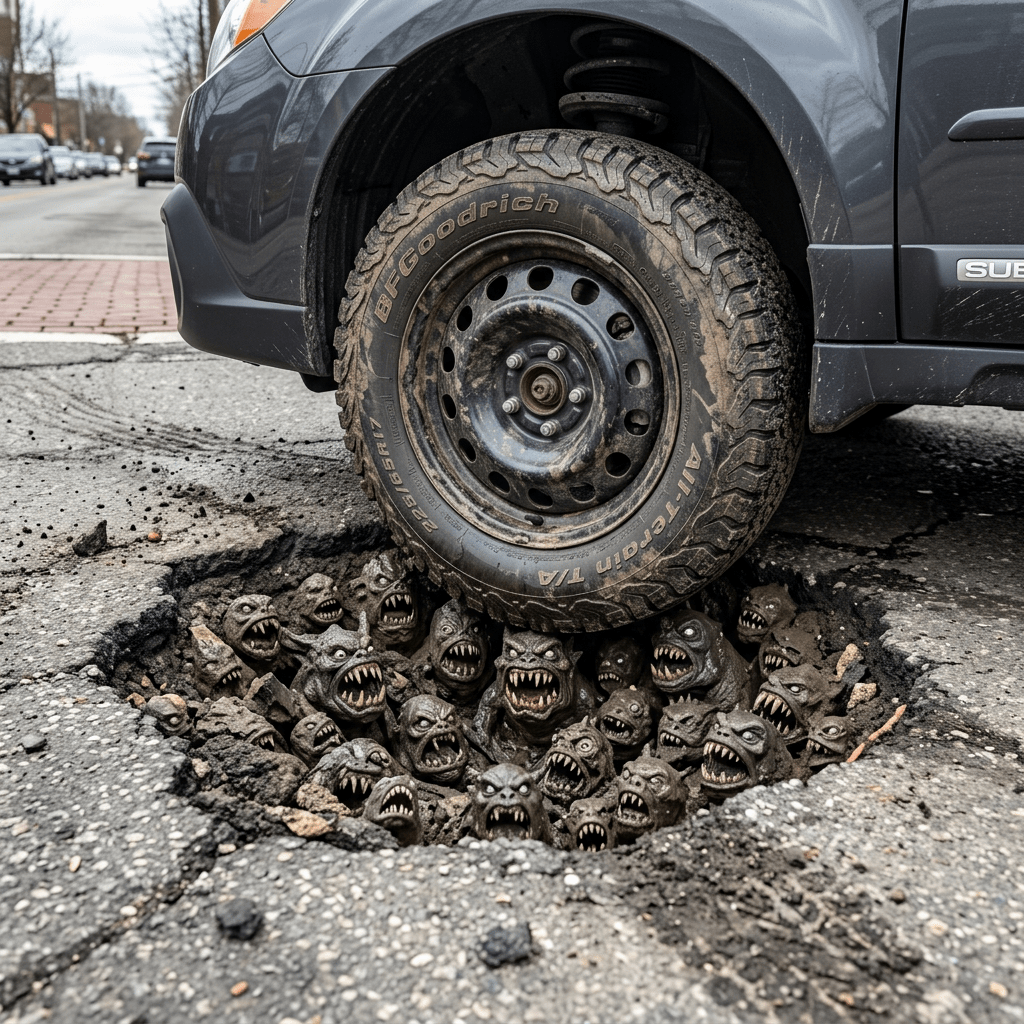
Car tire over a pothole containing small monster figurines with aggressive faces
A car tire hovers above a pothole filled with snarling monster sculptures.

Big Sister
replaced Big Brother
and generously
generated this image

“Watch out for that pot hole!”
“Which one?”
Snap, crackle, pop!
“That one.”

Pot Holes

Jack Pine Sonnet

Welcome to Pot Hole time.
It’s all yours and it’s all mine.
Mine, possession, not land mine,
though hitting one at speed
will rattle your teeth,
shake your spine, and leave you
feeling far from divine.

Pot Holes, Pot Holes, everywhere,
filled with water you can’t drink.
They hide the depth of every hole
with waters, dark as ink.

Spring’s freeze and thaw
breed ever more Pot Holes
than we had before. I think at night
they stay out late,
to fornicate, and celebrate.

A low spring sun in the driver’s eyes
makes shadows shift and slide.

A mazy life full of chance
drawing a labyrinthine thread
through a maze of Pot Holes
that we dread, the morning sun
blinding our eyes so we cannot see
the Pot Holes’ size
nor how they move and dance.

Big Sister
replaced Big Brother
and generously
generated this image

Comment:

This is wonderful fun. Moo has ceased to be jealous of Big Brother and Big Sister with their attempts to read my mind. And what a great job they do of it. All in the cause of the Pot Hole Dance Season. Have you seen the Pot Holes dance? You know, one minute there isn’t one and about and then a split second later – CLANK! The dreaded tire pressure light comes on. You turn it off. It comes back on. You turn it off. It comes back on.

You stop the car at the roadside, turn off the engine, get out, and check the tires. They look all right. You kick them or tap them with a stick. They all sound all right and they all sound the same. You get back into the car. You start the engine. All the lights come on. All the lights go off. Except one – the dreaded tire pressure light. Well, I can swear pretty well in about five languages. I turn the tire light off. Wonder of wonders, it goes away.

I am so happy. I turn on the radio. I clap my hands. And CLANK! I drive into another Pot Hole that appeared from nowhere and walked or danced or shimmied or slithered into the road right in front of your car. You guessed it – and the tire pressure light comes on!

Waist Land

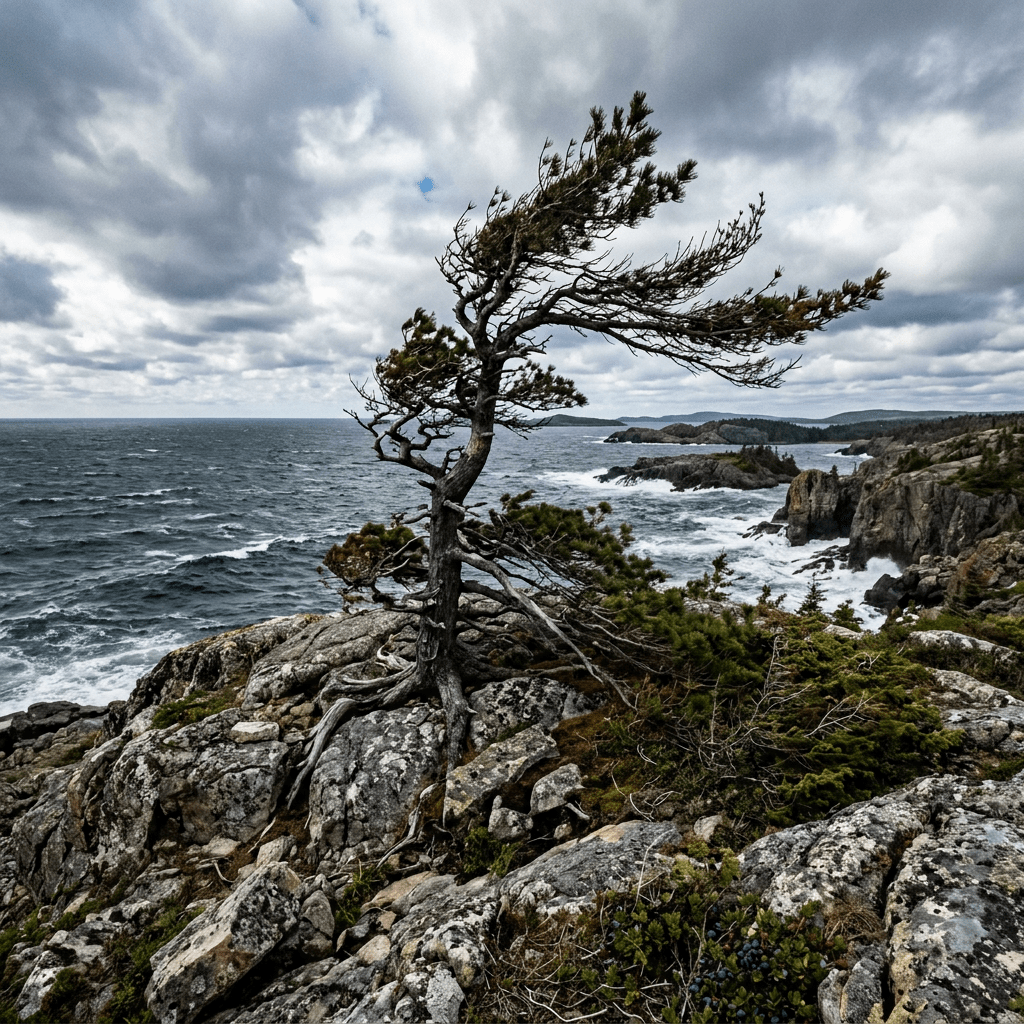
Wind-sculpted tree on rocky coastline with turbulent ocean and cloudy sky
A lone, wind-shaped tree stands on rugged coastal rocks under a cloudy sky

Image generated
not by Big Brother
but by Little Brother
who left the Frying Squad
to become a painter
and mind-reader

Waist Land

Jack Pine Sonnet

living in a waste land
surrounded by books
he writes in his journal
things false and true
in memory of the old days
when the world seemed so new

a life built on sand
slips through his fingers
wouldn’t it be grand
if the sand stays and lingers
refusing to pass through
the hour glass’ waist
so time stops to flow

then he could say no
leave me alone
there’s more sand to fall
I don’t want to go

Comment:

It’s a bit like a cliff-hanger, isn’t it? Hanging on by our fingertips and not daring to look at the depths down below. We know they are there, but look, there’s a tiny fossil in the fissure in the rock, so much older than us, we’ve got a long time to go to catch that up. And remember – 80 is not old, if you are a stone!

Treading air – great fun. Not as good as treading warm water in the local YMCA. Just a lovely sense of balance, floating there in the warmth, no weight on arthritic joints, and the world around us amniotic, as it was in the beginning. Ah, those original waters, we have all swum in them, the rich and the poor, the black and the white, and all shades in between. Even King Charles and the late Queen. And remember, they may speak of blue bloods, but all blood is red -and, if you cut us, do we not bleed.

Speaking of bleeding – blood-thinners – my favorite doctor’s latest joke. I cut my arm the other night, getting into bed. Didn’t even notice. Pillows and sheets soaked in blood when I woke up and my scalloped arm, stuck to the sheet, opened itself up and started to bleed again. Feels like seventeenth century Spain, the wounds of the dead man re-open and start to bleed when the assassin appears before him. Certain truth. Obviously 100% guilty.

And they tell me that in South Wales people are adding cooking oil to gasoline to make the petrol go further. Scotland Yard sent the Flying Squad to South Wales to sniff people’s exhaust pipes to see if they were cheating the tax man. I asked my friend – “Is this true?” “Ah, yes,” he said in his lovely Welsh lilt, “and we call them the Frying Squad!”

Rain

Rain

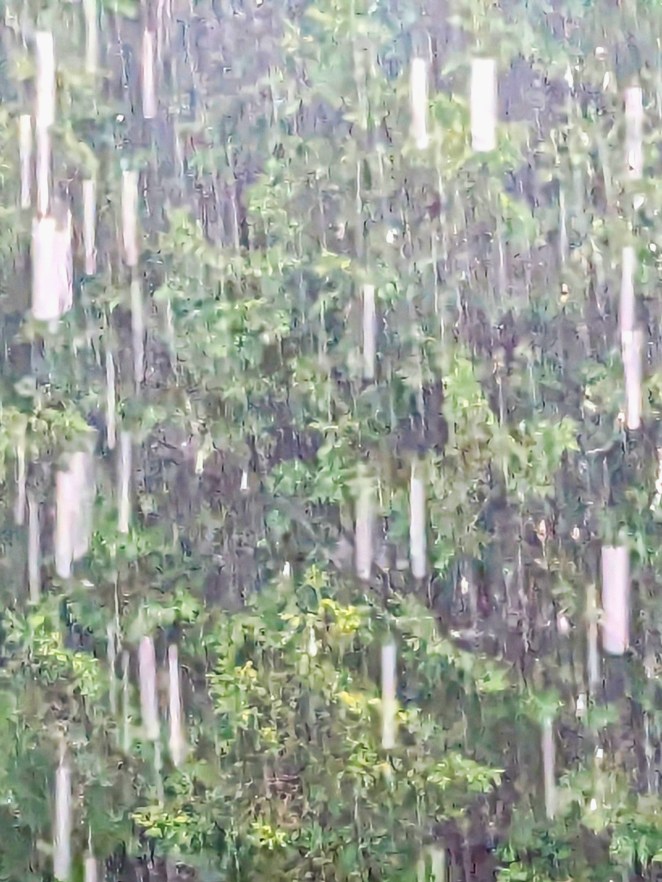
Rain walks thick lines
down the window pane.
The waters below the dam
churn like white shirts
tumbled up and down
in nature’s laundromat.

The radio calls for rain,
more rain, four inches,
they say,
in the next two days.

The moose have already
migrated to higher,
drier ground.
They stand on the highway,
head to head with cars,
stubborn and steaming
in the never-ending rain.

Comment:

It’s raining, it’s pouring, the old man is snoring.
He bumped his head on the top of the bed
and won’t get up until morning.

A Question for AI

A Question for AI

It is hard
to shed the skin
the skin once shed
can never
be worn again

Yesterday
is gone
today
slips slowly by

Tomorrow
always comes
but never arrives

Who and what am I
this child
who thrives on sorrow
and on a sadness

that grinds
those bones to dust
and soft silk ash

Tell me
if you know
what will arrive
for this child
tomorrow
if and when
it comes

Comment:

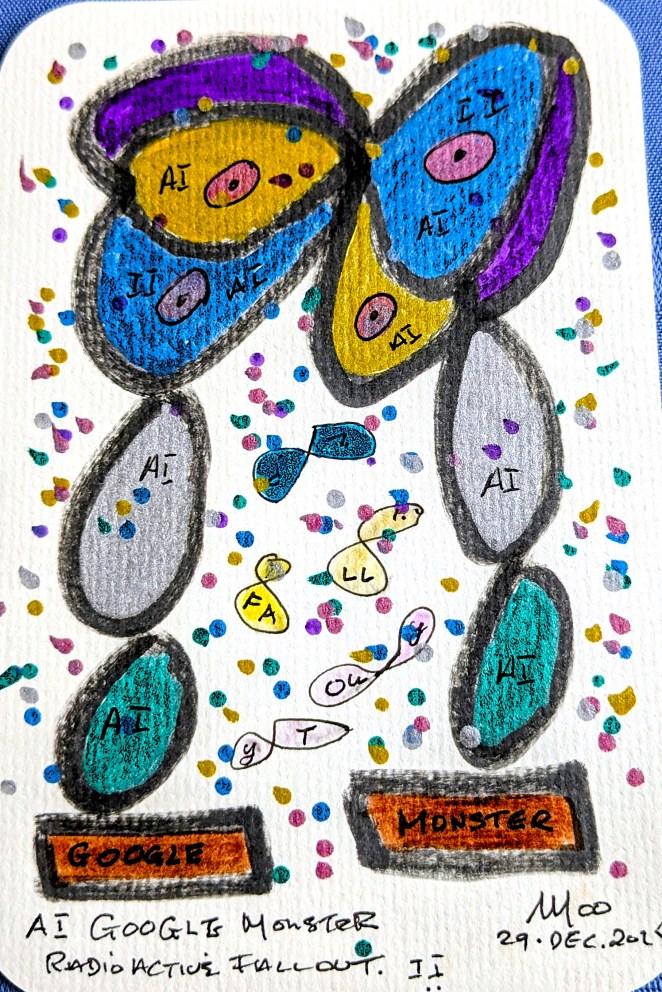
Moo is so happy when I don’t allow Ryan to persuade me to invite AI to paint my thoughts in pictures. “AI?” said Moo. “Have I got a painting for you!” And he showed me the AI Google Monster with its radio active fallout. “Nice,” I said. “I like the look and feel of that.” It looks like a two-eyed cricket bowling machine. It bowls Googlies out of the right eye and Chinamen out of the left one. Alas, we are no longer allowed to use the term Chinaman as it has been labelled ‘disrespectful’.

But what is a Googly? A Googly is an off-break bowled by a right-handed bowler with a leg break action. And a Chinaman is the reverse – a leg break delivered by a left arm bowler with an off-break action. Complicated? You bet it is. But AI and Google have demystified the mysteries of right and left arm wrist spin. Or have they?

It is one thing to know what they are – definition – but another to spot them as they leave the bowler’s hand, and yet another to play them as they whir through the air, then pitch and viciously spin. Of course, just to keep you up to date with Dennis Compton’s Three Card Trick, a top spinner, bowled with exactly the same action will come straight on and not turn at all.

It is hard to spot the spin when the ball is leaving the bowler’s hand, and the spin, once spun, can never be spun again! I am glad we sorted all that out. Oh sweet mysteries of the cricketer’s life. I once asked a top batsman how he spotted the difference between a leg- break, a googly and a top spinner. “I watch which way the stitches are moving when the ball leaves the bowler’s hand.” You need really good eye sight to do that. The Eggs Box, sorry, that’s the Two Ronnies, the X-Box will never do that for you.

But who is Dennis Compton and what is his three card trick? Good question. Dennis Compton, aka The Brylcream Boy, was one of England’s best ever batsman. You can look him up in the 1947 Wisden. Genuine paper pages, crackling as you turn them, much nicer than the metallic voice of AI. Compton was notorious for running out his partners with his three card trick – “Yes! No! Wait!” What do you mean, you don’t understand a word of what I am talking about? You’ve read Jabberwocky, haven’t you? Yes? No? Wait … if you haven’t read it you must do so. Immediately – but not if the slithy toves are gyring and gimbling in the wabe. Go Google it – and when you find it remember to sing “oh frabjous day, calloo, callay” as you chortle in your joy.

May Day

May Day

Trees in bud
sudden their break out
fresh today
a red fuzz here
catkins over there

Fairy lights
in the Mountain Ash
goldfinches
a mountaineer
this downy woodpecker
scaling the heights
a star
on top of the tree

Green the grass
in places
brown in others
from last year’s drought

New Brunswick violets
our provincial flowers
a patchwork of blue

Dark green
the early hollyhock leaves
pushing stubbornly
up and through
to greet the sky

Commentary:

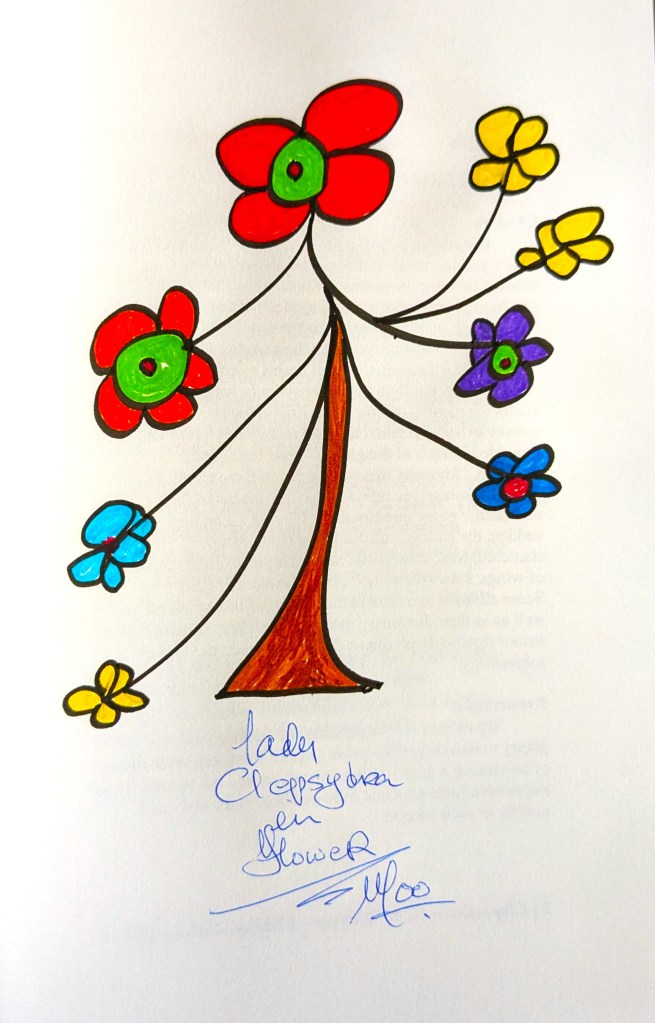
Mysterious indeed it is – to plant a clepsydra and watch it grow. Will it, won’t it? Does it suit the climate zone? Will it flower? Have you ever seen a flowering Clepsydra? Moo has. He draws and paints them all the time. But can he make them grow in my garden? We’ll have to wait to find out. He can certainly paint them.

But why does he call them mysterious? When I printed Clepsydra in my chapbook series, I mis-counted the pages and ended up with one blank page. “Mine!” said Moo. And he grabbed his colored pens and pencils and set to work drawing Clepsydras. That was his Mysterious Clepsydra Plant. Down below he has painted a Lady Clepsydra in Flower. Will the ones he says he planted in my garden be yellow, red, or multi-colored? Who knows? I most certainly don’t. And I am pretty sure Moo doesn’t have a clue about the plant life he uses to brighten my pages and plant in my flower beds.

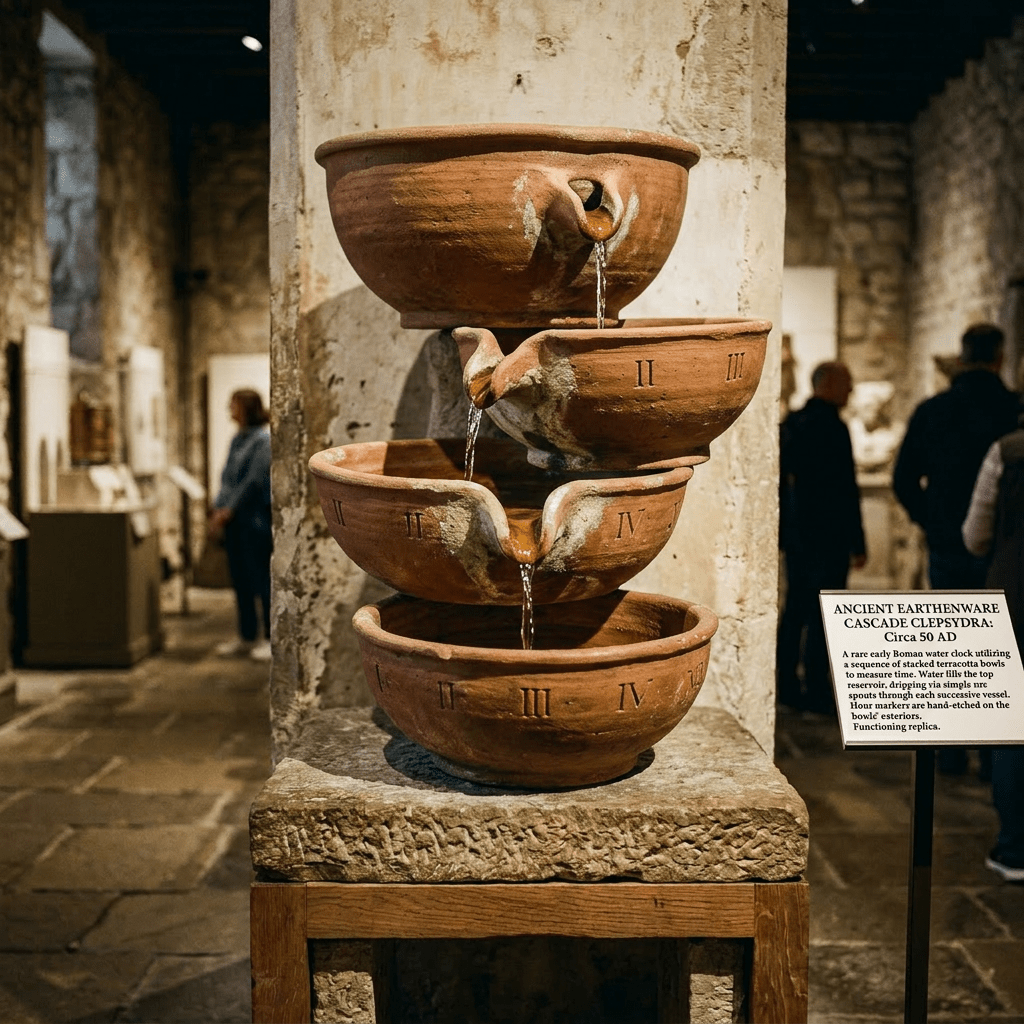
Do you know what a Clepsydra is? Let’s ask Big Brother to draw us one. Hey, Big Bro – paint us a Clepsydra. A voice emerges from nowhere – “Say pretty please and I’ll think about it.” “Pretty please.” The metalic voice vanishes and a sign appears – Thinking!

Replica of a Roman water clock with ornate brass components and a glass water container
A functioning replica of a Roman water clock circa 50 AD / CE – a clepsydra – displayed in a museum

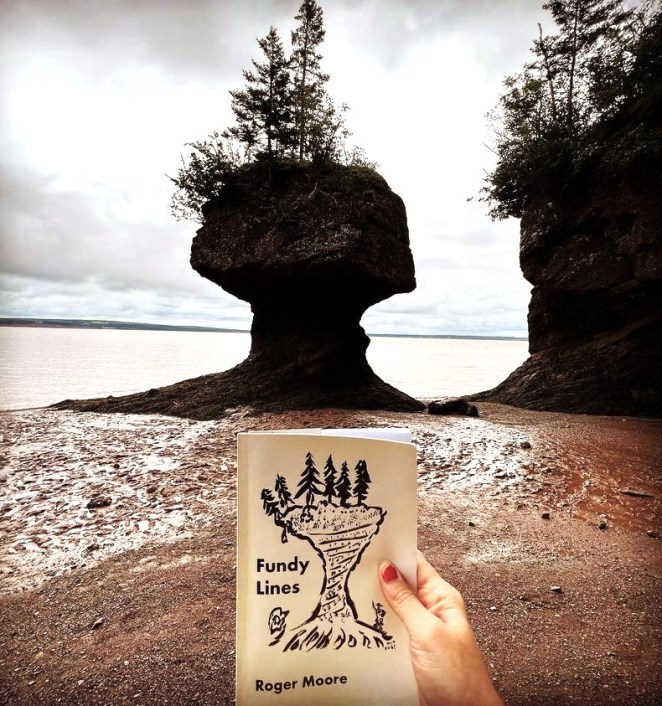
CE – Common Error – well I never. I guess poor Mistaken Moo made a common error and thought a Clepsydra was a flower. Time flows like a flowers, but it never flows back. If you see Moo, don’t tell him about this. He won’t be happy to know he can’t tell a flower from a set of flower pots. And what the heck would he paint if he went to Flower Pot Rocks? Oh no!!!! Well I never did. I blame Moo entirely. Shame on Moo! He’s fooled me again!

Red Cloud of Reality

Red Cloud of Reality

Far from the city lights
this night sky
a black umbrella
held above my head

the brolly’s fabric
pierced by pin-pricks
silent stars careless
in their indifference

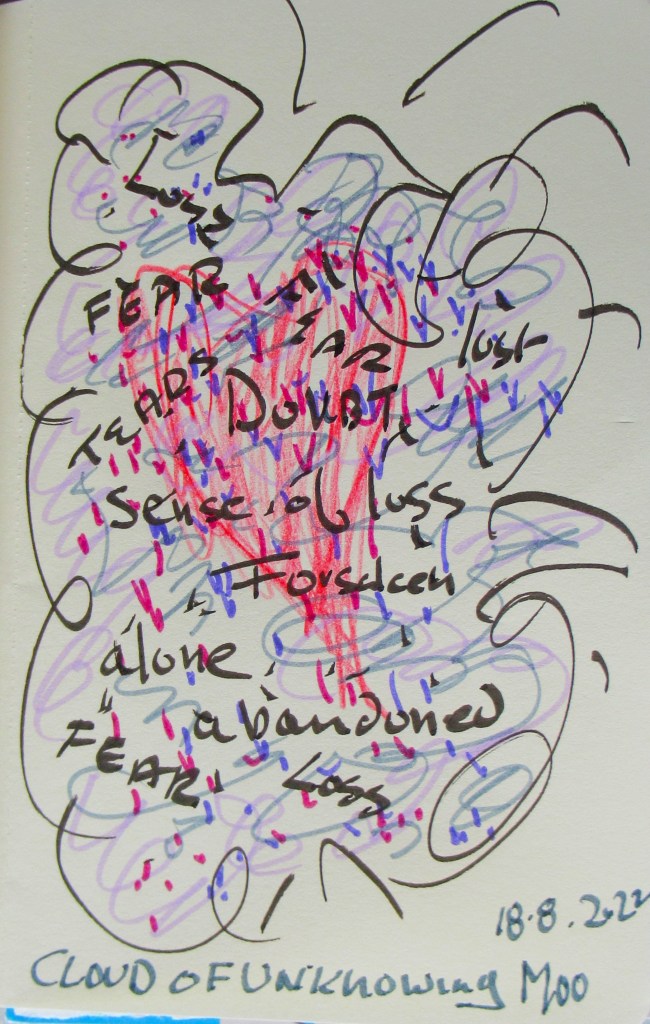
las night a cloud of unknowing
descended – wrapped itself
blanket-like around my house
brought warmth and comfort

today I sit alone and lost
head in hand – searching for sustenance
seeking the freedom to sky walk
to turn schemes and dreams into facts

Person holding a glowing umbrella overlooking a neon cyberpunk cityscape at night
A figure under a starry sky, holding an illuminated umbrella.

Big Brother painted this.
He’s watching you.

Comments:

Me and Moo back sharing poems and paintings, thoughts expressed in words and paint. How nice to be together again. Never mind the weather, as long as we’re together. Careful now, The Red Cloud of Reality is not part of a Wild West Show. There are no elephants and kangaroos in this part of the world. How cryptic can we be? I don’t know. Look carefully at Moo’s painting. Can you see an elephant or a kangaroo? Not unless they are fossilized, methinks. Fossilized before our eyes. Oh what fun it is to ride on a one engine sky red slay along with the Scarlet Pimpernel and the Lone Ranger. But how can he be a Lone Ranger if he’s accompanied? Don’t ask me, ask Tonto. Jay’s the one who knows everything. He even knows who that masked man is. I know, I know – he’s a survive of Covid, very wise, because he always wore a mask. And what did you do during Covid? Well, I didn’t shine bright lights inside my system. I didn’t drink Drano – a cure all for everything, if you’re a drain pipe. Me? A drain pipe? I don’t even wear drainpipe trousers. Oh those were that days. No parking meters outside our doors to greet us! Fings aint what they used to be. Figs, neither. And that’s why Syrup of Figs is all the rage Even better than Cod Liver Oil. I bet you don’t remember Scott’s Emulsion? Indeed I do. I also remember Eno’s Fruit Salts. Made you really happy they did as you rowed merrily, merrily down the stream of consciousness into the Land of Nod. You mean Toytown – the land of Noddy, Big Ears, and Mr. Plod. Big ears? See – an African Elephant. I knew there was one in there somewhere. And here he comes, blowing his own trumpet. How does an elephant commit suicide? I won’t tell you. I refuse to give King’s Evidence, even if you do put me in the soup – Cream of Kangaroo Court, of course. I bet you didn’t see that one coming. Hop along, now. Here comes Cassidy les Calanques and he don’t wait for nobo-doddy even if his name’s really Ken. I don’t get it. I didn’t get it either. That’s how I stayed clear of Covid. Ha! Try translating that little piece from Welsh into Basque. You’ll end up in a basket, cased like all those other little boiled egos, with their little legos. Never mind – “il faut imaginer Moo heureux!” / We must believe that Moo is happy.

Translation Theory

Ryan and Don Roger

15

Translation Theory
(revised 3 May 2026)

            In DQI, IX, Cervantes, in his role of first-person narrator, goes to the Alcana in Toledo, where he discovers an Arabic manuscript containing the adventures of Don Quixote. The first eight chapters of our novel contain no mention of a translator. Suddenly one appears. The narrator buys the manuscript, finds a translator, takes the translator to his house, and in six weeks receives a translation, from Arabic into Spanish, of the novel. Question – does the translation contain Chapters 1-8, already written by Cervantes, or not? Alas, we do not know. Is the translation accurate? We do not know that either, for the original Arabic manuscript is a literary illusion and does not exist.

            However, we do know that Cervantes writes that ‘reading a translation is like looking at the reverse side of a tapestry’. Speaking of the Italian poet, Boiardo, the priest, in DQI, 6, says “If I find him here speaking in any language but his own I shall show him no respect. But if he speaks his own tongue, I will wear him next to my heart.” The priest continues, “That is what happens with all authors who translate poetry into other languages. However much care they take, and however much skill they show, they can never make their translations as good as the original.”

            Of course, with no original for the Quixote, there can be no translation theory. So, let us try to construct one. In the course of my own work, I have studied various translations of Quevedo’s poem Miré los muros de la patria mía. I will use them to see how translations can function, and what happens when we look at the reverse side of the tapestry. First, Quevedo’s poem in the original Spanish. Then a direct, line by line translation of it, for those who do not read Spanish.

Miré los muros de la patria mía,
si un tiempo fuertes, ya desmoronados,
de la carrera de la edad cansados,
por quien caduca ya su valentía.

Salíme al campo, vi que el sol bebía
los arroyos del yelo desatados,
y del monte quejosos los ganados,
que con sus sombras hurtó su luz al día.

Entré en mi casa; vi que, amancillada,
de anciana habitación era despojos;
mi báculo más corvo y menos fuerte;

vencida de la edad sentí mi espada.
Y no hallé cosa en que poner los ojos
que no fuese recuerdo de la muerte.

            I looked at the walls of my fatherland, (line 1) if once strong, now crumbling, (line 2) from the passing of age tired, (line 3) which wears out their bravery. (line 4) I went out to the field, saw that the sun was drinking (line 5) the streams from the ice untied, (line 6) and of the hill complaining the herds, (line 7) whose shadows stole the light of day. (line 8) I entered my house; I saw that, stained, (line 9) of an ancient habitation it was the spoils; (line 10) my cane more curved and less strong; (line 11) conquered by age I sensed my sword. (line 12) And I didn’t find a thing on which to turn my eyes (line 13) that was not a reminder of death. (line 14).

            This very literal translation, with all its inaccuracies and its inability to express the hidden cultural depths of the original, is totally unpoetic and inadequate, compared to the genius of the original version. Other prose translations have been offered by J. M. Cohen and Elías Rivers, and they are much more accurate – and much better (!), than mine.

            Brave poetic translations, also at times somewhat distant from the original, have been published by Robert Lowell, David Gitlitz, and Griswald Morley / Charles Cobb revising the version of John Masefield. Alas, I do not have permission to replicate their versions. However, I called the translations ‘inadequate’, but they aren’t really they are just the best we can do. Robert Lowell, himself an outstanding poet, gave us much more than a translation. He gave us what I like to think of as a recreation, a new poem based upon the old original. Translations and re-creations, two very different kettles of fish! I offer you here two of my own efforts at recreating the poem!

1

I looked at the defenses of my native land:
empty silos, bombs and rockets melted down.
“Put your faith,” the TV said, “in diplomacy,
not in the metal walls of flying ships.” I went

outside. Cattle were lowing against the falling
temperature, tails to the wind. Steam
rose from their flanks, then was scattered
like an overnight dream of ghosts. Inside,

on the sink, a shrivelled tea bag, dried up stains;
my trusty coffee pot, rusty on the stove,
was chipped and raw at the rim. I took

my shot gun in my hand. Its crooked barrels
served me as a walking-stick. As I limped
around, my mother’s photo spoke to me of death.

2
I’ve got something to say, so here’s what I’ll do
I’ll write it out in rap with a rhythm just for you.
I once saw a town with a very small wall
that’s so fallen down it’s no wall at all.
It’s old and it’s rotten and it cannot last
like a runner on the track who’s run too fast
at the start of the race, and he’s run out of breath,
so he’s hit that wall, and he feels like death.
And there’s cattle lowing and the sun’s in the sky
but it’s winter time, so the sun’s not high,
and the shadows are long, and the wind’s getting cold,
and it’s all about a man who’s growing old.
He looks around his house and all he sees
are dead people’s faces and living memories.
He’s trapped on the ground floor, can’t climb stairs,
everything he touches he’ll leave to his heirs.
There’s a pain in his side, and he can’t catch his breath,
and all that he sees, reminds him of death!

            A rap sonnet (14 lines) containing nine pairs of rhymed couplets (18 lines)? The good Don Francisco de Quevedo will be turning in his grave and his still-warm ashes will once again be burning with love for Lisi and the joy of being alive, in one form or another, in spite of the River Styx, which the flame of his love could swim and not be lost forever.

            So, when looking at translation theory, what can we set down? First, it is very difficult to capture the full cultural meaning of the original because each word has an associative field that differs in each language. The associative field is the word itself, with all its secondary meanings and concepts. Mi espada / my sword is an excellent example. Quevedo, in spite of his infirmities, was a master swordsman. His sword remained unconquered, save by age itself. We no longer walk around with swords sheathed at our sides. The meaning, therefore, in all its sadness and profundity, cannot be captured by our translation skills. The words just do not have the weight.

            The grammatical structures, inversion of words, for example, cannot easily be reproduced in English translation.  Line 3 – from the passing of age tired – just doesn’t sound right. And yet, it is curiously accurate – but not English. Oh dear. Line 6 – the streams from the ice untied – Line 7 – of the hill complaining the herds – Line 10 – of an ancient habitation it was the spoils – no, sorry, these inversions just do not function in English.

            In addition, the rhythm and the syllable count of each line of the original is lost in translation. Whatever you say about it, the rhythm of my rap sonnet emphasizes the importance of beat and tempo. Great fun to read aloud, and when reading it to an audience, watch their faces and then their feet. I have actually seen some listeners tap-dancing during my reading! And the scowls of those who cannot believe the impertinence of a translator who translates into rap music the classical lines of a poetic genius. Finally, the rhyme scheme will almost always defeat the would-be translator who approaches it as a target, while never quite mastering the reproductive technique, other than approximation. The structure of Quevedo’s original rhyme scheme is 14 hendecasyllabic (eleven syllable) lines rhyming abba / abba / cde / cde.  This is all very difficult to reproduce in English with its eternal iambic pentameter. Therefore, we must be satisfied, like it or not, with the reverse side of the tapestry, as Cervantes calls it.
Tales Within A Tale

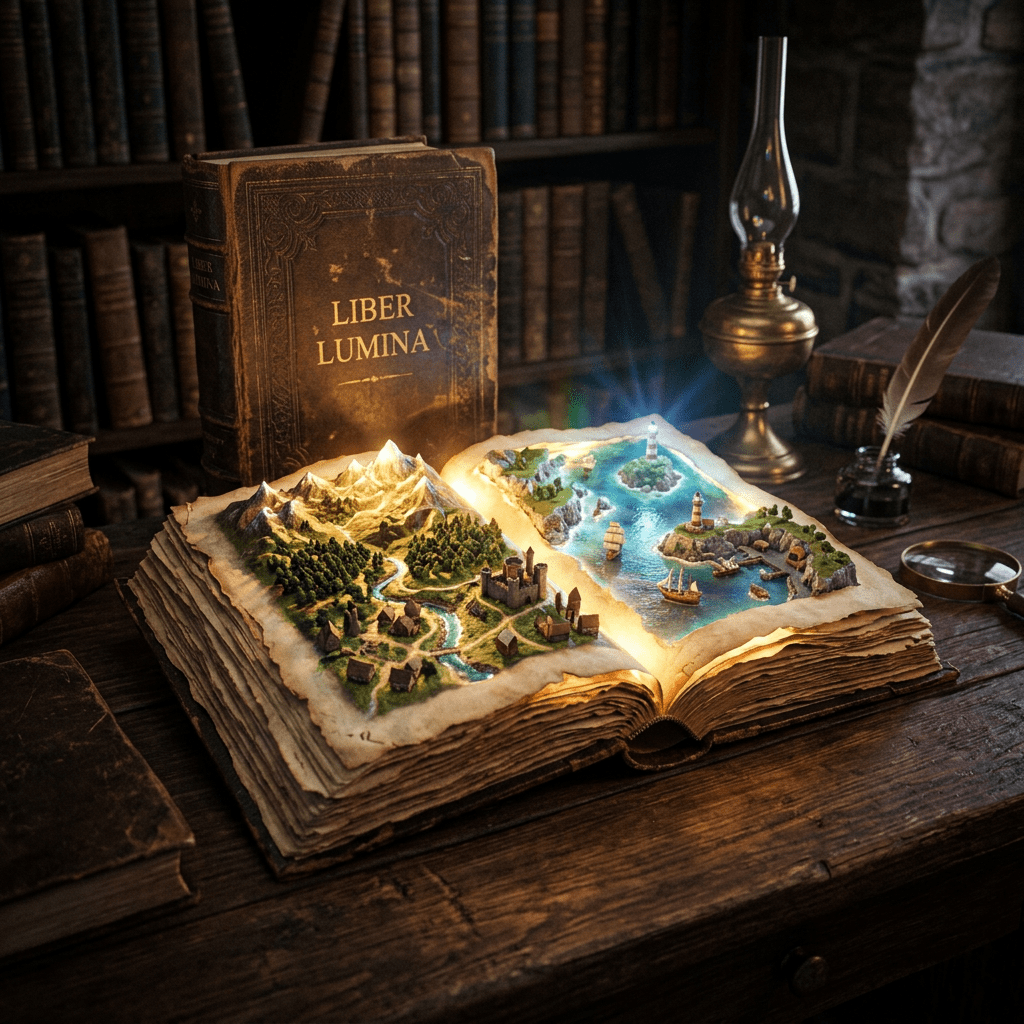
Open book with glowing three-dimensional fantasy map showing mountains, forest, castles, and sea with ships and lighthouses.
A magical book opens to reveal a glowing 3D map with mountains and sea landscapes.

Image generated by AI

Ryan and Don Roger

14

Tales within a Tale

            Don Quixote, the novel, is a tale that tells the story of Don Quixote and his adventures. While the adventures of Don Quixote and Sancho Panza, and their delightful dialogs are the essence of the story, other stories abound. These ‘other stories’ are known, in academia, as the intercalated novels. They are tales told of and by other characters within the main history of the adventures of the ingenious hidalgo. While the characters within some of these intercalated novels mix at one level or another into the story of Don Quixote, some of them do not.

            The Tale of Foolish Curiosity, DQI, XXXIII / 33 -XXXV / 35, has very little to do with the story of Don Quixote, other than the fact that our knight is present in the inn while the tale is being told. We know that in Italy, Boccaccio’s Decameron, was a key player in the genre of story-telling. Our friends at AI tell us that “the Decameron is a collection of short stories by the 14th-century Italian author Giovanni Boccaccio (1313–1375). The book is structured as a frame story containing 100 tales told by a group of seven young women and three young men. They are sheltering in a secluded villa outside Florence to escape the Black Death. No television, no radio. They amuse themselves by telling stories. The various tales of love in The Decameron range from the erotic to the tragic. Tales of wit, practical jokes, and life lessons also contribute to the mosaic. In addition to its literary value and widespread influence (for example on Chaucer’s The Canterbury Tales, it provides a document of life at the time. It is considered a masterpiece of early Italian prose.”

            What is The Tale of Foolish Curiosity doing in the Quixote?One suggestion is the hinge theory – the tale links thematically to the ideas expressed in the Quixote. We have just met several intercalated novels in which the theme of love plays a major role. The Tale of Foolish Curiosity is a psychological novel, written in the Italianate style favored by Cervantes, that explores the theme of folly in love. A second theory is that The Tale of Foolish Curiosity is there merely for entertainment. A third is that it is there to demonstrate Cervantes’s writing skills. Whichever reason pleases us most, and all can be equally true, we know from DQ2, III /3, that not every reader was happy with the inclusion of this tale in DQI.

            In this chapter, Sampson Carrasco, the Bachelor, tells us that “One of the faults they find in this history … is that the author inserted a novel called The Tale of Foolish Curiosity – not that it is bad or badly told, but because it is out of place and has nothing to do with the story of his worship Don Quixote.” In response, our knight replies “Now I believe that the author of my story is no sage but an idle chatterer.” The Tale of Foolish Curiosity is the only intercalated novel criticized in this fashion. Let us take a brief look at the others.

            The story of Chrysostom and Marcela (DQI, XII, XIII, XIV) involves our knight errant, for the characters in the intercalated novel, interact with Don Quixote, Marcela, in particular. When she wishes to leave the scene, the young men who love her and follow her against her will wish to follow her, but Don Quixote defends her, and prohibits their pursuit of the shepherdess. In similar fashion, the tale of Cardenio and Lucinda is woven into the narrative of Don Quixote’s adventures, Cardenio appearing in DQI, XXIII, XXIV, and again in XXVII. The first meeting between them (DQI, XXII) is justly famous. Two foolish people, the Ragged Knight and the Knight of the Sad Countenance, meet, embrace, and look deeply into each others mad eyes.

            Almost immediately (DQI, XXVIII), Dorothea appears on the scene and starts to tell the tale of her own misfortunes. They are interwoven with the tale of Cardenio and Lucinda, although they are not aware of it. Dorothea learns of the plot to deceive Don Quixote and bring him back to his village and willingly agrees to play the part of a distressed lady in search of a knight errant to rescue her. Don Quixote accedes to her request.  When they spend the night at an inn, first they hear The Tale of Foolish Curiosity and the captive, recently escaped from Algiers, appears and tells his tale (DQII, XXXIX, XL, XLI). Yet more adventures occur at the inn, and several more characters weave their own tales into the tale of Don Quixote.

            Two clear patterns emerge. (1) Tales that are independent in their majority, of the knight’s story. (2) Tales that are interwoven closely with the adventures of Don Quixote and Sancho Panza. This style of events changes in DQII, after the intervention of ten years (1605-1615) during which Cervantes receives and processes feedback from his many readers. As we will see when we get there, Don Quixote and Sancho become the key figures in what will become the first self-referring novel (more about that later), and all the tales told within DQII will be woven into the stories of what will become, thanks to the split narrative, our two adventurers.

            Meanwhile, in 1613, Cervantes published his Novelas ejemplares, a collection of twelve short stories (novellas) that showcase his mastery of narrative beyond Don Quixote. These tales range from realistic depictions of 17th-century Spanish life to idealized, romantic adventures, designed to offer both entertainment and moral instruction. Some critics have speculated that Cervantes might have been thinking of including these novels is an expanded version of Don Quixote. However, if he did have that idea, he certainly abandoned it, given his own criticism of The Tale of Foolish Curiosity. I think, given the quality and expanded dimensions of DQII (1615), we can all be happy that he abandoned that idea!