Railway Bridge
1
walking away
from Swansea sands
me crossing the bridge
shaking sand
from my sandals
a rare event
Swansea Bay Station
Cline Valley Line
a train at the platform
the station master
blows his whistle
doors close
slowly the train goes
under the bridge
I stand in a cloud
wrapped up
half-blinded
in huge puffs of smoke
filling my lungs
assaulting nostrils and eyes
with the sting of cinders
the stench of burning coal
sting and stench
and that short sharp whistle
they linger and cling
unforgettable
in my mind’s dark corner
Railway Bridge
2
walking away
from Swansea sands
me crossing the bridge
shaking sand
from my sandals
a rare event
Swansea Bay Station
Cline Valley Line
a train at the platform
the station master
blows his whistle
doors close
slowly the train goes
under the bridge
I stand in a cloud
wrapped up
half-blinded
in huge puffs of smoke
filling my lungs
assaulting nostrils and eyes
with the sting of cinders
the stench of burning coal
sting and stench
they linger and cling
unforgettable cobwebs
in my mind’s dark corridors
and never forget
that short sharp whistle
Comment 1:
Me and my writing buddy also discussed linked poems. This is simply a chain in which each poem links back to another one. Yesterday, we wrote about Swansea Sands and how the poem was generated. Today we can look at the linking between that poem and this one, the old railway bridge that crossed the railway lines by Swansea Bay Station, and led back into Swansea, a town in those days, and the Civic Centre. Note, now, that each of those names could generate further links, further poems in the chain.
When we think of the great chain of being, we think of how all things are linked. From the Great Western Railway (GWR), to the Mumbles Railway, to the Cline Valley Branch line, and beyond. Each poem a railway station along the way. Main line, branch line, express train, goods train … links everywhere, and each link encapsulated in a memory of one kind or another. How could we not write poetry about such things?
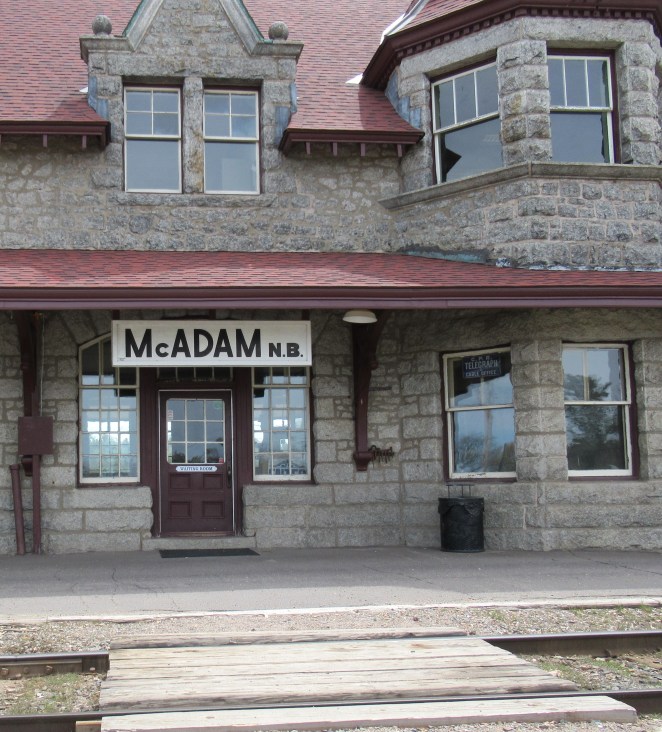
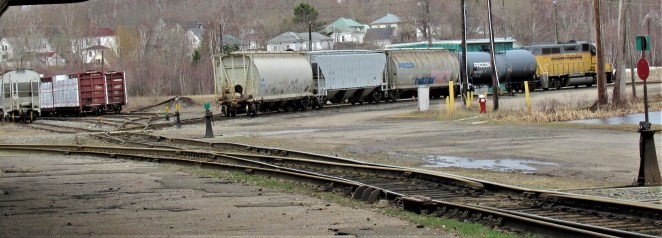
McAdam Railway Station, in New Brunswick, Canada. 60 trains a day used to stop here. Now the station is a landmark, a memory, a place where ghost trains run and shadowy figures run wild up and down the grass grown tracks where the sleepers sleep, their dreams undisturbed. I could write a book of poems about this station. Wait a second, I already have and Geoff Slater, my painting buddy, decorated it for me with his wonderful paintings and drawings. What more can I say? Each link in the chain, a potential poem. Each stop along the way, material enough for a painting, a poem, or a book.
Comment 2:
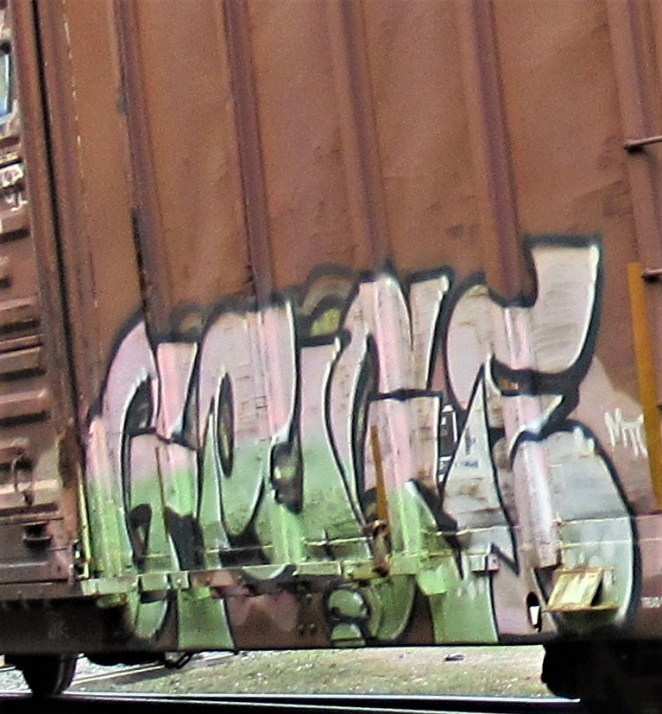
So, what happens when we change the photo? What if we add a branch line or two to the original poem? How does this affect our idea of creativity, poetic creativity? What happens when we add a different sketch from my painting buddy’s wonderful set of drawings? Oh-oh, that’s not my painting buddy – that’s a set of graffiti on a passing railway car. Sorry, painting buddy, please forgive me. But hey, wait a minute – de gustibus non est disputando – there is no arguing about taste. Somebody painted that box car and enjoyed doing it. Where does art begin? Where does it end? How formal can it be? How informal? How many railway stations do we stop at? I guess it depends on the length of the journey. But one thing I know, don’t get off the train until you reach your destination!