What’s in a Name?

Ryan and Don Roger

2

What’s in a name?

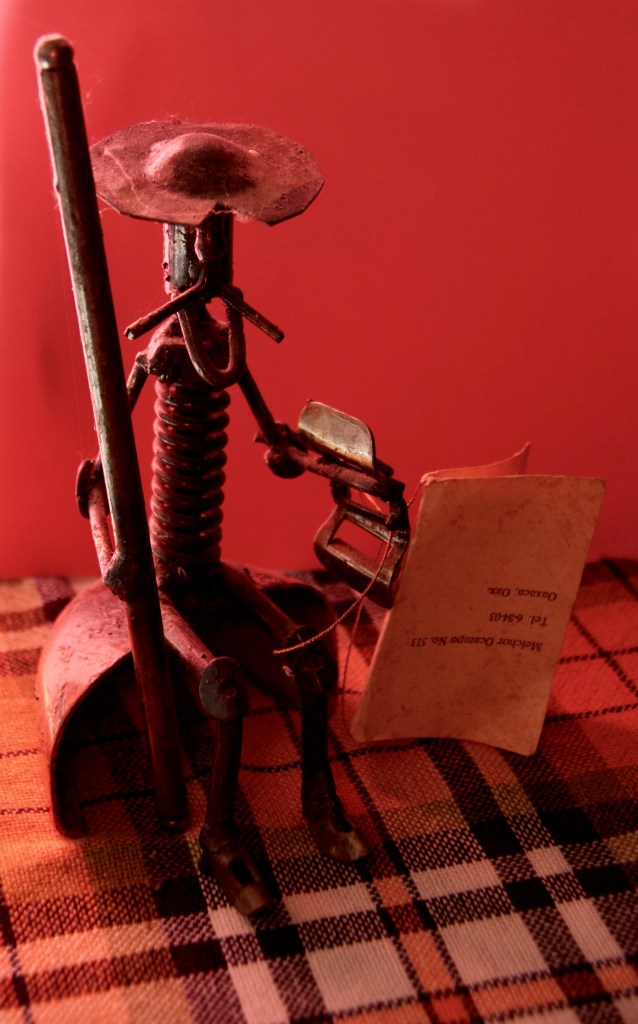
            Don Quixote was first published in Spain in 1605. In 1609, Thomas Shelton translated it into English. By 1611 / 1612 the adjective quixotic, was already in use within English society. An AI search tells us that “In the 17th century, the term quixotic was used to describe a person who does not distinguish between reality and imagination. The etymology of the word began after the publication of Don Quixote in 1605.”

But what does quixotic mean exactly? Another AI search reveals that “Quixotism (adj. quixotic) is impracticality in pursuit of ideals, especially those ideals manifested by rash, lofty and romantic ideas or extravagantly chivalrous action. It also serves to describe an idealism without regard to practicality.”

            Why is this important? Quite simply because in English we say Don Quixote / Quick-sot, not Don Key-hoe-tay a bastardized version of the Spanish. Please note that the adjective, in English, is quixotic not “key-hoe-tay-ic” which is too chaotic to be practical. Note too that the French translators offer us Don Quichotte, while the Italians suggest Don Chisciotte. Both these languages conserve the original pronunciation – a voiceless postalveolar fricative /ʃ/, which is the same sound as the English “sh” in “ship”. This is clear evidence that the X of the original had a different pronunciation in the seventeenth century than it does today.

            My wonderful friends on AI confirm this as follows, and I quote:

In 17th-century Spain, the letter ‘X’ primarily represented a voiceless postalveolar fricative /ʃ/, which is the same sound as the English “sh” in “ship”. During this period, which coincided with the Spanish Golden Age and the “readjustment of the sibilants,” this sound underwent a transformation, shifting from the “sh” sound to the modern velar fricative /x/ (similar to the German ch in loch or the modern Spanish ‘j’). 

Here are the key details about the pronunciation of ‘X’ during that era:

Initial “Sh” Sound: Early in the 17th century (and before), words that are now spelled with ‘j’ or ‘g’ were spelled with ‘x’ and pronounced as “sh.” For example, Don Quixote was pronounced “Don Keesh-o-teh”.

The Sibilant Shift: During the 16th and 17th centuries, the sound /ʃ/ (written as ‘x’) and the voiced /ʒ/ (written as ‘j’) merged into a single voiceless sound /ʃ/. Later in the 17th century, this sound moved backward in the mouth, evolving into the modern velar /x/ (the modern ‘jota’).

And this is just the beginning and what’s in a name? For example, what is the real name of Sancho Panza? Is it Sancho Panza or Sancho Zancas [DQI,9]? How about his wife? Is it Juana Gutierrez or Mary Gutierrez [DQI, 7]? In the same chapter she is called Teresa Panza, the name that stays with her throughout the novel.

And what about Don Quixote himself? Is his real surname Quixada, Quesada, Quexana [DQI,1] or Alonso Quijano el Bueno [DQII,74]? Don Quixada de la Mancha aka Don Quesada de la Mancha aka Don Quexana de la Mancha – and we won’t mention the alternate names he takes – the Knight of the Sad Countenance or the Knight of the Lions!

Fascinating, eh? So, after all that, tell me – what’s in a name?

Riding Buddies – Reading Buddies

Ryan and Don Roger

1

Riding Buddies – Reading Buddies

            Don Quixote makes three sorties. The first is very brief, about five chapters. The second is much longer. And the third is 74 chapters in length. Each sortie is different. For now, I would like to take a brief glance the difference between Sortie 1 and Sortie 2.

            Sortie 1 – Don Quixote sets out on his own. He travels to an inn, has adventures there, gets knighted by the inn-keeper, albeit falsely, and after an unequal combat in which he is bruised and battered, he is brought back home by a neighbor.

            When the inn-keeper asks Don Quixote for payment, the knight replies that knights errant do not carry money with them, nor do they pay for their food and lodging. The inn-keeper recommends that Don Quixote find a squire to attend, one who can carry the money and the other things that a knight needs. Our knight takes this recommendation to heart.

            Sortie 2 – In this second sortie, Don Quixote has a companion. One of the main differences between the first and second sorties is that the knight now has a squire with whom he can talk. This dialog between knight and squire, master and servant, is key to the understanding of the novel.

            Their contrasting points of view, Don Quixote literate, a believer in reading, with a firm belief that all books of chivalry are true, contrasts immediately with the illiterate Sancho, his squire. Where Sancho sees reality – the windmills are windmills – Don Quixote sees illusion – the windmills are giants, waving their arms, and threatening to attack. This is a simplistic summary, but we will leave it there for now.

            Graham Green understood the nature of dialog when he penned his novel, Monsignor Quixote. In the film, available free of charge on YouTube, the Catholic Priest (now a Monsignor) and his friend, the Communist Mayor (now defeated in an election and unemployed) leave the little town in which they live, and set out on a journey of adventures, much in the same way that Monsignor Quixote’s namesake sets out in Cervantes’s novel.

They do not have a horse and a donkey. However, they do have Monsignor Quixote’s car, nicknamed, of course, Rocinante, in which to travel. The key to Green’s novel is the constant dialog between the mayor, knowledgeable in the ways of the world, and Monsignor Quixote, innocent of the world outside his church and full of illusions about the reality of that world. It is easy to think of them as riding buddies who converse.

            So, what is a reading buddy? Well, Don Quixote is a long book, over 1000 pages, with 127 chapters. Many readers set out in search of adventure, but do not keep reading. However, a wise reader will set out on that journey with a reading buddy, who will travel with him, step by step, chapter by chapter. Each will keep the other company, and one of the delights of the journey will be the constant conversation between the reading buddies.

            I am Don Roger. My reading buddy is Ryan. I am short and stout. Ryan is tall and thin. We have reversed the Sancho / Quixote image, but we are both equally insatiable in our search for knowledge. The curious thing is that I have read Don Quixote 28 items, mainly in Spanish, but also in English and French. Ryan is reading it for the first time, but he is an expert in AI access and is helping me to understand the wily ways of that electronic world of short cuts. Of course, it helps you to sort the chaff from the grain when you know what you are looking for and just use AI to refresh your fading memory!

            I am full of the illusions of the academy. Ryan reads with a sharp mind, a keen wit, and no illusions at all. He sees only the reality of what is there. Together we have embarked on a journey that is in the process of opening our eyes to two different realities his and mine – Ryan’s and Don Roger’s. The conversations that we are having along the way, will be the subject of this little discourse on Cervantes’s novel.

Rage, Rage 43

Rage, Rage
43

The truth,
unwelcome as it is,
is that the day I was born
I took my first steps
on the path to death,
my own death.

Death –
an inescapable law
that tells me that
body and spirit
will be forced apart.

My flesh will wither
and perish,
and the person
that the world and I
know as me
will no longer be able
to hold together.

Commentary:

“The day I was born I took my first steps on the path to death.” An echo of a line from Francisco de Quevedo, of course.

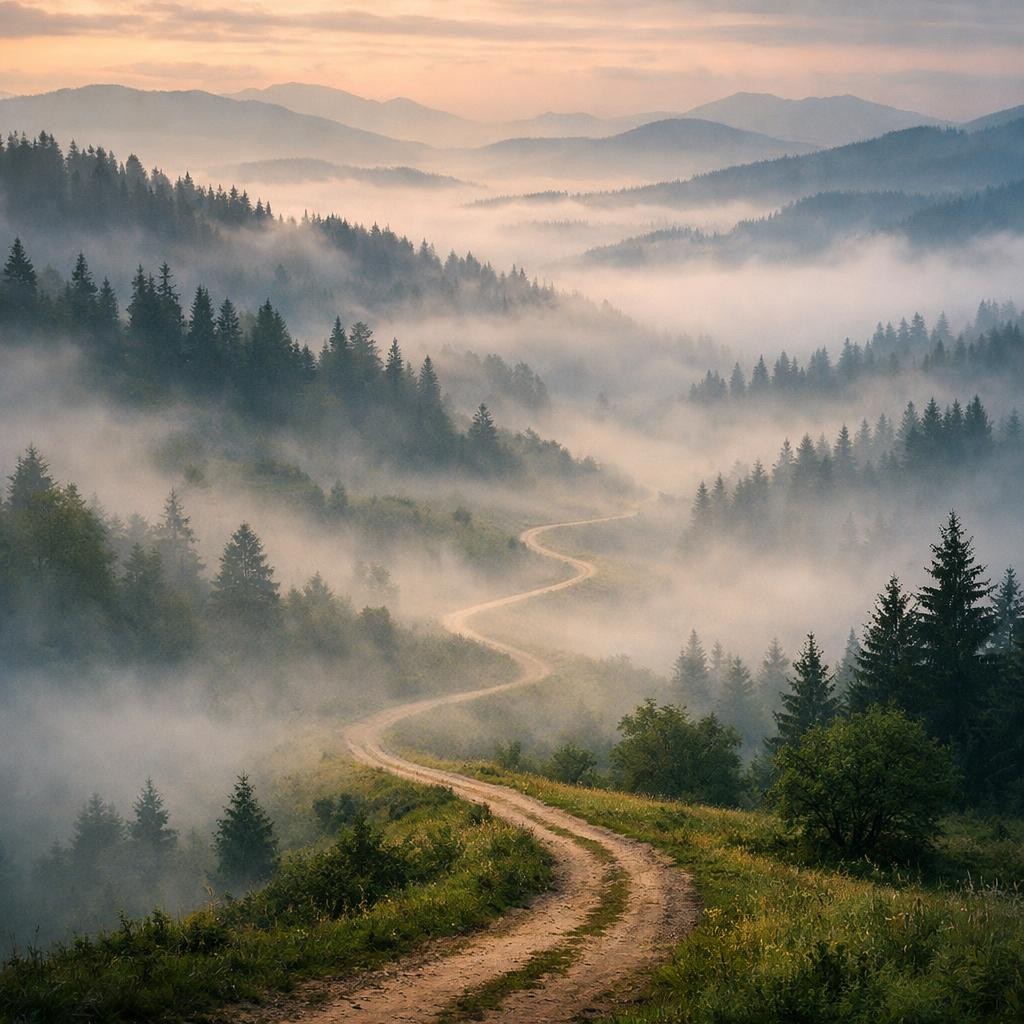
And the photo above? It is the old Roman road that ascends the Puerto del Pico in the Province of Avila. Hard to believe it was laid down nearly 2,000 years ago and still carries the transhumance cattle and sheep from the valleys in winter to the hills in summer. It is also a part of the Camino de la Plata, the silver road that brought precious metals from Spanish America to Madrid after the discovery and conquest of the Incan Empire.

The treasures of the Empire – what joy. Yet what weight around the neck of the Spanish nation. Wealth so abundant, spending so rife, money-lenders always lending, filling in the gaps between the arrival of the treasure convoys from the Colonies. And yet that borrowing became a millstone around the borrowers’ necks. So much money borrowed that there came a moment when each convoy only served to pay off the loan debt of the last set of borrowings.

The cattle and sheep struggle to climb to those heights. Yet it is not difficult to imagine how much easier it was to walk downhill, beside the creaking wagons that held the gold and silver to pay off the monarch’s debts, en route to the king and his court.

Think also of the squeals of anguish heard when the treasure fleet did not arrive. Captured by the English pirates, or hurricane battered and lost in the Caribbean or closer to home. This meant even more borrowing on the back of earlier borrowing and always the cost of living and the lending rates rising higher and higher.

Bleak Mid-Winter

Bleak Mid-winter
from
All About Angels

The reverse side of a tapestry this fly-netting,
snow plugging its tiny squares,
clotting with whiteness the loopholes
where snippets of light sneak through.
Black and white this landscape,
its colorless contours a throwback
to earlier days when dark and light
and black and white held sway.

Snow piled on snow.
The bird-feeder buried and buried, too,
the lamps that can no longer shine
beneath their cloak of snow.

The front porch contemplates a sea of white,
wave after wave cresting whitecaps,
casting a snow coat over trees
with snow-filled nests standing
shoulder-deep in the drifts
while a slow wind whistles
and high and dry in the sky above
the sun is a pale, thin penny
drifting through ragged clouds
hat threaten to bring more snow.

Comment:

A Golden Oldie, or rather, a Black and White Oldie, from when New Brunswick winters were colder and much more snowy. The iterative thematic imagery in the poem links to the hymn, In the bleak mid-winter. There are several reminisces of the hymn within the above lines.

It used to be sung as a an entry hymn in the Christmas Carol Services at King’s Stanley Church, along time ago, when I was in school. The procession would exit the vestry and move slowly though the church towards the altar. The first verse of the solo was sung solo. Then a duet followed. Then the whole choir joined in. I remember doing the solo one year, when both our lead singers were stricken with some form of laryngitis. We drew lots and I got the short straw.

The unique drum accompaniment that day was the sound of my knees knocking together, backed up by the loud beating of the heart in my chest. I preferred hiding in the choir, to stepping up out front and leading it.

Last year, we used our snow blower on three occasions. This winter, we have yet to use it. If during the next month or so I am forced to wake it up and shake it out of its cobwebs, I will be sure to sing “In the bleak midwinter” as I plow my drive. Alas, there will be no choir to accompany me. Those days are long past, and in the past they must remain, as the Flower of Scotland reminds us. They will be singing that in Edinburgh on Valentine’s Day. And Scotland will need a strong brave set of hearts to upset the invading armies from south of the border.

Wild Life

Wild Life

I see green grass
Small ponds
Winding roads
Patches of sorrow

Turquoise blues 
Hills to climb
Softness
Strength 

Flowers blooming
A small animal
Covered in feathers 

An eye
Keeping watch
Purity of white

Ekphrastic Poem
©
Yolande Essiembre

Comment:

My good friend Yolande Essiembre sent me her Ekphrastic poem after viewing this morning’s painting by Moo. Wild Life II is a better representation of the colours of the original. However, Moo added in some (what he calls!) helpful touches – the black shapes that reinforce the suggestions of the original. Yolande wrote her poem based on Version I – but with the stronger colors of version II. Magic oh what a tangled web we weave when first we practice to deceive. And all artists weave their webs of deceit. As Cervantes says – Tanto la mentira es mejor, cuanto más parece verdadera. / The closer it approaches the truth, the better the lie.

Imitatioimitation – one of the bedrocks of classical rhetoric. “Imitation is the best form of flattery”. Flattery, yes, but what we find, in art above all, is that there exists only one original. However good the copy, the flattery – the imitation, if you prefer – it is never as good as the original. The original of this painting exists in one time and one place. The two deceptions are not the original. In fact, Wild Life I no longer exists because Moo has repainted it. It has turned into Wild Life II.

So many questions – which version do you prefer – I or II? De gustibus non est disputandum. There is no arguing about taste. Which is the better version? Well, each viewer must choose. But remember, each version is a deception, and each deception is a lie. And there is only one original. Oh what a tangled web we weave.

But we can, I hope, agree on one thing – Yolande’s verbal version (which I publish here with her permission) is verbally picture perfect. It is how she sees the painting. It is what the painting means to her.

Thank you so much Yolande. Moo and I hope to publish your words and visions more often. With your permission. we will do so.


Rage, Rage 20

Rage, Rage
20

Words emerge
from the silence 
of blood and bone.

They break that silence
the day they are born.

Silence, once broken,
cannot be repaired
and a word once spoken
cannot be recalled.

The greatest gifts –
knowing how and when
to sink into silence,
knowing how to be alone
in the middle of a crowd,

So many word-worlds
smothered at birth
and those worlds, dismissed,
forgotten, still-born,
their names never spoken.

Comment:

So, are you paying attention? Did you notice anything? Has something gone missing? Moo tells me that he doesn’t think anyone will notice what I have. Can you prove him wrong? Good question! Whatever, as they say, or “So what?” as Miles Davies plays. Or, as Buddy Holly once sang “I guess it doesn’t matter any more.”

Moo wants me to tell you that he painted this painting last night. He calls it No More Blues. Guess what? There are no blue shades in it. Cunning, eh? And daylight hours are back up to 9:30 – 9.5 hours sunlight on this cold, wintry day. And it is cold at -14C. On the other hand, Moo’s painting is toasty warm and you can hold up your chilled fingers and warm them on his painted fires.

As for me, I am having great fun preparing my writing for competitions that I never win. I am also paying to enter them. But I choose carefully nowadays – so many publications and competitions want so much money just for sending them a manuscript they will possibly never read and probably (nay, almost certainly) reject. I am so happy that I do not have to live off my earnings. I have 17 books on KDP Amazon and guess what? I received $3.61 in earnings in 2025. And I must declare it on my tax forms. I hope it doesn’t send me up a tax bracket!

I guess it’s a case of Fly me to the stars and let me see what writing pays on Jupiter and Mars. Not much probably. I bet they don’t read poetry in any of those Mars Bars I am always reading about. That said, I wonder what language Mars Barmen speak? And do they have Mars Bar Flies, like we have Bar Flies here on earth? Oh the wonders of language and the Joy of Words. The Joy of Six, as well – and that’s Sex in Latin. Get the joke? Oh, to be multilingual, now that spring’s a coming. Easy now. Don’t get too excited. And look at all those little white angels flying in Moo’s painting.

Rage, Rage 10

Rage, Rage
10

My body’s house
has many rooms
and you, my love,
are present in them all.

I glimpse your shadow
in the mirror, and your breath
brushes my cheek
when I open the door.
Where have you gone?

I walk from room to room,
but when I seek,
I no longer find
and nothing opens
when I knock.

Afraid, sometimes,
to enter a room,
I am sure
you are in there.

I hear your footsteps.
Sometimes your voice
breaks the silence
when you whisper my name
in the same old way.

Comment:

Rage, Rage – and still I rage against the dying of the light and, like Dylan Thomas, ask the ageing of this world not to go gentle into that dark night. Yet, as my beloved and I age, we watch day’s shadows growing longer, and night stealing steadily along. What can we do?

Well, since the winter solstice, we can start counting the minutes as each day adds a minute or two and gifts some more light and strength to the sun. Sunrise today – 8:03 AM. Sunset today – 5:09 PM. That means 9 hours and 6 minutes of sunlight. Well, it would, if it weren’t cloudy, with a cold wind, and a dropping temperature. My guess is that it will get dark much before it ought to. And that’s not nice – no respect!

Of course, my beloved is a sun bunny and a Leo, and she perishes in these shortened days. I was born in them and they don’t affect me as badly as they do her. But I can still Rage, Rage, because there is so much to rage about – icy streets, the usual potholes, roads that hide ice beneath a thin covering of snow, some strange drivers who don’t seem to have bought winter tires. Oh yes, I love them. One came twisting and turning down the same side of the road as me only this morning. Luckily he hit the snow bank before he hit me. But, I ask you, what was he thinking?

So there’s Rage, and Rage Rage, and also Road Rage. Way to go! I think we should call a national rage day and all stay home for 24 hours, just to cool us all down for a bit. Oh dear, that might lead to cabin fever – and that would be an outRage.

Rage, Rage 2 & 3


Rage, Rage
2

These problems start the day
you realize you are alone.
Your beloved goes away,
for a holiday,
to be with your daughter
and grandchild.

Now the house and the cat
are yours, and yours alone.
No problem you say and
everyone believes you.

You jumped in the car,
drove daughter, and child,
holidays done,
to the airport.

Your beloved went with them,
her holiday about to begin.
And that’s when it all began.

3

When I come back home
from leaving them at the airport,
the front door stands open.

I thought I had closed it
when we left.
I tip-toe in and call out
“Is anybody there?”

Echo answers me –
‘… there, there, there …”

Commentary:

Raymond Guy LeBlanc, one of my favorite Acadian poets, published his poetry book, Cri de Terre, in 1972. My painter friend Moo, who also likes Acadian poetry, borrowed the title and changed it slightly when he painted this painting – Cri de Coeur. Earth Cry / Heart Cry.
What is all creativity, visual of verbal, but a cry from the land or a cry from the heart? Sometimes it is more than a cry – it becomes a clarion call, a shout out, a calling out.

So many of us are born with creativity in our hearts. So few of us carry that creativity, be it verbal or visual, into the adult world, a world that all too often grinds us down and sifts us out. We become grey people in grey clothing sitting behind grey desks beneath artificial lighting, doing grey jobs that slowly turn us into nine to five (or longer) dusts.

Moo has promised me a series of red paintings for this sequence. We shall see how he does. Red for anger, red for age, a red flag for danger, a red rag to wave at the raging bull of life, to provoke it, then bring it under control.

Nadolig Llawen – Welsh for Have a Joyous Festive Season. You can add other languages, as you wish. But above all remember Pedro Calderon de la Barca’s words – “Life is a dream and dreams are nothing but dreams.” One day, we shall all wake up. Artists and dreamers, grey ghosts and people of straw and dust.


Carved in Stone 72 & 73

Carved in Stone
72

Is this world I create real?
Of course it isn’t.

It exists only in my head,
and on the page,
but perhaps, one day,
you too will see
the things I have seen.

Yet the world I describe
is as unreal as the words
from which it is woven.

73

Heraclitus once wrote
we can never bathe
in the same river twice
.

This is the Catch 22
faced by all poets,
to remember,
and to try to recreate.

Shadow hands on cave walls,
colored pictographs on gesso,
hieroglyphics on papyrus,
ink on paper, raw words,
and in the end,
everything reduced
to these three little letters
carved in stone –

RIP

Commentary:

If you have read this far, we have walked a long journey together – 73 verses that comment on life and the meaning of life. Hard reading in places, easy in others. I trust you have enjoyed the journey and found some stops and resting points along the way in which to contemplate the ways in which the threads of your own life intermingle with mine.

Throughout this journey, I have tried to use a four step process. (1) Verbal – the poems themselves. (2) Visual – photos that intertwine with the verbal. (3) A Commentary – that goes beyond the verbal and visual and opens up the ideas a little more. (4) A Dialog between myself – the poet – and Moo – the visual artist who has so frequently loaned me his paintings when he thinks they illustrate my words.

It’s been a topsy-turvy journey through what Bakhtin calls a world of carnival, where little is at it seems, and the world is turned upside down. That said, we have a clear choice – to slide down the downside of this life, or to scale the upside, to contemplate, with joy and happiness, the world from those heady heights.

Blessings. Pax amorque.
And thank you for travelling with me.

Carved in Stone 61 & 62

Carved in Stone
61

Water through the water clock,
water off a duck’s back,
the waters of life,
continually flowing,
trapped in our children
and their children,
and the love we create
never lost, just circling,
like the hands of the clock,
like the planets and stars.

But who will wind up
the clockwork universe,
and tend the mechanism
that balances planets and stars?

What will happen
when the clockwork
finally runs down,
the last candle is snuffed,
and the water clock dries up?

62

Whoever, whatever remains
will be left to contemplate
Ozymandias with his two vast
and trunkless legs of stone,
standing in the desert.

“Look on my works,
ye mighty, and despair.”

Commentary:

“Look on my works, ye mighty, and despair.” Well, Moo does have a sense of humor after all. I thought he did. From Ozymandias to the meaning of “works” to the destiny of the work we did. What a journey. It goes from the joy of the children who build a snowman to the warm spring wind that melts him to the crows and the dog who do what crows and doggies do. Intertextuality – the links between verbal and visual and think about it – such strange things happens in Moo’s creative mind.

But what do we leave behind? Think about it. Only the wake of the ship in which we sail. The wake – that white trail we leave behind us, on the surface of the sea, slowly vanishing as we also vanish, pulling away into the unknown that always lies ahead. Moo is right – so many things disappear out of the frame of the painting. “There are no pockets in shrouds” said the preacher in the hospital where I took my father, so long ago for treatment.

And even if there were, how would you fit a snowman, several crows, a cardinal, and the rear end of a dog into the pocket? “Contemplate Ozymandias with his two vast and trunkless legs of stone, standing in the desert. Now contemplate the fate of the snowman. Now look on my works, ye mighty, and despair.”