Bullfight

Los Toros de Guisando

Bullfight

… at the beginning of the end, when more things have gone than are with us and the summer’s sun withers the grass and wrinkles our faces baking us bright red – como un cangrejo te has puesto, hijo mío, en el sol de Somo, como un cangrejo – and — pulpo en un garaje — you grasp at the new words, the new colors, the new delights, your tongue trapped clumsily in your mouth like a red rag doll and the midnight bull charging the spectators who gather and olé, au lait … as the drunken bullfighter climbs the bull and kills the post. The red cape flutters in our memories and to the slaughterhouse we go where the open body hangs loose like a flag and the red meat of him held out for all to see and some to share … and this is his body and this is his blood, sacrificed in a circle of golden sand for our drunken amusement … for whatever I did, I never visited those bull fights when I was sober … at five thirty, they began, and at 3 o’clock we would gather in the city center and slowly wend our way from bar to bar, up the Calle de Burgos, past the street where you lived and upwards, ever upwards, towards the bull ring at the top of the hill, from bar to bar, I say, and the bota, the wine-skin filled and re-filled with that dark red fluid that will set us all baying for the bull’s blood, or the matador’s blood, it doesn’t matter whose blood, as long as someone bleeds and the bull is butchered, torn from this life by a man on horseback, armed with a lance, and he thrusts the heavy blade between the shoulders of the bull, the blood first dripping red, then gushing, a small stream over the rock of the bull’s shoulder, and down the bull’s front legs, to slither on the sand, and the bull still ready to charge the horse, and the bull’s head steadily dropping as the muscles in the back and neck are gashed and torn and there’s no hell like this gaping wound between the bull’s shoulders and the blood flowing freely and vanishing into the sand, the golden sand, once pristine, stained now with blood, and soon to be further blemished with feces and urine, and the picador, his job done, walks his blind-folded, armored horse out of the ring, and the bull, un-armored, un-enamored of the process which turns his torment into a spectacle staged for our drunken delight, as we pass the bota round, and the blood red wine travels from hand to hand, and we squirt the bull’s blood squarely between our lips and it dashes against tongue and teeth and we swallow the body’s sacrifice hook, line, and sinker, as the banderillero runs in, harpoons in hand, waving his banderillas and plunging their arrowed barbs into the gaping wound that flowers on the bull’s back, and the bull stands there, twitching, wriggling, saliva and drool slipping down, sliding stickily into the sand, as the matador doffs his hat, takes his vorpal sword in hand and treads the light fantastique in his laced-up dancing pumps, his waltzing matilda feet so swift, so sure, eluding the lumbering rush of the charging bull, the load of bull, that tumbles down the railway track towards him as he stands there, the matador, poised like a ballerina, as stiff and as steady as a lamp-post around which the bull circles like a drunken man, staggering a bit, but still bemused by the red flag tied to a stick which waves before his eyes and goads him onwards, ever onwards, in his plunge towards a brilliant death, as he pauses, feet together, and the matador makes his move, one, step, then two, and the bull lurching forward to impale himself on three or four feet of curved, immaculate steel, and the matador immaculate in his reception of the bull – and what is happening? What will happen next? Sometimes, the sword pierces the spinal cord and death is instantaneous. Sometimes, the sword pierces the heart, and death is more or less swift, but certainly certain. And sometimes the sword pinches against the bone and flies from the matador’s hand, and the matador must bend, and pick it up, and try, try again, the red rag below the bull’s nose, the bull drawn forward, yet again, to impale himself, yet again, on the sharp end of the sword, and this time, the sword goes in, but the wound is in the lungs and the peones, the pawns, the workers, the drones, the little men who help, turn the bull round and round in ever tighter circles so the sword will open and even larger wound, sever the main arteries perhaps, and the bull, blood spurting through nose and mouth, lurches now, then falls to his knees, and lies there, bleeding, and the matador chooses the descabello, that little sharp sword with the razor blade at the end and he tries to sever the spinal cord, there at the back of the neck, and sometimes he does, and sometimes he doesn’t, and if he can’t then it’s the little men again in their colorful parrot suits all gleaming with sequins and stars and they carry a sharp little instrument, with a pointed end, la puntilla, that short, double-edged, stabbing knife which is plunged into the occipito-atlantal space to sever the medulla oblongata in the evernazione method of mercy killing,  and the puntilla is plunged again and again into the bull’s neck at this atlanto-occipital joint, until it severs the medulla oblongata, and when it is severed, in this glorious neck stab, then finally the bull drops dead, and the show must go on and on, and on, and the horses come in, black funeral horses with bright feathers on their heads and they loop a rope around the bull’s horns and away he goes, trailing blood, and urine, and shit, all across the sand and other little men appear to sweep the sands clean, and my neighbor who wears a large walrus moustache stained red now and purple with the wine that he has splashed about, shakes the wine skin and finds it as not as full as it was, so he sheds a bitter tear, and since the death was slow, the crowd all whistle and boo the matador and his merry men, but when the death is swift and quick then the crowd is aroused and they wave white hankies at the presidential box and the president awards the matador an ear, a salty, smelly, sticky ear which the peones cut off the bull before he is towed away, and then the matador throws the ear in the direction of his current sweet heart, the fairest lady in the crowd although she be as brown as the beauties baking daily on the summer sand where the sea horses dance and there are no bulls, and no bull shit, and no maids with mops, just the scouring sea, and sometimes the president gives away two ears, or two ears and the tail, dos orejas y el rabo, though this I have seldom seen, and what does the bull care that he dies bravely and well, for now he is dead he hasn’t a care in the world, and the butchers in the butcher’s shop are carving him away, carving him to the skeletal nothingness of skin and bone that awaits us all, the nothingness of this more or less glorious death, with our tails cut off and our ears hacked away to be pickled or smoked or otherwise kept in the fridge as the butcher’s trophy … and who now will walk stone cold sober into that magic circle of sun and shade and stand there, unbowed, before the might of the untamed beast, the untamed bestiality that drives us wild as it wanders through our nightmare cities and our wildest dreams … and now the crowd call ¡música, música! and the band strikes up and martial music plays as the bullfighter and his troupe march gaily round the ring, their trophies held high for all to see before they are thrown to the ravening crowd who bay like the dogs they are as they taste fresh, bloodied meat …
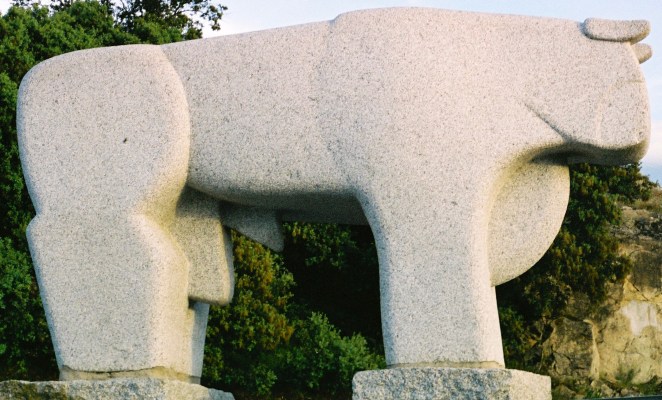
Contemporary stone bull

Mi verraco de Avila
gracias a Juanra

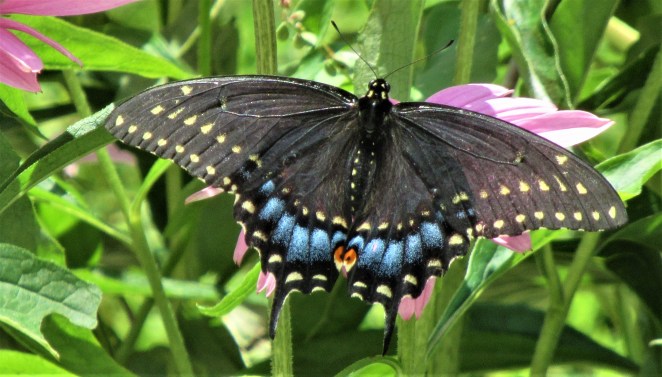
Rage, Rage 44 & 45

Rage, Rage
44

But all is not lost.
Highlights of the day:
waking to birdsong,
making it safely to the bathroom,
shaving without cutting my face.

I step high to get into the shower
and wash my body
without dropping the soap.

I emerge
without slipping or falling
thanks to the safety rails
Extra-Mural
inserted in the walls.

I stand on the bath mat
and dry with my towel
those parts of the body
that are now
so difficult to reach,
especially between
my far-off toes.

45

I pull my shirt over
still-wet, sticky patches,
damp from the shower,
and negotiate each trouser leg
without catching
my toe nails in a fold.

I tug at the pulleys
of the machine
that helps my socks
to glide onto my feet.

I force those swollen feet
into undersize shoes
and hobble
to the top of the stairs.

Banister in one hand,
cane in the other,
I lurch down them,
descending with caution
one step at a time.

Comment:

I lurch down the stairs, descending with caution, one step at a time. Indeed I do. That whole process of getting up, washing, dressing, going down stairs, takes me a good half hour, sometimes more. I do things in order, one after another, each step the same every day. That way, I remember everything and forget nothing. Easier said than done! I often forget something, or do something out of order, and then I get muddled and I stand there befuddled. Muddled and befuddled. Not a good way to start the day.

Moo sometimes visits and watches me as I struggle with my clothes. He has been known to help, especially when my back is still wet and my shirt won’t go on, or my feet get stuck in my pants or my socks. Usually, though, he’s very good. He sits or stands there quietly, just watching. I think some of his paintings come from some of my struggles. I know the titles do. When I am muddled and befuddled he says I am all shook up. he says that’s where the painting comes from. I’m not so sure about that. I think he has a secret liking for Elvis Presley.

Funny going back over those old songs from the fifties and sixties. Long gone are the days when boarding school boys stuck their chewing gum on their bedposts overnight. I remember when we used to dare each other to sing ‘does your chewing gum lose its flavor’ in the school chapel during the morning service. I remember once having a bet with a friend how many Hallelujahs there were in the Hallelujah chorus. We dared each other to sing the number we chose. His number was higher than mine, and I remember his voice, singing out a lone solo Hallelujah and shattering the deafening silence of the packed school chapel.

And those limericks – “There was a young boy in the choir, whose voice rose up higher and higher. One Saturday night it rose right out of sight and we found it next day on the spire.” And that might be the only non-filthy Limerick that this old man can remember. Oh dear – all those songs we sang on the school bus!

Rage, Rage 26

Rage, Rage
26

In my dreams, I track 
the sails of drifting ships,
white moths fluttering
before the wind.

I think I have caught them
in overnight traps,
but they fly each morning
in dawn’s unforgiving light.

I give chase
with pen and paper,
fine butterfly nets
with which to catch
and tame wild thoughts.

I grasp at things
just beyond my fingertips.

I wake up each morning
unaware of where
I have traveled
in my dreams.

Comment:

White moths fluttering before the wind – my dreams at night. How do I trap them, catch them, squeeze them between my fingers, hold them, pin them to the show case of memory? I remember in Oaxaca – the young boys, trapping the moths. Huge, gigantic butterflies, moths, as large as birds. They severed their wings, and sold them to the passing tourists. Such beauty, such colour.

I heard an angry buzzing, looked down, and saw flightless bodies, wings clipped, rowing their stumps of bunt oars, skidding sideways across the gutters, and dreaming painfully of the stars.

Rage, Rage 2 & 3


Rage, Rage
2

These problems start the day
you realize you are alone.
Your beloved goes away,
for a holiday,
to be with your daughter
and grandchild.

Now the house and the cat
are yours, and yours alone.
No problem you say and
everyone believes you.

You jumped in the car,
drove daughter, and child,
holidays done,
to the airport.

Your beloved went with them,
her holiday about to begin.
And that’s when it all began.

3

When I come back home
from leaving them at the airport,
the front door stands open.

I thought I had closed it
when we left.
I tip-toe in and call out
“Is anybody there?”

Echo answers me –
‘… there, there, there …”

Commentary:

Raymond Guy LeBlanc, one of my favorite Acadian poets, published his poetry book, Cri de Terre, in 1972. My painter friend Moo, who also likes Acadian poetry, borrowed the title and changed it slightly when he painted this painting – Cri de Coeur. Earth Cry / Heart Cry.
What is all creativity, visual of verbal, but a cry from the land or a cry from the heart? Sometimes it is more than a cry – it becomes a clarion call, a shout out, a calling out.

So many of us are born with creativity in our hearts. So few of us carry that creativity, be it verbal or visual, into the adult world, a world that all too often grinds us down and sifts us out. We become grey people in grey clothing sitting behind grey desks beneath artificial lighting, doing grey jobs that slowly turn us into nine to five (or longer) dusts.

Moo has promised me a series of red paintings for this sequence. We shall see how he does. Red for anger, red for age, a red flag for danger, a red rag to wave at the raging bull of life, to provoke it, then bring it under control.

Nadolig Llawen – Welsh for Have a Joyous Festive Season. You can add other languages, as you wish. But above all remember Pedro Calderon de la Barca’s words – “Life is a dream and dreams are nothing but dreams.” One day, we shall all wake up. Artists and dreamers, grey ghosts and people of straw and dust.


Rage, Rage 1

Rage, Rage
1

Old age creeps up on you,
slowly, ambushes you,
catches you unawares.

At first, you don’t believe
that it’s real.
You ignore the signs,
pretend they aren’t there.

Then comes a knock on the door.
There, did you hear it?
Around you your body’s house
slumbers in comfort.

You lose your footing,
but you do not fall.
Your book drops to the floor,
you bend down and pick it up.

Everything is as it always was.
Or is it? One of your friends
slips and falls down the stairs.

You descend the stairs
with more care than usual.
No, you don’t need a cane.
Nor special shoes and socks.

You convince yourself that
all is well. And so it is,
for a little while longer.

Commentary:

Rage, Rage
against the dying of the light

Dylan Thomas’s famous poem celebrates the passing of his father. “Do not go gentle into that good night, / old age should burn and rave at close of day. Rage, rage against the dying of the light.”

I am no Dylan Thomas, although I am still a Swansea boy at heart and, as my paternal grandfather used to sing while at the fighting front during WWI – “and still I live in hopes to see Swansea Town once more.”

Alas, I never will see Swansea Town, save in my dreams, for Swansea Town is no longer a town. It is now Swansea City and no, I will not be leaving Island View again, not even to return to Wales, the land of my fathers. But I can and do age, and ageing is a strange and very personal experience. These pages contain the thoughts that occur to me, in my solitude, as I come to terms with my diminishing existence.

Moo has been very silently recently. But when he saw this poem he climbed out of the woodwork where he had been hiding like a silent spider and he said “Roger, have I got just the painting for you.” The painting is also called Rage, Rage – make of that what you will.