All About Angels

039.JPG

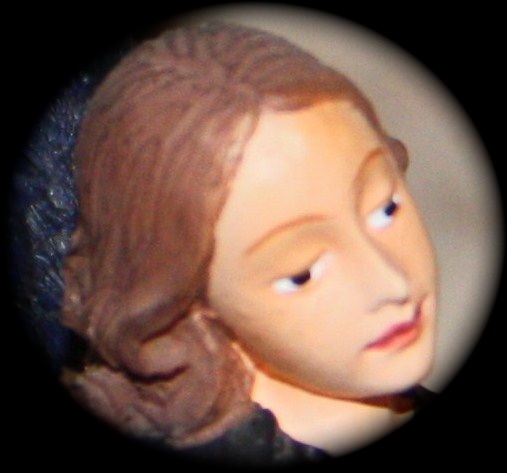
I first saw the Black Angel in Aldebarán’s cultural store in Ávila (2006). She sat there, in the shop window, along with several other angels, and I worshiped her from the distance of the street. Her image was taken from an original painting from Rogier van der Weyden (1399/1400-1464). This was turned into a 3-D image and then converted into the statue I saw in the shop window.

I brought the statue back to Island View, placed it on the shelf above the fireplace, where it still rests, and wrote several poems on the theme of Angels. I gathered them together in a chapbook entitled All About Angels that I self-published in Fredericton in 2009. The chapbook was dedicated to Clare’s great-aunt, D. E. Witcombe who departed this world on October 15, 2008.

All About Angels was also based on a book of a similar title, Sobre los Ángeles, written by Rafael Albertí, one of the poets of Spain’s Generation of 1927. I avoided the ambiguity of the Spanish title — Sobre (in Spanish) can mean Above or Beyond as well as About — by limiting my own title to All About Angels.

All About Angels
Paperback edition

All About Angels
Kindle Edition

For Carl Jung, angels are the messengers sent to inform people of the state of their world. For me, they are also the wild creatures that inhabit the world around me and often take the form of birds and other spiritual creatures. They can be best seen in those moments of solitude when we are most open to the natural world around us. Then, and sometimes only then, we can hear the urgent messages they bring.

Black Angel

You cannot hide
when the black angel comes
and knocks on your door.

“Wait a minute,” you say,
“While I change my clothes
and comb my hair.”

But she is there before you,
in the clothes closet,
pulling your arm.
You move to the bathroom
to brush your teeth.

“Now,” says the angel.
Your eyes mist over.

You know you are there,
but you can no longer see
your reflection in the mirror.

Angel Choir

(on seeing the Northern Lights at Ste. Luce-sur-mer)

listen to the choristers with their red and green voices
light’s counterpoint flowering across this unexpected son et lumière
we tremble with the sky fire’s crackle and roar

once upon another time twinned in our heavenly prisons
we surely flew to those great heights and hovered in wonderment
now our earthbound feet are rooted to the concrete
if only our hearts could sprout new wings and soar upwards together

the moon’s phosphorescent wake swims shimmering before us
the lighthouse’s fingers tingle up and down our spines
our bodies flow fire and blood till we crave light and yet more light
yet when the lights go out we are left in darkness
close up.jpg

 Croaking Angels

Their tunes are one note symphonies,
croaks of joy
moving their fellows to ecstasy,
exhorting them to share
the splendors of ditch life,
in a springtime bonding
that will loft them to the skies.

There’s an ancient magic in this calling:
love and laughter,
moonlight and water,
all the joyous things
one links with spring.

Moonlight swings its cheerful love lamp.
New leaves and buds are also known to sing.
In a country garden …

Each day sees another spark of brightness in the grass, in the trees, or at the feeder. Where, I wonder, have they been? In whose back yard did they winter?  Some, stray thoughts perched for a moment on a branch in the mind, fluttered last fall in the falling snow and melted away. Others, I know, stayed here with us and we fed them throughout the short cold days.

IMG_0017.jpg

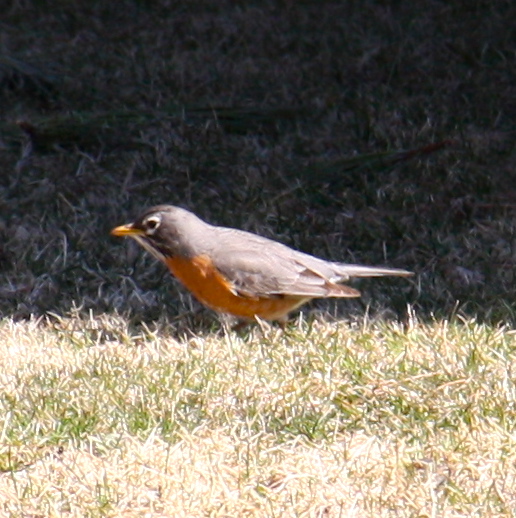
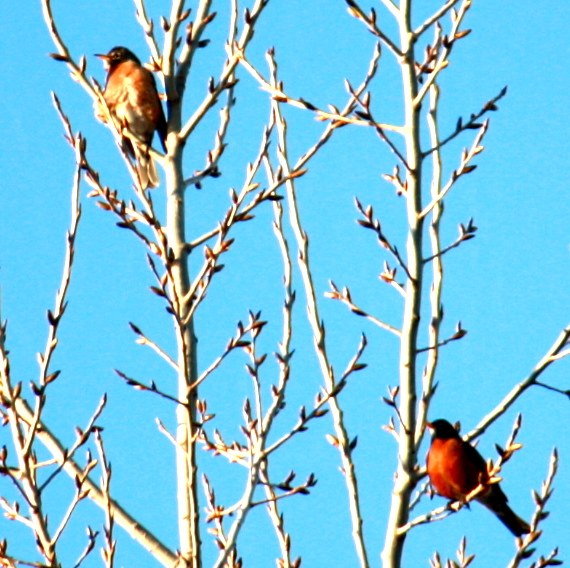
The robins, even though they are not my English robins, are my favorites, perhaps because they remind me of my childhood home. Less bold than those of my youth, they fly when we draw near and do not sit on the spade handle watching for worms as we turn the early earth and shake the garden back to life.

IMG_0033.jpg

Sentry duty: and they march up and down the lawn pacing their quicksteps, then standing to attention. They strut their stuff, turn their heads, listen, and look like guardsmen on parade outside our pastoral palace.

IMG_0014.JPG

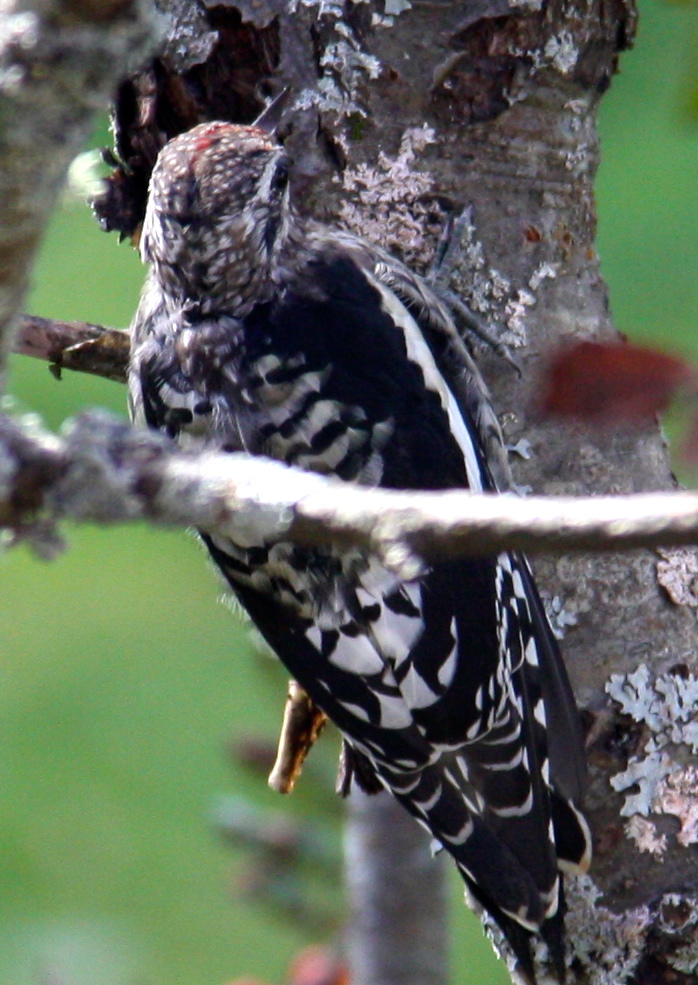
With the guardsmen come the workmen, the busy birds, the ones who tap on the trees in search of insects or to set the juices running. Shy, they turn away and hide behind the trunk. But if we are quick, we can catch them, heads turned, when absorbed in their work, they forget to fear us.

IMG_0063.JPG

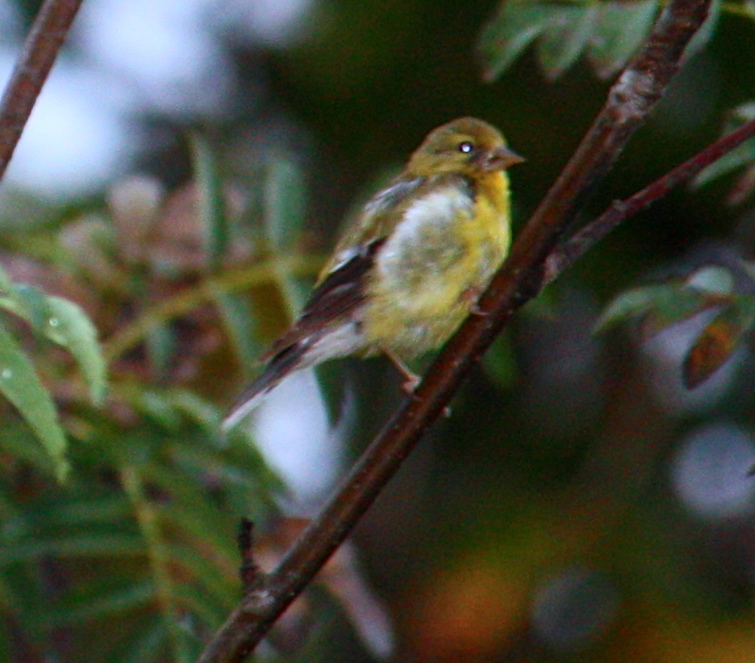
And the song-birds, shiest of all, often heard, their melodies, but their quicksilver spirits seldom seen except by chance and the artist’s luck and speed of finger. But listen: other songs throb their melodies on the wind and most days now we wake to music. A calling in the trees in the evening’s glow also tells us the world has turned once more and the birds, the glorious birds, the dwindling flocks of endangered birds, less this year than last year or the year before, are back. We must welcome them and cheer them while they are still with us.  Neither we nor they may  endure much more.

Sometimes

IMG_0130

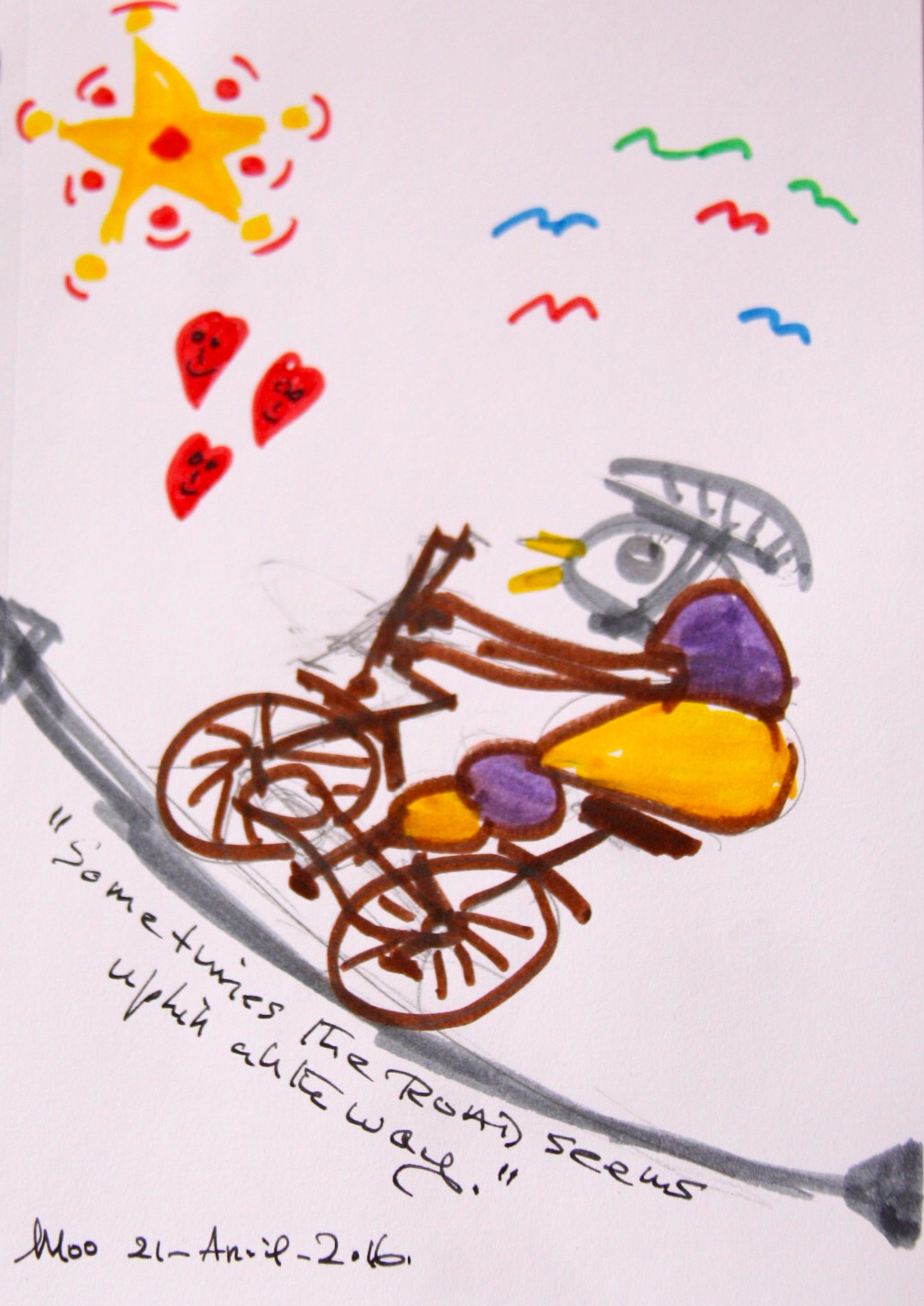
Sometimes the road seems uphill all the way. Lungs burn. Breath comes hot and hard and chunky in the throat. Legs hang heavy, muscles will not obey the owner’s instructions.

Consult the operating manual: “Take a break,” it says. “Rest now. Don’t push too hard.” But to rest is to give in, to come to an abrupt halt, or to drift backwards down the hill.

What stubborn streak is painted so deep in us that it shouts ‘never surrender’ when our most urgent need seems to be to throw in the towel? Is it the urge to get to the top, to see the lower lands stretched out below us? Or is it the mantra of fight the good fight?

Many things can drive us on: a need, a desire, a whim, an urge, or merely a refusal to stop fighting. Some of us will never give up. We will never lie down and curl up in a corner, a dead leaf to be blown hither and thither by the cold night wind.

Look carefully: there are no drugs, no needles, in the biker’s uniform. There is no small accessory motor hidden in the back wheel to help when times get hard.

The mouth is open, the eyes are set on the target, the legs still move, the sun still shines, and three smiling heart-shaped faces cheer the cyclist on.

Who can they be, these three angels at the road side, who can they be? Yet they are there and we are here and the bike is there and the hill is there and sometimes … yes, sometimes, the road IS uphill all the way.

But we keep the pedals turning and we don’t get off our bikes … and that’s life.

Rain Stick

Rain Stick

The bruja tilts her rain stick.
Rain drops patter one by one,
then fall and faster until
her bamboo sky world fills
with the sound of rushing water.

Sun-dried cactus thorns beat
against wooden prison walls.

Above me, heavy black clouds
release their pent-up rain

Scales fall from my eyes.
They land on the marimbas,
dry beneath the arches
where wild music sounds.

Its half-tamed rhythms,
sympathetic music
drawn by this rainstorm
unleashed by the bruja‘s dream.

(bruja: witch, witch doctor)

Swansea Sands

Swansea Sands

walking home
over the railway bridge

sand in my hair
sand in my socks

sand in my sandals
sand like sandpaper
sanding me down

tides rise and fall
sea gulls call
the bay so big
and me so small
as tiny as a tiny
grain of sand

Comment:

Not Swansea Sands at all, sorry. But a sandy beach all the same, here on the southern shores of New Brunswick, down by St. Andrews. The theme of the poem comes from Blake’s ‘to see the world in a grain of sand’. It might not be Swansea Sands, but there’s a great deal of sand down on the southern shores of NB. I worked on this poem with one of my writing buddies, who visits me regularly. We shared an impromptu creative writing session over the kitchen table in Island View a couple of days ago. Alas, as you probably know, there are no islands in Island View, and there’s not a grain of sea sand in sight. So we improvised.

We started with a central idea – a grain of sand – and from there we talked about how to generate a poem, from scratch so to speak, in three steps.

(1) The first draft.

Write as it comes to you – just write. Just bounce from word to word, line to line, like a supercharged, literate budgie. Take about 3-4 minutes for this. Then read it aloud to partner / writing buddy, checking on sound and rhythm.

(2) Second draft.

– Eliminate words and ideas that do not fit the central image. Remove anything loose or unclear. Then read it aloud to partner / writing buddy, concentrating on sound and rhythm.

(3) Third draft.

Polish and finalize the poem. Sometimes a fourth draft is needed, but in this case we settled with the third draft. At this stage, pay careful attention to the poem’s ending (closure is always difficult). Reorder, add, and polish, as necessary. Then read it aloud to partner / writing buddy, checking on sound and rhythm.

From the initial image – to see the world in a grain of sand – I generated two poems. My partner / writing buddy generated a short story that would fit into their current sequence of childhood memories. Other ideas for further poems also came through.

Conclusions;

  1. Make your poems alive, make them personal, make them an experience! 
  2. Remember rhythm. And never forget the necessity of a live reading or series of readings in which you can feel and hear the words.
  3. An alterative to a live reading with a partner / writing buddy is to record your own voice. The recordings can then be sent to friends who can comment on them.

Pot Holes

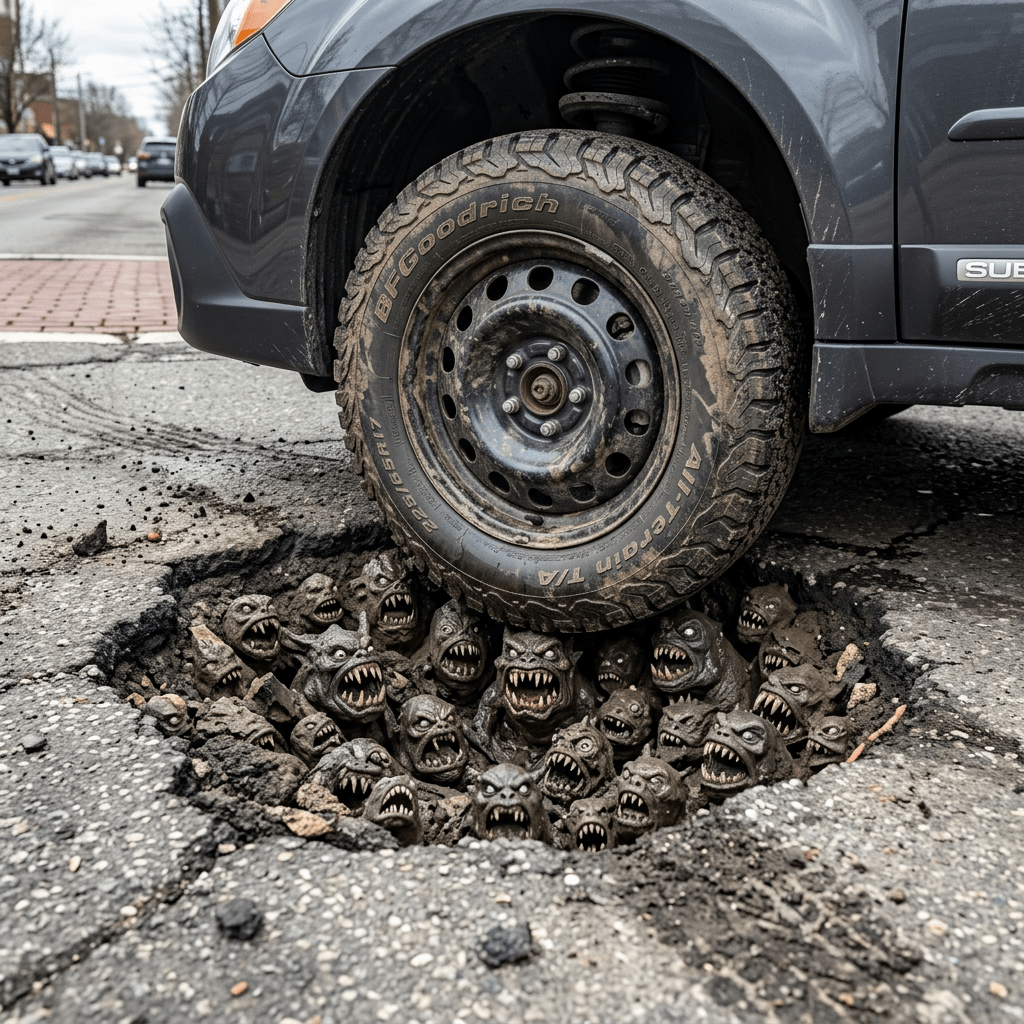
Car tire over a pothole containing small monster figurines with aggressive faces
A car tire hovers above a pothole filled with snarling monster sculptures.

Big Sister
replaced Big Brother
and generously
generated this image

“Watch out for that pot hole!”
“Which one?”
Snap, crackle, pop!
“That one.”

Pot Holes

Jack Pine Sonnet

Welcome to Pot Hole time.
It’s all yours and it’s all mine.
Mine, possession, not land mine,
though hitting one at speed
will rattle your teeth,
shake your spine, and leave you
feeling far from divine.

Pot Holes, Pot Holes, everywhere,
filled with water you can’t drink.
They hide the depth of every hole
with waters, dark as ink.

Spring’s freeze and thaw
breed ever more Pot Holes
than we had before. I think at night
they stay out late,
to fornicate, and celebrate.

A low spring sun in the driver’s eyes
makes shadows shift and slide.

A mazy life full of chance
drawing a labyrinthine thread
through a maze of Pot Holes
that we dread, the morning sun
blinding our eyes so we cannot see
the Pot Holes’ size
nor how they move and dance.

Big Sister
replaced Big Brother
and generously
generated this image

Comment:

This is wonderful fun. Moo has ceased to be jealous of Big Brother and Big Sister with their attempts to read my mind. And what a great job they do of it. All in the cause of the Pot Hole Dance Season. Have you seen the Pot Holes dance? You know, one minute there isn’t one and about and then a split second later – CLANK! The dreaded tire pressure light comes on. You turn it off. It comes back on. You turn it off. It comes back on.

You stop the car at the roadside, turn off the engine, get out, and check the tires. They look all right. You kick them or tap them with a stick. They all sound all right and they all sound the same. You get back into the car. You start the engine. All the lights come on. All the lights go off. Except one – the dreaded tire pressure light. Well, I can swear pretty well in about five languages. I turn the tire light off. Wonder of wonders, it goes away.

I am so happy. I turn on the radio. I clap my hands. And CLANK! I drive into another Pot Hole that appeared from nowhere and walked or danced or shimmied or slithered into the road right in front of your car. You guessed it – and the tire pressure light comes on!

Waist Land

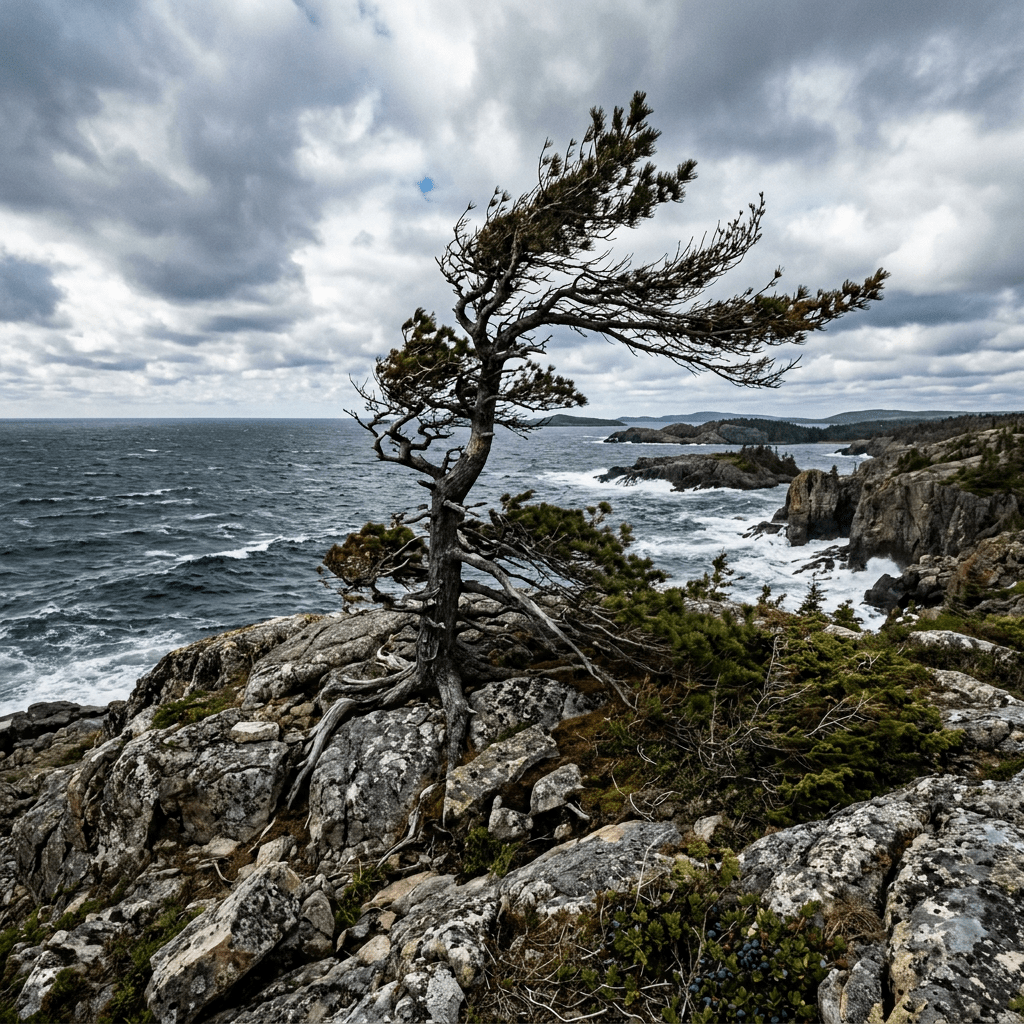
Wind-sculpted tree on rocky coastline with turbulent ocean and cloudy sky
A lone, wind-shaped tree stands on rugged coastal rocks under a cloudy sky

Image generated
not by Big Brother
but by Little Brother
who left the Frying Squad
to become a painter
and mind-reader

Waist Land

Jack Pine Sonnet

living in a waste land
surrounded by books
he writes in his journal
things false and true
in memory of the old days
when the world seemed so new

a life built on sand
slips through his fingers
wouldn’t it be grand
if the sand stays and lingers
refusing to pass through
the hour glass’ waist
so time stops to flow

then he could say no
leave me alone
there’s more sand to fall
I don’t want to go

Comment:

It’s a bit like a cliff-hanger, isn’t it? Hanging on by our fingertips and not daring to look at the depths down below. We know they are there, but look, there’s a tiny fossil in the fissure in the rock, so much older than us, we’ve got a long time to go to catch that up. And remember – 80 is not old, if you are a stone!

Treading air – great fun. Not as good as treading warm water in the local YMCA. Just a lovely sense of balance, floating there in the warmth, no weight on arthritic joints, and the world around us amniotic, as it was in the beginning. Ah, those original waters, we have all swum in them, the rich and the poor, the black and the white, and all shades in between. Even King Charles and the late Queen. And remember, they may speak of blue bloods, but all blood is red -and, if you cut us, do we not bleed.

Speaking of bleeding – blood-thinners – my favorite doctor’s latest joke. I cut my arm the other night, getting into bed. Didn’t even notice. Pillows and sheets soaked in blood when I woke up and my scalloped arm, stuck to the sheet, opened itself up and started to bleed again. Feels like seventeenth century Spain, the wounds of the dead man re-open and start to bleed when the assassin appears before him. Certain truth. Obviously 100% guilty.

And they tell me that in South Wales people are adding cooking oil to gasoline to make the petrol go further. Scotland Yard sent the Flying Squad to South Wales to sniff people’s exhaust pipes to see if they were cheating the tax man. I asked my friend – “Is this true?” “Ah, yes,” he said in his lovely Welsh lilt, “and we call them the Frying Squad!”

Runaway

Runaway

I waited until the boys
in the dormitory slept.
snores, whimpers, children
snuffling, crying in their sleep.

I dressed in the dark,
crept downstairs, opened
the school’s back door,
moved silently to the gates,
and climbed over them.

I stood at the roadside,
stuck out my thumb
at the cars that passed,
not many at one AM.

A cloudless night,
bright stars, dark sky.
A sense of imminent freedom
washed over me.

The fourth car stopped.
A man and a woman.
They opened the door,
let me in, turned around,
and drove me back to school.

I stood in the hall watching
the swing of the pendulum
as the head master, in pajamas,
thanked the couple
for bringing me back to school.

That night, he led me quietly
back to bed. Every night,
for a week, he removed
my clothes from the chair
beside my bed.

I ran away again and again.
No matter where I went
my own face stared
back at me from the mirror.

One day, I realized
I was running from myself.
When that happened,
the running finally stopped,
and I confronted my demons.

Comment:

I guess we are all motivated by flight or fight and I have always believed in the powers of flight – per ardua ad astra – through hardship to the stars, the motto of the Royal Air Force, I believe. Yet running really does no good, especially when we are running from our own interior demons. I hated that particular boarding school, my second, even more than I did my first one. I hated it with a deeply rooted inner loathing that still seethes inside me when I think about it. And that particular ‘first escape’ remains printed indelibly on my mid, every footstep, every floor board that creaked, every shadow that threatened.

Much later in life, while attending my fourth boarding school, one of the slightly better ones, with a strong emphasis on the slightly, my cousin, an unarmed combat instructor, took me in hand. For three weeks we went to Swansea Sands and he put me through basic training. How to break fall, to leg throw, to arm throw. Then he taught me the sacrifice throws, where you go to ground and your opponent follows, you prepared, your opponent not. He taught me about power points and the pointed or sharp edged bones that could do so much damage to the unprepared. He taught me all the multiple choke holds, how to apply them and then the secret of squirming out of them. Monday – Friday, four hours a day, total immersion, three weeks. I learned so much.

After that, I had the choice of flight or fight. However, I no longer saw myself as a victim because I saw those bullies and predators as potential victims. All the vibes had changed. Older, bigger boys no longer bullied me. Everything, in the end, turned out all right!

Rain

Rain

Rain walks thick lines
down the window pane.
The waters below the dam
churn like white shirts
tumbled up and down
in nature’s laundromat.

The radio calls for rain,
more rain, four inches,
they say,
in the next two days.

The moose have already
migrated to higher,
drier ground.
They stand on the highway,
head to head with cars,
stubborn and steaming
in the never-ending rain.

Comment:

It’s raining, it’s pouring, the old man is snoring.
He bumped his head on the top of the bed
and won’t get up until morning.

Follicle Folly

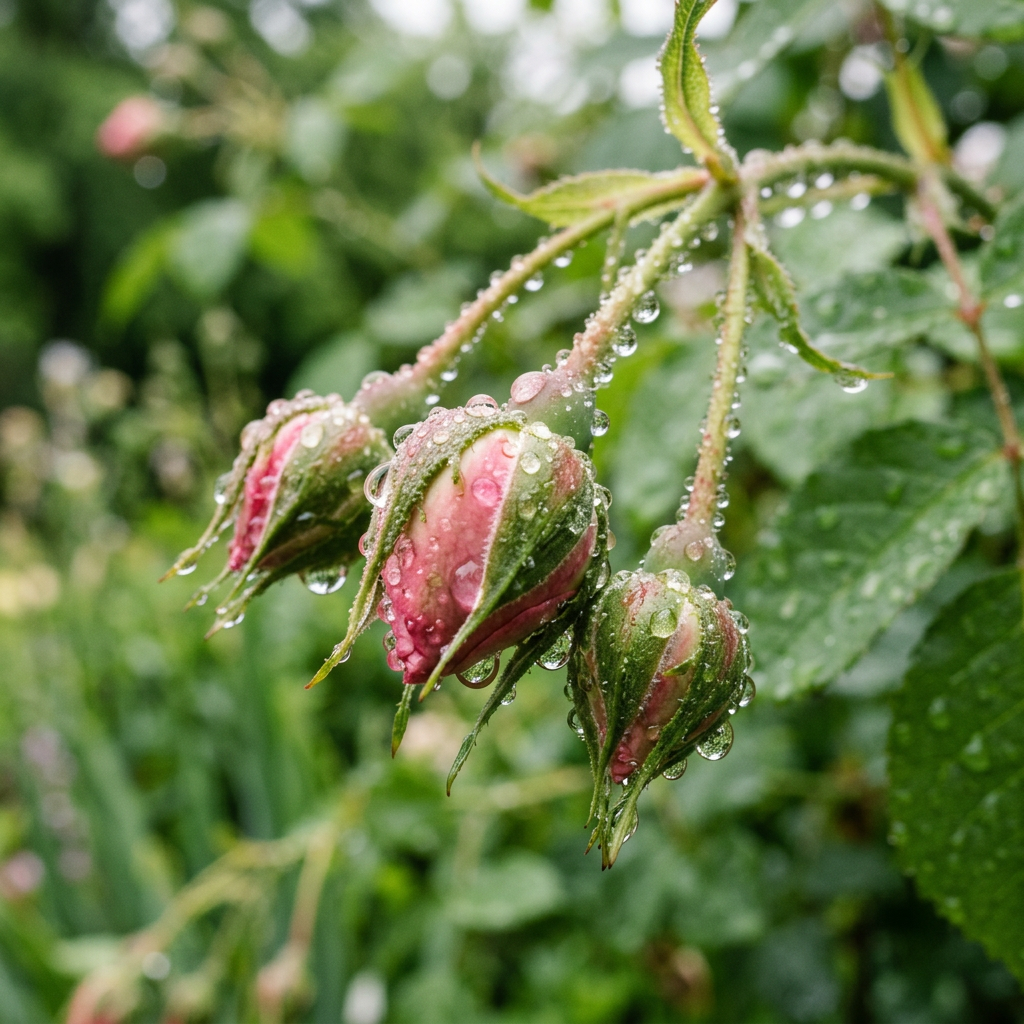
Pink rosebuds hanging with water droplets on green leaves background
Close-up of pink rosebuds adorned with glistening water droplets

Photo AI generated
Big Brother was watching
and listening

Follicle Folly

Jack Pine Sonnet

I am happy with smaller things
the buds just budding on the ash
grass just being grass and green
beneath drizzle and mizzle and
the lightest showers of spring rain

grey / gray I don’t know nor care
clouds descend dampen spring air
dampness curls my remaining hair
some gone but not as much as I see
lost hairs missing from my friends

I traveled with a friend who counted
every hair he lost but couldn’t count
the cost of the weight of his worrying
about every forlorn follicle he lost

Comment:

No comment. That’s what politicians say, and people taken into custardy. What’s yellow and deadly? Shark infested custard, of course. There’s no flies on me said the Portuguese Custard tart as I brushed the ants off it prior to devouring it. Try the Garibaldi cookie aka the dead flies grave yard. The body count of a Garibaldi should be high. You’d be raisin the roof, if the count wasn’t as high as the Count of Monte Cristo. Take off that Iron Mask when you’re talking to me. Who was that masked man? I don’t know. Ask Tonto, stupid.

Warning – these comments were artificially generated by a lost intelligence that is only just coming of age in a time of jerry attic semi-conductor memory loss with everything under lock and key in a small room upstairs under the roof where the thatch used to grow. Even worse than losing your follicles is losing your ….. add your own ending. Don’t make me pull out my remaining hair and waste my time by searching for a word to rhyme. And remember the village church’s limerick competition – the only clean one won it.