Gone out

Gone out

“She has lived.
Now she has gone out.”

And all too soon
I too will go out
and people
will be able to say
he has gone out.

Or not.
Maybe there’ll just be
a silence.
Few people know me.
Even fewer care about me,
know who I really am
what I’ve actually done.

What have I done?
Nothing, really.
Nothing at all.

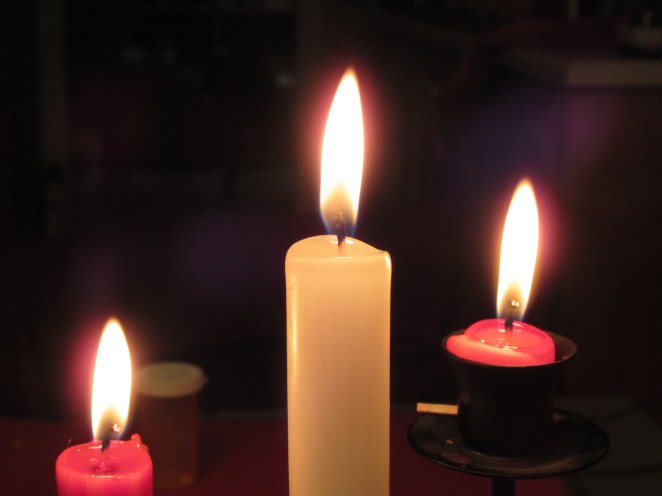
But I have struck a match or two,
lit some candles,
and allowed them to shine
in the darkness …

and soon, I too,
like those candles,
will go out.

Commentary:
The opening quote, changed and adapted, is from Rudyard Kipling’s novel Kim. I was reading it a few days ago, by candlelight, as we had a brief, and totally unexpected power outage because some idiot ran into a power pole on the highway below us and cut off our power.

Reading by candlelight is so inspirational. It brings back memories of my childhood in Wales, summer evenings in the bungalow, no power, no running water, reading by lamplight or candle light. The candle’s scent, the flicker of shadowy thoughts across the page, each word held for a moment or two in a magic, shimmering glow. I recall also the candles on the high altar, lit for midnight mass, and the church all a-sparkle with shimmering light, incense, and flowers.

Power outage – I often think they should be called power out[r]ages. Then I think of the war zones, rife with suffering, where power outages are only one of the many outrages from which people are suffering. “Man’s inhumanity to man.” Robbie Burns, I believe. I regret calling that driver who took out the power pole an idiot. Shame on me. I found out later that he was a human being, suffering, just like me, from the attributes of ageing. A heart attack took him and his leaden foot, dead on the accelerator, sped him into the power pole.

DOA – dead on arrival at the power pole, and at the hospital. “He has lived. Now he has gone out,” snuffed out like the candles I blew out when the power was finally restored. It’s so easy to relight a candle, so hard to relight the beauty of a lost human life.


Tell us about a time when you felt out of place!

Tell us about a time when you felt out of place!

I think it would be much easier to tell you about a time when I felt as if I was in my proper place. There were so few of them. As for the original question – Tell us about a time when you felt out of place – I think that a time should be replaced by the many times. Learning languages has always been more of a pain than a pleasure, for me, anyway. In the Basque Country, Northern Spain, at first with my parents, and then on my own. Sitting at the table or standing in the kitchen, listening to people chattering away in Spanish some days, in Basque, on other occasions. I was reduced to interpreting looks, smiles, scowls, meaningless sounds … how could I have felt that I was in my proper place? Etiquette – I knew nothing about their etiquette. Culture – I knew nothing about their culture and they knew even less about mine. I lived in a world where waves of sound battered at my body and I stood there, a rock on a seemingly deserted linguistic beach, being gradually worn down by the endless waves and the eroding tides. How could I have felt anything but ‘out of place’?

The same thing happened when I became immersed in French culture. I spent some time in the South of France, in an area where Provencal was still spoken. Between the two languages and the differing accents, I was lost, lost, lost.

Something similar happened when I came to Canada. Here, it wasn’t the language that baffled me, but the culture. I remember trying to learn to skate. My cousin played Junior “B” hockey and volunteered to teach me. Well, I learned very slowly (a) to keep my balance and (b) to move forwards very slowly. However, I couldn’t skate back wards and I couldn’t stop. In spite of that, I decided to try and play hockey. The park close to where I lived in Toronto had a frozen area where the little kids played shinny. I asked if I could join in. After three falls and a total inability to stick handle in any known fashion, they stuck me in goal. I used the goalie’s stick to try and stand up. After the third or fourth goal, one five or six year old whisked up to me, stopped in a sideways shower of ice, and said “Sir, please sir, you’re allowed to use the stick to stop the puck, you know.” I retired from ice hockey soon after that, and from skating. I did learn to cross-country ski, though. I also earned the name Wapiti (white-tailed deer) long before I saw one or knew what it meant.

And that is all just scratching the surface. I could say more, so much more. But I’ll control myself.

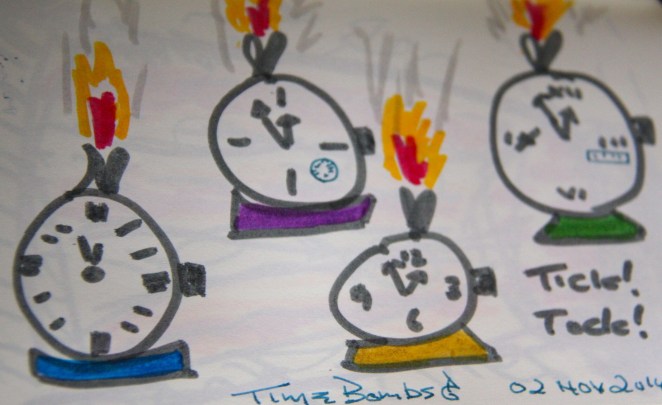
Clepsydra 21

Clepsydra 21

… she left me
          at the lighthouse
               rising tide
                    beach diminishing

and grew smaller
     as she walked away

I search the sand for sea-gems
     sand-dollars
          cerulean sea-glass
               rarest of all the reds

ground down
     polished
          sanded to perfection

so many worlds
     in a grain of sand
          their words going unspoken
               carried away by the sea-wind

the wind that haunts
     caves and cliffs
          hooting like a ghost train
               in a forlorn
                    tunnel of love

love lost
     love found
          an old love
               rediscovered
                    only to be lost anew

what is this thing
     called love …

Commentary:

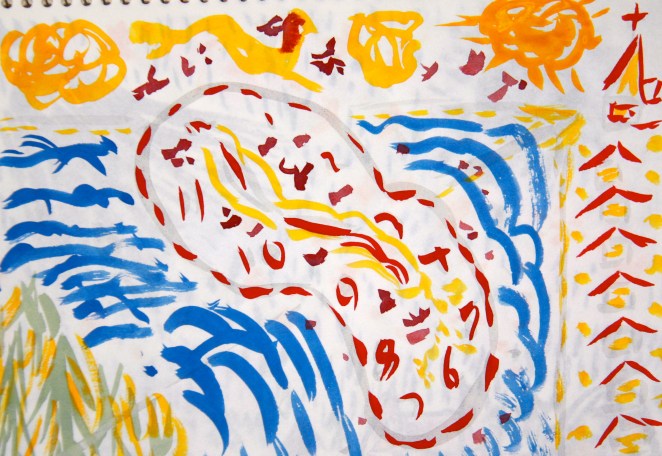
Listen! “Can you hear the music?” “No, but I hear singing even though there’s no one there.” I know, I know, we have had this conversation before. Moo didn’t have a painting along the lines of ‘what is this thing called love’, so he dug out this one – Walking on Air – the painting, not Moo. But then, Moo’s a silly old romantic and verses and songs settle in his mind. All too often, when he walks he finds he’s ‘walking on air’! The two of us, Moo and me, have always loved that song. Great to work it into a commentary on a poem (again).

Love – what is this thing called love? And how many types of love are there? We use the word so frequently, or infrequently, if we are Mr. Grinch. But what does it mean? Love of self, love of other? And how many others can we love – I know that Minnie had a heart as big as a whale, but how many loves can fit into it? Love of father, mother, daughters , sons, brothers, sisters, cousins – how far do we go? Winning sports teams – everybody loves everyone on the team when they win they cup. That love is so much harder if they lose it – especially if there is a goat on the team, and I don’t mean greatest of all time! I mean sacrificial.

I love you with all my heart! Does that include the pacemaker and the stent? What does atrial fibrillation mean in that situation? Good questions. Neither me nor Moo have the answers. Write your answers on a postcard and send it to – where? With Canada Post on strike, you will need a team of real snails. Hitch your postcards to them. Threaten them with the salt shaker. And off they go. Snail mail is back. Or you could place them on a dog sled, hitch up the huskies and Mush, Moo, mush! Away they all go hauling the mail. Why does it always be the mail? Why can’t it be the Femail? Mail – Femail. Oh, but I love that. There, you see. We’ve just added another meaning to love. Let’s hope none of the huskies lies down to rest. That’s called a Canadian flat tire. Oh, I love that one too.

I am running out of time, space, and ideas. And that’s only one word from the poem that we’ve looked at. Oh, shame and scandal in the letter-box.

Clepsydra 18-20

18

… as free as the birds
     a sky full at North Cape
          where shores retreat
               year after year
 
the big red mud diminishes
     under advancing waters
          sea-threatened cliffs
               undermined roads
                    houses
                         the lighthouse

gulls follow the fishing boats
     herring gulls
          blotting out
               sun and sky
                    above the reef

with its seals
     basking in sunshine
          knowing themselves
               being themselves
                    thinking themselves safe

kings and queens
     of their sealdom
          never questioning …

19

… an osprey
     sudden the swoop
          turned into a stoop

water shattered
     total immersion
          then emerging
               with lusty thrusts of wings

claws clasping
     imprisoned prey
          prised from the sea
               raised to the skies
                    up and away
                         murderer and victim

oblivious below
     the black horse
          with cart and farmer
               gathering seaweed

all of them
     having no doubts
          safe in the security
               of their roles …

20

… while lost in the labyrinth
      I searched for a thread
               on life’s loom

a thread woven
     by an unknown
          unseen hand
               a hand and thread
                    I could never control

yet one day
     that thread
          will lead me out
               from the dark

then shall I see
     the sun’s great candle
          beneath which red rocks
               wave and water battered
                    crumble

here at North Cape
     in a way that nobody
          can understand …

Commentary:

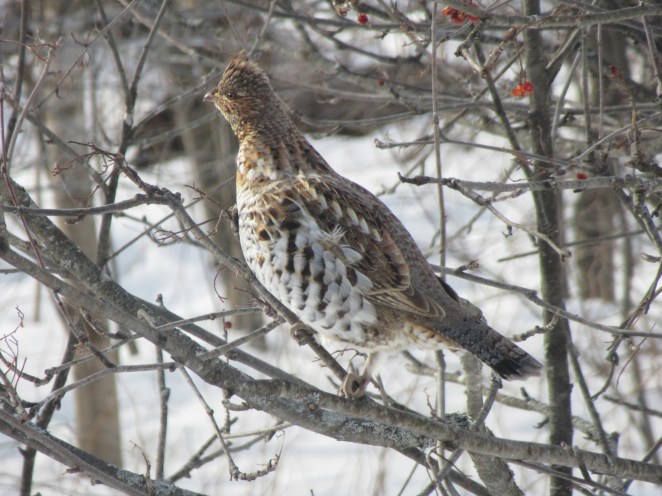
The osprey “emerging with lusty thrusts of wings, claws clasping, imprisoned prey prised from the sea, raised to the skies, up and away, murderer and victim.” The words are based on the photograph. A quiet day, somebody shouted, and pointed, and clickety-click, I was lucky enough to capture the whole thing on my digital camera. This one shot summarizes it all.

The stanzas (16 & 17) that precede this moment are available here. Clepsydra, the book, is one single poem, one single sentence, that rambles on and on. Each stanza stands alone, each poem (numbered) stands alone, and the whole book stands alone as a single sentence summarizing what I have seen and where I have been. Bakhtinian Chronotopos – my dialog with my time and my place. In this case, my many dialogs with my multiple times and multitudinous places.

Albert Camus lent me the phrase ‘murderer and victim’. ‘Nous sommes, ou meurtrier ou victime‘. Quoted from memory. I hope I am not too far wrong. My memory fades as I age. Louis Aragon suggested I borrow his line “rois tombés de leurs chariots” – that I found in his collection Il ne m’est Paris sans Elsa. Here, I have applied it to the seals at North Cape, PEI – “seals – basking in sunshine – kings and queens of their sealdom.” Intertextuality – texts talking to texts and recalling segments of texts within other texts.” Wonderful. Alas, I fear the coming days when the memory may no longer be so clear. ‘What will be, will be’ said the Osprey as he pulled the flounder from the sea and carried him too his nest in a nearby tree.

Absence

Absence …

… makes the heart grow
callouses scabs you can
pick at with your finger
nails bleeding fresh blood

they remind you that you have
a heart feelings something
buried so deep you need
a pick and a shovel to dig
a shaft with wooden slats
placed carefully at the sides
so your mine won’t collapse

you dig deeper and deeper
until in the gloom you see
the feathered fluttering —

a broken-winged canary
sacrificed in its cage
so part of you can escape
flee the mine
and come out alive

Commentary:

A golden oldie. Moo thought Poppy Day (11/11/2024) would be a suitable painting. Those who survive rarely forget those they were forced to leave behind. Kindred spirits, they travel though life together, the live one carrying the other on his shoulders as he would have done earlier, had he been able to.

Moo still has a teddy bear. He tells me he has always slept with one. His first teddy was an Australian Koala, a real stuffed koala given him by his Australian family, back when he was born. Moo was reading a book on the Battle of Britain (15 September 1940). It had a picture of the gunner from a Bolton Paul Defiant, sitting in the gun turret. Behind him, he had his little teddy bear. Moo couldn’t stop crying. He thinks he might have been an air gunner in another life, and when he saw that teddy, it brought back so many memories – flak, night fighters, search lights, tracer bullets, pain, flames, and then the unending darkness. So many did not come back, especially the tail-gunners. Their absence is still a presence to someone in their families. And so it should be.

Clepsydra 16-17

Clepsydra 16 & 17
Click on the following link for the previous stanzas
Clepsydra 14 & 15

16

… would this be the beginning
     or the end

men and women
     on the street
          hands out
               fingers splayed
                    panhandling

their eyes
     black holes in empty faces
          not brain dead
               just drained of hope
                    brains deadened
                         by blow after blow

loaf after loaf crisping
     blackening in life’s oven
          fit only for preacher crows
               flitting from tree to tree

descending on garbage day
     to feast on desperate souls
          marooned kerbside
               for garbagemen to find …

17

… no soul allowed
     to weigh more than forty pounds
          each one swaddled
               in a plastic garbage bag
                    that serves
                         as a winding sheet

dust to dust
     to grey-faced ashes
          wound up by brawny arms
               swung flung skywards
                    into the truck

then ferried away
     to that place where crows
          and hunch-backed vultures
               gulls and humped eagles
                    wait for merciless ferries,

they cross into the shadow lands
     who was the one who found me
          who untied the ties that bind
               freed me from my cell
                    the shell of myself
                         and set me free …

Commentary:

Poetry explains itself.
If it doesn’t, it’s inexplicable.

Autumn Leaves

Autumn Leaves

I used to run,
jump, and catch them
in mid-air,
one, two, three
in each hand.

Now
I stand and wait
for them to fall
and land, perhaps,
on my clothes
or catch in my hair

the Leprechaun luck
of my Irish heritage,
so long-denied,
with its pot of golden leaves
waiting for me
at summer’s cast-off
rainbow’s end.

Commentary:

Autumn Leaves, but where does it go to. Good question. Moo asked me that the other day. I just had to tell him that I didn’t know. However, he did offer me the perfect painting for the fall and the changing leaves. Fall Folly Age. I never realized that he could play with words like he plays with paint. Anyway, I know that last winter he painted a picture of little white dots with wings. “What are they?” I asked him. “Snow flies,” he replied. “You know, when the snow flies …” “When the snow flies do what?” “I don’t know.” Moo and I live in a mysterious world, as you have probably come to realize.

Any way, the combination of fall foliage and fall folly age is quite a good one and it shows the folly of ageing and trying to chase down falling leaves when gadding about in the garden with two sticks, one in each hand. Of course, in case you don’t like that painting, and I hope you do like it, because I do, then here’s another one for you.

The text reads – “Autumn leaves – catch them if you can – while you can -and close the door behind her – when she leaves.” Oh witty Moo. Painting and occasional poetry too.

OAS

OAS

I take up my pen to scribble
my name and a riddle in the sands,
neither seen nor understood
by folk in far off lands.

Yet here I stand on foreign strand
my body twice marooned
by friends and fate and oft of late
my achievements all lampooned.

I bid you spare a thought for me
and also for my fate:
I came, I saw, I got a job,
but retirement ain’t great.

A pittance for a pension,
a life on OAS,
a walking stick and SOS,
that’s all that’s left, I guess.

Commentary:

A Golden Oldie from way back (2013 or so). Things get worse, in many ways, but yma o hyd – we’re still here. And that’s the main thing. We need rain, more rain, and yet more rain. Yet the damp really gets to those of us who suffer from osteo-arthritis. Maybe we should put a tariff on it (250%) and then it would be priced out of existence. Then it can rain as much as it wants and the aches and pains will stay in Aix-les-Bains and not come running after me.

I asked Moo for a painting of rain drops falling on my head, but he didn’t have one. So I found a photograph of a real rain storm falling on the back porch, a year or so ago. We need one of those right now. Moo is nodding his head as I type. Oh dear, he just snored. He must have fallen asleep. He does much more noddy now than he used to. And so do I. Maybe I’ll do a photo of a big yawn next. Or he can paint one.

Monkey Meets Pontius Parrot

Monkey Meets Pontius Parrot
(With glorious  memories of Macarronic Latin)

Pontius Parrot is very clever
and very pontifical.
“Pretty Polly!”
He pontificates from his pulpit.

His name isn’t Polly
and he doesn’t have a pulpit
but he parrots words
in Macaronic Latin:
“Caesar adsum jam forte.”

Pontius Parrot is perky at the podium
and bounces up and down,
preening himself self-consciously,
rattling his chains,
shaking his bars,  and speaking Latin:
“Brutus aderat.”

He is marked with shame and scandal.
A dysfunctional family of feathered friends
 has henpecked him until he is black and blue
and he has thrown up copiously:
 “Caesar sic in omnibus.”

He dips his wings in holy water,
calls for some soft soap, 
and washes his feathers and claws.

Poor Pontius Parrot,
he can only say “Repent!”
“Brutus sic in at.”

Commentary:

I asked Moo if he had ever painted a parrot, but he told me that he hadn’t. However, one of his favorite viewers, had once called this painting a pile of spaghetti wriggling in tomato sauce and he thought that spaghetti was close enough to macaroni for it to serve as a painting for Bony Macaroni Latin.

I had to explain to him what we mean when we say Macaronic Latin. Back to that boarding school and we used to invent all sorts of Macaronic Latin phrases. They used to cane us with bamboo canes. So here’s the verb paradigm in Latin for ‘to cane a student’. Bendo – whackere- ouchi – sorebum. Of course, it helps if you know what Latin verb paradigms look like. They are easy to remember and are aide memoires for the four main parts of the verb. Bendo – I bend over – first person singular, present tense – whackere – to whack or cane – infinitive – ouchi – I said ‘ouch’ – past tense – sorbum – the inevitable result – past participle.

Now, if we look at the italics in the poem we see a poem within a poem, and that smaller poem is written in Macaronic Latin.

“Caesar adsum jam forte.
Brutus aderat.
 Caesar sic in omnibus.
Brutus sic in at.

Translation

Caesar had some jam for tea.
Brutus had a rat.
Caesar sick in omnibus.
Brutus sick in hat.

Oh never underestimate the ingenuity – linguistic and / or otherwise (and we won’t go into that one right now) – of the bored-to-tears Public Schoolboy. Especially if he is not destined to be a Perfect Prefect like Perfect Prefect Plod – who was never any good at Latin, if I remember well. Neither was I come to think of it. Horrible language, dead and reeks like the dead rat that Brutus ate.

As for the ‘repent’, well, usually, just before he beat you, the master doing the beating would enquire as to your health and ask you if you repented of your sins, crimes, bad language, being cheeky to Perfect Prefect Plod, or whatever else you had done (like smoking or holding a girl’s hand in public instead of a boy’s). You always said ‘yes, of course I do, sir,’ in the vain hope of avoiding a beating. But, bad luck, the cane descended anyway, ouchi was heard, and the victim retired to the bath room to examine his past participle, also known as his sorbum.

I bet you never imagined any of that. Wow! What a great lesson I have taught you today. Think about it all and think about it carefully. Now you know why Pink Floyd sang “We don’t need no education.” But what an education it was. And remember, the Duke of Wellington, Old Nosey, once said ‘my battles were won on the playing fields of the pubic schools of England.’ Oh dear – I hope I got that right. I fear there’s a letter missing somewhere.


What aspects of your cultural heritage are you most proud of or interested in?

What aspects of your cultural heritage are you most proud of or interested in?

Right now, I am quite interested in (re-) learning the Welsh Language. Although I was born in Wales, I was never allowed to speak Welsh at home and my parents sent me to schools in which Welsh was never seen nor heard, let alone taught. That didn’t stop me from hearing out on the streets, reading it on the street signs, or visiting places whose names were only available in Welsh, or an Anglicized form of Welsh.

I am no longer an assiduous student of languages, but I get a Welsh Word a day by e-mail, and each word comes with an explanation of meaning and extended meanings. I also receive the words’ pronunciation and its phonetic changes (something peculiar to Welsh – they come in written form and can be quite complicated). Useful sentences are added – not long, but 3-4 seconds, repeatable ad infinitum, by reliable Welsh speakers, who often offer the variant pronunciations not only of North and South Wales but of other regions as well.

A great deal of linguistic and cultural history is wrapped up in language and the origins of the word are analyzed – sometimes going back to Indo-European, proto-Welsh, Medieval forms, and modern changes to the language. Emphasis is also placed on the survival of Welsh and its preservation, in written form, in Y Beibl Cymraeg, The Bible in Welsh. This fixed the language and helped enormously in its preservation.

I am also interested in Welsh Songs and Hymns. I already know most of the tunes having sung them in English during my childhood. Now I am learning them in Welsh and am currently working on the words to Calon Lan, one of my favorite hymn tunes. So, there you are. A new start at a very advanced age. A return to the past and an investment in the unknown future!