Dorset Knobs and Old Vinny

Dorset Knobs and Old Vinny

Five Lysol wipes remain in the can.
As rare as hen’s teeth or Dorset Knobs
and old Vinny, they have become precious
items sold in marked up prices online
by people who stocked up at the beginning
of the crisis on commodities they were able
to seize before rationing stepped in
and limited quantities were permitted
to each purchaser who waited patiently,
in line, to enter the super-market.

I place my leather glove on my hand
and move to the gas pump. How many people
have used it, pumping gas with bare hands,
and the metal surface retaining how many germs
who knows for how long? I cannot wear my mask
while pumping gas. Cover my face and they will
not serve me for fear I may flee without paying.
I finish pumping, open the car door, remove
my glove, put on my mask, pick up my cane,
and walk into the gas-station shop to pay.

As I limp towards the door, a man, mask-less,
holds the door open for me, his face less
than a foot from mine. “There you are, sir,”
he says, showing his teeth. “Service with a smile.”

I return to the car, remove a precious sanitizing wipe,
clean my glove, the car door handles, every spot
my gloved hand touched. Then I wipe the handle
of the gas pump and dispose of the precious wipe
in the garbage can nestled between the pumps.

Commentary:

Well, I am willing to place a bet with my favorite bookmaker, at Covey’s Print Shop, that not many of you out there know what Dorset Knobs and Old Vinny is or are. Moo has joined me in my wager and he is willing to bet that very few of you know where the line “où est le papier?” comes from. Even fewer will be able to sing the whole song! Oh dear, our world is only artificially intelligent, not really intelligent. In my teaching days I would ask the class if we were in a smart classroom. “Yes, sir,” they would reply. I’d then walk to the wall, tap it and ask it “What’s 2 + 2?” The wall never answered. I’d try again. “What’s 2 + 2?” – Silence. “Not such a smart classroom then,” I’d say to the students.

But I bet you all remember Covid, the days of taking all sorts of precautions, of wearing masks and gloves, of washing everything that came into the house, of washing hands, and not touching surfaces in public places where the unwashed may have left a winning lottery ticket with your Covid Number upon it. Oh dear, those were indeed the days. And this little poem, a golden oldie, recalls them. Let us hope they do not return. And let us doubly hope they do not return with a mutating or mutated helix of sinister proportions.

Carved in Stone 44

Carved in Stone
44

The old man, withered,
last house on the left,
leaning on his garden wall,
coughing, spitting up
coal dust and blood.

He’s not old, when you get close,
just grown old, underground,
where emphysema
and pneumoconiosis
devour men and boys.

He spits on the side walk.
Mining souvenirs,
Max Boyce calls them,
and they appear
every time the young man,
turned suddenly old,
starts to cough.

He can’t walk far,
wearing carpet slippers,
soft and furry,
just leans on the wall.

He fell, or was pushed,
into the trap at an early age,
when the coal seams
had grown so thin,
that only a small boy
could kneel before
the coal black altar
of the underground god
and, with a pick and shovel,
he learned to carve and shape
the long, slow death
contained in those seams.

Commentary

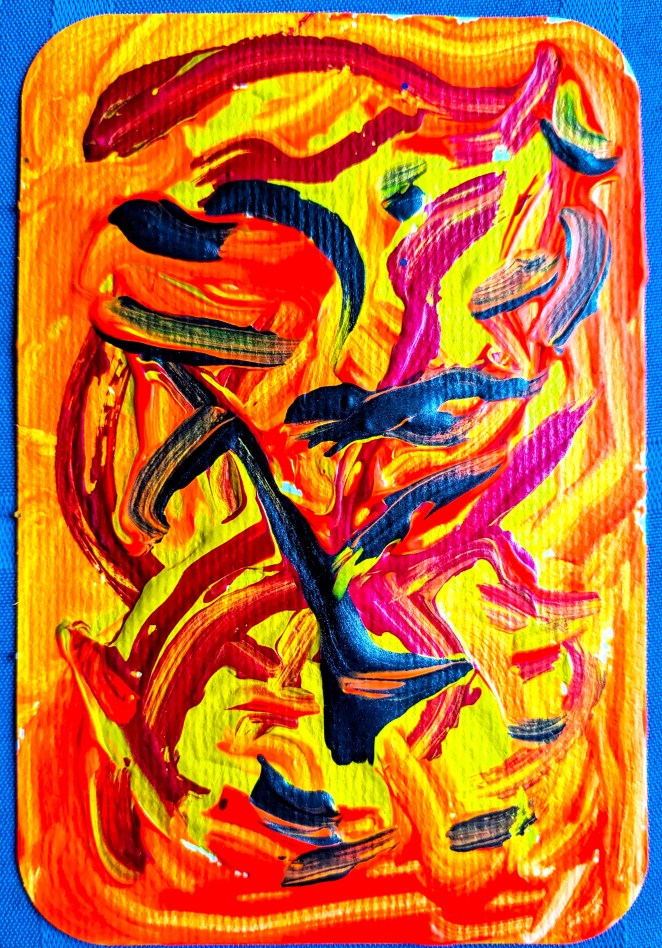
Moo’s painting, Coal Face, adorns the front cover of Carved in Stone, Chronotopos II. Coal Face is not the denigration of Black Face, white men pretending to be black by dyeing their faces, although they have some similarities. In Welsh Mining, the coal face is where the men used to dig when, with their shovel and their pick and their little lamp and wick, they knelt to dig out the coal. Knelt, because there was no standing room, deep down underground. Then, when the seams grew thinner, and the men could no longer reach them, the young boys were sent underground.

A day underground left men and boys with coal dust seamed into their bodies, especially their hands and their faces. Hence the triple meaning of black face – where the coal is dug, what men and boys looked like after a day’s work, and the blackening of their faces by white men, for the fun of it.

Faces are one thing, coal dust in the lungs is another. The result – emphysema and pneumoconiosis devour men and boys. Black lung, some call it. “And every time he coughs, he gets a mining souvenir” – a black spot coughed up on the sidewalk – Max Boyce.

Child labor, minimum wage, living wage, work that kills, slowly and silently, – what can I say? Forgive me, for I can say no more.

Carved in Stone 30 & 31

Carved in Stone

30

A well of beauty dwells within me,
not skin deep, but buried, arcane.

A flickering candle
tethered to an altar,
shimmers at midnight,
when the Latin mass is said,
bringing me light.

In the dark, canonical hours,
shadows move beside me
as I walk long corridors
from dormitory to a chapel
filled with heady incense.

31

I kneel, dumb-founded,
as candle flames wax and wane,
their brightness enhanced
by the midnight magic
that turns doubters into believers.

Spell and symbol, each candle a star,
shining, twinkling, in a galaxy of light,
and everywhere, the incense,
overloading my brain, releasing me
to revelations way beyond
muttered responses, mumbled words.

A world of inner darkness,
yet heart and soul soar together
up to the altar’s immortal light.

My shadow flickering
on the corridor walls,
as candle in hand, half-asleep,
I return to my cold bed
where the long, chill snake
of the bamboo cane
reminds me of tomorrow’s
flagellation.

Commentary:

Shadows on the wall or candles – with which should we start? Verbal and visual – how do they blend and knit together? Does my visual take away from your visual, or does it enhance it? To what extant does my verbal and the commentary on my verbal change the nature of your original thoughts when you re-create, within your own mind, my images, both verbal and visual?

Verbal and visual – now add the sense of smell. “The incense, overloading my brain, releasing me to revelations way beyond muttered responses, mumbled words.” And now remember that I was only six or seven years old when I experienced these things. Add the Latin mass, only half understood, the cold, damp feel of walls and wood beneath the hands. A world of inner darkness, yet heart and soul soaring together up towards the altar’s immortal light.”

My words are black print on white paper. My memories flare – an aurora borealis of senses sent crackling down the spine, in and out of the mind, tumbling the brain into a world … what sort of world? An unimaginable world. One never forgotten. One never re-recreated. One that never existed. One that never could exist. One for which the young child, six or seven years old, yearns for the rest of his life. His unsatisfied life. His unsatisfying life. His meaningless life. His absurd life.

Oh pity the poor puppy, not knowing what he has done wrong, not knowing how to put things right, always inadequate, whining and cringing at his master’s feet. And always, “that cold bed where the long, chill snake of the bamboo cane reminds me of the next day’s flagellation.”

Memories

Memories

All that remains of you: memories
and these swift-flowing rivers of blood
embodied within my flesh and skin.

A lifeless kite, each word I write,
too heavy to rise. Each sentence,
a wasted movement of lips and tongue.

And you, a black and white snap-shot,
of blooded washing hanging on the barbed
wire fence we grew each day between us.

Today, sunlight streams through stained
glass windows of the house you no longer
inhabit. Dust rises from artificial flowers.

Your poinsettia’s dry silk leaves, now mine,
brush a taut, barren kiss against my face.
I dream of the drowned lying cold on a beach.

Fresh memories pound through my head.
Waves on a rocky shoreline. Each word
a grating grind of shingle and sharp stones.

Commentary:

Moo calls it going Bodmin but the idea comes from Doc Martin and Porthwen. People lose their minds, their directions, and end up ‘going Bodmin’. This means they wander about, lost, on the Bodwin Moor and can’t find their way home. As we age, it happens to many of us. Not only do we go Bodmin, but our memories betray us. Sometimes we remember what we did as children, but forget what we did a few moments ago.

WWI – my grandfather told me all about it. “We’ll hang out our washing on the Siegfried Line, have you any dirty washing mother dear?” Or worse, “If you want to find the Sargent, I know where he is, he’s hanging on the old barbed wire.” Unbroken wire, covered by enemy machine guns, we who die like cattle – such bitter memories. And the French, walking to the front, baaing like lambs being led to the slaughter, decimated, one in ten (10%) being shot for cowardice or insubordination. “If you want the whole battalion, I know where they are, they’re hanging on the old barbed wire.”

And now you must think of the barriers, the fences, that we grow between us, day after day, as we grow old, and older. Artificial flowers, houses we no longer inhabit, dust motes floating in the air through rooms well-remembered, but no longer open to us. “Each word, each memory, a grating grind of shingle and sharp stones.”

Look at them, those lost people, those forgotten faces. You may even recognize one or two of them. Listen – well-remembered voices, bugles calling from sad shires, and every night, a drawing down of blinds.

Alone

Alone

the longing
to belong
appears from
nowhere

I want
to lose myself
in something bigger
than myself

religion
can bite like that
church and altar
feast days
incense and candles
confession
repentance
forgiveness
then sin again

I am not religious
not in that sense

nor am I militant
right arm raised
goose-stepping
in a parade
each step in time
with every one else

if that’s the meaning
of belonging
I guess I’ll continue
to dream alone

Commentary:

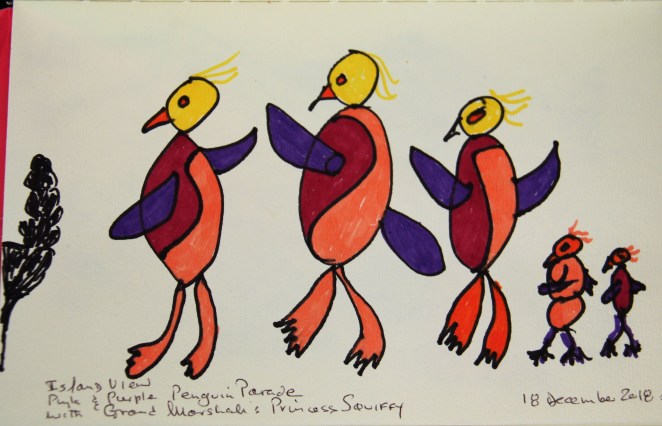
Moo thinks that Princess Squiffy, out at the front of the parade, a solitary cat, all alone and on her own, would be perfect for this poem. I am not so sure. Everybody is so happy, so engaged, except for Princess Squiffy aka Vomit, who is vanishing into the woodwork – about to plan and execute her next act of sabotage, I guess. Yes, Vomit! She’s the one who throws up in my chair.

The meaning of meaning – such a simple phrase, such a complicated philosophical history. How does one ‘belong’? In what ways can one ‘belong’? Does one yearn to belong or long to belong? And what does it mean – to belong? Does my cat belong to me? Does my dog belong to me? Cat and dog are long dead now – so how can they belong to me? And when I am gone, all my belongings will belong to someone else. A strange world, eh? And yet I long to belong in it for as long as possible.

The two most dangerous words in the world – thine and mine. Cervantes wrote that somewhere. For thine and mine are possessives. They teach us to possess things, to claim them as ours. My house, my garden, my trees, my flowers, my lawn. With the drought that has occurred this summer and into the fall, I can no longer say my lawn, my flowers, my garden, for they have all dried up and marched along, privatim et seriatim, – a touch of Kipling there, Storky and Co. if I remember correctly, and I don’t, because I just checked and it’s Stalky not Storky! – into whatever happy gardens dead flowers and gardens inhabit in their after life.

I think one of the most dangerous games ever invented is Monopoly. Make no mistake, I love my Monopoly set – especially the top hat and the flat iron – but what do we learn from Monopoly and from all similar types of game playing and role modelling? Why, to gather everything into our hands hands and possess everything on the Monopoly Board. At least when we play chess, we defeat an opponent by check-mating his / her king. We don’t have to accrue all 31 pieces on our side of the board leaving the poor king alone on the other. Even Fox and Hounds – and that’s an impossible game to win when you’re the fox- doesn’t humiliate anyone in quite that fashion. Ah well, the meaning of the meaning of Monopoly – Happy Canadian Thanksgiving – we can all have a good rant about that one.

Inquisitor

Inquisitor
Sun and Moon

He told me to read,
and plucked my left eye from its orbit.
He slashed the glowing globe of the other.
Knowledge leaked out, loose threads dangled.
He told me to speak and I squeezed dry dust
to spout a diet of Catechism and Confession.

He emptied my mind of poetry and history.
He destroyed the myths of my people.
He filled me with fantasies from a far-off land.
I live in a desert where people die of thirst,
yet he talked to me of a man who walked on water.

On all sides, as stubborn as stucco,
the prison walls listened and learned.
I counted the years with feeble scratches:
one, five, two, three.

For an hour each day the sun shone on my face,
for an hour at night the moon kept me company.
Broken worlds lay shattered inside me.
Dust gathered in my people’s ancient dictionary.

My heart was like a spring sowing
withering in my chest
It longed for the witch doctor’s magic,
for the healing slash of wind and rain.

The Inquisitor told me to write down our history:
I wrote … how his church … had come … to save us.

Commentary:

No wonder the little girl in Moo’s painting looks so sad. She must have read this poem and understood how the exercise of power and authority, be it religious or secular, can effect those upon whom it is exercised. Times change, but so many things remain the same. The pendulum swings, and it moves from chaos to order and back again. The meaning of meaning – how we define chaos and how we define order define who we are.

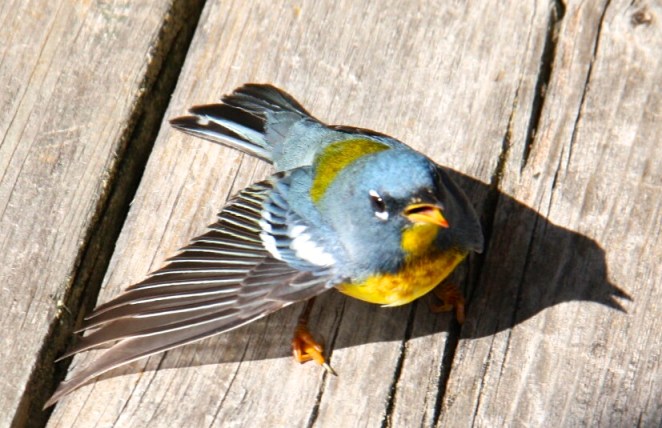
Birds of a feather flock together. Manners maketh the man. Wonderful sayings. But fine words do not necessarily make for fine men or women at that. Serpents and senators, both can speak with forked tongues. It is up to us to apply discourse analysis and distinguish between what they say and what they actually mean. As my friend Jean-Paul Sartre once said – “L’homme n’est rien d’autre que ce qu’il fait.” A man is nothing more than what he does. His deeds reveal his true inner self – and remember – the plumage doesn’t necessarily make the bird.

Gone out

Gone out

“She has lived.
Now she has gone out.”

And all too soon
I too will go out
and people
will be able to say
he has gone out.

Or not.
Maybe there’ll just be
a silence.
Few people know me.
Even fewer care about me,
know who I really am
what I’ve actually done.

What have I done?
Nothing, really.
Nothing at all.

But I have struck a match or two,
lit some candles,
and allowed them to shine
in the darkness …

and soon, I too,
like those candles,
will go out.

Commentary:
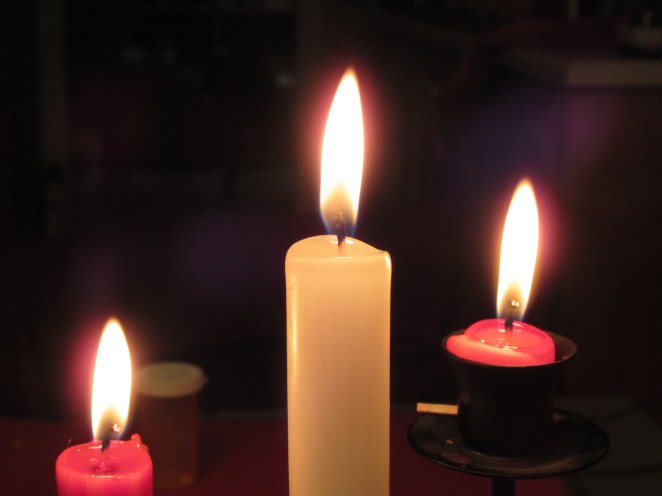
The opening quote, changed and adapted, is from Rudyard Kipling’s novel Kim. I was reading it a few days ago, by candlelight, as we had a brief, and totally unexpected power outage because some idiot ran into a power pole on the highway below us and cut off our power.

Reading by candlelight is so inspirational. It brings back memories of my childhood in Wales, summer evenings in the bungalow, no power, no running water, reading by lamplight or candle light. The candle’s scent, the flicker of shadowy thoughts across the page, each word held for a moment or two in a magic, shimmering glow. I recall also the candles on the high altar, lit for midnight mass, and the church all a-sparkle with shimmering light, incense, and flowers.

Power outage – I often think they should be called power out[r]ages. Then I think of the war zones, rife with suffering, where power outages are only one of the many outrages from which people are suffering. “Man’s inhumanity to man.” Robbie Burns, I believe. I regret calling that driver who took out the power pole an idiot. Shame on me. I found out later that he was a human being, suffering, just like me, from the attributes of ageing. A heart attack took him and his leaden foot, dead on the accelerator, sped him into the power pole.

DOA – dead on arrival at the power pole, and at the hospital. “He has lived. Now he has gone out,” snuffed out like the candles I blew out when the power was finally restored. It’s so easy to relight a candle, so hard to relight the beauty of a lost human life.


Absence

Absence …

… makes the heart grow
callouses scabs you can
pick at with your finger
nails bleeding fresh blood

they remind you that you have
a heart feelings something
buried so deep you need
a pick and a shovel to dig
a shaft with wooden slats
placed carefully at the sides
so your mine won’t collapse

you dig deeper and deeper
until in the gloom you see
the feathered fluttering —

a broken-winged canary
sacrificed in its cage
so part of you can escape
flee the mine
and come out alive

Commentary:

A golden oldie. Moo thought Poppy Day (11/11/2024) would be a suitable painting. Those who survive rarely forget those they were forced to leave behind. Kindred spirits, they travel though life together, the live one carrying the other on his shoulders as he would have done earlier, had he been able to.

Moo still has a teddy bear. He tells me he has always slept with one. His first teddy was an Australian Koala, a real stuffed koala given him by his Australian family, back when he was born. Moo was reading a book on the Battle of Britain (15 September 1940). It had a picture of the gunner from a Bolton Paul Defiant, sitting in the gun turret. Behind him, he had his little teddy bear. Moo couldn’t stop crying. He thinks he might have been an air gunner in another life, and when he saw that teddy, it brought back so many memories – flak, night fighters, search lights, tracer bullets, pain, flames, and then the unending darkness. So many did not come back, especially the tail-gunners. Their absence is still a presence to someone in their families. And so it should be.

Monkey’s Clockwork Universe

Monkey’s Clockwork Universe


Some days, monkey winds himself up
like a clockwork mouse.
Other days he rolls over and over
with a key in his back like a clockwork cat.

Monkey is growing old and forgetful.
He forgets where he has hidden the key,
pats his pockets, and slows right down
before he eventually finds it
and winds himself up again.

One day, monkey leaves the key
between his shoulder blades
in the middle of his back.

All day long,
the temple monkeys play with the key,
turning it round and round,
and winding monkey’s clockwork,
tighter and tighter,
until suddenly the mainspring breaks
and monkey slumps at the table –
no energy, no strength,
no stars, no planets, no moon at night,
the sun broken fatally down,
the clockwork of his universe
sapped, and snapped.

Commentary:

I guess we normal human beings, not the monkeys who live in the Monkey Temple, think of this as a sort of mental and physical burn out. It can happen to anyone really. You don’t have to be a monkey. But if you live in a clockwork universe where you clock in at nine and clock out at five, and regulate everything – your eating, your breathing, your visits to the loo – by the tick of the tick-tock work clock, then I guess this can happen to you.

Escarmentar en cabeza ajena – a lovely Spanish proverb that means ‘to learn from the blows delivered to another’s head’. Much better to let this poor monkey teach you that yes, you have to take breaks or, like monkey, you will break down. You must learn to pace yourself, not to be put upon by others, and to look after yourself. Because, if you don’t, others will take advantage of you and push you to, and beyond, your limits. Don’t learn that lesson the hard way, by ending up broken, run down, and in hospital. Learn from monkey’s experience. Keep the key hidden. Don’t let other people see it, or steal it, or wind you up with it.

Life is hard enough anyway. Look after yourself first. And then you will be much better able to look after other people – especially your family and friends – when they need your help. A difficult lesson to learn, especially in this world of multi-tasking where too many people hold too many low-paying jobs and work long, long hours, day after day, just to make ends meet.

There is no escape from the clockwork labyrinth, you think. Alas, that too is true, all too often. But escape you must. Somewhere, Ariadne’s thread will lead you out. You must seek it, even in the darkness and the gloom. Once found, it will lead you out from the darkness and back into the light. And that is what we must all hope for and work for. Pax amorque – and blessings.

Water

Water

Here, in Island View, my lawn’s parched grass
longs for water, long-promised but never drawing near.
Do my flowers remember when the earth slept without form
and darkness lay upon the face of the deep?

The waters under heaven gathered into one place.
When they separated, the firmament appeared.
Light sprang apart from darkness
and with the beginning of light came the word,
more words, and then the world …

… my own world of water in which my mother
carried me until her waters broke
and the life sustaining substance drained away
throwing me from dark to light.

In Oaxaca, water was born free, yet everywhere
lies imprisoned in bottles, in jars, in frozen cubes,
its captive essence staring out with grief-filled eyes.

A young boy on a tricycle pedals the streets
with a dozen prison cells, each with forty captives:
forty fresh clean litres of drinkable water. He holds
out his hand for money and invites the villagers
to pay a ransom, to set these prisoners free.

Real water yearns to be released, to be spontaneous,
to trickle out of the corner of your mouth,
to drip from your chin, and fall to the ground.

It is a mirage of palm trees upon burning sand.
It is the hot sun dragging its blood red tongue across the sky
and panting for water like a great big thirsty dog.

Commentary:

This year, spring came with lots of rain. At one stage it looked like the waterlogged plants in our flower beds would all drown. Then, just before summer came, the rain went away and we suffered day after day of unbearable heat followed by nights during which the temperatures scarcely dropped.

As a result, the woods dried up and dry lightning strikes started fires. At one stage close to forty wild fires burned, many out of control. Entry to the woods was forbidden by law. Gradually, the fire-fighters fought back, extinguished the fires, one by one, and reclaimed control. I hope everyone realizes the enormous debt we owe to those brave men and women who risk their lives to save not only our lives, but our houses and our properties.

The fires have gone now. We had a day’s rain, 11 mms fell, but it’s not enough. We need more, a great deal more. We need to soak the trees, the grass, and to feed the streams and rivers. We also need to refill the aquifers on which life on earth, as we know it, depends. We need deep ends in our pools, not the shallow ends of depends, when it depends on whether or not the skies open and the heavenly waters fall.

CBC radio last night – farmers say they have lost their winter hay. How will the animals survive our winters with the hay fields burned and dry? One farmer said that, having no hay himself, it would cost him a minimum of $55,000 to bring in hay – if he could find anyone to sell it to him. Unfortunately, the same is true across the Maritimes – drought, forest fires, and a lack of winter hay. Spare a thought (and a prayer or two) for all those poor creatures, born to die, who will suffer this winter on account of this summer’s heat.