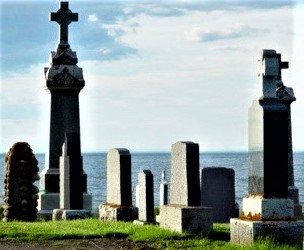
Carved in Stone 58

Carved in Stone
58

Modern shamans
roam the pyramid’s flat top,
looking for its energy point,
not knowing that, seated,
peacefully in silence,
that power will seek them out.

The more they seek,
the less they find,
yet that power seeks me out,
because I no longer seek it.
Is that the secret of creativity?

Commentary:

A long time ago my judo instructor taught me the following –

“The more you strive,
you cannot grasp it,
the hand cannot hold it,
nor the mind exceed it.
When you no longer seek it,
it is with you.”

It was the same with the St. John Ambulance course that I took. The instructor told us that we might not remember now exactly what we were doing, but if the occasion arose, everything we were practicing now would appear before us and we would just do it, knowing exactly what to do. A rugby coach, I saw and met and solves several such injuries on the field of play. Something took me over and I did what I had to do.

I still don’t know how or why. But it is the same with creativity. “When you no longer seek it, it is with you.”

Just breathe deep and believe.


Latch-Key Kid

Latch-Key Kid

In one room in my head, I stand on a stool beside my father’s mother helping her to mix the cake she will later bake in the wood-fired oven of her black, cast-iron stove. Every time she mixes a cake, she places a small piece in a dish and bakes it just for me. As a child, I spent hours in that kitchen, watching her cook. When she boiled vegetables, she never threw out the vegetable water, but used it for boiling other vegetables or for making rich, thick, delicious gravy.

Later, with both my parents working, I became a latch-key kid. I spent all day in an otherwise empty house and cooked my own breakfast and lunch. I also prepared supper for my parents so that it would be waiting when they came home. I grew up loving to cook.

When I went abroad to spend my summers in Spain or in France, I spent as much time as possible in the kitchens, watching, listening, learning. The women always had time for a small child. Then men seldom did. Children should be seen and not heard. They just got in the way. That was the male attitude. I learned so much in those kitchens.

Later, in Santander, my landlady would place one egg, one onion, and one potato beside the stove. It didn’t matter what time I came back from a night out with the boys, my supper was there, a Spanish omelet, una tortilla Española, waiting for me to cook it. Sometimes she left me a piece of chorizo, but I preferred the omelets. I did enjoy making shapes and designs out of the chorizo – that was always fun.

Not many people knew about my cooking skills. One of my aunties always cooked for me. She told me that her husband didn’t even know how to boil an egg. The men in my family seldom cooked, except for my maternal grandfather, who learned how to fend for himself in the trenches and dug-outs during WWI. He taught me how to make stews and soups, rich and nourishing, and always better on the third day. He also told me what he put in them – and you wouldn’t want to know about what he hunted and scavenged to stay alive in those cold, dark days. Nowadays, so many of us just don’t know how lucky we are. I do know how happy and lucky I am, not to be homeless, not to be living out on the streets, dependent on soup kitchens, charity, and fighting the elements just to stay alive.

Banks of the Seine

Banks of the Seine

Gnawing at the carcass of an old song,
my mind, a mindless dog, chasing its tail,
turning in circles, snapping at the fragment
of its own flesh, flag flourished before it,
tournons, tournons, tournons toujours,
as Apollinaire phrased it, on a day
when I went dogless, walking on a mind-leash
before the Parisian bouquinistes who sold,
along the banks of the Seine, such tempting
merchandise, and me, hands in pockets,
penniless, tempted beyond measure,
by words, set out on pages, wondrous,
pages that, hands free, I turned, and turned,
plucking words, here and there, like a sparrow,
or a pigeon, picks at the crumbs thrown away
by pitying tramps, kings, fallen from chariots,
as Éluard wrote, and me, a pauper among riches,
an Oliver Twist, rising from my trance, hands out,
pleading, “Please, sir, can I have some more?”

Commentary:

Intertextuality – how many different texts can you recognize in this one piece of verse? I can count six reminiscences of other poets, ones that have influenced me to a lesser or greater extent. A couple of novelists lurk in the shadows as well. Fascinating, eh? Do these voices echo in any other ears than mine? Good question – and does it matter if they do or they don’t? The main thing is that they harmonize, the old world with the new, the centuries that went before with the one that is with us now. Quevedo – “Vivo en conversación con los difuntos y escucho con mis ojos con los muertos.” I live in conversation with the defunct and I listen with my eyes to the dead.

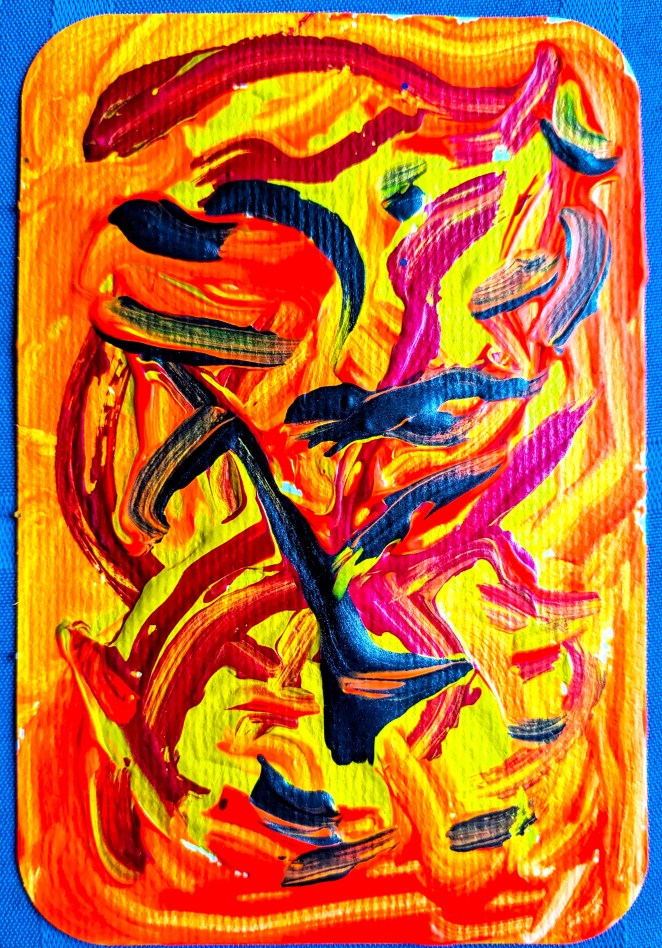
And look at that painting. No, not the Banks of the Seine, but the banks of the Fundy, near St. Andrews. And it’s Moo, at his best, doing a cross between a cartoonist, a genuine artist, a surrealist, and an amateur artist who lends his paintings to friends when they want a picture of water, or a river bank, or something or someone else that will add to the intertextuality of his works. Yea, Moo. Go Team Moo, go. Long may you survive and work together.

Carved in Stone 50

Carved in Stone
50

Here, in the castle of my own home,
I sit and write and patiently wait
for the enemy’s superior forces
to arrive and overwhelm me.

But death is not the enemy.
He is the friend
who has walked beside me
every day, since the day
that I was born.

I know him and I trust him,
though I am unaware
of when he will come to call
and I am ignorant of the shape
he will finally take.

Commentary:

Francisco de Quevedo, the 17th Century Spanish Neo-stoic and Metaphysical poet, wrote “the day I was born I took my first step on the path to death.” And so it is, with all of us. Sometimes we are able to choose our paths, sometimes they are forced upon us, sometimes they appear – with choices – and we make our selection and move on.

There are so many roads to travel. For Antonio Machado (Spain, Generation of 1898) there is no road. There is only a wake upon the sea – “Caminante, no hay camino, solo hay estela sobre el mar.” We must look back, to see where we have come from and where we have been. But there are many other possible paths, beside that of the sea – gravel paths, cobbled ways, log trucking roads in the Canadian Forest, cattle roads, transhumance roads, winding roads, straight Roman roads, roads that run up hill, down hill, or twist and bend following the paths of rivers.

The picture above shows the old Roman Road that leads to the Puerto del Pico, in the province of Avila. It followed the contours of the hill and formed part of the Ruta de la Plata, the road that took Latin American silver from Seville to the Spanish capital in Madrid. Look carefully and you can see the modern highway that runs parallel to the old Roman road. Nowadays, that older road is used for transhumance, the movement of cattle from the valleys in the winter to the hills in the summer. The same road, the same pass, so many different uses, and the road a wake upon the path of so many lives.

Joy of Words

Joy of Words

If the words won’t come, don’t worry.
Sooner or later, they will arrive, driving
down in flurries. Think wind-driven leaves
or the soft white whisper of snaking snow.

There is a moment when all sounds cease
and you can be at one with your inner self,
there, where summer sunshine twinkles
and soft rains bring forth clarity and joy.

What are words anyway, but soap bubbles
emerging from an iron ring to rise in
child-hood’s skies, soaring, dying, around
the cloudy thrones of sun-kissed clouds.

We, their so-called creators, are left below,
building cotton-wool castles spun from air.

Commentary:
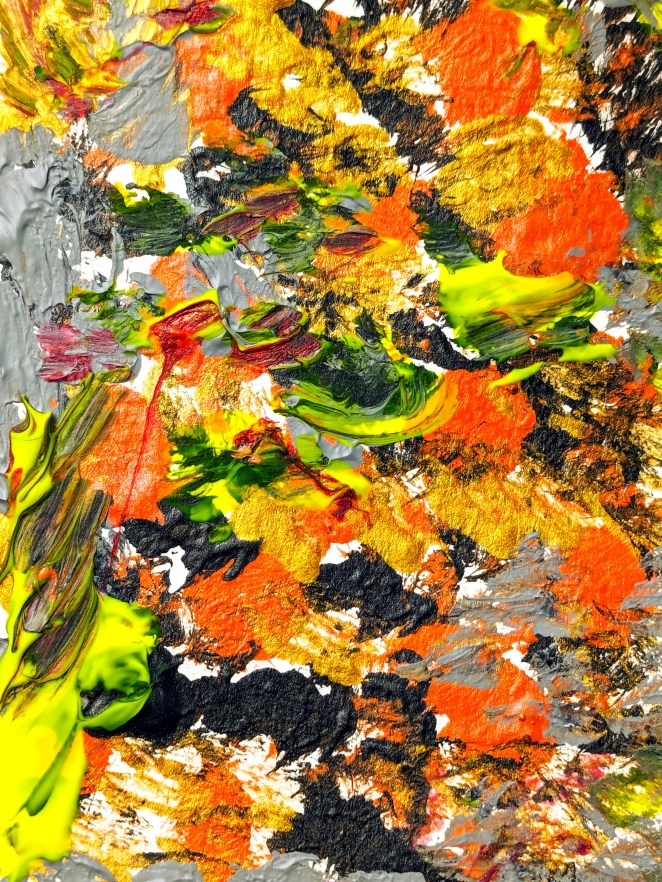
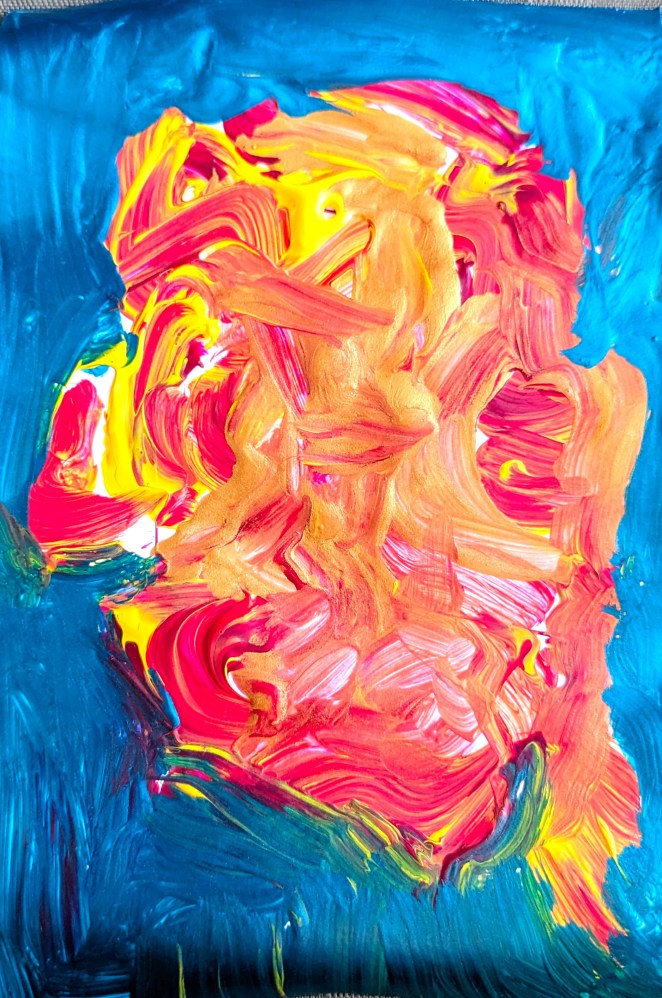
Moo suggested I use this painting of his to illustrate this poem. He called it originally The Olde Order Passeth, but the original phrase, from Tennyson’s Idylls of the King, should really be The Olde Order Changeth, lest one good custom should corrupt the world.

And yes, things do change. Here we have a fourteen line sonnet. Structure giving order to chaos. And words change, the world changes, our thoughts change, the weather changes. Hymns Ancient and Modern – Age and decay in all around I see, oh thou who changeth not, abide with me.

And what do we do when we meet with change? Weather – I change my clothes. There is no such thing as bad weather, only inadequate clothing. It used to be a useful saying, that one, but not any longer. When change changes into disaster, it is a very different kettle of fish. Thoughts change – mine just did. A useful phrase suddenly becomes an inadequate reaction to a changing situation. The world changes – sometimes for better, sometimes for worse, but how do we, each one of us, confront that change? How do we adapt to it?

I know far too many people who, like the ostrich, bury their heads in the sand and pretend that change is not all around us, that the world is the same as it always was. We humans are experts at adapting. We must adapt. But how do we adapt? Each one of us must answer that question in his or her own way. The alternative is to close our eyes, bury our heads, and pretend that nothing is happening.

Another alternative is to seek within for that moment when all sounds cease and you can be at one with your inner self, there, where summer sunshine twinkles and soft rains bring forth clarity and joy. Perhaps that is the world the ostrich discovers when he removes himself from this world and enters that other one beneath the sand. Who knows? Not even the ostrich, I would guess.

Carved in Stone 32

Carved in Stone
32

I dream of winter snow
snaking its whispering way
down the highway.

Waves draw lacy curtains
across the beach.

Sandpipers wade, pecking,
probing at tide’s foaming edge,
strange writings their footprints,
punctuation,
the holes they leave
drilled in the sand.

Evening now, and a low light
casts its magic on the forest,
gilding the trees.
Dry leaves rustle.

A shadow flickers
at the edge of my eye,
my childhood –
a sea bird soaring.

Commentary:

So inadequate, the word world I create. Sound – winter snow snaking its whispering way down the highway / dry eaves rustling. Absence of sound – waves draw lacy curtains across the beach / sandpipers, with their shrill voices and constant whistling’ / the gentle hiss and buddle where the sandpipers sew their holes.

What about the other senses? I miss the sense of smell, the odors borne on the wind, the different aromas that arises from dry and wet sand, the pong that wet sea weed exudes, the perfumes of sea side grass and wild flowers … And what about touch – the sandpaper scraper of dry sand between the toes, the feel of those lacy curtains as, jeans rolled up, you paddle along the shoreline, the feel of the wind on your face when sea birds soar … and who can ever forget the salt taste of the sea upon their lips?

The Catch 22 of all writers – how much can we include? How much can we suggest? How much must we let slip by? Culture – how can we describe the sea to someone who has never seen the sea? I can ask the questions – but I must leave you to work out the answers for yourself. So inadequate, the word world I create.

A Touch of Frost

A Touch of Frost

Cooler nights have brought
a touch of frost to higher ground.

At night, temperatures fall.
By day, they build.

I watch as Autumn, finger on lips,
tiptoes through the garden.

With a wave of its wand,
winter threatens.

A gust of wind swirls the leaves,
sends snow flaking round the tree.

My love has a gentle touch of frost,
a blanched fringe at her curl tips.

When I look in the mirror,
I see the full effects, snow drifts
gathered on my own head.

I look at my beloved.
Her hair –
a crab apple tree
in full spring bloom.

Commentary:

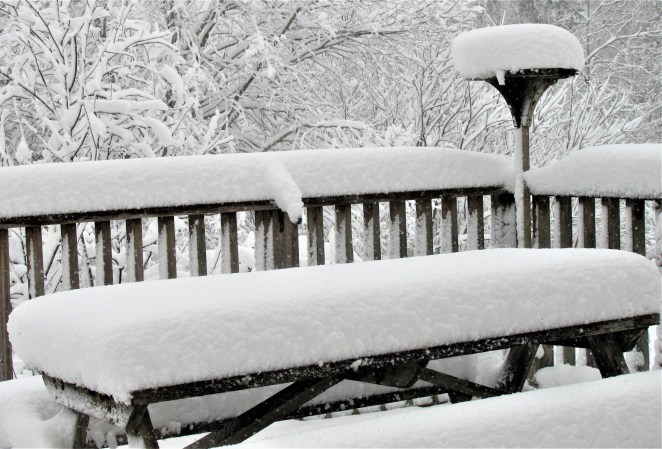
Moo to the rescue with a little touch of frost and snow in his painting. So many images here. So many pictures floating through my mind. Still Autumn, and we had some snow. Not much, but enough to remind us that winter lies just around the corner. Enough for today. More tomorrow. And snowflakes and blessings to all.

Carved in Stone

Carved in Stone

28

The man who cannot cry
is dry indeed,
his inner space
a wasteland without rain.

Who can now walk forty days
in a desert wilderness,
without water?

Where is that crystal fountain,
with its healing streams
flowing from the rock,
its waters flowing through us,
bringing us tears of sorrow
and tears of joy.

Water and words –
they drift through me
and shadowed waves move,
shifting shape in the changing light.

29

A rising moon,
shimmers over the bay.
It reveals the path
that leads me back
to my primal waters.

Oh, salt flow of tears,
salty the waters
of the baptismal font
washing away all stain of sin.

Immersion in water,
a new start, a new life,
and all the soul-sweet eternities
of water and the word.

Commentary:

Water – such an important commodity, and filled with so much symbolism, religious and otherwise. And our bodies, on average, are composed of 60% water. We can survive for three days without water, if we are lucky. How precious it is. How much we depend on it.

The Bay of Santander, so beautiful beneath the moon. And I remember the full moon’s circle touching a rocky triangle as it rose above Peña Cabarga. Oh, the night life of the fish as they rose in the bay and basked in the moonlight. How often was I tempted to walk out along that moon path and walk the waves to Somo and Pedreña on the far side of the bay.

Immersion in water, a new start, a new life, and all the soul-sweet eternities of water and the word. Total immersion, then, not just in languages, but also in water. Where would we be without those life-long commitments, not to mention the crystal fountain whence the healing streams do flow?

Carved in Stone 27

The philosopher in search of his stone.

Carved in Stone

27

Miguel de Cervantes –
I read and re-read his words,
envious of his ability to reach out
with language that thrills me still.

I see him as a total entity,
while I see myself in pieces,
broken, unable to express
the simplest thoughts.

As I age, I sense the water
slipping from the water-clock,
the candles burning lower.

I still cannot make the mark
I want to make, for they are beyond me,
those marvelous word-worlds.

My words are mortal, his are immortal.
Mine just ink stains on a humble page,
his cast in print, but crafted to last forever.

As I bear witness to those powers,
so much greater than mine,
my eyes fill with tears.

Commentary:

They are beyond me, those marvelous word-worlds. Indeed they are. But I do not seek to create ‘a marvelous word-world’. I am happy with ‘ink stains on a humble page’. I seek to reach out and find those one or two people who accept me for what I am and find their own selves in a small corner of the tiny gardens I discover or create. Not a world, then, but a tiny corner of my own world, described, and offered to those who have eyes to see and ears to hear and hearts and minds to feel and understand.

And what is this infatuation with the poem itself? I no longer write individual poems, I write sequences of linked poems, a set of poetic narratives, if you need to find a label for what I am trying to do. Cervantes once wrote “La épica también puede escribirse en prosa.” / Epic poetry can also be written in prose. What happens if we reverse that statement and say – “A narrative sequence can also be written in poetry.” Interesting, eh?

And what is this desire to leave something, some trace of us, behind? I cannot answer that question. The answer will vary for each one of us, and for each fall wall flower perishing against the garden wall. I look at the homeless, pushing their grocery carts, head down. Their existence is as important as mine. Their desire to survive, for another day, another week, another season – and winter is coming one – is more powerful than any poet’s desire to leave a work – a magnum opus – to celebrate their lives.

And yes, my words are mortal, as I am mortal, as Miguel de Cervantes and all the great writers were mortal. Patrick Lane once told me that if poets leave one poem behind them that is remembered, they have done well. Even the greatest poets, and you can check this in the anthologies over the ages, rarely leave more than ten or a dozen memorable poems. As for me, I am happy to say that I have never had a poem included in an anthology. Not to my knowledge anyway.

And what does Magnum Opus actually mean? I leave you with the quote from Wikipedia set out above. Click on it, and find yet another way to distract, deflect, and change the direction of our lives! Given that road, who would ever want to walk it to its end?

Carved in Stone 25 & 26

Carved in Stone

25

I speak to a generation I will never see,
as others, in the past, have spoken to me.

They spoke through their prison bars
in manuscripts and books,
or told me, in hieroglyphics,
of ages disappeared,
their secrets lost, and gone.

Who now will listen, with their eyes,
as I listened with mine, for my world
is not their world,
nor can their world be mine.

And yet the same moon,
finger-nail thin, or gibbous,
waxes to full, then wanes,
in search of its rebirth.

26

What are words?
Is it the language that speaks,
not the author, as Barthes tells us?

Or do I write these words,
and who am I,
who sits mouse in hand,
fingers on keyboard,
tapping these words?

Do I not speak to the readers?
Yet how could I speak to them,
for the printed word
cannot ring out from the page.

And what are my words,
but soap bubbles,
blown by an old man
in his second childhood,
through an iron ring?

Or are they soft letters
of snaking snow,
lisping their whispered words
along the inner highways
of the listening mind?

Meaning – the readers
must recreate it,
illusions, delusions, and all,
in their own creative minds.

Commentary:

Meaning – each reader must recreate it. We come from so many cultures, so many languages, so many backgrounds. And yet I write in one language, one of the several I speak. I know only too well how words shift, shuffle, change their meanings. I know how innuendo, culture, religion even, changes the meaning of words. So who am I to say – this, and this only, is the correct meaning of the words carved in stone. Even the words and the symbols carved in stone are open to interpretation.

“Patience,” said Miguel de Cervantes, “and shuffle the cards.” Of course, wrth gwrs, he wrote those words in Spanish, and he placed them in the mouth of one of his characters. And now I am repeating them and placing them in your minds. For you, each one of you, must shuffle the words, shuffle their meanings, adapt them to your own minds and cultures, and come up with the meanings, the multiple meanings, that you can attach to my words.

“And what are my words, but soap bubbles, blown by an old man in his second childhood,
through an iron ring?” Answer that question and perhaps you can solve the riddle of the universe. But to whose satisfaction? Words carved in stone – but what is the stone, who quarries the stone, who carves the words in the stone, and who descends from the mountain with what words carved in stone?

Meaning – each reader must recreate it, illusions, delusions, and all, in his or her creative minds.