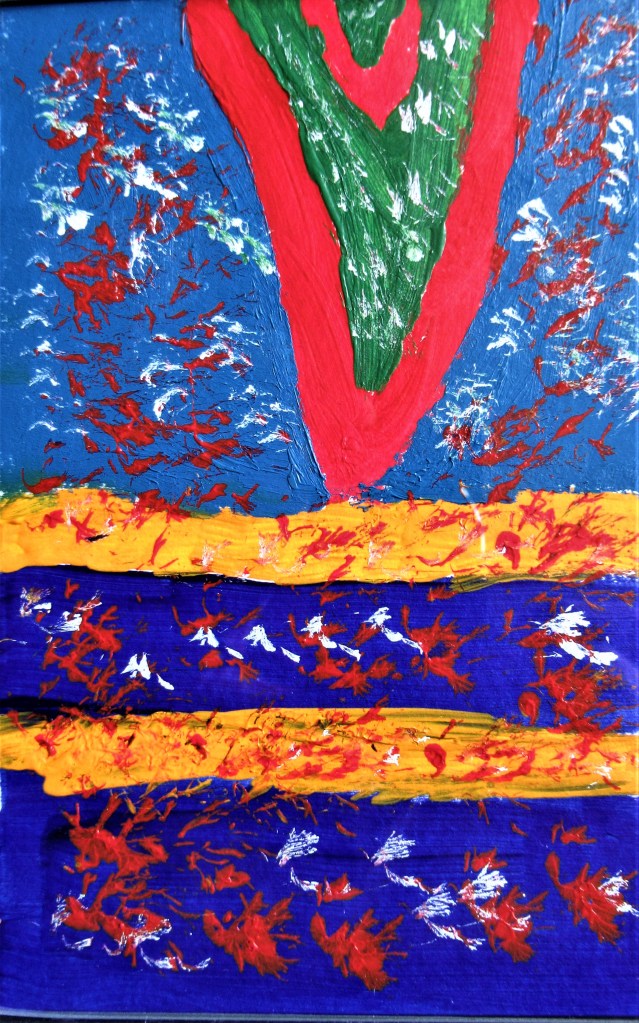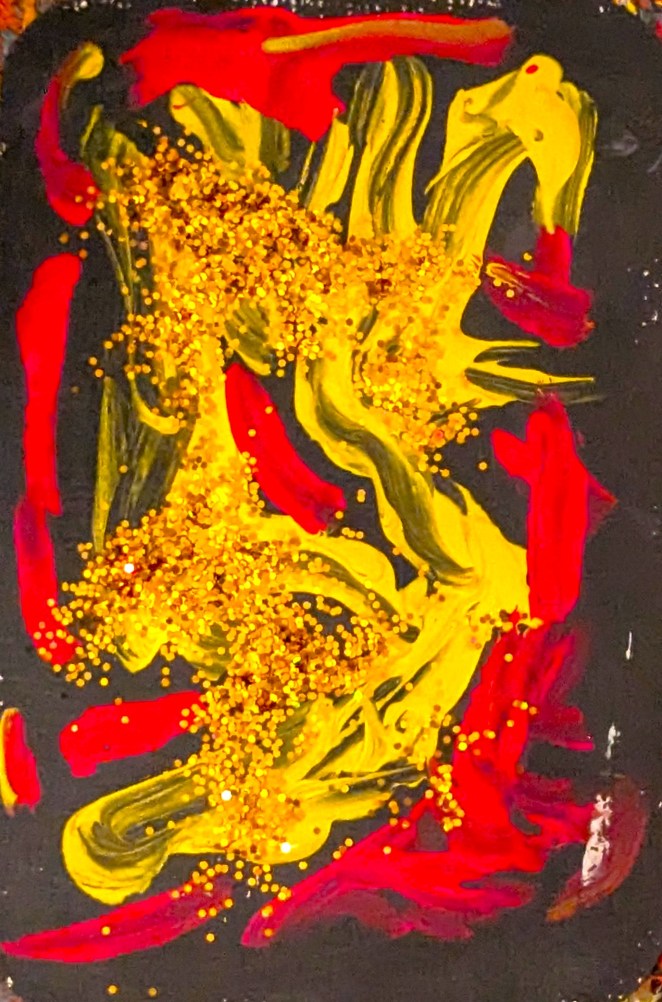
Gaia

Santo Domingo
Worshipping Gaia before the great altar
in Santo Domingo

If the goddess is not carried in your heart
like a warm loaf in a paper bag beneath your shirt
you will never discover her hiding place

she does not sip ambrosia from these golden flowers
nor does she climb this vine to her heavenly throne
nor does she sit on this ceiling frowning down

in spite of the sunshine trapped in all this gold
the church is cold and overwhelming
tourists come with cameras not the people with their prayers

my only warmth and comfort
not in this god who bids the lily gilded
but in that quieter voice that speaks within me

and brings me light amidst all this darkness
and brings me poverty amidst all this wealth

Commentary:

A Golden Oldie from Sun and Moon – Poems from Oaxaca. The Church of Santo Domingo in Oaxaca, Mexico, contains approximately six tons of gold and gold leaf. Incredible. I visited it regularly, but rarely saw anyone else in there. The local people seemed to avoid it and tourists with cameras were the main visitors. I refuse to take pictures inside churches, for several reasons.

It has always amazed me that the Spaniards built their churches on the sites of previous places of religious worship. This is partly because the indigenous appreciated the sacredness of certain sites, and partly because it was to these sites that the indigenous had traveled prior to the arrival of the Spaniards. Interesting, too, that the Spaniards call their arrival the Discovery while the indigenous call it the Conquest. History – a coin with two different sides – and it is sometimes difficult to look at both sides at once. Malinche – heroine or traitress? Cortes – hero or murderer? And, as they used to say in Northern Ireland, during the troubles, one man’s freedom fighter is another man’s terrorist.

Spin the coin of history, by all means. But beware of seeing only ‘heads’ and forgetting that there are ‘tails’. And never reduce those ‘tails’ to mere ‘tales’. Neither the written tradition nor the oral tradition is infallible. Many people, quiet and secretive as they may be, have long memories. And remember too that all that glitters is not necessarily gold.

Clepsydra, Poems 2 & 3

2

… who closes
     the museum doors,
          locking away its memories

dark descends,
     waters heard but unseen
          time unmeasured now
               until the coming of candles

each with its symbol
     lines that mark time
          an hour here or there,

never accurate
     seldom on time

a time that quickens
     in a whisper of wind
          the flame flickering
               time traveling faster

one candle tilts
     its waxen cataracts
          tumbling time
               cascading down
                    entering the void

that empty space
     left by the spent flame
          smouldering

where did it go
     the light
         I’d like to know
               how and why

a lifetime
     like a fire-fly’s spark
          flits away …

3

… fifteen eighty-eight
     the Spanish Armada
          its crescent glistening
               gunfire sparking
                    fireflies of flame

ponderous time
          spaced out
               relentless and slow

an unstoppable juggernaut
     on and on
          tides turning ebbing
               ever-flowing

hill beacons burning
     church bells
          ringing out their warnings

God blew
     and gusting winds
          took them away
               to the sand-dunes
                    off the Lowlands coast

flashes of flame
     fire-ships launched
          fire on the flood
               the rigging ablaze

quickly cut anchors
     now watch them go
          shepherded
               by sheepdog ships

 on Ireland’s rocky coasts
      ships and men
          their time up
               torn from the light
                   
swallowed by night’s
     dark throat …

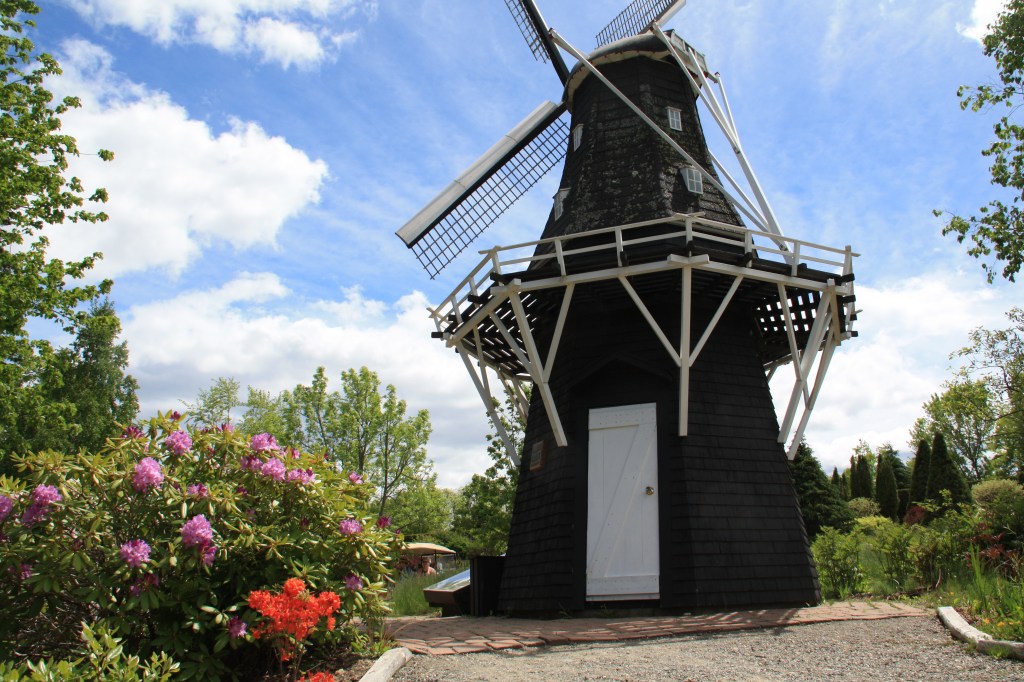
Windmills

Windmills

Only the pendulum clock
disturbs the silence
as the slow stars circle
and the moon hides
its face beneath
seven excluding veils.

Tranquility finds me,
seated here, head in hands,
contemplating the complicated
dance steps of a terra-centric
universe where planets weave
an intricate back and forth
to justify the falsehoods
of misguided mistakes.

Men, confident in their wisdom,
know that all is well,
that their faith in the old gods,
the old books, the words
that were written, in stone,
before the modern world began,
need no rethinking.

Those whirling sails,
imprinted on the questing mind,
are a giant’s arms, those sheep
an enemy army cloaked
in dust, coats of arms visible
only to the far-sighted
whose eyes defy vision’s laws.

Right, they were then.
Right they are now.
Nothing changes. Nothing
can possibly change.
Sheep are the enemy
and windmills wait to invade
the unsuspecting mind.

Comment: The history of Don Quixote and its reception in Spain is quite interesting. I was very sorry to read that Cervantes’s language is now considered so antiquated that interpreters are needed. I actually have a cartoon version of his quests – a picture reader, so to speak, very brief, because each picture is worth a thousand words. I have not yet seen the simplified text, rewritten with today’s reader in mind.

Don Quixote still holds many lessons for this modern world of ours and is definitely worth re-reading for, as Soren Kierkegaard (1813-1555) wrote: “There are two ways to be fooled. One is to believe what isn’t true; the other is to refuse to believe what is true.” Don Quixote, the character, threads a narrow path between those two extremes, as do many of the other supporting characters, some of whom use metatheatre for their smoke and mirror Wizard of Oz trickery. And remember, or forget at your peril, nihil sub sōle novum – there is nothing new under the sun. And yes, history does repeat itself, as you will see if you read (or re-read) Cervantes’s master piece.

Black Paintings

Black Paintings
pinturas negras
Goya

Wrapped in his blanket of silence, the painter paints.
He pays no attention to the shrieks, screams, prayers,
curses, doesn’t even hear them. He sees their staring eyes
as the bull’s eyes at which anonymous soldiers, heads down,
backs to his easel, fire. He sees their mouths as black holes,
slashed across their faces. He sees the priest with his rosary,
but never hears the rattle of the beads or the firing squad’s guns
going off, filling the canvas with smoke, the square with blood.

Back home, in the Quinta del Sordo, his deaf man’s house,
he sits at the supper table, dwarfed by his painting of Saturn,
devouring one of his children. Beside him, old women,
hags themselves, suck soup silently from wooden spoons,
or fly soundless, black bats in the starless sky,
 on the back of goats or on their witches’ brooms.

The great, open wounds of his paintings speak to us
of his hushed suffering, of the calamitous world that spawned
such violence, plague, famine, and fear. Plundering armies,
guerrilla warfare in back street and alley, torture, pillage,
rape, and suffering, pits filled with the dead and dying,
famine walking the streets, and all of it inaudible,
the nightmares of a little child, seen, but never heard.
His paintings speak to us, and they allow us to reconstruct
in our imagination, the many things that the painter, deaf,
but never dumb, could never hear, yet reproduced
using his paintbrush and his taciturn palette as a tongue.

Click here for Roger’s reading.

“It is said that deafness is worse than blindness because you are isolated in an inner world of terrible silence.” John O’Donohue, Anam Cara, p. 71.

Good Friday

Good Friday

Crucifixion and Death

1

Now is the hour of his parting,
such sweet sorrow, they say,
but not on this day.
Yet we’ll meet again, sang Vera Lynn,
don’t know where, don’t know when.

There he lies, helpless, on the street.
Why is that man in blue
kneeling on his neck?
“I can’t breathe.”
Can’t anyone hear his cries?
Is there anybody out there listening?

Watchers stand round and watch.
Someone makes a video on a cell phone.

Who gifted him this gift,
this parting gift he never chose.
Everyone who follows him
and tries to walk in his shoes
knows he had no choice.
They know he didn’t choose.

2

Do you feel the baton stab into the guts?
The plastic shield’s edge slash into the face?
The knee come up, no ifs, no buts?

Eyes water from tear gas and pepper spray.
Thunder flashes crack and roll, deafening
ears, taking years from marchers’ lives.

Did you follow him through Jerusalem?
Did you walk in his footsteps, step by step?
There is a green hill far away, or so they say.

The cameras rolled as they cuffed him
to his pavement cross, men in blue smiled,
winked at each other, watched him fade.

His loss was not their family’s loss.
Just another loser tossed beneath the bus.
The watchers watched and nobody made a fuss.

They stood and stared and nobody cared
until cell phone videos hit the tv screens.
 Now it’s fake news, whatever that means.

The believers will believe what they’re told.
You can’t put a price on what he was losing,
on the many things that others have already lost.

3

Leg-irons and chains:
that’s what remains from his journey here.

Iron, cold iron, splintered, burning wood.
A death bed on the sidewalk
his last will and testament.

A flaming cross lifted him to the skies,
that cross burning before his eyes.

Before he goes, we must double-check:
whose is that knee upon his neck?

“Let me breathe, let me breathe.
Take away your knee.
Justice, why hast thou forsaken me?”

Commissioner, forgive them.
They didn’t know what they did,
when all around the dying man
men closed their eyes and ears,
buried their heads, and hid.

4

Good Friday in Island View:
a foot of snow fills the streets,
empties the churches.
The Easter Weekend lurches
towards its predestined end.

But how do you end
two thousand years of hurt,
four hundred years of persecution,
of cruelty and neglect?

How do you end
eight minutes and forty-six seconds,
with that black man lying there,
choking, a white man’s knee on his neck.

He died in the shade
of orders that were given and obeyed,
orders that should never have been made.

Anonymity

Anonymity

Multiple masks stripped away, old wall paper
shed in strips, layer by layer, until you reveal
the bedrock foundations of your delicate face.

Your visage dissolves before my eyes until you
become what you were when I first met you:
sweet, young, fresh, a delight to catch the eye.

As you still are, to these old, fragile eyes of mine,
cataracts removed and lenses still capable of
seeing you in your spring, although it is your winter.

The snowfall of your hair cannot deny the sparkle
in your eyes, the summer freckles that will soon return,
the sunlight and joy you bring when you enter the room.

Ageing, yes, but you are as young and as sweet
as you always were. How could you not be?
Anonymity peels itself away until no barriers exist

between what you are to me now, and what you were.
It is a lie, that only the young write poetry in praise
of their beloved’s eyebrow, her lips, her gaze.

For how many days have we stood together, as one,
breathing the same air, walking together, facing
the same difficulties, and overcoming them hand in hand?

Yes, we have both slowed down – the way of all flesh –
and we are no different. We wither and perish, but
we haven’t perished yet, although we are withering.

The magic of our love, our gifts, molded into our DNA,
will not perish with us, and never will, not while
our spirits live on and our love creates others in our shape.

Click here for Roger’s reading.

“In the human face, the anonymity of the universe becomes intimate.” John O’Donohue, Cara Anam, p. 37.

Hollyhock

Hollyhock

Is it a silken purse
made from the pig’s ear
of its seed pod,
or just a single seed
excreted by
an incontinent bird?

Its bruised
evening-sky hues
stretch their emperor’s
imperial purple all too thin.
In the late summer sun
it swallows one errant bee
in its leviathan mouth.

Sole survivor,
from a score of flowers
that once climbed
the seven foot,
eight foot stalk
to sway in the wind,
it stands on guard
against fall cold
and winter’s snow.

Click here for Roger’s reading on Anchor.
Hollyhock

Comment: I didn’t like the ending to the earlier version, so, when it came to reading it, I rewrote it first instead. I much prefer this version. Apologies to those who read the earlier words.


Revisionism

Revisionism

Chalk on a blackboard.
Black, red, blue, green markers
on a white board.

Here comes the eraser.
The board is wiped clean,
or almost clean, figures,
letters, blurred, just about
ready for the next class.
This happens again and again.

What remains?
Notes in a student’s book?
Memories of a lesson
in tedious boredom,
the teacher droning on and on.

“Knowledge:
that which passes from my notes
to your notes,
without going through anyone’s head.”

Yesterday’s lessons:
dry dust of a doctoral thesis.

Revisionism:
“What color is the blackboard?”
“Last year, it was green, but
this year, the blackboard is white.”

Click here for Roger’s reading on Anchor.
Revisionism

Doors

Vis Brevis – Ars longa

Doors
Revised version

Paintings:
doors you can walk through,
windows that open onto visions
of another, more beautiful life.
Deeper than the paint, the thoughts
and words that formed them,
brushed them into life,
an ephemeral life, so brief
that butterflies seem to last longer
and flowers live for all eternity.

Transience and insubstantiality.
Change is all around us,
we are surrounded by change.
But the deepest changes,
the ones that affect us most
are internal, set deep within us,
death’s eggs hatching slowly
since the day we were born.

Life is indeed short, and art endures.
Carved five thousand years ago,
in stone, this magnificent henge,
first Wood-henge, then Stonehenge,
majestic at the dawn of time,
with its sarsen stones, pillars, post-holes,
and labyrinths, circling within circles,
a frail spider-web of sunlit brilliance.

Lost now, the message,
as my own message is lost,
covered by paint, though words
emerge in the strangest places,
allowing us to peer in through windows
as long-lost words and worlds
whirl out through carved and painted
windows and everlasting doors.

Doors
First version

Paintings are doors you can walk through,
windows that open onto visions
of another, sometimes better, life.
Deeper than the paint are the thoughts
and words that formed them,
brushed them into life,
an ephemeral life, so brief
that butterflies last longer
and flowers live for all eternity,
or so it seems.

Transience and insubstantiality.
Change is all around us,
we are surrounded by change.
But the deepest changes,
the ones that affect us most
are internal, set deep within us,
death’s eggs hatching slowly
since the day we were born.

Life is indeed short, and art endures.
Carved five thousand years ago,
in stone, this Towie ball
with its labyrinths and circles.
Lost now, the message,
as my own message is lost,
covered by paint, though words
emerge in the strangest places,
allowing us to peer in through windows
as long lost words and worlds
walk out through carved and painted doors.

Click on this link for Roger’s reading.
Doors

A Rainbow of Clichés

Meditations on Messiaen
Why do the people?

2

A Rainbow of Clichés

It’s raining outside. A tympany of raindrops
drums rhythmically on roof and window.
Thunder rolls. Lightning flashes, lighting up the sky.
our lights flicker, but we don’t lose power.

“It never rains in the bars,” they say in Spain.
Yet it’s raining in my heart, a sad song,
raindrops, tear drops, my best friend,
tested for Lyme disease, now tested for Covid.

“It never rains unless it pours,” they say in Wales.
And here it comes again, that nineteenth session
of Covid nerves, heart fluttering, nostrils twitching,
that unmasked girl standing six inches behind me,

texting, all thumbs, totally absorbed in the medium
that delivers massage after massage, click here,
out from the empty spaces between her ears and into
the void beyond, bouncing from tower to tower,

small stones cast in a tranquil pond, rippling their way
to whatever eternity lies out there, external realities ignored,
enveloped in the smoke screen of the texting self,
mask-less, fearless, coughing, not covering her mouth.

Here come those clichés. ‘I’m all right, Jack.’ ‘It’s all
about me.’ ‘My life, my freedom to do what I want.’
“It ain’t the cough that carries you off, it’s the coffin
they carry you off in.” A coughing fit, fit for a coffin.

Better, I suppose, than World War One trench warfare,
when it’s over the top, and look: officers, chaplains, men,
the whole battalion, hanging from that old barbed wire.

Click on link below for Roger’s reading.
A Rainbow of Clichés