Monet at Giverny

Monet at Giverny

1

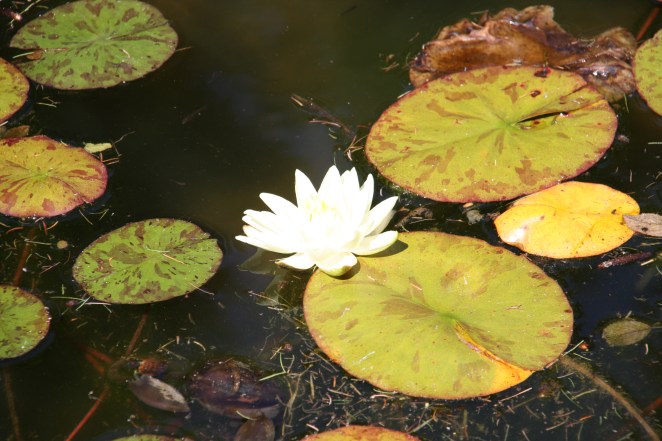
his lily pond
a mirror shattering
shards of clouds
flames beneath the lilies
fractured fish

2
the executioner stripes evening
a cross the sacrificed horizon
in blood we were born
in earth will we rest
our flesh turned to bread
empurpled this imperial wine
streaming with day’s death
these troubled waters

3
green footprints the lily pads
a halo
this drowned man’s beard
liquescent
like the gods
he dreamed
he walked dry over water
flowering goldfish
this thin line of cloud

4
maples flash ruby thoughts
ripples flowing outwards
as heavy as a stone at Stonehenge
this altar tumbling downwards
through a liquid sky

5
wisteria and his curly blue locks
Narcissus clad in an abyss of lilies
imperial his reflection and perilous
slowly he slides to sleep
merging into his imaged dream
a vaulted cathedral
his earthbound ribs
the blood space immaculate

6
night and day and sun and clouds
leapfrogging over water
something survives
sepia tints
dreaming on and on
exotic this sudden movement
Carassius auratus flowering

7
Clos Normand and the Grande Allée
closed to him now
folded his flowers
their petals tight at his nightfall
dark their colours
mourning for his mornings of light
fled far from him now

8
can we soften this sunstroke of brightness
le roi soleil threatening to blind us?
rey de oros
the sun glow braiding itself
an aureate palette
a susurration of leaves

9
the lady of the lake
holding out her hand
handing him an apple
l’offrande du coeur
a scarlet heart of flame
monochromatic this island
brown earth in a crimson lake
the world reborn in tulips

10
especially
when the dying sun
molten fire spreading
a limpid light
sky brimming over into pond
trapped in low clouds
a slash of colour here
and there a tree
a fountain of gold
the sun an apple
blushing
on a setting branch

11
silver-white the money plant
moonlight between fine-tuned fingers
its rattle of seeds
blunt the moon’s bite
raked from water
gaunt its gesture
matched ripples
face to face
with the moon

12
upside down these clouds
bright in their winter boats
the night wind blows
clean dry bones
across the sky

13
fish aloft like birds
skimming wet sunshine
spring’s first swallow
rising from the depths
to snatch a golden note
quivering in the air

14
thunder raises dark ripples
lightning a forked tongue
insinuated into paradise
an apple tossed away
caution thrown over the shoulder
as sharp as salt

15
winds of change
that first bite
too bitter to remember

16
timeless this tide
this ebb and flow
oh great pond-serpent
biting your own tail
forever

Comment:

A real Golden Oldie and going back a long way. I just re-discovered it. Funny how these things become lost and abandoned. Then they resurface. This is from Though Lovers Be Lost, available online should you wish to continue with its poetry!

Click on the link below to purchase the book

Though Lovers Be Lost
Print Edition

Rage, Rage 26 with Bonus Poem

Rage, Rage
26

In my dreams, I track 
the sails of drifting ships,
white moths fluttering
before the wind.

I think I have caught them
in overnight traps,
but they fly each morning
in dawn’s unforgiving light.

I give chase
with pen and paper,
fine butterfly nets
with which to catch
and tame wild thoughts.

I grasp at things
just beyond my fingertips.

I wake up each morning
unaware of where
I have traveled
in my dreams.

Comment:

White moths fluttering before the wind – my dreams at night. How do I trap them, catch them, squeeze them between my fingers, hold them, pin them to the show case of memory? I remember in Oaxaca – the young boys, trapping the moths. Huge, gigantic butterflies, moths, as large as birds. They severed their wings, and sold them to the passing tourists. Such beauty, such colour.

I heard an angry buzzing, looked down, and saw flightless bodies, wings clipped, rowing their stumps of bunt oars, skidding sideways across the gutters, and dreaming painfully of the stars.

Bonus Poem

Dreams

White moths fluttering
before the wind
my dreams at night.

How do I catch them,
trap them,
pin them
in memory’s showcase?

In Oaxaca
young boys traps moths.
Gigantic moths,
huge jungle butterflies,  
as large as birds.

They cut off their wings,
sell them like postcards
to passing tourists.

I hear
an angry buzzing
and look down.

Flightless bodies,
wings clipped,
rowing stumps of blunt oars,
skidding sideways
across the gutters
dreaming painfully
about the stars.

Ice Storm

Ice Storm

This month and my life
are nearly done.

Sun strengthens in the sky
but birds ice up
in spite of feathers,
fluffed like eider downs.

Man alone,
within warm walls,
can bravely laugh
at winter’s squalls.

But oh, if the power fails,
if wires are tumbled
by winter’s gusting gales,
man’s heart no longer
fills with ease.

He sits at home
in the cold and dark
while all around him,
ice covers the land
and even fire dogs
freeze.

Rage, Rage 18

Rage, Rage
18


I nod off again and dream
of a summer beach,
burning sand, tide way out,
sparkling waves, clouds moving,
inaudible, as they drift by.

I dream of my beginning
and find a forlorn formlessness
that sought the solace of sound
only to discover waves and wind
as I drifted on an amniotic sea.

The wind of change has blown.
I awake and pick up my book.

Voltaire –
“Si jeunesse savait,
si vieillesse pouvait.”

“If youth knew,
if age were able to.”

Comment:

The wind of change has blown and, by all accounts, it is still blowing. A Nor’ Easter here, swinging down from the Arctic and bringing us cold weather, ice, and more snow. Driving isn’t too bad, for the roads are cleared regularly, especially when schools are in. Most enterprises have cleaned, salted, and sanded their premises. Some haven’t. Yesterday, it took two people to move my shopping cart from the shop to the car, a matter of about thirty yards. The wind was so strong. It tussled and tugged, drove me where I didn’t want to go, and two people stepped in to help me. Then I discovered an undug doorway. I parked my car at a sharp upward angle, on the snow. A man offered me his arm. I said no, but he stood beside me, hands held out to help, just in case. Leaving that same shop, I was accompanied by a young lady who insisted on carrying my bags, taking my arm, and leading me to my car. The dangers of falling on down hill ice were even greater than going uphill.

I dream of my beginning, more and more often nowadays and now-a-nights. I know, spell check underlined that word. A neologism, not a proper word. But I like it, for though I dream by day, nodding suddenly into a shallow sleep, it is by night that I really do my dreaming.

At night, I find I can roam a world that has become hostile in the light of day. I can, and do, dream of my childhood on the Gower Peninsula. The fields are still there. My grandmother walks among the bluebells, and together we tell the time by the old dandelion clock. The larks still rise on Bishopston Common and Bluebells, Cowslips, and Primroses still hide beneath the trees. The sands at Brandy Cove are still clean. There is no pollution in my dreams and no oilers clear their tanks in the pristine waters of the Severn Estuary. There is no industrial haze and, on a clear day, I can still see, from the steps of the bungalow, Ilfracombe, across the bay.

And the people – my family and friends are still there. My uncles and aunts, my cousins, all young still, my parents and my grandparents … and all my dogs return, one by one, from their canine adventures. At night the cows can be heard crunching grass, and wheezing in my dreams. I met one, once, on a night trip to the outhouse – we had no indoor plumbing. And, on one memorable night, I stepped into a wet, warm cow patty, left like an anti-personal landmine, just outside the back door. I still shiver as I think of that warmth creeping up between my toes. No amount of wiping has ever really removed it. It haunts like the ghosts of summers past that drift at midnight round my room. waiting to be plucked from the air.
Rage, Rage 14, 15

Rage, Rage
14

As for you, my love,
one moment you were with me,
at the airport,
the next, you were not.

I turned away for a second,
and, when I looked again,
you had walked
through the boarding gate,
and passed out of my life.

Now, I can’t think straight.
Hair leaks from my head
like straw from a scarecrow.

My teddy bear brain
has morphed from sawdust
into a mess of lonely grey jelly.

15

Memories deceive me
with their flickering
shadow shows.
Shapes shift with a click
of the magician’s fingers.

What magic lantern
now slips its subtle slides
across night’s screen?

Desperate, I lap,
like a wild Alpine goat,
at salt-licks
that increase my thirst
and drive me
deeper into thick,
black clouds
of want and need.

Comments:

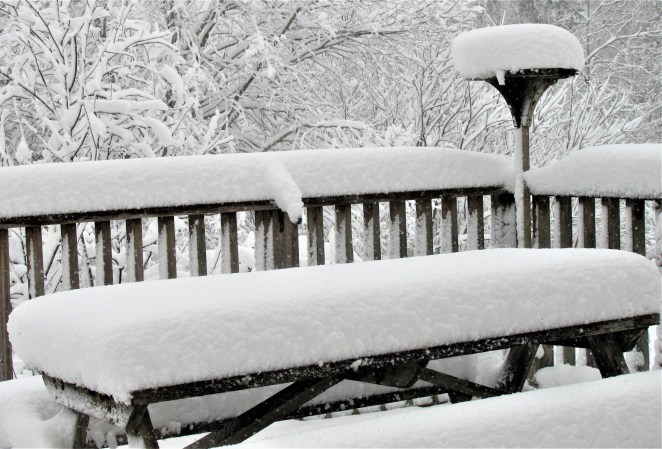
Shapes shift with a click of the magician’s fingers. Indeed, they do. I love the shape-shifting nature of snow. One day, the ash tree stands stark against dark pines. The next, the garden is winter white and the trees are dressed in their fine wedding garments. The table is no longer a table, though I do not know exactly what it has turned into. The distant trees seem to lean in close. The railings lose their summer dirt and snow turns everything inside out and upside down.

It reminds me of Pete Seeger – “Snow, snow, falling down, covering up this dirty little town.” Except the garden isn’t dirty, just a little abandoned in winter until the snow arrives, or, even better, the ice storm, followed by sun, when we suddenly seem to live in the heart of an icy diamond, looking out.


Carved in Stone 63

Carved in Stone
63

Words descend, soft and peaceful.
They brush my mind
with the hushed touch
of a grey jay’s soundless wings.

Yet the grey jays have gone,
vanished along with the grosbeaks,
evening, pine, and rose breasted.

Words can hardly express what I feel
in this diminishing world
when I inhale color and light.

Dawn bursts into bloom,
and the indoor hyacinth starts,
once more, to blossom.

Its immanent beauty
fills me with a warmth
that disperses night’s shadows,
taking away all sense of gloom.

Commentary:

The indoor hyacinth starts, once more, to blossom. Its immanent beauty fills me with a warmth that disperses night’s shadows, taking away all sense of gloom. Indeed it does. Once upon a time, it became infested with little bugs and was reduced to one leaf. Clare worked with it, spoke to it, cajoled it, and bit by bit it came back to life. Now it lives in the front porch in summer and returns to the house, southern aspect, in winter, to flourish when least we expect it.

Hyacinth, Jamaica in Spanish. And nothing more delicious than the miel de jamaica that one is offered in Oaxaca, fruit juice squeezed from the hyacinth flowers. “My wife has gone to the West Indies.” “Jamaica?” “No, she went of her own accord.” Humor flows and the hyacinth flowers, and I spend my winter hours sitting and watching my indoor flowers.

Yet the grey jays have gone, vanished along with the grosbeaks, evening, pine, and rose breasted. They used to flock on the picnic tables but as the weather warmed, they went further north. I remember when 64 mourning doves perched on the power lines. Now, we have two or three who look lonely in the garden and sound even lonelier. Words can hardly express what I feel in this diminishing world when I inhale color and light, but long for the passerines’ morning and evening flight.

But, in spite of all that, sad as it is, the hyacinth’s immanent beauty fills me with a warmth
that disperses night’s shadows, taking away all sense of gloom.

Carved in Stone 50

Carved in Stone
50

Here, in the castle of my own home,
I sit and write and patiently wait
for the enemy’s superior forces
to arrive and overwhelm me.

But death is not the enemy.
He is the friend
who has walked beside me
every day, since the day
that I was born.

I know him and I trust him,
though I am unaware
of when he will come to call
and I am ignorant of the shape
he will finally take.

Commentary:

Francisco de Quevedo, the 17th Century Spanish Neo-stoic and Metaphysical poet, wrote “the day I was born I took my first step on the path to death.” And so it is, with all of us. Sometimes we are able to choose our paths, sometimes they are forced upon us, sometimes they appear – with choices – and we make our selection and move on.

There are so many roads to travel. For Antonio Machado (Spain, Generation of 1898) there is no road. There is only a wake upon the sea – “Caminante, no hay camino, solo hay estela sobre el mar.” We must look back, to see where we have come from and where we have been. But there are many other possible paths, beside that of the sea – gravel paths, cobbled ways, log trucking roads in the Canadian Forest, cattle roads, transhumance roads, winding roads, straight Roman roads, roads that run up hill, down hill, or twist and bend following the paths of rivers.

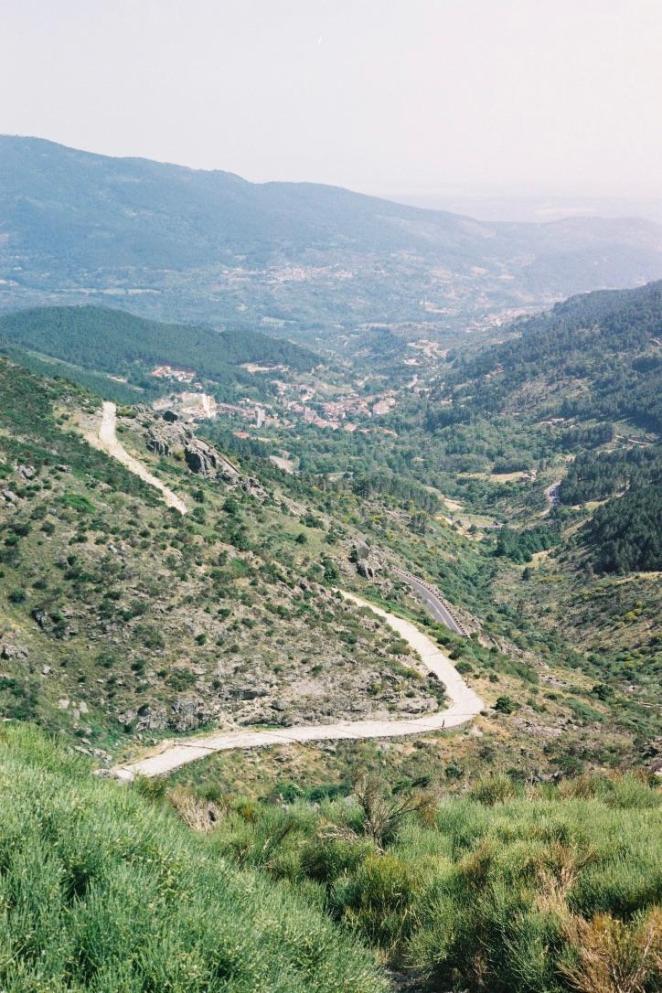
The picture above shows the old Roman Road that leads to the Puerto del Pico, in the province of Avila. It followed the contours of the hill and formed part of the Ruta de la Plata, the road that took Latin American silver from Seville to the Spanish capital in Madrid. Look carefully and you can see the modern highway that runs parallel to the old Roman road. Nowadays, that older road is used for transhumance, the movement of cattle from the valleys in the winter to the hills in the summer. The same road, the same pass, so many different uses, and the road a wake upon the path of so many lives.

Fire Storm

Fire Storm

Yesterday, it was difficult to breathe.
We inhaled dust and ashes as smoke
from forest fires scuttled towards us,
carried piggy-back on a strong west wind.

Today, the wind herds clouds into aerial castles,
pinnacles and pyramids piled upwards,
tall ships’ canvases painted dark, thundery,
raised by fierce wedges thrust beneath them,
lofting them into darkening skies.

Beyond a certain height, water becomes ice.
Particles group together. Hail stones form,
small at first, growing ever larger
until the very air can no longer bear
their weight. Golf ball big, they tumble down
the sky’s steep ladder and fall to earth.

The dry drum roll of distant thunder rumbles.
A scissor-slash of light shreds black skies.
An executioner’s hay wain rolls towards us,
a runaway train destined to tear our lives
apart. It leaves us helpless, clamoring for safety,
our world torn apart, our earth sore wounded.

Death scythes away, downing rich and poor alike.
Who now knows which way thrown dice will fall?
The dye’s sharp edge, once cast, cuts like a blade.
Hail stones clatter on the roof, battering us down.

Carved in Stone 32

Carved in Stone
32

I dream of winter snow
snaking its whispering way
down the highway.

Waves draw lacy curtains
across the beach.

Sandpipers wade, pecking,
probing at tide’s foaming edge,
strange writings their footprints,
punctuation,
the holes they leave
drilled in the sand.

Evening now, and a low light
casts its magic on the forest,
gilding the trees.
Dry leaves rustle.

A shadow flickers
at the edge of my eye,
my childhood –
a sea bird soaring.

Commentary:

So inadequate, the word world I create. Sound – winter snow snaking its whispering way down the highway / dry eaves rustling. Absence of sound – waves draw lacy curtains across the beach / sandpipers, with their shrill voices and constant whistling’ / the gentle hiss and buddle where the sandpipers sew their holes.

What about the other senses? I miss the sense of smell, the odors borne on the wind, the different aromas that arises from dry and wet sand, the pong that wet sea weed exudes, the perfumes of sea side grass and wild flowers … And what about touch – the sandpaper scraper of dry sand between the toes, the feel of those lacy curtains as, jeans rolled up, you paddle along the shoreline, the feel of the wind on your face when sea birds soar … and who can ever forget the salt taste of the sea upon their lips?

The Catch 22 of all writers – how much can we include? How much can we suggest? How much must we let slip by? Culture – how can we describe the sea to someone who has never seen the sea? I can ask the questions – but I must leave you to work out the answers for yourself. So inadequate, the word world I create.

Carved in Stone 12

12

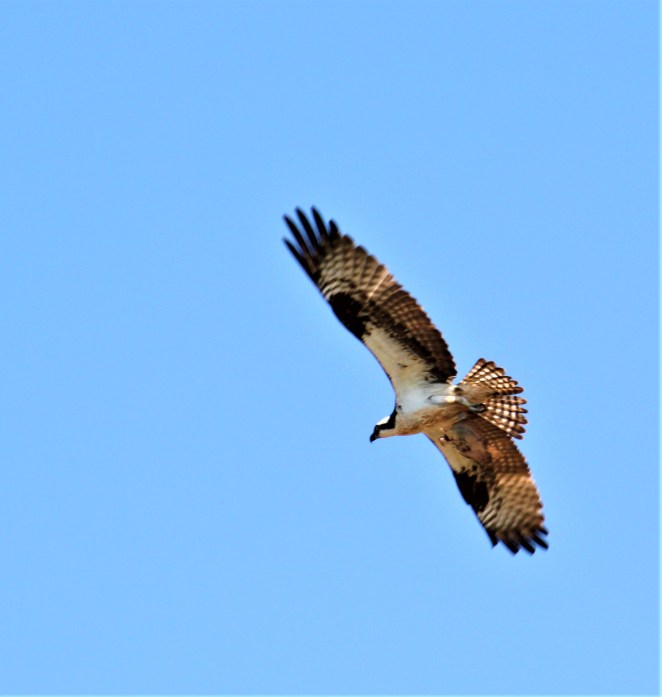
A Ruffed Grouse sought refuge
among the berries
of the Mountain Ash.

I shot him,
not with a gun,
but with a camera.

Intertextuality –
a friend borrowed the photo,
turned it into elegant brush strokes,
and now the painting
hangs on my wall,
opposite the tree
where once he sat.


A still-life
face to face with its reality
as early morning dew
forms on spider webs,
hammock-strung
between grass-blades,
bending in the wind.

And what if the spell breaks
and I can no longer see the fine seeds
of the dandelion clock kissed away
by the lisping lips of time?

What is life?
Is it just an illusion?

Commentary:

I shot him, not with a gun, but with a camera. Interesting. I have never seen the need to take the life of living creatures, except in cases of absolute necessity. And no, I have never killed, let alone for fun or sport. Shooting with a camera, that’s my ideal, and when a friend and fellow KIRA artist likes the photo and offers to paint it … well, that leads us into the nature of intertextuality, where reality becomes photo, becomes painting, becomes a text, and you, dear reader, are contemplating all those moments that join us.

The fine seeds of the dandelion clock kissed away by the lisping lips of time. This image comes from my walks in the Welsh countryside around Brandy Cove, Gower, with my paternal grandmother. “What time is it Nana?” I can still see her, bending down, plucking a dandelion, and holding it out for me to blow the seeds away – one puff, one o’clock, two puffs, two o’clock. I recall the seeds, drifting away on the summer breeze. “The Good Lord loved those dandelions,” she once told me. “That’s why He planted them everywhere.”

What will happen when the wells run dry and water runs out and there are no more dandelion seeds? How long will it be before I can no longer see them? Vis brevis, ars longa. The answer to my questions – I care, but I really don’t know.