Carved in Stone 67 & 68

Carved in Stone
67

At night, on the cool
sea-shore of my dreams,
the calls of shore-birds
at Ste. Luce-sur-Mer
are borne on the wind.

High-pitched, they are,
like the voices of children,
or of men and women,
in distress.

I walk on the sand
at low tide and a lone gull
flies past my head,
battering itself
against the wind’s cage
with outraged, sturdy wings.

68

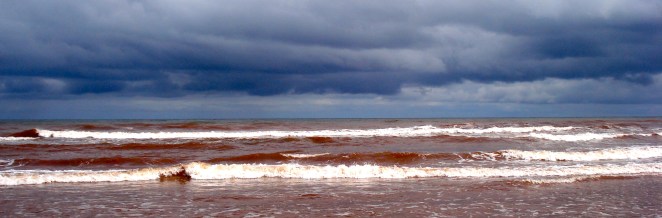
Sunset.
Sea mists descend.
The church on the headland
steps in and out of darkness.

Shadows gather, persistent.
Gulls surround a lone heron.
It clacks its beak in anger
forcing the gulls to scatter.

These words are not my words.

They came to me in the speech
of birds hidden in the foliage,
or carried on a feathered plume
sprung from the osprey’s wing.

Some came from the click
of the crab’s claw as he dug
deeper into the sand
a refuge where he thought
he could live safely.

Commentary:

Sunset. Sea mists descend. The church on the headland steps in and out of darkness. And so do I. I seek clarity, but there is no clarity when the sea mist descends, just the blurred image and the clouded thought. The cloud of unknowing, one philosopher called it, many years ago, and it is still with us. Especially when the sunlight fades and we are left wandering in the mists of unknowing.

“Is it here, you ask, or over here?” Well, if you do not know, I cannot tell you. But I will ask you this, and think very carefully before you answer – does the answer come from outside of you, given by another, or does it come from the deep, sacred intimacy of your own soul? The answer to that question will tell you all you need to know, one way, or the other.

These words are not my words. They came to me in the speech of birds hidden in the foliage, or carried on a feathered plume sprung from the osprey’s wing. Some came from the click of the crab’s claw as he dug deeper into the sand a refuge where he thought he could live safely. Sunset. Sea mists descend. The church on the headland steps in and out of darkness.

Crystal Liturgy

I

Crystal Liturgy

Here, in the abyss,
where song-birds pluck their notes
and send them, feather-light,
floating through the air,
here, you’ll find no vale of tears,
no fears of shadow-hawks,
for all blackness is abandoned
in the interests of sunlight and song.

Here, the crystal liturgy surges,
upwards from the rejoicing heart,
ever upwards, into the realms of light,
where color and sound alike
brim over with the joy that, yes,
brings release to head and heart.

Here, seven-stringed rainbows reign,
the everlasting harp is tuned and plucked,
and an eternity of music cements
the foundations of earth and sky.

Here, the master musician conducts
his celestial choir, their voices rising,
higher and higher, until they reach
the highest sphere, and song and voice
inspire, then expire, passing from our eyes
and ears into unbounded realms of light.

Here, the seven trumpets will sound
their furious dance, a dance that will announce
the end of this singer, the end of his song,
but never the end of song itself.

Commentary:

Crystal Liturgy is the first poem in the poetry sequence Septets for the End of Time. I will start placing these poems here and you can follow the sequence as it evolves. It consists of 56 poems – seven septets and a coda.

A Note for Readers

Olivier Messiaen is one of my favorite composers. I purchased his Quatuor pour la fin du temps / Quartet for the End of Time in Rimouski, PQ, in 1982 while driving around the Gaspé Peninsula. I was fascinated both by the music and by the words that headed each section. I should note that I have always enjoyed ekphrasis, the verbal description of visual works of art. With Messiaen, I tried to recreate not only the thoughts and images generated in me by his music, but the spaces and repetitions that come from light and dark sounds and birdsong caught in the intervals between notes. This was a new sphere of experimental writing for me and while composing I played first the Quatuor pour la fins du temps / Quartet for the End of Time, then Éclairs sur l’au-delà/ Lightning above the Beyond, and finally Petites esquisses d’oiseaux / Little Sketches of Birds. What I tried to capture came from within my own mind, but the metaphors and images were inspired by listening to Messiaen’s music.

As Right as Rain

As Right as Rain

It’s the day after the night before
and I awake to an ache
in each of my arms.

I went to bed early, at ten,
and slept until eight-thirty,
but my AI watch tells me
that I only got six hours sleep.

I found a bump in the bed,
on the right side,
when I look towards the window.

I must have lain my arm against it,
during the night. It was so sore,
my right arm, the Covid arm,
when I got up this morning,
but the left arm, the flu arm,
was perfectly alright, except for
a little itch, and a tiny tingle,
like the jingle of elf-bells.

Black coffee and an aspirin
soon cleared it all up, and now
I am as good as new,
as right as rain,
except the rain that fell last night
brought power losses, cold,
and an absence of warmth and light,
and that sort of rain is not all right.

Commentary:

That’s a golden oldie from a couple of years back. I did both jabs in the same arm this year and didn’t feel a thing. It didn’t rain either, but look at the muck coming down in the photo – we had a bit of that a couple of days ago. Welcome to our Canadian half-winter. We used to get 3 metres / ten feet of snow every winter. Last year I only used the snowblower of three occasions. No wonder I think of it as a half-winter – winter ain’t what it used to be.

Carved in Stone 63

Carved in Stone
63

Words descend, soft and peaceful.
They brush my mind
with the hushed touch
of a grey jay’s soundless wings.

Yet the grey jays have gone,
vanished along with the grosbeaks,
evening, pine, and rose breasted.

Words can hardly express what I feel
in this diminishing world
when I inhale color and light.

Dawn bursts into bloom,
and the indoor hyacinth starts,
once more, to blossom.

Its immanent beauty
fills me with a warmth
that disperses night’s shadows,
taking away all sense of gloom.

Commentary:

The indoor hyacinth starts, once more, to blossom. Its immanent beauty fills me with a warmth that disperses night’s shadows, taking away all sense of gloom. Indeed it does. Once upon a time, it became infested with little bugs and was reduced to one leaf. Clare worked with it, spoke to it, cajoled it, and bit by bit it came back to life. Now it lives in the front porch in summer and returns to the house, southern aspect, in winter, to flourish when least we expect it.

Hyacinth, Jamaica in Spanish. And nothing more delicious than the miel de jamaica that one is offered in Oaxaca, fruit juice squeezed from the hyacinth flowers. “My wife has gone to the West Indies.” “Jamaica?” “No, she went of her own accord.” Humor flows and the hyacinth flowers, and I spend my winter hours sitting and watching my indoor flowers.

Yet the grey jays have gone, vanished along with the grosbeaks, evening, pine, and rose breasted. They used to flock on the picnic tables but as the weather warmed, they went further north. I remember when 64 mourning doves perched on the power lines. Now, we have two or three who look lonely in the garden and sound even lonelier. Words can hardly express what I feel in this diminishing world when I inhale color and light, but long for the passerines’ morning and evening flight.

But, in spite of all that, sad as it is, the hyacinth’s immanent beauty fills me with a warmth
that disperses night’s shadows, taking away all sense of gloom.

Daffodils

Daffodils

Winter’s chill lingers well into spring.
I buy daffodils to encourage the sun
to return and shine in the kitchen.
Tight-clenched fists their buds,
they sit on the table and I wait
for them to open.

For ten long days the daffodils
endured, bringing to vase and breakfast-
table stored up sunshine and the silky
softness of their golden gift.

Their scent grew stronger as they
gathered strength from the sugar
we placed in their water, but now
they have withered and their day is done.

Dry and shriveled they stand paper-
thin and brown, crisp to the touch.
They hang their heads as their time
runs out and death weighs them down.

Commentary:

A sad poem, really, for a wet, damp, dark, chilly day that begs for some light and warmth. And what warmth and light daffodils bring. Not to mention their delicate scent that lingers long in the nostril, faint, but intoxicating. For ten long days the daffodils endured. This was a joy in itself. Sometimes cut flowers wither so quickly. But ten days … wow! And they do indeed bring to vase and breakfast-table stored up sunshine and the silky softness of their golden gift.

Their scent grew stronger as they gathered strength from the sugar we placed in their water. Indeed it did. And the sugar itself enhanced their ability to linger on. A little Somerset trick that, all the way from Zummer Zet where the cider apples grow. And no, you can’t have real cider without real cider apples from real cider apple trees. But never forget Sally the Sozzled Sow – she got into the storage shed and drank about five gallons of the stuff. It was all over the newspapers. She got loose and knocked the milk churns over and rolled them in the clover. The corn was half cut at the time, and so was she.

Dry and shriveled they stand paper-thin and brown, crisp to the touch. So sad when this starts to happen. Then one day, they just fade away. And then they hang their heads as their time runs out and death weighs them down. Sad, really, as I said at the start – but we must never forget the joy and light and happiness they bring us when they are in their prime.

Dorset Knobs and Old Vinny

Dorset Knobs and Old Vinny

Five Lysol wipes remain in the can.
As rare as hen’s teeth or Dorset Knobs
and old Vinny, they have become precious
items sold in marked up prices online
by people who stocked up at the beginning
of the crisis on commodities they were able
to seize before rationing stepped in
and limited quantities were permitted
to each purchaser who waited patiently,
in line, to enter the super-market.

I place my leather glove on my hand
and move to the gas pump. How many people
have used it, pumping gas with bare hands,
and the metal surface retaining how many germs
who knows for how long? I cannot wear my mask
while pumping gas. Cover my face and they will
not serve me for fear I may flee without paying.
I finish pumping, open the car door, remove
my glove, put on my mask, pick up my cane,
and walk into the gas-station shop to pay.

As I limp towards the door, a man, mask-less,
holds the door open for me, his face less
than a foot from mine. “There you are, sir,”
he says, showing his teeth. “Service with a smile.”

I return to the car, remove a precious sanitizing wipe,
clean my glove, the car door handles, every spot
my gloved hand touched. Then I wipe the handle
of the gas pump and dispose of the precious wipe
in the garbage can nestled between the pumps.

Commentary:

Well, I am willing to place a bet with my favorite bookmaker, at Covey’s Print Shop, that not many of you out there know what Dorset Knobs and Old Vinny is or are. Moo has joined me in my wager and he is willing to bet that very few of you know where the line “où est le papier?” comes from. Even fewer will be able to sing the whole song! Oh dear, our world is only artificially intelligent, not really intelligent. In my teaching days I would ask the class if we were in a smart classroom. “Yes, sir,” they would reply. I’d then walk to the wall, tap it and ask it “What’s 2 + 2?” The wall never answered. I’d try again. “What’s 2 + 2?” – Silence. “Not such a smart classroom then,” I’d say to the students.

But I bet you all remember Covid, the days of taking all sorts of precautions, of wearing masks and gloves, of washing everything that came into the house, of washing hands, and not touching surfaces in public places where the unwashed may have left a winning lottery ticket with your Covid Number upon it. Oh dear, those were indeed the days. And this little poem, a golden oldie, recalls them. Let us hope they do not return. And let us doubly hope they do not return with a mutating or mutated helix of sinister proportions.

Carved in Stone 56 & 57

Carved in Stone
56

I stand before the Tzompantli,
the Aztec Skull Racks
in the ruins of the Great Temple
in Mexico City,
and gaze in wonder,
at the multiple meanings
of these decorated deaths.

57

At Teotihuacan,
I climb the Sun Pyramid,
with its carved serpent,
slithering sideways,
as the sun moves.

I heave myself upwards,
panting, sweating,
and when I get to the summit,
I sit there, feet over the edge,
and I feel my heart thumping
as I fight to regain my breath.

Now, I feel purified,
cleansed, sweated dry,
as I watch poor mortals
struggle as I did
to take that final step.

I imagine them laid
on the sacrificial stone,
their chests carved open.

Each beating heart,
when extracted,
will cover altar, priest, and sky,
with a fountain of blood,
so hard those hearts
are pounding. Blood seeds
shoot into the sky
to revive the setting sun
as it drowns in its own blood.

Commentary:

Incredible, looking back, those moments in Mexico when I came face to face with a culture, so old, so alien to me, that I had difficulty coming to terms with it. I do not understand human sacrifice. Nor do I understand the mentality of the conquistadores who held the Aztec Emperor’s feet to the fire and burned them to the bone, leaving him alive. And still he would not tell them the secrets of the kingdom.

“The setting sun as it drowns in its own blood.” A nod to Charles Baudelaire, of course, – “Le soleil s’est noyé dans son sang qui se fige.” Wonderful how these images stay with us. Sunrise – and the sun is born in blood – sunset and the sun sets in its own blood. And was it really true that only the blood of humans, drawn through human sacrifice, sometimes voluntary, sometimes not, would keep the sun in the sky?

And there we go – in blood we were born, in blood we will probably die – all hail the power of blood – unless of course / wrth gwrs – it is contaminated. And what will happen to us then?

Banks of the Seine

Banks of the Seine

Gnawing at the carcass of an old song,
my mind, a mindless dog, chasing its tail,
turning in circles, snapping at the fragment
of its own flesh, flag flourished before it,
tournons, tournons, tournons toujours,
as Apollinaire phrased it, on a day
when I went dogless, walking on a mind-leash
before the Parisian bouquinistes who sold,
along the banks of the Seine, such tempting
merchandise, and me, hands in pockets,
penniless, tempted beyond measure,
by words, set out on pages, wondrous,
pages that, hands free, I turned, and turned,
plucking words, here and there, like a sparrow,
or a pigeon, picks at the crumbs thrown away
by pitying tramps, kings, fallen from chariots,
as Éluard wrote, and me, a pauper among riches,
an Oliver Twist, rising from my trance, hands out,
pleading, “Please, sir, can I have some more?”

Commentary:

Intertextuality – how many different texts can you recognize in this one piece of verse? I can count six reminiscences of other poets, ones that have influenced me to a lesser or greater extent. A couple of novelists lurk in the shadows as well. Fascinating, eh? Do these voices echo in any other ears than mine? Good question – and does it matter if they do or they don’t? The main thing is that they harmonize, the old world with the new, the centuries that went before with the one that is with us now. Quevedo – “Vivo en conversación con los difuntos y escucho con mis ojos con los muertos.” I live in conversation with the defunct and I listen with my eyes to the dead.

And look at that painting. No, not the Banks of the Seine, but the banks of the Fundy, near St. Andrews. And it’s Moo, at his best, doing a cross between a cartoonist, a genuine artist, a surrealist, and an amateur artist who lends his paintings to friends when they want a picture of water, or a river bank, or something or someone else that will add to the intertextuality of his works. Yea, Moo. Go Team Moo, go. Long may you survive and work together.

Carved in Stone 50

Carved in Stone
50

Here, in the castle of my own home,
I sit and write and patiently wait
for the enemy’s superior forces
to arrive and overwhelm me.

But death is not the enemy.
He is the friend
who has walked beside me
every day, since the day
that I was born.

I know him and I trust him,
though I am unaware
of when he will come to call
and I am ignorant of the shape
he will finally take.

Commentary:

Francisco de Quevedo, the 17th Century Spanish Neo-stoic and Metaphysical poet, wrote “the day I was born I took my first step on the path to death.” And so it is, with all of us. Sometimes we are able to choose our paths, sometimes they are forced upon us, sometimes they appear – with choices – and we make our selection and move on.

There are so many roads to travel. For Antonio Machado (Spain, Generation of 1898) there is no road. There is only a wake upon the sea – “Caminante, no hay camino, solo hay estela sobre el mar.” We must look back, to see where we have come from and where we have been. But there are many other possible paths, beside that of the sea – gravel paths, cobbled ways, log trucking roads in the Canadian Forest, cattle roads, transhumance roads, winding roads, straight Roman roads, roads that run up hill, down hill, or twist and bend following the paths of rivers.

The picture above shows the old Roman Road that leads to the Puerto del Pico, in the province of Avila. It followed the contours of the hill and formed part of the Ruta de la Plata, the road that took Latin American silver from Seville to the Spanish capital in Madrid. Look carefully and you can see the modern highway that runs parallel to the old Roman road. Nowadays, that older road is used for transhumance, the movement of cattle from the valleys in the winter to the hills in the summer. The same road, the same pass, so many different uses, and the road a wake upon the path of so many lives.

Carved in Stone 48 & 49

Carved in Stone

48

Moats. Everywhere.
Defensive, offensive,
and the mote
in the other’s eye
much more offensive
than the beam in your own.

49

Caerphilly Castle –
the largest water defenses
in the United Kingdom,
but unable to compete
with the changing times.

Cromwell’s cannons came,
destroyed the towers,
broke down the walls.

His army bridged the moat,
destroyed every one inside that castle
with fire and sword.

Only the desecrated towers,
vast, legless trunks of stone,
eyeless, toothless,
remain as a reminder.