Rage, Rage 44 & 45

Rage, Rage
44

But all is not lost.
Highlights of the day:
waking to birdsong,
making it safely to the bathroom,
shaving without cutting my face.

I step high to get into the shower
and wash my body
without dropping the soap.

I emerge
without slipping or falling
thanks to the safety rails
Extra-Mural
inserted in the walls.

I stand on the bath mat
and dry with my towel
those parts of the body
that are now
so difficult to reach,
especially between
my far-off toes.

45

I pull my shirt over
still-wet, sticky patches,
damp from the shower,
and negotiate each trouser leg
without catching
my toe nails in a fold.

I tug at the pulleys
of the machine
that helps my socks
to glide onto my feet.

I force those swollen feet
into undersize shoes
and hobble
to the top of the stairs.

Banister in one hand,
cane in the other,
I lurch down them,
descending with caution
one step at a time.

Comment:

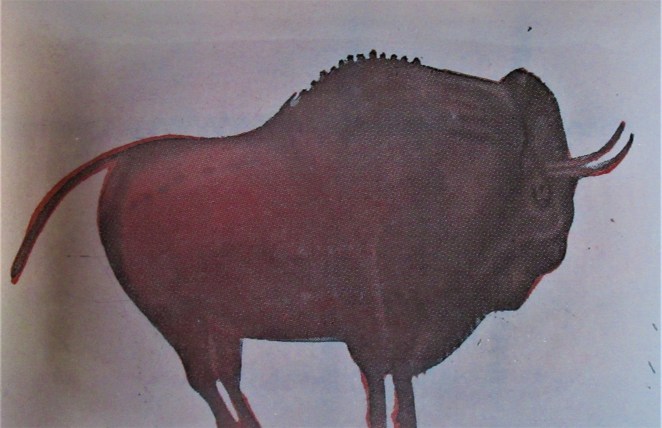
I lurch down the stairs, descending with caution, one step at a time. Indeed I do. That whole process of getting up, washing, dressing, going down stairs, takes me a good half hour, sometimes more. I do things in order, one after another, each step the same every day. That way, I remember everything and forget nothing. Easier said than done! I often forget something, or do something out of order, and then I get muddled and I stand there befuddled. Muddled and befuddled. Not a good way to start the day.

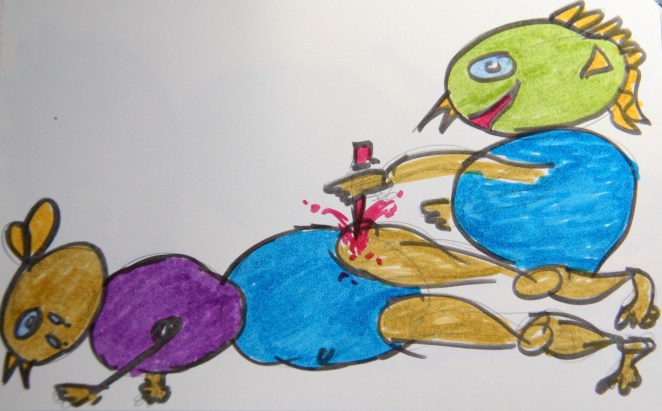
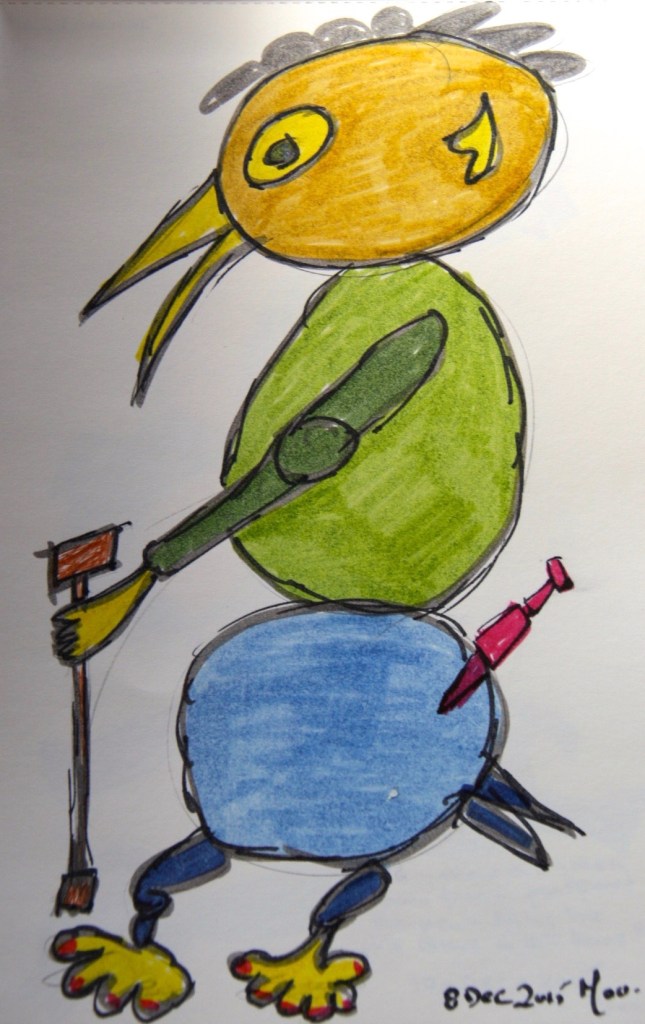
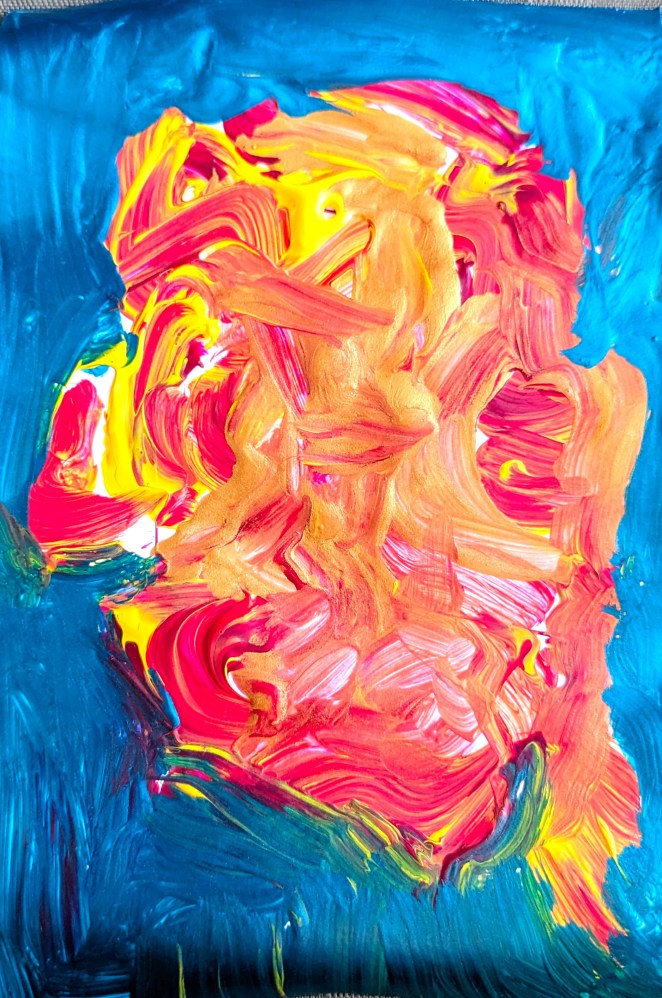
Moo sometimes visits and watches me as I struggle with my clothes. He has been known to help, especially when my back is still wet and my shirt won’t go on, or my feet get stuck in my pants or my socks. Usually, though, he’s very good. He sits or stands there quietly, just watching. I think some of his paintings come from some of my struggles. I know the titles do. When I am muddled and befuddled he says I am all shook up. he says that’s where the painting comes from. I’m not so sure about that. I think he has a secret liking for Elvis Presley.

Funny going back over those old songs from the fifties and sixties. Long gone are the days when boarding school boys stuck their chewing gum on their bedposts overnight. I remember when we used to dare each other to sing ‘does your chewing gum lose its flavor’ in the school chapel during the morning service. I remember once having a bet with a friend how many Hallelujahs there were in the Hallelujah chorus. We dared each other to sing the number we chose. His number was higher than mine, and I remember his voice, singing out a lone solo Hallelujah and shattering the deafening silence of the packed school chapel.

And those limericks – “There was a young boy in the choir, whose voice rose up higher and higher. One Saturday night it rose right out of sight and we found it next day on the spire.” And that might be the only non-filthy Limerick that this old man can remember. Oh dear – all those songs we sang on the school bus!

Rage, Rage 43

Rage, Rage
43

The truth,
unwelcome as it is,
is that the day I was born
I took my first steps
on the path to death,
my own death.

Death –
an inescapable law
that tells me that
body and spirit
will be forced apart.

My flesh will wither
and perish,
and the person
that the world and I
know as me
will no longer be able
to hold together.

Commentary:

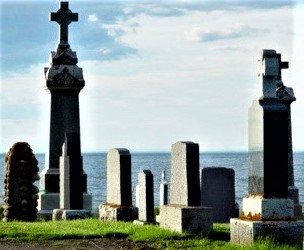
“The day I was born I took my first steps on the path to death.” An echo of a line from Francisco de Quevedo, of course.

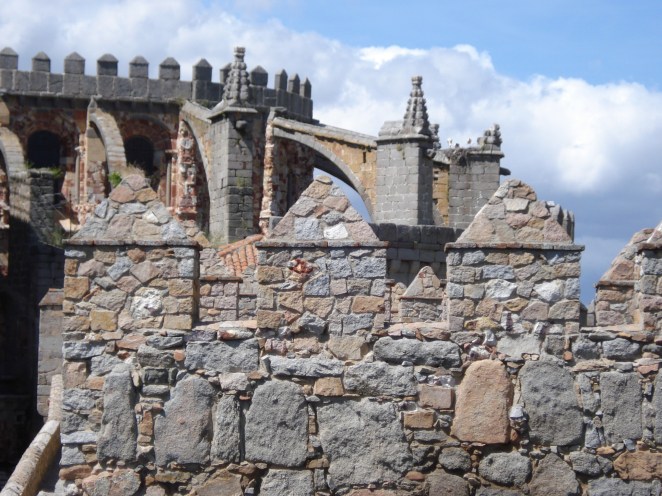
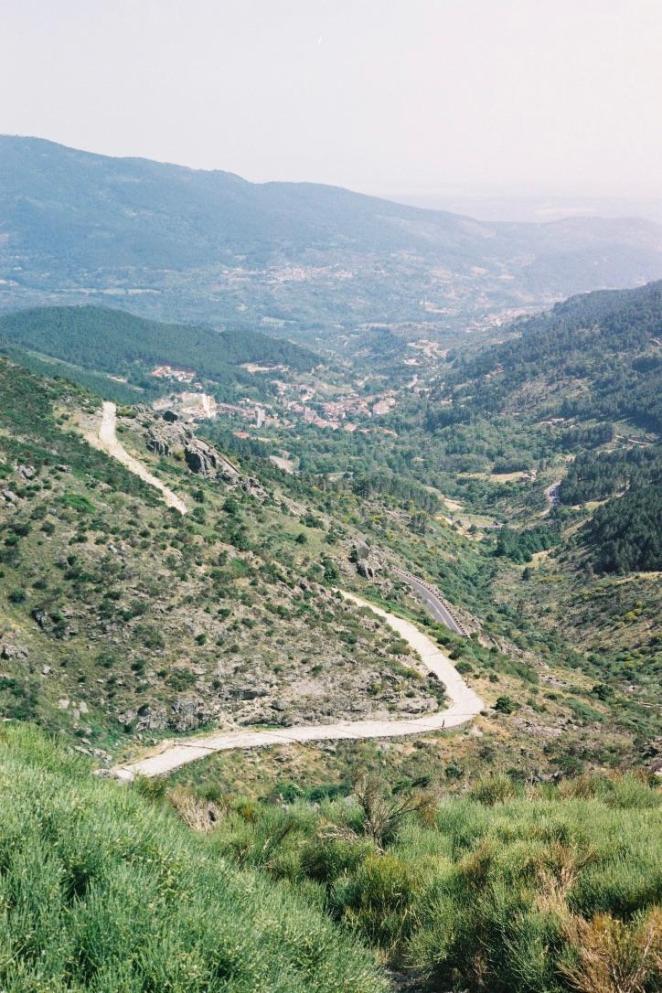
And the photo above? It is the old Roman road that ascends the Puerto del Pico in the Province of Avila. Hard to believe it was laid down nearly 2,000 years ago and still carries the transhumance cattle and sheep from the valleys in winter to the hills in summer. It is also a part of the Camino de la Plata, the silver road that brought precious metals from Spanish America to Madrid after the discovery and conquest of the Incan Empire.

The treasures of the Empire – what joy. Yet what weight around the neck of the Spanish nation. Wealth so abundant, spending so rife, money-lenders always lending, filling in the gaps between the arrival of the treasure convoys from the Colonies. And yet that borrowing became a millstone around the borrowers’ necks. So much money borrowed that there came a moment when each convoy only served to pay off the loan debt of the last set of borrowings.

The cattle and sheep struggle to climb to those heights. Yet it is not difficult to imagine how much easier it was to walk downhill, beside the creaking wagons that held the gold and silver to pay off the monarch’s debts, en route to the king and his court.

Think also of the squeals of anguish heard when the treasure fleet did not arrive. Captured by the English pirates, or hurricane battered and lost in the Caribbean or closer to home. This meant even more borrowing on the back of earlier borrowing and always the cost of living and the lending rates rising higher and higher.

Dydd Dewi Sant Hapus

Dydd Dewi Sant Hapus!

Happy St. David’s Day

Spring in Wales.

Spring in Wales

               Spring in Wales comes very quickly.  Sometimes, if you blink twice, it has gone again. But usually, you take a step outside the door one morning and suddenly there are daffodils everywhere. And they all come so early, crowding together like party-goers, tossing their heads in the bright yellow sunshine, and the whole world green and yellow, like the round yellow eye of this first blackbird, whistling on the garage roof or on a branch of the apple tree which is suddenly covered with a warm green fuzz of threatening leaf …

               … all so early, I say, and the countryside yellow with daffodils by March the First, St. David’s Day, our Dewi Sant, and especially in the Castle Grounds and Blackweir gardens, where the daffs grow wild and cluster beneath the trees, like huge, enthusiastic, rugby crowds, clapping and waving at every passing moment, and all the leaves on all the trees are just starting to sprout and there’s a pale, watery sun, but the wind is still fresh with the daffodils all tossing their heads in sprightly dance …

               … and you can walk the dog in Blackweir Gardens without a winter coat and without your wellington boots, though it’s as well to wear thick socks and good, stout shoes, just in case there are still puddles and the autumn leaves that fell last year may still be wet and soggy and slippery after their winter out in the rain and snow and the Feeder Brook which used to feed the Old Castle Moat, drained now, and no longer a stock pond for trout and carp,  is running strongly and quite fast, all the way down from Taffs Well … and the gurgling weir is beside you as you walk, with the crunch of the gravel beneath your feet, the song birds starting to sing, the nesting birds pairing up and starting to nest, and always the daffodils, the Taffodils as they sometimes call them in Cardiff, Caer Dydd, as they write on the busses, with the river Taff flowing there, just above you, as you climb the embankment and the River Taff flows beneath you now, all black and swift and deep and swollen with the end of the winter rains … and the Taff cradles as it flows the finest of fine coal dust and carries it down to the sea … and the fish and eels are born eyeless, so the fishermen say, as they measure out the length of the whoppers that got away, because nothing can be seen in the River Taff when it’s as black as that … and in places you can walk on it, they say, it’s so laden with coal dust from the worked out seams of the nearby Rhondda, and what use are eyes in a river where the coal dust is impenetrable and the water’s like a dense black stew …

               … and spring is Easter and Easter is when the Barbarians Rugby Football Club make their annual Easter Tour of Wales and the southern part of Wales is rugby mad on Good Friday, and we have just been released from the prison camps of our schools for the Easter Holidays, and in our new found freedom we go to Penarth where the Sea-Siders, as we call them, play against the Baa-Baas, as we call them, and we park the car at the top of the hill near the centre of Penarth, and we walk and half run to the playing fields down at the bottom of the hill, squeeze ourselves like toothpaste, in through the gates, squeeze ourselves small in the gathering crowd and there they are, the mighty Barbarians, 14 internationals from England, Ireland, Scotland, and occasionally France or South Africa,  and standing firm against them, the men from Penarth, 15 average tiny Welshmen, perennial losers, doomed to their annual failure, but not today, as Bernie Templeman, “Slogger” to his friends and intimates, kicks a penalty and drops a goal, and the giants are shunted all round the park and almost off the scoreboard … and we shout ourselves hoarse and it’s Penarth 6 and the Barbarians 3 … and all that international strength and might vanishes, Goliath felled by David on a damp Good Friday night … in the spring time, in my childhood, in Wales …

               … and on Easter Saturday, we stay in Cardiff … and we have tickets for the stand where you don’t have to stand at all, but can actually sit in luxury … and my friend’s dad has a friend who has friends who have season tickets … but they have just won the football pools and they have left Wales and are travelling around the world on a cruise ship, and they have left us their tickets, their wonderful tickets in the stands, and we sit on the half way line and watch this magnificent game where they, the Barbarians, have fourteen internationals and a school boy who will one day be an international, but we have fifteen internationals because this is Cardiff … the best club side in the world … and this is the Capital of Wales … and we are playing at Cardiff Arms Park, at the ground where my father played and my grandfather before him, and we are watching history, and family history, and everyone who plays for Cardiff also plays eventually for Wales, and my father came here, like my grandfather, as a visitor, not part of the home team, and Swansea were the champions back then, not Cardiff, and my grandfather played for Swansea, way before the First World War, and my dad …

               …  well, I don’t know much about him and his rugby because he changed from rugby to soccer because my mother’s family, who all had English and Scottish blood, thought rugby was dangerous and they wanted him to play soccer, so he did, and he broke his ankle playing soccer and never played sports that well again, though he was a great sportsman, more than 6 foot tall, yet I take after my mother and I’m tiny like her, and “much better to have had a girl, with him as small as he is” some neighbours said and others said “Don’t worry; he’ll grow!” but I never did and so I became a runner not a rugger, but my father’s side of the family could never understand why I wasn’t out there, like my father and my grandfather and “A good little ‘un is just as good as a good big ‘un” they used to tell me, so I played occasionally, especially in the spring, and there they were, giants at six and seven foot tall, and there I was a dwarf, a pigmy, at five foot tall, and it’s lies they tell you sometimes, myths and lies, because five foot can never match six or seven in spite of everything they say about a good little ’un … but this is Cardiff and Cardiff always wins and win we do … and we all go home happy …

               … but on the morning of Easter Sunday we set  out for Swansea and the bungalow in Bishopston, where we will spend the night, and we have our knapsacks on our backs and in our knapsacks we have our sandwiches and our snack bars and our bathing trunks, and we’re all ready for that first Easter visit to the beach … and we catch the train at Cardiff General and go from Cardiff General to Swansea High Street, and when we’re in Swansea we run to the bus station and catch the next bus, the next brown and yellow Swan bus, and it takes us out along the Mumbles Road, and up the Mayals, and over Bishopston Common, which is still open land and not the least bit enclosed, and there are skylarks rising early in the morning, and cows, and ponies, and sheep, and sometimes they are found wandering on the road that crosses the common, but not today … and we leave the common and rush through the narrow lanes, at breakneck speed, and the trees lash the bus windows with their branches, inches from our faces, and we duck as the leaves smack the glass in front of us, even though we know the windows are there and the leaves can’t touch us … and at Pyle Corner, we leave the bus and it’s down through the lanes, and it’s out to the bungalow which hasn’t been opened yet, and we’re the first there, so it’s light a fire and warm the place up, and dry the mattresses, and get the damp out of the one bed we’ll sleep in, all of us, and then it’s down to the hard stone beach at Pwll Ddu, and we wander on the shore fully dressed and dare each other to swim as we wander across the pebbles and yes, we decide to do it, to strip, and the wind turns us blue and there’s nobody else there, just us, and it’s Easter Sunday, and the sea-gulls are daring us to take off all our clothes and bathe naked in the naked sea beneath a naked, cloudless sky …

               … and it’s not as warm as we remembered it from last year, and the wind whips our naked flesh and turns it blue and we run up and down trying to keep warm and then we plunge into the icy water and the water must be a degree or two warmer than the land, but it’s still cold in the water and even colder when we come out … and I remember now that my grandfather was a member of the Swansea Polar Bear Club and swam, each Christmas, in the docks at Swansea and also on new Year’s Day and he must have been mad, even if he did join a club of equal nut cases, ‘cos we’re freezing, I tell you, and this is Easter Sunday, not New Year’s Day, though the year is new enough for us and the cycle of the seasons is just beginning, and the old year ends with winter and the new year starts with Easter, and this ritual turning blue as though we were all daubed and tattooed with woad, and the annual, ritual dip lasts for about two seconds, two seconds of total immersion, like baptism, with your hair wet or it doesn’t count and “Watch out!” there’s someone coming down the cliff path and we’re no longer the only ones on this beach and we leap into each other’s clothes just to have something on when the others arrive, whoever they are, these neighbours, these nosy neighbours are … and “Skinny dipping. were you?” they say, “We’ll tell your ma, we will.” “You can’t she’s in Cardiff!” “Well we’ll tell your grandma then, she’s still in Swansea, I saw her at the market yesterday, and she’ll tan your backsides — should be ashamed of yourselves, bathing naked on Easter Sunday.”  “Aw, don’t tell gran; remember: you were young once!” “Yes! I was; but I didn’t run naked on the beach on Easter Sunday!” …

               … and it’s back to the bungalow with everything soon forgotten and the bungalow is warmer now, from the fire and the woodstove, and you know automatically where everything is, the oil lamps, and the wood fire stove, but there’s no electricity and we have forgotten to get water and unless we drink rainwater from the barrel it’s down to the end of the field, with its single tap that feeds and waters the whole field, 26 summer houses and only three of them occupied, two by people who live there all year round, and one by us, now, at Easter, and the neighbours drop in to see we are all right … and we talk and they help us to trim the wicks and set the lights and one of the neighbours comes in and helps us to make a pot of stew on the wood stove, a Welsh stew with potatoes, and cabbage, and onions, and carrots, and a bit of meat they lend us so we will not be tempted to use the piece of old dry smoked bacon left over from last summer, and hanging still from the rafters, out of reach of the mice and the rats who have taken back their empire and scuffle and scrimmage each night, like Barbarians, over the roof and through the walls … and we can hear them at midnight, as they travel the pathways they have built around us …


               … and we can also hear the cows, out in the field all night, as they rub their bodies up and down against the bungalow walls, and there are fresh cow pats where they have sought human company and the warmth of the fire because it’s cold at night even though it’s spring and when Monday dawns, first  it’s breakfast and Brandy Cove, where the beach has changed shape after the winter storms … and all the paths are slightly different, down from the cliffs to the sand, and we are not the first, for there are new paths and footprints and one of our neighbours is there in the cove with his canoe which he paddles all winter, every day, at full tide, in Brandy Cove at first, then out round the headlands to Caswell and Langland, Pwll Ddu and Three Cliffs and we don’t know now that one day he’ll go out on that tide, but he’ll never come back, and they’ll hold a funeral for him, but they’ll never bury him, because they’ll never find his body … and this year, again, he’s all sun tanned and brown and doesn’t look at all like one of us, we white skinned boys, with our sunless winter skins not yet exposed to wind and sand save for that one appearance yesterday that blued us as if we were dyed in woad,  as if we were ancient British warriors and the old Celtic Race was reborn in tattoo and blue … and fearsome we are, we warriors, we blue men, marching up Snowdon with our woad on, never minding if we’re rained or snowed on, and slap us on the chest and we are all bowmen they say, and the spring is here and the summer campaigns can be planned, but first, it’s back to the bungalow, finish up the food, clear everything away, make sure the fires are all out, lock all the doors, and off down the lane, we go to catch the bus back into town, the brown and yellow bus that was once driven by my great-grandfather, not in bus form, but he put a plank in the back of his truck and he gave people lifts, and this was the first informal transport system, ages and ages ago, long before the First World War, and everyone knew him and everyone knows me, but me I have left … and I don’t know anyone any more … but they all know all about me …
              
               … and we get off the bus at the Swansea Recreation Ground and we walk to St. Helen’s for the game, because today Swansea play the Barbarians and my uncle is there and he used to play for Swansea and he’s in his usual place … we know just where to find him … and we stand by him and talk to him and everyone is wearing something white today, because Swansea are the Swans when they play soccer and the All Whites when they play rugby and Cardiff play in Cambridge Blue and Black and I cannot remember the colours worn by Penarth, because we only go there once a year to watch them and nobody in the family ever played for them …

               … and Swansea is great because the stand is low and players can kick the ball over the stand and then the little boys, which is what we are in the eyes of the grown ups, though we think are big and tall and Celtic Warriors, quite capable of bathing at Pwll Ddu on Easter Sunday, with nothing on, which the grown ups would never think of doing, well, we little boys are told to run and get the balls which have been kicked over the grandstand out into the street where the Mumbles Railway still runs, right beside the Cline Valley Line, and all the traffic is stopped because the balls are rolling around and the boys are chasing them and whenever the grown men get tired of playing and need a breather, why, one of them kicks the ball over the pavilion roof and I can remember in the cricket season when a ball was hit over the pavilion roof and it landed in a coal truck that was passing on the railway line and it travelled all the way up to North Wales where it was discovered, lying on the coal, and the grown ups all said that we boys had stolen the ball, until it was discovered, a week later lying on the coal … and I can’t remember whether Swansea won or lost, but I think they won, because I don’t think the Barbarians won anything in Wales that year, and that night after the game it was back to High Street Station and back up to Cardiff General on the train, and the next day was Easter Tuesday ….

               …. and the holidays are almost over … but on Easter Tuesday, the Barbarians play Newport in Newport at Rodney Parade … and nobody in the family likes Newport, because the people from Newport are neither English nor Welsh and they change allegiance and go with whoever’s winning, England or Wales, and they move in and out of Wales, playing for England when the Welsh don’t want them and they can’t get a game with our team … and we don’t like that …  so nobody trusts them and you can see people from Newport playing on the English side, in white, with a red rose on their shirts … but Ken Jones wouldn’t do that … and he’s from Newport … and he’s fast, very fast, and he’s got an Olympic bronze medal for sprinting, and the crowd all sing the Skye Boat Song, except the words are different and  they sing “Speed, bonny boat, like Ken Jones on the wing, onward to score a try!”

               … and although we’re meant to support Ken Jones and the Newport team, we secretly support the Barbarians, but not too loudly, because there are some big, and I mean big, Newport supporters close by us, so we don’t make too much noise … and I can’t remember that game either because Rodney Parade isn’t very nice and nobody from my family would ever think of playing for them …

               … and Wales, as I remember it, was still very tribal … and people in Newport, Cas Newydd,  live on the border, and by the border, and we’re never sure which side of the border they’re fighting on, and that’s totally prejudiced and unfair, and politically incorrect … but that’s also tribal warfare, so there! … and it’s perfectly fair to support the Barbarians against Newport because in the folk lore, of that part of Wales, at that time, well, the people of Newport were Barbarians … and they didn’t know whether they were English or Welsh … and they were mixed breeds, mongrels, Heinz 57’s … and they kept the pubs open on Sundays too …

               … ah well, most of those things happened a long time ago and they’re all forgotten now, the rivalries, the family feuds, but some things you never forget … like Easter and the Barbarians Tour of Wales and the daffodils in the Castle Grounds and Roath Park in Spring and Blackweir Gardens … and suddenly, so suddenly, Easter Tuesday was over … and it was back to school … and the holidays were done … and Easter was done … and those are my memories of Spring … in Wales … where the blackbirds still whistle and sing on the garage roof … and all the world is yellow with gorse and sunshine and all those Taffodils …

Rage, Rage 35

Rage, Rage
35

Now,
once a month, they stick
a needle in my arm
and check the levels
of my PSA, cholesterol,
and testosterone.

Is my blood pressure rising?
Is my cholesterol high?
Are my electrolytes
ticking slowly down?

The doctor keeps telling me
it’s a level playing field
but every week
he changes the rules
and twice a year
he moves the goal-posts.

What game is he playing?
A man in a black-and-white
zebra shirt holds a whistle
to his lips while another
throws a penalty flag.

It comes out of the tv set
and falls flapping at my feet.
Now I know for certain that
I’m living in the Red Zone
and I’m running out of time.

Comment:

Now, once a month, they stick a needle in me! Not always in the same place. But, I sometimes feel like a pin cushion. “The slings and arrows of outrageous fortune” have turned into the “probing instruments of innumerable doctors.” Try repeating those lines at speed and you will end up repeating the message, from lips to ear, like the battalions waiting to go over the top, used to do in the trenches of WWI.

Original message – “Send reinforcements, we’re going to advance.” Last message in sequence – “Send three and fourpence, we’re going to a dance.” Funny how times change. I am re-reading Don Quixote (yet again) and am bowled over by the length and complexity of the sentences. Then I realize how words, culture, times, and attitudes have changed. “Change and decay in all around we see…” – indeed we do.

How many people now know what ‘three and fourpence’ means? And how about LSD – and no, it’s not a psychedelic drug, it’s code for pounds, shillings, and pence. Well, for the original Latin terms for them anyway.

Oh the joys of AI – “The terms librasestercia (commonly sestertius), and denarius are the direct Roman ancestors of the British pre-decimal currency system (£sd), which was in use until 1971. The system was adopted from the Roman/Frankish model where a pound (libra) was divided into shillings (solidus) and pence (denarius).”

Oh the wonders of the British pre-decimal currency system (£sd). Four farthings = one penny; 12 pennies / pence = one shilling; 20 shillings = one pound; 21 shillings = one guinea. What fun we had adding and subtracting British coinage in those days, let alone multiplying and dividing for those wonderful state examinations.

Ah well, it’s all forgotten now, as are the jabs, the needles, and the tests. Anyone got a Wills’ Woodbine? Or a Player’s Navy Cut? And how about a Lucifer to light your fag? There weren’t any fags in my boarding school. Fagging was strictly forbidden. As was smoking. And drinking. And loads of other things that we did anyway.

Bleak Mid-Winter

Bleak Mid-winter
from
All About Angels

The reverse side of a tapestry this fly-netting,
snow plugging its tiny squares,
clotting with whiteness the loopholes
where snippets of light sneak through.
Black and white this landscape,
its colorless contours a throwback
to earlier days when dark and light
and black and white held sway.

Snow piled on snow.
The bird-feeder buried and buried, too,
the lamps that can no longer shine
beneath their cloak of snow.

The front porch contemplates a sea of white,
wave after wave cresting whitecaps,
casting a snow coat over trees
with snow-filled nests standing
shoulder-deep in the drifts
while a slow wind whistles
and high and dry in the sky above
the sun is a pale, thin penny
drifting through ragged clouds
hat threaten to bring more snow.

Comment:

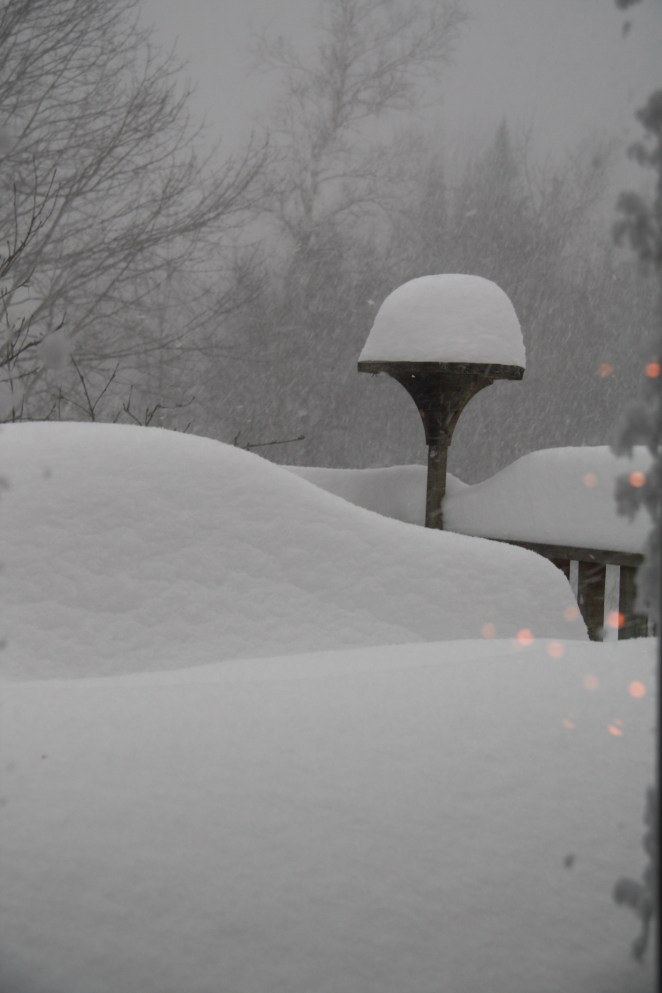
A Golden Oldie, or rather, a Black and White Oldie, from when New Brunswick winters were colder and much more snowy. The iterative thematic imagery in the poem links to the hymn, In the bleak mid-winter. There are several reminisces of the hymn within the above lines.

It used to be sung as a an entry hymn in the Christmas Carol Services at King’s Stanley Church, along time ago, when I was in school. The procession would exit the vestry and move slowly though the church towards the altar. The first verse of the solo was sung solo. Then a duet followed. Then the whole choir joined in. I remember doing the solo one year, when both our lead singers were stricken with some form of laryngitis. We drew lots and I got the short straw.

The unique drum accompaniment that day was the sound of my knees knocking together, backed up by the loud beating of the heart in my chest. I preferred hiding in the choir, to stepping up out front and leading it.

Last year, we used our snow blower on three occasions. This winter, we have yet to use it. If during the next month or so I am forced to wake it up and shake it out of its cobwebs, I will be sure to sing “In the bleak midwinter” as I plow my drive. Alas, there will be no choir to accompany me. Those days are long past, and in the past they must remain, as the Flower of Scotland reminds us. They will be singing that in Edinburgh on Valentine’s Day. And Scotland will need a strong brave set of hearts to upset the invading armies from south of the border.

Cribbage

Cribbage

Red and white markers
chase each other
along the S bends,
past the skunk lines
to the final straight
where a single space
awaits the winner.

I don’t remember
who won, nor do I care.

We shuffle the cards
and deal again
as we wait for sleep
to descend and bless us.

We fast, tonight:
no food, no water.

When midnight strikes,
we put away the deck
and pegging board,
and bid each other
goodnight.

Sleep well if you can,
my friend:
morning will bring
a much more serious game
that neither you nor I
can afford to lose.

Comment:

A Golden Oldie from 2015. We were both receiving treatment for cancer, in Moncton, at the Georges Dumont Hospital. We both had sessions the next day, he had opted for surgery, while I was undergoing radiation treatment. We could not sleep, and so we sat up and played cards. It helped reax both of us and we talked while we played. I do not remember the conversation – nor the cards – just the immense peace and brotherhood that wrapped itself around us as we waited together.

A little later, we both left the hospital and we never met again. I remember how he played cards, his pegging skills, his ability to read the hands. But I can’t remember his face, or his name. Yet here he is, a ship that passed me, nameless now, in the night, and still, I hope sails on.

Looking back on those days – I remember such closeness in the Auberge, such camaraderie. Those who had been there longest sharing the secrets of survival skills with the newest arrivals. One of the greatest joys for me, was to meet with so many wonderful Acadians – male and female – who shared their language, their knowledge, and their culture. I remember the quilting sessions, the gossip around the table – and I was the only man in the group. The ladies wanted to know where I had learned to sew so well, but I fudged the answers and wouldn’t tell them. I still keep that knowledge to myself. I remember, too, the painting sessions. And the musical evenings with dance and song. So much encouragement, so much fun – and all in the face of disaster, for not everyone survived their treatment. As for me, I was one of the lucky ones. And I recall those days as blessed, in spite of the fear and sometimes the pain.

Carved in Stone 72 & 73

Carved in Stone
72

Is this world I create real?
Of course it isn’t.

It exists only in my head,
and on the page,
but perhaps, one day,
you too will see
the things I have seen.

Yet the world I describe
is as unreal as the words
from which it is woven.

73

Heraclitus once wrote
we can never bathe
in the same river twice
.

This is the Catch 22
faced by all poets,
to remember,
and to try to recreate.

Shadow hands on cave walls,
colored pictographs on gesso,
hieroglyphics on papyrus,
ink on paper, raw words,
and in the end,
everything reduced
to these three little letters
carved in stone –

RIP

Commentary:

If you have read this far, we have walked a long journey together – 73 verses that comment on life and the meaning of life. Hard reading in places, easy in others. I trust you have enjoyed the journey and found some stops and resting points along the way in which to contemplate the ways in which the threads of your own life intermingle with mine.

Throughout this journey, I have tried to use a four step process. (1) Verbal – the poems themselves. (2) Visual – photos that intertwine with the verbal. (3) A Commentary – that goes beyond the verbal and visual and opens up the ideas a little more. (4) A Dialog between myself – the poet – and Moo – the visual artist who has so frequently loaned me his paintings when he thinks they illustrate my words.

It’s been a topsy-turvy journey through what Bakhtin calls a world of carnival, where little is at it seems, and the world is turned upside down. That said, we have a clear choice – to slide down the downside of this life, or to scale the upside, to contemplate, with joy and happiness, the world from those heady heights.

Blessings. Pax amorque.
And thank you for travelling with me.

Sheep

Sheep

Wales is whales (with an aitch) to my daughter who has only been there once on holiday, very young, to see her grandparents, a grim old man and a wrinkled woman. They wrapped her in a shawl and hugged her till she cried herself to sleep suffocating in a straitjacket of warm Welsh wool. So how do I explain the sheep? They are everywhere, I say, on lawns and in gardens. I once knew a man whose every prize tulip was devoured by a sheep, a single sheep who sneaked into the garden the day he left the gate ajar. They get everywhere, I say, everywhere. Why, I remember five sheep riding in a truck on the coal train leering like tourists travelling God knows where bleating fiercely as they went by. In Wales, I say, sheep are magic. When you travel to London on the train, just before you leave Wales at Severn Tunnel Junction, you must lean out of the carriage window and say “Good morning, Mister Sheep!” And if that sheep looks up, your every wish will be granted. And look at that poster on the wall: a hillside of white on green, and every sheep as still as a stone, and each white stone a roche moutonnée.

Commentary:

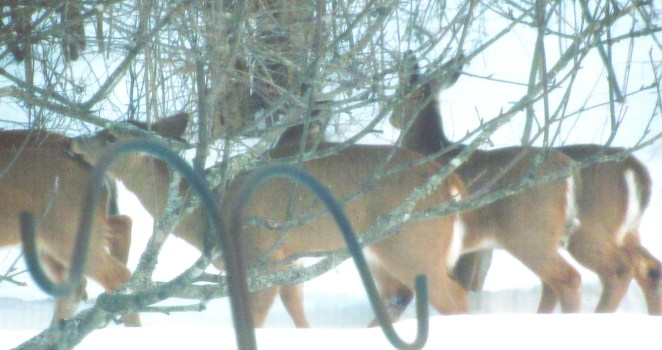
Sheep in Wales and deer in Canada. And here is a little group wandering around in our garden. So how do I explain the deer? They are everywhere, I say, on lawns and in gardens. I once knew a man whose every green leafed plant was devoured by a herd of deer, who sneaked into the garden the day he left the gate ajar. They get everywhere, I say, everywhere. And everybody loves them, because the heart beats a little faster when you see them walk by.

Carved in Stone 70 & 71

Carved in Stone
70

Where can I survive
in this harsh world
where poetry and ideas
struggle to be free,
a world in which
the great literary myths
have been destroyed?

Where mass media rules,
sensationalizes, lies,
falsifies the power and glory
of words, now used
not to delight and educate,
but to manipulate.

A treacherous world
in which an evil genius rules
and constantly misleads us.

71

An Age, not of Enlightenment,
but of Endarkenment,
this is not the world
in which I want to live.

My chosen world
is that quiet corner,
outside El Rincón
in the Plaza Zurraquín,
by the Mercado Chico,
in Ávila, Spain,
where leaves and confetti
dance to the wind’s tune.

A world of mystery and dream,
personal perhaps,
but well known to
all of those dreamers
who have the eyes to see
and the heart to stand still
and listen.

Commentary:

“There is no earth, no heaven, no extended body, no magnitude, no place and that nonetheless I perceive these things and they seem good to me. And this is the most harrowing possibility of all, that our world is commanded by a deity who deceives humanity and we cannot avoid being misled for there may be systematic deception and then all is lost. And even the most reliable information is dubious, for we may be faced with an evil genius who is deceiving us and then there can be no reassurance in the foundations of our knowledge.” René Descartes (1596-1650).

Cervantes wrote about such times in Don Quixote. Do we see what others see? What is truth and what is fiction? How do we approach and understand authority? What do we believe and why do we believe? Are they windmills or giants, wineskins or warriors, a flock of sheep or an invading army? “Only believe, and thou shalt see” – but what do we believe and why do we believe. “The fault, dear Brutus, lies in ourselves, not in the stars, that we are underlings,” Shakespeare, from one of his many plays.

Carved in Stone 69

Carved in Stone
69

Words, words, foundered words,
flotsam and jetsam
that I rescue from the beach.

I find them in the tide mark,
its seaweed filled
with bleached carapaces,
charred wood, old rusted iron,
and the bright bones
of long dead creatures,
polished by the relentless action
of wind and sandpaper sea.

Commentary:

Words, words, foundered words – where do they come from. Good question, but I have no answers. Automatic writing – you put pen to page and scribble for five minutes. Everything that comes into you head. The Surrealists did it. They thought they were in contact with their own subconscious minds, but the written results were c-r-a-p, or any other word that means the same thing. I have seen university teachers request their students to do it, but crap by any other name would smell as sweet.

Poets who said they were not surrealists did it. Lorca and Paz, for example. But they did not publish the automatic writing. They used it as a quarry to seek for the one or two gems that actually surfaced when they had done it. Those they chose. The rest they dismissed as the crap that it was.

So, where do we find our inspiration, our words? I find it in the tide mark, its seaweed filled
with bleached carapaces, charred wood, old rusted iron, and the bright bones of long dead creatures, polished by the relentless action of sea-breeze and sandpaper sea.