Rage, Rage 22 & 23

Rage, Rage,
22

I trace dark contours,
scarred desiccated lines
blurred on the back
of my wrinkled hands.

Blood maps, they are,
unremembered encounters
with immovable objects,
wounds that bleed freely,
deep below the surface,
subcutaneous.

23

When I dream,
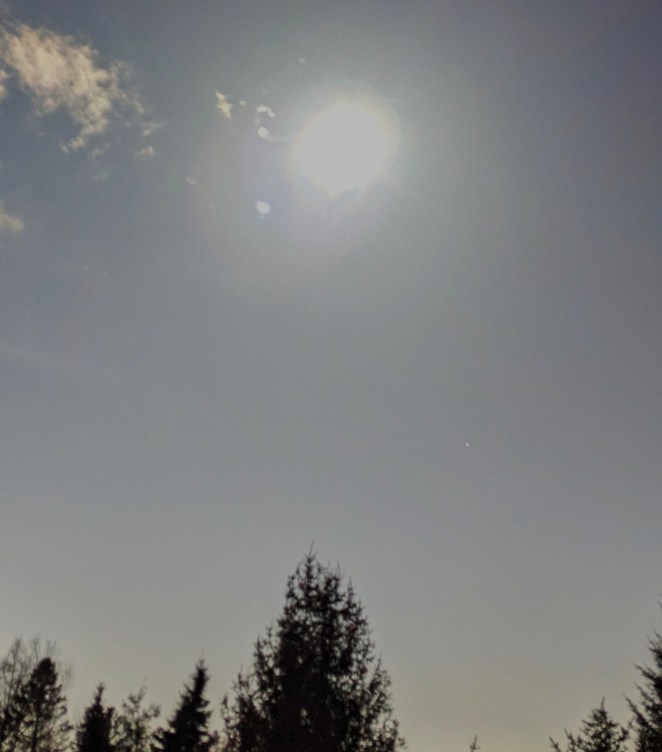
I imagine the sky
to be a crystal ball,
twinkling with stars
that tell the time
and my fate.

With silent steps
they creep and steal
hours, days, weeks, years,
whittling my life away,
splintering it
a little bit more
every day.

Time, like golden sand,
trickles through
night’s fingers.

I hold in my hands
an hourglass
through which my life,
secretly, silently,
slides down
and trickles away.

Comment:

“Unremembered encounters with immovable objects,” – oh dear. Anti-coagulants, blood-thinners for short. Moo’s skin is dry anyway. Now that he’s on anti-coagulants, he bruises every time he bumps into something. And Moo bumps into things. He’s one of those people who fall out of bed and go bump in the night. How do I know? He stole my teddy bear and my teddy bear told me. Anyway, his cardiologist calls it collateral damage. A sort of side dish that arrives when ever he stumbles into anything. That’s Moo, not the cardiologist.

As for me, I miss the old myths. I love the idea of the platonic, terra-centric universe. The planets move back wards and forwards around the earth in a slow dance. In order to dance, you need music. So the Platonic creator is a master musician who pays the harp. The stars dance to his music. Fray Luis de León uses this Neo-Platonism in his poetry. For him the sky is ‘un gran transunto donde vive mejorado todo lo que es, lo que será, y lo que ha pasado’. – a large space where, much improved, dwells everything that is, that will be, and that ever was. A lovely thought. Nothing is lost. Everything is saved – but in a state of betterment, all mistakes erased.

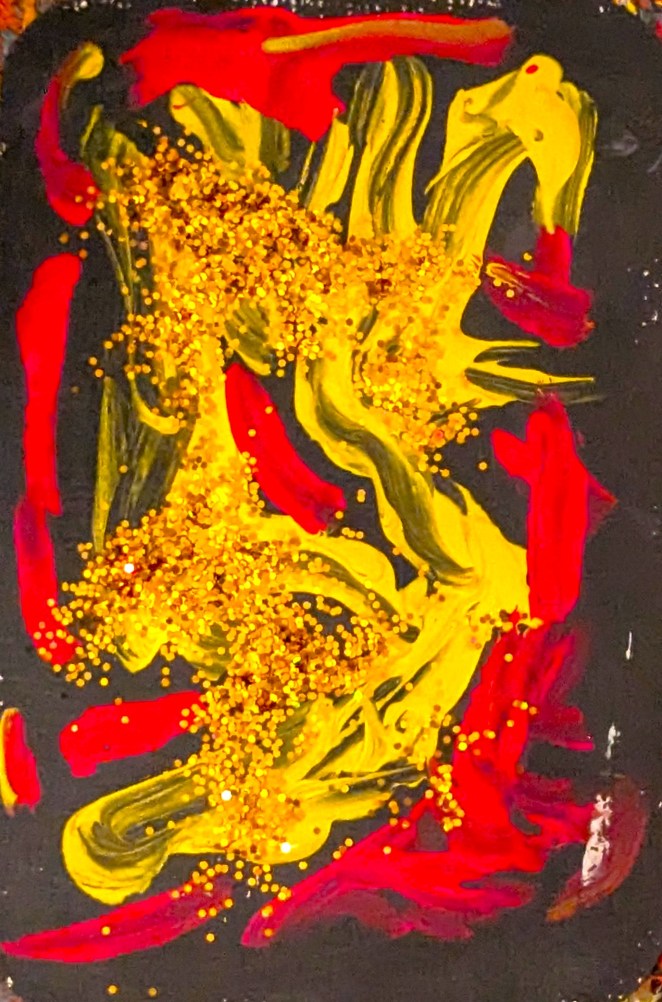
Moo would like that. His collateral damage all turned back into perfect skin. Oh dear. He wouldn’t be happy. He’d have nothing to paint. I am sure he paints his bruises when he runs out of inspiration.

Carved in Stone 65 & 66

Carved in Stone
65

Flames flow sparkling waters,
a cataract of fire,
down church walls
as the Castillo burns.

Fireworks claw upwards
to knock on heaven’s door
and waken the sleeping gods
reminding them
not to forget their people.

A knife edge slices sun
from shadow, heat from cool,
solombra, Paz calls his neologism
with its combination
of sun and shade / sol y sombra.

66

I will never forget the taste and smell
of my own sweat as I walk beneath
the heaviness of a midday sun,
its heat falling vertical
and rebounding in waves
from concrete and cobbles.

I recall the roughness
of hand-hewn stone
heated by that burning sun,
the smoothness of silk
contrasting with the harshness
of tares in hand-woven wool,
marketed in the central square.

Commentary:

Fireworks claw upwards to knock on heaven’s door. The celebrants would buy their rockets in groups of 3, 6, or 12. When the first rocket went up – whoooosh – BANG! – we would wait for the fourth. When the sixth rocket went up, same thing – do they have a full dozen? And when the seventh rocket goes up, indeed, we know they do. Sometimes, we would be woken up in the early morning, as the joyful people returned home after a night of reveling. When that seventh rocket flew skywards – we knew it was useless to try and go back to sleep!

I remember leaving the zócalo one night, turning into a side street, and being met by a wall of people. A whole village, with its accompanying band stood there, waiting. Up went the first rocket, the band started to play, and the dancing broke out. No sleep for the gods that night. Their people needed them and had come knocking on the door. I was always amazed by the way the old gods stood shoulder to shoulder with the new gods of Christianity. The number of people who worshiped both also surprised me.

I last visited Oaxaca in 2001. I wonder how much has changed. I hope the dancing trees never change. Inside them, young children, their eyes peering through the bark, followed the band music. Occasionally, one of them would stop, open his or her tree, and invite you in. Alas, I never had the courage or the skill to accept the invitation. Even by 2001, the traditional carnival figures – monos – were gradually being replaced by Donald Duck and Mickey Mouse. Tragic, in so many ways. I hope they keep the traditions of the rockets and the music and the trees.

People of the Mist
A Poet’s Day in Oaxaca

If you want to read more about Oaxaca
Click here to purchase this book.

Growing Old Together

Growing Old Together

You and I are growing old together.
We have been together for 59 years
and married for 54 of those.

We watch each other slowly breaking down,
the memories going,
the body parts not functioning
the way they used to.

In some ways,
it is incredibly beautiful.
In other ways,
it is so tragic, this slow waltz
around life’s dance-floor
towards who knows what
that last dance will bring?

It gets harder and harder
to find the right things to say,
sometimes to find anything to say.

There are days
when we just sit in silence,
filling in time,
doing a crossword or a sudoku,
or just gazing into space,
trying to avoid
the mindlessness
of endless adverts
on the television.

Commentary:

Not much to say, really. The poem and the photo speak for themselves, as good art always should. Sometimes the artist plans everything, and out it pops, all ready-made. On other occasions, a small miracle takes place and words and images tumble out, fluff their feathers, settle down and wow! – it’s a work of art. As long as one other person, other than me, thinks so, then I will be happy. “If I can reach out and touch just one person.”

I often wonder how many people are touched by traditional art nowadays. There is so much shock and awe out there, that the humble homely corner with its two doves or the image of an elderly couple dancing slowly around their kitchen, hanging onto each other – for what? And both of them waiting – for what, exactly? I expect it varies with each couple. But what I pity most are the lone doves, abandoned, autonomous, living on their own-some with nobody to talk to and only the TV to listen to. How many of them are out there, I wonder? When I walk around town, I see the street people, the homeless, the really lonely ones, just sitting, or slowly pushing a grocery cart with all their belongings tied up in plastic bags. Heads down, they plod on, never stopping, never looking.

“A sad life this, if full of care, we have no time to stop and stare.” W. H. Davies.

Last Dance

Last Dance

Ten years ago,
in the Hospice for patients,
the shy lady in the corner,
body withered by cancer,
stood up to dance.

She bowed to the band
then floated into movement,
dancing alone.

She clung to the empty air
as she once clung to her lover.

Nymphs and shepherds
played sweet music at midnight
in this room turned sacred grove,
where naiads and dryads
emerged from the shadows.

Her dance-steps
were a draught of joyous water
from the fount of eternal youth
and lasting love.

Commentary:

Moo offered me one of his paintings for this poem. He calls it Keep on the green side. Every Wednesday, in the hospice, a local band came in to play. Some patients danced, others sat and watched, some stood on the sidelines and listened to the music.

I had the fortune to be present at the singular performance recounted above. I never found out that lady’s name and I never saw her again afterwards. She remains a mystery, like the naiads and the dryads, and the hamadryads, who inhabited those mythological woods where so many of us dream our dreams of one last chance and one last dance.

Clepsydra 25 & 26

25

… how will it all end
     does it not need closure
          something to bring
               the water-wheel full circle
                    a golden key to open
                         what

the museum’s door
     memory’s door
          the archives where
               so many memories lie
                    gathering dust

though some may tell the truth
     whatever that is

or does the story go on and on
     never pausing
          never ending
               wrinkle after wrinkle
                    threaded through time
                         after time
                              the candle
                                    burning

the clepsydra
     dripping all life away
          the pendulum
               swaying
                    back and forth …

26

… Westminster Chimes
     chiming the quarters
          church bells
               ringing out a warning

the hills alive
     alight
          with burning beacons

what new armadas
     sailing now off our coast
          what fireflies flicker
               their thunderous roar
                    frightening birds in trees
                         driving deer
                              into the woods

how many people
     cast forth like bread
          upon the waters
               to return ten-fold

hark to the bells
     ringing out again
          St. Clement’s
               St. Martin’s
                    the Old Bailey
hark to the children singing
     dancing in a circle
          never-ending
               until the music ends

and the last child
     is caught by
          the lowering arms
               trapped
                    a fish flapping
                         in the osprey’s grasp …

Commentary:

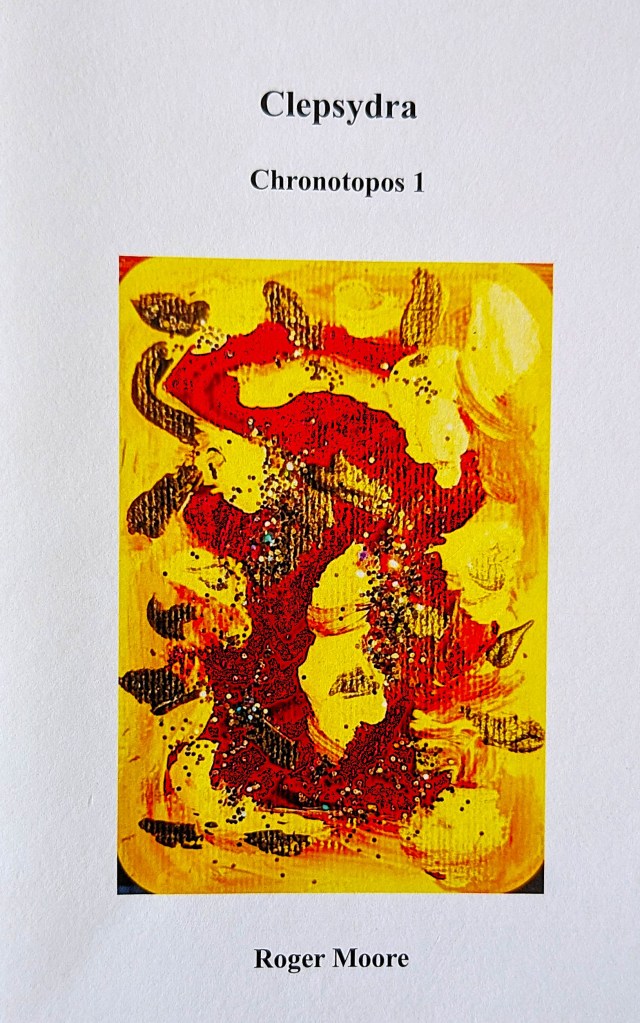
I wonder how many people still sing the children’s song about the bells of London? Images from it – intertextuality – occur throughout Clepsydra.

“Oranges and lemons,”
ring the bells of St. Clement’s.

“You owe me five farthings,”
say the bells of St. Martin’s.

“When will you pay me,”
ask the bells of Old Bailey.

“When I grow rich,”
sing the bells of Shoreditch.

“And when will that be,”
sing the silver bells of Battersea.

“I do not know,”
booms the great bell at Bow.

“Here comes a candle
to light you to bed.
And here comes a chopper
to chop off your head.”

The song appeared at children’s parties. Two of them joined hands, held their hands high, like London’s Tower Bridge, and the children, in a long chain passed beneath the ‘bridge’ as the song was sung. At the end, the children speeded up and they tried to avoid the last verse when the bridge’s arms descended and two children were caught. These then had to replace the original two gate-keepers and the game started again. At least, that was how I remember it being played.

It is worth remembering how violent in their imagery children’s songs can be. The games seem sweet, but they often have dark undertones, some going back to the Black Death – “Ring a ring a rosies, a pocket full of posies, atishoo, atishoo, we all fall down.” If you don’t know what that all signifies, go down the rabbit hole with Alice and the white rabbit and look it all up! And find out what a farthing is, and a penny farthing – go on – I double-dog dare you!

And remember – poetry carries its own meaning – or multiple meanings – and they are not always easy to find. Dig, my friends, dig. There’s gold in them there hills.

Clepsydra 11

Clepsydra 11

11

… gone too
     that Raggedy Ann doll
          held together
               by her patchwork heart

cross-stitched lovingly
     with needle and thread
          the sluggish drip-drip
              of her cotton blood
                    proving
                         she is still alive

neither mummified
     nor rat-and-mouse-gnawed
          in limbo perhaps
               but not dancing

asleep maybe
     dreaming in the museum’s oubliettes
          with their closed doors
               their cellars and attics
                    stuffed with memories
                         all dusty and worn

memories
     that only come alive
          at midnight
               when the full moon
                    awakens the shadows

boys and girls
     come out to play
          and walk and dance once more
               beneath liquid moonlight

the celestial lantern’s
     liquescent flame …

Clepsydra 9 & 10

9

… what lies behind this attic door
     ready to spring out
           at the slow push of my hands

cobwebbed
     this world revealed
          a universe of memories
               waiting to be called
                    back into life

what life
     the flickering half-life
          of shadows on a wall     

or the alternate reality
     of planets that lost their way
          and forgot how to dance
               around their sun

do they still move
     in rhythm to an unsung song
          an unstrung guitar
               music no one else can hear
                    played by a wandering star

lost the glimmer
     of life’s candle
          adrift on distant waters,
               but never forgotten …

10

… nor seen
     nor heard
          I am amazed by the maze
               wandering
                    among cluttered objects,

my world takes shape
     in a mad hatter’s workshop
          where things grow legs
               walk this way that way
                    constantly getting lost

I can hear them
     chittering chattering
          but I can neither
               see nor hold them

like so many bats
     they roost upside-down
          little children lost
               in memory’s attic
                    where everything ages
                         slowly gathering dust …

Clepsydra 6 & 7

Clepsydra 6 & 7

6

… I say I walked alone
     along a long lonely road

nobody could cross that threshold
     nor enter that inner sanctum
          where hungry metal monsters
               lay in silent ambush waiting

nobody could share that sacrificial altar
     the single bed with its iron frame
          on which I lay on my own waiting

uniformed attendants
     locked themselves
          behind their concrete defences
               away from the radiation
                    so dangerous

while I waited
     for those circling stars
          that would burn
               and scar me
                    to descend …

7

… and single beds
     were only meant for one
         
just me
     strapped in
          tied so tight
               lying motionless
                    as I waited for
                         the bed to rise …

upwards
     into that dark night of the soul
          and I the sole sufferer
               under a claustrophobic sky

behold my body
     a mass of red and green striations
          burned by pin-pricks of light
               walking across my body
                    follow the red map
                          painted on my body

burns and blisters
     body and mind scarred
          scared by knowing
               all this suffering
                    might be in vain

others walked this road before me
     some never returned
          empty places at breakfast
               hushed whispers
                    faces turned away

when the tide turns
     it brings with it
          the joy of life
               a spark of hope
                    life’s waters
                         resuming their flow …

Comment:
All that happened to me ten years ago – but the memories are still fresh in my mind. At night, I often watch those planets circling, closing in, those star ships, guns blazing, burning my skin. So many of us have walked that lonely path, lain on that bed, faced those demons. Holst’s Planets – it amazes me that the music still plays in my mind, the celestial dance still goes on in the ballroom of my head, and the memories refuse to fade, though the burns on the skin have vanished and are long gone.

Clepsydra 4 & 5

Clepsydra 4 & 5

4

… candles and the clepsydra
     marking time
          witnessing
               the transition
                    from day to night

drip-by-drop
     falling water
          flickering candle flames

less certain
     than the monotonous
          tick-tock
               of a pendulum clock
 
time and tide
     wait not
          for ship nor man

though time is marked
     on calendars
          and prison walls

days passing into weeks
     spring into summer into autumn

daylight lengthening
     shortening
          until bleak mid-winter
               comes again …

5

… black midnight
     all is lost
          who now can count the cost

stiff upper lips
     forget how to pray
          fingers clasping
               unclasping
                    never grasping
                         life’s simple flow

with silent steps
     planets and stars
          slowly turning
               writing out our lives

sun by day
     moon by night
               the sky alight
                    with shimmering fires

midnight curtains
     burning lights
          crazy curtains
               drawn in night’s sky

a lost dog hurls
     his coyote cry
          who on high
               now listens to his call

not the planets
     nor the Archer
          nor the dog star
               who never barks
                     anything
                          but summer’s flames

pity the poor dogs below
     bitches in heat
          waiting alone
               for their lover’s paws
                    their welcome snuffles

locked and bolted
    the door
          heightened
               the canicular heat …

What was the last live performance you saw?

Daily writing prompt
What was the last live performance you saw?

What was the last live performance you saw?

Depends on how you define performance, doesn’t it? Here’s one from a couple of days ago. I left the lid of my pot of wildflower honey slightly open and, guess what? This is what I saw inside. Actually, there were fourteen of them. Some ran for it. Some were so absorbed that they just lay there, inebriated. I grabbed my cell phone and took this shot.

It could have been a video. The seven that fled, it might have been eight, looked like a broken line of can-can girls fleeing from the Moulin Rouge. But look at the color of that honey. Such a rich, warming gold. It was, quite simply, one of the best honeys I have ever tasted. And I have to say, that I cannot blame the ants for invading such a honey-trap paradise.

The live performance was the running, fleeing, burying into the honey, and wild whimpering of the ants. Then, when I squished them, it was their feeble twitching, followed by their gradual submission to a force majeur.

The Nature of Art and the Art of Nature – a live performance, followed by a still life. A nature morte, as they say in French, or a naturaleza muerta, as the Spanish say. On the bright side, I like to think that they found their land of milk and honey, their earthly paradise, before they met their tragic end.