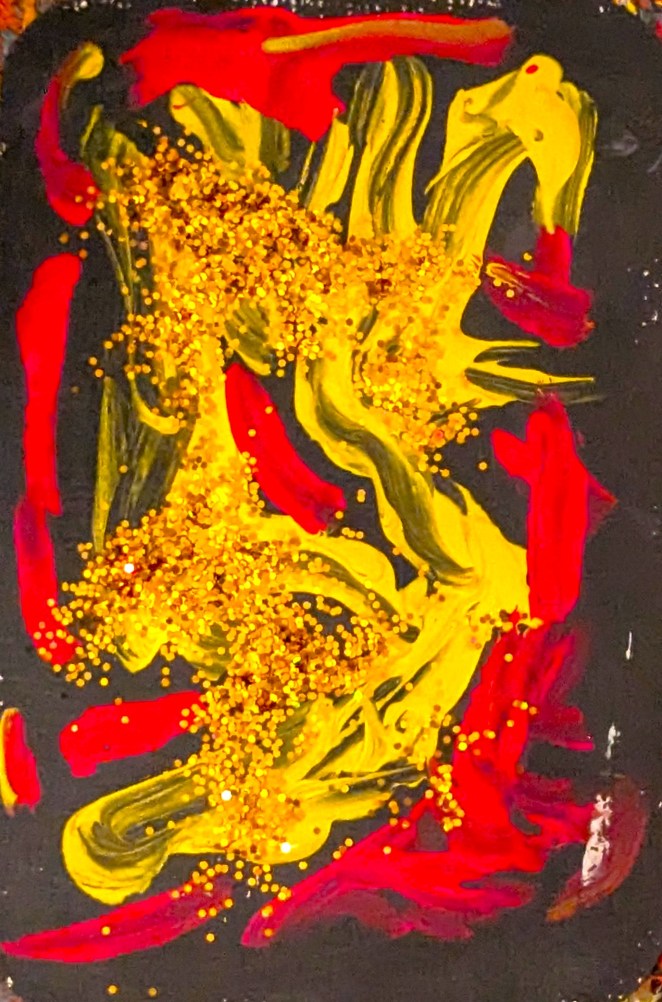
This Vessel in which I Sail

This Vessel in which I Sail

Trapped in this fragile vessel, with the pandemic
a passenger waiting to board, I drift from port to port,
looking for a haven, safe, to have and to hold me.

No harbour will let me dock. “No room at this inn,”
they say. “No haven here.” They wave me away.

Now I have no destination. Aimless, I float and every
where I go the message is: “No vacancy: no room at all.”

Unwanted, abandoned, I wander with wind and waves,
my only friends seals, porpoises, and whales.
I walk the whale road, leaving a frail, white wake behind.

This vessel has become a gulag now, a prison
camp where I exist just to survive. Each hour of each day
endless, boundless, like this shadowy, haunted sea.

Today there is no motion, no goal. What is there to achieve
but survival? Each day’s journey is sufficient unto itself.

Commentary:

Moo’s cartoon, Naval Gazing, dates from 2015. That year I spent eight weeks in Moncton at the Georges Dumont, gazing at my navel while waiting for my anti-cancer radiation treatment. Naval gazing / navel gazing, indeed. Good one, guys. You make a great pairing.

The poem dates from 2020 when Covid stalked the streets and we wore masks when we were not confined to our houses. I thought of the tour ships, wandering the seas, with the disease on board, and no port wanting them. It was a strange time.

Golden Oldies, then, both poem and painting. There are signs, small at present, but still visible, that such days are on their way back. We must each ask the question – What is there to achieve but survival? Hopefully we will come up with a similar answer – Each day’s journey is sufficient unto itself. Journey well and journey safely, my friends.

Apocalypse when?

Apocalypse When?

A strange, milk-cloud sky, skimpy, with the sun
a pale, dimly-glowing disc and my pen scarce
casting a shadow as the nib limps over the page.

Out on the west coast, fires still range free and this
is the result, these high, thin clouds casting a spider
web cloak over the sun face and darkening the day.

The west coast: five or six hours by plane and three
whole days to get there by train, even longer by bus,
all chop and change with multiple stops.

The wind blew and the clouds came widdershins,
backwards across the continent. Today they reached
across the ocean to claw the sun from European skies.

It is indeed a small world after all. Isostasy:
you push the balloon in here, and it bulges out
over there in the place you least expected.

Now we are all interconnected in an intricate network
of a thousand ways and means. What does it all mean?
Ripples ruffle the beaver pond’s dark mirror.

The forest mutters wind-words, devious and cruel,
that I sense, but cannot understand. High in the sky
clouds turn into horsemen on plunging steeds.

Fear, fire, flood, foe, poverty, pandemic, crops destroyed,
unemployment, and, waiting in the wings, the threat of civil
unrest, leading to the apocalypse and the war to end all wars.


Pioneer Sky

Pioneer Sky
04 September 2020

Sky and clouds float side
by side in the beaver pond,
mingling shape and color
with the autumn leaves.

When the walking trail
became too crowded,
the beavers left their lodge.
They moved to another pond,
lower down than this one,
and there, where fresh milkweed
grows, they built another dam
and a brand-new lodge.

The great blue heron still
stands on guard, patrolling
his usual watery haunts.
He searches for solitude
in untroubled waters,
weaving his wary way
between white and blue skies
mirrored in the pond below.

Just when I think that life
has become meaningless
I look up at that Pioneer Sky,
celestial blue for hope –
white clouds for purity,
and I seek new meanings.

I also find them
in the rippling patterns
of the Beaver Pond.

Hello again – our old friend is back!

Hello again – our old friend is back!

Co-[vidi]-s
17 March 2020

I saw time change with the clocks
and my body clock
is no longer in sync
with the tick-tock chime
that denounces each hour.

Hours that used to wound
now threaten to kill.
They used to limp along,
but now they just rush by
and I, who used to run
from point to point,
now shuffle a step at a time.

Around us, the Covidis
thrives and flowers.
Wallflowers, violets,
we shrink into our homes,
board up the windows,
refuse to open doors.
We communicate by phone,
e-mail, messenger, Skype.

Give us enough rope
and we’ll survive a little while,
fearful, full of anguish,
yet also filled with hope.

Comment:

A Golden Oldie, written on 17 March 2020, St. Patrick’s Day.

Only yesterday, I read that Covid is back once more, in a new and mutated shape. Masking is once again demanded in the local Horizon hospitals especially in areas where patients and the public gather. I lost a couple of good friends to Covid last time round. I hope I don’t lose any in this new session. Guess I’ll be continuing to get my vaccinations and keep them up to date.

Whoever is reading this, I wish you all the best. May you stay Covid and illness free. May you also enjoy a long and happy life with sunshine days – and enough rain to keep the forests cool, the trees happy, the flowers flourish, and the wildfires at bay.

Clepsydra 14-15 – Clowns clowning around

Clepsydra 14-15
Clowns clowning around

14

… walking life’s walk
     grey jays in the ash tree
          fresh snow on the ground

at night
     deer track out of the woods
          moon’s dead skull
               chalking its slow path
                    westwards

snow falls
     white upon white
          whirling our world
               back to its cratered life

nothing needed
     other than moonlight on snow
          to ignite us

a white wall of water cascades
     earthwards from the moon
          waters of renewal
               waters of life
                    waters that restore us
and save us
     from the moonbeam’s slicing knife
          that amputates all life …


15

… it is scary tonight
     inside the topsy-turvy
          big-top of my circus world

carnival time
     clowns clowning around
          turning my life
               upside down

is my mind
     a spider-web
          spun by worry and doubt

I remember how
     they pushed me around
          kicked me out
               always the anonymous they

they abandoned me
     told me I was unwanted
          surplus to purpose
               forced me to exit

they told me to forget
     those amniotic waters
          that water world of comfort
               that illusion of reality
                     they had created
                          then threw me onto the street

    I left behind
          their stultified personalities
               with all their stupid rules
                    and blinkered minds
                         that stopped them
                              from seeing straight …

Butterflies

Butterflies
Miguel de Unamuno

… butterflies … temporal forms … fluttering …
existing for one sweet day … they perch … spread
their wings … fan us with their beauty … flourish …
catch our attention … then caught by a gust
tear their wings on a thorn … and perish … blink
your eye and they are gone … yet reborn … they
cluster and gather in dusty ditches …
congregate on bees’ balm … smother Black-Eyed
Susan and Cape Daisy … shimmer in shade …
butterflies by day … fireflies by night …
terrestrial stars floating in their forest
firmament … dark tamarack … black oak … bird’s
eye maple … silver birch … impermanence
surrounds us … dances beneath stars … sings with
robins … echoes the owl’s haunting cry …
eternity held briefly in our hands …
then escaping like water or sand … black
words on white paper capturing nothing …
… my dialog … my time … my place … butterflies …

Note: “La poesía da permanencia a las formas temporales del ser / Poetry gives permanence to the temporal forms of the self.” Miguel de Unamuno (1864-1936)

The temporal forms of the self – and so much today is unsettled, changing, insubstantial. I have often wondered how one makes time stop. Is it even possible to do so? Time and tide wait for no man. And why should they? Fray Luis de León – “Con paso silencioso, el cielo vueltas dando, las horas del vivir le va hurtando.” / With silent step, the ever-turning sky, steals away life’s hours. Or Fancisco de Quevedo – “Que sin saber ni cómo, ni adónde, la edad y la salud se hayan huído. Falta la vida, asiste lo vivido, y no hay calamidad que no me ronde.” Without me knowing how or where, age and health have fled. Life is lacking, past life flew by, and there isn’t a calamity that doesn’t hound me.

Ars longa, vis brevis – art endures, life flies by. My translations are freer than usual today, but I too feel like being creative in my own language. So, if we can’t slow time down, what can we do? We can create – poems, paintings, photos. We can read – and translate from one language to another. We can, like butterflies, perch on flowers and enjoy our brief days in the sun. Mindfulness – we can make the most of each moment by living it thoroughly and well. Carpe diem – we can seize each moment of every day and live it to its full measure. And, above all, we can write and read poetry – because, as Unamuno says – Poetry gives permanence to the temporal forms of the self.

If you were going to open up a shop, what would you sell?

1. If you were going to open up a shop, what would you sell?

That is a very hard question to answer. I think of all the material things that everyone else can think of, but I do not want to sell commonplace things – antique furniture, paintings, books, stamps, groceries – I could go on and on, but I will resist the temptation to do so.

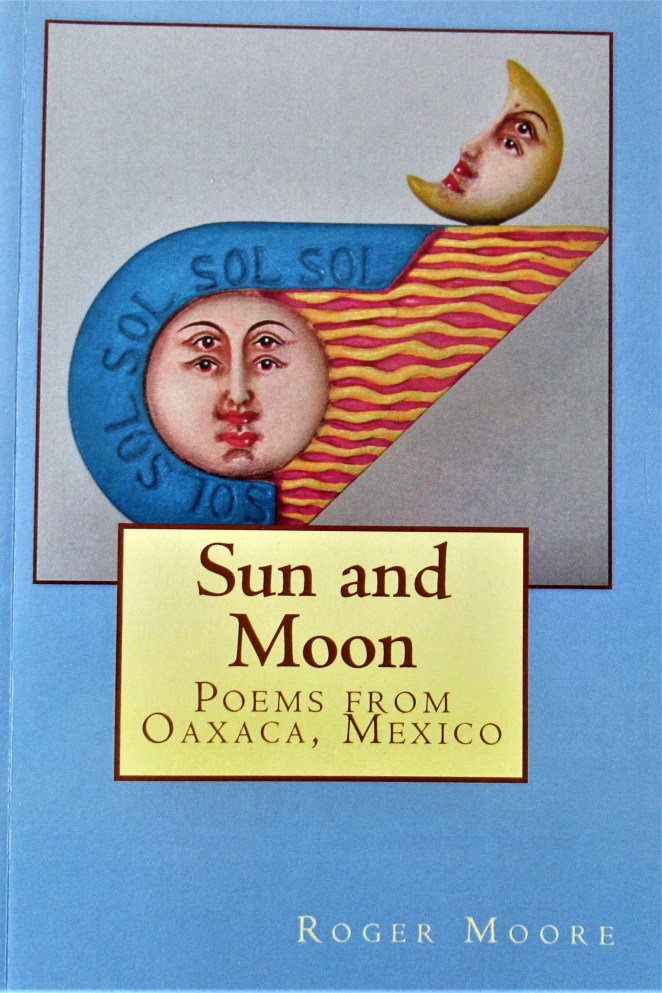
When I lived in Santander, Spain, the local wines were sometimes called ‘sol embotellado’ / bottled sunshine. I wouldn’t want to open a wine shop, but I would love to bottle the essence of a warm sunny summer day and – why should I sell it? I wouldn’t. I would give it away, free of charge, to all the needy people, inner city boys and girls, the impoverished, those who live in the streets and sleep in doorways or under bridges at night. Oh, the joy and happiness that would come when they opened their bottle of summer sunshine and felt the warm fresh air gather around them so they could breathe it in.

But why stop there? I would also give away ‘essence of butterflies’, that special feeling that comes on the colored wings of a butterfly and combines with the joy of flowers and the gift of taking flight. How special that would be. But sell it? It is much too valuable to sell. Put a dollar, Euro, yen, rupee, or sterling price upon it, and all its powers would vanish, like fairy dreams fading away.

Among other things, I would also like to offer the gift of the joy of words. Colors, in the imagination of Blake, were ‘sky wounds’. What joy to take a normal word, add a second word to it and create a new verbal image – ‘sky wounds’. And what happens when the sky is wounded, you ask. Well, the wound opens, the blood pours out and ‘le soleil se couche dans son sang qui se fige’ ‘the sun sets in its own congealing blood’. Baudelaire, if I remember correctly, from Les Fleurs du Mal. What beauty in those new images. What joy in remembering and recreating them. I would bottle such gifts and give them away in my shop.

Fairy dreams – yes, I would offer them as well to those who needed them. And not the sort that fade away, but those fairy dreams that suspend us in the wondrous beauty of their ethereal light. And I would bottle hope, and self-belief, and the power to change oneself from what one is to what one is destined to be. And I would add essence of self-knowledge and powder of Davey Lamp light that would enable the seekers to seek in the darkest corners of their souls and find that elusive inner self, and bring it out from the darkness. And I would stock fragrant filaments of firefly that would also allow my customers to enlighten that darkest of nights, the dark night of the soul. And a map of hidden foot paths that would allow the wanderer to wander and never get lost.

How about an elixir of happiness and joy? A quintessence of rainbows, perhaps? Or a magic lantern that would shine out from heart and eyes and enlighten the soul friends of those lucky souls who were able to locate and enter my shop of conditioners, vital vitamins, and soul magic for all those lost and lonely people. And there, that mirror on the wall – look in it, gaze deep into your own eyes, and maybe, just maybe, you will find my shop.

And “What will your shop be called?”, you ask. Look into your heart and you may find the answer engraved therein. It will be called The Gift Shop of Hope Restored. I look forward to welcoming you when you open the door and step in.

Comment
1. The number at the beginning of this post, refers to its position in The Book of Everything. In that book, I have included 100 blog prompts (The Book of Everything) and 11 more (and a little bit extra) to give a total of 111 responses to prompts. Each one is a little bit crazy, just as this one is. But what fun to read, and write, and think slightly differently.

On Loneliness

Loneliness

58 What relationships have a positive impact on you?

I think one of my poems answers this question best. I write “one of my poems” but it is really my ‘free’ translation of one of Francisco de Quevedo’s sonnets – Retirado en la paz de estos desiertos. I have changed the poem slightly, but I am sure Don Francisco (1580-1645) will excuse Don Roger’s impoverished effort (2023).

On Loneliness
29 December 2023

Resting in the peace of these small rooms,
with few, but welcome books together,
I live in conversation with my friends,
and listen with my eyes to loving words.

Not always understood, but always there,
they influence and question my affairs,
and with contrasting points of view,
they wake me up, and make me more aware.

The wisdom of these absent friends,
some distant from me just because they’re dead,
lives on and on, thanks to the printed word.

Life flits away, the past can’t be retained.
each hour, once past, is lost and gone,
but with such friends, I’m never left alone.

And there are so many of those literary friends. I still read Rudyard Kipling and I have just finished Kim, Captains Courageous, Stalky and Co., Puck of Pook’s Hill, and Rewards and Fairies. I read these first when I was nine or ten years old, and I return to them regularly. Other friends include Garcilaso de la Vega, Fray Luis de León, St. John of the Cross, Quevedo, Góngora, Calderón, Miguel de Unamuno, Antonio Machado, various members of the Generation of 1898, the majority of the poets from the Generation of 1927… and these are just my Spanish literary friends. I have French friends, English friends, Anglo-Welsh friends, Canadian friends, Mexican friends, and, in translation, many, many more. My relationship with each of these friends has had an impact upon me.

A recent painting, by my friend Moo, is called Fiat Lux – Let There Be Light. It is reminiscent of Dylan Thomas’s poem, Light breaks where no light shines. Intertextuality – Quevedo drew inspiration from the Stoics. I drew inspiration from Quevedo. Moo drew inspiration from Dylan Thomas. The nature of creativity, and its continuing links throughout the ages, shines clearly through these wonderful associations. Long may they continue, and may others enjoy them and be influenced by them as much as I have.

Comment:
The funny thing is that I do not remember writing this blog prompt, nor do I remember having translated Quevedo’s poem into English. I wonder how many other forget-me-nots there are out there. Or, to be more precise, in my books and in my notes. A treasure trove – that’s my guess. Borges wrote of Quevedo that he was more a library than an author, and I am beginning to think that way about my self. A strange world, this, one in which the creator abandons, and then forgets, his creations. Perhaps we should change the image – not so much a library as an orphanage, and so many lost and abandoned orphans wandering around The Little World of Don Rogelio.

The Book of Everything

Discourse Analysis
and
The Meaning of Meaning

Words have dictionary definitions that allow us to agree on what they mean. In this fashion, when I say ‘my grandmother’, you automatically know that I am referring either to the mother of my mother (maternal grandmother) or the mother of my father (paternal grandmother). This is the dictionary meaning of the word ‘grandmother’.

But words have lives of their own, and their meaning changes when used by individuals. You, the reader, never knew my grandmothers. You never will. They both passed away a long time ago. I loved them both, but for very different reasons, and to me they were as different as different can be.

This means that when you, the reader of these words, reach the word ‘grandmother’, the faces you see, the emotions you feel, the memories conjured up by that word are totally different from mine. Same word, same dictionary definition, different personal memories, experiences, relationships. In addition, the role that our grandmother(s) played in our lives will be very different too. That role may vary from culture to culture, from language to language, and from the social structure of the changing society in which we live.

For example, when I first went to Santander, Spain, I visited a family who lived in a large, detached house that contained three generations of the family – grandmother and siblings, father and mother, grandchildren, and an assortment of aunts and uncles. No need for babysitters in that household. Everybody had a vested interest in the development of the young ones and the older ones received tender, loving care, twenty-four hours a day, every day of the week.

I lived from time to time in the same town as my own grandparents. I saw them regularly, but rarely on a daily basis. When my parents sent me to my first boarding school, age six (if I remember correctly), I lost contact with my family. My paternal grandfather died when I was away at school. My maternal grandmother died while I was away at school. My paternal grandmother died when I was living in Spain. My maternal grandfather died when I was living in Canada. Alas, after those early years, I scarcely knew them. My experience, then, was so different from that of other people.

When I moved to Canada, the Atlantic Ocean separated me from my parents. My daughter, born in Canada, grew up with no close knowledge of her grandparents. The word ‘grandmother’ did not mean the same to her as it did to the grandchildren in Santander, or to me. How could it? All those miles between the families, and visits limited to a couple of weeks every other year at best. Although the dictionary meaning is always the same, what a difference in the emotional meanings for each person using that word.

Discourse Analysis, the way I use it, builds not on the dictionary meanings of words, but on their emotional and personal resonance. I take the standard, dictionary meaning of words, twist it, look for meanings at different levels, and then build an alternative narrative on that changed meaning. I have great fun doing so.

Part of that verbal fun comes from my childhood. I listened to Radio Shows like The Goon Show and Beyond Our Ken. Giles’ Cartoons gave my names like Chalky White, the skeletal school teacher, or Mr. Dimwitty, a rather dense teacher in another school. These shows also twisted the meaning of words and drew their humor from such multiple meanings. The Goon Show – “Min, did you put the cat out?” “No, Henry, was it on fire?” Or on an escaped convict – “He fell into a wheelbarrow of cement and showed every sign of becoming a hardened criminal.” Or from Beyond Our Ken – “My ear was ringing. I picked it up and answered it. ‘Ken here, who am I speaking to?’ ‘Larry Choo.’ ‘Ah, Choo.’ ‘Bless you, Ken.’ Verbal scenes like these – it’s hard to get visual pictures from listening to the radio – remain engraved in my memory banks. More than engrained, they become part of the verbal system from within which I write.

This system includes Direct Discourse, Indirect Discourse, and the Twisted Discourse of an Inventive Mind that still wishes to create. It also comes from Francico de Quevedo’s Conceptismo, from Ramón del Valle-Inclán’s esperpento, and from certain aspects of Albert Camus’s Theory of the Absurd, all blended with the poetry of Jacques Prévert and the songs of Georges Brassens. This from the latter – “Tout le monde viendra me voir pendu, sauf les aveugles, bien entendu.” Everyone will come to see me hanged, except the blind of course.

This is not always easy humor, nor is it a comfortable way to see the world. But it is a traditional one with a long literary history. The title of my book goes back to Francisco de Quevedo, of course, who, in 1631, in Madrid, published El libro de todas las cosas y otras muchas más / The book of everything and a lot more things as well. Don Roger turns to his good friend Don Francisco whenever he needs a helping hand.

The pieces themselves were first published on my blog rogermoorepoet.com. They have been revised, and I have added some more pieces in a similar vein. Tolle, lege – Take and read.  Above all, enjoy this world of mine, with its subtle and not so subtle humor, its sly digs at many of our follies, and its many forms of creativity.

The Book of Everything
and
a little bit extra

Click on the title to purchase this book.

Time Flies

Time Flies

… bends like a boomerang,
flies too rapidly away,
limps back to the hand.

Endless this shuffle of unmarked
days dropping off the calendar.

Hands stop on the clock.
The pendulum swings:
time and tide stand still,
do not move.

‘As idle as a painted ship
upon a painted ocean.’

The painting in my grandma’s room:
seemingly moving seas,
sails swelling out,
but the ship doesn’t move,
it stays firm in its frame.

Our garden fills with birds
and squirrels, light and dark.
Morning ablutions: each day
a twin of the day before.

The TV screen churns ceaselessly,
tired, shadow faces boring us
with shallow wit
and worn-out wisdom.

Time:
an albatross around the neck,
an emu, an ostrich, a dodo,
an overweight bumble bee,
too clumsy, too heavy to fly.