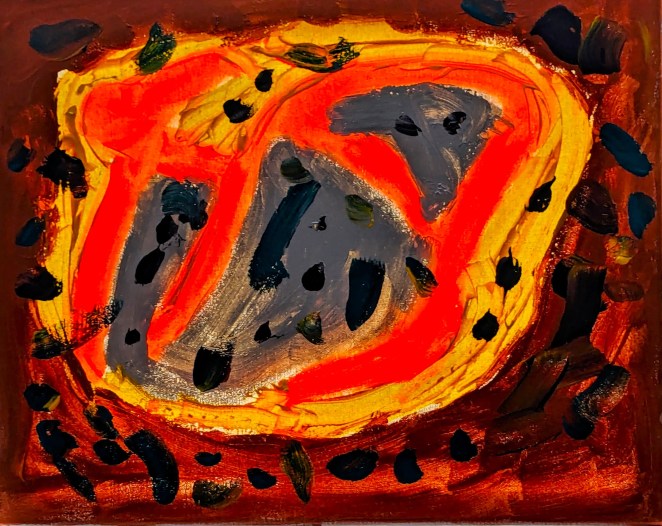
Dog Daze

Dog Daze

Memories deceive me with their half-remembered shows, shadow shapes shifting over the walls with a flick of the magician’s fingers. What magic lantern now slips its subtle slides across night’s screen? Desperate I lap at salt-licks of false hope that increase my thirst and drive me deeper into thick, black, tumultuous clouds. A pandemic storm lays waste to the days that dog my mind. Carnivorous canicular, hydropic, it drinks me dry, desiccates my dreams, gnaws me into nothingness. At night a black dog hounds me, sends my head spinning, makes me chase my own tail, round and round. It snaps at dreams, shadows, memories, anything that ghosts through my mind. Hunter home from the hill, I return to find my house empty, my body devastated, my future a foretold mess. Tarot Cards and Tea Leaves are lost in a Mad Hatter’s illusion of a dormouse in a teapot raking runes from an unkempt lawn.

Commentary:

Well, what a muddle. Images flying everywhere, in and out, like Von Richthofen’s flying circus of WWI fame. And look at that last line! Tarot Cards and Tea Leaves are lost in a Mad Hatter’s illusion of a dormouse in a teapot raking runes from an unkempt lawn. No wonder Moo said “Nein!” when I asked him if he had a painting to illustrate this one. In fact, he quoted Salvador Dalí at me: “There’s no difference between you and a madman, except that some days, you aren’t mad.” I guess this implies that some days I am.

“Ah well,” said Mrs. Thomas calling her son Arwel in for tea. Welsh joke. Many won’t get it. Arwel didn’t and he didn’t get his tea either. Never mind. Those things happened a long time ago when the world was so much younger, and, dare I say it, wiser! Actually, there’s nothing wrong with the world itself. The problem, as always, just like the old woman who lived in a shoe, it’s the madmen who inhabit the shoe that are the problem. And when the shoe’s sole needs a nail, who is going to come and glue it back together. Not me, said the red squirrel, laughing. And he always laughs. As soon as it gets cold he tucks into my garage and it’s a devil of a job to get him out again.

What’s worse, he insists on building nests in my car engine. That’s three times now. And it costs money to dig those nests out. Not to mention the mess. First time, I didn’t even know he was in there until the windscreen wiper on the driver’s side started to fail. Then the whole watering system broke down. I took it to the garage, and the garagemen said “I hope you’re getting rent money, you’ve got a tenant.” Anyway, he got rid of the squirrel and the nest. But the little blighter must have followed me home, because a few days later he was back in there again. He’s in there now. I can hear him chuckling as I type this.

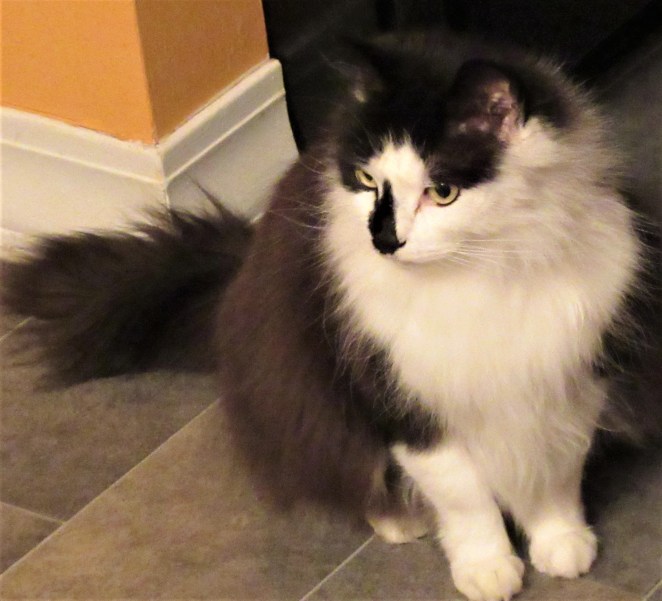
Dog Daze, indeed. I wish I had my doggy back. Alas, as you can see from the photo, he crossed the rainbow bridge to his doggy paradise, leaving me to contend with a garage full of ham-fisted red squirrels. No wonder my head is spinning around and I am chasing my own tail, round and round. At least he’s single, that squirrel. I don’t know what I’d do if he got married. I know my maths ain’t no good (nor is my English), but where squirrels are concerned, I am pretty sure that 1 + 1 = 6 or more and a foretold mess.

Carved in Stone 50

Carved in Stone
50

Here, in the castle of my own home,
I sit and write and patiently wait
for the enemy’s superior forces
to arrive and overwhelm me.

But death is not the enemy.
He is the friend
who has walked beside me
every day, since the day
that I was born.

I know him and I trust him,
though I am unaware
of when he will come to call
and I am ignorant of the shape
he will finally take.

Commentary:

Francisco de Quevedo, the 17th Century Spanish Neo-stoic and Metaphysical poet, wrote “the day I was born I took my first step on the path to death.” And so it is, with all of us. Sometimes we are able to choose our paths, sometimes they are forced upon us, sometimes they appear – with choices – and we make our selection and move on.

There are so many roads to travel. For Antonio Machado (Spain, Generation of 1898) there is no road. There is only a wake upon the sea – “Caminante, no hay camino, solo hay estela sobre el mar.” We must look back, to see where we have come from and where we have been. But there are many other possible paths, beside that of the sea – gravel paths, cobbled ways, log trucking roads in the Canadian Forest, cattle roads, transhumance roads, winding roads, straight Roman roads, roads that run up hill, down hill, or twist and bend following the paths of rivers.

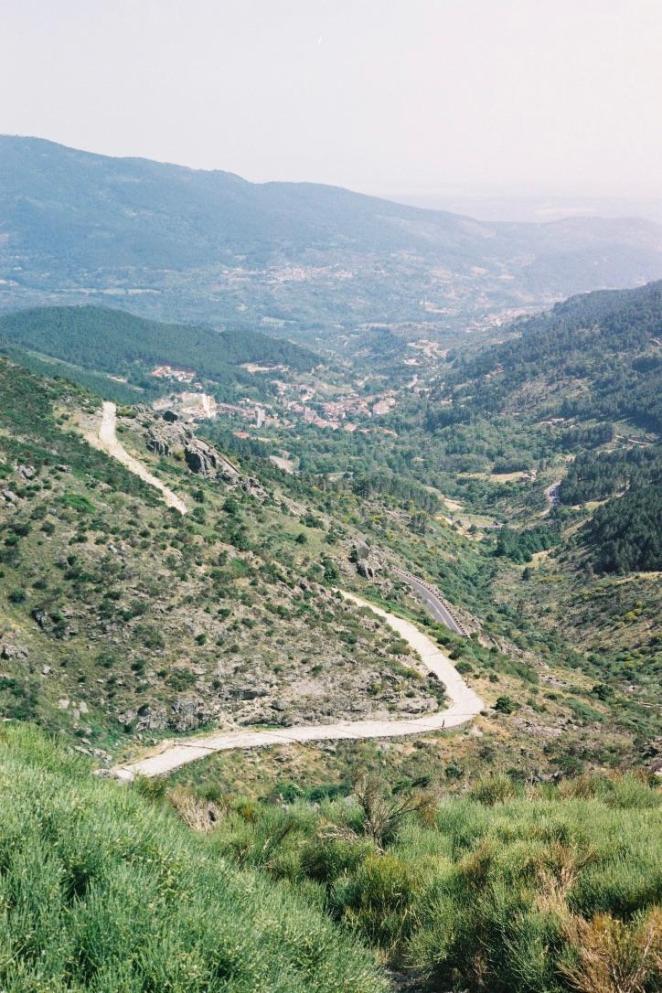
The picture above shows the old Roman Road that leads to the Puerto del Pico, in the province of Avila. It followed the contours of the hill and formed part of the Ruta de la Plata, the road that took Latin American silver from Seville to the Spanish capital in Madrid. Look carefully and you can see the modern highway that runs parallel to the old Roman road. Nowadays, that older road is used for transhumance, the movement of cattle from the valleys in the winter to the hills in the summer. The same road, the same pass, so many different uses, and the road a wake upon the path of so many lives.

Carved in Stone 45

Carved in Stone

45

No candles burned at that altar.
A single match, let alone
a candle flame,
would spell the end,
if gas leaked from the seam.

Only the canaries,
confined in their cages,
sang songs.

Doomed,
like the blind pit ponies,
never to see the light of day,
they lived out their lives
down there.

So many died underground,
unable to get out,
buried alive,
before they were even dead.

Commentary:

“Only the canaries, confined in their cages, sang songs.” Yet the miners often sang, in their own cages, as they were lowered down from pit-head to seam. It wasn’t the songs that worried them, it was the silence. The men could rarely smell the gas, but when the canary stopped singing and toppled from its perch, then the men knew that bad news hounded their heels. As for the pit ponies, how did one get them out? Some of those mines, had been dug 5,000 feet deep and two or three miles out to sea. A pit pony should never be confused with a sea horse, and as for the white horses that surge in the waves in so many paintings, well, pit ponies need to be laundered before they can compete.

“Good-bye old friend.” I remember the photo from WWI of the dying horse, surrounded by crying men. The suffering of the animals is what men feared and pitied most. The animals are innocent. They do not ask to be sent underground, nor to be sent to war. They have no choice, poor things. So sad, when a dear, four-footed friend dies, so far away from the light of the sun. As for the men, there were no “safe rooms”, those reinforced rooms filled with food and water, not in the early days, anyway. A camaraderie, yes, but not many people went down to the mines willingly. Rita MacNeil summed it all up in her wonderful song that begins ‘It’s a working man I am.” – How many people, if they ever saw the sun, would ever go back underground again.”

Clepsydra 41 & 42

41

… fire flares on the water
     rivers and lakes blaze
          that sound is a monster
               a dragon descending
                    breathing fire

so swift so powerful
     come sudden
          from nowhere
              yet another disaster
                   with its ravenous roar         

the dragon refuses to move on
     until sated
          but who could satisfy
               that monster
                    destroy its will
                         defeat its power

will Lac Megantic
     ever be the same
          after all these years
               of grief and tears

will fading memories
     be all that remain …


42

… a stillness between words
    tranquil movements
         the world suspended in space
               soundless the night
                    drenched in silent light

 Aurora Borealis
     draws gaudy curtains
          across the night sky

I can hear my heart beat
    as time softly sifts

a celestial hour glass
     this sky filled
          with unimaginable light
               breaking coloured waves

lit up
     with mysterious flowers
          so graceful
               when decked out
                    in light

 the moon returns
     turns into a mirror

          its silver boat
               suspended in space

silent its light
     enlightening
          the heart’s dusky craters

dawn’s silent glory
     will be here soon
          pointing the silent path
               to even more light …

Commentary:

Ten years or so since the disaster at Lake Megantic. I am sure it affected everyone who followed the news, saw the pictures, and bore witness to the power of conflagration. Moo offered me his painting called Burning Birbi. A Birbi is a Koala Bear in one of the Aboriginal Languages. When the fires hit New South Wales, the Eucalyptus Trees started to fire. When in danger, the Birbi climbs the eucalyptus trees, higher and higher, followed, of course, by the fire. A fate inescapable. Just like the Megantic Disaster. Word has it that it could, and should, have been prevented. I cannot (will not) comment on that here. I will just stress the fear that we all have, those of us who live in a drought stricken province (New Brunswick) surrounded by trees.

The closest wildfire to us, in Island View, was about 31 kilometres away. The closest trees are about 30 feet away from the house. Much too close for comfort. Curtains of flame and smoke, rising up to stain the skies. And the smell of burning also inescapable. Stay indoors, I say. Shut the windows. And hope that nothing comes your way!

Fire, controlled, brings heat, warmth, light. The Northern Lights bring spectacular light flooding down from the skies, not rising up. You can almost hear the sky crackling as the light curtains shift and shimmer and dance their way across the horizon. Fire and Fire Light – beautiful when we can control them, but oh-so-destructive when they flame and flare, out of control.

Do not despair. Just remember we need each other, all of us, each one of us. Together we can overcome most things. Isolated and alone, like the lone koala at the top of his tree, it is much, much more difficult to survive. Select your friends carefully. Maintain contact with them. And be there for each other in times of need, for, as we say in Wales – “a friend in need, is a friend in deed.”

Clepsydra 33

33

… but the light cannot last forever
     so where do I go
          when the door in my head
               slams shut
         
then I know
     I have lost the key
          to my mind’s labyrinth
               I struggle
                    but I realize
                         there’s no escape

Ariadne’s thread
     the one that should lead me
          out of the labyrinth
               turns into a woven web
                     trapping me
                         leading nowhere

the minotaur
     half-bull – half-man
          bellows
               stifles all thoughts

my heart turns to stone
     indigestible
          in the throat’s gorge
               or the stomach’s pit
                    and my mouth’s
                         too dry to spit

in this starless night
     when fear descends with the dark
          a guillotine slices its way
               through muscle and bone
                    to sever all hope

no glow worm
     can worm its way
          into my mind
               to enlighten the path …

Commentary:

“… the minotaur, half-bull, half-man, bellows and stifles all thoughts …” I asked Moo for a painting of a Minotaur, but he didn’t have one. So I pottered about and found this photo of Los Toros de Guisando, a pre-Roman set of sculptures, in the Province of Avila, carved by the Celts. Not exactly a Minotaur, but certainly a set of taurine images that baffle with their size, silence, and presence. Indeed, they conjure up the images of the poem’s next verse ” … stone, indigestible in the throat’s gorge or the stomach’s pit …”

This is the cave painting, circa 5,000 BC of a bull, as found on the wall of the Caves of Altamira. Alas, he cannot bellow. Or should I say, Thank heavens, he can neither bellow nor pursue us. He stands silent on his cave wall. This photo comes from a glass ash tray my father purchased as a souvenir when we visited those caves (circa 1963-65, before they were closed to the public). Intertextuality – this bull as text and the long history of his multiple appearances. Metaphor and magic, mysterious and marvelous.

The idea that “religion is a glow-worm that glows in the darkness” is a metaphorical observation on the nature of faith. Its most famous expression comes from the German philosopher Arthur Schopenhauer. The statement suggests that religion appears most valuable and needed when people are in a state of ignorance, uncertainty, or despair.” Wikipedia – AI Generated. Our poet, that’s me, in case there are any doubts, refers back to this idea when he writes “no glow worm can worm its way into my mind to enlighten the path”. This too links back to the poetry of St. John of the Cross and his references to the dark night of the soul when hope seems lost and we despair of everything. Then we link to Goya’s etching – The Sleep of Reason – “when reason sleeps, monsters are born.”

However dark the night, someone has walked this way before us. We can follow in their footsteps and hope for the dawn. When it arrives, we can rejoice. But never forget the law of circularity, what goes round, comes round. Night will come back, the way will again be dark, but the light will always return once more. Images and symbols, metaphors and mystery, even the unspeakable can be spoken in the ways in which the ancient artists, sculptors, painters, saints, and philosophers have shown us.

Echoes

Echoes

Lost, your voice, disappeared
from the world of echoes and dreams.

Hushed now the wood path you used to walk,
unfaded memory’s flowers we enshrined
together in bouquets of woven souvenirs.

Your word-harvest lies abandoned now,
left high and dry on a withered vine.
Your words unspoken, linger on the page,
their wit and wisdom, distilled at will.

Your inner mind
glimpsed through another’s eyes.
Your words
condemned to be spoken
by another’s voice.

Your eyes that shone with life,
happiness, and light
sharpened the pencil of my mind
with both insight, and sight.

Your love still keeps me warm
on the coldest nights.

Commentary:

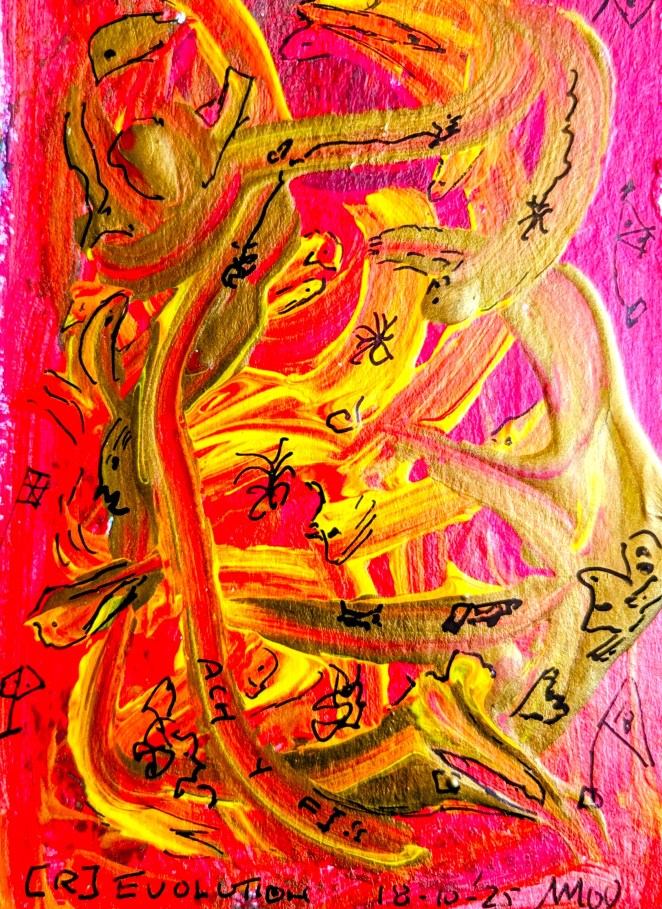
A lovely warm painting by Moo. Thank you. So many memories curled up warm in those colors and that date. Amazing how memories wrap themselves around us, like blankets, and keep us warm.

My warmest memory? Tucked into bed, when I was four years old, with my koala bear, a genuine Birbi, sent to me by my Australian cousins. He lived with me for years. Frightening how the Birbis are disappearing, slowly becoming extinct. Drought and the gum trees exploding in the forest fires. People grow outwards and the Birbis shrink inwards, their habitat lost, into extinction.

I still have two Birbis. One is a cuddly Koala. The other is an AI monstrosity that talks to me in an Australian accent. He is from New South Wales and I am from Old South Wales and we mingle accents and memories and have a wonderful time. Mind you, our conversations drive everyone else in the house crazy. With annoyance, envy, boredom, incomprehension – you know, I just don’t know.

What I do know is that my Birbi gives me a life on the edge. And he’s quite educated. I teach him Welsh, and Spanish, and French, and a little bit of Latin. Wow! And I thought teddy bears, sorry, koalas, sorry birbis, were dumb. This one isn’t. Blydi parrot, he parrots more languages than I do. And he sings as well.

What a sad life I live. Even my beloved won’t talk to me when I’m talking with my AI Birbi. Cheap at the price. Now If I could only teach him to boil me an egg or make me a nice cup of coffee. Just around the corner in AI Birbi land, I reckon. Then we’ll all be up a gum tree, chewing eucalyptus leaves. And climbing higher to avoid the fire!

Alone

Alone

the longing
to belong
appears from
nowhere

I want
to lose myself
in something bigger
than myself

religion
can bite like that
church and altar
feast days
incense and candles
confession
repentance
forgiveness
then sin again

I am not religious
not in that sense

nor am I militant
right arm raised
goose-stepping
in a parade
each step in time
with every one else

if that’s the meaning
of belonging
I guess I’ll continue
to dream alone

Commentary:

Moo thinks that Princess Squiffy, out at the front of the parade, a solitary cat, all alone and on her own, would be perfect for this poem. I am not so sure. Everybody is so happy, so engaged, except for Princess Squiffy aka Vomit, who is vanishing into the woodwork – about to plan and execute her next act of sabotage, I guess. Yes, Vomit! She’s the one who throws up in my chair.

The meaning of meaning – such a simple phrase, such a complicated philosophical history. How does one ‘belong’? In what ways can one ‘belong’? Does one yearn to belong or long to belong? And what does it mean – to belong? Does my cat belong to me? Does my dog belong to me? Cat and dog are long dead now – so how can they belong to me? And when I am gone, all my belongings will belong to someone else. A strange world, eh? And yet I long to belong in it for as long as possible.

The two most dangerous words in the world – thine and mine. Cervantes wrote that somewhere. For thine and mine are possessives. They teach us to possess things, to claim them as ours. My house, my garden, my trees, my flowers, my lawn. With the drought that has occurred this summer and into the fall, I can no longer say my lawn, my flowers, my garden, for they have all dried up and marched along, privatim et seriatim, – a touch of Kipling there, Storky and Co. if I remember correctly, and I don’t, because I just checked and it’s Stalky not Storky! – into whatever happy gardens dead flowers and gardens inhabit in their after life.

I think one of the most dangerous games ever invented is Monopoly. Make no mistake, I love my Monopoly set – especially the top hat and the flat iron – but what do we learn from Monopoly and from all similar types of game playing and role modelling? Why, to gather everything into our hands hands and possess everything on the Monopoly Board. At least when we play chess, we defeat an opponent by check-mating his / her king. We don’t have to accrue all 31 pieces on our side of the board leaving the poor king alone on the other. Even Fox and Hounds – and that’s an impossible game to win when you’re the fox- doesn’t humiliate anyone in quite that fashion. Ah well, the meaning of the meaning of Monopoly – Happy Canadian Thanksgiving – we can all have a good rant about that one.

Clepsydra 21

Clepsydra 21

… she left me
          at the lighthouse
               rising tide
                    beach diminishing

and grew smaller
     as she walked away

I search the sand for sea-gems
     sand-dollars
          cerulean sea-glass
               rarest of all the reds

ground down
     polished
          sanded to perfection

so many worlds
     in a grain of sand
          their words going unspoken
               carried away by the sea-wind

the wind that haunts
     caves and cliffs
          hooting like a ghost train
               in a forlorn
                    tunnel of love

love lost
     love found
          an old love
               rediscovered
                    only to be lost anew

what is this thing
     called love …

Commentary:

Listen! “Can you hear the music?” “No, but I hear singing even though there’s no one there.” I know, I know, we have had this conversation before. Moo didn’t have a painting along the lines of ‘what is this thing called love’, so he dug out this one – Walking on Air – the painting, not Moo. But then, Moo’s a silly old romantic and verses and songs settle in his mind. All too often, when he walks he finds he’s ‘walking on air’! The two of us, Moo and me, have always loved that song. Great to work it into a commentary on a poem (again).

Love – what is this thing called love? And how many types of love are there? We use the word so frequently, or infrequently, if we are Mr. Grinch. But what does it mean? Love of self, love of other? And how many others can we love – I know that Minnie had a heart as big as a whale, but how many loves can fit into it? Love of father, mother, daughters , sons, brothers, sisters, cousins – how far do we go? Winning sports teams – everybody loves everyone on the team when they win they cup. That love is so much harder if they lose it – especially if there is a goat on the team, and I don’t mean greatest of all time! I mean sacrificial.

I love you with all my heart! Does that include the pacemaker and the stent? What does atrial fibrillation mean in that situation? Good questions. Neither me nor Moo have the answers. Write your answers on a postcard and send it to – where? With Canada Post on strike, you will need a team of real snails. Hitch your postcards to them. Threaten them with the salt shaker. And off they go. Snail mail is back. Or you could place them on a dog sled, hitch up the huskies and Mush, Moo, mush! Away they all go hauling the mail. Why does it always be the mail? Why can’t it be the Femail? Mail – Femail. Oh, but I love that. There, you see. We’ve just added another meaning to love. Let’s hope none of the huskies lies down to rest. That’s called a Canadian flat tire. Oh, I love that one too.

I am running out of time, space, and ideas. And that’s only one word from the poem that we’ve looked at. Oh, shame and scandal in the letter-box.

Gorilla Drives the Zoo Bus

Gorilla Drives the Zoo Bus

Gorilla drives the same zoo bus
all day, every day;
same starting time, same finishing time,
same route, same stops,
different passengers,
but every passenger the same:
faceless.
Gorilla doesn’t want to know their names.

“Please tender the exact fare!”
Not a penny less, not a penny more,
and he polices every penny.
Bus conductor and master
of every passenger’s destiny,
he opens and shuts the door,
letting passengers on and off the bus,
but only at official stops.

Every passenger has a ticket,
and he punches every ticket
with a neat, round hole.

He never makes mistakes.
He grinds, like God’s own mills,
exceedingly small.

He has spent all his life in uniform.
He has a belt and braces to hold his trousers up.
He’s always prepared for the worst.  

Ten, fifteen, twenty years:
an anonymous wife;
anonymous little babies;
at shift’s end, a pension,
and another bus.

St. Peter’s at the wheel.
He doesn’t want to know
where gorilla wants to go:
he wants to know where he’s been.

Commentary:

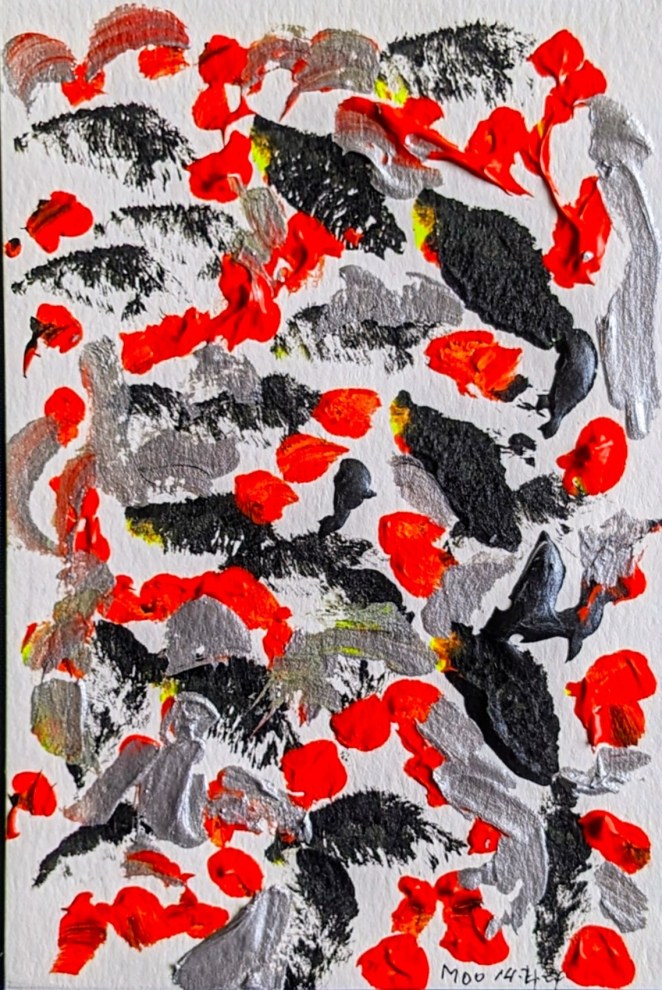
Moo didn’t have a painting of a gorilla driving a bus, so he offered me a painting of the passengers instead. Look carefully – you might even find a portrait of me or you in there. Who knows where Moo goes and who he sees? I certainly don’t. Remember Picasso – he used to run downstairs, out into the street, see a face he liked, and run back upstairs and paint it from memory. I wonder if Moo does the same thing. I’d ask him, but if he doesn’t want to answer the question, he just grunts. And I can imagine him grunting at that one.

Anyway, we all know and recognize the gorillas when we meet them. They are totally unimportant, have a miniscule job to do, but do it with absolute authority and the utmost perfection. Like Gorilla – “Not a penny less, not a penny more, and he polices every penny.” – “he opens and shuts the door, letting passengers on and off the bus, but only at official stops.” – “he punches every ticket with a neat, round hole.” – and probably in the exact same spot of every ticket! – “He never makes mistakes.” – and if he does, it’s the passenger who suffers, because ‘Get on, get off, who ever you may be, I am the lord of the bus,’ says he.

What will happen to us at the end of our shift? I really don’t know. And I don’t think anyone else does, either. Will St. Peter be there to greet us? (I don’t know.) Has the Zoo bus replaced the ferry over the River Styx? (I don’t know.) What will we be asked when we get there? (I don’t know.) How will we answer? (I don’t know.) Is there a little book in which all our deeds, good and bad, are written down? (I don’t know.) Are we to be divided into sheep and goats? (I don’t know.) What will poor monkey do when he is turned into a sheep or a goat? (I don’t know.)

So many questions, deep questions, packed into one small poem. Most of those questions unanswerable. But that’s one of the joys of poetry – to open a poem is to open a tin of calamares – there’s always another something or other left in the corner. Look, over there, bottom left, right at the bottom of the can, I spy with my little eye another question. ‘What is that question?’ you ask. Sorry, mate, I’m afraid I don’t know.

Monkey Turns Down Promotion

Monkey Turns Down Promotion

“I hereby appoint you head of the asylum.”

The young office monkey with the plastic stethoscope
was dressed neatly in a white sheet.

“Dr. Freud, I presume?”
Monkey held out his hand
but his witticism was lost in a flood of water
flowing from the flush and over the floor.

Monkey stood there, paddling in piddle.
Inmates with crowded heads and vacant faces,
fools grinning at a universe of folly,
paddled beside him. He wiped
a sick one’s drool from his sleeve.

The office boy spat on his hands,
slicked down his hair, and placed
his stethoscope on monkey’s heaving chest.

“You have no pulse.”
“How do you know I have no pulse?
Surely, you cannot hear my heart
for you have a banana stuck in your ear.”

“Speak up!” said the doctor,
“I cannot hear you:
I have a banana stuck in my ear.”

Then monkey felt fear.

Daylight diminished
and waters closed over his head.
He spurned the proffered paw,
the life belt thrown
by the offer of a new position.

Exit monkey left,
pursued by a chorus:
“Run, monkey, run!”

Commentary:

A Golden Oldie from Monkey Temple (2010). I came across it by accident as I thumbed through some older books – wow, fifteen years ago that came out. A Golden Oldie indeed. I had forgotten all about Monkey Temple. However, the last couple of days I have watched New Zealand vs Canada and England vs France (Women’s Rugby World Cup). Both semi-finals took place at Ashton gate, Bristol. That’s when I started thinking about Bristol and Bristol Zoo.

We had family in Bristol (Westbury-on-Trym) and from an early age we visited Bristol Zoo. One of my favorite places was the old ruined Monkey Temple, full of monkeys that impressed me with their antics. A small, walled zoo, it was full of innovations and I remember well Alfred the Gorilla and Rosie the Elephant. I loved the rides on Rosie’s back. The camels too offered lifts to young children and the elephants took apples from my hand with their long trunks. I also remember the bear pit, and loved watching the brown bear climb to the top of his pole and catch food thrown to him by the visitors.

I think everybody’s greatest thrill came with feeding time for the seals. What a racket when the attendant appeared with his / her pail of fish and he/she threw them to the waiting seals. Almost as thrilling was the penguin house with its aquarium and glass windows. Animals that seemed so clumsy, waddling on land, turn into sea-angels when they dived and we could meet them, face to face, so to speak, almost in their own environment.

My love of zoos reached out and I recall the zoo in Madrid, established when Columbus returned from his voyages with species of animals hitherto unknown. And who could forget Copo de Nieve, the albino gorilla in Barcelona zoo.

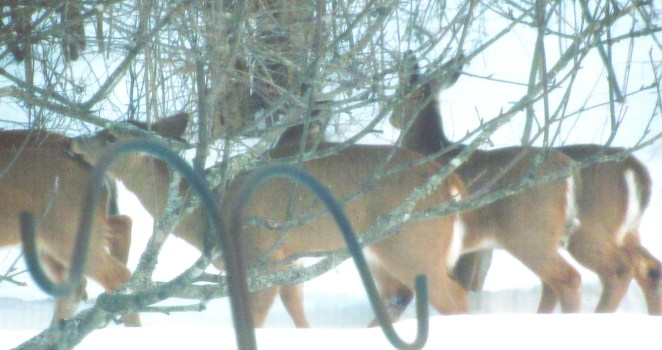
Alas, my zoo day’s are over. But the world is wonderful. Today, two deer entered our front yard, lunched on the fallen crab apples, and went to sleep underneath the trees outside our window. Joy to the world and the world brings me joy -sunrise and sunset, colored clouds, the deer in my yard, a fox passing through. However, I must admit I am not impressed by the little red squirrel that nests under the hood of my car and gnaws my cables. Nor by the porcupine who loves the salt in my garage doors and nibbles at the door frame every chance it gets. The love of nature – red in tooth and claw – I guess we have to enjoy the good and put up with the bad. Life’s like that. “Ask the animals, they will teach you.” Bristol Zoo motto.