Carpe Diem

Autumn in the Garden

Carpe Diem

Seize the day. Squeeze this moment tight.
Nothing before means anything. Everything
afterwards is merely hope and dream. 

A tiny child, you chased wind-blown leaves
trying to catch them before they hit the ground
Elf parachutes you called them and trod with care
so as not to crush the fallen elves as they lay leaf-bound.

I stand here now, a scarecrow scarred with age,
arms held out, palms up, in the hope that a leaf will descend,
a fallen sparrow, and rest in my hand.

When one perches on my shoulder and another
graces my gray hair, my old heart pumps with joy.

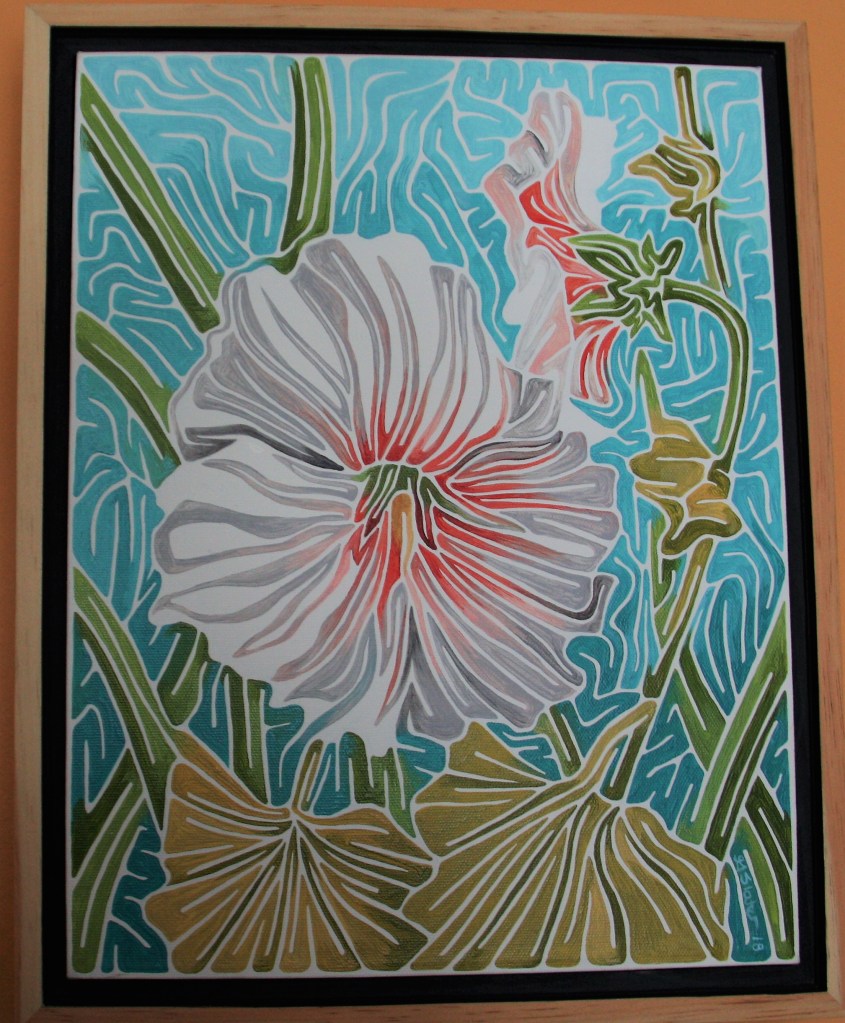
Comment: Autumn in the Garden was framed by Geoff Slater who gifted it to me this summer. Thank you Geoff. A double picture, it shows the flowers and the trees with that first touch of drifting snow. NB it snowed here in Island View early September this year while we still had flowers and leaves. The poem, Carpe Diem, is from a series of quasi-sonnets. Quasi, because they rarely have 14 lines! Oh Petrarch: shake in your shoes.

Underwater Road

Underwater Road
Chuck Bowie

We met at St. Andrews, at low tide, on
the underwater road. In secret we
shared the closed, coded envelopes of thought,
running fresh ideas through open minds.

Our words, brief vapor trails, gathered for
a moment over Passamaquoddy,
before drifting silently away. Canvas sails
flapped white seagulls across the bay.

All seven seas rose before our eyes, brought
in on a breeze’s wing. The flow of cold
waters over warm sand cocooned us
in a cloak-and-dagger mystery of mist.

We spun our spider-web dreams word by word,
decking them out with the silver dew drops
proximity brings. Characters’ voices,
unattached to real people, floated by.

Verbal ghosts, shape-shifting, emerging from
shadows, revealed new attitudes and twists,
spoke briefly, filled us with visions of book
lives, unforgettable, but doomed, swift to fail.

Soft waves ascended rock, sand, mud, to wash
away footprints, clues, all the sandcastle
dreams we had constructed that afternoon,
though a few still survive upon the printed page.

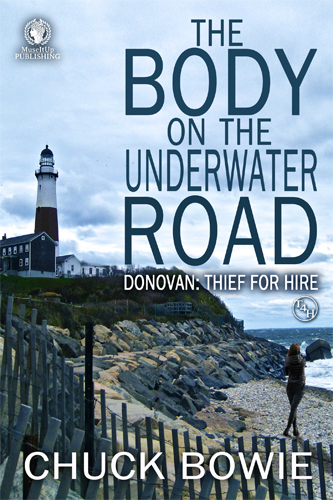
Comment: I wrote this in St. Andrews during my residence at KIRA (June, 2017). Chuck drove down for lunch, and after we had eaten, we sat by the sea and discussed the writing projects on which we were engaged. I was busy writing a poetry collection, One Small Corner (now available on Amazon / KDP), and Chuck was plotting his way through a new novel, based on St. Andrews, with the title The Underwater Road.

More details on The Underwater Road.

Here is the purchase site on Amazon.ca: https://www.amazon.ca/Body-Underwater-Road-Donovan-Thief-ebook/dp/B07CLPRG81/ref=sr_1_1?dchild=1&keywords=The+Body+on+the+Underwater+Road&qid=1604981052&s=books&sr=1-1

… and it may also be purchased  at Westminster Books in Fredericton, and Mill Cove Coffee, in Miramichi.

Line Painting

No Exit
a line painting
by Geoff for Andrea Slater

Where is the entry point, where the exit?
This labyrinth of lines, straight, not circular,
baffle the eye, confuse with a negative space
that lightens colors and begs more darkness.

Mystery surrounds the sitter’s form: the board walk,
no Dutch kitchen this, the chair on which she sits,
the locket she wears, the landscape, seascape
against which she is framed. White noise, perhaps,

but noise that turns to a single voice, a single line,
that of the paint-brush tip-toeing, delicate its thread
through interior, exterior meaning, just beyond

the viewer’s grasp. Yet walking past, each person stops,
stands still, as the painting draws them in, ties them up,
binds them with an ineffable thread, stronger than words,

mightier than the eye that traces its way along paths
that deceive, disturb, throw us from the high-wire created
by an artist who turns circular colors into linear space.

Comment: No Exit forms a part of my manuscript collection The Nature of Art and the Art of Nature that placed second in the WFNB’s Alfred G. Bailey Award (2020). This collection will soon be made available online at Amazon / KDP.

Geoff Slater
the inventor of line-painting, gifted me this painting,
one of my hollyhocks about two years ago.
This is indeed a gift that keeps on giving.

Eyeless in Kingsbrae

Eyeless in Kingsbrae Garden

A feather upon the cheek,
this fern held fragile, hesitant
between fine fingers.
Touch and smell:
two senses engaged.

A paint brush sounds,
brush-brushing lightly
on expectant skin.
Faint the taste tested
suggestive on tongue tip.

No sight, just insight.
I have a sense of senses lacking.
My words reach out like fingers,
but they can neither retain
nor explain the meaning of it all.

Eyeless in Kingsbrae,
They push me, blindfolded,
around the garden.
Gravel crunches beneath
the wheelchair wheels,
sharpens my inability to be sure
of shadows and shapes
that are no longer there.

The ones who push me talk
and tell but cannot show.
How could they hold a rainbow
before my sightless eyes
or explain those lights that
crisp and crackle in the night sky?

There’s warmth in a color,
and heat’s visible to the touch.
Shocking pink has a different
feel beneath blind fingers,
and it has no name
that you and I, sighted,
would ever know.

Oh, Song of Songs, and the singer
deaf to his own sublimity.
Oh dealer of false cards,
fingerless pianist,
and dancer shuffling
on amputated stumps.

Comment: The poem Eyeless in Kingsbrae Garden is contained in my book One Small Corner: A Kingsbrae Chronicle (2017), available online at Amazon / KDP.

Monkey Throws Away the Keys

Monkey Throws Away the Keys

Monkey is tired of writing reports
that are never read.
He is fed up with frequently asked
questions and their unread answers.
To every lock, there is a key.
Monkey looks at the red and gold
locks of the last orang-utangs
and wonders how to unpick their DNA.

Monkey would give his kingdom
for a key, a key, a little silver key:
the key to a situation, the key to a heart,
the office key, the key to the door,
at twenty-one, the keys of fate,
the Florida keys, the key to San
Francisco’s Golden Gate,
a passe-partout, a skeleton key,
the key to Mother Hubbard’s cupboard,
where she hides dry bones …

On the last day, when monkey leaves work
he takes a lifetime of keys
and throws them down a deep dark well.

As they halve the distance to the water,
he listens to the sound of silence and wonders
if they’ll ever hit the bottom.

Monkey Temple:
the complete book, is available on KDP and Amazon.

Candle Light

Candle-light

Five candles burn at my table.
Outside, the night wind howls like a dog
and scratches its pelt on my roof.

The wind has torn branches from the trees
and polished the evening frost until
it sparkles like eighteenth century silver.

A moth circles, sizzles, and flares.
I keep my vigil at night’s altar
and place a wrinkled palm
into the candle’s liquid flame.

Put out a candle, put out a child.
Who would put out a dog on a night like this?
Outside, playing tag between dark trees,
the wind runs wild.

Paella

Paella

A bullfrog lives in my computer.
He eats all the full stops and I can’t
type a period to end my sentences.

I imagine he thinks they are tadpoles,
though the commas, with their short,
twisted tails, would be visually better.

I could live without commas, I can’t face
an endless future with no periods in sight
and www-comma-com just isn’t right.

I guess I could survive a future without
frogs, though cuisses de grenouille appear
each summer at my local super market.

I ate a paella québécoise in a Spanish café
in Montreal once. It was full of frogs’ legs
and was very, very tasty. I wonder if I can
find that bullfrog and put him in a paella.

October

October

… and the wind a presence, sudden,
rustling dusty reeds and leaves,
the pond no longer a mirror,
its troubled surface twinkling,
sparking fall sunshine,
fragmenting it into shiny patches.

It’s warm in the car, windows raised
and the fall heat trapped in glass.
Outside, walkers walk hooded now,
gloved, heads battened down
beneath woollen thatches.

A wet dog emerges from the pond,
shakes its rainbow spray
soon to be a tinkle of trembling sparks
when the mercury sinks
and cold weather closes the pond
to all but skaters. Then fall frost will turn
noses blue and winter will start to bite.

Autumn

Autumn
and all that jazz

1

Slow last drag of summer’s sad trombone
sliding its airs between stark, naked trees.

Golden memories float face down in tranquil
waters, life and the summer drained away.

A voice, her voice, ripples across the pond,
echoes over drowned and mirrored leaves.

2

Grey the sky, white the birch trees:
Narcissus kneeling, dark waters flooding.

Tumble-dried by this autumn sky,
leaf words falling, still her voice echoes.

3

Tintinnabulation: a tin-pan alley of leaves
blown against windscreen and car windows.

I, who a grief ago sat here watching her walk,
now sit here alone, waiting for her return.

4

I who am nothing know nothing, save that I
am a burnt-out ember, cold, in a grey-ash grate.

A grating of old bones, these hips and knees,
and if I fall, sweet heart, please love me more.

5

Here endeth today’s lesson: that of the fall,
the fall of all things finally into deep water.

Fall, fall asleep to the rhythmic leaf beat
that summons us all to our appointed end.

The Unexamined Life

The Unexamined Life

“The unexamined life is not worth living.”
Socrates.

A philosopher’s life’s based on thinking,
and drinking, and thinking about drinking,
and thinking while drinking,
and drinking while thinking,
and thinking about thinking when drinking.

He gazes on and on at his navel,
every day for as long as he is able,
and talks to his wife
about trouble and strife
and the problems they have to unravel.

But all is not doom and gloom
when a philosopher enters the room,
though none can debunk
the size of the trunk
of the elephant stuck in the room.

As for me, I am caring and giving,
and although I work hard for my living,
I’d willingly share
with a friend in despair
half my cloak and a third of my living.

“The unlived life is not worth examining.”
Pseudo-Socrates.

“Join the army,” that philosopher said.
“There’s no life like it,” he said.
“You get very few thanks
when you’re in the front ranks,
but it’s better than walking round dead.”