Autumn

Autumn
and all that jazz

1

Slow last drag of summer’s sad trombone
sliding its airs between stark, naked trees.

Golden memories float face down in tranquil
waters, life and the summer drained away.

A voice, her voice, ripples across the pond,
echoes over drowned and mirrored leaves.

2

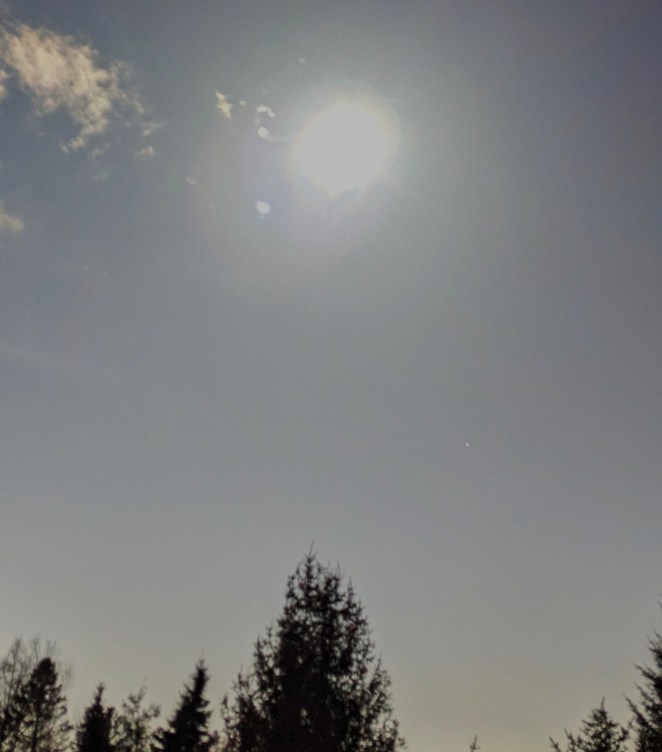
Grey the sky, white the birch trees:
Narcissus kneeling, dark waters flooding

Tumble-dried by this autumn sky,
leaf words falling, still her voice echoes.

3

Tintinnabulation: a tin-pan alley of leaves
blown against windscreen and car windows.

I, who a grief ago sat here watching her walk,
now sit here alone, waiting for her return.

4

Here beginneth the gospel of the fall,
the fall of all things finally into deep water.

Fall, fall asleep to the rhythmic leaf beat
that summons us all to our appointed end.

5

I who am nothing know nothing, save that I
am a burnt-out ember, cold, in a grey-ash grate.

Grating of old bones, these hips and knees,
and if I fall, sweet heart, please love me more.

Commentary:

The trees and the grass are all stressed out and we are looking at an early fall this year. So many bright berries on our Mountain Ash and Crab Apple trees. Yet the grass all dry, the hollyhocks brittle, and so many flowers dried up and gone.

Pioneer Sky

Pioneer Sky
04 September 2020

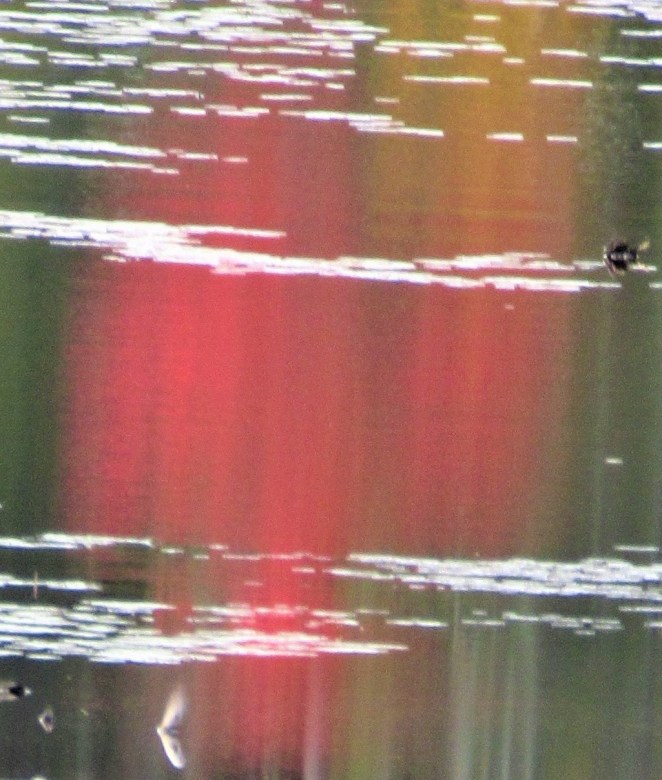
Sky and clouds float side
by side in the beaver pond,
mingling shape and color
with the autumn leaves.

When the walking trail
became too crowded,
the beavers left their lodge.
They moved to another pond,
lower down than this one,
and there, where fresh milkweed
grows, they built another dam
and a brand-new lodge.

The great blue heron still
stands on guard, patrolling
his usual watery haunts.
He searches for solitude
in untroubled waters,
weaving his wary way
between white and blue skies
mirrored in the pond below.

Just when I think that life
has become meaningless
I look up at that Pioneer Sky,
celestial blue for hope –
white clouds for purity,
and I seek new meanings.

I also find them
in the rippling patterns
of the Beaver Pond.

Butterflies

Butterflies
Miguel de Unamuno

… butterflies … temporal forms … fluttering …
existing for one sweet day … they perch … spread
their wings … fan us with their beauty … flourish …
catch our attention … then caught by a gust
tear their wings on a thorn … and perish … blink
your eye and they are gone … yet reborn … they
cluster and gather in dusty ditches …
congregate on bees’ balm … smother Black-Eyed
Susan and Cape Daisy … shimmer in shade …
butterflies by day … fireflies by night …
terrestrial stars floating in their forest
firmament … dark tamarack … black oak … bird’s
eye maple … silver birch … impermanence
surrounds us … dances beneath stars … sings with
robins … echoes the owl’s haunting cry …
eternity held briefly in our hands …
then escaping like water or sand … black
words on white paper capturing nothing …
… my dialog … my time … my place … butterflies …

Note: “La poesía da permanencia a las formas temporales del ser / Poetry gives permanence to the temporal forms of the self.” Miguel de Unamuno (1864-1936)

The temporal forms of the self – and so much today is unsettled, changing, insubstantial. I have often wondered how one makes time stop. Is it even possible to do so? Time and tide wait for no man. And why should they? Fray Luis de León – “Con paso silencioso, el cielo vueltas dando, las horas del vivir le va hurtando.” / With silent step, the ever-turning sky, steals away life’s hours. Or Fancisco de Quevedo – “Que sin saber ni cómo, ni adónde, la edad y la salud se hayan huído. Falta la vida, asiste lo vivido, y no hay calamidad que no me ronde.” Without me knowing how or where, age and health have fled. Life is lacking, past life flew by, and there isn’t a calamity that doesn’t hound me.

Ars longa, vis brevis – art endures, life flies by. My translations are freer than usual today, but I too feel like being creative in my own language. So, if we can’t slow time down, what can we do? We can create – poems, paintings, photos. We can read – and translate from one language to another. We can, like butterflies, perch on flowers and enjoy our brief days in the sun. Mindfulness – we can make the most of each moment by living it thoroughly and well. Carpe diem – we can seize each moment of every day and live it to its full measure. And, above all, we can write and read poetry – because, as Unamuno says – Poetry gives permanence to the temporal forms of the self.

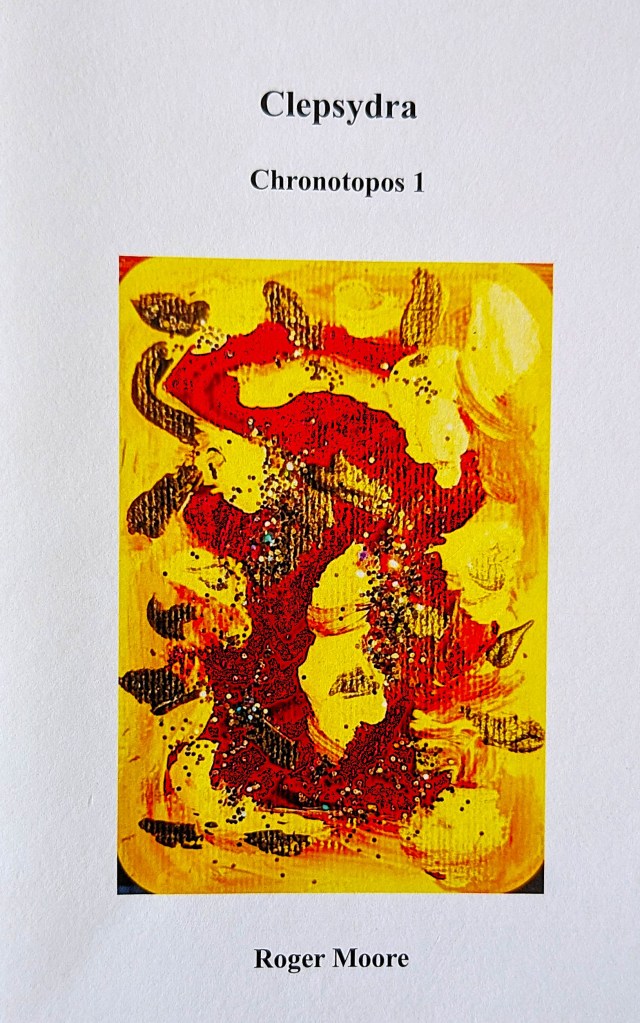
Clepsydra 11

Clepsydra 11

11

… gone too
     that Raggedy Ann doll
          held together
               by her patchwork heart

cross-stitched lovingly
     with needle and thread
          the sluggish drip-drip
              of her cotton blood
                    proving
                         she is still alive

neither mummified
     nor rat-and-mouse-gnawed
          in limbo perhaps
               but not dancing

asleep maybe
     dreaming in the museum’s oubliettes
          with their closed doors
               their cellars and attics
                    stuffed with memories
                         all dusty and worn

memories
     that only come alive
          at midnight
               when the full moon
                    awakens the shadows

boys and girls
     come out to play
          and walk and dance once more
               beneath liquid moonlight

the celestial lantern’s
     liquescent flame …

Clepsydra 9 & 10

9

… what lies behind this attic door
     ready to spring out
           at the slow push of my hands

cobwebbed
     this world revealed
          a universe of memories
               waiting to be called
                    back into life

what life
     the flickering half-life
          of shadows on a wall     

or the alternate reality
     of planets that lost their way
          and forgot how to dance
               around their sun

do they still move
     in rhythm to an unsung song
          an unstrung guitar
               music no one else can hear
                    played by a wandering star

lost the glimmer
     of life’s candle
          adrift on distant waters,
               but never forgotten …

10

… nor seen
     nor heard
          I am amazed by the maze
               wandering
                    among cluttered objects,

my world takes shape
     in a mad hatter’s workshop
          where things grow legs
               walk this way that way
                    constantly getting lost

I can hear them
     chittering chattering
          but I can neither
               see nor hold them

like so many bats
     they roost upside-down
          little children lost
               in memory’s attic
                    where everything ages
                         slowly gathering dust …

Clepsydra 4 & 5

Clepsydra 4 & 5

4

… candles and the clepsydra
     marking time
          witnessing
               the transition
                    from day to night

drip-by-drop
     falling water
          flickering candle flames

less certain
     than the monotonous
          tick-tock
               of a pendulum clock
 
time and tide
     wait not
          for ship nor man

though time is marked
     on calendars
          and prison walls

days passing into weeks
     spring into summer into autumn

daylight lengthening
     shortening
          until bleak mid-winter
               comes again …

5

… black midnight
     all is lost
          who now can count the cost

stiff upper lips
     forget how to pray
          fingers clasping
               unclasping
                    never grasping
                         life’s simple flow

with silent steps
     planets and stars
          slowly turning
               writing out our lives

sun by day
     moon by night
               the sky alight
                    with shimmering fires

midnight curtains
     burning lights
          crazy curtains
               drawn in night’s sky

a lost dog hurls
     his coyote cry
          who on high
               now listens to his call

not the planets
     nor the Archer
          nor the dog star
               who never barks
                     anything
                          but summer’s flames

pity the poor dogs below
     bitches in heat
          waiting alone
               for their lover’s paws
                    their welcome snuffles

locked and bolted
    the door
          heightened
               the canicular heat …

Candle Light

Candle Light

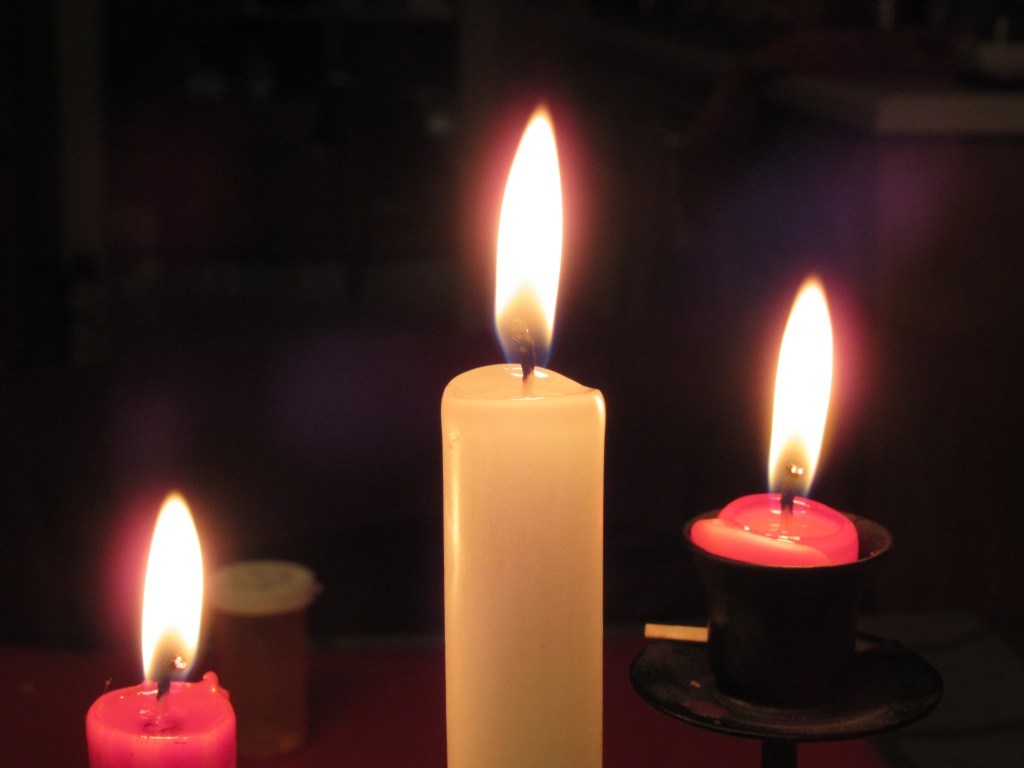
Candle light
softens your features
brings out the bone shape
makes me forget
the minor flaws
of ageing.

Bone shape,
rock shape,
land scape,
your face contours
traced by the flame,
counting the years,
like tree rings.

Beneath the surface
you are as you always were
and always will be.

When I look into your eyes,
I see your soul
dancing in the candle’s flame.

Great White Egret

Great White Egret

            The Great White Egret is Yolande Essiembre’s first chapbook of poetry. The title poem offers an image, a white egret, that is central to the whole collection. Summarized in this one poem are the concepts of pantheism, mindfulness, self-questioning, and receiving lessons and inspiration from the natural world that surrounds the narrator and her poetic voice.

            Pantheists often consider the universe, or nature, to be identical to the divinity. In simpler terms, it’s the old Greek idea of Gaia, the world spirit – spiritus mundi, in the Latin of Moncton’s Northrop Frye – that links nature and the divinity. Pantheism can be found in both religious and philosophical contexts, with some branches of pantheism rooted in traditional religious beliefs and others stemming from poetic perspectives. In the case of The Great White Egret, the narrative voice sees nature as an all-embracing poetic concept that makes possible a life, both physical and spiritual, in the immediate present.

            The lessons the narrator receives in the course of observing The Great White Egret are (1) to take one step at a time, (2) to be still, and (3) to be one’s own reflection. This third lesson reaches out to include the cover photograph. Verbal and visual blend when the egret, reflected in the water, parallels the reflection of the poet in the stillness of nature. This is further complicated by the double meaning of reflection as mirror image and of the thought process involved during the observation of the bird. The visual and mental images become reminiscent of the hymn “on the wings of a snow-white dove.”

Part of the beauty of Yolande Essiembre’s poetic meditations lies in the extension of image and metaphor beyond the page and into the mind of the reader where they create a mirror universe of reciprocal reminiscence and creativity. Other poems that reach out in similar fashion to explore the deity manifest within the natural world include A Force of Love in Our Universe, Breath of Life, Glimpses, and In the Sanctuary. This last poem works on the basis of repeated images that stand strong and clear, for example, “Life pressing through a blade of grass. / Leaves shimmering, dancing, waving. / Light flickering, casting shadows.” Life and movement, especially movement – pressing, shimmering, dancing, flickering, casting – create a sense of wonder in the natural setting where the poet finds sanctuary.

            Mindfulness is a mental state achieved by focusing one’s awareness on the present moment, while calmly acknowledging and accepting one’s feelings, thoughts, and bodily sensations. It is often used as a therapeutic technique and can be compared with the yoga techniques which our poet practices. This yoga technique is compounded in the poems where breathing is emphasized, as in Breath of Life, for example, where we read “Who are you breath of life / Who fills my lungs with air”. It can also be found in the poem In Your Presence “In the stillness of the morning / I breathe / I listen / I breathe”.         

This chapbook is more than a mere collection of poems. It is a compendium of personal feelings, inner thoughtfulness, and natural observations. It is the work of a thinker and feeler, in tune with the universe and continually seeking answers to some of life’s most important questions. Reading The Great White Egret, you too may start asking similar questions. More important, you may even find some meaningful answers.

The Great White Egret
Sitting, rocking, gazing upon a lake,
Pondering, reflecting, wondering.
How one can choose purpose over comfort?
How does one remain true to oneself?

On a wing span comes an answer.
A bird, a Great White Egret
Lands at the edge of the water.
Tall, magnificent, breathtaking.

Steps in slow motion, into the lake,
Advances one long leg at a time.
Proud, confident, in no hurry.
My first lesson: “Take one step at a time.”

The bird stops, remains still,
Listens, stretches its long neck,
So still that I hold my breath.
We wait.
Second lesson: “Be still.”

The majestic bird gracefully glides
In the calm clear water.
Its reflection a thing of beauty.
Like a mirror, reflects divinity.
Third lesson: “Be my own reflection.”             

Transitions

Transitions

Modes of limited transitions,
moods of time tapped in time
to time’s rhythmic piano.

Scales fall from my listening eyes
and all-seeing ears.
A transitory awakening,
this glimpse of the composer’s vision,
each note a new version
extracted from abstracts
perceived in color,
each note a hue, and chords
a rainbow spectrum of light
glimpsed darkly through
the raindrop’s distorting lens.

Birdsong and sunshine.
Notes perched
on the matinal branch,
each in tune with the other,
at times in seeming discord,
yet the morning chorus
diluting the day
with the liquidity
of light and sound.

Comment:

Transitions is the fourth poem in the first sequence (Crystal Liturgy) of my poetry book Septets for the End of Time.

“How on earth did you create that painting?” I asked my friend Moo. “And how do you relate it to this poem?”

“Good questions,” Moo replied. “Difficult to answer, though.” First of all, this is not a painting. It is the background cloth, always changing, always in transition, upon which I create my post card paintings. The idea of transition summarizes the movement from paint, to brush, to painting, and the haziness of the creative moment. It relates directly to your lines ‘Scales fall from my listening eyes / and all-seeing ears.’ This is the point in time, the magic moment, when the painting declares itself. I assume you have the same moment when you write poetry.”

“The two processes are very different, I think. In my poetry, a thought leads to a verbal image, and then each of the words turn themselves into little worlds in which verbal gemstones appear. I try to catch those verbal gemstones and to transform them into poetry. If I listen carefully, then my ears see and my eyes hear the words forming themselves into the right order.”

“Interesting. And yes, that’s what happens in my painting too. The initial mood captured in that first color, and then the minor moods that emerge from the first one gradually woven into the painting.”

“That is somewhat similar to how I write – by listening to the words and doing what they tell me to do. Then I do what they want me to do, not what I want them to do.”

“Fascinating. But there is one huge difference between us.”

“What’s that?”

“I’ll tell you next time.”

The End of Time

The End of Time

A thin violin crying
its cat-gut heart out
in tears of sound, falling,
rhythmic raindrops,
down a grey-streaked face
tight with stress and taut with pain.

Such concentration,
such soulfulness packed
into each mindful note.

An audience of one,
I sit, head bowed, meditating
on the meaning of meaning
and the nothingness
of a being condemned
to oblivion, yet oblivious
of the how and when.

Each note a hammer-blow,
then, the piano pounding nail
after nail into this living coffin,
this body I drag through the motions
of extracting meaning
from this meaningless life.

Comment:

The End of Time is the second poem in the first sequence (Crystal Liturgy) of Septets for the End of Time. The painting, by my friend Moo, expresses his impressions of the nature of the end – but he doesn’t tell me the end of what. Certainly not of our friendship, I hope.

I am always worried by those last two lines: extracting meaning from this meaningless life as I don’t think that life is meaningless. However, there are times when it certainly feels that way. Those are the times when we need our beliefs in truth and the purity of art to survive. But how do you define them, you ask me. In all honesty, I don’t. I can’t. Art changes. What we consider to be true changes. Relativism? Yes, to a certain extent. I know what I believe. I don’t know what you believe. But I would never try to inflict or enforce my beliefs on to you. That is not how I work.

As for Moo, I don’t know how his mind works. I think he just sees things in color and shape and in the creation of movement within the stillness of a two dimensional illusion. I also think he thinks like a child. Maybe, like me, he has entered his second childhood, though I don’t really remember ever having had a first one. Oh dear – the meaning of meaning – one of the great enigmas of this wonderful world in which we live.