Clepsydra 18-20

18

… as free as the birds
     a sky full at North Cape
          where shores retreat
               year after year
 
the big red mud diminishes
     under advancing waters
          sea-threatened cliffs
               undermined roads
                    houses
                         the lighthouse

gulls follow the fishing boats
     herring gulls
          blotting out
               sun and sky
                    above the reef

with its seals
     basking in sunshine
          knowing themselves
               being themselves
                    thinking themselves safe

kings and queens
     of their sealdom
          never questioning …

19

… an osprey
     sudden the swoop
          turned into a stoop

water shattered
     total immersion
          then emerging
               with lusty thrusts of wings

claws clasping
     imprisoned prey
          prised from the sea
               raised to the skies
                    up and away
                         murderer and victim

oblivious below
     the black horse
          with cart and farmer
               gathering seaweed

all of them
     having no doubts
          safe in the security
               of their roles …

20

… while lost in the labyrinth
      I searched for a thread
               on life’s loom

a thread woven
     by an unknown
          unseen hand
               a hand and thread
                    I could never control

yet one day
     that thread
          will lead me out
               from the dark

then shall I see
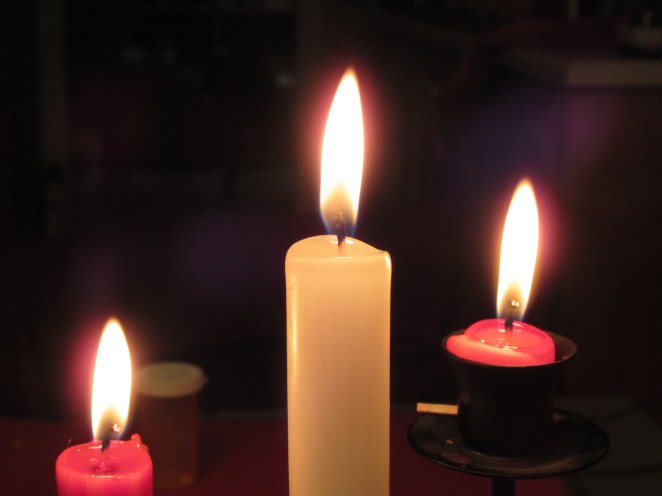
     the sun’s great candle
          beneath which red rocks
               wave and water battered
                    crumble

here at North Cape
     in a way that nobody
          can understand …

Commentary:

The osprey “emerging with lusty thrusts of wings, claws clasping, imprisoned prey prised from the sea, raised to the skies, up and away, murderer and victim.” The words are based on the photograph. A quiet day, somebody shouted, and pointed, and clickety-click, I was lucky enough to capture the whole thing on my digital camera. This one shot summarizes it all.

The stanzas (16 & 17) that precede this moment are available here. Clepsydra, the book, is one single poem, one single sentence, that rambles on and on. Each stanza stands alone, each poem (numbered) stands alone, and the whole book stands alone as a single sentence summarizing what I have seen and where I have been. Bakhtinian Chronotopos – my dialog with my time and my place. In this case, my many dialogs with my multiple times and multitudinous places.

Albert Camus lent me the phrase ‘murderer and victim’. ‘Nous sommes, ou meurtrier ou victime‘. Quoted from memory. I hope I am not too far wrong. My memory fades as I age. Louis Aragon suggested I borrow his line “rois tombés de leurs chariots” – that I found in his collection Il ne m’est Paris sans Elsa. Here, I have applied it to the seals at North Cape, PEI – “seals – basking in sunshine – kings and queens of their sealdom.” Intertextuality – texts talking to texts and recalling segments of texts within other texts.” Wonderful. Alas, I fear the coming days when the memory may no longer be so clear. ‘What will be, will be’ said the Osprey as he pulled the flounder from the sea and carried him too his nest in a nearby tree.

Absence

Absence …

… makes the heart grow
callouses scabs you can
pick at with your finger
nails bleeding fresh blood

they remind you that you have
a heart feelings something
buried so deep you need
a pick and a shovel to dig
a shaft with wooden slats
placed carefully at the sides
so your mine won’t collapse

you dig deeper and deeper
until in the gloom you see
the feathered fluttering —

a broken-winged canary
sacrificed in its cage
so part of you can escape
flee the mine
and come out alive

Commentary:

A golden oldie. Moo thought Poppy Day (11/11/2024) would be a suitable painting. Those who survive rarely forget those they were forced to leave behind. Kindred spirits, they travel though life together, the live one carrying the other on his shoulders as he would have done earlier, had he been able to.

Moo still has a teddy bear. He tells me he has always slept with one. His first teddy was an Australian Koala, a real stuffed koala given him by his Australian family, back when he was born. Moo was reading a book on the Battle of Britain (15 September 1940). It had a picture of the gunner from a Bolton Paul Defiant, sitting in the gun turret. Behind him, he had his little teddy bear. Moo couldn’t stop crying. He thinks he might have been an air gunner in another life, and when he saw that teddy, it brought back so many memories – flak, night fighters, search lights, tracer bullets, pain, flames, and then the unending darkness. So many did not come back, especially the tail-gunners. Their absence is still a presence to someone in their families. And so it should be.

Monkey Visitsthe Chimpanzees’ Tea Party

Monkey Visits
the Chimpanzees’ Tea Party

Dressed to the nines in their gala outfits,
they have come here for the tea party.
Hairy penguins, they waddle back
and forth across the temple,
then lunge for a table with its jumbo shrimp,
smoked salmon, scallops, baked oysters.

Faces slashed from ear to ear
by enormous grins,
“Food’s free!” they say
and stuff themselves
regardless of the consequences.

Serviettes tucked into collars,
they scoff lobster and crab.
Birds of Paradise, subtle delicacies
flown in from half a world away,
decorate the tables.

There is something about them, though,
these chimpanzees,
gripping cup handles
between finger and thumb,
enormously pleased to be the centre of attention,
however clumsily they walk,
in their hired-for-the-occasion,
ill-fitting, black and white penguin suits.

Commentary:

Moo apologizes. He hasn’t painted any chimpanzees, but a long time ago (2018) he drew and colored this cartoon. Pink and Purple Penguin Parade with Grand Marshall, Princess Squiffy. You can just see the end of Princess Squiffy’s tail as she vanishes out of the cartoon, encouraging the Pink and Purple Penguins to follow behind her behind. Oh the joys of leading the parade. Not everybody wants to do it though, many are content not to lead, but just to follow. Perhaps we should have called our cat MacNamara. After all, he was the leader of the band. But I don’t think Princess Squiffy would rather be anything other than what she is – a princess.

This poem, from Monkey Temple (of course / wrth gwrs) reminds me of Parents’ Day at my Boarding School. After several weeks of scarcely edible food, the tide would suddenly turn. Thursday, prime rib roast beef for supper. Friday, roast chicken with all the trimmings. When our parents arrived on the Saturday, all we could talk about was the wonderful food we had been eating for the last two days. Cunning, eh? We all had to dress up for Parents’ Day. Sunday starched collars, collar studs and all, and nice clean Sunday School ties.

Tea on the lawns in summer – unforgettable. A marquee, in case it rained, but otherwise tables laden down with a variety of skillfully cut sandwiches, little triangles, with no crusts, followed by endless helpings of strawberries and cream. The boys served their parents, fleeting back and forth to full the rapidly emptying plates. One boys father, I won’t say whose, devoured 12 bowls of strawberries and cream before the headmaster call the son over and begged him to beg his father not to eat all the strawberries and cream as some other parents’ would like some also.

Griffin Hunting – not a typical public school sport but one in which my school most certainly indulged. Our school symbol – a griffin – woven with gold thread on a dark blue background symbolized for the younger boys the perfection of the Prefects. To Hunt a Griffin was to behave in such a way as to attract the attention of older boys (already Perfect Prefects) and the school masters so that one became a candidate to climb the ladder and become a candidate for Griffin-hood. Some of us, myself included, preferred the anonymity of Robin Hood and were happy in our chosen roles of outlaws in Sherwood Forest and agents provocateurs and anarchists. Not for us the gentle counting of innumerable sheep. We chose rather the perils of after-dark transistor radios and the joys of Radio Luxemburg.

I remember being caught out of bed one night, on my knees, in a corner of the dormitory. All the dorm occupants were squealing and making a terrible noise. This attracted the attention of Perfect Prefect Plod – and in he came, threw the door open, and switched on the light. “You!” he pointed at me. “What do you think you are doing, out of bed?” “I am catching a mouse, Prefect Plod,” I replied. “You are a nasty little liar,” said Prefect Plod. “There are no mice in our nice clean house.” “Oh yes there are,” I replied, and I showed him the little mouse that I had cradled in my hands. “Give that to me,” ordered Prefect Plod. So I did. And the mouse took an instant dislike to him and immediately sunk its sharp little teeth into his thumb. I remember Prefect Plod running out of the dorm screaming “Matron! Matron!” and the little rodent swinging back and forth and hanging grimly on.

Those boarding school days ended 63 years ago. Hard to believe, really, but I still have such vivid memories of them. And of the Perfect Prefects, gripping cup handles between finger and thumb, enormously pleased to be the centre of attention on Parents’ Day, however clumsily they walked, in their spruced up for the occasion, Sunday Suits and Shirts, with their Golden Griffin ties. I always think of the Chimpanzees’ Tea Party when I think of the special performances of that little lot ‘for a Prefect’s lot is not a nappy one, nappy one.’

Monkey Turns Down Promotion

Monkey Turns Down Promotion

“I hereby appoint you head of the asylum.”

The young office monkey with the plastic stethoscope
was dressed neatly in a white sheet.

“Dr. Freud, I presume?”
Monkey held out his hand
but his witticism was lost in a flood of water
flowing from the flush and over the floor.

Monkey stood there, paddling in piddle.
Inmates with crowded heads and vacant faces,
fools grinning at a universe of folly,
paddled beside him. He wiped
a sick one’s drool from his sleeve.

The office boy spat on his hands,
slicked down his hair, and placed
his stethoscope on monkey’s heaving chest.

“You have no pulse.”
“How do you know I have no pulse?
Surely, you cannot hear my heart
for you have a banana stuck in your ear.”

“Speak up!” said the doctor,
“I cannot hear you:
I have a banana stuck in my ear.”

Then monkey felt fear.

Daylight diminished
and waters closed over his head.
He spurned the proffered paw,
the life belt thrown
by the offer of a new position.

Exit monkey left,
pursued by a chorus:
“Run, monkey, run!”

Commentary:

A Golden Oldie from Monkey Temple (2010). I came across it by accident as I thumbed through some older books – wow, fifteen years ago that came out. A Golden Oldie indeed. I had forgotten all about Monkey Temple. However, the last couple of days I have watched New Zealand vs Canada and England vs France (Women’s Rugby World Cup). Both semi-finals took place at Ashton gate, Bristol. That’s when I started thinking about Bristol and Bristol Zoo.

We had family in Bristol (Westbury-on-Trym) and from an early age we visited Bristol Zoo. One of my favorite places was the old ruined Monkey Temple, full of monkeys that impressed me with their antics. A small, walled zoo, it was full of innovations and I remember well Alfred the Gorilla and Rosie the Elephant. I loved the rides on Rosie’s back. The camels too offered lifts to young children and the elephants took apples from my hand with their long trunks. I also remember the bear pit, and loved watching the brown bear climb to the top of his pole and catch food thrown to him by the visitors.

I think everybody’s greatest thrill came with feeding time for the seals. What a racket when the attendant appeared with his / her pail of fish and he/she threw them to the waiting seals. Almost as thrilling was the penguin house with its aquarium and glass windows. Animals that seemed so clumsy, waddling on land, turn into sea-angels when they dived and we could meet them, face to face, so to speak, almost in their own environment.

My love of zoos reached out and I recall the zoo in Madrid, established when Columbus returned from his voyages with species of animals hitherto unknown. And who could forget Copo de Nieve, the albino gorilla in Barcelona zoo.

Alas, my zoo day’s are over. But the world is wonderful. Today, two deer entered our front yard, lunched on the fallen crab apples, and went to sleep underneath the trees outside our window. Joy to the world and the world brings me joy -sunrise and sunset, colored clouds, the deer in my yard, a fox passing through. However, I must admit I am not impressed by the little red squirrel that nests under the hood of my car and gnaws my cables. Nor by the porcupine who loves the salt in my garage doors and nibbles at the door frame every chance it gets. The love of nature – red in tooth and claw – I guess we have to enjoy the good and put up with the bad. Life’s like that. “Ask the animals, they will teach you.” Bristol Zoo motto.

Love in Old Age

Love in Old Age

How do I love you? Let me count the ways.
I love you when together we start to write
for although you’re sometimes out of sight,
you’re never out of mind. So many days

we’ve spent sitting together at keyboards, tapping
at computer keys. Is this the way to please
each other, a choosing of words, a squeeze
of meaning into a smaller space, with overlapping

metaphors and images improved in ways
we never would have dreamed of? Each
to his or her own, we say. Yet we reach
out to each other over time and space,

not joined at hip or lip, but with energy and zest,
sailing similar seas, and trying our very best.

Commentary:

A Golden Oldie, the poem more than the painting. Moo is more up to date than me. He also thinks my beloved and I sit side by side, or at opposite sides of the table, gazing at each other, but not saying much. Hence his choice of cartoon – The Sound of Silence.

“Each to his or her own, we say. Yet we reach out to each other over time and space.” Sometimes silently, often with words. Silence is best – because as my hearing goes, what I hear is a mumble – like the rumble of the old Mumbles Railway – does anybody else remember that? The result of the overheard mumble is an inelegant ‘Eh?’ Too many ‘ehs’ spoil the silence. Don’t they, eh? What’s that you say, eh?

So, I am now having great fun reading a new word a day in Welsh. What a joy to pursue the language that was forbidden when I was a boy. I don’t have anyone to talk to, but that is beside the point. Reading, remembering, the old place names still there at the tip of the tongue – Brynhyfryd, Rhosili, Pwll Ddu. Each name brings with it a visual memory, usually silent, but sometimes filled with the cries of sea-gulls and the growling of corgis defending their territories. Whatever – what joy!

Sweet Dreams

Sweet Dreams

Amnesia survives in these amniotic waters,
moving in time to the water pump’s heart beat.
I close my eyes and dream. Nothing is the same.

Do I drift dreamily or dreamily drift?
The bath-tub’s rose-petals bring memories –
primroses, bluebells, cowslips, daffodils dancing

beneath the trees in Blackweir Gardens,
or beside Roath Lake, where I biked
on gravel paths so many years ago.

Photos float before me, pictures of moments
I alone recall. Spring in Paris, the trees
breaking into bud along the Champs-Élysées.

Santander in summer, walking the Piquío
as it slumbers beneath the jacarandas.
One winter in Wales, up in Snowdonia,

I ran down a valley between high hills,
on a freezing night, with only the stars
to keep me company, so cold, I nearly froze.

Autumn at the Peace Park in Mactaquac,
with leaves reflected in the head pond.
Or the Beaver Pond with its fall orgy

of gaudily painted trees, leaves drifting down
on this first chill wind, to settle like tiny,
colorful birds in my beloved’s hair.

I remember the look in her eyes when
I caught a falling leaf and put it in
her pocket, telling her to save it,
like a falling star, for a rainy day.

Things


Things

I fumble in my mind for things
long lost in an upper attic.
I can no longer read the words
I wrote. What does this mean?

At night I dream of things
beyond my reach. My fingers
clutch but cannot clasp
those clouds that clutter.

Who, oh who, the owl cries,
can free the mice that nibble
through my mind and set me
gnawing at my own soul?

Once upon a time, a long
time ago, I thought I saw light
at the end of the tunnel.
I travelled on a ghost train.

The light I saw was a gaslight
ghosting my mind with fictional
fantasies of an illusive kingdom
that would never be mine.

Elusive, these memories of things
that never were, but might have been.
Will o’ the wisps dancing shadows
on the salt-marsh of my unknown life.

Commentary:
Memory loss. I guess it happens to all of us at one time or another. One of my long-lost friends visited yesterday and between us we could hardly put two consecutive memories together. Every other sentence was punctuated with a pause – ‘Now, when did that happen?’ ‘What was his name? I can’t remember now.’ ‘Me neither.’

I am not particularly worried by such happenings. I am a poet and a story-teller. Sometimes, I forget the truth – so what? – I just go ahead and reinvent it, tickling it here, sticking a spot of paint there, adding a word or two, or a magic moment. I often remind myself of Oscar Wilde when he created a magic moment of verbal ingenuity – “I wish I had said that, Oscar.” “You will, Roger, you will.”

Best of all, even in those moments when personal memories fail me, literary magic returns. I think of Dylan Thomas and his words spring to my mind – ‘time has ticked a heaven round the stars’. Wonderful. Or Francisco de Quevedo ‘soy un fué, y un será, y un es cansado.’ / ‘Tired I was, tired I am, tired I always will be.’ My own translation from the summer of 1963 when José Manuel Blecua introduced me to the poem, or rather Blecua introduced the poem to me, in that summer’s courses of the UIMP.

So, according to this theory, even when you feel lost, you are never really lost, because there are an enormous number of people living inside your head, who who will step out from the shadows, when needed, and give your memory a little boost. But don’t get too carried away. Think too of José María Valverde and his poetic premonition: ‘Pobres poetas de hoy, destinados a ser polvo seco de tesis doctoral.’ / ‘Poor poets of today, destined to be the dry dust of doctoral theses.’ (My translation).

Dust to dust and ashes to ashes – ‘Serán ceniza, pero tendrá sentido. Polvo serán, pero polvo enamorado.’ Quevedo, of course. But you didn’t need me to tell you that. You might need me to help you with the translation, though – ‘Ashes they’ll be, but ashes with feeling. They will be dust, but dust that burns with love.’ (My translation, with a little bit of exaggeration [sorry, don Francisco!] just at the end.)

Pioneer Sky

Pioneer Sky
04 September 2020

Sky and clouds float side
by side in the beaver pond,
mingling shape and color
with the autumn leaves.

When the walking trail
became too crowded,
the beavers left their lodge.
They moved to another pond,
lower down than this one,
and there, where fresh milkweed
grows, they built another dam
and a brand-new lodge.

The great blue heron still
stands on guard, patrolling
his usual watery haunts.
He searches for solitude
in untroubled waters,
weaving his wary way
between white and blue skies
mirrored in the pond below.

Just when I think that life
has become meaningless
I look up at that Pioneer Sky,
celestial blue for hope –
white clouds for purity,
and I seek new meanings.

I also find them
in the rippling patterns
of the Beaver Pond.

Hello again – our old friend is back!

Hello again – our old friend is back!

Co-[vidi]-s
17 March 2020

I saw time change with the clocks
and my body clock
is no longer in sync
with the tick-tock chime
that denounces each hour.

Hours that used to wound
now threaten to kill.
They used to limp along,
but now they just rush by
and I, who used to run
from point to point,
now shuffle a step at a time.

Around us, the Covidis
thrives and flowers.
Wallflowers, violets,
we shrink into our homes,
board up the windows,
refuse to open doors.
We communicate by phone,
e-mail, messenger, Skype.

Give us enough rope
and we’ll survive a little while,
fearful, full of anguish,
yet also filled with hope.

Comment:

A Golden Oldie, written on 17 March 2020, St. Patrick’s Day.

Only yesterday, I read that Covid is back once more, in a new and mutated shape. Masking is once again demanded in the local Horizon hospitals especially in areas where patients and the public gather. I lost a couple of good friends to Covid last time round. I hope I don’t lose any in this new session. Guess I’ll be continuing to get my vaccinations and keep them up to date.

Whoever is reading this, I wish you all the best. May you stay Covid and illness free. May you also enjoy a long and happy life with sunshine days – and enough rain to keep the forests cool, the trees happy, the flowers flourish, and the wildfires at bay.

Butterflies

Butterflies
Miguel de Unamuno

… butterflies … temporal forms … fluttering …
existing for one sweet day … they perch … spread
their wings … fan us with their beauty … flourish …
catch our attention … then caught by a gust
tear their wings on a thorn … and perish … blink
your eye and they are gone … yet reborn … they
cluster and gather in dusty ditches …
congregate on bees’ balm … smother Black-Eyed
Susan and Cape Daisy … shimmer in shade …
butterflies by day … fireflies by night …
terrestrial stars floating in their forest
firmament … dark tamarack … black oak … bird’s
eye maple … silver birch … impermanence
surrounds us … dances beneath stars … sings with
robins … echoes the owl’s haunting cry …
eternity held briefly in our hands …
then escaping like water or sand … black
words on white paper capturing nothing …
… my dialog … my time … my place … butterflies …

Note: “La poesía da permanencia a las formas temporales del ser / Poetry gives permanence to the temporal forms of the self.” Miguel de Unamuno (1864-1936)

The temporal forms of the self – and so much today is unsettled, changing, insubstantial. I have often wondered how one makes time stop. Is it even possible to do so? Time and tide wait for no man. And why should they? Fray Luis de León – “Con paso silencioso, el cielo vueltas dando, las horas del vivir le va hurtando.” / With silent step, the ever-turning sky, steals away life’s hours. Or Fancisco de Quevedo – “Que sin saber ni cómo, ni adónde, la edad y la salud se hayan huído. Falta la vida, asiste lo vivido, y no hay calamidad que no me ronde.” Without me knowing how or where, age and health have fled. Life is lacking, past life flew by, and there isn’t a calamity that doesn’t hound me.

Ars longa, vis brevis – art endures, life flies by. My translations are freer than usual today, but I too feel like being creative in my own language. So, if we can’t slow time down, what can we do? We can create – poems, paintings, photos. We can read – and translate from one language to another. We can, like butterflies, perch on flowers and enjoy our brief days in the sun. Mindfulness – we can make the most of each moment by living it thoroughly and well. Carpe diem – we can seize each moment of every day and live it to its full measure. And, above all, we can write and read poetry – because, as Unamuno says – Poetry gives permanence to the temporal forms of the self.