A Touch of Frost

A Touch of Frost

1

Cooler nights
have brought
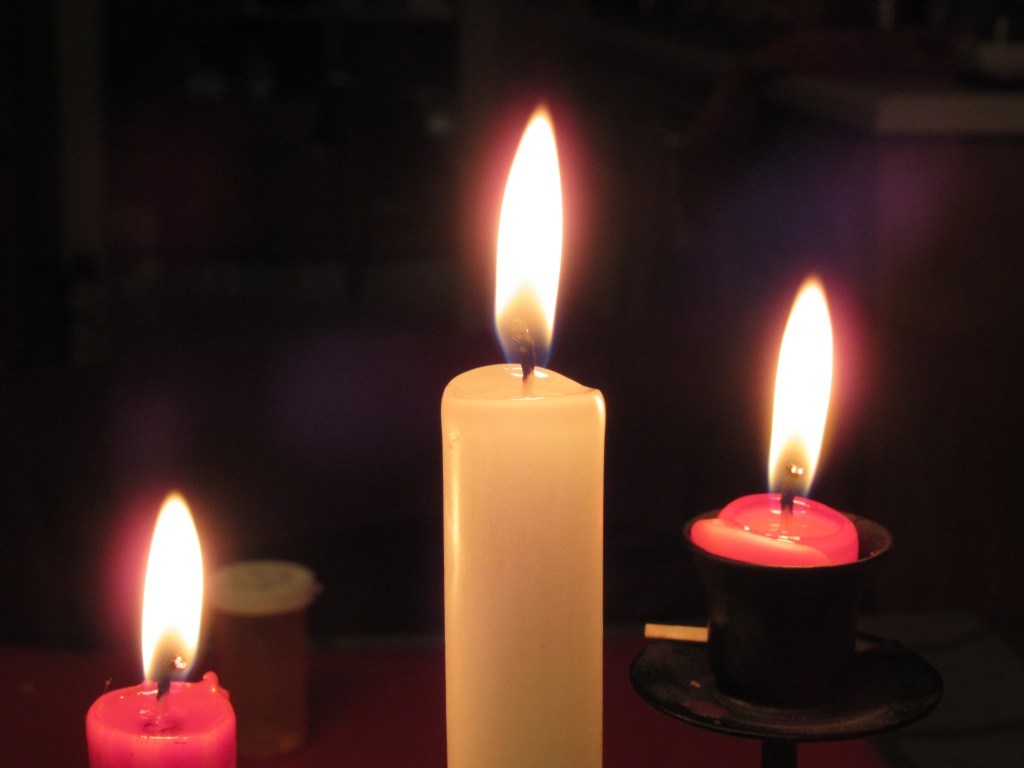
a touch of frost
to higher ground.

At night,
temperatures fall.
By day,
they build.

I watch as Autumn,
finger on lips,
tiptoes
through the garden.

2

With a wave of its wand,
winter threatens.

A gust of wind
swirls the leaves,
bears tufts of snow
dancing round the tree.

I watch
as my grandchild grows,
my child grows older.

She has a gentle
touch of frost,
a grey fringe
at the curl’s roots.

When I glance
in the mirror,
I see the full effects –
drifts of snow
gathered on my head.

I look
at my beloved.
Her hair –
a crab apple tree
in full spring bloom.

Comment:
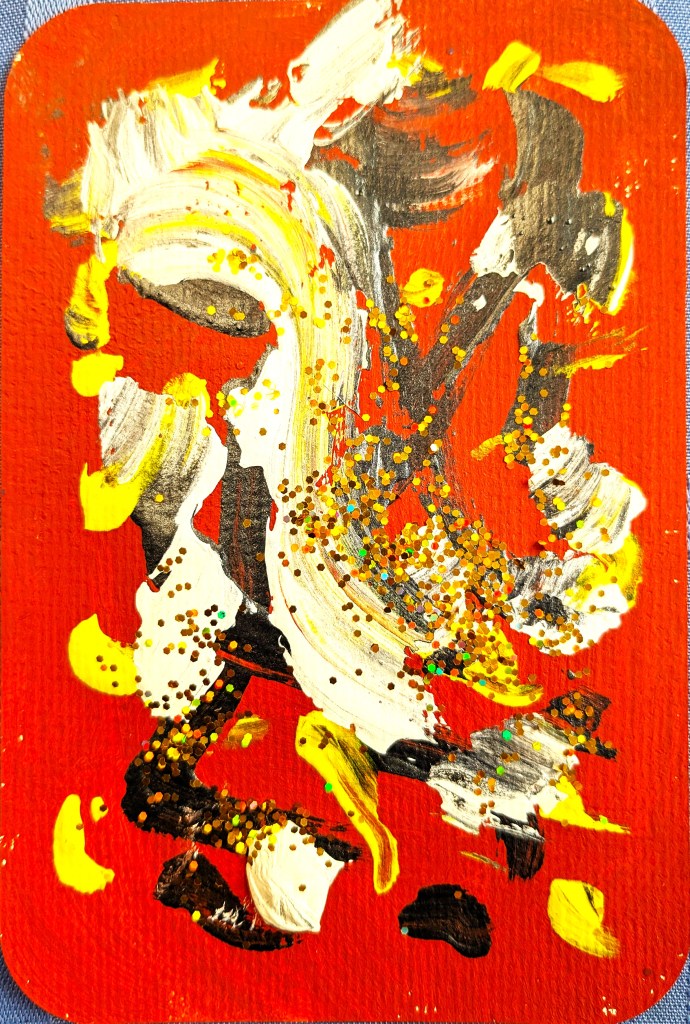
Nice to add a new poem of my own to this poetry page. Today’s poem came as a result of discovering Moo’s painting – A Touch of Frost. Painting and poem, painter and poet – a great collaboration.

And then there’s the nights – KTJ

Then There’s The Nights … KTJ                

As a child my days were good.
Full of wonder and being misunderstood.
Growing and learning without knowing love.
But always guided by the Lord up above.
The days were filled with hope in my sights.

Then there’s the nights.

Trying to make sense of my life in a bed I did not own.
Fighting demons no child should ever fight alone.
Dreams of monsters under the bed.
Thoughts of not belonging filling my head.
Longing for a normal Mom and Dad.
Crying myself to sleep and feeling sad.

At 14, I thought I was grown.
Stealing my food and living alone.
Leaving behind a brief life with my dad.
Street life was hard, but it was all that I had.
The days seemed to pass by all right.

Then there’s the nights.

Fear of passing by where the dead lay to rest.
I’d stand with my thumb out and hope for the best.
I was told it was the living I should fear.
But my mind was confused
and my thoughts were unclear.
Sleeping in ditches and dreaming of a home.
No one to care for me, I was alone.

Years passed by as if in slow motion.
People came and went, playing on my emotions.
More than one marriage, with hopes of a happy home.
Each time I was sure I was done being alone.
I kept telling myself life was sunny and bright.

Then there’s the nights.

Sleeping once again in a bed I didn’t own.
Waiting for a husband who does not come home.
Anger and confusion running through my head
Wondering if he was sleeping in another woman’s bed.
I wanted to scream and demand he be true.
But you don’t have that option if someone’s abusing you.

I’ve finally made it to the last quarter of my life.
I no longer desire to be anyone’s wife.
I have my independence and a loving heart.
I want love, but I also need time apart.
To grow and learn and miss the ones I love.
I have been truly blessed by God above.

Then there’s the nights

Sometimes sleeping in a bed, I don’t care if I own.
Nights full of contentment for me and me alone.
I’ve let go of the dream of two hearts and souls
intertwined as one.
Finally, my worries and grief are done.
The rest of my journey will be full of peace and love.

Once again, I thank the good Lord above.

Comments
Yesterday, I posted a painting that KTJ associated with one of her poems, Addiction. Last night, my friend, Moo, painted this painting which accords with one of KTJ’s poems entitled And then there’s the nights. This is the lead poem in her first poetry collection, I am my tattoos. This linking of the verbal (poetry) with the visual (a painting) has been a technique I have used before. The movement between visual and verbal often generating a shifting pattern of colors and images in the reader’s / viewer’s mind. These collaborations between artists are very productive. Long may they continue.

NB If you, dear reader, would be interested in writing for one of Moo’s paintings, just drop me a line, or leave a note in the comments section.

What are you doing this evening?

Daily writing prompt
What are you doing this evening?

What are you doing this evening?

This evening, I am thinking about how September is the month in which academics, thinkers, and philosophers, as well as everyday people, can be reborn. I wrote this article 25 years ago. Re-reading it now, I am amazed by its clairvoyance. Here are my thoughts from way back then.

“September Renaissance: The Annual Adventure of (Re)Creating the Individual.”

This address was delivered to faculty at MOUNT ALLISON UNIVERSITY on 07 September 1999. It is a revision (and an extension) of the adress I delivered to students at St. Thomas University during the inaugural speech delivered to the incoming class of students by the winner of the St. Thomas University Excellence in Teaching Award.

Tomorrow, 08 September, 1999, is a very special day for me, and I would like to share my Special Day with all of you.

“A Special Day?” you think. “It must be his birthday.”

But no, it’s not my birthday. Could it be my Saint’s Day then? If we were in class, and you were all students, I would see some puzzled faces. A hand would be raised: “Please Dr. Moore, what’s a Saint’s Day?”

I would smile at the student brave enough to ask that question. “Good question!” I would say. “When one person asks a question, class, there are twenty people in the room, perhaps more, who wanted to ask that question, but did not raise their hands because they were afraid to do so. Never be afraid to ask questions. Question everything. Question everyone. Ask questions all the time. That, in part, is what you are here for: to ask questions and to learn to ask the right questions.”

So: what is a Saint’s Day? Well, in Spain, people often have two celebrations a year: their birth day and their Saint’s Day. Their birthday is, of course, the day they are born; their Saint’s Day is the Feast Day of the Saint after whom they are named. That was a good question, class, and you have gained a little knowledge! But No! It is not my Saint’s Day.

Why is today such a special occasion for me? Again, if this were a classroom I might, at this stage, do one of several things:

  • I might divide you into groups and ask you to discuss the question;
  • I might turn on a video;
  • I might access the classroom computer and show you a multi-media presentation;
  • I might give you a lecture or a talk or a question and answer session, much as I am now doing;
  • I might send you to the library to find out the answer for yourselves;
  • I might send you to the computer room to surf the net in search of an answer;
  • I might ask you to work together on an interactive listserve and let others help you access the information;
  • I might send you home early with reading material for the next class;
  • I might send you home to watch a specific television program;
  • I might set you the question as a Problem Based Learning Group Research Project (written answers on my desk, tomorrow, by 3:15 pm!);
  • I might ask you to write your essay in a journal page or in a researched essay (due in six weeks time, with annotated bibliography!);
  • I might ask you to tap in to your subconscious and freewrite around the question for fifteen minutes;
  • I might tell you to do some thinking and asking around, because that specific question will be on the final examination;
  • I might ask you to design a poster or your own multi-media presentation demonstrating the meaning of the question and several possible answers …


… Clearly, there is no right or wrong approach and there are many ways of dealing with what is, on the surface, a relatively simple question. You are using many of these approaches in your own classes here at Mount Allison University and I do not presume to tell you that one way is right and another wrong. So much depends on the shifting relationships between teacher, learner, class size, class maturity, work capacity, research resources, and subject matter. At Mount Allison you have a national reputation for the excellence of your students and of your faculty. You have proved over a long period of time your ability to distinguish between the more important questions and the correct research and investigation procedures; above all, you know how to choose those that are most suitable to you and to your own students.

Since this is NOT a classroom, since you are not my students, and since I would have great difficulty in dividing you up into small groups so that you could discuss why tomorrow is such an important day for me, I will provide you with the required answer: TOMORROW, September 8, 1999, is my RE-BIRTH-Day! Tomorrow, I celebrate the day of my RE-BIRTH. Thirty-three years ago tomorrow, I was RE-BORN.

Permit me to share with you the matter of my RE-BIRTH!

It came about like this: On September 8, 1966, I got up at 4:00 am, ate a light breakfast, packed my suitcases into my father’s car, and headed for Heathrow Airport, London. There I boarded BOAC Flight 1040 and at 3:00 pm that afternoon I landed in Toronto, Ontario, Canada. By 3:15 pm, I was passing through Canadian Customs and Immigration and by 3:30 pm, I was RE-BORN as a Canadian.

This RE-BIRTH was not an easy process. It took me a long time to learn to act, think, and speak like a Canadian. It also took me a long time to realize that while the Canadian within me was growing stronger every day, other parts of me, even when they were rigorously maintained, were beginning to die. Thus, at the same time as I celebrate my RE-BIRTH as a Canadian, I mourn the gradual passing away of my Welshness, the slow disappearance of my Welsh family, the fading of my Welsh friends, some of whom I have not seen in more than thirty years.

Yes! I was RE-BORN 33 years ago tomorrow. But this is not the only RE-BIRTH that I have undertaken. There have been many other rebirths:

  • 28 years ago, I emigrated from Ontario and was RE-BORN as a New Brunswicker;
  • 27 years ago, I left the University of New Brunswick and was RE-BORN as a St. Thomas University professor;
  • 24 years ago, I was RE-BORN when I graduated with my PhD and was officially no longer a student;
  • 5 years ago, when I visited the Dominican Republic, I was RE-BORN as a conscious critic of certain neo-colonial policies and attitudes towards Developing Countries; in the DR, incidentally, I was also held up at gun-point — and surviving THAT little incident certainly guaranteed an instant RE-BIRTH which I celebrated in the closest bar!
  • 4 years ago, in December 1995, I was RE-BORN as a pseudo Professor of Education when I visited Oaxaca, Mexico, as part of what was later to be called the St. Thomas University – University of New Brunswick – Universidad Autónoma Benito Juárez de Oaxaca Faculty Exchange Program;
  • And tomorrow, on September 8, 1999, as I celebrate the 33rd anniversary of my being RE-BORN as a Canadian, I am in fact in the process of being RE-BORN yet again.


I will explain how in a moment. Meanwhile let me say that along with the pain and struggle for RE-BIRTH come various things:

  • PRIDE: in the fact that I, along with everyone else in this room, can achieve RE-BIRTH;
  • HUMILITY: in the knowledge of how fortunate I am, together with all of you gathered here in this room today, to be counted among those who are still capable of RECREATING their lives and of being RE-BORN;
  • RESPONSIBILITY: in the knowledge that when we are RE-BORN a new set of duties falls upon our shoulders;
  • ENERGY AND ENTHUSIASM: in the knowledge that I, like every one of you, am capable of sharing the secret of my RE-BIRTH with the students who come to my office and my class almost every day in search of the new selves which they wish to create for themselves.


This summer, to prepare myself for this Fall’s RE-BIRTH, I did the following:

• I revised all my courses;
• I attended the University of New Brunswick Multi-Media Institute for three weeks and completed my Certificate of Multi-Media Studies;
• I reconstructed, with the aid of Clare (without whom I would not be here today, but perhaps I’ll tell you more about that later), my web page;
• I (re)commenced my annual summer reading program to update my thinking.

I say all this to assure you that I know as well as you do that knowledge is not a solitary, self-contained unit which, once attained, stays with us forever. Knowledge is an ongoing process; learning is a lifetime commitment; you, as faculty, teach at Mount Allison University, as I teach at St. Thomas University, not just to earn a salary, but to continue a life-long commitment to teaching and learning. If you are like me, you love the sheer process of teaching and learning; you love the contact with young, developing minds.

I try always, as I am sure you do, to encourage my students to start their life studies with us at St. Thomas and to continue their life studies when they leave university. We do not say “Learn for four years and then you can stop learning for you will have all the knowledge you will need for the rest of your lives.” At least, I hope we don’t.

And it is the same thing for us, as faculty. For we, as faculty, are actively involved in our own ongoing research and scholarship, some of which we publish and some of which we use in our classes; research moreover, without which the knowledge we share with our students would be a dead package, taken from our notes, and handed over without thought or revision, or consideration, to the next generation, much as certain forms of knowledge were handed to me when I was an undergraduate by some of the teachers de cuyos nombres no quiero acordarme / by teachers whose names I do not wish to recall, to borrow the famous words with which Cervantes opened perhaps the world’s greatest novel: Don Quijote de la Mancha.


So what did I read this summer?

Amongst other things, I read about the RENAISSANCE — the RE-BIRTH of Western Civilization in the 15th and 16th Centuries; I also read about the REFORMATION that came about as a direct result of the challenges and questions posed by the RENAISSANCE; and I read about the COUNTER-REFORMATION that sprang up as a reaction to and dialogue with that first REFORMATION.

I also realized, not for the first time, the similarities between our own age and that of the RENAISSANCE. The RENAISSANCE, as Marshall MacLuhan pointed out in The Gutenberg Galaxy, was a time of new ideas and new technology; in addition, a radical change occurred in the paradigm of man’s learning and thinking. The known world was expanding with the voyages of discovery that set out to East and to West. Man’s view of the universe changed with the various discoveries in optics that allowed us to see objects in space larger and in more detail than ever before. This led, of course, to the concept of the heliocentric universe, where human beings were displaced, away from the centre of creation; a new concept for the Church, and one that they fought against bitterly at the time.

In the same period the printing press had an enormous influence on the dissemination of knowledge, and totally changed peoples’ ways of disseminating, creating, receiving and perceiving written information. It is very difficult for us to understand, even today — perhaps especially today — the impact of the printed word on a semi-literate society in which, again according to Cervantes, groups of people would gather in the evenings to have books read out loud to them by the one or two people in the village who could read. Walter Ong has described this process to us in Orality and Literacy, another book which I (re)read this summer. Suffice to say, that for us, as a television generation, it is difficult to understand the initial impact of radio upon our parents and grandparents. For the new generations of students emerging today, it is difficult to imagine life without the instant communication of television, telephone, email, and computer.

In many ways, the impact of print must have been similar to the impact of the electronic technological revolution which we are going through today. And one thing I know for certain, after completing my Certificate in MultiMedia Studies: none of us are aware, nor will we be fully aware for a long time yet, of the full impact of the electronic technological revolution upon the hearts, souls, intelligence, and minds (not to speak of the wrists and eyes) of those who use it and of those who are now growing up, many of whom know no other way of accessing information.

The paradigm of knowledge and technical skill is still changing and developing explosively; as a result, we are still unaware of exactly what can be achieved by the new media. Take computer chess, for example. Chessmaster 2000 had approximately 150 games programmed into its chess library; Chessmaster 4000 not only has 1500 games programmed in, but also presents us with games in which Karpov commentates in digital audio his own moves in his own matches!

Yet, in spite of this tremendous rate of progress, few of us who follow Chess would have dreamed that Deep Blue, programmed by a gentleman from Clare’s home town of Bournemouth, would thrash Karpov, the world chess champion from the Soviet Union, only a year or two down the road. Nor can we understand the extremely rapid progress that leads us in a matter of months, to see the memory banks in a pc clone expand from 1 gig of memory to 4 gigs of memory, to 6 gigs of memory, to the 10.6 gigs of memory that Dell is advertising in its latest computer sales. In some ways, it is like the 10, or 12, or 14 zeros that are now following the initial figures in the MEXICAN FOBAPROA SCANDAL: so many zeros that the concept of the magnitude of the debt is beyond the understanding of most of us.

In our day, then, as in the Renaissance, the paradigm of knowledge is expanding explosively. Knowledge in the Renaissance evolved so quickly that few individuals were capable of grasping the full meaning of the REVOLUTION, the RENAISSANCE, the REBIRTH which they were observing and in which they were involved. In fact, the RENAISSANCE BATTLE OF THE BOOKS or the continuing discussions between the ANCIENTS AND MODERNS were very similar in many regards to some of the discussions regarding the FUTURE OF EDUCATION that we are holding in all the Atlantic Provinces Universities right now. Authority or Innovation? The old ways or the new? Technology or Tradition? Whatever side we come down upon, these discussions are good for us all for they mean we are alive and thinking and that our knowledge is not a dead but a living thing.

This summer, I also (re)read Mikhail Bakhtin; I believe with him, that human beings can live in a DIALOGISTIC RELATIONSHIP WITH THEIR CHRONOTOPOS — that is to say, in less Bakhtinian language, that people can hold a dialogue with their time and their space, a dialogue which can bring about change, new directions, new commitments, in short, a RE-BIRTH.

And now, from Dialogue to Drama: Wayne C. Booth, in Freedom and the Individual (the Oxford University Amnesty International Lectures of 1992) wrote that we are all individuals, writing the drama of our own lives; each student’s entrance to Mount Allison University, in Wayne Boothian Theory, is a chance for that student to begin his or her play again; all students can rewrite their roles and their characters; as we can rewrite our lives and our roles. In short, each one of you can, like me, be RE-BORN. And believe me: September is the month in which this ANNUAL REBIRTH can and should take place.

I also read several books on the THEORY OF TIME: sidereal time, atomic time, linear time, instantaneous or contemporaneous time … many of the courses I teach at St. Thomas University are based on linear time: each term, they progress steadily from Day 1 to Day 36; however, our lives as teachers and learners are also based on seasonal or cyclical time. For teacher and student, the learning and teaching cycle begins anew every September; this is the time of the SEPTEMBER RENAISSANCE or RE-BIRTH. September then is the month for us ALL to be RE-BORN.

In some ways, the most important books I read this summer were all written on or about don Francisco de Quevedo. These books no longer have a single author. We are no longer dealing with one person’s ideas. Thus, although Pablo Jauraldo Pou’s name adorns the edition of the latest and best biography of don Francisco de Quevedo, Quevedo’s life has actually been researched by an extensive team of scholars, students, and friends, so large, that only the most important dozen or so can be acknowledged. The same is true of James O. Crosby’s edition of the Sueños, or of Ignacio Arellano and Lia Schwartz Lerner’s edition of the metaphysical poetry, or of Crosby and Jauralde’s edition of Quevedo y su familia en setecientos documentos notoriales, a compendium of legal documents concerning the Quevedo family which runs from 1572 to 1724.

In fact, when a single author, not a member of a team, writes on Quevedo nowadays, it is to offer a study of just a small portion of the author’s work. In this fashion, Josette Riandière de la Roche’s Nouveaux documents quévédiens: Une famille à Madrid au temps de Philippe II deals with a very short time period and only a selected aspect of the life of the poet. In similar fashion, Santiago Fernández Mosquera’s La poesía amorosa de Quevedo: disposición y estilo desde CANTA SOLA A LISI deals with only one aspect of Quevedo’s poetry, that of the love poems seen in the light of the sonnet sequence to Lisi.

TEAMWORK: it is becoming more and more necessary to work as a member of a team in order to keep up with the knowledge explosion with which we are confronted. I once said, tongue in cheek, that a TIER 2 CIDA GRANT APPLICATION demands the construction of a team. You need

  • a reader who specializes in how to read the AUCC / CIDA guidelines as they change from year to year;
  • an interpreter who specializes in what the current buzzwords are in government circles actually mean and how to use them in your documents;
  • an accountant who specializes in cash flow, international money transfer, and book balancing;
  • a manager who specializes in Results Based Management or whatever form of management system is the current government buzz word;
  • this manager must also have organizational skills to link the various parts of the application to the Results Based Management that is currently demanded by AUCC/CIDA.

Further, the manager must have people skills in order to hold the team together when things are going badly or well, for triumph and disaster, as we well know although both impostors are ever present when applying for Grants from Government Sources; you also need

  • a writer who specializes in writing up the final text so that it will convince the granting authorities that you, the applicant, another often forgotten member of the team, actually knows what you are doing;
  • finally you need what I call a people person or a wheeler – dealer who will get out there and make the appropriate contacts and find out who are the current movers and shakers and who will actually give you the internal promotion that your CIDA GRANT needs if the application is to be successful.

I would also suggest, perhaps not totally tongue in cheek, that a similar team approach to the writing of SSHRCC GRANTS FOR THE HUMANITIES would not be a bad idea.

TEAMWORK: As I said earlier, I completed my Certificate in MultiMedia Studies at the University of New Brunswick this summer. One of the things that I learned was the importance of teamwork in computing.

In our first SCENARIO FOR A CASE STUDY this summer, for example, we were required to design and build a commercial web site. Of course one person can build a website, and a pretty good one at that. But the studio team which we were given consisted of

  • a graphic artist,
  • a sound engineer,
  • a creative director,
  • a computer tech,
  • a multimedia specialist,
  • a photographer,
  • a specialist in digital photography,
  • a graphics designer, and
  • a colour specialist.

We did not have digital video capacity and were forced to contract digital video out. Costing was also a major part of the exercise: how many people, how many tasks, what order for the tasks, how many hours, how much time, how much money! I repeat: the new paradigms of knowledge that are developing around us will be demanding more and more teamwork from us.

I will end this brief presentation by reminding you that this fall, on Saturday October the Sixteenth, 1999, to be precise, the Atlantic Teaching Showcase will be coming to St. Thomas University, Fredericton. I hope to see some of you in St. Thomas, at that meeting. I am, as many of you know, the Chair of the Atlantic Association of Universities Teaching Showcase for this year.

However, I have not arranged the Showcase on my own. On the contrary: I have gathered a team of faculty and together we are working towards the Teaching Showcase. In fact, I have one person looking after finances, another looking after registration, another building a website, another looking after catering, another looking after audio visual equipment, another booking rooms, another organizing the program, another recruiting and organizing student help. We have planned and arranged the program between about eight of us.

An exercise in teamwork, no less.

I know that in all that I have said so far today, here at Mount Allison University, I am talking to people who know as much as I do, or more, about all these things: REBIRTH, RENAISSANCE, TEAM WORK, COLLABORATION. For a very long time, I have been impressed by the quality of Mount Allison’s teachers and by the quality of Mount Allison’s students.

In five weeks’ time, at the Atlantic Association of Universities Teaching Showcase, there will be a session entitled “WORKING TOGETHER: MODELS OF COLLABORATION INSIDE AND OUTSIDE THE CLASSROOM.” This particular session is a perfect example of the type of teamwork I have been talking about today. The session was presented to me in its entirety as a proposal for a single session incorporating 4 papers and some interactive discussion. The session will have a 90 minute slot and I very much hope to be present for what promises to be an exciting time. The session currently consists of a series of four papers, as follows:

  • “Mixing media: High Theory, Low Culture (or Inviting Popular Culture into the Classroom”;
  • “Collaborating with Students: Sharing Power over Syllabus Design”;
  • “Interdisciplinary Collaborative Project: A Model”;
  • “Beyond Discipline: Facilitating Collaborative Student Research”.

The session organizers are all associated with Mount Allison University and I would like to congratulate Professors Pat Saunders-Evans, Deborah Wills, Robert Lapp, Jeff and Ausra Burns on the hard work they have put in to an excellent integrated proposal.

Imitation, they say, is the best form of flattery. I have stood here today and spoken to you and you have kindly listened to my words. Tomorrow, I will spend part of my RE-BIRTH-DAY with you, here at Mount Allison. I have been invited to attend your Learning and Teaching Development Workshops, and I hope to take back to St. Thomas University some of the excellent ideas on which you are working here on campus. You are nationally and internationally recognized leaders in your field. Tomorrow, it will be my turn to listen to, and learn from, you!

Thank you for inviting me here.
And thank you for listening.

What profession do you admire most and why?

Daily writing prompt
What profession do you admire most and why?

What profession do you admire most and why?

Why admire a profession? I used to admire the fire-fighters when I was in Spain. Then I discovered that a small group of them were setting fires deliberately so that they could get double pay and danger money extinguishing the fires they had set. I used to admire politicians. Then I discovered that they weren’t always honest, had their hands in other people’s pockets, used their positions to entrench and enrich themselves, and pulled all sorts of tricks to stay in power. I used to admire priests. Then I started reading horror stories of child abuse, abuse of power, negligence of priestly duties. And these things aren’t new. In The Book of Good Love, (Spain, 1330-1343) written by Juan Ruiz, the Archpriest of Hita details how the celibate priests were ordered in a letter from the pope of the time to give up the ladies with whom they were living (and with whom they had children) to return to a life of celibacy. All fictitious, of course, but also based on a truthful reality, as was the Seller of Papal Bulls (as described in Lazarillo de Tormes – Spain 1554, and published anonymously because of its anti-clerical content).

I hope, with that short selection of potential professional felonies, I have made my point. In brief, to admire the ideal of a profession is one thing. But to admire the unprofessional conduct of certain individuals who ruin the reputation of their own profession is something else entirely.

Therefore, I would propose that we change the title of this prompt from What profession do you admire most and why?, to What professional do you admire most, and why? Now the question can be answered with ease. I most admire those professionals whose profession is a vocation. They do their jobs out of love and not just for money. They are dedicated individuals who put their profession and the people they serve before their own home comforts, wants and desires.

Such unsung heroes abound. The baker who gets u at 4:00 am, arrives at the bakery at 5:00 am, bakes, prepares, and wraps the goods, until 8:00 am when the customers arrive and the shop opens. This is done at minimum wage, autumn, winter, spring, and in the summer when the heat warnings go out and the bakery is a living hell, what with the ovens and the heat dome outside. The teacher whose work does not end in the classroom, but starts outside, when class has ended, and the students really need the TLC that comes from a teacher who puts them before his/her office schedule of 30 minutes student time a week. The general practitioner who does not retire at age 55 to bask in the sun on a Caribbean Island, but who continues his work, until at age 80, he can tend his flock of patients no more, and who then retires with grace, heartfelt thanks, and love from a job well done.

These are my heroes. These are the professionals that I most admire. Not the profession, but the person who performs that profession with skill, hope, love, commitment, and a dedication that reaches out to embrace that specific professional world, whatever it is, and the people who share it.

If you were going to open up a shop, what would you sell?

Daily writing prompt
If you were going to open up a shop, what would you sell?

If you were going to open up a shop, what would you sell?

That is a very hard question to answer. I think of all the material things that everyone else can think of, but I do not want to sell commonplace things – antique furniture, paintings, books, stamps, groceries – I could go on and on, but I will resist the temptation to do so.

When I lived in Santander, Spain, the local wines were sometimes called ‘sol embotellado‘ / bottled sunshine. I wouldn’t want to open a wine shop, but I would love to bottle the essence of a warm sunny summer day and – why should I sell it? I wouldn’t. I would give it away, free of charge, to all the needy people, inner city boys and girls, the impoverished, those who live in the streets and sleep in doorways or under bridges at night. Oh the joy and happiness that would come when they opened their bottle of summer sunshine and felt the warm fresh air gather around them so they could breathe it in.

But why stop there? I would also give away ‘essence of butterflies’, that special feeling that comes on the colored wings of a butterfly and combines with the joy of flowers and the gift of taking flight. How special that would be. But sell it? It is much too valuable to sell. Put a dollar, Euro, yen, rupee, or sterling price upon it, and all its powers would vanish, like fairy dreams fading away.

Fairy dreams – yes, I would offer them as well to those who needed them. And not the sort that fade away, but those fairy dreams that suspend us in the wondrous beauty of their ethereal light. And I would bottle hope, and self-belief, and the power to change oneself from what one is to what one is destined to be. And I would add essence of self-knowledge and powder of Davey Lamp light that would enable the seekers to seek in the darkest corners of their souls and find that elusive inner self, and bring it out from the darkness. And I would stock fragrant filaments of firefly that would also allow my customers to enlighten that darkest of nights, the dark night of the soul. And a map of hidden foot paths that would allow the wanderer to wander and never get lost.

How about an elixir of happiness and joy? A quintessence of rainbows, perhaps? Or a magic lantern that would shine out from heart and eyes and enlighten the soul friends of those lucky souls who were able to locate and enter my shop of conditioners, vital vitamins, and soul magic for all those lost and lonely people. And there, that mirror on the wall – look in it, gaze deep into your own eyes, and maybe, just maybe, you will find my shop.

And “What will your shop be called?”, you ask. Look into your heart and you may find the answer engraved therein. It will be called The Gift Shop of Hope Restored. I look forward to welcoming you when you open the door and step in.

What’s the most money you’ve ever spent on a meal? Was it worth it?

Daily writing prompt
What’s the most money you’ve ever spent on a meal? Was it worth it?

What’s the most money you’ve ever spent on a meal? Was it worth it?

The real question is not, how much money did you spend, but was the meal worth it! Think hamburgers – they can vary in price from a couple of dollars to twenty or thirty dollars, each. Is a good hamburger at $2.00 worth more than a rotten hamburger at $20.00? Of course it is. However, if you get a rotten hamburger at $2.00, even those dollars seem to be a waste of money, in the stomach pains of post-gobbling regret.

The same question and answer can be applied to most things – a sweater, a suit of clothes, a dress, a diamond ring… What we are really talking about is value for money. One of the best meals I have ever eaten was at a small restaurant outside the railway station in Lisbon. I arrived early for the overnight train to Madrid, checked my luggage in the left-luggage office, and walked down the road to this wonderful restaurant. I had plenty of time.

When I arrived a plate of hors d’oeuvres appeared before. These were meant to be snacked on before I placed my order. I asked for the menu of the day and chose pork tenderloin cutlets, with patatas bravas (hot spicy fried potatoes). After this came a small omelet, with fines herbes, French style, and this was followed by a lettuce, tomato, onion salad, in an oil and vinegar dressing. A fresh loaf of bread accompanied the meal and red wine was served throughout. Dessert was half a melon, hollowed out, filled with ice cream and soaked in cherry brandy. Afterwards, came a cigar (I smoked occasionally in those days), and a glass of brandy, with espresso coffee. It was simply delicious. How do you valley such a meal? I asked for the bill and reached for my traveler’s cheques (these were indeed the old days, before the ubiquitous credit card). I was ready to pay what the waiter demanded.

When the bill came, I couldn’t believe my eyes – $25, $50, $75, $100? No such luck. $4.50 and $5.00 with the tip added on. I didn’t need my traveler’s cheques. I pulled my wallet out and gave the waiter the equivalent of $10. What a wonderful meal. Totally unforgettable.

I have eaten in five star restaurants, in Michelin recommended restaurants, in restaurants owned by the friends of friends, and I have been ripped off, left right, and centre / center – whichever way you want to spell it. I have often found that the simple restaurants, with home cooking, and a simple menu were better than the over-rated, highly expensive, glitzy showpieces.

In Santander, we used to regularly visit a small restaurant that specialized in fish. The owners had their own fishing boat. They would net fish at sea, but line fish on the way back to port, genuine trawling, the old-fashioned way. The fish they caught was fresh, unbruised from the nets, and, at their restaurant, always cooked simply and well. Family and friends, we all shared the bounty of the sea. And the prices were low, while the quality and love was high.

Discourse Analysis – look at the question. Think about the words and ask what they mean. Search beyond them (and the simple answer) for the true values by which you wish to live your life. Do you crave the $100 cigar, or the free one delivered to your table after a wonderful meal? The $100 sauces that cover up the taste of the rancid meat or fish, or the simplicity of family food, hand picked and as fresh as fresh can be?

Oh yes – and I remember waiting two hours for my meal at one restaurant, a tiny one in a small community in Northern Spain, that nestled by a fish-filled stream. The trout, fried with bacon, were on special. The owner’s son had been sent to the stream to catch them, but they were slow to bite that day. The wine and tapas were free until the meal arrived. And arrive it did, dripping wet and still wriggling slightly. Twelve delicious trout, four each between the three of us. Who’s for fast food? Not me. I want the simple life – shared with friends and filled with love – any day of the week, no matter the cost. But when you look well and seek wisely, it will not cost that much – and it will be unforgettable.

And look at the paella I made for my beloved and I – in the photo above -. Warm for supper and cold for lunch the next day. Simple, relatively quick, and four round meals (they really weren’t square) served at about $2.oo a plate. Unbeatable. Unforgettable.

What’s the most delicious thing you’ve ever eaten?

Daily writing prompt
What’s the most delicious thing you’ve ever eaten?

What’s the most delicious thing you’ve ever eaten?

No single item of food stands out. That said, eating is a cultural thing – does one eat on one’s own, or does one eat with family and friends? What role does food play in one’s life? For me, for example, food is cultural, an occasion, not a meal. For example, a fresh, Spanish croissant, for breakfast, a late breakfast, at the bar in the Rincon, Avila. Before me, the daily newspaper, open at the page with the daily chess problem. The coffee, freshly brewed, a cafe con leche, and the croissant, waiting to be dipped in the coffee, and the resulting delight transported to my mouth. Sometimes, there are no croissants left. Then, one of the world’s best kept secrets, un sobao pasiego, a small sponge cake, from the Vega de Pas in Cantabria. It holds together when dunked and can be eaten moist or dry.

By extension, when younger, after an afternoon’s soccer on the beach – la Segunda Playa del Sardinero, in Santander – cool red wine from a porron, and selected seafood in the form of tapas, nibbled with the other players, as thirst is quenched, and the appetite that comes from running on warm sand under a hot, summer sun, is slowly sated. Seafood – this includes octopus – pulpo a la gallega – or squid – calamares rellenos en su tinta – or caracoles de mar – sea-snails – or oysters, fresh, with a squeeze of lemon – or mejillones en salsa de tomate – mussels in tomato sauce – gambas a la plancha, roasted shrimp – or gambas al ajillo, pan fried shrimp in garlic – or almejas a la marinera, clams, Spanish style – the point is to ganarse el puchero / to earn your food, by dint of hard work, and to share it with your friends.

When I think of Welsh food, once again, it is the family gatherings and the love around the table that dominates. Under these circumstances, a simple boiled egg – not everyone can boil an egg properly – with hot toast and fresh salt butter, can be an overwhelmingly delicious meal. Eggs – so supple, so creative – scrambled eggs, creamy and lightly curded – an omelette aux fines herbes, with a lightly tossed green salad – a tortilla espanola, easy to prepare, but incredibly difficult to prepare to perfection. Free range eggs, fresh from the hen house, sea salt prepared locally, olive oil from a local terroir, potatoes, also local, onions from the garden. Each of these contains within it the taste of the same earth, the same air, the same rain.

Speaking of which, to travel to the high hills in the Province of Avila, and to smell the herbs that grow in the sheep pastures, thyme, rosemary, and to know that the flesh of the spring lamb will be flavoured by the herbs it has been eating – even the lechazo, a lamb still on its mother ‘s milk, tender, so tender, and so small that it broke my heart to see it. A lamb so small that I couldn’t eat it. I watched it appear on the family table and vanish in a couple of mouthfuls, washed down by a specially selected wine. I enjoyed the company and the rest of the meal. But I’ll never forget that tiny lamb.

However, it’s never just about food – it is about the cultural content of the room, the family, the table, the friends, the joy of sharing and caring. Oh dear, and I never got around to telling you about the paella I made, the ones that appears in the lead photo!

What notable things happened today?

Daily writing prompt
What notable things happened today?

What notable things happened today?

One of my best friends passed away today at approximately 2:30 pm. She had been rushed into the Hospice and perished within days of being admitted. Such things are never easy, especially when the deceased person is younger than you.

My friend was a wonderful cook. To mark her passing, I made a traditional Welsh leek and onion dish for my beloved, who pronounced it good. Concentrating on the cooking enabled me to come to terms with a loss that is not only mine, but belongs to her family and the larger writing community as well.

My friend wrote prose, but was a poet at heart. Her creativity went beyond the written page and entered into her life, her relationships, and her cooking. A ray of sunshine in the kitchen, she brought the sunshine of her life to her guests when she presented the gifted poems of her food.

The title of the prompt includes the word “things”. A mutual friend contacted me with news of her passing. I contacted two more mutual friends and we shared happy memories – horas non numero nisi serenasI count only the happy hours.

Covid came between so many of us, especially the older generation. It drove a wedge between friends, shut out mutual meeting places, destroyed regular reunions and contact. This passing of a loved one, beloved to many of us, helped us reconstruct the spider webs of friendship, allowed us to share our grief, and enabled us to see the world in a slightly different light – one of joy and happiness – joy in the love we all shared, happiness in recalling the best of those moments.

Vis brevis, ars longa.
Requiescat in pacem.
Pax amorque.

And no, Latin is not a dead language.

Who do you spend the most time with?

Daily writing prompt
Who do you spend the most time with?

Who do you spend the most time with?

My Teddies. I know, I know. Most of you will say “A Teddy Bear is not a real person. You can say what, but you can’t say who.” And most of you would be wrong. Teddy Bears are trained confessors – they listen to everything you tell them – in silence – and they never condemn you. They are a great comfort too, and are just as good and effective as a comfort dog. Also, they are very, very obedient. Tell your Teddy Bear to sit and wait, and s/he does, very patiently.

I sleep in the same room as my teddies. And since I am in that room for 8-10 hours almost every night, that doesn’t leave much time for spending with other people. Besides which, while Rose and Teddy, the big ones, Mother and Father Bear, so to speak, usually stay in the bedroom, while Basil Bear, the small pocket bear with the pink ribbon, often travels with me, in my pocket, and usually sits on the table with me at meal times and when I read and write.

And remember – Teddy Bears don’t eat your porridge, so you never have to look at your Teddy Bear and say “Who’s been eating My porridge?” I hate porridge, by the way, “Porridge, porridge, thin and brown, waiting for breakfast when I come down. They clean the table of every dish, eggs and bacon, cheese and fish. But however early, however late, porridge is always sure to wait.” Sometimes I wish my Teddy would devour my porridge, especially when it’s burnt. I wounder if I could train him?

Here’s Basil Bear, on the table with me, helping me to choose my wine. He reads the label, very carefully, and then tells me which one it is. Now that’s what a Care Bear does – cares for and looks after his human. And look at that Black Cat – I do think he’s envious of Basil, four green eyes filled with the light of jealousy. I hope he doesn’t scram my Basil – a gath wedi scrapo Basil fach.

I also talk to that friend , who always walks with me. As Antonio Machado says – “El que habla solo, espera hablar con Dios un dia.” “He who talks to himself hopes to talk to God one day.” Let’s hope that particular chat is delayed a little bit longer. I enjoy writing these prompts. So, happy thoughts, and may you all share a Teddy or two who really care.

What is your favorite season of year? Why?

Daily writing prompt
What is your favorite season of year? Why?

What is your favorite season of year? Why?

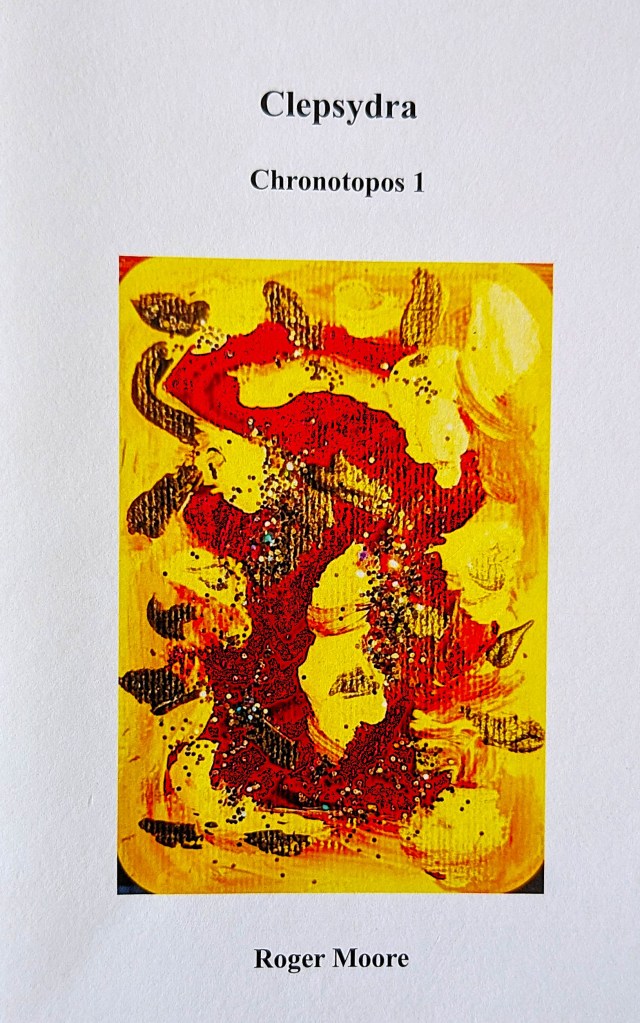
I don’t have a favorite season of the year, nor do I have a favorite Season of the Heart. The book came out today. Hot off the press, it waits to be gifted to my friends and faithful readers.

The heart has multiple seasons, many more than the four with which we endow the earth. The seasons of the heart may occur in any order, for all them may be experienced in a single day. Many will be gifted to us in the brief moments when our modern society allows us the time to meditate and find the inner silence that generates the deepest and most sincere thoughts.

Each heart season – joy, sorrow, remembrance of the past, the dark night of the soul, despair, hope, and there are many more – will recur, some with persistence, others with less frequency.

I enjoy all of them, for different reasons. As Antonio Machado might have written – “In my heart I felt passion’s thorn. When I plucked it out, I was all forlorn for I couldn’t feel my heart at all. Now I’d rather replant that thorn. The pain was better after all.” Remember, wherever there are roses, there are also thorns.