Carved in Stone 56 & 57

Carved in Stone
56

I stand before the Tzompantli,
the Aztec Skull Racks
in the ruins of the Great Temple
in Mexico City,
and gaze in wonder,
at the multiple meanings
of these decorated deaths.

57

At Teotihuacan,
I climb the Sun Pyramid,
with its carved serpent,
slithering sideways,
as the sun moves.

I heave myself upwards,
panting, sweating,
and when I get to the summit,
I sit there, feet over the edge,
and I feel my heart thumping
as I fight to regain my breath.

Now, I feel purified,
cleansed, sweated dry,
as I watch poor mortals
struggle as I did
to take that final step.

I imagine them laid
on the sacrificial stone,
their chests carved open.

Each beating heart,
when extracted,
will cover altar, priest, and sky,
with a fountain of blood,
so hard those hearts
are pounding. Blood seeds
shoot into the sky
to revive the setting sun
as it drowns in its own blood.

Commentary:

Incredible, looking back, those moments in Mexico when I came face to face with a culture, so old, so alien to me, that I had difficulty coming to terms with it. I do not understand human sacrifice. Nor do I understand the mentality of the conquistadores who held the Aztec Emperor’s feet to the fire and burned them to the bone, leaving him alive. And still he would not tell them the secrets of the kingdom.

“The setting sun as it drowns in its own blood.” A nod to Charles Baudelaire, of course, – “Le soleil s’est noyé dans son sang qui se fige.” Wonderful how these images stay with us. Sunrise – and the sun is born in blood – sunset and the sun sets in its own blood. And was it really true that only the blood of humans, drawn through human sacrifice, sometimes voluntary, sometimes not, would keep the sun in the sky?

And there we go – in blood we were born, in blood we will probably die – all hail the power of blood – unless of course / wrth gwrs – it is contaminated. And what will happen to us then?

Carved in Stone 54 & 55

54

On the Night of Sorrows,
the Spanish invaders,
defeated,
fled the city.

Plunder weighed them down –
gold and silver,
images carved from jade,
wealth beyond measure.

The fleeing troops,
floundered, then foundered,
sinking rapidly
in the lake’s dark waters.

55

Cortés retreated to the coast
where he built small boats
and carried them in pieces
back to Tenochtitlán

He assembled them there,
and attacked, by water, the Aztec city
that had only been attacked by land.

Tenochtitlán,
one of the world’s great wonders,
more populous than London or Paris,
destroyed by internal conflict
and an armada of small boats
that outsailed the Aztec
dugout canoes.

What was there, at the end,
but wailing, burning, and death.

Carved in Stone 50

Carved in Stone
50

Here, in the castle of my own home,
I sit and write and patiently wait
for the enemy’s superior forces
to arrive and overwhelm me.

But death is not the enemy.
He is the friend
who has walked beside me
every day, since the day
that I was born.

I know him and I trust him,
though I am unaware
of when he will come to call
and I am ignorant of the shape
he will finally take.

Commentary:

Francisco de Quevedo, the 17th Century Spanish Neo-stoic and Metaphysical poet, wrote “the day I was born I took my first step on the path to death.” And so it is, with all of us. Sometimes we are able to choose our paths, sometimes they are forced upon us, sometimes they appear – with choices – and we make our selection and move on.

There are so many roads to travel. For Antonio Machado (Spain, Generation of 1898) there is no road. There is only a wake upon the sea – “Caminante, no hay camino, solo hay estela sobre el mar.” We must look back, to see where we have come from and where we have been. But there are many other possible paths, beside that of the sea – gravel paths, cobbled ways, log trucking roads in the Canadian Forest, cattle roads, transhumance roads, winding roads, straight Roman roads, roads that run up hill, down hill, or twist and bend following the paths of rivers.

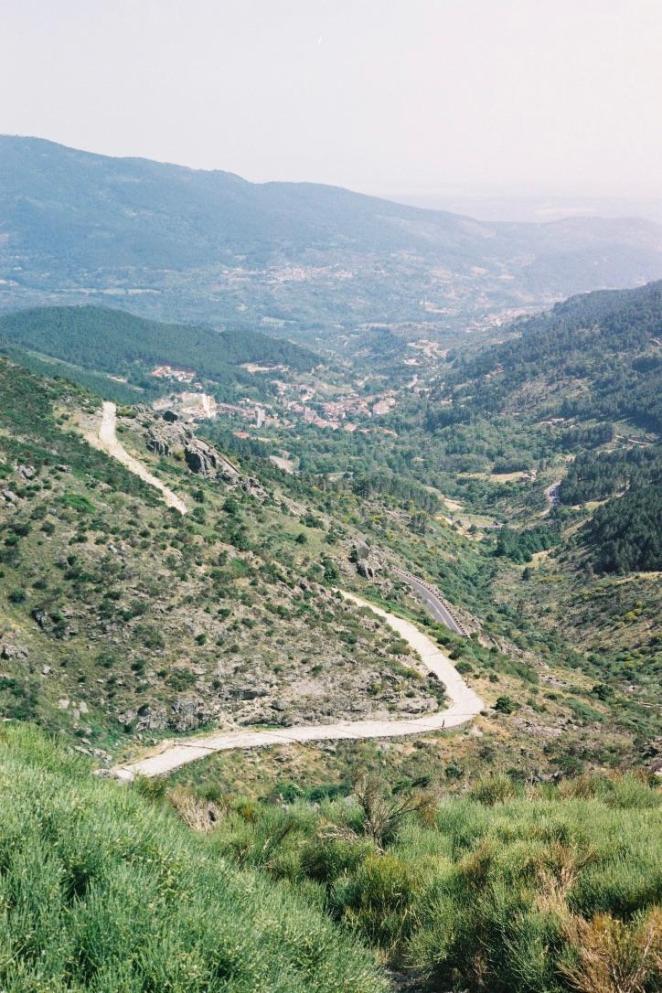
The picture above shows the old Roman Road that leads to the Puerto del Pico, in the province of Avila. It followed the contours of the hill and formed part of the Ruta de la Plata, the road that took Latin American silver from Seville to the Spanish capital in Madrid. Look carefully and you can see the modern highway that runs parallel to the old Roman road. Nowadays, that older road is used for transhumance, the movement of cattle from the valleys in the winter to the hills in the summer. The same road, the same pass, so many different uses, and the road a wake upon the path of so many lives.

Carved in Stone 44

Carved in Stone
44

The old man, withered,
last house on the left,
leaning on his garden wall,
coughing, spitting up
coal dust and blood.

He’s not old, when you get close,
just grown old, underground,
where emphysema
and pneumoconiosis
devour men and boys.

He spits on the side walk.
Mining souvenirs,
Max Boyce calls them,
and they appear
every time the young man,
turned suddenly old,
starts to cough.

He can’t walk far,
wearing carpet slippers,
soft and furry,
just leans on the wall.

He fell, or was pushed,
into the trap at an early age,
when the coal seams
had grown so thin,
that only a small boy
could kneel before
the coal black altar
of the underground god
and, with a pick and shovel,
he learned to carve and shape
the long, slow death
contained in those seams.

Commentary

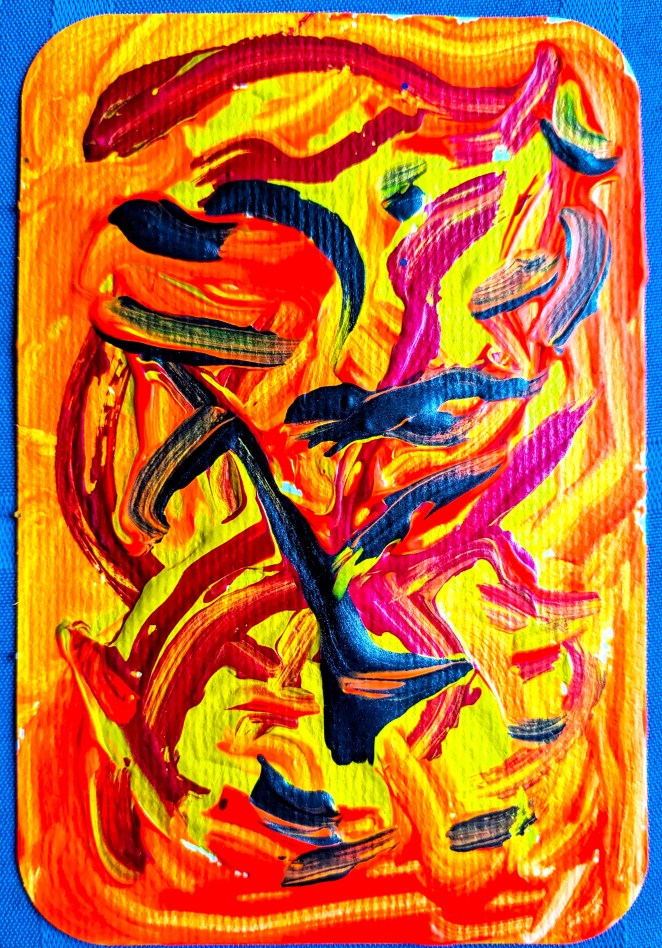
Moo’s painting, Coal Face, adorns the front cover of Carved in Stone, Chronotopos II. Coal Face is not the denigration of Black Face, white men pretending to be black by dyeing their faces, although they have some similarities. In Welsh Mining, the coal face is where the men used to dig when, with their shovel and their pick and their little lamp and wick, they knelt to dig out the coal. Knelt, because there was no standing room, deep down underground. Then, when the seams grew thinner, and the men could no longer reach them, the young boys were sent underground.

A day underground left men and boys with coal dust seamed into their bodies, especially their hands and their faces. Hence the triple meaning of black face – where the coal is dug, what men and boys looked like after a day’s work, and the blackening of their faces by white men, for the fun of it.

Faces are one thing, coal dust in the lungs is another. The result – emphysema and pneumoconiosis devour men and boys. Black lung, some call it. “And every time he coughs, he gets a mining souvenir” – a black spot coughed up on the sidewalk – Max Boyce.

Child labor, minimum wage, living wage, work that kills, slowly and silently, – what can I say? Forgive me, for I can say no more.

Carved in Stone 37

Carved in Stone
37

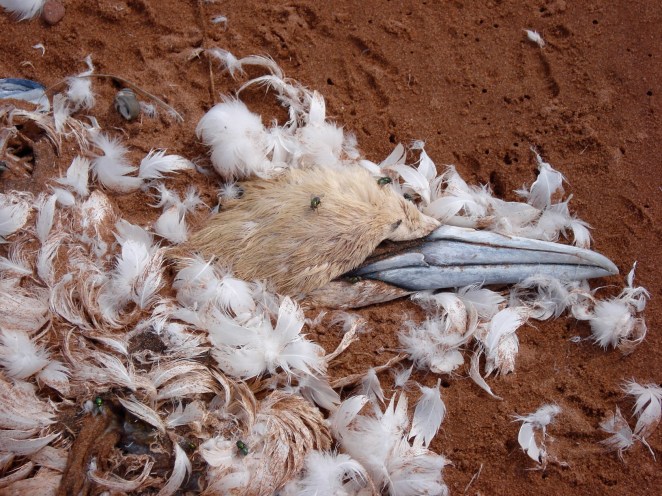
A great blue heron,
half-buried in the sand,
lies, covered in flies.

What words could I carve
in sand beside his grave?

What words would I carve
on mine?
What could anyone say?

I guess I could say
that I was happy,
in spite of the pain,
but would I do it
all again?

Commentary:

I guess I could say that I was happy, in spite of the pain, but would I do it all again? – Good question, and I have no answer to that question. Is life circular? Do we pass on from existence to existence, learning as we go? Some religions think so. Do the participants and believers have a choice? That I do not know.

Would we, like the English cricket team currently in Australia, make the same mistakes again and again, never learning from each dismissal, never learning from the blows given to another’s body or head? All good questions. Or would we learn from each life, each circumstance, slowly ascending a sort of Platonic Ladder until we climbed to the highest level of perfection? Who knows? I most certainly don’t. Nor do I know where the light and the flame go when I blow out the candle.

So many mysteries, as the fate of my little bird was a mystery, as the fate of the fish in the first photo was also a mystery. Albert Camus – meurtriers ou victimes? Are these the only choices that we have, to be the predator or the prey? I most certainly hope not. Libre albedrío – free will in the Calderonian world of the seventeenth century in Spain. But how free are we? What cultural and developmental chains bind us, pull us down, and are we surrounded by our childhood and our culture, and our education, in such a way that we have little or no choice in how we think and what we do?

Answers by air mail, please, and tied to the back of a great blue heron, preferably the one in the upper photo, not in the lower one!

Carved in Stone 21 & 22

21

Goodrich Castle – Civil War tore down
its curtain walls, fired its stables,
drove horses and people mad with fear,
all destroyed, a way of life, gone overnight.

I stand in the ruins of the solarium
beneath towering columns
empty now of the stained-glass
that would have kept out the rain
and retained the sun’s heat.

I imagine standing there,
speckled in sunshine,
coloured diamonds covering me.

22

I stop in the ruined quad
to sniff the air, to imagine the panic,
to smell the crackle of burning,
to hear the high-pitched screams
of dying horses, trapped in the stables.

Sometimes, at night,
fate mans the pumps of my blood,
and sends fire alarms surging
through my veins.

I do not want to die alone,
defenseless, besieged by memories
that gnaw away my remaining days,
like flames.

Commentary:

Memories burn away my remaining days, like flames. Fire controlled, stolen from the gods by Prometheus in Greek Mythology, by Zopilote, the Trickster, in Oaxacan Mythology. I will always recall those early mornings in Oaxaca, standing on the azotea (rooftop) doing my morning exercises in the half light. High above me, Zopilote slowly spiralled. His wings glowed red in the sun that had not yet penetrated to the earth below. As he descended, he brought the sun fire down with him and gifted it to humans.

Fire and flames, under control, in the candle on the table, on the birthday cake, in hearth and fireplace, a life-giving source of heat, light, and energy. Fire and flames, uncontrolled – wild fires in the woods, blazing out of control. It happened last summer. A severe drought, and the woods so dry. A lightning strike – and fire and flame soon raged, out of control. Smoke darkened the skies and the smell of burning hung around for days. So many people evacuated, moving out of their houses with three days, two days, one day’s notice. Sometimes it was so much less. Three hours, two hours, one hour … our community newsletter contained details of what to have ready to cover each of those situations. Very sobering and thought-provoking.

Back now to Goodrich Castle. The occupants trapped inside the walls with no place to go. Horses and livestock trapped in the stables, and those life giving flames now bringing death and misery. “Man hands on misery to man. It deepens like a coastal shelf. Get out as early as you can.” Hands up all of you who recognize the author of those lines, a great English poet who is possibly not as well recognized as he ought to be. I know who he is, but I’ll leave you guessing and googling! Go on, Google him. I know you want to!

Carved in Stone 19 & 20

19

The Spanish Civil War –
one brother pro-Franco, and the other,
imprisoned for a quarter of a century.

They locked him, with two dozen men,
in a deep cell below the convent
of San Marcos de León.

All save him were executed.
He spent our time together
telling me how guilty he felt
because he survived.

20

So many died standing blind-folded
with their backs to unforgiving stone walls,
because they refused to believe
what the enemy told them to believe.

Nobody spoke for them.
Who can speak for those who carry
the candle or board the tumbril,
or see the hooded executioner draw near?

The axe approaches. The gallows draw closer.
The guillotine falls. The single eye of each rifle
stares at the victim’s chest.

Commentary:

I find it hard, very hard, to talk about these two stanzas (19 & 20). I remember two of Goya’s paintings, The Second of May and the Third of May. The Third of May says everything that I cannot say. So, I will just leave you with two paintings to google and one photo of an unforgiving stone wall, with the gateway filled in. Pax amorque – we all need peace and love – I can say that, for we all need it.

Carved in Stone 2

2

How many free thinkers
stumble up the gallows’ steps
or take that short walk,
candle in hand,
to the executioner’s block?

Some take a longer trip,
in a tumbril along French streets
lined with howling,
slogan-chanting citizens,
en route to the guillotine.

Heads, already severed,
welcome them with sightless eyes,
a strange harvest for straw baskets.

Hearken to the swish of stone
against steel as the executioner
sharpens the blade that will swiftly fall,
then rise, only to fall again.

The horse-drawn cart
creaks towards its inevitable end,
filled, standing room only,
with unfortunates trapped
by whatever rising tide
hurled them against the razor rocks
of their imminent mortality.

Commentary:

Flower Pot Rocks along the Fundy Coast. One of the most beautiful spots in New Brunswick, a province with so many other beauty spots. It’s hard to believe that I was standing on the seabed when I took that photo. It’s also hard to believe that the Fundy Tide, one of the highest, if not the highest, in the world, rises to the tree line, at the top of the photo, way above the sand.

If you go to the Fundy, consult the Tide Tables with care. You do not want to get stuck in the Fundy mud. Nor do you want to be one of the unfortunates trapped by whatever rising tide hurls you against the razor rocks of your imminent mortality.

Clepsydra 35 & 36

35
… to save myself
     I must grasp it firmly
          as I would a nettle
               not with my hands
                    but with my teeth

but my hands are tied
     behind my back
a cloth is bound
     over my eyes         
          and I cannot see … 

36

… I struggle and squirm
     until released
          I float ashore
               and stand on the sea wall
                    calling out to the moon
                         begging her not to hide
                              her scarred face


I entreat the ebbing tide
     to carry me with it out to sea
          past the island
               beyond the lighthouse
                    into deep water

waves stronger than any

     thing I have known
          thrust rough fingers
               under my arms
                    lift me up
                         then drag me down

to the depths
     where I can finally rest
          in peace …

Commentary:

Mors omnia solvit – death solves everything. But does it? What about the crossword, the jigsaw puzzle, the unsolved ? What about the problem of life itself? What is it? How does it function? And what is that poor bird doing lying on its PEI beach half-covered in sand? What problems did he have solved?

” my hands are tied behind my back, a cloth is bound over my eyes and I cannot see” …  so how can I tell where I am going and why I am going there? Simple questions – yet there are no answers, none that are given to me anyway. And who am I to reason why? Is my detiny, as always, to just do and die?

I do not know. The bird on the beach does not know. The ebbing tide doesn’t know, or care what it carries out with it. And what are we anyway? Why do we search for meaning in the meaningless? For answers in the absurd? And why does Sisyphus roll his rock up the hill, release it, then walk back down, pick it up and carry it up again? And why must we imagine that Sisyphus is happy? Our daily work – ce boureau sans merci – why should we be thankful for it?  Because there is nothing else? Because otherwise we would be abandoned? Or just because?

Oh, ho-ho-ho-ho, tell me if you know, who the… where the … why …. the what for … where did that one go? Even poor old Alf and dear old ‘Erbet, somewhere on the Somme, didn’t know the answer to that one. And they had their little dugout made a mess of by a bomb. Well, at least they found another hole, but when that other shell went over, it left them still wondering! And don’t we all?

Memories

Memories

All that remains of you: memories
and these swift-flowing rivers of blood
embodied within my flesh and skin.

A lifeless kite, each word I write,
too heavy to rise. Each sentence,
a wasted movement of lips and tongue.

And you, a black and white snap-shot,
of blooded washing hanging on the barbed
wire fence we grew each day between us.

Today, sunlight streams through stained
glass windows of the house you no longer
inhabit. Dust rises from artificial flowers.

Your poinsettia’s dry silk leaves, now mine,
brush a taut, barren kiss against my face.
I dream of the drowned lying cold on a beach.

Fresh memories pound through my head.
Waves on a rocky shoreline. Each word
a grating grind of shingle and sharp stones.

Commentary:

Moo calls it going Bodmin but the idea comes from Doc Martin and Porthwen. People lose their minds, their directions, and end up ‘going Bodmin’. This means they wander about, lost, on the Bodwin Moor and can’t find their way home. As we age, it happens to many of us. Not only do we go Bodmin, but our memories betray us. Sometimes we remember what we did as children, but forget what we did a few moments ago.

WWI – my grandfather told me all about it. “We’ll hang out our washing on the Siegfried Line, have you any dirty washing mother dear?” Or worse, “If you want to find the Sargent, I know where he is, he’s hanging on the old barbed wire.” Unbroken wire, covered by enemy machine guns, we who die like cattle – such bitter memories. And the French, walking to the front, baaing like lambs being led to the slaughter, decimated, one in ten (10%) being shot for cowardice or insubordination. “If you want the whole battalion, I know where they are, they’re hanging on the old barbed wire.”

And now you must think of the barriers, the fences, that we grow between us, day after day, as we grow old, and older. Artificial flowers, houses we no longer inhabit, dust motes floating in the air through rooms well-remembered, but no longer open to us. “Each word, each memory, a grating grind of shingle and sharp stones.”

Look at them, those lost people, those forgotten faces. You may even recognize one or two of them. Listen – well-remembered voices, bugles calling from sad shires, and every night, a drawing down of blinds.