Carved in Stone 35

Carved in Stone

35

My eyes draw sound
out of the white space
of silence.

Silent the pen,
gliding smooth,
over unlined paper,
a skater leaving marks
on fresh ice.

Each mark is a signifier,
or a series of signifiers
constituting a signified,
a message engraved
in the reader’s mind.

Commentary:

Each mark is a signifier, part of a series of signifiers constituting a signified, a message written on paper, then engraved in the reader’s mind. But, of course, the message has to be read, and the reader has to be diligent enough to burrow into the meaning of the message. And what is the meaning of meaning? Ah, we have been down that rabbit hole before and Alice has been through the looking glass, and we have seen ourselves in our daily mirrors, slowly fading as the years go by.

A skater leaving marks on fresh ice or a stone cast into a pond, with multiple meanings, multiple ripples moving slowly outwards, to end up where? Who knows? Not me. I only know that the thrown stone, like the spoken word, can never be recalled. And there’s a 2,000 year history behind those words. Each word a stone, and each stone leaving its mark on many people of many cultures and multiple languages, though English is the language in which I now write.

Frost and snow here this morning. Not much, just a dusting. I looked out of the window at the crows’ prints on the white surface of the garden. My eyes drew silence out of the white space with its runic language written by the crows.

The meaning of meaning – tell me, if you can, what did they say? What did they want from me? What did they mean?
Carved in Stone 32

Carved in Stone
32

I dream of winter snow
snaking its whispering way
down the highway.

Waves draw lacy curtains
across the beach.

Sandpipers wade, pecking,
probing at tide’s foaming edge,
strange writings their footprints,
punctuation,
the holes they leave
drilled in the sand.

Evening now, and a low light
casts its magic on the forest,
gilding the trees.
Dry leaves rustle.

A shadow flickers
at the edge of my eye,
my childhood –
a sea bird soaring.

Commentary:

So inadequate, the word world I create. Sound – winter snow snaking its whispering way down the highway / dry eaves rustling. Absence of sound – waves draw lacy curtains across the beach / sandpipers, with their shrill voices and constant whistling’ / the gentle hiss and buddle where the sandpipers sew their holes.

What about the other senses? I miss the sense of smell, the odors borne on the wind, the different aromas that arises from dry and wet sand, the pong that wet sea weed exudes, the perfumes of sea side grass and wild flowers … And what about touch – the sandpaper scraper of dry sand between the toes, the feel of those lacy curtains as, jeans rolled up, you paddle along the shoreline, the feel of the wind on your face when sea birds soar … and who can ever forget the salt taste of the sea upon their lips?

The Catch 22 of all writers – how much can we include? How much can we suggest? How much must we let slip by? Culture – how can we describe the sea to someone who has never seen the sea? I can ask the questions – but I must leave you to work out the answers for yourself. So inadequate, the word world I create.

Two New Poems

Two New Poems

1

My Words

My words are black print
on white paper.
My memories flare
 – an aurora borealis of senses
sent crackling down the spine,
in and out of the mind,
tumbling the brain into a world
 … what sort of world?

An unimaginable world.
One never forgotten.
One never re-recreated.
One that never existed.
One that never could exist.
One for which the young child,
six or seven years old,
yearns for the rest of his life.
His unsatisfied life.
His unsatisfying life.
His meaningless life.
His absurd life.

2

Puppy

Oh, pity the poor puppy,
not knowing
 what he has done wrong,
not knowing
how to put things right,
always inadequate,
always in fear
of the angry word,
the quick, sly kick,
the vicious blow,
whining and cringing
at his master’s feet.

“Into your box!”

And always,
that cold puppy bed,
often soiled,
 where the long, chill snakes
of frail, wriggling dreams,
remind him of
the next day’s
punishment.

Commentary:

Both these poems evolved from the comments I made yesterday to my blog post. I have started noticing that those words, beneath the poems, sometimes have a rhythm and a magic all to themselves. I guess it is a little bit of the unconscious slipping upwards and spilling out.

Discovered poems – I never set out to write these two poems. When I re-read my commentary, I thought ‘wow, there’s a poem in there”, and I found not one, but two new poems. Interesting. As I age, I discover something new every day. What a wonderful world it is, unless, like earlier this week, I discover my tap leaking and am forced to call my friend, the plumber, into my water world. Alas, if only that tap were tapped into a maple tree and it weas spring once more. Ah well, I am a dreamer, I can always dream.

Carved in Stone 27

The philosopher in search of his stone.

Carved in Stone

27

Miguel de Cervantes –
I read and re-read his words,
envious of his ability to reach out
with language that thrills me still.

I see him as a total entity,
while I see myself in pieces,
broken, unable to express
the simplest thoughts.

As I age, I sense the water
slipping from the water-clock,
the candles burning lower.

I still cannot make the mark
I want to make, for they are beyond me,
those marvelous word-worlds.

My words are mortal, his are immortal.
Mine just ink stains on a humble page,
his cast in print, but crafted to last forever.

As I bear witness to those powers,
so much greater than mine,
my eyes fill with tears.

Commentary:

They are beyond me, those marvelous word-worlds. Indeed they are. But I do not seek to create ‘a marvelous word-world’. I am happy with ‘ink stains on a humble page’. I seek to reach out and find those one or two people who accept me for what I am and find their own selves in a small corner of the tiny gardens I discover or create. Not a world, then, but a tiny corner of my own world, described, and offered to those who have eyes to see and ears to hear and hearts and minds to feel and understand.

And what is this infatuation with the poem itself? I no longer write individual poems, I write sequences of linked poems, a set of poetic narratives, if you need to find a label for what I am trying to do. Cervantes once wrote “La épica también puede escribirse en prosa.” / Epic poetry can also be written in prose. What happens if we reverse that statement and say – “A narrative sequence can also be written in poetry.” Interesting, eh?

And what is this desire to leave something, some trace of us, behind? I cannot answer that question. The answer will vary for each one of us, and for each fall wall flower perishing against the garden wall. I look at the homeless, pushing their grocery carts, head down. Their existence is as important as mine. Their desire to survive, for another day, another week, another season – and winter is coming one – is more powerful than any poet’s desire to leave a work – a magnum opus – to celebrate their lives.

And yes, my words are mortal, as I am mortal, as Miguel de Cervantes and all the great writers were mortal. Patrick Lane once told me that if poets leave one poem behind them that is remembered, they have done well. Even the greatest poets, and you can check this in the anthologies over the ages, rarely leave more than ten or a dozen memorable poems. As for me, I am happy to say that I have never had a poem included in an anthology. Not to my knowledge anyway.

And what does Magnum Opus actually mean? I leave you with the quote from Wikipedia set out above. Click on it, and find yet another way to distract, deflect, and change the direction of our lives! Given that road, who would ever want to walk it to its end?

Carved in Stone 23 & 24

Carved in Stone

23

It isn’t true that art
lives longer than life,
for all too often art and artist
are destroyed together.

Words, all words,
and words emerge
from the silence of blood,
bone, and stone, breaking
that silence the day they are born,
and the word once spoken
cannot be recalled.

24

Here, among the ruins of my life,
I have learned how to be alone,
how to sink into silence,
how to smother at birth
that world of words,
and that world, still-born,
becomes a lost world
whirled on the silent wind that fans
the unborn fires within.

I sit here
brushed by a tadpole’s solitude
as it swims through the sultry silence
of blood, bone, and stone,
into its own metamorphosis.

The wind that blows unspoken words
tugs at the spider web of my mind
twisting and untwisting
its frayed, fragmented ends.

Commentary:

The fragility of life. The single puff that turns the dandelion into a dandelion clock. The multiple puffs that dowse the candles on the birthday cake. And then, one day, there are no more candles, no more cakes, just the heart ache of multiple absences, family and friends all gone and each of us alone with our individual loneliness.

That’s when we finally turn in and seek the inner roads that lead us to ourselves. The selves that were, the selves that are, the selves that always will be. Crack the walnut – inside is the map of a brain – your brain? If it is you will have found yourself in this labyrinth. But if it is the brain of another, you must not give up, you must seek yourself, walnut after walnut.

And when you go to the library, you must check book after book, because one day, if you are lucky, you will find the book of your life and it will tell you who you were, what you are, and what you will always be.

Carved in Stone 18

18

Day-dreams, cloud castles,
châteaux en Espagne.

I climb the castle tower
in Segovia, and watch
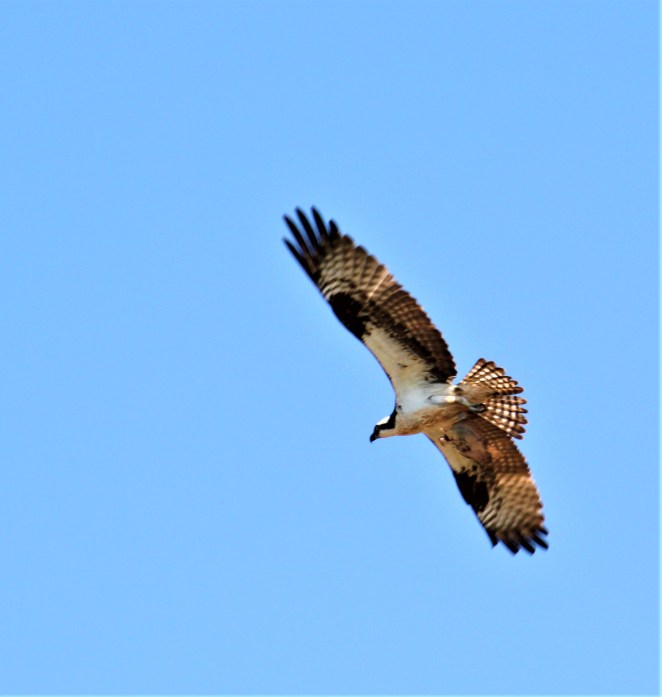
Golden Eagles flying
in the air below me.

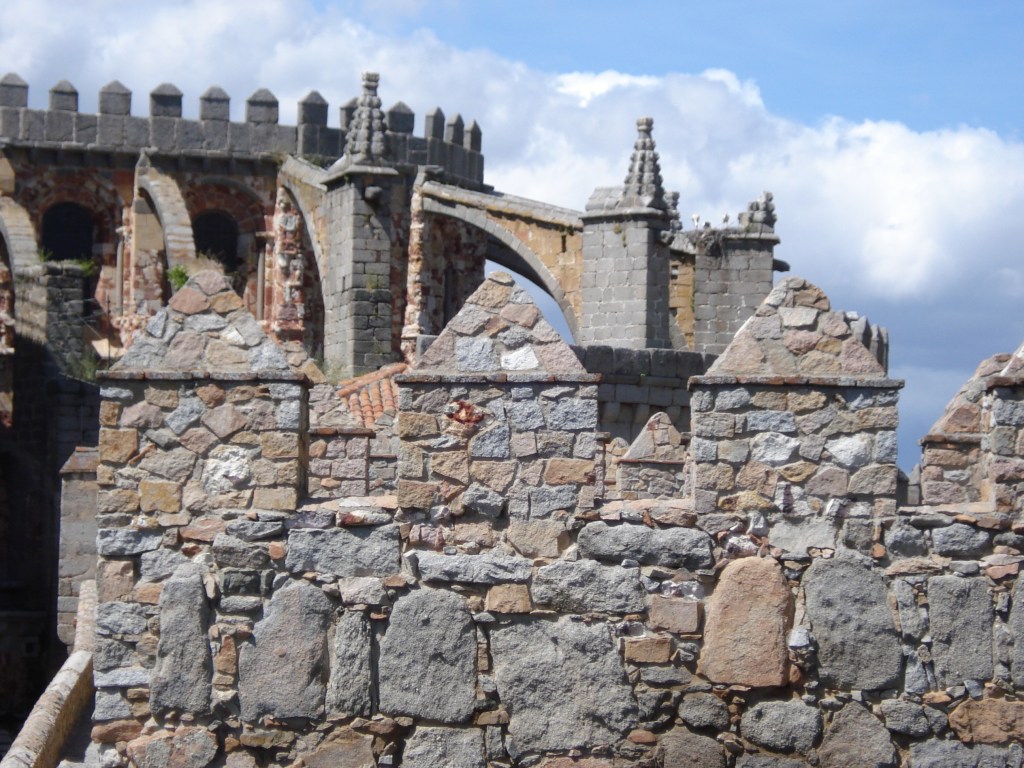
I walk the walls in Avila,
feel the stonework, warm in the sun,
and sense the passing of time
as it slowly gathers,
like clouds in the air
when they foretell a storm.

I trace masonic signatures
on the cathedral’s central façade,
and marvel at the master carvers,
who shaped the statues.


They also created angels
and the praying pay-masters
condemned to kneel there,
seeking forgiveness for their sins,
as flickering candles mark time.

Commentary:

Avila: 3.8 kilometres of walls. 9 entrances. Inside the walls, the old city. I lived for three summers in El Rincon, a Hostal in the city centre just outside the Mercado Chico. I still dream of walking those city streets, visiting the bars each with its different customs and tapas. And I remember the tapas, each bar specializing in something different. The Rincon, a marisqueria, and I learned so much abut sea-food, its transportation, the ways of preparing and cooking it.

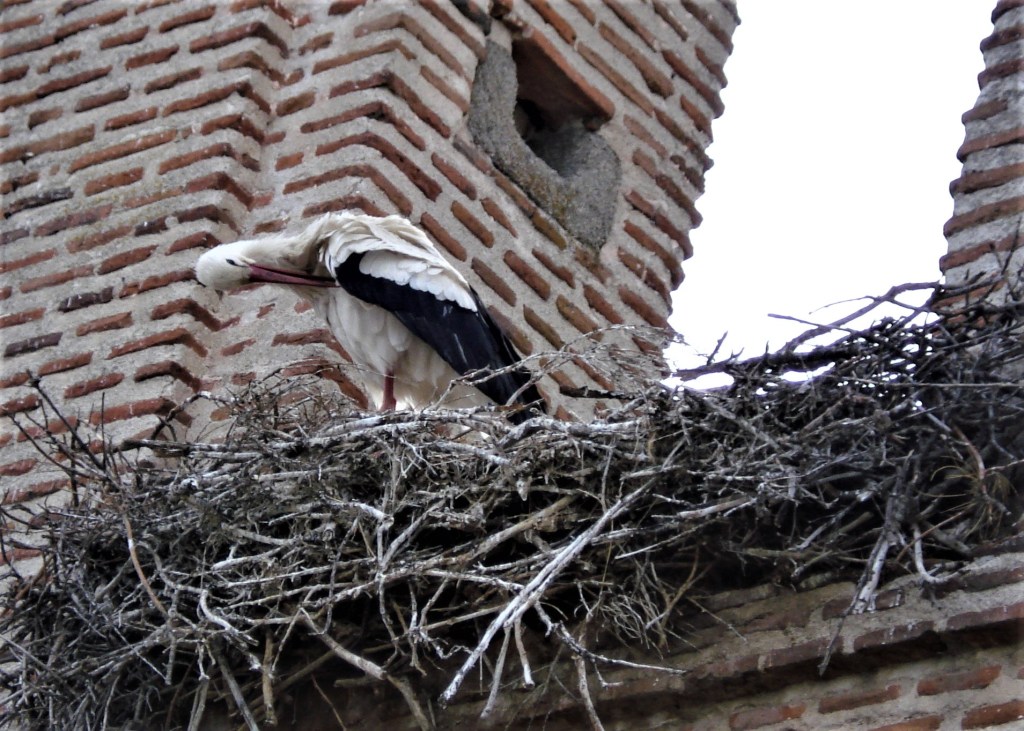
And while in Segovia, you look down at the Golden Eagles, in Avila, an eternity of storks looks down at you. I remember my friend, standing at the door of the Hostal and calling the storks, as they returned from a day in the fields, by the names of the churches in whose towers they built their nests.

I never thought those days would end, but end they did. As all things do. Now I must take a delight in the memories as they walk before me and call me by my name.

On Writing Poetry

On Writing Poetry

I sit here writing poetry
and, head in hands, I cry
at all the things I’ve left unsaid,
and then I wonder why
I wasted so much time on things
that perished before my eye.

Outside the night is dark and cold
and shadows flit and filter by.
I know that I am growing old,
that soon my story will be told,
and when it ends, I’ll die.

I know that death is not the end,
yet I do not want to die.
I want to paint the autumn trees,
the clouds that float on high,
with evening lights that stain the sky.

But rhyming is not all I do.
I often write in prose, with words
that wound, and sow dark seeds,
that root and flourish, grow like weeds,
and nourish other people’s needs.

Alas, I know not what I do,
nor yet what I have done,
nor when, nor where, the seeds
were sown, nor if they aided anyone
to turn away from the dark inside
and walk in the light of the sun.

Commentary:

A Golden Oldie that turned up on my Facebook page. So I copied it and pasted it here. What fun. I’ll probably revise it and sharpen it up a little bit. All best wishes to all my readers.

And remember, Remembrance Day is for Remembering. Both my grandfathers served in WWI and were decorated. Never forget those who sacrificed themselves to give us life and freedoms we enjoy.

Carved in Stone 16 & 17

16

The Bulls of Guisando,
pre-historic, unweighable,
the bearers of Roman graffiti,
itself two thousand years old.

Were they carved as boundary markers,
or designed to designate pastures,
for horses, pigs, sheep, and bulls,
all grazing in their stone dreams?

Celtic, pre-Roman,
they speak to my Welsh blood,
and to the Irish soul
that will always be a part of me.

I place my hand
on the dimpled granite hide
and feel time coursing
beneath the stone skin.

Granite ships,
islands in a sea of time,
I sense a heart beating,
something surviving
within the stone.

17

We are powerful people,
we creative artists,
we carvers of stone,
we dreamers,
whether we dream
by day or by night.

Those of us
who dream by day,
often see our day-dreams
come true.

Commentary:

“Those of us who dream by day, often see our day-dreams come true.” Lawrence of Arabia – The Seven Pillars of Wisdom. You recognized the quote of course, wrth gwrs. Intertextuality, the weaving of words through text after text in different combinations according to our time and space. Some of us think we are original, but there are only so many plots to a play, 24 or so, if I remember my Aristotle correctly, and I have changed the number, just to test you. Oh ye of too much faith!

We think we are original, but, as Picasso said, the painters of the cave paintings, all those many years ago, created everything we artists could ever dream of. We all borrow in one way or another and originality is merely a disguised form of borrowing. The faces change, the actors change, the medium changes, the times change, but otherwise, everything else is the same. Sad, really, that we should claim originality (and fresh water) for all that water that has passed under so many bridges.

Welsh blood and Irish soul – not even original, but shared by so many in my family. Add an English education, studies and residence in Spain, France, Mexico, Canada, and the USA, and what do you have? An intellectual mongrel, that does not know its own mother, like so many other mongrels, and that shakes its coat only to shed so many multi-cultural and multi-lingual fleas.

And remember – “Great fleas have lesser fleas upon their backs to bit them, and lesser fleas have smaller fleas, and so ad infinitum.” Intertextuality – they were only playing leap-frog and one jumped over and another jumped over someone else’s back.

Growing Old Together

Growing Old Together

You and I are growing old together.
We have been together for 59 years
and married for 54 of those.

We watch each other slowly breaking down,
the memories going,
the body parts not functioning
the way they used to.

In some ways,
it is incredibly beautiful.
In other ways,
it is so tragic, this slow waltz
around life’s dance-floor
towards who knows what
that last dance will bring?

It gets harder and harder
to find the right things to say,
sometimes to find anything to say.

There are days
when we just sit in silence,
filling in time,
doing a crossword or a sudoku,
or just gazing into space,
trying to avoid
the mindlessness
of endless adverts
on the television.

Commentary:

Not much to say, really. The poem and the photo speak for themselves, as good art always should. Sometimes the artist plans everything, and out it pops, all ready-made. On other occasions, a small miracle takes place and words and images tumble out, fluff their feathers, settle down and wow! – it’s a work of art. As long as one other person, other than me, thinks so, then I will be happy. “If I can reach out and touch just one person.”

I often wonder how many people are touched by traditional art nowadays. There is so much shock and awe out there, that the humble homely corner with its two doves or the image of an elderly couple dancing slowly around their kitchen, hanging onto each other – for what? And both of them waiting – for what, exactly? I expect it varies with each couple. But what I pity most are the lone doves, abandoned, autonomous, living on their own-some with nobody to talk to and only the TV to listen to. How many of them are out there, I wonder? When I walk around town, I see the street people, the homeless, the really lonely ones, just sitting, or slowly pushing a grocery cart with all their belongings tied up in plastic bags. Heads down, they plod on, never stopping, never looking.

“A sad life this, if full of care, we have no time to stop and stare.” W. H. Davies.

Carved in Stone 14 & 15

14


The sun throws shadows
across the cathedral’s face.

Crosses, arrows, stars,
masonic symbols
hammer-and-chiseled
into the granite sea-cliff
of the entrance way,
reveal the signatures
of the master masons
who laboured here.

And not just here,
for they traveled everywhere,
adding their stone signatures
to those of the other workmen
who left a piece of themselves,
carved in stone.

15

In the cathedral
of Santiago de Compostela,
Maese Pedro sculpted
a statue of himself,
a figurine, small,
low down, facing the main altar.

Students rub noses with him
before their exams,
when they look for luck
having forsaken their studies.

Illiterate people
consult these carvings
in the same way the educated
seek knowledge in their books.

16

The Bulls of Guisando,
pre-historic, unweighable,
the bearers of Roman graffiti,
itself two thousand years old.

Commentary:

workmen who left a piece of themselves, carved in stone … I couldn’t find my masonic markings from the cathedral in Avila, so I added the words carved into one of the Bulls of Guisando instead. Amazing how people want to make a little bit of themselves eternal – in the sense that we extend our names, our graffiti, our messages beyond our lifetime and, stones thrown into a pond, who knows how long the ripples from those tiny word-waves will endure?

So, what’s it all about, Alfie? And which Alfie are we referring to, the one who burnt the cakes or the (in)-famous gorilla in Bristol Zoo, who went missing? And how many Alfies are there out there? And why buy an Alfie-Romeo when you can buy a neat tombstone for a much smaller sum of money and have it remind people of you long after you have gone?

Silly questions, really, but this is what poetry is for, to open up the curious mind and to dig warrens for bunny rabbits so that the hunters of curiosities can dig their ways down and find whatever they shall find. But do we ever find what we are looking for when we first start out? Good question. Carve your answers into a piece of rock and leave it by the roadside to see what happens to it. Or else, you can write a message, stick it in a bottle, and send it out to sea to float on the waves. Put my name on it, along with yours, and maybe, one day, it will arrive at my doorstep in Island View and, if I am still here, I will reply to you by the same method.