Time Flies

Time Flies

… bends like a boomerang,
flies too rapidly away,
limps back to the hand.

Endless this shuffle of unmarked
days dropping off the calendar.

Hands stop on the clock.
The pendulum swings:
time and tide stand still,
do not move.

The print in my grandma’s house:
seemingly moving seas,
sails swelled out,
the ship stays firm in its frame.

‘As idle as a painted ship
upon a painted ocean.’

Our garden fills
with brightly colored birds
and red and grey squirrels.

Light and dark
switch back and forth
each day
a twin of the day before.

The TV screen hangs out
the daily washing.
Tired, worn out shadow,
their faces boring us
with shallow wit
and hand-me-down wisdom.

Time:
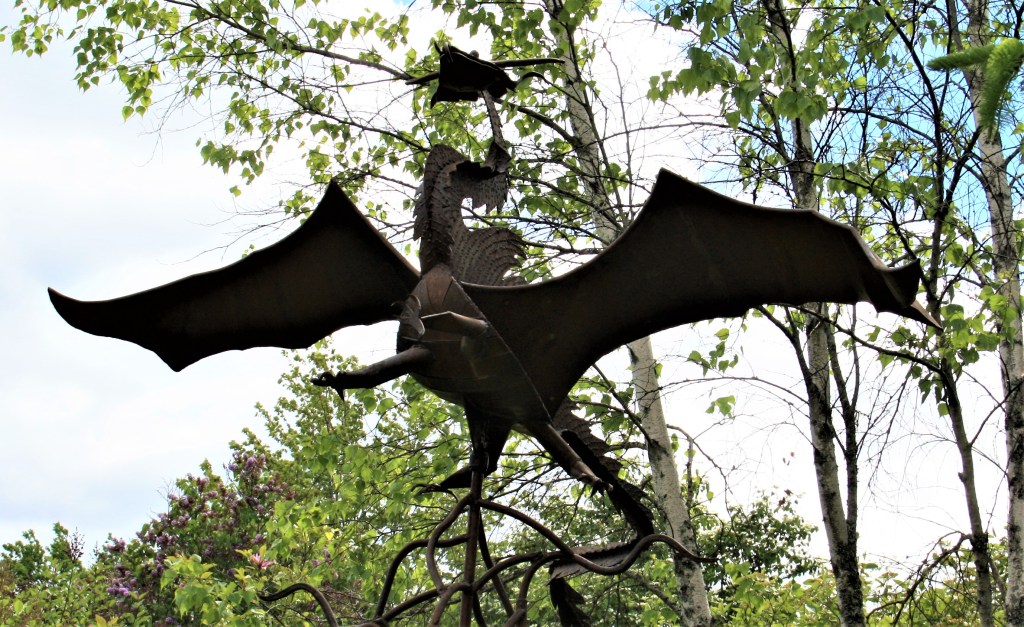
an albatross around the neck,
an emu, an ostrich, a dodo,
an overweight bumble bee,
too clumsy, too heavy to fly.

“Time flies?”
“You can’t.
They fly too fast.”

Commentary:

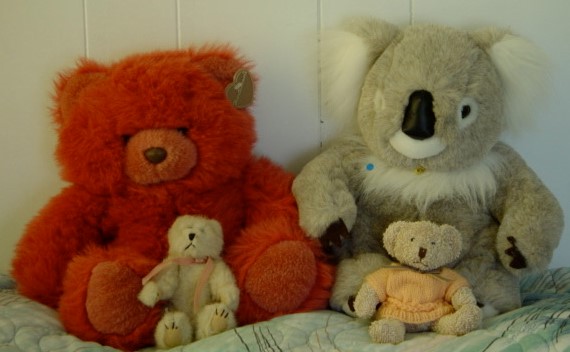
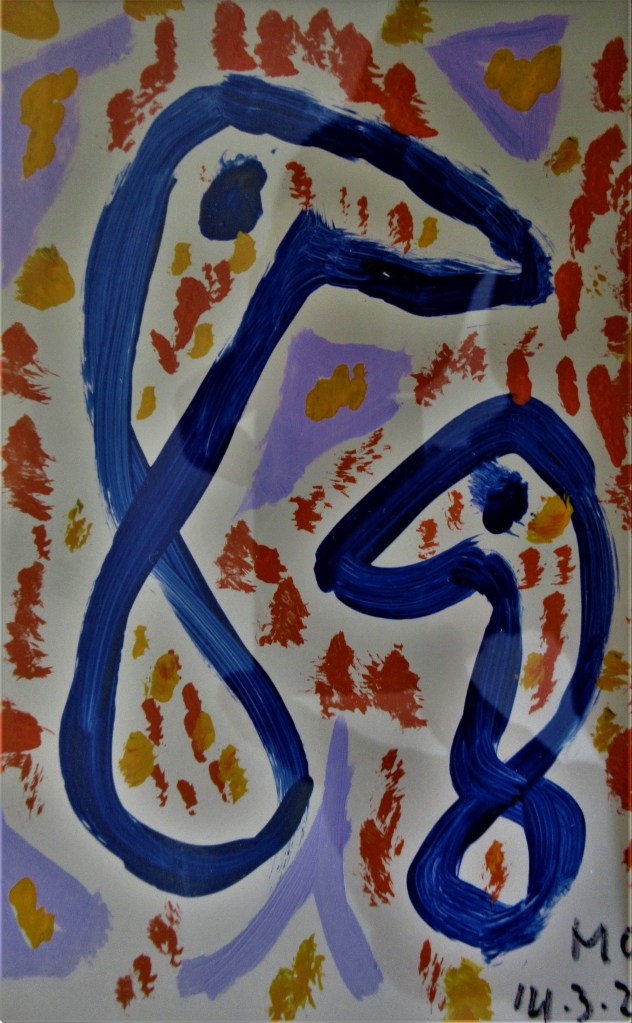
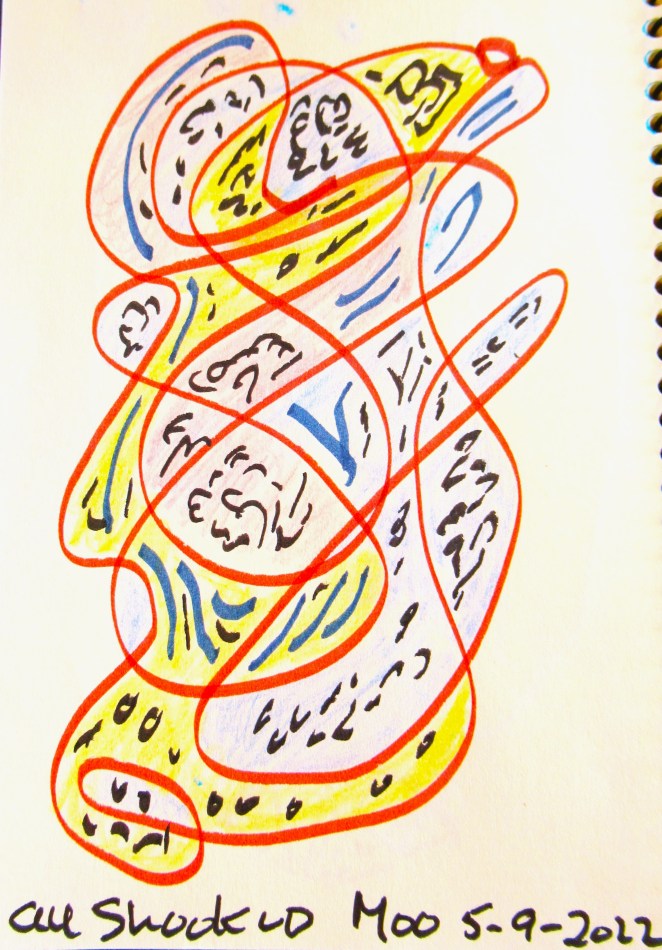
My friend Moo told me he was ‘all shook up’ when I read him this poem. I don’t think Moo’s too smart. He thought All Shook Up was written by the Rolling Stones when they went out moss gathering during the Fredericton Harvest Festival, but I said no, it was definitely written by Buddy Holly on an off-day when he was playing cricket. It wasn’t okay in those days to play croquet.

The last three lines come from an examination question in the General Paper, “S” Level, as it used to be. “Punctuate this sentence – time flies you can’t they fly too fast” – of course, they should have said, “in exactly the same way we want you to. Corrections and alternative versions will not be accepted.” What did they think I was? A mind-reader? I wasn’t. I was a teenager having a field day in the national examinations. I would love to have been a fly on the wall when they marked my paper.

In the biology exam, they gave each one of us a Brussel Sprout and asked us to draw it and tell us as much as we could about it. Of course, I ate mine, and I said it tasted a little bit dry and needed some salt. Then I drew a mess of potage, all yellow and green with chewed up squiggles, and added “That’s what the sprout probably looks like right now.” I failed that exam too. Didn’t even get a part mark for ingenuity, though the science teacher said I could have a glow of satisfaction. Very useful after lights out in a boarding school, I can tell you.

I can’t remember if Moo went to that school with me or not. I don’t think he did. I think he drifted into my life a little bit later. He wasn’t a painter at that stage, just a half-starved philosopher doomed to live in a garret. Of course, once he started painting houses, he made money. It’s amazing how many people will pay you for painting their houses. Of course, that was before they invented plastic siding.

About now you realize that I live in a strange world all of my own and a lot of people live in it with me. You, too, if you enjoyed reading this. Long may the ‘strange world of me, you, and Moo’ continue. I’d send you a penny for your thoughts, but they have gone out of circulation. I can’t even sing you a song of sixpence these days either. Silver sixpences have walked the dodo path too.
This Vessel in which I Sail

This Vessel in which I Sail

Trapped in this fragile vessel, with the pandemic
a passenger waiting to board, I drift from port to port,
looking for a haven, safe, to have and to hold me.

No harbour will let me dock. “No room at this inn,”
they say. “No haven here.” They wave me away.

Now I have no destination. Aimless, I float and every
where I go the message is: “No vacancy: no room at all.”

Unwanted, abandoned, I wander with wind and waves,
my only friends seals, porpoises, and whales.
I walk the whale road, leaving a frail, white wake behind.

This vessel has become a gulag now, a prison
camp where I exist just to survive. Each hour of each day
endless, boundless, like this shadowy, haunted sea.

Today there is no motion, no goal. What is there to achieve
but survival? Each day’s journey is sufficient unto itself.

Commentary:

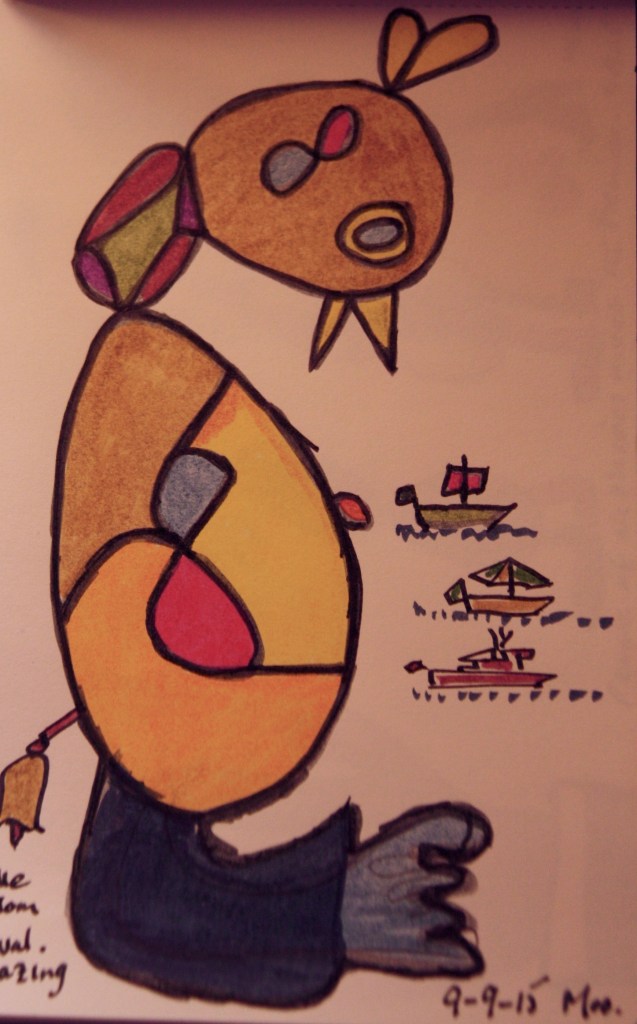
Moo’s cartoon, Naval Gazing, dates from 2015. That year I spent eight weeks in Moncton at the Georges Dumont, gazing at my navel while waiting for my anti-cancer radiation treatment. Naval gazing / navel gazing, indeed. Good one, guys. You make a great pairing.

The poem dates from 2020 when Covid stalked the streets and we wore masks when we were not confined to our houses. I thought of the tour ships, wandering the seas, with the disease on board, and no port wanting them. It was a strange time.

Golden Oldies, then, both poem and painting. There are signs, small at present, but still visible, that such days are on their way back. We must each ask the question – What is there to achieve but survival? Hopefully we will come up with a similar answer – Each day’s journey is sufficient unto itself. Journey well and journey safely, my friends.

Flight

Flight

Such a miracle: those first steps to flight
taken by the cormorant over water.
That first one heavy, creating ripples,
the second one lighter, and the third one
scarcely touching the water.

The need to take flight lies deep within me.
Fleeing from what? Flying towards what?
Who knows? All I know is that the future
lies ahead where my bird’s beak points and
the past, a rippling wake, lies behind me.

That white water, trailing its kite’s tail,
tells me where I have been. Machado’s
voice calls out from the past: “Traveler,
there is no road, just a wake across life’s sea.”

Comment: The photo is a golden oldie, one of the first I ever posted on this blog. The poem is part old, part new. In reality, it is a revision, completed today, of the earlier poem associated with that old blog post. It is interesting to compare the two visions – with those seven extra years of creative experience between them. Let me know what you think!

A special thank you to my long-time friend, Dale Estey, for commenting and suggesting an improvement for the fourth line. Spot if if you can!

On Being Welsh – Dydd Dewi Sant

On Being WelshDydd Dewi Sant

On being Welsh
in a land ruled by the English

 I am the all-seeing eyes at the tip of Worm’s Head.
I am the teeth of the rocks at Rhossili.

I am the blackness in Pwll Ddu pool
when the sea-swells suck the stranger
in and out, sanding his bones.

Song pulled taut from a dark Welsh lung,
I am the memories of Silure and beast
mingled in a Gower Cave.

Tamer of aurox, hunter of deer, caretaker of coracle,
fisher of salmon on the Abertawe tide,
I am the weaver of rhinoceros wool.

I am the minority, persecuted for my faith,
for my language, for my sex,
for the coal-dark of my thoughts.

I am the bard whose harp, strung like a bow,
will sing your death with music of arrows
from the wet Welsh woods.

I am the barb that sticks in your throat
from the dark worded ambush of my song.

On Being Welsh – short stories – Amazon and Cyberwit

On Being Welsh – poems included in my selected poems (1979-2009)

Cherry always listened to my readings

Click here to here Roger’s reading on Anchor
– On Being Welsh

A book is a book is a book

A book is a book is a book

“If one cannot enjoy reading a book over and over again, there is no use in reading it at all.” Oscar Wilde

A good friend of mine once told me that her creative writing writing prof in the MFA program told the class: “We are not writers. We are re-writers.” Our mission in life, then, is not just to rewrite, but to think and to revise. The art of writing lies in analysis, research, thought, and thinking carefully about (a) what we are about to write and (b) what we have just written. As a great Spanish writer once said “I write as I speak and when writing I count my syllables.”

So can the same principle be applied to reading? In my undergraduate poetry courses, one of my wiser profs announced that “It is better to read one poem a hundred times, than a hundred poems once.” Is re-reading better than reading? Good question. But it is what I call a swimming pool question: it has shallow ends and deep ends. Joke – it depends, you see, upon the quality of the material one is reading. For example, does a single reading of the Bible suffice? I read it through, page by page, when I was twelve years old. Was that it? No, I still return to it – the good book – from time to time, selecting, remembering, checking, looking for comfort, advice, or sometimes, pure joy in the sound of the language – King James version, of course.

What other books have I read and re-read? Lazarillo de Tormes, Don Quixote, The Hobbit, The Lord of the Rings, The first book in the Harry Potter series – it reminded me of elements of my own childhood, especially the cupboard under the stairs. Been there, done that, got the tee shirt. The Wind in the Willows, Gongora’s Polifemo, Quevedo’s Metaphysical Poems and his Cycle to Lisi. Octavio Paz’s Sunstone / Piedra de Sol, Lorca’s Romancero Gitano, his Poet in New York, and his plays. Platero y yo. Charlotte’s Web. Several of Shakespeare’s plays, including McBeth, Henry V, King Lear, and a couple more. Rudyard Kipling’s Kim and Stalky and Co. Mary Gentle’s Golden Witchbreed. Robert Bly’s Morning Poems, Iron John, The Sibling Society. Unamuno’s The Tragic Sense of Life and his Niebla. Enough, no more. It is not as sweet now as it was before. And there are so many more to which I have returned, again and again.

So, think about all the time wasted on trivial books, books that remained unfinished, books that have never been opened. One person’s vegetarian or vegan’s fare is a carnivore’s poison [sick]. Sometimes a book mirrors our thoughts. Sometimes it challenges us to rethink our lives and our philosophies. Sometimes it comforts us or takes us back into our childhood. And sometimes it just bores us and we cannot finish it.

A rose is a rose is a rose. A book is a book is a book. Or is it? We are not readers – we are re-readers. And if we aren’t, we ought to be. Think about that. Carefully.

To be a writer (Revised)

To be a writer
revised version

To be a writer ….

Those who would true valor see,
let them come hither.
One here will constant be,
through foul or fair weather.
There’s no discouragement
will make her once relent
her first avowed intent,
to be a writer.

Those who beset her round
with dismal stories,
do but themselves confound:
her strength the more is.
No blank page can her fright,
she’ll with a sentence fight,
and she will have a right,
to be a writer.

Rejections nor false friends
can daunt her spirit.
She knows she at the end
will a book inherit.
So critics fly away,
she’ll fear not what they say,
she’ll labor night and day
to be a writer.

Click here for Roger’s reading on Anchor.
To be a writer

revised version

Comment: I first wrote this poem in January 2021. It is, of course, a rewriting of John Bunyan’s hymn / poem, To be a pilgrim from Pilgrim’s Progress. In the original version, I kept the male pronouns. However, after collaborating as the only male participant in [Quick Brown Fox] Brian Henry’s Advanced Writing Group of 13 fantastic women writers, I realized that the female pronoun was, in so many cases, the most appropriate one. I therefore made the necessary adjustments. You can find the old poem at this link – personally, I prefer the new version! https://rogermoorepoet.com/2021/01/11/to-be-a-writer/

Water

Water: such a precious commodity, and more than a commodity, the very substance of life. Without it, we shrivel and die. Vegetation struggles to survive, the desert shifts its boundaries outwards, and a high tide of sand rises to engulf the cultivated land.

In Oaxaca, Mexico, the Atoyac, the Green River, often runs dry. When it does, women kneel on the sand and pebbles and dig little holes into which the water seeps. They wait for the holes to fill and use little cups to pour that water into their buckets. These water holes are also used to wash their clothes and they hang them out on the riverbank bushes to dry beneath a burning sun.

Twice I have been in Oaxaca when the rains have not arrived. I have seen the reservoirs sink lower and lower as the sun laps up the precious liquid and no rain falls. Oaxaca, with or without rain, is a land of dry toilets, chemical toilets, chemicals to put in the tap water when you wash and peel fruit and vegetables. You drink only bottled water. It is sold to the households in forty litre bottles and hawked round the street by boys on tricycles who cry out their wares.

In Oaxaca, almost every house has its own supply of water. The flat roof, azotea, catches the rain when it falls and channels it into large internal cisternas that trap the water and keep it cool.  Water to waste is a luxury that few can afford and most water is recycled when possible in one way or another.

The rules are strict: drink nothing direct from the tap; do not clean your teeth in tap water;  beware of ice cream and ice cubes; drink only water delivered from trusted hands. In addition: eat food only from establishments with running water and a reputation for safety. Avoid street vendors, especially the little ladies in the street who cook over open fires and and change their babies’ nappies only to return to their cooking with unwashed hands … There are so many things you learn if you want to be safe and streetwise. Above all, close your nose to the delights of those wonderful street side cooking smells.

Peragua

Water seeks its final solution as it slips from cupped hands.
Does it remember when the earth was without form
and darkness was upon the face of the deep?

The waters under heaven were gathered into one place
and the firmament appeared.
Light was divided from darkness
and with the beginning of light came The Word,
and words, and the world …

… the world of water in which I was carried
until the waters broke
and the life sustaining substance drained away
throwing me from dark to light.

The valley’s parched throat longs for water,
born free, yet everywhere imprisoned:
in chains, in bottles, in tins, in jars, in frozen cubes,
its captive essence staring out with grief filled eyes.

A young boy on a tricycle bears a dozen prison cells,
each with forty captives: forty fresh clean litres of water.
“¡Peragua!” he calls. “¡Super Agua!”

He holds out his hand for money
and invites me to pay a ransom,
to set these prisoners free.

Real water yearns to be released,
to be set free from its captivity,
to trickle out of the corner of your mouth,
to drip from your chin,
to seek sanctuary in the ground.

Real water slips through your hair
and leaves you squeaky clean.
It is a mirage of palm trees upon burning sand.

It is the hot sun dragging its blood red tongue across the sky
and panting for water like a great big thirsty dog.

Poema de Amor

Poema de Amor / Love Poem
Complete version

Mitla is a sacred burial place in the Oaxaca Valley. The caves in the hills above the town are said to lead directly to an underworld from which demons and devils emerge at night and by means of which humans can communicate with the souls of the dead. Mitla, in fact, is often called the city of the dead. Legend has it that if you embrace  a certain magic column in the Palace at Mitla, the time left for you to live can be measured by the distance between your fingers as they reach round the pillar and almost touch. The pillar, they say, grows and shrinks according to the length of the seeker’s life. Petrus,  a rock, in Latin, evolves into piedra, a rock or stone in Spanish: upon this rock will I build my church.

1
We walk on tiptoe round the garden
peeling free the sunlight cloud by cloud

sometimes the heart is a sacrifice of feathers
bound with blood to an ornate altar

petrus
this rock cold against my chest
piedra
centuries of glyphs alive in your face

if our arms meet round these all too human columns
what will become of us?

2
beneath your skin the woad lies as blue as this evening sky
yellow light bends low in the fields below us
each darkened pool a warrior fallen beneath the scythe

the moon paints a delicate circle
its great round open eye stands out
above the rooftops
tonight it bears an eye lid carved from  cloud

our teeth are diadems of whiteness
we tie shadows to our heels
and dance in triumph through street and square

3
daylight bends itself round rock and turns into shadow
we flourish in blocks of fire

dreaming new selves from roots and branches
we clasp each resurrection with greedy fingers
will the moon rise again tonight and will we watch?

dark angel bodies with butterfly wings
our shadows have eloped together

we can see them sitting side by side
bumping knees at a table in the zócalo

4
church bells gild the barrio‘s rooftops
our fingers reach to the skies and hold back light
we draw shadow blinds to shut out the day
night fills us with stars and silhouettes

we dream ourselves together in a silent movie
closed flesh woven from cobwebs
lies open to a tongue-slash of madness

the neighbor’s dog wakes up on the azotea
he barks bright colors as dawn declares day
and windows and balconies welcome the sun

can anyone see the dew-fresh flowers
growing from our tangled limbs?

your fingers sew a padlock on my lips
“Listen to the crackle of the rising sun!”

Click on this link to hear Roger reading on Anchor.
Poema de Amor

Fake News

 Fake News

Sometimes at night I hear deer walking across the lawn outside my bedroom window. Intruders in the garden, they rattle the feeders then walk darkly into the woods. Sometimes a coyote howls at the fingernail moon and my heart pumps sudden blood, rapid, through my veins.

            Below me, in the hall, the grandfather clock ticks the night away. I stitch myself up in my dreams, count the black sheep in the family, and iron old ghosts upon the ironing board until they are as flat as the white shirts we wore in boarding school on Sundays.

            If I close my eyes, they rise up before me, those Sunday shirts, flapping their arms, and mouthing their apologies for the sorry life they made me lead. No, I didn’t need to spend those days praying on my knees before the stations of the cross. Nor did I need to ask forgiveness for all the transgressions pulled from me, like teeth, in the Friday confessional.

            Marooned in a catholic cul-de-sac, I walked round and around in rigid circles. An academic puppet, I was trapped in the squared circle of an endless syllogism. Who locked me into this labyrinth of shifting rooms where sticky cobwebs bound windows, doors, and lips? Why did the razor blade whisper a love song to the scars crisscrossing my treacherous wrist? Who sealed my lips and swore me to secrecy?

            A tramp with a three-legged dog, I slept beneath a pier at midnight and woke to the sound of the waves rolling up the summer beach. Once, I stole a deckchair, placed it at the edge of the sea, and told the tide to cease its climbing. The moon winked a knowing eye and the waves continued to rise. Toes and ankles grew wet with wonderment and I shivered at the thought of that rising tide that would sweep me away to what unknown end?

            Last night I wrapped myself in a coward’s coat of many-colored dreams. My senses deceived me and I fell asleep in a sticky web spider-spun by that self-same moon that hid among the clouds and showed her face from time to time. My fragile fingers failed to unravel all those knots and lashings and I was a child again walking the balance beam that led from knowledge to doubt.

            A thin line divides the shark from the whale and who knows what swims beneath the keel when the night is dark and the coracle slides sightless across the sea? I gather the loose ends of my life, weave them into a subtle thread, and make myself a life-line that will bind my bones and lash my soul to my body’s fragile craft.

Click here for Roger’s reading on Anchor.
Fake News


Love Song

Poema de Amor (3 & 4)

3

daylight bends itself round rock and turns into shadow

we flourish in blocks of fire

dreaming new selves from roots and branches

we clasp each resurrection with greedy fingers

will we watch the moon again tonight?

dark angel bodies with butterfly wings

our shadows have eloped together

we can see them sitting side by side

bumping each other’s knees at a table in the zócalo

4

church bells gild the barrio’s rooftops

our fingers reach to the skies and hold back light

we draw blinds to shut out the day and shadows fill us

we dream ourselves together in a silent movie

closed flesh woven from cobwebs

waiting to be opened by a slash of the tongue

the neighbour’s dog watches from the azotea

he barks bright colours as dawn opens doorways on the street

can he see the flowers growing from our tangled limbs?

your fingers sew a padlock on my lips

“Listen to the crackle of the rising sun!”

Click here for Roger’s reading on Anchor.
Poema de Amor