Aubade

Spotify:
Remember to scroll down to the appropriate audio episode.

Aubade

Driving in winter, early one morning,
from Island View
to the Georges Dumont Hospital in Moncton
for Cancer tests

1

The crows in the garden complain of the cold,
cawing from their look-out points
with short, sharp calls.

A life of ease they seem to live,
but when the mercury descends and water freezes
icy blinds inside our window panes and snow-
squalls bluster in from north and west,
who knows what’s best for those poor birds
aloft in their crow’s nest spars,
sailing snow’s seas,
steadfast in their skippering of wind-bent trees?

This Arctic cold is such
that neither man nor beast can love it much,
crouched close to whatever warmth there is,
shivering in the wind’s cold touch.

 2

 Yesterday, a dozen crows pecked at salt grains
scattered over this road.

A black-clad chorus, they rejoiced
when sunshine drew the white-tailed deer,
from winter depths of banked up snow.

Not long ago she was alive.
Now she lies stiff and broken.

Soon she’ll be picked up by workmen,
tossed into the back of their truck,
dumped, and forgotten.

What magic spell invokes what beginnings?
To what end do we prolong our days?
What myth, this fairy-tale I call my life?
Stars drift hidden through the sunny sky.

3

Driving home from the hospital,
bullied by fierce winds
on a snow-packed road,
I dream as I drive.

I envision a past
that never was, a future
that may never be.

As I hibernate in that past,
last summer’s flowers
flourish in my mind.

The car skids into a snow bank
and my world shakes in shock.

A thirty wheeler rumbles by:
there are so many ways to die.

Sharp-Shin

Spotify:
Remember to scroll down to the appropriate audio episode.

Sharp-Shin

She surveys her empire
from our back porch
steps into space
plunges her body’s weight
into fragile air.

A feathered arrow,
she makes contact, feet first,
bowling the unsuspecting robin
over on the ground.
His shrill shriek emerges
from a beak shredding failing air.

The hawk’s claws clench.
Her victim’s movements weaken,
eyes gaze into darkness.

One final spasm,
a last quick twitch,
and the robin is gone,
one wing dragging,
borne skywards
in the hawk’s claws.

Empress of Ireland

Empress of Ireland
Poems from Ste. Luce-sur-mer

is available at the following link:
Click here to purchase Empress of Ireland

The Empress of Ireland

The poems which have come together to form the Empress of Ireland were begun in Ste. Luce-sur-mer, Quebec, in May 2002. It was off-shore from Ste. Luce, in the early hours of the morning of the 29th of May, 1914, that the Empress of Ireland collided, in dense fog, with a converted Norwegian collier whose bows had been strengthened for ice-breaking. There were approximately 15 minutes between the moment of impact (1:55 am) and the moment the Empress caught fire and sank (2:10 am). Although the disaster has received little international attention, more passengers perished in this accident (840) then in the loss of the Titanic (832) or the sinking of the Lusitania (791).

Introduction to the Empress of Ireland

Click on the link below to read an early post with a new sound recording of
A Survivor lights a candle
https://rogermoorepoet.com/2020/11/23/a-survivor-lights-a-candle/

I first heard voices in the cries of the sea birds on the beach at Ste. Luce-sur-mer.

Borne on the wind, over the sigh of the waves, they seemed high-pitched, like the voices of children, or of men and women in distress. These were lost voices, the cries of people alone and frightened by the dark. I heard them calling to me.

That night, there were knocks at my cabin door and finger nails scratched at my window. Tiny sounds, almost beyond the range of human hearing: the snuffling of puppies when they turn over in their sleep and tug at each other, whimpering in their dreams.

“Who’s there?”

I started from my sleep. But there was only the wind and the waves as the tide’s footsteps climbed a moonbeam path to ascend the beach. When I walked on  the sand next day, at low tide, there was a whispering behind my back. Little voices crying to be set free.

“Who’s there?”

A lone gull flew past my head and battered itself against the wind’s cage with outraged sturdy wings.  That night, the mist descended. The church stepped in and out of its darkness and shadows gathered, persistent, at my door.

I walked out into the night and saw a lone heron surrounded by gulls. It was as if an adult, clamoured at by children, was standing guard over the beach. Then I saw the shadows of little people searching for their parents, the shapes of mothers and fathers looking for their off-spring, lost among the grains of sand.

Beyond them, on the headland, the church stood tall above the shadows. I saw grandmothers and grandfathers, their lips moving in supplication, kneeling before the granite cross which stands above the sea. As I approached, they turned to me, opened their mouths, mouthed silent words, then disappeared.  When I went back to bed, faces and voices visited me in my dreams. When I got up next morning, they came to me in the speech of birds hidden in the foliage, in the words dropped by the osprey’s wing, in the click of the crab’s claw as he dug himself deeper into the sand.

“Release us”

“Speak for us!”

“Set us free!”

The words of the M Press of Ire are not my words. They could never be my words. Foundered words, they are, rescued from the beach, and dragged from the high tide mark with its sea weed, carapace, charred wood, old rusted iron, and bright bones of long dead animals polished by the relentless action of wind, sea and sand.

Gaza Street

This is the original version. It is much better than the revision that I posted earlier. Sometimes, when we revise, we lose the freedom of thought and association that comes with the early version. Message: keep your variations and keep an open mind. Over-elaboration is the poet’s worst enemy.

Wingless in Gaza Street

amputees deprived of flight
they flutter grounded in the gutter

galley slaves chained to broken oars
they ply blunt stumps relentlessly

shorn of strength and beauty
their once glorious shuttles weave dark circles

my mouth is a full moon open in a round pink circle
bone and its marrow settle in subtle ice

futile fragility of the demented heart pumping
its frequency of fragmented messages

frail beauty torn from its element of air
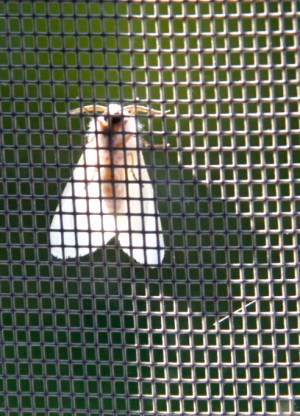
this brightness of moths drowning in inky depths

the seven o’clock news brought to you
from an otherwise deserted street.

Wingless in Gaza

IMG_0177 2

Wingless in Gaza

amputees
they buzz an unending dance
in the dusty gutter

galley slaves
chained to broken oars
they ply rhythmic
blunt stumps

shorn of strength and beauty
their once coloured shuttles
weave dark circles

my mouth is a full moon
open in a round pink circle
shadowed by a skull
bone and its marrow
settle in subtle ice

futile fragility
of the demented heart
pumping the same frequency

fragmented messages
panicked veins

frail beauty
torn from its element of air

this brightness of fragile moths
wing-shorn
drowning in the inky
depths of the gutter

the seven o’clock news brought to you
from an otherwise deserted street

Babs

Babs

It was March 17, St. Patrick’s Day.

Babs held the cat in her arms. The vet slipped the needle into the shunt he had inserted into the animal’s paw and the tiny wind of life gusted from the cat’s fragile body. The struggle ceased. The cat’s head settled and her tongue protruded, just a little, in that beloved and well-known gesture. It was all over.

Babs had found that lump, hard, but smaller than a pea, on New Year’s Day. The next day, she carried the cat to the vet where they took blood samples and ran tests. The vet’s assistant called later that afternoon. A lymphoma, she said, small but deadly. Steroids might help. They would give the cat a 40% chance at a life that would get more difficult, in spite of any known treatment. The alternative was to bring her back in and put her down now, that very afternoon. Babs looked at the cat: highlights strayed through her fur and her bright eyes sparkled like sunshine on a lake.

Throughout January the steroids went in and the cat glistened and grew fat. At first, Babs saw no sign of the lump but by Robbie Burn’s Day it was back. Babs started to count the days: January 31, February 2. The lump grew larger.

Three years before, on Valentine’s day, Babs had salvaged the cat from the SPCA where she languished, abandoned in a cage. The cat was a stray, half feral, taken in from the streets and subject to who knows what sort of treatment and feeding in its infancy. Babs wondered if it was in those days of neglect that the cancerous seed took root? Or did those seeds come later, when the cat wandered the garden and fed off the wild life, mice and voles, and drank from the streams that flowed through the killing fields with their fertilizers, their weed killers, their nutrients, and their poisons?

“What are we doing to ourselves,” Babs wondered as she sat at the kitchen table and sipped a cup of tea. “Was my cat the canary in my coalmine, doomed to warn me of what’s to come? Will my own system be invaded then poisoned with cancerous growths? Will I be subject to that stumbling, downward road that leads in the end to an inevitable death?”

She lay awake that night alone in the bed wondering in what ways cancer might ravage her body. How long would chemotherapy keep her alive? Who would be there for her, who would hold and comfort her, who would slip that releasing needle into her veins when her time came?

Babs ran her fingers over her body as she imagined herself sliding day by day down that slippery slope that leads to the grave. Then she caught her breath, her heart raced, and her blood turned to ice as her fingers tripped against the colony of killers: three small hard lumps that nested in her soft breast.

Downsizing

fire the means of forging / Omega and Alpha / beginning and end

Downsizing

a double sword
this clearing out
of odds and ends

the library diminishing
book by book
so many memories
slipped between the covers
dust-bound now
yet springing so quickly
back to life

sorrowful not sweet
these multiple partings
from people I will never see again
save in my dreams

I think of book burnings
so many heroes
gong up in flames
fire their beginnings
fire their ends

fire the means of forging
the Omega and Alpha
of those book worlds
that surround us

fire words
encircling us
consuming us
outside and in

R.I.P.

Tigger blowing his coat in Spring and waiting on the picnic table for his daily grooming. Some days I am convinced he is still out there, waiting for me.

What’s in a name?
            At the Farmer’s Market there are fourteen puppies in a cardboard box. One of the puppies, still blind, clambers whimpering over the side of the box and totters toward me. An elderly lady picks him up, thrusts him towards me and says:
            “Here: he’s your dog. He wants to be with you!”
            “No way, Lady!” I say and turn away.
            When I exit the market, I walk past the dog box. There are five dogs left but the one that wandered in my direction has gone. The salesman calls out to me: “Hey you!” He walks towards me. “That woman said you’d be back for your dog. Here: take him!” He unzips his coat, and there’s the dog, snuggled against his chest.
            “When was he born?” I ask.
            “January 16!” comes the reply.
            January 16 is my birthday. Today is March 8, the anniversary of my mother’s death. The dog is 53 days old, much too young to leave his mother.
            When I get home, my wife tells me to take the dog straight back to the market.
            “I can’t do that!” I say. “The man will be gone by now.”
            “But we don’t know anything about the dog!”
            “I’ll clean up after it.” I say. “I’ll feed it and train it.”
            “You’ll have to put it in a cage.” She tells me. “I’m not having it peeing and pooping all over the floor. You know why they’re called poopies.”
            Later that evening, I force the little puppy into the old dog’s crate, and I retire to bed. No sooner have I gone upstairs than there’s an unholy noise from the kitchen.
            “Help me!” I say to my wife.
            She laughs. “Not a chance! You know the rules!”
            Down in the kitchen the puppy is in distress. I take him out of his cage and he waddles and wags and promptly pees. I clean up after him and wonder what to do. The cage isn’t a solution. There’s no box in which to put him and any form of captivity, like a board across the door or a baby’s gate, sets him howling again. I gather my sleeping bag and a couple of cushions and I lie down on the kitchen floor. He immediately snuggles up to me, finds my finger, and sucks on it.
            I get up off the floor, make my way to the fridge, open the door, and pour a glass of milk; for the rest of the night, every time the dog gets restless, I stick my finger into the milk and the dog sucks my finger. I spend the next week doing this.
            While I’m lying on the floor, I study the dog.
            “What is your name?” I ask him constantly.
            Then, one night, as I watch him bounce across the room towards my milky finger, I know what to call him.
            “Tigger!”
            If I had waited another week, I might have called him Pooh!
            Tigger never leaves me. He is like an orphaned duck who follows the first human being who feeds it. Tigger follows me around the house with his nose behind my knee and if I stop suddenly, he bumps into me. My wife has started to call me Dada Duck. I now call her Mother Duck and our daughter has been renamed Baby Duck. Tigger has a second name: Dada Duck Dog.
            We have a little corner piece on our lot where the roads join and all the dogs stop, including mine. I went out there one day and put up a large sign with “Pooh Corner!” written on it. Beside it I placed an arrow which points “To the house!”
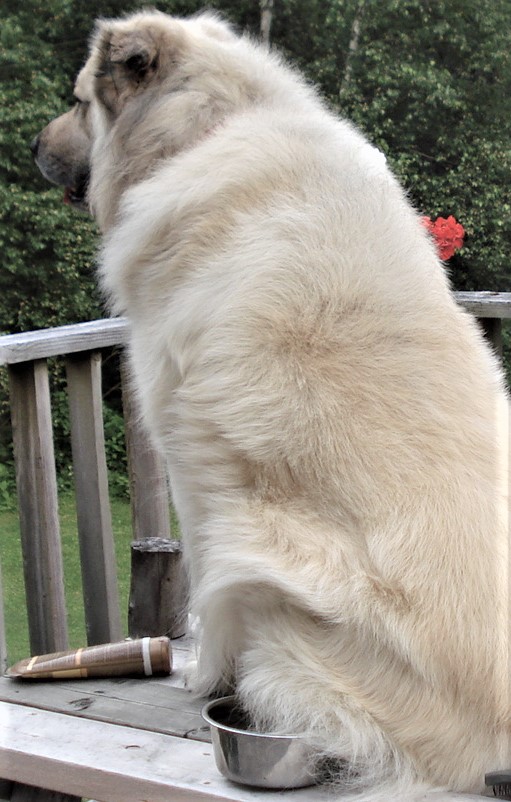
            All the children on the block love Tigger. When he came home, he weighed 6 pound and covered six tiles. Full grown, he weighs 110 pound and covers 108 tiles! He is gentle and well-behaved and everyone adores him. Some of the children want to buy a little saddle and ride on him, he is certainly big enough, but I won’t let them do that. The children on the block now call me Christopher Robin. At Christmas, they bring me pots of honey.
            As eleven years went by, Tigger grew old and slow. He developed cancer and had arthritis. On fine days he was fine, but on damp days he could hardly place one foot in front of the other. He had difficulty climbing the stairs and would sleep for hours rising only for his morning and evening walks and his food.
            Yesterday, el cinco de mayo, at 12 noon, Tigger passed away.
            Today, there is a little white cross at the corner of our lot. The children have laid a circle of flowers around the cross. On it somebody has painted: R.I.P. Tigger.

Thin Ice

Thin ice, light snow, and the crows’ feet of age marking the earth face with graven beauty, scars like those made by time’s tick-tock arrows.

Thin Ice
Vulnerant omnia, ultima necat

I walk on thin ice
at the frayed edge
of my life.

I search for the key
that will rewind me,
but I fail to find it.

Who will winch up
the pendulums on
my grandfather clock,
resetting it
in spring and fall?

Who will watch
time’s sharp black arrows
as they point the path
of moon change
and the fleeting hours?

Each hour wounds me.
Who will tend me
when that last one kills?

Collateral Damage

And that’s not all they checked: a regular Spanish Inquisition. Post Covid-19 it has all fallen silent. Those doctors don’t call anymore.

Collateral Damage

Once a month, they used to stick
a needle in my arm and check my PSA,
cholesterol, and testosterone:
blood pressure rising, cholesterol high.

The doctors kept telling me
it was a level playing field
but every week they changed the rules
and twice a year they moved the goal-posts.

Monday Night Football:
a man in a black-and-white zebra shirt
held a whistle to his lips while another
threw a penalty flag. It came out of the tv
and fell flapping at my feet.
Someone on the field called a time out.

I haven’t seen my doctor for three years.
My urologist has been silent
for more than eighteen months.
It’s been two years since I last spoke
with my oncologist.

I have become collateral damage.
My body clock is ticking down.
I know I’m running out of time.

Comment: I know I am not the only one to have fallen between the cracks in the medical service. Nor will I be the last. I don’t want to cry ‘wolf!’ and yet I feel as though I have been completely rejected. A year after I recovered from my cancer, I received a survey asking me to assess my post-cancer treatment and services. I read it and cried. I did not even know that the services I was being asked to assess were even being offered. I had certainly received none of the follow-up services. “A law for the rich and a law for the poor” indeed. And so many cracks between so many floorboards with so many people falling through. This is not a rant: it is a warning that all of us must look out for ourselves. I can assure you that if you don’t care for yourself, nobody, but nobody, except for your nearest and dearest, will give a damn for you either.