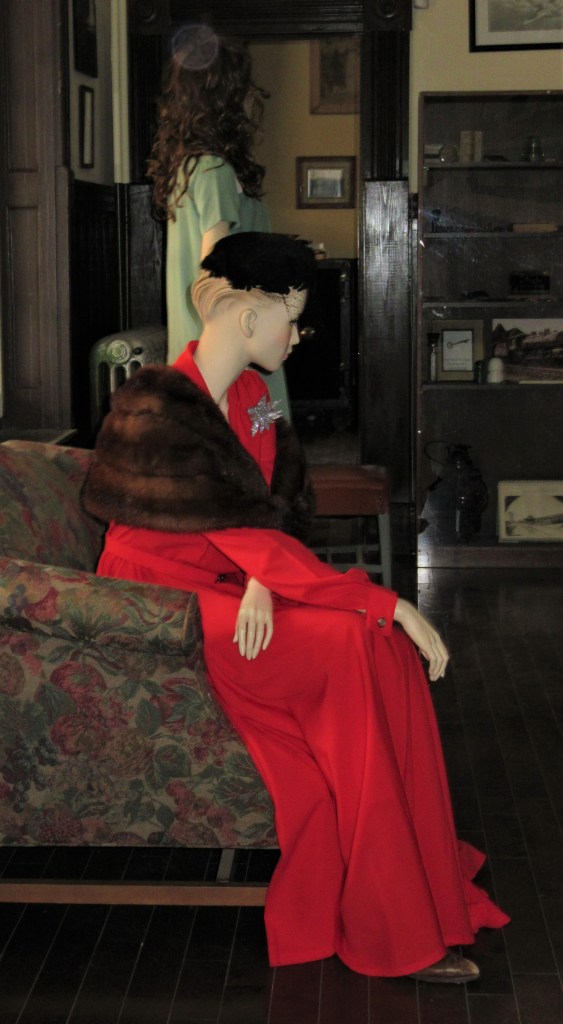
Boxing Day

A wonderfully quiet and peaceful Christmas in Canada. Oh the sea, oh the sea, thank God it still flows between my family and me.

Boxing Day
            By the time I get up, the gloves are really off and the sparring has begun in earnest. I hear voices, walk downstairs to the kitchen, and a hush falls on the room. Knife-edge glances slice their menacing ways through the thick fog of war.
            Time for boxing: on my left, in the blue corner, my mother, smoking what is probably her second packet of the day. A thin haze of grey smoke escapes from her bruised lips and a cloud of exhaled fumes crowns her head with a murky halo. On my right, in the red corner, my father. White-faced, hungover yet again, truly into the spirits of Christmas. He breathes heavily, like a Boxer Dog in the mid-summer dog-days, snoring and snorting at a bitch in heat. In the middle, my grandfather, the referee. He is keeping the combatants apart, creating a tiny breathing space so the true Spirit of Christmas can disentangle itself from those false Christmas Spirits and bring peace to earth again for at least sixty seconds between each round.
            I look around the heaving, seething, threshing silence of a room where conversation has suddenly ceased. The fire is burning merrily. Beside it, tongs, poker, and small shovel stand to attention. On the hearthstone, the little red brush, with its long handle lies in ambush. This is what my father uses to beat me when he can’t be bothered to take off his leather belt. Scorch marks from the hot coal fire sear the handle and back of the little red brush. I threw it on the fire one day, hoping to see the end of it. Of course, it was rescued from the flames, resurrected, and I got beaten for that act of rebellion too.
            “It’s all your fault!” My father breaks the silence, pointing at me. His red-rimmed eyes blazing with a sudden and renewed anger. He starts to rise, but my grandfather steps between us.
            “Go and see your granny,” grandpa tells me. “She’s in the kitchen. Go now!” He points to the kitchen door.
            I run a gauntlet of staring eyes and go to my gran. As I shut the door behind me, voices rise higher in the room I have just left. Boxing Day, indeed. The gloves are off. The battle has begun again. My grandfather has evacuated me from no-boy’s-land and, for a moment, I am no longer trapped in the mud-filled, cratered, shell-holes between the trenches, the uncut barbed-wire barriers, the poached-egg eyes peering through periscopes and spying on me from the parental and priestly parapets. Here in the kitchen, for a while, I walk on the wooden duck-boards that keep my feet dry and clear of mud and water.

Comment: This is, of course, the true origin of the term Boxing Day. A genuine Boxing Day has nothing to do with the myth that it was the day on which the servants, who worked Christmas Day on the Lord’s estate, received their Christmas Boxes. Peace on earth and mercy mild has got nothing to do with alcohol-fueled quarrels, raging hangovers, and little children who should be seen and not heard. Sometimes, when all the elders are down at the pub on the corner, the night may, for a little while, actually be silent. But the noise when the drunks roll raucously home is most unholy. Then little children should be wise like the wise men, run quickly into bed, and lie there, neither seen nor heard.

Merry Christmas

A forgotten child’s Christmas in Wales.

On the Outside Looking In

As I walked home, it started to snow. Not the pure white fluffy snow of a pretty Merry Christmas card, but the dodgy, slippery mixture of rain, snow, and ice pellets that turned the steep streets of Swansea into ice slides and traps for the elderly. I turned up the collar of my coat, bowed my head, and stuffed my hands into my pockets. Two houses before my own, I stopped in front of our neighbor’s house.
The window shone, a beacon in the gathering dark. I drew closer, pressed my nose against that window and looked in. A Christmas tree, decorated with lights, candles, more decorations, a fire burning on the hearth, two cats curled up warm before the fire, presents beneath the tree, stockings hanging from the mantelpiece. For a moment, my heart unfroze and I felt the spirit of Christmas. Then I thought of my own house. Cold and drafty. No lights, no decorations. No fire. The snowball snuggled back into my chest and refused to melt.
            When I got home, our house stood chill and empty. My parents were out at work and the fire had died. Nothing was ready for Christmas. I sat at the kitchen table, took out my sketch book and began to draw, then color. When my mother came home, I showed her my picture.
            “Very nice,” she said without looking up.
            “But mum, you haven’t really seen it.”
            She stared at the picture again. This time, she saw the Christmas tree and the lights, the cats before the fire, the candles burning on the mantelpiece, the decorations and the presents wrapped and waiting beneath the tree. But she never noticed the little boy standing outside the house in the falling sleet, cold and shivering, peering in through the window.

Comment: Everyone remembers Dylan Thomas’s story A Child’s Christmas in Wales, but not all Welsh Christmases are like that. This is the story of a forgotten child’s Christmas in Wales. It is a story about a latch-key kid, left alone at Christmas to fend for himself. I enclose the drawing he did and I dedicate the story to anyone who is alone this Covid-19 Christmas. Christmas spent on your own is not much fun. Looking through another’s window, from the cold street outside, is not much fun either. So, at this time of year, let us remember those who are lost and lonely, those who need a kindly smile and a helping hand, those who do not have the comfort of family and friends, a warm wood fire, or a cat or a dog to snuggle up to them, to lick them, and to wish them ‘all the best’ in the languages that all animals speak on Christmas Eve, and sometimes into Christmas Day. Phone a friend, nod to a neighbor, and may your Christmas season be filled with joy.

Death by Devilry

Silence in the garden. A hawk perched nearby. There are so many ways to die.

Death by Devilry

Silence in the garden.
A hawk perched nearby.
There are so many ways to die.

A cerebral bleed, minor,
but enough to send him to hospital
and keep him there.

Cured, ready for release,
he would need extra care
and added attention.

The devil lived in the small print.
Too much attention needed now:
his care home wouldn’t care for him.

Back to the old folks ward he went.
There he lay, waiting for a vacancy
in a home that would really care.

One day, Covid came a-visiting,
stalked the ward that night, choosing
its victims: you, you, and her, and him.

What killed him?
A cerebral bleed, a minor stroke?
Or a major stroke from the devil’s pen?

Bold words, bare words,
a barren ward, another vacant place
around a Christmas table.

Comment: Sitting at the breakfast table, with an empty space before me, I penned these words. So tragic, so avoidable. Yet how many families have gone through something similar in the past twelve months? How many empty spaces are there, vacancies that will never again be filled? I look at today’s figures from the USA: 18,466,231 infected and 326,232 already perished, an increase of 227,998 and 3,338 since yesterday. I am reminded of the words of Pink Floyd: “Is there anybody out there?” Blas de Otero also echoes through my mind: “levanto las manos: tu me las cercenas” / I hold up my hands: you cut them off. And yet it is Christmas Eve and there is still the Christmas promise of joy, and hope, and a new year entering. Let us raise our hands in prayer: and let us pray they are not hacked off.

R.I.P.

Forget-me-not!

R.I.P.

He was a good man,
and a better friend.
He came over to mow the lawn
and stayed for a beer.
“This is gonna sizzle!”

Some called him uneducated,
no BA, no MA, no LLB,
but he had a golden heart
and a PhD in the school
of life and hard knocks.

I met men like him in Wales,
coal miners in bars,
steel workers on rugby teams,
sheep farmers from the hills
in the big city for the game.

Humble, they were, honest,
hard men, hard working,
intolerant of pretension and fools.
When I went to university,
nineteen and full of ideals,
they pulled me on one side.

“You’re one of us,” they said.
“However high you rise,
don’t lose the common touch.”

I met men like him in Spain,
foot-soldiers from the Civil War,
riflemen, dynamite throwers
with their skills learned
at coal face and quarry.

Machado wrote poems about them:
“Donde hay vino, beben vino;
donde no hay vino,
beben agua de las fuentes.”

Where there is wine,
they drink wine.
Where there is no wine,
they drink water from the fountains.

A good man, an honest man,
an uneducated man, some say,
who taught me more about life
and how to live it
than any university professor.

Comment: I read the obituary of one of my best friends in the newspaper today. He moved away from the neighborhood and we lost touch. But I never forgot him. As I have never forgotten those who shaped me in Wales and Spain. I have forgotten many of their names. But I have never forgotten their faces, nor their words of wisdom. At first, his passing brought a shadow to my life. Then I realized that no, he would not have wanted that. I think now of the good times, the laughter, the joy and, instead of mourning for him, I rejoice in all the goodness he gave me. Rest in peace, my friend. I will forget-you-not.

A Survivor Lights a Candle

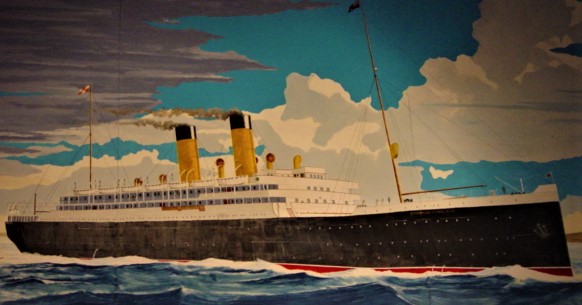
A Survivor from the Empress of Ireland
Lights a Candle During the Old Latin Mass for the Dead
Before the Main Altar at the Sanctuaire Sainte-Anne
Pointe-au-Père

1

I am still afraid of fire:
in principio erat verbum
/ in the beginning was the word.

I am still afraid of the loud voice of the match
scratching its sudden flare,
narrowing my pupils,
enlarging the whites of my eyes:

et lux in tenebris lucet
/ and light shines in darkness.

Booming and blooming,
igniting the soul’s dark night.

Voice of fire:  
et Deus erat verbum
/ and the Word was God.

Flourishing to nourishment,
flames whispering on the flood:
omnia per ipsum facta sunt
/ all things were made by Him.

Wool and water,
this sodden safety blanket;
and what of the cold
plush of pliant teddy bear,
the staring eyes of the doll:

et tenebrae eam non comprehenderunt
/ and the darkness comprehended it not.

2

The lashes of their eyes bound
together with salt water,
they were doused in a silken mist:
hic venit in testimonium
/ this served as a witness.

Still the patterns pierce my sleep,
hauling me from my opaque dreams,
holding my wrists in this sailor’s double clasp:
non erat ille lux
/ he was not the light.

Oh! Curse these dumb waters rising!
“Not a hair on your head shall be harmed!”
he said,
hauling my sister up by her hair
only to find her staring eyes
belonging to the already dead:
et mundus eam non cognovit
/ and the world knew her not.

3

Night waters rising.
The moon raising
its pale thin lantern glow:
et vidimus gloriam ejus
/ and we saw His glory
shining forth
upon the waters’
mirrored face.

Comment: I searched everywhere, but I could not find a copy of my poetry book Empress of Ireland. Nor could I find a file containing the poems. Lost, I searched everywhere yet again and then, on an old USB, I found the text of the chapbook M Press of Ire. The above poem comes from that chapbook. Empress of Ireland is available on KDP / Amazon. I had forgotten how much I loved the sequence.

Some People

Some people leave indelible impressions
memorable moments impressed
on memory’s eye or clasped closely
to the butterfly heart caged in its chest
wings wildly beating as it strives for flight

some people cast shadows on snow
leave footprints light as flakes
as they walk across our waking dreams
or call on us in those midnight hours
when their image sears the drowsing mind

Some people set a fire in our hearts
allow us to see things out of sight
to write what we never thought to write
to reach out to the unreachable
to teach what we thought was unteachable

Stars in night’s silence they point the way
lead us on paths we never thought to tread
present us with a thread to lead us
through life’s labyrinths and out
from the darkness into bright light

Sometimes they cross the rainbow bridge
before we do and when they go we know
deep down in our hearts that they are there
just out of sight waiting for us ready
to welcome us when it’s our time to go

Downsizing

Books abandoned on the sea shore of life.

Downsizing
Francisco de Quevedo

I chose each book, held it in my hands for
one last time, then placed it peacefully in
its new resting place. Old friends, they were …
I broke that friendship and set my friends free
to fulfill their promised afterlife on
another reader’s shelves.

Mind to mind, though they had
lived five hundred years ago,
I strove to engage them in lively
conversation, Bakhtinian dialogs
within our time and space, and
that space my basement library.

I loved to hear their lilting speech,
to listen to their wisdom with open eyes
and mind. I answered them with words
I quickly pencilled on each page.

One day, a man arrived from the university.
He carried them away in a delivery truck
and they were borne to a wider world.

If you see on, bless it, read it, cherish it.
Blind now my eyes that devoured their words.
Deaf now my ears that heard the dead,
for I can listen no more.

Note: “Escucho con mis ojos a los Muertos /
I listen with my eyes to the words of the dead.”
Francisco de Quevedo (1580-1645)

With thanks to Nicholas Wermuth, who was kind enough to comment and help me revise and restructure this poem.

Survivor

Survivor

Every day, now he’s learning to speak Welsh,
he finds out something new about his childhood.
It’s not the need to talk so much as the necessity
of diving into himself and mining his memories.

Brynhyfryd / Mount Pleasant.
Pen-y-Bont / the End of the Bridge.
Ty Coch / the Red House.

This latter the house in which he was born,
way out of town, by Fairwood Common,
away from the strafing and bombing.
The war generation of his family all born
in the same in-the-country Gower bed.
No room in war-time hospitals
not even for the birth of war babies.

Three of his brothers did not survive
those rough, household births.
He still bears the forceps’ scars
from the moment the doctor
plucked him out, head first,
and hung him up by the heels,
shaking him, bringing him back to life.

He bears other scars as well
from the survivor’s burden of carrying
three dead brothers for seventy long years,
alive and kicking in the womb-warm
crevices of his still beating heart.

Autumn

Autumn
and all that jazz

1

Slow last drag of summer’s sad trombone
sliding its airs between stark, naked trees.

Golden memories float face down in tranquil
waters, life and the summer drained away.

A voice, her voice, ripples across the pond,
echoes over drowned and mirrored leaves.

2

Grey the sky, white the birch trees:
Narcissus kneeling, dark waters flooding.

Tumble-dried by this autumn sky,
leaf words falling, still her voice echoes.

3

Tintinnabulation: a tin-pan alley of leaves
blown against windscreen and car windows.

I, who a grief ago sat here watching her walk,
now sit here alone, waiting for her return.

4

I who am nothing know nothing, save that I
am a burnt-out ember, cold, in a grey-ash grate.

A grating of old bones, these hips and knees,
and if I fall, sweet heart, please love me more.

5

Here endeth today’s lesson: that of the fall,
the fall of all things finally into deep water.

Fall, fall asleep to the rhythmic leaf beat
that summons us all to our appointed end.

Chance Encounter

Chance Encounter
Overheard one night at the bar

“Meeting her, unexpected,
with another man, that night,
and me, with another woman,
all four of us looking
bemused by what the other
had chosen in each
others absence

… time suspended …

and the halted, faltering
politeness of a nod,
a handshake, ships
passing in the night,
signs and signals
no longer recognized.”