Quack!

Quack!

A duck, in cricket, means the batter has been dismissed without scoring. The 0 resembles a duck’s egg, and hence score of naught is known as a duck! A golden duck means the batter has been dismissed first ball, without scoring, a sad fate indeed. A King Pair is first ball in each innings of a four innings match (two per side).

My cartoon shows an English cricketing duck carrying his bat through a golden shower of life’s purple patches. There are several clichés and double entendres in this title. First, of course, the ignominious duck. Carrying his bat: this has a double meaning (a) to literally carry a cricket bat, as this duck is doing, and (b) to open the batting and carry your bat throughout the innings, un-dismissed, although the other ten wickets have fallen around you. To carry your bat for a duck is as near as impossible as it can possibly be. A golden shower: alas, we are all now familiar with the pornographic version. Some will be familiar with the myth of Jupiter descending as a shower of gold. The golden shower here also represents the shower of golden ducks that has currently descended upon the English cricketing team. Purple patches can be good. However, a purple patch of golden ducks is only good for the opposition bowlers, if you are on the batting side.

England top order quacking and creaking into history of the duck: this article in Tuesday’s Manchester Guardian cricketing section will explain the makings of current duck history for all who are interested. Equally interesting are the double meanings (a) within the verbals of the above cartoon and (b) within the visuals of the drawing itself. For example, the golden duck holes / eggs pecked in the bat, the mingling of gold and purple in the shower falling, the duck eggs woven into the batter’s shirt…

So, here we go, swinging low, swinging to miss, and swinging into history, where batter itself is a neologism replacing batsman as a non-generic term for those who bat, much as bowler, the man, not the hat, is a non-generic term for those who bowl, or fielder for those who field. Now, what on earth are we going to do with ‘gloveman’? Glover, perhaps, or wicket-person, or a return to wicket-keeper, or just a limited keeper? Language is so lovely and the mixture of language and cartoon is is doubly good, as long as everyone is bilingual and can entendre.

Patience

Thursday Thoughts
Patience

Patients must be patient.
The waiting-room
is where the doctor
makes them wait.

My father waited, patiently,
to see the specialist.
At the stroke of noon,
nurse told the waiting patients
not to wait patiently
and to all go home.

“Come back next week,” nurse said.
“What’s up?” I asked.
“The doctor,” she said,
“has a very important meeting.”

I hurried for a taxi.
My father on his Zimmer
followed slowly behind.
On the hospital steps
I met the doctor.

“Damnation!” he said,
into his cell phone.
“I’m going to be late
for that appointment.
I’ve left my golf clubs behind.”

Thursday Thoughts: I remember that day well. My father was due to visit the hospital for his appointment with the stroke specialist. I wanted to drive him there, but he insisted on waiting for the old folks’ ambulance. It was due at 9:00 am and his appointment was for 10:30 am. We waited patiently, watching the hands on the clock moving slowly round. 9:00 > 9:15 > 9:30 > 9:45. “I can drive you,” I said. My father shook his head: “If I don’t take the ambulance, they won’t come to pick me up again. They’ll say I have other means of transport.”

The ambulance / ambwlans (in Welsh) arrived just before 10:00 and dad was sure they’d make his appointment time. Except there were still empty seats and that meant more passengers to pick up. Used to the system, my father waited patiently while I got more and more frustrated. Finally, the ambulance was full and we made our way to the hospital, getting there about 10:45. “Run,” my father said, thrusting his appointment papers at me, “tell the nurse I’m on my way.” Run I did. When I got to the waiting room, I found it full of people with never a chair for my father to sit on. When he arrived, a younger patient offered him his seat and he flopped down into it.

Names rang out. Patients disappeared. Some returned to the waiting room, then walked out. Some didn’t return. At 11:15 my father demanded tea. I got him a cup. At 11:30, a man stood up and started to preach to his captive audience. “Does that every week,” dad muttered in my ear. “He’s mad.” “You can’t take it with you,” the preacher thundered. “There aren’t any pockets in shrouds.” People fiddled and looked uncomfortable. Most had teacups perched precariously on saucers, and some rattled them, whether in applause or anguish, I still don’t know.

Then at noon the nurse appeared and announced what you have read above. “Dr. XXX’s patients: you can all go now. Dr. XXX has an important appointment. Come back next week.” My dad pushed me. “Run,” he said. “Get a taxi. They’ll all be wanting one and by the time I get there there’ll be none left.” That was the only visit I made with my father to that particular hospital. I had so many questions to ask that specialist, but, alas, I never met him.

What I did learn was that patients must learn patience. Hospitals, like airlines, run to their own schedules. A sign should be placed above every hospital door. “Abandon hope, all ye who enter here.” Just a thought, nothing more. The delays in all our medical systems, caused by the Covid-19 pandemic, have been disastrous for many people, especially the old. Missed appointments. Delayed and cancelled treatment. Long waits and delays. The medical staff have been placed in such stressful conditions. Many are finding it difficult to cope with their inability to fulfill their desires to help their patients. Many are so stressed out. Two of my own doctors have cried when talking to me. I think of it as Covid Collateral Damage, CCD, just like the Colony Collapse Disorder that wiped out our bee population a few years back. Now we are the bees and hospitals and nursing homes are the hives.

Looking back, that morning spent waiting with my father, was a lesson in what old age has in store for us Golden Oldies as we age. Patience: as patients, we must learn patience. And remember, as Bette Davis once said “Old age is not for cissies.” And those are my thoughts for today!

Christmas Angel

Christmas Angel

Once upon a time
he sang carols,
but now he chokes
on red-herring bones
and obscure meanings.

When he opens his mouth,
his tongue falls bleeding on the silver tray
encased in wood
passed round to collect the money.

His knees are dusty from lack of use.
What wooden doll’s head
rocks back and forth on his shoulders?

On Christmas Eve, a painted
clothes peg lies in a wicker cradle.

He swaddles it with birdsong
and hums forgotten words
to half-remembered tunes.

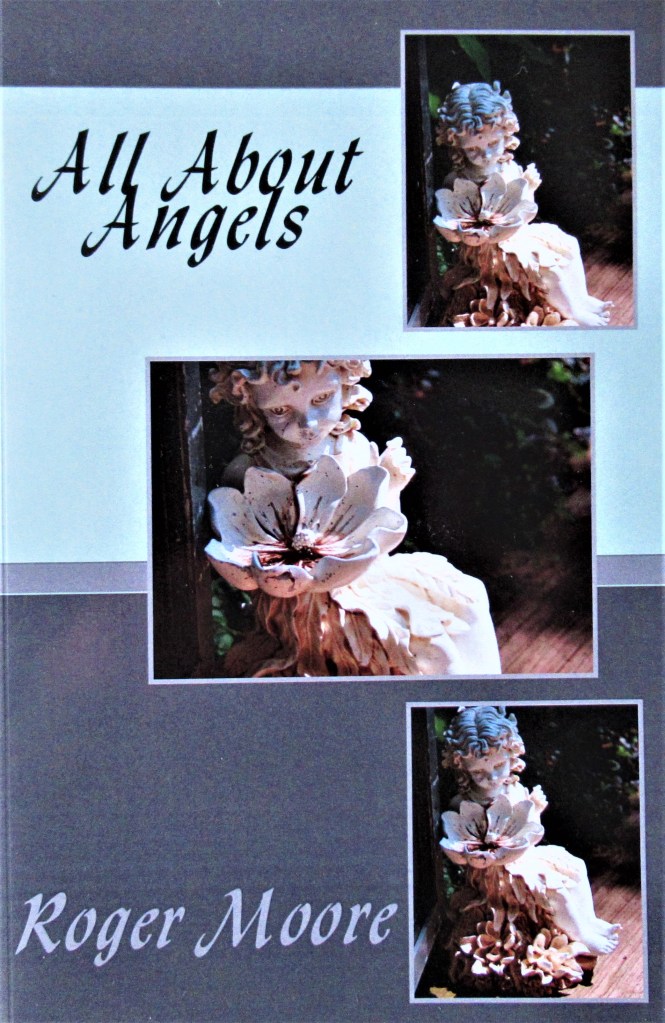
Christmas Angel can be found in
All About Angels.


All About Angels
Paperback edition


All About Angels
Kindle Edition

Building on Sand

Building on Sand

Everywhere the afternoon gropes steadily to night.
Some people have built fires,
others read by candlelight.

Geese, drifts of snow their whiteness,
settle on the riverbank. They walk
on thin ice at civilization’s edge.
Around them, the universe’s clock
ticks slowly down.

Who forced that scream
through the needle’s eye?
Inverted, the Big Dipper,
hangs its question mark
from heaven’s dark eyelid.

Ghosts of departed constellations
stalk the sky. Pale stars bob
phosphorescent on the flood.

The flesh that bonds,
the bones that walk,
the shoulders and waist
on which I hang my clothes,
now they stand alone
and listen at the water’s edge
to the whispering trees.

They have caught the words
of snowflakes strung between the stars.
Moonlight is a liquor
running raw within them.

Comment: The verse version (above) is from Though Lover’s be Lost. The prose version (Below) is from Stars at Elbow and Foot.

Building on Sand

Everywhere the afternoon gropes steadily to night. Some people have built fires, others read by candlelight. Geese, drifts of snow their whiteness, settle on the riverbank. They walk on thin ice at civilization’s edge. Around them, the universe’s clock ticks slowly down. Who forced that scream through the needle’s eye? Inverted, the Big Dipper, hangs its question mark from heaven’s dark eyelid. Ghosts of departed constellations stalk the sky. Pale stars bob phosphorescent on the flood. The flesh that bonds, the bones that walk, the shoulders and waist on which I hang my clothes, now they stand alone and listen at the water’s edge to the whispering trees. They have caught the words of snowflakes strung between the stars. Moonlight is a liquor running raw within them.

Click here for Print Version

Click here for Kindle edition

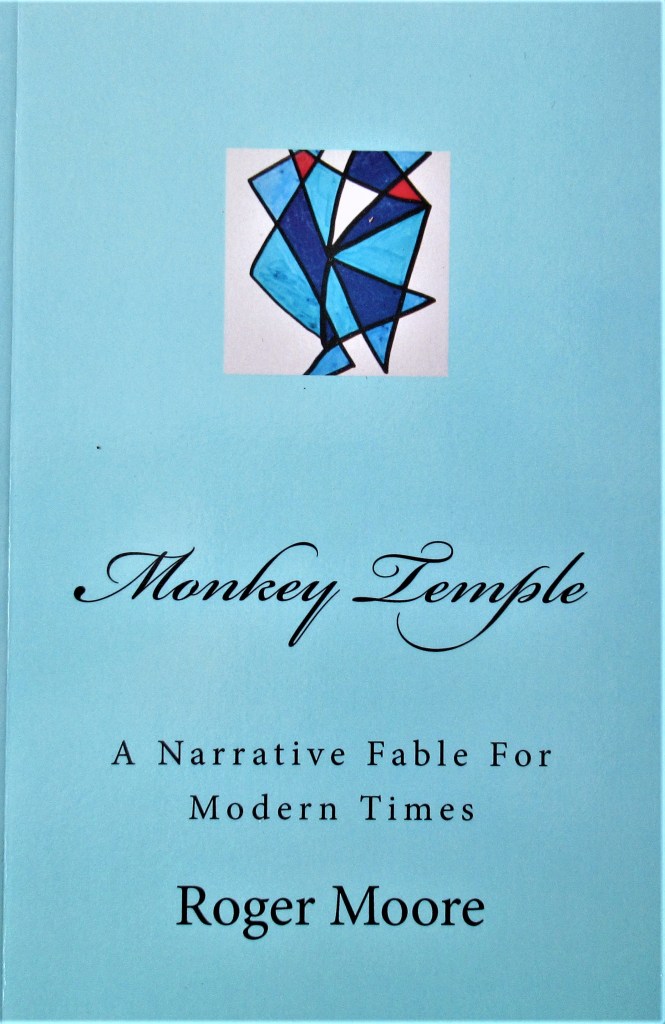
Monkey Presses Delete

Monkey Presses Delete

Monkey loves walking behind the gorillas.
The gorillas break and enter:
and when they do, monkey simply points
and gorillas do their thing:
it’s that simple …

Monkey has a code word
that he took from his computer course.
“Delete!” he says with delight
and the gorillas delete whatever he points to.

Monkey loves burning other people’s books.
He also loves deleting parents
especially in front of their children,
and deleting children in front of their parents
can be just as exciting.

The delete button excites monkey:
maneuvering the mouse
tightens his scrotum
and he feels a kick like a baby’s
at the bottom of his belly
as he carefully selects his victim and
“Delete!”

The gorillas go into action:
ten, twenty, thirty, fifty, seventy years of existence
deleted
with a gesture and the click of an index finger
pointed like a gun.  

Rainstorm in Granada

Not the Alhambra, but a blood red sky!

Rainstorm
Granada

 Black umbrellas burgeon beneath sudden rain.
Waterproof cloth opens to provide protection.
Churches fill with defenseless passersby.

The cigarettes they smoke flare shooting
stars through finger bars of flesh and bone.
After the rain, gypsy women flower in the street.

Carnations carve wounds in their sleek, oiled hair.
They offer good luck charms and fortune telling.

“Federico! Federico,” the gypsies cry out,
“tomorrow, the guards will take you from your cell.
They will drive you to the hills and shoot you dead.”

“Tonight,” Federico replies, “I’ll paint the city red.
And tomorrow… ” “Tomorrow,” the gypsies sigh,
“the Alhambra’s walls will run red with your blood.”

Comment: I have made some minor changes to the sonnet that was published in Iberian Interludes (available online at this link) The sonnet is a Golden Oldie, going back to our visit to Granada in 1986. I asked my pre-teenage daughter if she would like to go to a country where there was no snow in winter. She laughed at me. “Don’t be so silly, dad, there’s no such thing as a winter without snow.” We got to Madrid on January 5 and awoke to 3 inches of snow on January 6. “There, dad,” she said. “Told you so.” We took the train down to Granada and that year they had six inches of snow in the city center, for the first time in forty years! It also rained, and this is a poem about the Granada rain.

Iberian Interludes

Vets

Autumn Leaves, the Peace Park, Mactaquac

Spotify
Remember to scroll down to appropriate audio episode.

Vets
A Thursday Thought

Mary Jones

I met her unexpectedly in a restaurant in St. George.
I was masked, but she knew me right away. She hadn’t
changed. How could she have? She is as she is. Straight
forward, upright, honest, true to her words and her values.
Ex-military. A United Nations Peace-Keeper. A Blue Beret.
World traveller to some of the roughest, toughest, ugliest,
craziest spots. Everywhere she went, she helped keep the peace.

She came back home to find out what she already knew: that
rural New Brunswick was as wild as anywhere she had been.
She was anonymous, here, was just another number in a book,
a casualty in a nameless war of attrition after which the winners
rewrite the history of events, twisting them this way, that way
to suit themselves and their own instincts and interests.

“Best of the best,” I wrote in the book I gave her. Fortuitous,
it was, finding her again, finding that copy close to hand,
reserved for her alone. That book and this poem are my tribute
to her for her courage, her fortitude, and her strength of will.
They are also a tribute to her role in making the world a safer place
in which others, less fortunate, can create, without fear, their lives.

Comment: There is very little more to be said. Each former soldier is an individual with a history and personality of their own. This is my tribute to a very good friend who served her country and the United Nations Peace Keeping Forces with pride and distinction. Mary Jones, I, an academic, a writer, and a non-combatant, salute you for all the positive values which you have brought into this sometimes troubled world of ours. You and your well-being are in my Thursday Thoughts.

Cage of Flame

Remember to scroll down to appropriate audio recording.

Cage of Flame

Now you are a river flowing silver beneath the moon. High tide in the salt marsh: your body fills with shadow and light. I dip my hands in dappled water. Twin gulls, they float down stream, then perch on an ice-floe of half-remembered dreams. Eagle with a broken wing, why am I trapped in this cage of flame? When I turn my feathers to the sun, my back is striped with the black and white of a convict’s bars. Awake, I lie anchored by what pale visions fluttering on the horizon? White moths wing their snow storm through the night. A feathered shadow ghosts fingers towards my face. Butterflies stutter against a shuttered window. A candle flickers in the darkness and map in runes the ruins of my heart. Eye of the peacock, can you touch what I see when my eyelids close for the night? The black rock of the midnight sun rolled up the sky. Last night, the planet quivered beneath my body and I felt each footfall of a transient god. When will I be released from my daily bondage?

Oh dear, I no longer know whether I am writing poetry or prose. Maybe I should contact Survey Monkey and have a survey on the subject. Clearly the above is prose because it has no line breaks. But what happens when we do this?

Cage of Flame

Now you are a river flowing
silver beneath the moon.
High tide in the salt marsh:
your body fills with shadow and light.
I dip my hands in dappled water.

Eagle with a broken wing,
why am I trapped in this cage of flame?
When I turn my feathers to the sun,
my back is striped with the black
and white of a convict’s bars.

Awake, I lie anchored by what pale visions
fluttering on the horizon?
White moths wing their snow
storm through the night.
A feathered shadow ghosts
fingers towards my face.
Butterflies stutter against
a shuttered window.
A candle flickers in the darkness
and maps in runes the ruins of my heart.

Eye of the peacock,
can you touch what I see
when my eyelids close for the night?
The black rock of the midnight sun
rolled up the sky.

Last night, the planet quivered
beneath my body and I felt
each footfall of a transient god.
When will I be released
from my daily bondage?

Sure, it’s the same text. But is it? And what happens if we change the line breaks? Does the rhythm stay the same in both cases? It certainly does when I read it, but how about you? Poetry or prose? Tell me if you knows! And what’s the difference anyway if the words roll off your tongue and metaphors, mystery, and magic rule?

Cage of Flame can be found in my poetry collection Though Lovers Be Lost and also in Stars at Elbow and Foot (Selected Poems, 1979-2009). Both are available at this link.

Inquisitor

Remember to scroll down to get the correct audio episode on Spotify

Inquisitor

Inquisitor

He told me to read,
and plucked my left eye from its orbit.
He slashed the glowing globe of the other.
Knowledge leaked out, loose threads dangled.
He told me to speak and I squeezed dry dust
to spout a diet of Catechism and Confession.

He emptied my mind of poetry and history.
He destroyed the myths of my people.
He filled me with fantasies from a far-off land.
I live in a desert where people die of thirst,
yet he talked to me of a man who walked on water.

On all sides, as stubborn as stucco,
the prison walls listened and learned.
I counted the years with feeble scratches:
one, five, two, three.

For an hour each day the sun shone on my face,
for an hour at night the moon kept me company.
Broken worlds lay shattered inside me.
Dust gathered in my people’s ancient dictionary.

My heart was like a spring sowing
withering in my chest
It longed for the witch doctor’s magic,
for the healing slash of wind and rain.

The Inquisitor told me to write down our history:
I wrote … how his church … had come … to save us.

Inquisitor was also a requested reading last Saturday. My promise, to put it up on the blog, with a reading in my own voice is now fulfilled. I love this poem: it speaks volumes about the Catholic Church in Oaxaca and the relationship of the Dominicans with the local people, aboriginals all and inhabitants of the Valley of Oaxaca for at least 10,000 years. The numbers represent the approximate date, 1523, of the arrival of the Conquistadores in Oaxaca, about three years after the fall of Tenochtitlan, the Aztec capital, now Mexico City. The poem, Inquisitor, can be found in Sun and Moon and also in Stars at Elbow and Foot, both available through this link.

Stars at Elbow and Foot

Stars at Elbow and Foot

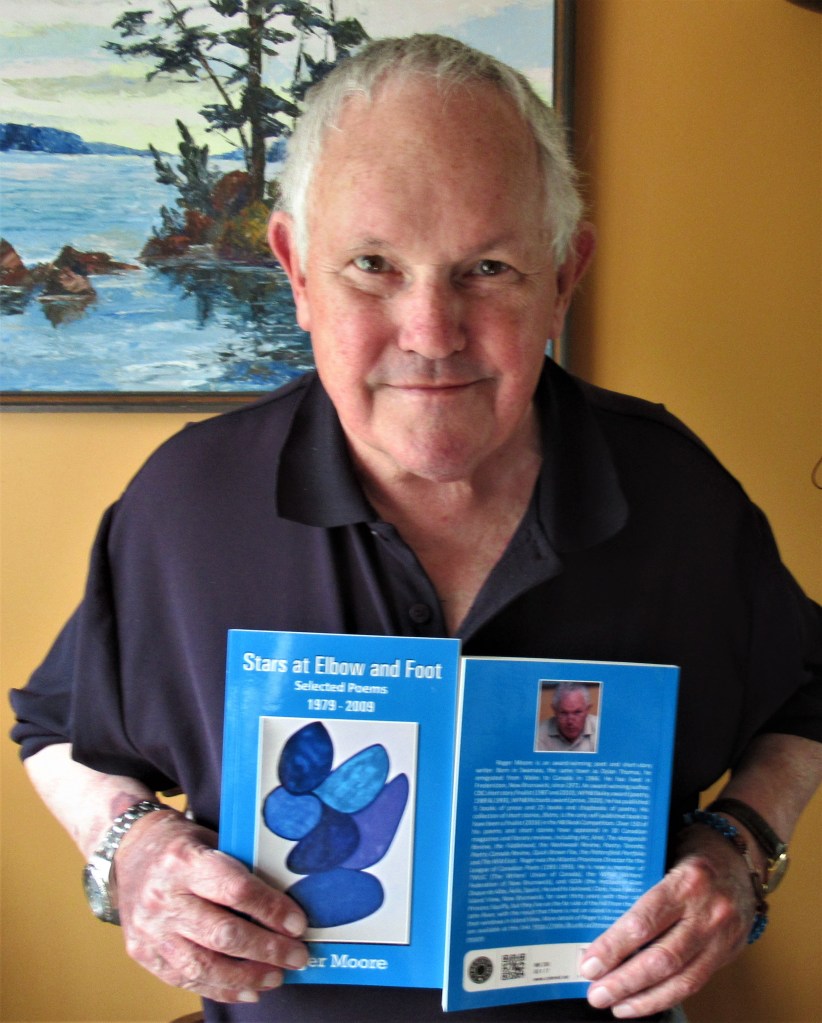
I retuned from the Red Room at KIRA to spend the weekend at home with Clare and this is what was waiting for me in the garage: a large parcel with books! So, we opened it and, to our delight, a constellation of stars emerged to bless us with their light and wisdom.

So, here I am, standing before the only island in Island View, with the first two copies of Stars at Elbow and Foot (Selected Poems, 1979-2009) out of the box and in my hands. Delightful. As soon as I have the purchasing details, I will place them online.

With regard to this collection, some thanks are due. First to my editor, Dr. Karunesh Kumar Agarwal who always does such a fine job in editing and publishing what I send him. Second to Allison Calvern who helped me choose, order, and revise the collection. Allison has always been such a strong supporter of writing, first here in Fredericton, and now in Ottawa. My thanks and best wishes go out to her. Third, to Chuck Bowie who told me with no uncertainty that THIS was the cover painting, and forget the others! Fourth, to Brian Henry of Quick Brown Fox who reached out to me one day, when my writing spirits were at low tide, and refilled my spiritual glass with encouragement and enthusiasm. Fifth, to all the readers and commentators on my blog and on Facebook. Your ticks are so important. Your comments are so welcome. Thank you all. Sixth, to the multitude of friends and editors who have encouraged me and my work, supported me, and pushed me to push myself further. Writing is a lonely task. We writers rely on others for so many things: support, advice, encouragement, and occasionally for the bus fares that help us stay on that writing bus and to never get off until we reach our destination.