Time Folds

IMG_0158

Time Folds

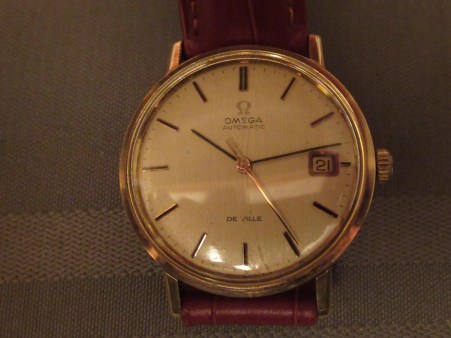
Time folds … itself in two or three. A rubber omelet clock, it vanishes over the white water adventure rocks, bending and sliding, folding and unfolding. Riding the waves is ungainly, unseemly. We hang on to ropes, clock edges, reach for outstretched hands, count seconds, minutes, hours, search for meaning …

Further downstream, men and women dance on the bridge at Avignon. Now there are two popes and each one castigates the other, hurling verbal darts, well sharpened, that pierce the thickest of skins. The bridge across the river stands unfinished. It stretches stone hands out towards the other side, but the further shore is distant and the bridge’s fretwork abandons its quest.

Where do we find meaning when seconds, minutes, hours slip down the stream paddled along beside all those hours lost from the clock? Omnia vulnerant, ultima necat: they all wound, but the last one kills. At what time will that final hour suddenly loom and sling its ultimate stone, shoot its outrageous final arrow? Jove’s thunderbolt, sudden, from a cloudless sky? Life’s lead-tipped slingshot and all that we love turned suddenly to hatred? A tremble of the ground beneath our feet? Kangaroos and Koalas burn, setting even more bush ablaze and the smoke from those fires reaches out, out, out, across the bush, across the cities, across the Tasman, across the Atlantic. New Zealand has become the land of the long pink cloud.  Now South America is gifted its grey, smoky monsters of grasping hands, those insubstantial nightmares of our childhood dreams, reaching in from the dark to pluck us from our sleep.

On the unfinished bridge at Avignon, the people still dance. In their papal palaces, the partisan popes still hurl the insults of their hit and missiles. Somewhere, close, was it in the future or will it be in the past, the Black Death lurks, waiting its moment. The Great Fires of London sizzle and stench from 1666 to 1941 while religious partisans burn each others’ homes. The Spanish flu invades the trenches and kills more men than the war will ever manage.

Turn your face to the wall, my darlings, as the gentlemen go by. But what do they bear in their hands, those gentlemen, in their minds, those unsubtle warriors of a crazy game that leads us onward, merrily, merrily, not so gently, down what stream, over what waterfall, and into which of the many perils that lie in wait?

Ephemera

PEI + bockle 2008 059

Ephemera

‘The day I was born, I took my first step on the path to death.’ Thus spoke Francisco de Quevedo, the Spanish poet born in 1580, died in 1645. “Am I going to die, Father?” “We’re all going to die, Patrick. We just don’t know how, where, or when.” This from the Sharpe’s Rifles Series. I can’t remember which show, but I remember the scene.

Ephemera / ephemeral: butterflies on a rock, on a flower, in a summer garden, blown away in a puff of wind. And that’s what we all are. “For whether we last the night, or no, / I’m sure is only touch and go.” Dylan Thomas: Under Milkwood. Or under Idlewood, Island View, as I like to rewrite it.

“Mais où sont les neiges d’antan?” / “Where are lost year’s snows?” François Villon.  “No hay pájaros en los nidos de antaño”“There are no birds in last year’s nests.” Miguel de Cervantes.

One of my friends, twenty-five years younger than me, wrote to me today speaking of how fragile he felt. Another friend wrote me last week, mid-forties, going into another round of cancer. How long do we have? How do we face our individual end? How do we pass through that door that opens for us, and each one of us alone? I have no answers. I remember pushing my father in a wheelchair around the cancer ward. I remember sitting with my mother, needles inserted in her arm, her arm a sunset of bruises.

Where do we go? What will become of us? What will we do when the dandelion clock runs down and that last puff of wind bows us into eternity? Horas non numero nisi serenas / I count only the happy hours. These words come from the old Roman sundial. I first read them in a children’s book: The Puppy Who Lost his Wag. Does anyone remember that book? Or was it just an ephemeral publication, lost in the tides of time? Villon, Cervantes, and anonymous author … pobres poetas de hoy: polvo seco de tesis doctoraltoday’s poor poets: dry dust of a doctoral thesis. (José María Valverde, a very good friend).

Et ego in Arcadia vixi / and I in Arcadia have lived. It is, and has been, a wonderful life. I feel the sands of time trickling though my fingers. I feel the waters running dry in Antonio Machado’s  clepsidra / his water clock. And I am not afraid. I rejoice in who I am and what I have been. My puppy dog life has regained its wag and the sun shines on my sundial.


IMG_0617

Reyes

IMG_1318 (3)

Reyes

The Spanish Christmas comes on the Twelfth Day after our traditional Christmas: January 6, today. 32 years ago, we spent Reyes in Madrid. We arrived in time to see the Christmas Parade and what a sight that was, with the three Wise Men, los reyes magos, riding on their camels at the end of the parade. It had just snowed and the city, streets and squares, shone white.

It’s funny what we remember and how we remember it. “Mira, mira, mira!” “Look, look, look!” Then, in the distance, descending from the Puerta de Alacalá, the Three Wise Men. Behind us, a little boy screamed at his mother. “Don’t you want to see los tres reyes magos?” she asked him. “No,” he yelled. “I don’t believe in the three wise men. I want to go home and watch soccer on the telly!”

I wore a white sweater that evening. When I got back to the hotel, I discovered that every inch of sweater that had emerged from beneath my coat was now grey. Even the air was filthy and pollution lay in ambush everywhere. “Every time I cough, I get a mining souvenir,” Max Boyce used to sing. Well, after a couple of days in Madrid, I too was coughing up souvenirs, but they didn’t come from coal dust underground. They came from the very air I was breathing out in the city streets.

Later that week, we took the train out to the Casa del Campo to see those same three camels in the zoo. In the distance, the Guadarrama stood out clearly against the sky. The zoo welcomed us and we enjoyed breathing in the fresh air and seeing the animals in the wide open spaces behind the invisible bars that allowed us to view them in a more natural habitat.

Christmas / Reyes: a magic time for remembering things that seem to have vanished, yet that sneak up on you and shake you awake when you least expect it.


IMG_0124

Butterflies

IMG_1053 (2).JPG

Butterflies

Here today and gone tomorrow. Ephemeral. Like all of us ‘poor creatures, born to die’ (as Dylan Thomas once wrote in Under Milkwood). It seems strange to look back on last summer’s photos and to remember that yes, they were here, those butterflies. Outside the window. Perching on the flowers. Showing their varied colors. Alive. Vibrant. Raising and lowering their wings.

Once upon a time, a long time ago, when I wore a grey suit and lived in a concrete, four-walled cell that they called an office, I was asked if I would edit a new journal for one of the institutions with which I was involved. ‘Sure,’ I said. ‘That would be great.’ ‘We’ll need you to submit a title and a theme,’ they said. ‘Sure,’ I said. ‘Of course I will.’

I thought about many things: titles, themes, topics, writers … Then I thought about other journals with which I had been involved in various capacities. Then I considered walking in the footsteps of the Journal of Higher Education with all of its cutting-edge articles and high-powered inspiration. I breathed a sigh of frustration, then of relief. ‘Got it,’ I said, and the Journal of Lower Expectations was born.

Alas, it was a butterfly that never spread its wings. ‘Your services will not be needed,’ came the curt reply when I submitted the title.

Think about it: a couple of years back, there were no bees in the garden: CCD (Colony Collapse Disorder). Last year, there were no birds. The feeders stood empty, and bird flu was the cry on everyone’s lips and the plague on every bird’s beak. Ephemeral. Butterflies on a rock. Australia burns and people are rescued from the beaches where they have taken refuge in the sea. Everyone, everywhere, now needs to live with lower expectations.

IMG_1058 (2).JPG

Butterflies and birds and bees: will they be back next summer? Who knows? I certainly don’t. But then, I am a true agnostic. I have no scientific background worth speaking of and neither ax no knife to grind on this topic. I genuinely do not know where we are heading. But I believe least those who protest most, especially when they bluster and bluff and try to pull the cocoon of disbelief over my eyes by shouting loudly their point of view. I have eyes. I can see, even if there are no butterflies, birds, or bees to be seen. Alas: I can still see and suffer their absence.

Please
will ye no come back again?”
Poor kangaroos, kookaburras, koalas,
wallabies and platypus ducks.

IMG_1047 (2).JPG

We will miss you so much if you any of you,
let alone all of you,
along with the butterflies, birds, and bees,
go AWOL.

Black and White

IMG_1519.JPG

Black and White

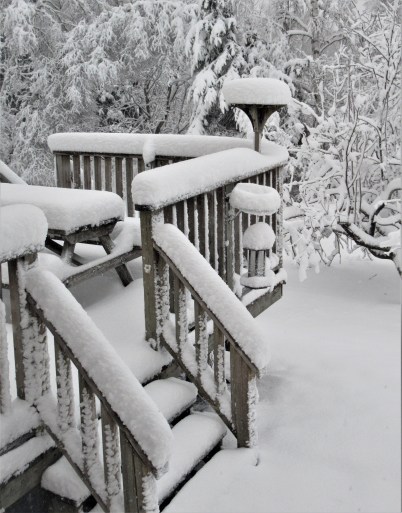
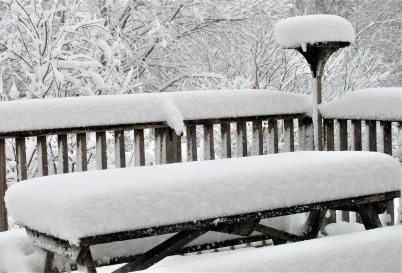
There is a moment in winter photography when the world of color turns to black and white. Color is still there, but today it travels incognito, anonymous. The world is formed by shapes, trees draping their branches, snow weighing them down, dressing them in wedding gowns for their marriage with the new year spirits that haunt sunlit, moonlit snowbanks and dance across the snow. Even the clouds exist to give a soft, quiet dramatic touch to the winter beauty that visits the garden. And yes, it will always be there, even if we are not here to see it because it will carry on without us. As for us, we are secondary, mere witnesses to winter’s beauty and the nature that surrounds us.

IMG_1554.JPG

Amateur photographers can sometimes capture this effect in a moment of luck (or occasional inspiration). Great painters have always known this art of the minimal. El Greco drew light from darkness, his portraits often finding their own fire and lighting up from within.  Caravaggio, too, knew the values of chiaro-oscuro, light and dark, black and white. Velasquez was the master of the spotlight that highlighted the eggs frying in the pan, the hand of the water-carrier. Goya, in his etchings [The Disasters of War, The Caprichos] and dark paintings, drew mood and anguish from this contrast between light and dark, black and white.

image1-1.jpeg

My friend Geoff Slater has caught such a moment in his sketches for Scarecrow. Above he catches the precise moment when the scarecrows, male and female, reach out to each other, and beneath a Van Gogh planetary sky, dare to dream of mobility and love. The dream world: so important to us all and especially to the creative artist who dwells in each of us. Deus est in nobis, the Latin poets used to say, it is god within us. The god of black and white who transforms the world into color and light.

image3 (10)

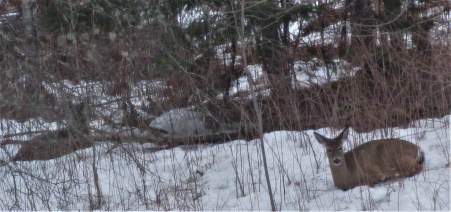
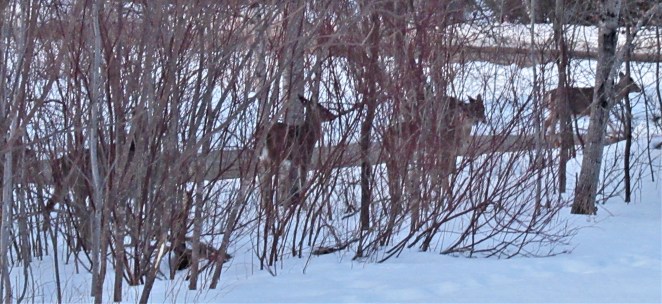
Black and white, light and dark, winter trees, Clare, two scarecrows, deer and crows: labors of love that reach out and catch us unawares, blowing our hearts wide open, letting in the sun and the wind and the ever present joy of seeing things, seizing them, sizing them up, in black and white.

image2 (15)

Let it snow ….

IMG_1532 (2).JPG

Let it snow …

A New Year, a new snowblower, and the same beautiful handy-person. Luckily I can cook, so when the hard work is done, that handy-person can sit down to hot tea and buttered crumpets. Oh the joys of retirement. Some never retire, though, and a handy-person’s work is never done. Mind you, cooking, for me, is a joy, not a chore, so I don’t ever think of it as ‘work’, that nasty, old-fashioned Anglo-Saxon four-letter word. In fact, come to think of it, teaching and research were joys, never chores. As a result, I have never done a day’s work in my life. Nor did I ever want to.

IMG_1526 (2).JPG

And that’s what I wish you all for the New Year: brave blossoms that stand out against a snowy background, joys that make each day a pleasure and never a grind, happiness that drowns out the daily sorrows of this Vale of Tears through which we are passing, and a clock without hands, so that you never have to count the hours as the days tick slowly by.

IMG_1571 (2).JPG

May each morning fill you with joy, happiness, and a sense of adventure. And may the evening sky fill you with peace and contentment for a day well lived.

My Father

IMG_0137

My Father (Solace 1)

1

            I saw my father yesterday evening. I walked through the zócalo, opened the main cathedral doors and walked in. The doors closed behind me. I looked towards the main altar and there my father stood, motionless. The evening light shone through the engraved glass panels and illuminated him as if he were some long passed saint come back to visit me. We stared at each other, but I couldn’t open my mouth to speak. The hairs on my neck stood on end and my hands shook. When I forced my mouth open, words stuck in my throat. He wore his best grey suit over a light blue shirt and a dark blue, hand woven tie: the outfit in which I had buried him.

               Three old women, dressed in black, broke the spell. One stood in front of me and wouldn’t let me approach my father. She held a large bag of knitting in her hands and the wool spilled everywhere as she pushed me away. The second threatened me with a pair of scissors that she held in her left hand and stabbed towards my face. The third beat a tailor’s measuring rod against my father’s head.  He nodded, smiled sadly, and they all turned their backs on me and hurried away out of the cathedral and into the square.

               Just for a moment, I stood there in silence. Then I pulled the doors open and ran in pursuit of my father. The setting sun filled the square with shadows that whispered and moved this way and that, as if a whole village had come down from the hills to walk beneath the trees and dance in the rays of the dying sun. I stood on the cathedral steps and called out my father’s name, but I could see no sign of him among the cut and thrust of the shadowy crowd.

               I ran out into that crowd and pushed at insubstantial people who stood firm one moment and then melted away the next like clouds or thick mist. I came to a side street and saw real people, flesh and blood beings, a group of villagers gathered behind their band. I stopped and as I did the village elder put a live match to the taper of the rocket that he clutched between his thumb and forefinger. The taper caught on fire and the rocket soared upwards with a searing whoosh. The village band marched forward and started to play a traditional dance as the rocket clawed its way into the sky to explode with a loud knock on the door of the gods.

               Tired of grasping at shadows and afraid of this living phalanx of men that marched towards me I went back to the cathedral and knelt at the altar of La Virgen de la Soledad, the patron saint of Oaxaca. Real wax candles stood before her altar, not tiny electric lights, and I inserted five pesos in the slot, took a taper, and lit a fresh candle from an ageing one that had started to sputter. I knelt and, for the first time in years, I prayed. I prayed for the soul I had saved from extinction by lighting my candle from his flame. I prayed for my father and my mother and, above all, I prayed for myself.

               On the way home to my second-floor apartment where I live alone, I bought two litres of mescal, one to send me to sleep, and the other so I would survive the next morning.

The Yfory* Tower

IMG_1333 (2)

The Yfory* Tower

“Tomorrow never comes,” they told me,
because, by the time it gets here,
it’s already today.

All my tomorrows are woven into today’s
threads of mist that weave silk scarves
around the open-mouthed trees,
ensuring their silence

Silence, save for click of cat’s claws,
slither of pen over page, tapping of keys,
letters turned into words, words that worm
their way over the page, soundless, into my head.

Geese fly high, arrowing their way to the south.
Autumn is on the wing as days shorten.
Cold weather will be here tomorrow
even though they tell me that tomorrow never comes.

Beethoven rewrites the Fifth. I refuse to open the door
when the postmen knocks, bearing his fatal message.
I guess he’ll be back tomorrow, although they tell me
that tomorrow never comes.

Yfory*:
Yfory, the Ivory Tower, means tomorrow in Welsh.

Going, going …

IMG_1336 (2).JPG

Going, going …

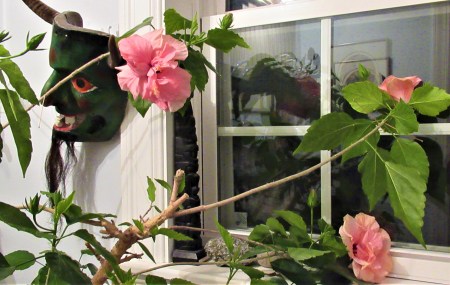
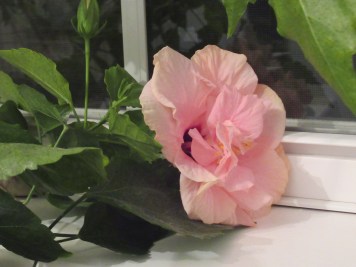
… and soon they’ll all be gone, save for the lucky ones that Clare gathers and sticks in pots to winter over in the house-warmth. Over the coming months, if you visit us, you’ll find these flowers in corners, on tables, in places that are touched by the low winter sun. Clare keeps lots of geraniums and they do winter over very well. She makes a selection of colors and then places them in sunlit spots. They bring color and light to the darkest days and help keep winter at bay. They are also great to photograph against snows and crows, and I often use their window reflections in my indoor photography.

IMG_1264.JPG

Here are some red and white geraniums getting their last touch of fall sunshine as they cling to the back porch.

IMG_1259 (2).JPG

This little group await their fall prune. Clare will trim them down and then bring them in. They will be slightly dormant for a while and then start to flourish once again. By the time next spring comes round, they will be ready for their outdoor adventures, a day at a time, back in overnight, and nursed and nurtured until they are ready for their full summer blossom.

It’s Thanksgiving this weekend, so a Happy Thanksgiving to all, and may you all have flowers to brighten your life and bring you some beauty and peace.