Self Isolation Day 21

IMG_0638

Self-Isolation Day 21
Bakhtin’s Chronotopos
Man’s dialog with his time and place

Chronos / time + Topos / space = chronotopos: the time and space within which we live.

Chronos: this morning, when I woke up, I moved back into my own time and space. But what is my time? It was 5:45 am when I awoke, so was that my time? I stayed in what the Spanish call the duermivela, that drowsing dream-world in which we all wander, half-conscious. I stayed there until I decided to get up at 7:45 am. Was that my time? Well, yes,  all of that is / was my time. But time extends further than that. Real time is static and only exists in this second as I type the s of second, but look how it has flowed or flown. So my time drifts backwards into a knowable and then an unknowable past. I knew my parents, and my grandparents. But I know nothing of their childhood, their war days (WWI and WWII), their courting, their marriages. Their time is time lost for me. Sure, I can invent it, renew it, recreate it … but it can never be mine. All I can possess is this Second when I preSS the S key, a Second that haS already flowed paSt me, flown and gone. The same with future time. It is there, stretching out before me, for how long, I do not know. It is not yet mine, and when I come to possess it I will only posses it, really possess for those precious Seconds when I inhale, or exhale, or press the S key. And now I have bewitched you, and your concept of time, and your keyboard will never be the same.

Topos / Place: so what is my place? When I awoke this morning, it was the kennel-cave of the bed in which I hibernate each night. Then it morphed into the bathroom where I dressed and prepared for the day. After that, I walked downstairs. Descending the stairs, a step at a time, feeling for the steps with my cane, as I do, I find that each step is my place. Luis de Góngora, one of my favorite Spanish poets, wrote, a long time ago that “Cada pie mal puesto es una caída, / cada caída es un precipicio”each footstep, badly placed, is a fall, / each fall is like tumbling down a precipice. Ipso facto, I must take care not to fall each time I place my foot on a stair, and each stair, therefore, is my concentrate of time, and this moment of time manufactures my space.

Then there is my breakfast place, my office place, my work place. Time spent in each of these spaces is a link backwards and forwards, past, present, and future all inexorably bound in each passing second that I live.

But there are other spaces, spaces in which time flows at a different rate in objective time (the thirty minutes you spend in the dentist’s chair) and subjective time (the hours and hours those thirty minutes take to pass as each second limps by, like a three legged tortoise with gout). hen there is creative time: and creative time, especially on the computer, leads us into a different space, a sort of hyper-space, in which we hover between this place (the place of the office and the house) and that place (the place in which we create our visions and dream our dreams). Lost in that creative hyper-space we drift in a timeless amniotic sea where all time is one and all places are one and we are the masters and mistresses of our own creative universe. Y aquí, as my good friend José Hierro once told me, el tiempo no tiene sentido / here time has no meaning.

Jane Tims wrote these words to me today. “The idea that some of our words will live on, on the page… I wonder where our WordPress and Facebook words will reside in 300 years? Will some antiquities student make the headlines having managed to upload the forgotten words of people who wrote about the days of the coronavirus?”

My reply: “These are very true words, Jane. It looks like you have gifted me with the topic of tomorrow’s blog! Thank you.”

Indeed, the online medium is so ephemeral and can be wiped out in seconds. Tweets can be erased, changed, and altered. Written words and written histories have also been erased and wiped out. In our brave new world, the truth changes from day to day with no vital record attached to it. Historians always say that the conquerors write history … and when they do so they usually destroy the writings of the conquered. I think of all those Mexican Codices, destroyed by the Spanish priests on their arrival in Mexico as the works of the Devil. We know so much from the surviving ones, for example the history of Ocho Venado, born in 1063 and sacrificed in 1113 in accordance with the fifty two year annual cycle. Only five Mixtec codices now survive, one, the Vindobonensis, still bears the scorch marks from when it was plucked from the flames that were meant to devour it. Man’s inhumanity to man. How much have we lost? How much are we losing? How much will we retain? And what is truth …?

As for us and our chances of survival, another good friend of mine, the poet and philosopher José María Valverde once wrote of nosotros, los pobres poetas de hoy, destinados a ser polvo seco de tesis doctoralwe poor poets of today, destined to become the dry dust of doctoral theses. In spite of all this, it is our fortune and our duty to exist within our time and our space, to live letter by letter, painfully tapped on the keyboard, and to engage in our dialog with our own time and space, for that my friends is all we have, the single instant of that one letter S.

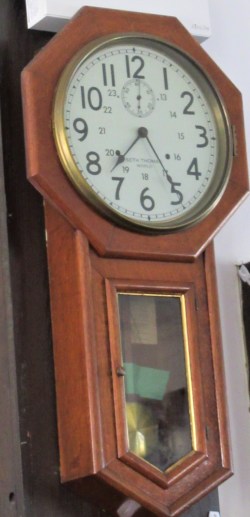
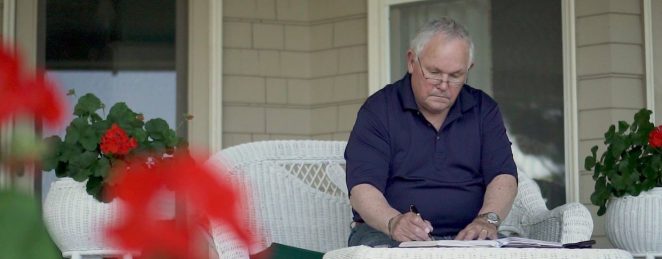
Comment: The watch in the photo belonged to my father. I wind it up and wear it on his birthday every year. It now measures my time, as it once measured his, and its place, at least once a year is on my wrist. Its function is to tell me the time. One day, it will do the same for my daughter, and then my granddaughter and they too will have their dialog with their own time and place.

Self-Isolation Day 19


IMG_0718 (2)

Self-Isolation Day 19
Platero yo yo
Meniscus: Crossing the Churn

I am eking out my reading of Platero y yo much as I eke out the food supply: small portions, and a chapter at a time. In the same ay that I am enjoying my food so much more, savouring each mouthful, cutting down on the accompanying wine, tasting life to the full, so I am slowing down my reading. I am learning to enjoy the journey, the perusal of each word, each phrase, the long-drawn out aftertaste of every image, the lingering bouquet of each metaphor. Yes, Platero y yo is a fine wine drawn slowly over the palate to be tasted and tested, not swigged and swallowed.

Not for the first time in my life, I am jealous, jealous of this writer with his Nobel Prize for Literature and his wonderful way of choosing le mot juste, the exact word, with which to illustrate his tales. It is not the Nobel Prize of which I am jealous, but the talent, the skill, the patience, the taste of each word. I wish I could write like that. I wish I could take the world outside in my garden and imprison it on the page.  Imprison: that’s what I do. Juan Ramón Jiménez imprisons nothing. His birds and butterflies fly free. His donkey roams free. His village women, young and old, wander freely across the pages as do the gypsy children and the children of the poor, with their dreams of gold watches that will not tell the time, their shot-guns that will not kill hunger, their donkeys that will carry them to a pauper’s death. Reading at this level, I rediscover my inevitable inability to write the way I want, to capture what I see, to give life and liberty to my words, enchained all, and lavishing in their captivity.

There is, of course, an alternative, one of which I am also incapable: to create a new world. I know of few people who are capable of doing that. Tolkien, of course, created Middle-Earth, the Shire, Mordor, Gandalf, and the Lord of the Rings. Rowland created Hogwart’s and the world of magic that surrounds Harry Potter. Closer to home, Alexandra Tims created Meniscus, a planet that travels around twinned suns and is in turn circled by two moons. Here water effervesces and flows uphill or generates dramatic water-climbs and lake-like churns.Erosion occurs by wind-scour and frost-heave. It holds predators (slear-snakes and kotildi) and humans have been brought her, as slaves, from earth itself, to eke out a miserable existence amidst the dystopia created by Dock-winders, Gel-heads, Argenops, and the Slain.

What I love about this series includes the invented language, the flora and the fauna, the wonderful drawings and maps that occur regularly throughout the books. This is no Middle-Earth, a recognizable world inhabited by humans and figures of magic drawn from our own legends and mythologies. It is a flesh-and-blood creation of something new and startlingly different.

Wolfgang Kayser suggested, a long time ago, that there were three types of novels: novels of action (the easiest to write, if you have that calling), novels of character (the development of an individual or a series of individuals), and novels of place (where the world, or a small part of it, is captured in detail). Occasionally, a great novelist, and Miguel de Cervantes was one of those, manages to write a book (Don Quixote) that contains all three of these features. Mikhail Bakhtin talks about ‘man’s dialog with his time and place’. Well, Ms. Tims has created ‘a woman’s dialog with her created time and space’ and I, personally, am so very happy that she did so.

Comment: [added 27 March, 2020]
Meniscus: Crossing the Churn can be found at
Here are the other books in the series.
Book One – Meniscus: Crossing The Churn

Book 1.5 – Meniscus: Forty Missing Days
Book Two – Meniscus: South from Sinta
Book Three – Meniscus: Winter by the Water-climb
Book Four – Meniscus: The Village at Themble Hill
Book Five – Meniscus: Karst Topography
Book Six – Meniscus: Oral Traditions
Book Seven – Meniscus: Encounter with the Emenpod


Wannabe a Creator


IMG_1047 (2)

Wannabe a Creator?

            Not everyone can be a creator, not because they cannot create, but because they do not believe in the powers of creation, the strength of the tsunami, of that tidal wave that sweeps us creators away and drives us into the blackened spaces of our inner minds where a dark sun shines its coal black light and shadows dance their will o’the wisp dance and lead us on and on until we have caught our dreams, squeezed them dry of their nothingness, and turned them into the stuff of an actuality filled with new life, a new reality, a new creation, something that is really ours, yet that will only truly live outside ourselves.
We gaze at each new creation for a moment, in astonishment, then position it in its cradle of reeds, place it in the running river, push it out into midstream and eyes, filled with tears, we wish it ‘god speed’ and send it spinning on its way to who knows where? Our hearts fill with hope as we watch it float away to make its own life, sink or swim, on this sea of sorrows, where someone, downstream, may bend to the waters and speak the magic words and tell a tale, our tale, their tale, or whatever they then deem the new tale to be.
Now, in our time of trouble, is the opportunity to dig deep, to mine our unconscious, to discover and re-discover our innate creativity. Take out that note-book, that pencil. Find that old sketch-book. Bring tat camera back to life. Above all, take the time to be yourself, to remember who and what you are, to re-discover your self and, wherever possible, take this opportunity, for it is an opportunity, to build the new self, the one you still wish to be. There are no greater mortal creators than those people who can create themselves anew. Now is the time to dream ourselves a new and better reality. Now is the time to drop the wannabe and to become a true creator.

Comment: I am taking the time now to multi-task my reading. This means starting and restarting several books at once and then shuffling the readings and pausing a while as I contemplate the pages. More on this tomorrow. Join me then.

Creativity

IMG_1526 (2)

Creativity

When creative artists get together they talk and walk and hug and hold and discuss so many things, like how the creative spirit can inflate the body and send it soaring like a trial balloon, how listeners can be swept away by a magic vortex of voice, and how time and space can be suspended in the glories of creation that spin a web of forgetfulness around us and makes us disregard who and what we are as we forge new worlds.
Dark earth-spirits of love, want, and creation, hold us captive and drive us onward and inward until we give birth to that which was waiting patiently to be born, even though we never knew that the seed had been planted. “What is this?” we ask as we survey the new-born entity fresh on the page, held in the hands, suddenly full of life and breathing on its own, a thing of beauty, an essential being. It makes complete sense as we struggle to hold it as it grows and transforms from internally ours to eternally theirs, a product of our mind and body now belonging no longer to us but to the world beyond us.
We long to know its fate, to watch it as it walks along its path, its destiny now in its own hands. “What is it?” people ask as we stand still and know not what to tell them. Some sigh, some mutter ‘nice’, others just turn and walk away, lost in a self-created labyrinth of cul-de-sacs, dead end streets, and black, blind walls. Many go back to their two-thumbed clicking and surf the networks, bereft of the imagination to see and explore that which has been thrust fresh before them, this new-born babe beautiful in its swaddling clothes, a new creation.

Comment: The photograph … a geranium against the snow. Truth and beauty can survive even the hardest winters. As true creative artists we must be prepared to fight for our creative ideals. When the skies seem to be at their darkest (see my recent posts Poem from the Cree, Co-[vidi]-s and Outrageous Fortune) that is when we must strive to re-create the light, not just for ourselves, but for others as well.  

Le Pont Mirabeau

IMG_1318 (3)

Le Pont Mirabeau

Beneath Mirabeau Bridge flows the Seine
and so does our love
must I be reminded yet again
that happiness always follows pain

Let night descend let the hours sound
the days go by … I’m still around

Hand in hand let us stay here face to face
while beneath the bridge of our arms
like flowing waves our gazes interlace

Let night descend let the hours sound
the days go by … I’m still around

Love flows away like waves that flow
love flows away
hope fills us with dismay
and life passes slow

Let night descend let the hours sound
the days go by … I’m still around

Days and weeks flow by bye bye
along with former loves
and past times that did fly fly fly
they will never come back again
Beneath Mirabeau Bridge flows the Seine

Let night descend let the hours sound
the days go by … I’m still around

Comment: It’s hard to give up on this. The poem has stayed with me since 1962 (58 years). A slight variant on an earlier version. Sorry, Guillaume.

New Projects

IMG_0026

New Projects

 … how do you choose them, these new projects? Simple answer: I really don’t know. So much depends on you and your work habits. In my own case I have a back log of projects. I have been writing and creating for years. As a result I have a whole set of files that I can turn to and select from. Two novels, about fifty short stories organized into two or three as yet unpublished manuscripts, a couple of hundred poems, organized into three separate thematically organized manuscripts, a set of writings on facilitating creative writing …

Projects … do the work and then choose the order in which you will publish it. I look at the hollyhock that suddenly appeared last year in my garden. Do the work: the birds (in all probability) seeded it. The hard work: the hollyhock grew itself. I should add that my beloved nearly tore it out on the grounds that she didn’t recognize it and it looked like a weed. But she left it, and it grew into what it was meant to be: a hollyhock. One stalk. So many buds. We didn’t know which would blossom first. And it didn’t matter. One after anther they all blossomed. The hollyhock knew what it was doing [we didn’t]. It had belief and faith [we didn’t]. But we had hope.

The Hollyhock Project: This year the hollyhock has eight [yes, eight] different shoots. It’s no longer a single flower, it’s become a bush! It has also shed seeds further afield [I should really write abed, since they’re all in the same flower bed.] I wonder in what order they will blossom. It doesn’t matter really: I am just confident they will bloom. And the sunflowers have rooted below the bird feeders. They have their own projects and I know they will grow as and how they will. And the yucca has four shoots that will flower, how and why I just don’t know. But each flower has its project(s) and I am confident they will all flower and flourish.

My own projects: When June came in, I didn’t know what to do, nor did I know in what order to do it. Then Time-spirits came together. Geoff gave me some drawings and I chose one for the cover. I took the manuscript to the printers, got an estimate, and received a mock-up. The text had shifted in the transfer from computer to computer. My 70 page text had grown to 132 pages. I spent the next 72 hours rewriting everything, eliminating words, lines, poems, dropping the text back down to 70 pages. It is now published. I wondered what to do with the McAdam Railway Station poems. Geoff came to see me on Sunday, 23 June, and told me that he would be celebrating his birthday the following Friday. He also told me that the McAdam Railway Station would be unveiling his mural the following Sunday (June 30). The McAdam railway poems were published on Saturday, 29 June, and I took them to McAdam in time for the ceremony.

Trust: Trust yourself, trust your projects, trust the universal spirit [Northrup Frye’s Spiritus Mundi], under whichever name you acknowledge it). And remember, genius is 99% perspiration and 1% inspiration. Put in the mileage, put in he hard work, believe, and trust. ¡Qué será, será! Whatever will be, will be.

IMG_0206

Comment: another golden oldie. I am trying to choose what new projects to start and which old projects to finish. A pleasant problem. Meanwhile, I am enjoying the prospect of a nice, snowy Canadian winter day. Best wishes and happy writing to all.

Grandpa

IMG_5811_2

Grandpa

Going back in time,
to a better time,
an innocent time,
when we believed
in frost and rime,
and Santa Claus
and Christmas.

Stockings hung
with hope and joy
and filled with
tiny things and toys,
an apple, an orange,
a chocolate bar,
small things
brought in
from afar.

My grandpa, who
had not been good,
with a carrot,
an onion, coal,
and wood,
but a smile
on his face
and his red
underwear.

I often see him
standing there,
beside the fire,
beneath the tree.
He still means
oh so much to me.

Time Folds

IMG_0158

Time Folds

Time folds … itself in two or three. A rubber omelet clock, it vanishes over the white water adventure rocks, bending and sliding, folding and unfolding. Riding the waves is ungainly, unseemly. We hang on to ropes, clock edges, reach for outstretched hands, count seconds, minutes, hours, search for meaning …

Further downstream, men and women dance on the bridge at Avignon. Now there are two popes and each one castigates the other, hurling verbal darts, well sharpened, that pierce the thickest of skins. The bridge across the river stands unfinished. It stretches stone hands out towards the other side, but the further shore is distant and the bridge’s fretwork abandons its quest.

Where do we find meaning when seconds, minutes, hours slip down the stream paddled along beside all those hours lost from the clock? Omnia vulnerant, ultima necat: they all wound, but the last one kills. At what time will that final hour suddenly loom and sling its ultimate stone, shoot its outrageous final arrow? Jove’s thunderbolt, sudden, from a cloudless sky? Life’s lead-tipped slingshot and all that we love turned suddenly to hatred? A tremble of the ground beneath our feet? Kangaroos and Koalas burn, setting even more bush ablaze and the smoke from those fires reaches out, out, out, across the bush, across the cities, across the Tasman, across the Atlantic. New Zealand has become the land of the long pink cloud.  Now South America is gifted its grey, smoky monsters of grasping hands, those insubstantial nightmares of our childhood dreams, reaching in from the dark to pluck us from our sleep.

On the unfinished bridge at Avignon, the people still dance. In their papal palaces, the partisan popes still hurl the insults of their hit and missiles. Somewhere, close, was it in the future or will it be in the past, the Black Death lurks, waiting its moment. The Great Fires of London sizzle and stench from 1666 to 1941 while religious partisans burn each others’ homes. The Spanish flu invades the trenches and kills more men than the war will ever manage.

Turn your face to the wall, my darlings, as the gentlemen go by. But what do they bear in their hands, those gentlemen, in their minds, those unsubtle warriors of a crazy game that leads us onward, merrily, merrily, not so gently, down what stream, over what waterfall, and into which of the many perils that lie in wait?

Reyes

IMG_1318 (3)

Reyes

The Spanish Christmas comes on the Twelfth Day after our traditional Christmas: January 6, today. 32 years ago, we spent Reyes in Madrid. We arrived in time to see the Christmas Parade and what a sight that was, with the three Wise Men, los reyes magos, riding on their camels at the end of the parade. It had just snowed and the city, streets and squares, shone white.

It’s funny what we remember and how we remember it. “Mira, mira, mira!” “Look, look, look!” Then, in the distance, descending from the Puerta de Alacalá, the Three Wise Men. Behind us, a little boy screamed at his mother. “Don’t you want to see los tres reyes magos?” she asked him. “No,” he yelled. “I don’t believe in the three wise men. I want to go home and watch soccer on the telly!”

I wore a white sweater that evening. When I got back to the hotel, I discovered that every inch of sweater that had emerged from beneath my coat was now grey. Even the air was filthy and pollution lay in ambush everywhere. “Every time I cough, I get a mining souvenir,” Max Boyce used to sing. Well, after a couple of days in Madrid, I too was coughing up souvenirs, but they didn’t come from coal dust underground. They came from the very air I was breathing out in the city streets.

Later that week, we took the train out to the Casa del Campo to see those same three camels in the zoo. In the distance, the Guadarrama stood out clearly against the sky. The zoo welcomed us and we enjoyed breathing in the fresh air and seeing the animals in the wide open spaces behind the invisible bars that allowed us to view them in a more natural habitat.

Christmas / Reyes: a magic time for remembering things that seem to have vanished, yet that sneak up on you and shake you awake when you least expect it.


IMG_0124

Black and White

IMG_1519.JPG

Black and White

There is a moment in winter photography when the world of color turns to black and white. Color is still there, but today it travels incognito, anonymous. The world is formed by shapes, trees draping their branches, snow weighing them down, dressing them in wedding gowns for their marriage with the new year spirits that haunt sunlit, moonlit snowbanks and dance across the snow. Even the clouds exist to give a soft, quiet dramatic touch to the winter beauty that visits the garden. And yes, it will always be there, even if we are not here to see it because it will carry on without us. As for us, we are secondary, mere witnesses to winter’s beauty and the nature that surrounds us.

IMG_1554.JPG

Amateur photographers can sometimes capture this effect in a moment of luck (or occasional inspiration). Great painters have always known this art of the minimal. El Greco drew light from darkness, his portraits often finding their own fire and lighting up from within.  Caravaggio, too, knew the values of chiaro-oscuro, light and dark, black and white. Velasquez was the master of the spotlight that highlighted the eggs frying in the pan, the hand of the water-carrier. Goya, in his etchings [The Disasters of War, The Caprichos] and dark paintings, drew mood and anguish from this contrast between light and dark, black and white.

image1-1.jpeg

My friend Geoff Slater has caught such a moment in his sketches for Scarecrow. Above he catches the precise moment when the scarecrows, male and female, reach out to each other, and beneath a Van Gogh planetary sky, dare to dream of mobility and love. The dream world: so important to us all and especially to the creative artist who dwells in each of us. Deus est in nobis, the Latin poets used to say, it is god within us. The god of black and white who transforms the world into color and light.

image3 (10)

Black and white, light and dark, winter trees, Clare, two scarecrows, deer and crows: labors of love that reach out and catch us unawares, blowing our hearts wide open, letting in the sun and the wind and the ever present joy of seeing things, seizing them, sizing them up, in black and white.

image2 (15)