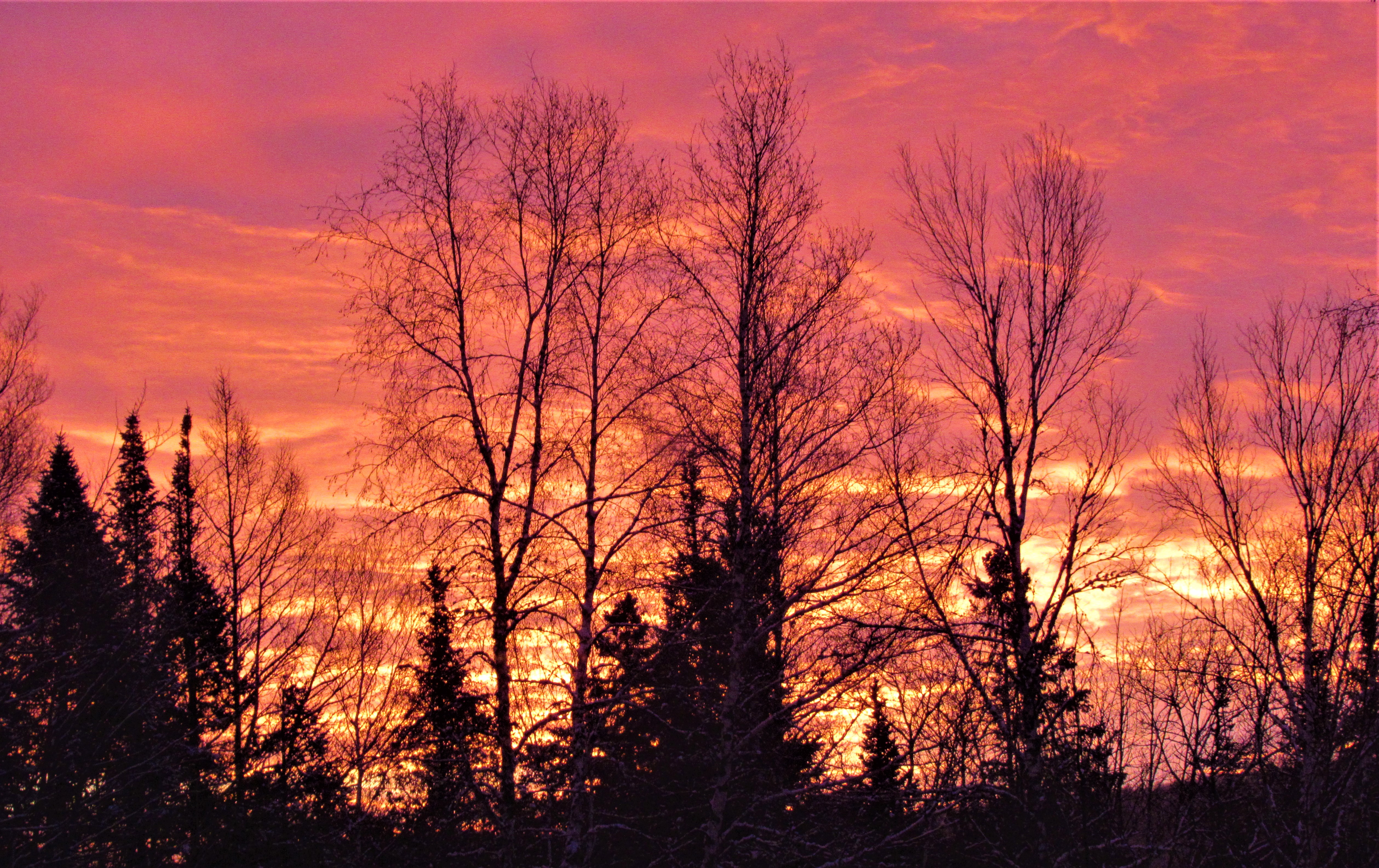
Can you tell me …

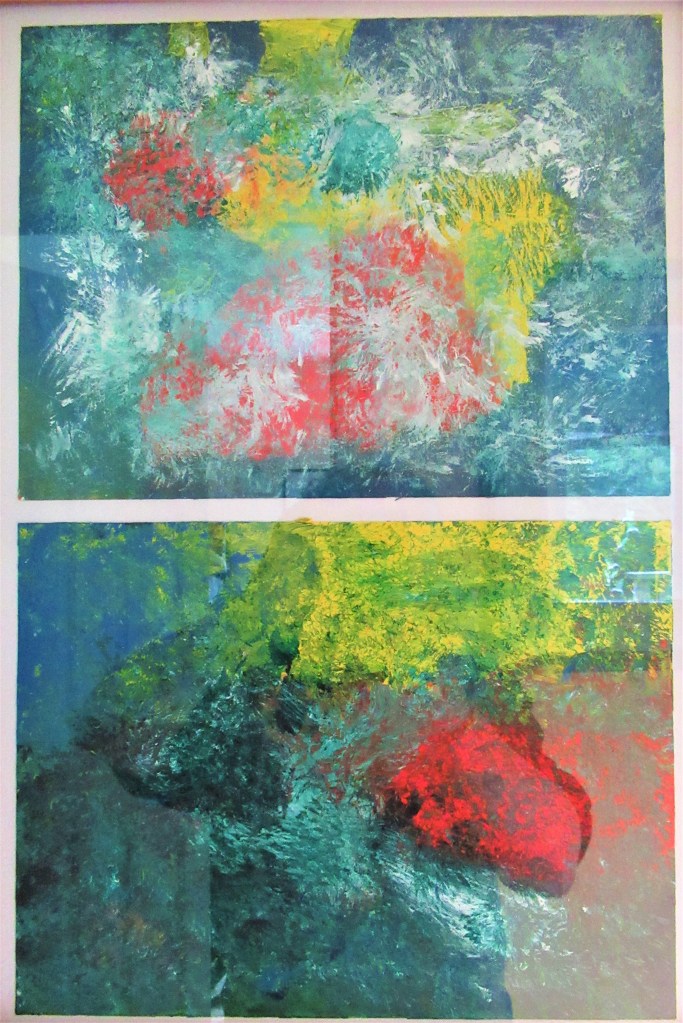
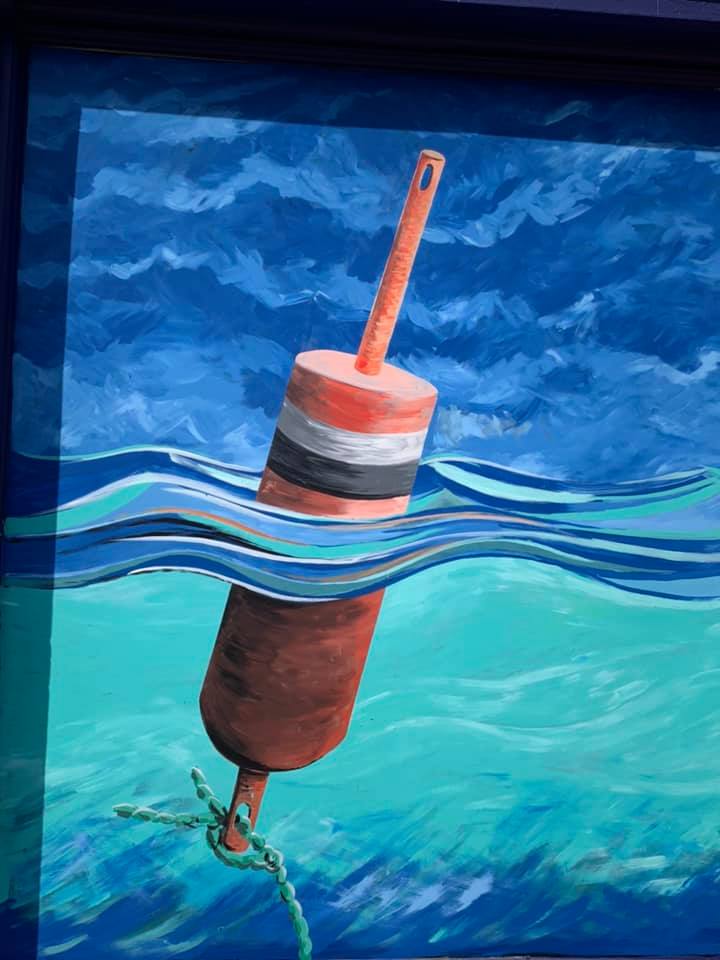
Painting by the very talented
line-painter, Geoff Slater

Can you tell me …

… why an incoming wave
is a flash of a handkerchief
an invasion of white water,
a hand at dockside waving good-bye?

… why each wave separates,
thrives for a little while,
then dies on the beach,
wrapped up in its lacy
shroud of foam?

… why errant stars fall,
leaving their constellations
to wander the world alone,
each shooting star, a child?

… why a mother abandons that child,
turns her back on her husband,
and looks silent at the wall?

… why, one night, that husband
walks out of his house,
and never returns?

Holly and Hock

Why, hello!

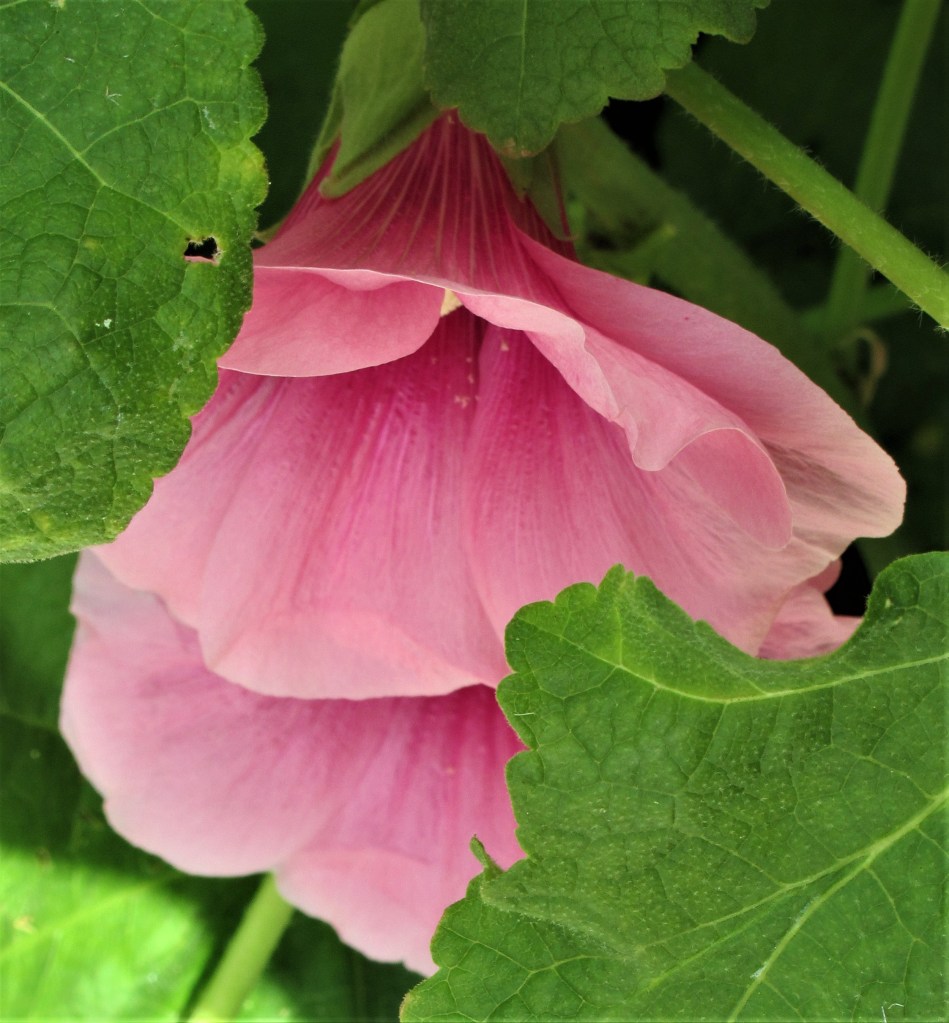
So, the holly hocks are back and this year we have some red ones to go with the lovely yellow ones that reseeded, in a different place, from last year. The red ones are very shy and are hidden away by the back steps where they are very hard to see.

I spy, with my little eye …

The red and green go well together. More a deep, blushing pink, I guess, with very dark centre. You can see the wood of the steps just behind them. I posted this yesterday, incidentally, but the computer munched it and I had to rewrite it today. It has been a slow time for me. The Corona-19 finally got to me, not in the physical sense, but mentally. As a result I have been feeling isolated, trapped, and a little bit depressed. Alas, there are many more like me suffering in today’s world. Luckily, the flowers help. As does the sunshine.

We’re back

Here are the new seeds from last year’s hollyhocks. They are similar in color, but much smaller this first season. They have also shifted location and I have been surprised at how many seedlings have sprouted and started to grow. Next year we may have a bumper crop.

Night Garden

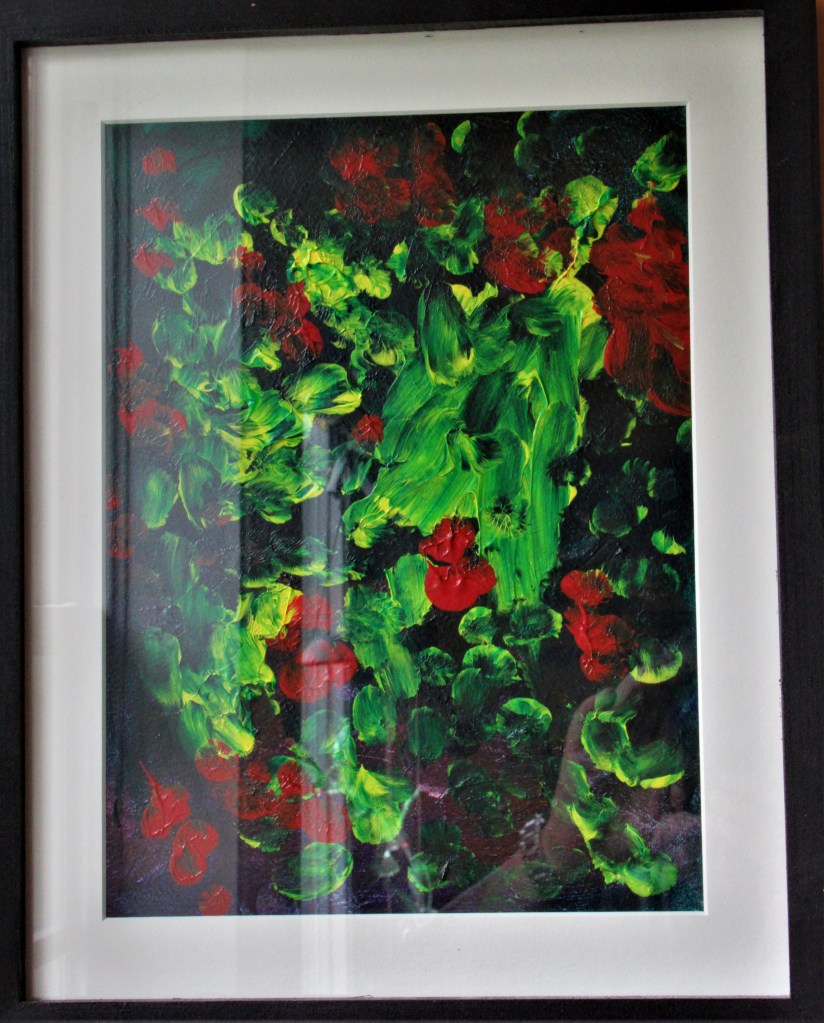
And here we have a painting of the garden at night, flourishing without us, but beneath the stars. “The garden going on without us.” Given the current situation, I prefer the garden going on with us still here to watch it.

Ah would some power …

Ah, would some power

“Ah, would some power the giftie ge us / to see ourselves as others see us.” Robbie Burns, a Scottish Poet.

And sometimes I think the flowers would like to be seen as they see themselves, not as we see them with our imperfect eyes, not with the cataracts of the Elderly Monet, not with the blunted vision of many artists who have stopped, and sniffed, and bent their heads, and wondered at the colors that entered their paint brushes through the nostrils. Vision and reality: the photo versus the objects as we see and sense them. The reality versus our own version of it.

So who is this anonymous artist who delivers these visions to my blog and allows me to glimpse alternate realities that are so different to my realities. I think of Lorna Crozier, The Garden Going on Without Us. I think of Kingsbrae Gardens, at night, when the flowers are alone and talk only to themselves. I think of Monet at Giverny as his vision lessened and his instincts grew. Who are we? What are we? Do we see ourselves as others see us? Do others see what we see? Color, shade, light, hue … El ojo que ves no es ojo porque lo ves, es ojo porque te ve / the eye you see is not an eye because you see it, it is an eye because it sees you (Antonio Machado). Does the man or woman looking out at us from the television set see him or herself as we see them?

The night before last I sat alone in a hotel room. The television screen was much, much wider than it was high. All the facial images were greatly distorted. I didn’t recognize the people I saw, except by their voices. Who will distinguish the reality of the flowers, each by each and one by one, privatim et seriatim? Who will listen to their floral voices and call them by the names they have given themselves, rather than by their horticultural names?

Tell me, what reality do we see when we see the flowers? What reality do the flowers see when they see us? The anonymous painter who painted this picture that Geoff Slater, my anonymous friend, framed so nicely did not see those flowers the way that I saw those flowers. Why not? Why can’t I see like him (or her)? and why can’t she (or he) see like me?

Ah would some power …

Night Garden

Night Garden

Every trip to Kingsbrae Garden in St. Andrews, New Brunswick, opens my eyes to more beauty. Yesterday, I brought back this painting, Night Garden, and placed it on the wall by the garage door so I would see it regularly when entering and leaving the house. Alas, I caught the reflection from the window in the photo, but the night flowers and their colouring make up for any lapses in my amateur photography.

The painting is neither signed nor dated, so this night artist will have to remain anonymous for now. My friend Geoff Slater framed the painting but my photo does not do justice to the beauty and skill of the frame. My apologies. Alas, I must live with my inadequacies, but at least I am aware of them!

I spent a wonderful day in Kingbrae / KIRA, incidentally, chatting over a glass of wine with some exceptional local visual artists who are spending four weeks (June and July) in day residencies and working out of the artists’ studios at KIRA. Geoff Slater, the Director of Art at KIRA, led the conversations and I joined in, as did Alana, Ann, Simone, Stephanie, and Simone’s visiting friend, Renate. When artists gather at KIRA to discuss their art, the conversation is wide ranging and varies from the intensely personal to universal theories of creativity. Visiting KIRA is an experience like no other and one that I delight in every time I visit.

Summer in Wales

Summer in Wales
aka
Cricket, lovely cricket!              

Summer in Wales is always as I remember it: glorious days of sun and sand and blue skies and warm winds … and especially the sun on the beaches with the water sparkling and little boys and little girls playing cricket on the dry wrinkled sand packed hard when the tide goes out and leaves the land stranded … and uncles and aunties bowl under arm, not over arm, so the little ones could manage to score lots and lots of runs … and I remember us, standing breathless between the wickets, or at the wicket, if there was only one set of stumps, or a picnic basket stood on its side, or three pieces of driftwood, with sea-weed for bails, and what are bails, you ask?

              Well, bails are the sea-weed that is draped over the driftwood that stands as stumps. And we guard our stumps with the cricket bat that somebody has brought and we bowl with wet tennis balls, because nobody will risk a red, leather ball on the sands, with the wet tide standing there, waiting for the ball to be hit at it, or into it, and it’s cold, but not that cold, and when uncle hits the ball, right out so sea, someone has to run after it, then dive, and then swim after it, and if it’s real runs you want, then uncle runs two or three quite quickly; then the aunties tell him to stop running so fast or he’ll have a heart  … so he slows down and trots four or five; then he walks six and seven; and when you throw the ball back, he’s walking eight or nine; and then the dog intercepts the ball, catches it in his teeth, and starts running around with it in his mouth and everyone is trying to catch the dog except my uncle who is now limping very, very slowly between the wickets, but he’s already up to eleven or twelve; and then the little ones start crying because “It’s not fair!” Loud sniff! Then uncle stops in the middle of the wicket and sits there, waiting for somebody to run him out; except everyone is tired, except the dog, who is tireless and completely energized, and now the centre of attention; and nobody is going to catch him;  and finally uncle walks to the wicket and he lifts the piece of seaweed with his bat and everybody appeals, then he’s finally “OUT!” because officially he’s hit his own wicket and that’s illegal and now the game can go on once more, with everyone happy and God’s in his heaven and all’s right with the world …

And the dog has dropped the ball right at the edge of the waves and is barking furiously at the incoming waves as time and tide march up the beach and sweep us and our memories all away.

After the Lecture

After the Lecture

After I delivered the lecture at London University, as it was back then, I caught the tube and descended at Paddington station. While waiting for the train back to Cardiff, I sat in the station bar and ordered a pint of beer and a Cornish pasty. An older man wearing a sweater and jeans asked if he could join me. I didn’t say ‘yes’ but he sat down anyway and straight away began to talk.
            I paid no attention to him until he rolled up his sleeve and showed me the collection of scars that ran crisscross, hard and welted, over his left wrist.
            “Failed attempts,” he said. “But I’ll get it right next time. “I wouldn’t want you to make the same mistakes I did. If you want to kill yourself, you must do it this way,” he reached across the table and picked up the knife I had used to cut my pasty. He pulled out a dirty hanky and wiped the knife in it. Then he laid the blade not cross-wise but parallel to the artery in his wrist. “And you must dig deep, first time, and at a slight angle.”
            “I’ve got to go,” I told him as a tinny voice came over the Tannoy. “That’s my train.” I stood up, leaving the remains of my pint and my pasty on the table.
            I got to the door of the station bar and looked back. Then I watched as my table companion finished my pasty and reached across the table to claim the remains of my beer.
            “Quite the lecture,” I thought. “Good job I didn’t spit in the glass.” Then I realized that both my day’s lectures had been effective, in one way or another.

Don’t Look Out

Don’t Look Out the Window

Don’t look out the window, you don’t want to
know what’s lying out there. Don’t look out.

Play ostrich. Place your head in the sand,
pretend there’s nothing there to worry you.
Pretend you can see the missing PPE,
the vanished masks, the surgical gloves,
the sanitized hand-wash that everybody needs.
Just don’t look out the window. Don’t look out.

Pretend there’s nothing out there. Deny that
nearly two million people are ill.
Deny that a hundred thousand have died,
not in vain, but from ignorance and vanity
 and a total denial of scientific truth.
Just don’t look out the window. Don’t look out.

Just look at these walls that surround you.
Smile back at the smiling faces, the nodding heads,
the puppet-string politicians who agree with
every piece of nonsense that issues, meaningless,
from empty mouths. Surround yourself with people
who believe what you believe, who think and do like you,
fellow narcissists and bullies, cheats and liars,
who have deceived and stolen, lied like you, to build
enormous fortunes while they have cheated on
their wives, gone bankrupt, and borrowed shady money
in questionable deals with shabby, foreign banks.
Don’t look out the window. Don’t look out.

All those employees know a bum deal
when they are on the sharp end of one.

But nobody speaks out and nobody,
but nobody, dares open those curtains
for fear of seeing that reborn beast,
its hour come at last,
slouching down the streets.
Close your eyes. Don’t look out the window.
Don’t look out.

Comment: I rarely comment on political events, let alone write poems about them. That said, I do not consider this poem to be a political statement. For me, the key to the poem can be found in the final five lines beginning with ‘for fear of seeing …’. I have explored inter-textuality before in these pages. I hope the reference to W. B. Yeats’ poem The Second Coming, is clear.

Blue and Green

“Blue and green
should not be seen
without a color
in between,”
thus spoke my mother.

What did she know
of the Peace Park grass
sweeping spring-clean
to head pond waters?

Didn’t she sense the frail
brown fringe of rock
scarfing between green
grass and head pond blue
or the white caps lacing
cow parsley on the stones?

I know she knew nothing
of yellow and red leaves,
brown spotted like an old
man’s hands, freckling waters,
fretting at the fragility
of nature’s delicate balance.

My Grandfather’s Chair

18581930_1306791786107970_4016640231053970709_n

My Grandfather’s Chair
For Margie Goldsmith

“Write about that chair,” Margie said,
and I wondered what was in her head.
How can I write about that chair
when those who sat in it are not there.

Before the coal fire my grandfather sat,
snoring away, on his lap slept the cat.
At three years old, I climbed that chair,
and blew on the bald spot in his hair.

So many things we no longer know:
my grandpa did the same thing, years ago,
and years before that, his own grandad
did just the same to make his old man mad.

Now I, in my turn, when I drink deep,
like to sit in that chair for a little sleep,
and my grand daughter, there’s no grandson,
climbs up that chair, as others have done,

and sees the bald spot in my hair
and blows and blows as I snooze there.
The years roll back and I see the smiles
of generations woken by a young child’s wiles.

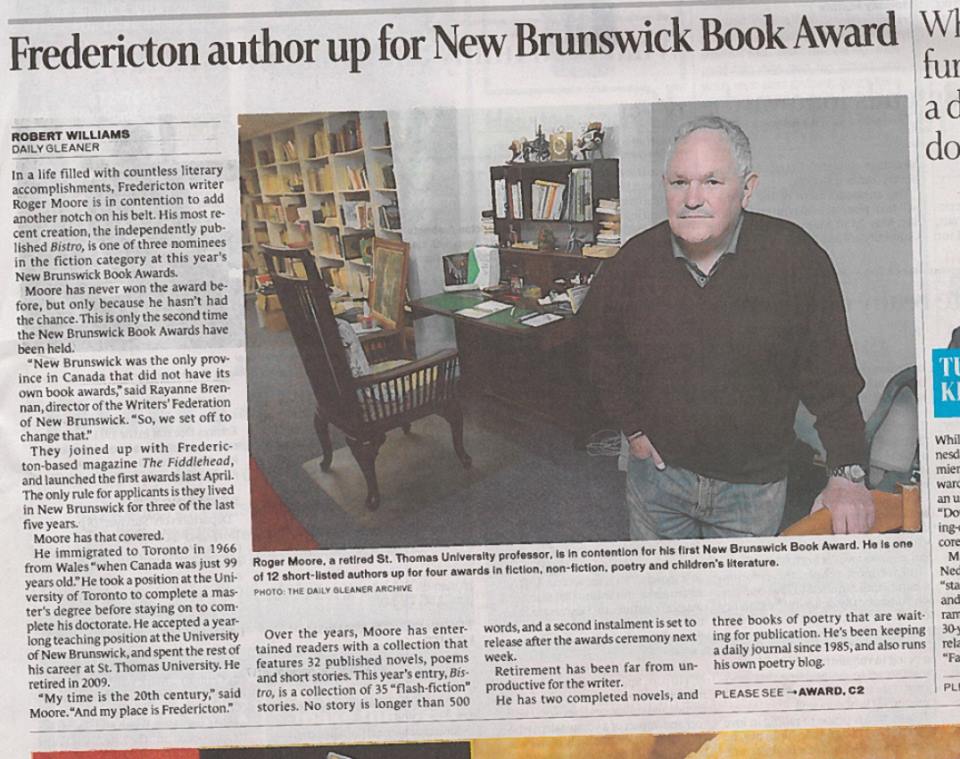
Comment: Talking the other day, I mentioned my grandfather’s chair, the only piece of furniture rescued from my parents’ house, and Margie said I had to write a poem about it. So, last night I did. The result is something very different from what I normally write. This is what in Spanish is called an occasional poem and it celebrates a specific occasion, a specific set of circumstances. Thus, it is written under different rules, rhyme, rhythm, stanzas. It is always an adventure to write something suggested by someone else. Poems like this cross the boundary between poetry of play (which this is) and occasionally enter the realm of poetry that expresses the authenticity of being which, to a certain extent is present in this poem too. The above photo, from our local newspaper, The Daily Gleaner, is the only one I have of the chair which resides in the basement where I keep my books. The article is an old one (2017), but the photo is nice!

Fire and Flame

IMG_1571 (2)

Fire and Flame

1

The world is on fire.
Someone, somewhere
lit a match.
The world exploded.

A match in the lungs.
the whole world burning.

Someone, somewhere
sneezed into their sleeve.
the world collapsed
in a fit of coughing.

“It isn’t the cough
that carries you off,
it’s the coffin
they carry you off in,”
said the talking head,
scientific boffin.

2

Intelligence, give me
the exact name of things:
corona virus, vaccine,
air that’s pure,
drinkable water,
a new, fresh world
for my daughter
and her daughter.

I wish I could spare them
from all this slaughter.

Comment: The echoes in here are obvious to me, but to how many others? Octavio Paz strolls through the first stanza while Juan Ramón Jiménez patrols the second one. How many people read their poems now? Polvo seco de tesis doctoral / dry dust of a doctoral thesis, as my friend José María Valverde once wrote. He, too, passed and will all too soon be forgotten like the rest. And time: what is it? How does it function? Is it linear or circular and repetitive? It twists and turns, like we did last summer, but not like we’ll do this one. My old arthritic bones will allow me to twist no more. Vingt-et-un, quatre-vingt- et-un: twist and bust. Yet time flows by, like water under Le Pont Mirabeau and days blend into days. 79 days of lock down now, all voluntary, or is it 80? El tiempo aquí no tiene sentido / time is meaningless in here, as my friend and mentor, José Hierro wrote, so long ago. And yes, these memories linger on, as time lingers on, as life lies heavy around us, and time limps by with its lame, old feet, yet looking back, it has raced passed like a spring river in spate. And the leaves are back, and the flowers are coming up, and the spring birds and bees and butterflies are arriving … and, in spite of everything, perhaps even because of it, life is as lovely as it ever was. Keep safe, keep well!

IMG_1264