Angel Choir

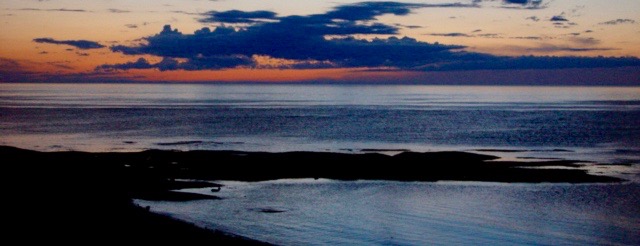
Sunset at Ste. Luce. We wait for the choir to arrive. Take a deep breath: it will soon be here.

Angel Choir
(on seeing the Northern Lights at Ste. Luce-sur-mer)
Sonnet

Listen to the choristers with their red and green voices.
Light’s counterpoint flowering across this unexpected son et lumière,
we tremble with the sky fire’s crackle and roar.

Once upon another time, twinned with our heavenly wings,
we surely flew to those great heights and hovered in wonderment.
Now, wingless, our earthbound feet are rooted to the concrete.
If only our hearts could sprout new wings and soar upwards together.

The moon’s phosphorescent wake swims shimmering before us.
The lighthouse’s finger tingles up and down our spines.
Our bodies flow fire and blood till we crave light, and yet more light.
We fall silent, overwhelmed by the celestial response.

When the lights go out, hearts and souls are left empty.
Leaving the divine presence is a gut-wrenching misery.
Abandoned, hurt and grieving, we are left in darkness.

Comment: The Spanish mystics, St. John of the Cross, and St. Teresa of Avila, wrote, in the sixteenth-century, about the ‘dark night of the soul’. That dark night also arrives when the communion with the spiritual finishes and the communicants are left alone, in their loneliness, abandoned to their earthly selves. To leave the divine presence is a heart-breaking, gut-wrenching misery. To turn from the marvels of nature can produce lesser, but still deeply moving feelings of grief and sadness. The secret is to preserve that joy and to carry it with us always, warm, in our hearts. Doing so makes the pain of separation much more bearable.

Black Angel

from an original painting by Rogier van der Weyden (1399/1400-1464)

Black Angel

You cannot hide
when the black angel comes
and knocks on your door.

“Wait a minute,” you say,
“While I change my clothes
and comb my hair.”

But she is there before you,
in the clothes closet,
pulling your arm.
You move to the bathroom
to brush your teeth.

“Now,” says the angel.
Your eyes mist over.

You know you are there,
but you can no longer see
your reflection in the mirror.

Comment:

I first saw the Black Angel in Aldebarán’s cultural store in Ávila (2006). She sat there, in the shop window, along with several other angels, and I worshiped her from the distance of the street. Her image was taken from an original painting from Rogier van der Weyden (1399/1400-1464). This was turned into a 3-D image and then converted into the statue I saw in the shop window.

I brought the statue back to Island View, placed it on the shelf above the fireplace, where it still rests, and wrote several poems on the theme of Angels. I gathered them together in a chapbook entitled All About Angels that I self-published in Fredericton in 2009. The chapbook was dedicated to Clare’s great-aunt, D. E. Witcombe who departed this world on October 15, 2008.

All About Angels was also based on a book of a similar title, Sobre los Ángeles, written by Rafael Albertí, one of the major poets of Spain’s Generation of 1927. I avoided the ambiguity of the Spanish title — Sobre (in Spanish) can mean Above or Beyond as well as About — by limiting my own title to All About Angels.

For Carl Jung, angels are the messengers sent to inform people of the state of their world. For me, they are also the wild creatures that inhabit the world around me and often take the form of chickadees, crows, mourning doves, woodpeckers, deer, foxes, chipmunks, the occasional bear, and other spiritual creatures. They can be best seen in those moments of solitude when we are most open to the natural world around us. Then, and sometimes only then, we can hear the urgent messages they bring.

Water

Not Oaxaca, but Avila, with una tromba, a meseta rainstorm, about to descend upon us. And when it descends, there is water, water, everywhere, as you can imagine from the clouds. In Oaxaca, water is precious. Tap water is to be avoided. Bottled water is to be preferred. We used to wash our vegetables in water that was specially chlorinated, also the pots and pans!

Water
Peragua
Water seeks its final solution as it slips from cupped hands.
Does it remember when the earth was without form
and darkness was upon the face of the deep?
The waters under heaven were gathered into one place
and the firmament appeared.

Light was divided from darkness
and with the beginning of light came The Word,
and words, and the world …
… the world of water in which I was carried
until the waters broke
and the life sustaining substance drained away
throwing me from dark to light.

The valley’s parched throat longs for water,
born free, yet everywhere imprisoned:
in chains, in bottles, in tins, in jars, in frozen cubes,
its captive essence staring out with grief filled eyes.

A young boy on a tricycle bears a dozen prison cells,
each with forty captives: forty fresh clean litres of water.
¡Agua!¡Peragua!” he calls. “¡Super Agua!”

He holds out his hand for money
and invites me to pay a ransom,
to set these prisoners free.

Real water yearns to be released,
to be set free from its captivity,
to trickle out of the corner of your mouth,
to drip from your chin,
to seek sanctuary in the ground.

Real water slips through your hair
and leaves you squeaky clean.
It is a mirage of palm trees upon burning sand.

It is the hot sun dragging its blood red tongue across the sky
and panting for water like a great big thirsty dog.

https://rogermoorepoet.com/2016/04/28/water/

Comment: More and more competitions, publishers, and magazines are asking for ‘original material, not previously published, or self-published, even on your own blog.’ So what is a poet to do? Put up fresh material, and it is illegible for entry elsewhere. Recycle and revise old material? Now that might work. Click on the link above for the original version of this post! And yes, it has been previously published on these ages!

A Thought for the New Year

Couldn’t find a photo of Don Quixote so I attached this instead. A suitable symbol for Brexit!

A Thought for the New Year

“Sábete, Sancho, … Todas estas borrascas que nos suceden son señales de que presto ha de serenar el tiempo y han de sucedernos bien las cosas, porque no es posible que el mal ni el bien sean durables, y de aquí se sigue que, habiendo durado mucho el mal, el bien está ya cerca.”
Miguel de Cervantes : Don Quixote de la Mancha.

“Know this, Sancho, … All these squalls that beset us are signs that the weather will soon clear up and better things will come to us, because it isn’t possible for good or ill to endure, and from here it follows that, these ills having lasted so long, good times are now close.”
My translation.

Comment: This quote was sent to me by Marina, my close friend from Avila, with whom I have maintained contact, even though it is now twelve full years (2008-2020) since we last saw each other and talked, except on Messenger. Break ups and lost and absent friends and families: it seems to be the story of my life. And how could it be otherwise when one is a migrant who emigrates and immigrates and passes on and through, rarely resting in the same place for long? I guess it is also the story of the Intelligentsia: those whose learning and understanding and life experience moves them out from one place and into many others. Cualquier tiempo pasado fue mejor / any time from the past was better. Hiraeth: the knowledge that the past is lost, save in our minds, and can never be recovered, even though sometimes we wish so badly to do so. The Intelligentsia: always dissatisfied, both with the past which they can never recreate and which they view through the pink lens of nostalgia and with the present which is never as beautiful as that pastel pink past, that in reality probably never existed. Toda la vida es un sueño y los sueños sueños son / The whole of life is a dream and dreams are just dreams, and nothing more (Calderon de la Barca).

WFNB

Moo

WFNB

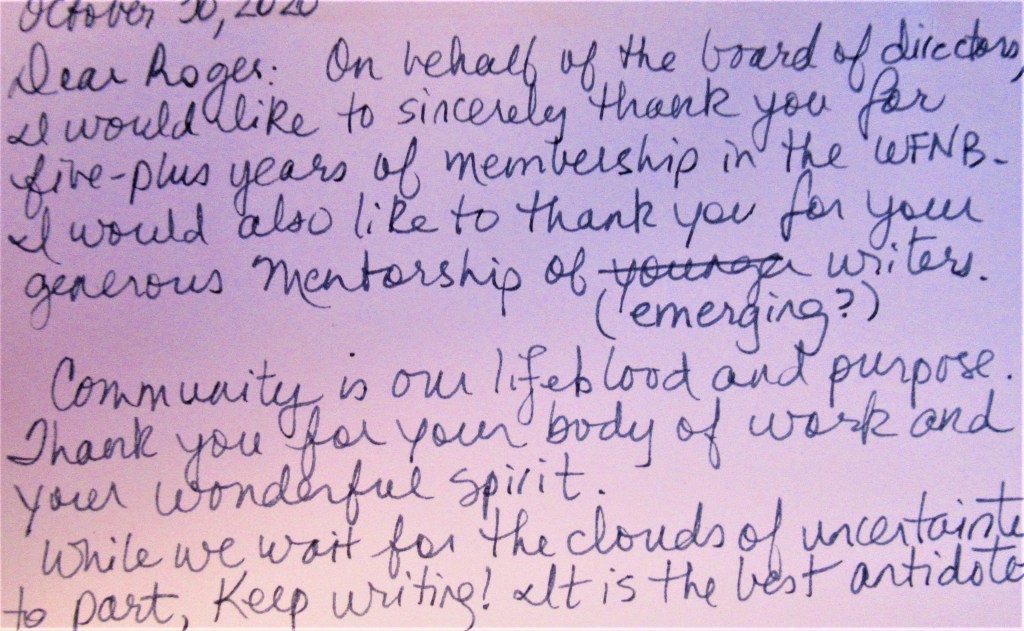
I have been a member of the Writers’ Foundation of New Brunswick for a long, long time. I am not a ‘founding member’, but I think I have been a member since around 1985, and I am sure I was a member in 1986, when Goose Lane Editions, Fredericton, published my second poetry collection, Broken Ghosts. I was most certainly a member in 1989 when my still-unpublished poetry manuscript Still Lives placed first in the Alfred G. Bailey poetry competition.

In the years between 1985-1986-1989 and 2020, I have never received a hand-written communication from any member of the WFNB Board, other than an official communication of one kind or another. Imagine, then, my surprise, when the above postcard, inserted in a hand-addressed envelope, arrived in my mail box yesterday. I was truly amazed and very grateful to the president who wrote these kind words to me. Amidst the panic and the pandemic, it is so nice to be remembered and in such a thoughtful way. Madam President: thank you so much for reaching out to me with this verbal gesture. And yes, you can count on my support for yourself and our Writers’ Federation, I hope for a long, long time to come.

I was in two minds whether to post this or not. However, I wish to emphasize several things: the importance of reaching out, the importance of continuing to believe in ourselves and our creative talents during these difficult times, the necessity of creating alternate communities and of supporting each other as much as possible, the need to avoid total isolation and to maintain human contact in different ways when the physical things — meeting, touching, holding, direct dialog — and the normal activities and relationships of healthy human beings are denied to us, and last, but by no means least, the need to encourage each other and to offer comfort and recognition whenever and wherever possible.

Waiting for inspiration
and
hoping to fly!

Lament

Lament
for three brothers
dead before him

“Eric, Phillip, Peter:
why did you leave me?
Why did you,
where did you go?

Eric, Phillip, Peter:
you went out
through the door,
so silent,
didn’t even slam it,
why did you go?

Eric, Phillip, Peter:
I hardly even knew you,
the house, my life,  
so empty without you,
shadows so scary,
why did you leave me,
where did you go?

Eric, Phillip, Peter:
vacant and silent,
lonely the house,
such a big world
without you,
so full of menace,
so full of woe,
why did you leave me,
why did you go?”

Walls

Walls

             
I remember little Willy, the mad boy at the end of our lane, whose cries of “Uh! Uh! Uh!” were the closest he came to speech. His presence still haunts me, for my father and grandfather made throaty sounds ‘Uh! Uh! Uh!” to chide me whenever I did something wrong or disobeyed the dictates of their adult world, their grown up world that layered cement on top of the high brick wall, that inserted bottles in the still wet cement,  that waited for the cement to dry, and then smashed all those bottles with a hammer and locked little Willy, the boy with whom I must no longer play, into a high-walled cage whilst I watched and waited and knocked at the door and asked politely: “Please: can Willy come out and play?” But my only companion was his wild sound “UH! UH! UH!” flawed words torn with clawed hands from his throat and floated like invisible butterflies over the cruel glass jest of the wall they had built between us.

Keeping Score

Avila 2007a 035 (2)

The Score

It’s the old conundrum:
you place one grain of wheat
on the chessboard’s first square,
two on the second,
four on the third.

And so on and so forth,
eight on the fourth,
sixteen on the fifth.
Now close your eyes
and make a wish:
“Let all these pandemic victims go.”

Alas, no.
You must sit and watch them grow:
32, 64, 128,
and that’s the first rank done.
Seven more marching ranks to go.

256, 512, 1014,
Lord above: how many more?
2028, 4056, 8112,
what on earth can people do?
Wash your hands, stay inside,
and hope your best friends
haven’t died.

Doubled again
that’s even more:
16 thousand 224.
Upon this rank
just one more square
sees 32 thousand
lying there.

How many more,
how many more,
and each death ringed
by family and friends.
This week it seems
death’s dance will never end.

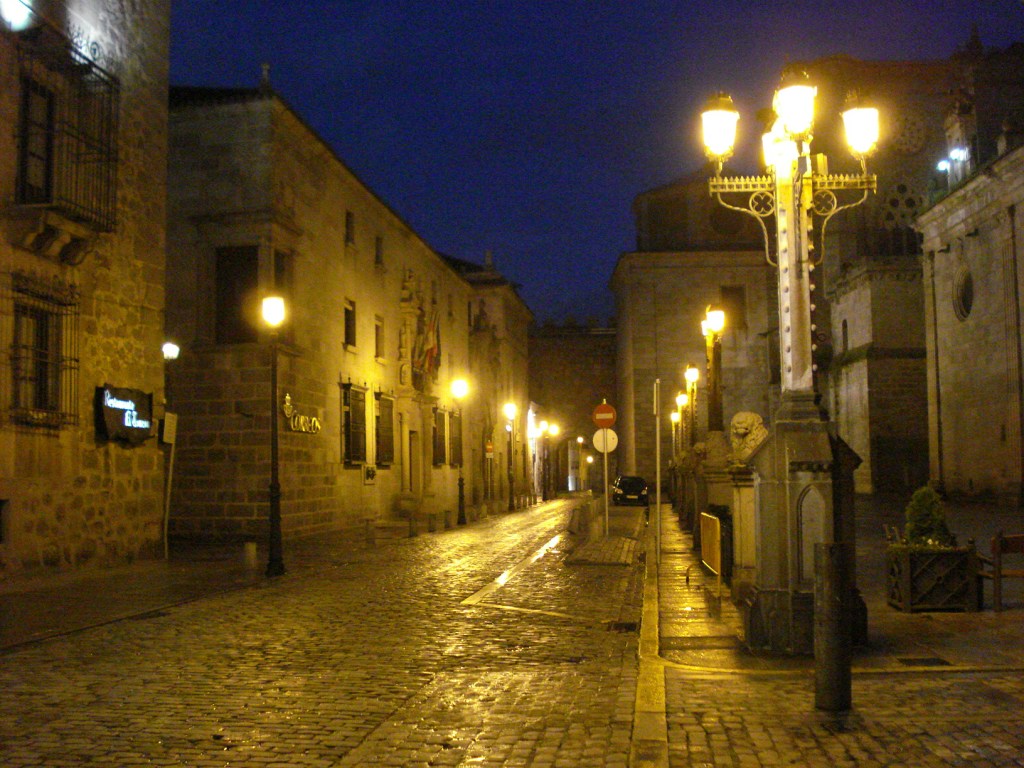
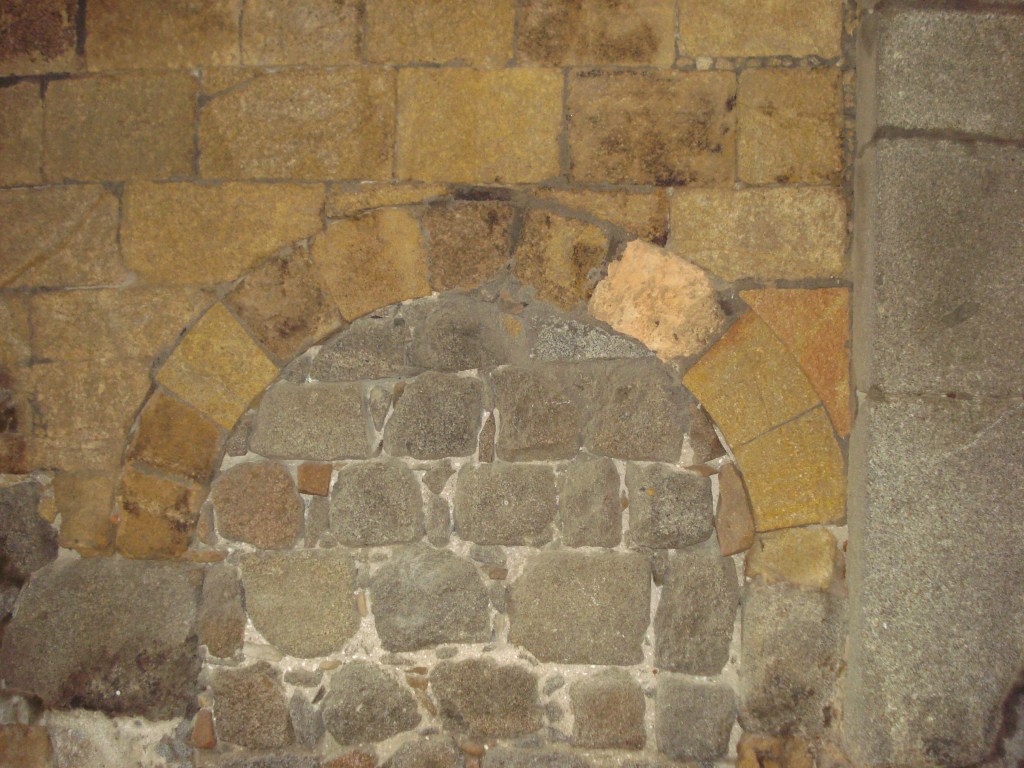
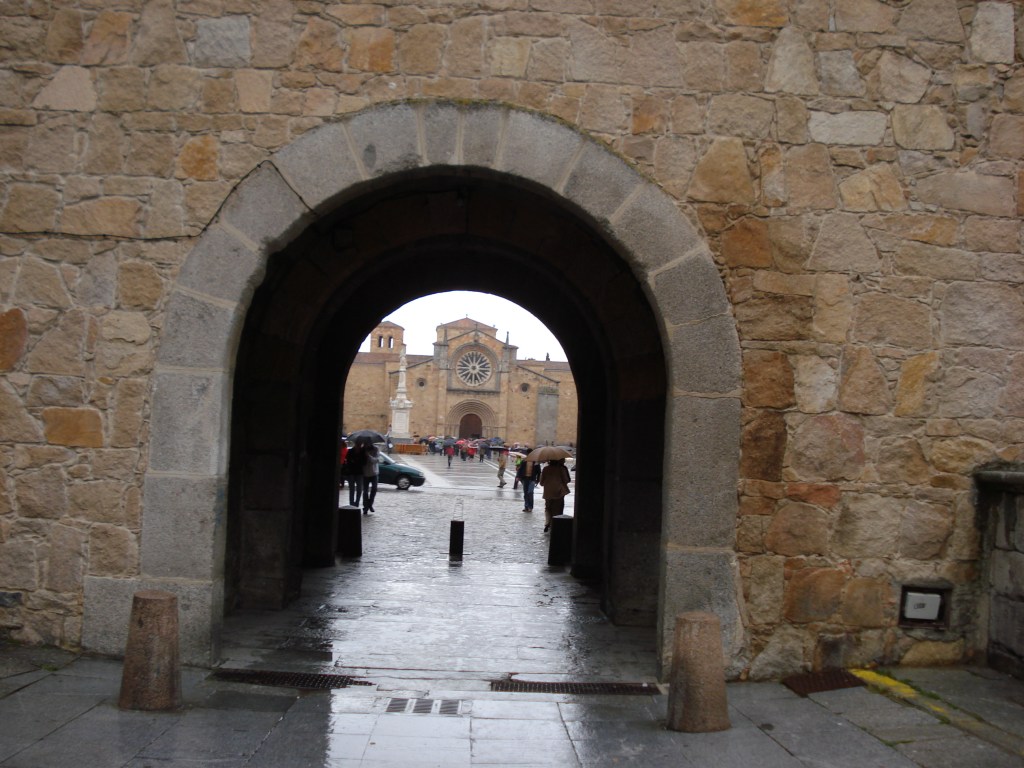
Comment: La Calle de la Cruz / Street of the Cross, shown in the above photo, runs past the cathedral of Avila. It is also known locally as La Calle de la Vida y de la Muerte / the Street of Life and Death as it seems duels were sometimes fought there. It seemed an appropriate photo to accompany this poem which speaks of the seeming lottery, with its winning and losing tickets, in which we are all currently involved. The lower photo, incidentally, captures a stone mason’s mark carved into the face of the cathedral in Avila.

When writing the poem, I repeated the numbers naming them with their single digits, thus: 256, 512, 1014 becomes two five six, five one two, one oh one four (line 14). This allowed me to manage rhythm and rhyme. In my mind I always associate  rhyme with reason, but in this current pandemic, I can see very little reason. I guess, as I wrote in one of my earlier poems, ‘there are so many ways to die’. I just hope Corona Virus isn’t one of them. No, I don’t want to live forever, but hell no, I don’t want to die just yet! Keep safe, keep well!

Avila 2007a 039

Pots and Pans


F1020017.jpg

Pots and Pans
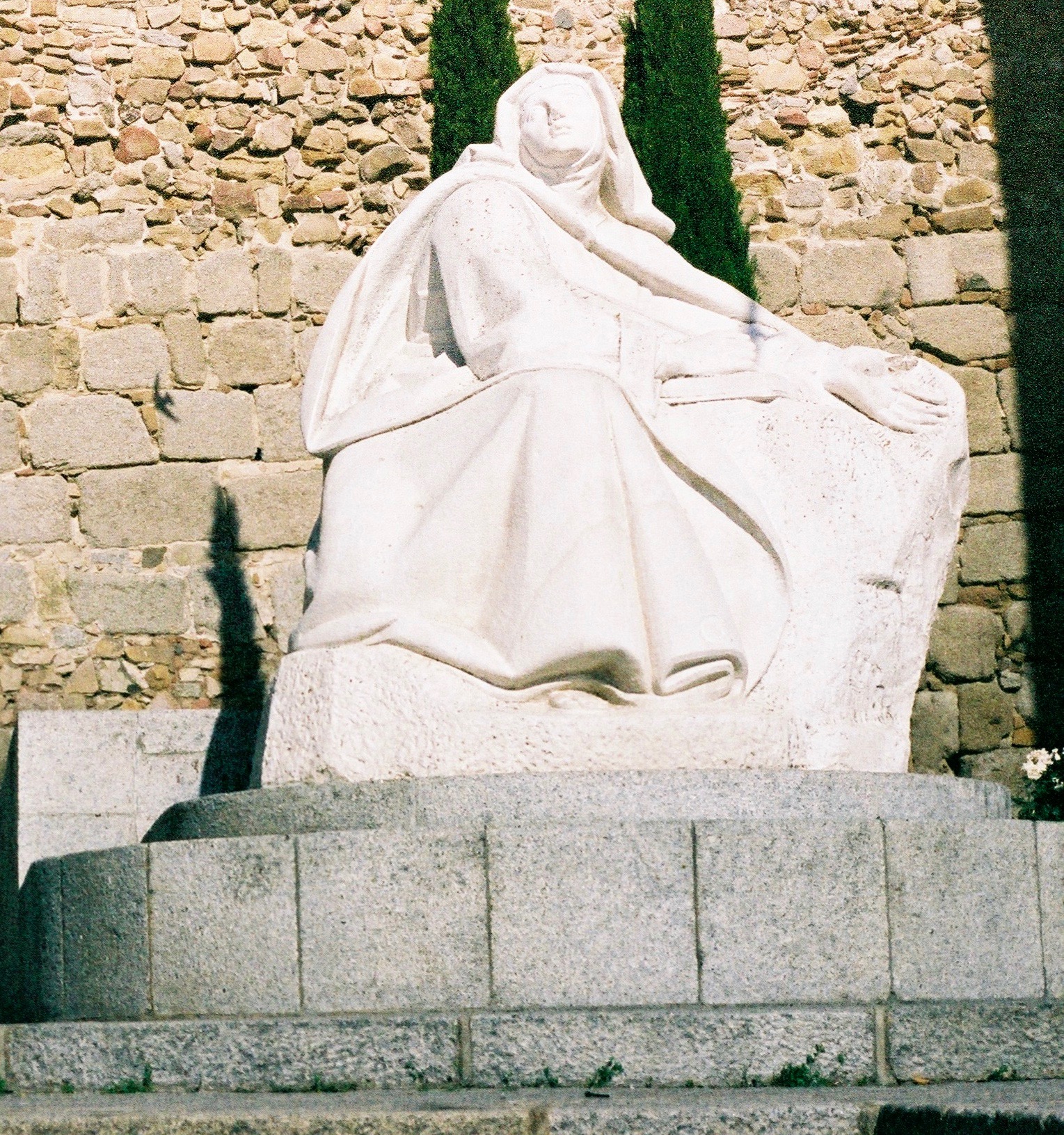
St. Teresa of Ávila

A dusty highway. This woman riding
side-saddle on a hard, wooden seat, eyes
turned heavenward for inspiration. Frail,

fragile, she has never been strong, yet has
had enough strength, shoe-less, not soul-less,
to create her order of Discalced Carmelites

and found a hundred convents, safe havens
where woman can live in poverty, peace,
and prayer. Snow falls in high mountain passes.

Rivers rush downhill in springtime spate.
Mules rebel against cold waters. Bed bugs
bite … her God created them, so she suffers

in silence their indignities. Wounded heart
and soul, often doubting, faith always backing
her thoughts, words, deeds, she believes,

and that belief, as strong as this mule, as
solid as the San José corner-stone she laid.
She knows all too well that God often walks

and works his wonders for her faithful nuns
in convent kitchens cooking and washing
doing the small things, among pots and pans.

Comment:También anda Dios en la cocina entre las pucheras / God also walks in the kitchen among the pots and pans.” St. Teresa of Avila (1515-1582). It’s funny how, in times of stress, the little things in life come back back to haunt and help us. I have written of St. David, “Gwnewch y pethau bychain mewn bywyd / do the little things in life,” and here is St. Theresa of Avila saying more or less the same thing, nearly a thousand years later, this time in Spanish, not in Welsh. Intertextuality: in this way, I am able to talk, through my eyes, with Dewi Sant and Santa Teresa. And, through me, you too can indulge in this saintly dialog.

Avila 2007a 035 (2).jpg

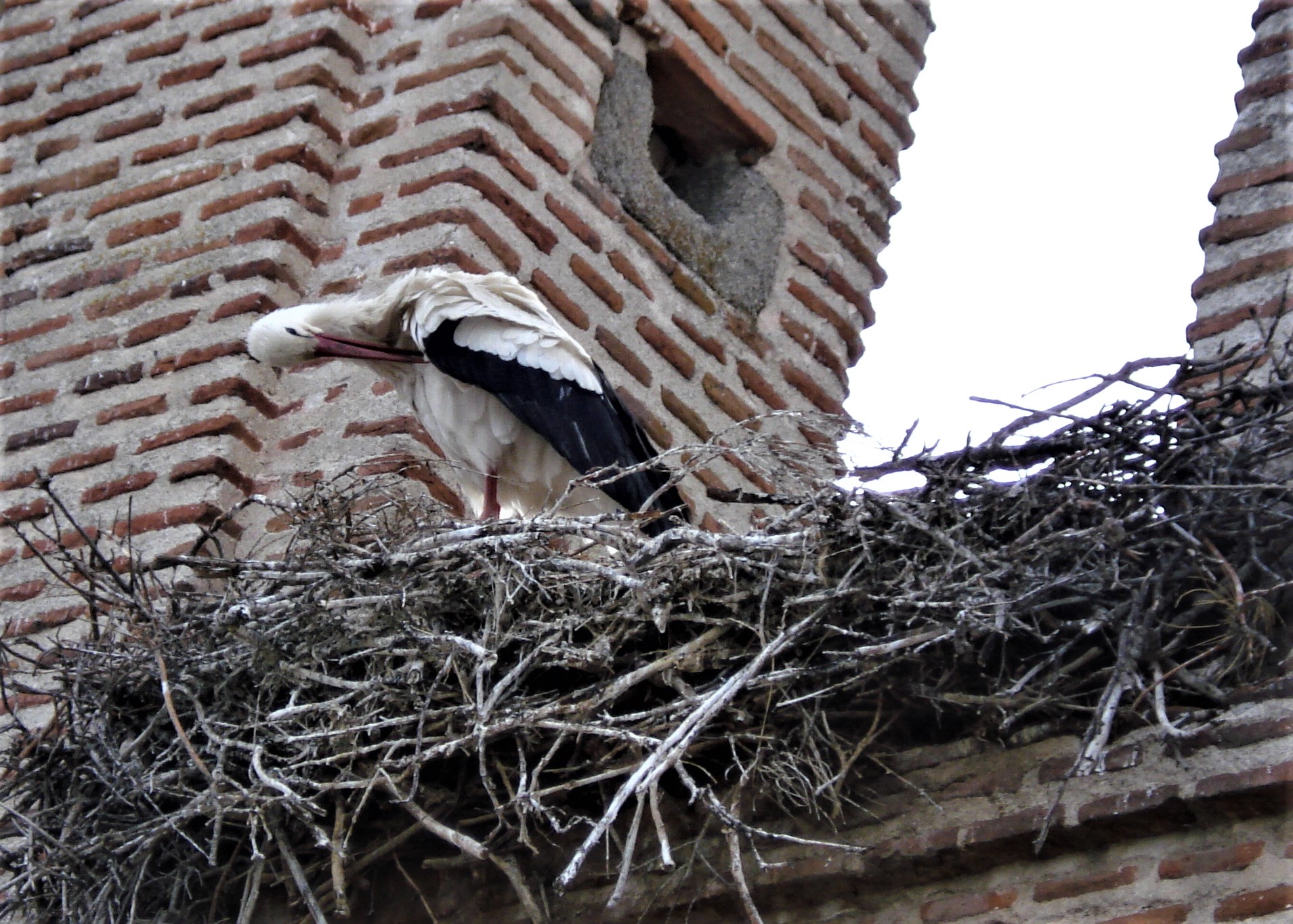
In my blog post, Triumphs, I wrote about how doing the little things in life can be so rewarding and so important for us as we age. No, I will never climb Mount Everest, but climbing up the stairs to my bedroom every night is, for me, a journey to the roof of my world and every ascent is a personal triumph, as is a safe descent each morning. I will never compete in a marathon, even though, back in my youth, I raced over ten miles and completed a half marathon. None of that now matters. What does matter is that I get my daily walk around the house, around the garden, around the block. My Olympic Goal is not to “own the podium”, a phrase I have always found slightly odious, but to win my daily wrestle with myself to just get my exercise done. Do the little things in life. In these troubled times, routine is important. Belief is important. Doing the little things that keep us alive is of paramount importance. And here’s a photo of a magnificent stork, in Avila, doing the little things in life.

Avila 2007a 087 (2).jpg