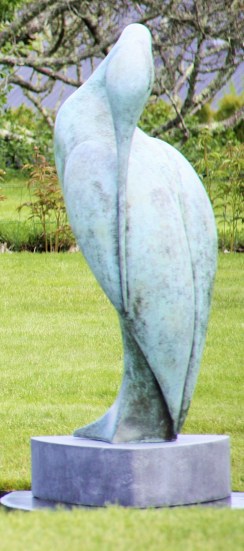
Apologia

IMG_0447


Kingsbrae 5.2
5 June 2017

Apologia

Late last night, I opened Alistair Macleod’s book The Lost Salt Taste of Blood and I re-read the first story. I was soon dabbing my eyes with a tissue and blowing my nose.

This morning, I want to destroy everything I have written. I know I don’t possess the verbal and emotional genius of the great writers and I sense that I cannot write like them. Graduate school taught me to be passive, not active, and to write impersonally, choking every emotion when I write. Academia also taught me how to kiss and how to run away with my thirty silver pence. “Never challenge the status quo,” my professors told me. “Learn the rules and disobey them at your peril.”

But here, in this private space where I create and re-create, there are no rules. The enemy is not clear any more and the fight is not one of black against white. It is rather a choice between diminishing shades of grey, and all cats are grey in the gathering dark that storms against my closing mind. Should I destroy all my writing? I wouldn’t be the first to do so; nor would I be the last. And I won’t be the first or the last to destroy myself either. Intellectual, academic, and creative suicide: as total as the suicide of the flesh.

I carry on my back the names of those who have gone on before me as if they were a pile of heavy stones packed into a rucksack that I carry up a steep hill, day after day, only to find myself, next morning, starting at the bottom once again. But this is not the point: the point is that if I cannot write like the great writers, how can I write?

I think of Mikhail Bakhtin and his cronotopos, man’s dialog with his time and his place. I have no roots, no memories, and that is where my stories must start: in the loss of self, the loss of place, the loss of everything. I was uprooted at an early age, soon lost my foundations, and only survival mattered.

I look at the first page of one of my manuscripts. My writing manifesto is clear before me: “And this is how I remember my childhood,” I read. “Flashes of fragmented memory frozen like those black and white publicity photos I saw as a child in the local cinema. If I hold the scene long enough in my mind, it flourishes and the figures speak and come back to life.”

I am aware of the words of T. S. Eliot that “every attempt / is a wholly new start, and a different kind of failure / because one has only learnt to get the better of words / for the thing one no longer has to say, or the way in which / one is no longer disposed to say it” (East Coker).

Are these stories an exercise in creativity or are they a remembrance of things past? How accurate is memory? Do we recall things just as they happened? Or do we weave new fancies? In other words, are my inner photographs real photographs or have they already been tinted and tainted by the heavy hand of creativity and falseness?

The truth is that I can no longer tell fact from fiction. Perhaps it was all a dream, a nightmare, rather, something that I just imagined. And perhaps every word of it is true.

I no longer know.

Yellow Bird

IMG_0176

Kingsbrae 5.1.1
5 June 2017

Yellow Bird

Broken-winged, a bird I found,
panicking upon the ground.

I stooped to lift it from the land:
it nestled in my open hand.

A matchstick splint with cotton tied,
a canary cage to rest inside.

With healing done, an open door:
my yellow bird will fly no more.

I take a pencil, draw a tree,
my bird begins to sing for me.

I erase the cage bars, one by one,
paint a lion’s mane of sun.

Now yellow bird sits in his tree,
and sings all day, to inspire me.

Comment: I split the original post into two segments. The first, 5.1.1 is the poem Yellow Bird and the voice recording. The second, numbered Kingsbrae 4.3 Encaustic, contains the summary of the first evening’s artistic discussion.

Ireland in my Mind

Empress 070

Kingsbrae 3.2
3 June 2007

Ireland in my Mind
(for Anne)

That cottage, stony and cold,
on Galway’s shore
where sunsets redden
the bay as the sun’s slow
candle burns low
across untroubled waters.

Overhead, the planets
await their call to emerge
from the sky-dark
and perform their Platonic
dance steps back and forth
as they have always done.

This limestone, barren
at first sight, now teems
with a hidden life that
emerges when the time
is right and its particles
dance their earthly dance,

the one that burgeons
into paint and flows with
beeswax down the canvas
to create a poetry woven
with lichens and moss, as soft
as this Irish accent

that leaves word footprints
and worlds, as dark as song,
with memories drawn, like water
fresh from the well, as starlight
twinkles and the day recreates
itself in memory and dream.

Journal: Last night, a magnificent and very entertaining supper, hosted by Mrs. Flemer, was held for the invited artists and the KIRA Residency Team. Afterwards, the residency group, consisting of Anne (Encaustic) , Carlos (Piper), Elise (Sculptor), Hanna (Cuisine), Roger (Poet), and Ruby (Painter) gathered in the residence at KIRA and began the first of many discussions on the new cultural world we are creating.

Carlos explained, through his interpreter, how he listened to other people’s music. First comes the rhythm. Then the structural division, segment by segment. Finally, there is the melody. In addition, Carlos looks at what techniques and themes he may incorporate into his own compositions. A general discussion followed on the nature of art and inspiration. Included in the discussion was the weight of responsibility that many of the residency artists felt. This was expressed in a need to produce something special while we are here.

This need to produce came in part from the desire to return to KIRA the faith shown in selecting this group of people, most of whom expressed their surprise at having been chosen.  A discussion followed on how each member had felt upon receiving the news of the selection. A fierce desire to repay the KIRA Team with works of value was felt by the chosen artists. However, the artists also realized that while some results might be immediate, the long-term development of the individual’s art, as a result of the KIRA Residency, might take some time to come through. Patience, belief, and envisionment were three of the themes that then surfaced. After all, Rome wasn’t built in a day and Kingsbrae would never be revealed in all its glory on the first day of a 28 day residency.

Anne Wright presented a signed copy of her book Change Artistry to each member of the group. She also gifted us a delightful card collection of inspirational sayings. My own favorite for the day: “There is a thread you follow. It goes among things that change. But it does not change” (William Stafford). Other exchanges of gifts, some visual, some verbal, some musical, will occur, we are certain, throughout this residency.

Kingsbrae 1.2

img_0180

Kingsbrae 1.2

Huezeequichi
1 June 2017

Pen on paper,
words fall like tears,
waters that will erode
the hardest of stones.

 This man bears witness
to thought, word, and deed.

He’s the outsider who sees
the interior world
and drags forth its spirit
for others to see,
not painted in paint,
not sculpted in stone,
no breeze through the reeds,
just words on the page
lined up in thin lines
to flower and flourish
like an army that conquers
the world of the soul,
and leaves fresh foot
prints on eternal snow.

Journal: The packing is being done. I have gathered my books and my writing material, my notebooks, my pens, my colored inks for cartoons, my drawing paper … it is all in a large box that I call my office. Next I must pack the laptop and the files / USBs and music that I need. After that comes camera and accoutrements, including a tripod in case I want some videos. Finally, the clothes that I need, working clothes and something slightly more elegant, not that I have much good clothing that fits me any longer: alas, I have put on size and weight. The ones who wear white coats told me I would … and they were right.

Carlos will be catching the Fredericton plane in an hour or so. I will have supper when I have packed and I’ll go to the airport after supper to meet him. Then I have to decide whether to drive down to St. Andrews tonight or whether to come back home and sleep here. Decisions, decisions: if the flight is delayed, as it often is, then we’ll spend the night here. If we spend the night here, we’ll leave tomorrow and head for St. Andrews early, just after breakfast.

There is so much to do, so much to think about. Luckily, I made a list and I am just following the instructions I gave myself when my mind was calmer.

Huezeequichi: the one who bears witness.

Kingsbrae 1.1

IMG_0464

Conference Call
(for Anne, Carlos, Elise, and Ruby)
Kingsbrae 1.1
1 June 2017

Face to face, the five of us,
a gallery of artists, meeting
together for the first time
in a virtual reality unlike
the ones we ourselves create.

Our opening words simulate
a game of chess, slow and
hesitant, then speeding up,
slowing down, accelerating
as we gain more confidence.

Faces become names, voice
and tone take on deeper
meaning, one of us smiles,
some of us smile back. Then
smiles turn to laughter as
formalities break down.

In growing fellowship, we work
on the where, how, and why,
of what we will be doing
when we meet at Kingsbrae.

Journal: Anne organizes two conference calls in May and we are able to talk online and discuss what we intend to do when we gather together at Kingsbrae. It is a little slow at first, but we soon warm to each other and the ideas flow.  It’s not easy for us to pull everything together, for we are so different. Our group contains an artist in multi-media (Anne), a musician from Peru who plays the pan pipes (Carlos), a sculptor, (Elise), a painter (Ruby), and a poet (Roger).

Now the First of June has arrived. Anne and Elise are already on the road. Carlos is in the air, flying in from Lima to Toronto, and then on to Fredericton, where he will be met later today by Roger. Ruby is all packed and about to set out. She will probably head right past my house as she travels to St. Andrews. Depending on the actual time of arrival of Carlos’s flight, we will either meet tonight in Kingsbrae or else early tomorrow.

Expectation is high. My own artistic antennae are twitching, and I am sure that everybody else feels the same: fortunate, lucky, charged up with artistic energy, in a single word: blessed. Soon the creative adventure will start. Then let the magic wand wave and a fecund creativity will set in.

Metaphor: Wednesday Workshop

img_0177

Metaphor
Wednesday Workshop
26 October 2016
Revised
31 May 2017

Metaphors: What are they? I must be honest: I don’t really know. I don’t understand them. I never have. I probably never will. This morning, I determined to find out what a metaphor really is. So I Googled metaphor and came up with the following definitions.

  1. A metaphor is “a figure of speech in which a term or phrase is applied to something to which it is not literally applicable in order to suggest a resemblance.”
    Well, that is pretty clear, isn’t it?
  2. A metaphor is “something used, or regarded as being used, to represent something else; emblem; symbol.”
    No doubts there.
  3. “Metaphor is a figure of speech which makes an implicit, implied or hidden comparison between two things that are unrelated but share some common characteristics. In other words, a resemblance of two contradictory or different objects is made based on a single or some common characteristics.”
    I know exactly what they mean. Or do I?
  4. “In simple English, when you portray a person, place, thing, or an action as being something else, even though it is not actually that “something else,” you are speaking metaphorically.”
    No misunderstanding here.
  5. “A metaphor is a figure of speech that refers, for rhetorical effect, to one thing by mentioning another thing. It may provide clarity or identify hidden similarities between two ideas. Where a simile compares two items, a metaphor directly equates them, and does not use “like” or “as” as does a simile.”
    Slightly clearer, but not as clear as daylight.

I turn to my blog in search of metaphors that I have created in my poetry and read that “The egg of my skull / shows hairline cracks: / tiny beaks pecking / fine-tuned sparks of song”. “This piece,” Tanya Cliff writes, “offers a unique and beautiful perspective on the theme (of birds).” I think I can do without the dull, dry definitions set out in the definitions above and understand metaphor as “a unique and beautiful perspective”. This functions for me. Thank you, Tanya.

Two more sequences, this time from October Angel: (1) she gathers her evening gown / and walks among ruined flowers (Meg Sorick’s choice) and (2) a snapdragon opens / the frosted forge of its mouth / and sprinkles the sky / with ice-hard shards of fire (Tanya Cliff’s choice). I can understand the first in terms of “a unique and beautiful perspective” since the picture of the October Angel is clear in my mind. In addition, evening / evening gown / ruined flowers are particularly evocative. The second sequence is much stronger as anyone who has seen the snapdragon flowers braving the ice and frost will testify.

After thinking about these three examples, I think I can now understand metaphor a little bit better. I would now define a metaphor as “a brief verbal sequence that creates a new reality that offers a unique and sometimes beautiful perspective on something that we have long known and accepted but now, thanks to the writer / poet, see in a different light.”

This personal definition allows us to distinguish more easily between dead metaphors and clichés like dead as a door nail or avoid it like the plague while allowing us to enjoy the permutations that spring from the innovation of the true metaphoric sequence. The metaphoric sequence also allows us to distinguish between a two word metaphor and a series of metaphors that are thematically linked.

From my own poetry, ruined flowers would be an example of the first while the longer sequence a snapdragon opens / the frosted forge of its mouth / and sprinkles the sky / with ice-hard shards of fire would be an example of the second. Iterative thematic imagery, a form of sequenced metaphor chains, then links the whole work, be it poem or longer piece, within an associative semantic field of parallel meanings. This also illustrates the idea of differentiating between the inorganic and organic conceit, where the inorganic conceit is the example of a single, independent instance while the organic conceit is woven into the fabric of the oeuvre.

In the WFNB Workshop on Metaphor, held in Saint John on Saturday, 27 May, 2017, we had a two hour, in-depth discussion on this topic. We began the workshop with a meet and greet and ice-breaker. Then we offered a pictorial definition of a metaphor. We generated a series of dead metaphors, to be avoided like the plague, except where we use them to define a character, or make fun of them, or use them in a new fresh light that resurrects them and brings them back to life. This was a great deal of fun. We then indulged in a series of creative writing exercises that focused on the creation of new metaphors. We finished the workshop with a “song of craze” in praise of the joys of metaphors. What a day!

The structure of the workshop was very simple. We had 120 minute (two hours) and broke them into 3 sessions of 20 minutes, a 5 minute break, 2 sessions of 20 minutes, and  a grand finale composed of 3 sessions at 5 minutes each. The twenty minute sessions broke down into 5 minutes writing, 7 minutes small group discussion (4 participants per group), and 8 minutes full room participation. The five minutes writing centered on each person writing to a topic. Each member of the group then shared what they had written with the other group members. This helped develop individual voices (the theme of the conference) and showed how each individual approached a single topic in a multitude of different ways. A representative piece from each group was then chosen and the writer read the creation to those gathered in the full room participation.

As a result, everybody was actively engaged in the thinking, writing, creating, reading, and critiquing process. A considerable number of what I call “writing starts” were made. Hopefully participants will continue to develop these writing starts and develop something from them, long term.

Rainbow

IMG_0375

Rainbow

I dreamed last night
that angels lofted me
skywards and wrapped me
in cotton-wool clouds.

The nearest rainbow
was a helter-skelter
that returned me to earth
where I landed in a pot
of golden sunlight.

Red, gold, and yellow
were my hands and face.
I stood rooted like
an autumn tree covered
in fall foliage with
no trace of winter’s woe.

“May this moment last
forever,” I murmured,
as the rainbow sparkled
and I rejoiced in
my many-colored coat.

Weird

img_0380-2

Weird

Weird these words
dropping in inky
drops from pen end
poised above paper:
a variety of poses.

Not for me the key
-board’s voluminous
vocabulary, nor the tap,
tap, tap, fingers on lap
top to search for a word,
an idea, a distraction
just a tap away.

For me, the slow flow
of thought, the clumping
together of the mind’s
pretty litter of ideas
milked slowly, one by
one from a cornucopia:
happy creativity.

KIRA

IMG_0452.jpg

KIRA

Kingsbrae International Residence for the Arts has appointed five artists who will work in residence at Kingsbrae and Kingsbrae Gardens (St. Andrews, New Brunswick), from June 1 to June 28, 2017. The artists who will work in Kingsbrae in June are Carlos Carty (Lima, Peru, musician), Anne Wright (Ottawa, multi-media), and Elise Muller (Muskoka sculptor). They will be joined by two New Brunswick artists, Ruby Allan (Fredericton, painter), and Roger Moore (Island View, poet). Note that KIRA is making a special effort to encourage New Brunswick artists. Full details are in the link above.

The selected artists met face to face on a video conference call and discussed some of the work that they could do in common: more about this later. Suffice to say for now that joint workshops on different forms of creativity are being planned. While the residency will be an excellent time for individual work, each participant has a specific project to be undertaken during our time at St. Andrews, there will also be time for the interchange of creative ideas and for readings and workshops within the local artistic community.

My own project will be to establish a Bakhtinian poetic dialog with my time (June) and my place (Kingsbrae, St. Andrews).  This follows the ideal of the Bakhtinian chronotopos, as outlined in my earlier post Alebrijes or Inspiration, and I plan to use my time to reflect upon and write about both St. Andrews and the Kingsbrae Gardens. I intend blogging regularly throughout the month of June and I look forward to posting photos and cartoons to accompany my poems and the journal that I will maintain throughout my stay. My blog is located at rogermoorepoet.com.

Further to this project, I hope to establish a rapport, much along the lines of my poems on Monet at Giverny, between myself as poet and Kingsbrae Gardens as a subject for poetry. Giverny and Monet at Giverny 1-4/16, Monet at Giverny 5-8/16, Monet at Giverny 9-12/16, and Monet at Giverny 13-16/16 offer a model for some of the art work I would like to accomplish.

Each artist will have studio space. Should you visit St. Andrews in June, please consider not only visiting Kingsbrae and its beautiful gardens but also dropping by to meet us as we work to accomplish our artistic tasks. I, personally, will be very happy to meet and talk with visitors to the residency who are interested in the daily workings of my art.


Writing Groups: Thursday Thoughts


img_0186

Writing Groups
Thursday Thoughts
11 May 2017

We write in solitude.

We cannot group-write with a second person suggesting the second word and a third person, the third word. This leads only to the Third Word War or the Third Word Whore, as some would express it.

To write is to be alone. It is to sit alone before a blank page and watch it slowly fill with the black ants that we form into thoughts. With pen or pencil we trace the Morse Code SOS of our Mayday signals. We gather them into groups, press them between cardboard covers, and we send them out to sea in little bottles. Then we sit back and wait, hoping to contact intelligent and compatible life that will approve our efforts and perhaps offer to publish our writing.

We must not confuse the act of writing with the act of sharing.

In many cases, to share is to seek approval. But this is not always true. We sometimes share in the hopes that a listener will suggest improvements to our writing. I think of this as ‘sharing from weakness’. We are unsure of our sharing self and we seek confirmation and reinforcement. We also seek the reassurance that the second person or the third actually has a better vision than the writer and can improve that writer’s offering. How confident are we in our own writing when we constantly look for approval?

Sometimes, our sharing is in an act of defiance. We organize our black ant army. We form it into battalions. We launch them at the enemy and “Take that you bastards,!” we think as we read out our thoughts. Occasionally, our sharing is an act of self-praise. We know it’s good and we want others to realize just how good this piece is and how good we are. Auto-homenaje (Spanish): an act done in praise of oneself.

The act of sharing can be private and confidential. This is when we gather with a group of friends to share our thoughts and creations. This is most useful, in my opinion, at the beginning of a writer’s career. Writers have to become independent. They have to learn to shake off the shackles of doubts, second and third opinions, and the rewriting that comes from the mind of an outside reader. Writers have to learn to stand alone and to write alone. This is where the public reading comes in.

To read in public, as in an open reading given before an audience of unknown faces, is a different proposition. We are relatively confident when we share with our friends. We are not so confident when we read in public. We must be confident in ourselves and our words if we are to stand before strangers and expose ourselves, our strengths and our weaknesses, to those who may not love us and some who may actually hate us, looking for any defect, any chink in our written armor.

Beyond writing, yet enclosed within it, is the writer’s desire to be recognized and published. If we are writers, we want our works to be known and read. We want to be published. Even when we know we are not ready to be published or worthy to be seen in print, we like to imagine ourselves preparing that great tome or slender volume of verses that one day will project us into the realms of glory when it finally sees the light of day.

Yet we cannot publish alone. Or can we? Desk-top publishing on our own computer is easy to do. Format the work, print it out, take it to the photocopy machine, copy it multiple times, staple the resulting pages together and we have … a book. But are we satisfied with those morsels of paper that we hand out to our friends? Some people are, many are not.

Let us look at an alternate route: we hand the book over to a press that edits the writing, does all the copying work for us, chooses a cover, binds the book, gives us twenty free copies, and hands us an enormous bill … some are happy with that; again, others are not.

Let us examine another route: we find an online company that will do all (or most) of that for free. All we have to do is market our work … again, some are happy with that; others are not.

Mal de todos, consuelo de tontos. This is a delightful Spanish phrase. It means that when everyone is travelling in the same ship of sorrows, only fools are consoled by the fact that we all share the same fate. Perhaps that’s why writers gather together in groups and perch, like autumn swallows preparing to migrate, on chairs in a drawing room at somebody’s house or gather together in a disreputable, but cheap, coffee house to read, discuss, share, and endlessly talk about the works that never get published.

“You just got rejected? What a pity. I just did too. Let’s compare rejection letters. Paper your walls with them, my friend.”

The carrot that we all seek is the pot of gold at the rainbow’s end that contains the winning lottery ticket: a letter from a publisher offering to publish the book we have written. An Old Welsh Recipe for rabbit pie begins with these wise words: “First catch your rabbit.” The same wisdom must be applied to writers: “First, write your book.”

When the book is written, to the satisfaction of the writer, then, only then, let the networking begin. Then we can reach out to the community. Then we can read in public. Then we can seek out that elusive publisher and follow our own thirty-nine steps to success.

Bu, in the meantime, remember, never forget, we write in solitude.