Clepsydra 45 & 46

45

… I enter ancient rooms
     on the walls
          pale ghosts walk
               flickering shadows

why am I tongue-tied
     why do I struggle
          a fly in a spiderweb
               to make myself heard

I long for
     the freedom of flight
          for culture restored
                    for a return
                         to my own lost world

I grasp at shadows
     reaching out
          for the ones I know
                         are no longer there …

46

… how deeply time’s wounds

     have cut and carved
          through my flesh and bone

               into the embers
                    of that slow-burn fire
                         they call the heart

some days those wounds
     neither ache nor itch
          but in moments of madness
               a knife-edged finger nail
                    careless in the dark
                         opens them up

they throb again
     and begin to bleed afresh …

Commentary:

” … on the walls, pale ghosts walk flickering shadows – I grasp at shadows, reaching out for the ones I know are no longer there …” Vanity of vanities, all is vanity. For in much wisdom is much grief, and he who increases knowledge increases sorrow.

” … the embers of that slow-burn fire they call the heart … ” Pulvus eres et pulvus eris. Just another shadow on life’s wall.

Clepsydra 43 & 44

43

… a mouth stopped with silence
     a pen that can’t write

a river that won’t flow
     no safe place at night

when I lit that candle
     I turned out the light

and sat in the stillness
     all flickering with fright

to whom can I turn
     to make things right

silent in the darkness
     I yearn for a light

a moth in life’s flame
     I flare and burn bright
 
scorching a hole
     in the shade of the night …

44

… but to lose my language
     is to lose my butterfly soul
          as it flutters to reach
              life’s sweet-scented rose

does the soul leave
     the body at night

released from its prison
     of earthbound clay
          does it wander
               in dreams
                    among the stars

Commentary:

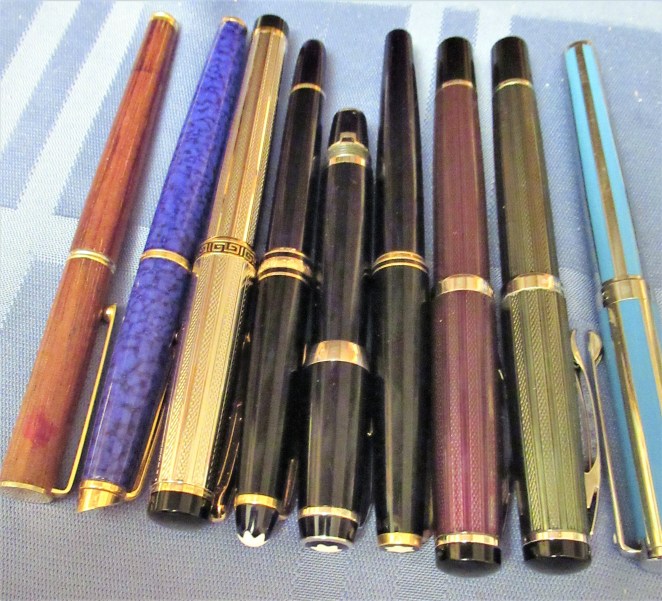
“Cette plume n’est pas une plume.” This pen is not a pen. A mere photo of a pen, and I won’t be able to write a word with it. Nor will you. Not that it matters, for we are nearly at the end of our journey. Only eight more sections remain, and then the poem will be done.

I thank all of you who are travelling this road with me. Not much longer. The poem is coming to its end.

Clepsydra 41 & 42

41

… fire flares on the water
     rivers and lakes blaze
          that sound is a monster
               a dragon descending
                    breathing fire

so swift so powerful
     come sudden
          from nowhere
              yet another disaster
                   with its ravenous roar         

the dragon refuses to move on
     until sated
          but who could satisfy
               that monster
                    destroy its will
                         defeat its power

will Lac Megantic
     ever be the same
          after all these years
               of grief and tears

will fading memories
     be all that remain …


42

… a stillness between words
    tranquil movements
         the world suspended in space
               soundless the night
                    drenched in silent light

 Aurora Borealis
     draws gaudy curtains
          across the night sky

I can hear my heart beat
    as time softly sifts

a celestial hour glass
     this sky filled
          with unimaginable light
               breaking coloured waves

lit up
     with mysterious flowers
          so graceful
               when decked out
                    in light

 the moon returns
     turns into a mirror

          its silver boat
               suspended in space

silent its light
     enlightening
          the heart’s dusky craters

dawn’s silent glory
     will be here soon
          pointing the silent path
               to even more light …

Commentary:

Ten years or so since the disaster at Lake Megantic. I am sure it affected everyone who followed the news, saw the pictures, and bore witness to the power of conflagration. Moo offered me his painting called Burning Birbi. A Birbi is a Koala Bear in one of the Aboriginal Languages. When the fires hit New South Wales, the Eucalyptus Trees started to fire. When in danger, the Birbi climbs the eucalyptus trees, higher and higher, followed, of course, by the fire. A fate inescapable. Just like the Megantic Disaster. Word has it that it could, and should, have been prevented. I cannot (will not) comment on that here. I will just stress the fear that we all have, those of us who live in a drought stricken province (New Brunswick) surrounded by trees.

The closest wildfire to us, in Island View, was about 31 kilometres away. The closest trees are about 30 feet away from the house. Much too close for comfort. Curtains of flame and smoke, rising up to stain the skies. And the smell of burning also inescapable. Stay indoors, I say. Shut the windows. And hope that nothing comes your way!

Fire, controlled, brings heat, warmth, light. The Northern Lights bring spectacular light flooding down from the skies, not rising up. You can almost hear the sky crackling as the light curtains shift and shimmer and dance their way across the horizon. Fire and Fire Light – beautiful when we can control them, but oh-so-destructive when they flame and flare, out of control.

Do not despair. Just remember we need each other, all of us, each one of us. Together we can overcome most things. Isolated and alone, like the lone koala at the top of his tree, it is much, much more difficult to survive. Select your friends carefully. Maintain contact with them. And be there for each other in times of need, for, as we say in Wales – “a friend in need, is a friend in deed.”

Clepsydra 39 & 40

39

… all too soon I too shall move on
     leaving behind me
          fading memories and cloud shadows


yet I recall
     standing beneath the cathedral’s
          great rose window
               on a sunny day
                    my body dressed
                         in a harlequin suit
                              of glistening lights 

in such splendour
     mortal things like words
          cease to flow

I held my breath
     shocked by an enormous presence
          that filled me then
               as it does now
                    with the knowledge
                         that nothing happens in vain …

40


… illumination
     I must find it for myself
  were another to tell me
      where it dwells
            its light would be untrue

only I can strike the match
     ignite the flame
          and trap its warmth
              in my body’s bone cage

when it flowers within me
     I’ll need no candle
          not even in the darkest mine

in Alma, I have seen
     the tide lower
          Fundy fishing boats
               down into the mud

like those boats
     I lack the power
          to resist both time and tide …

Commentary:

I asked Moo for a painting of boats from Fundy, preferably from Alma, lying on their sides at low tide. “Let me see what I am meant to be illustrating,” he said. He read the above excerpt from Clepsydra and told me “You’re navel gazing again. I thought I told you not to do that. Now, have I got a painting for you.” I didn’t dare refuse to post it – he’s had a bad couple of days and it has sharpened his sense of humor – so it’s here it is. Moo calls is – now don’t laugh – Naval Gazing.

“Nothing happens in vain.” So maybe I was predestined to ask Moo for a painting he didn’t have and to end up with one that tickled his fancy. Now that set off a light bulb in my skull. Mr. Dimwitty came to his sense – I have been navel gazing. Naughty, naughty. How many of you remember Mr. Dimwitty, the not too bright schoolmaster on BBC radio? Hold up your hands, and I’ll count them.

Meanwhile, things happen to Moo and me, and like the boats on the Fundy, we lack the power to resist both time and tide. And that’s why we help each other, carry each other along. “We few, we few, we band of brothers.” That was Shakespeare. Nowadays we have to say “we band of siblings.” It pays to be inclusive. Speaking of bands, I saw a man walking down Main Street yesterday, blowing a rubber trumpet. I asked him what he was doing and he told me that he was looking for a rubber band. Joy to the world and help spread the joy. If you don’t like joy, spread Marmite. And if you don’t like Marmite I am sure you’ll love Vegemite. Ma might, but Pa won’t. That’s why it’s not called Pa-mite.

Writing in the Red Zone

Writing in the Red Zone

The Red Zone:
it’s a familiar concept.
Monday Night football
talks about it all the time.

“Success percentage
in the Red Zone,
offense and defense.”

It’s not just football.
Other sports, soccer, rugby,
have their red zones.
So does life, my life,
for better or for worse,
and now I know I’m in
the Red Zone.

I can see the goal line.
I can feel the tension rising.
I know the clock’s ticking down.
I can sense it, but can’t see it.
I no longer know the score,
and I don’t know whether
I’m playing offense or defense.

They tell me it’s a level playing field,
but every day they change the rules,
and today I wonder what the heck’s
the name of the game I’m playing.

Clepsydra 27

Clepsydra 27

… the museum closes its doors
     inside the clepsydra murmurs
          on and on

evening falls from the sky
     in great cataracts of light
          stars flare like candles

who will see
     that last drop of water
          trembling at
               the clepsydra’s edge,

who will snuff out
     that last flickering
          flame of my life
               as the final verses
                    of the children’s song
                         loom closer

Here comes a candle
     to light you to bed.
          And here comes a chopper
               to chop of your head…

Commentary:

Moo got it right this time – “evening falls from the sky in great cataracts of light, stars flare like candles …” Lovely painting of a star ‘flaring like a candle’ against the evening sky. I think he called the painting Affirmation. Yup, he’s nodding his head, and he has his eyes wide open. He’s not dropping off into one of those drowsy moments of old age. Too early in the morning to do ‘noddy’ I say. Oh-oh, there he goes. It’s Billy Cotton Band Show Time … “Wakey-wakey!” Now how many of you remember the Billy Cotton Band Show on BBC Radio on Sunday afternoons, just as people are dropping off to sleep after the enormous Sunday dinner and dessert? Hands up if you’re over eighty and remember that. Oh dear. Not a good idea. Moo’s hand’s gone up and he’s still got his eyes shut. Ah well, appearances aren’t everything.

And look at that comma after – the clepsydra’s edge, (line 10) -. The one that got away. There’s always one that gets away, no matter how hard we try – and try we do. Clepsydra is meant to be a single sentence, with no punctuation other than an ellipsis at the beginning and end of each sequence. And what have we here? A common or garden comma, growing like a large, spring dent-de-lion / dandelion in the middle of a patch of flowery images and metaphors. Out, out fowl spot! What bird was that? A Flying MacBeth just dropped something on my windshield. ‘What a foul fowl was that fellow,’ said the soccer referee pointing to the penalty spot. A round spot with a whale of a tail.

“Any questions?” I asked my students at the end of class one day. A brave young lad raised his hand. “I have a question, sir?” [I liked it when they called me, sir. It happened about once or twice a year. I always knew something drastic was about to happen when I received a knighthood.] “Ask away,” I replied. “What the heck are you on? I’d love to have some of that. Can you give me some, sir!” Two knighthoods in one day. I’ll be a KG next, instead of an RG. I bet you don’t get that joke! Answers by snail mail and dog sled, please!

Clepsydra 25 & 26

25

… how will it all end
     does it not need closure
          something to bring
               the water-wheel full circle
                    a golden key to open
                         what

the museum’s door
     memory’s door
          the archives where
               so many memories lie
                    gathering dust

though some may tell the truth
     whatever that is

or does the story go on and on
     never pausing
          never ending
               wrinkle after wrinkle
                    threaded through time
                         after time
                              the candle
                                    burning

the clepsydra
     dripping all life away
          the pendulum
               swaying
                    back and forth …

26

… Westminster Chimes
     chiming the quarters
          church bells
               ringing out a warning

the hills alive
     alight
          with burning beacons

what new armadas
     sailing now off our coast
          what fireflies flicker
               their thunderous roar
                    frightening birds in trees
                         driving deer
                              into the woods

how many people
     cast forth like bread
          upon the waters
               to return ten-fold

hark to the bells
     ringing out again
          St. Clement’s
               St. Martin’s
                    the Old Bailey
hark to the children singing
     dancing in a circle
          never-ending
               until the music ends

and the last child
     is caught by
          the lowering arms
               trapped
                    a fish flapping
                         in the osprey’s grasp …

Commentary:

I wonder how many people still sing the children’s song about the bells of London? Images from it – intertextuality – occur throughout Clepsydra.

“Oranges and lemons,”
ring the bells of St. Clement’s.

“You owe me five farthings,”
say the bells of St. Martin’s.

“When will you pay me,”
ask the bells of Old Bailey.

“When I grow rich,”
sing the bells of Shoreditch.

“And when will that be,”
sing the silver bells of Battersea.

“I do not know,”
booms the great bell at Bow.

“Here comes a candle
to light you to bed.
And here comes a chopper
to chop off your head.”

The song appeared at children’s parties. Two of them joined hands, held their hands high, like London’s Tower Bridge, and the children, in a long chain passed beneath the ‘bridge’ as the song was sung. At the end, the children speeded up and they tried to avoid the last verse when the bridge’s arms descended and two children were caught. These then had to replace the original two gate-keepers and the game started again. At least, that was how I remember it being played.

It is worth remembering how violent in their imagery children’s songs can be. The games seem sweet, but they often have dark undertones, some going back to the Black Death – “Ring a ring a rosies, a pocket full of posies, atishoo, atishoo, we all fall down.” If you don’t know what that all signifies, go down the rabbit hole with Alice and the white rabbit and look it all up! And find out what a farthing is, and a penny farthing – go on – I double-dog dare you!

And remember – poetry carries its own meaning – or multiple meanings – and they are not always easy to find. Dig, my friends, dig. There’s gold in them there hills.

Cage of Flame

Cage of Flame

Now you are a river
flowing silver beneath the moon.
High tide in the salt marsh:
 your body fills with shadow and light.
 I dip my hands in dappled water.

Twin gulls, they float down stream,
then perch on an ice-floe
of half-remembered dreams.

Eagle with a broken wing,
why am I trapped in this cage of flame?
When I turn my feathers to the sun,
my back is striped
with the black and white
of a convict’s bars.

Awake, I lie anchored
by what pale visions
fluttering on the horizon?

White moths wing their snow
storm through the night.
A feathered shadow ghosts
fingers towards my face.
Butterflies stutter
against a shuttered window.

A candle flickers in the darkness
and maps in runes
the ruins of my heart. Eye of the peacock,
can you touch what I see
when my eyelids close for the night?

The black rock of the midnight sun
rolled up the sky.
Last night, the planet quivered
beneath my body
and I felt each footfall
a transient god.

When will I be released
from my daily bondage?

Commentary:

Moo reminded me that this poem also existed as a prose poem. here it is in prose layout. Think about it and let me know which version you prefer. Is one easier to read than the other? Do the rhythms come through more strongly in one version? Meanwhile, since he hasn’t painted a cage of flame, nor a river flowing silver, he suggested that if I really felt like the poem suggested I might feel like, then All Shook Up – with its warm, colorful flame images, might be just the poem to fit the crime. Better, he said than playing billiards on a cloth untrue, with a twisted cue, and elliptical billiard balls.

I wonder how many people recognize that little tip of the hat to the past glories of English Comic Opera? Since Canada post is on rotating strike – talk about twisted cues and elliptical billiard balls – then send your answers by highly trained snails (snail mail) or dog sled via whatever route still has enough snow for the huskies to haul on. Meanwhile, Ottawa has declared that the Maritime provinces are continuing with their suffering a buffering from lack of rain and severe drought. I do long for that river flowing silver, not to mention high tide in the salt marsh. We need water badly. And the sooner the better. Aquifers, rivers, wells, they all need filling.

Ah, the majestic game of cricket – and how I long for that summer test match curse – Rain Stopped Play. Or as the BBC commentator said on the radio one day – I heard him – “play has been stopped because of piddles on the putch – oh, sorry, I mean puddles on the pitch.” I wonder what Mr. Hugh Jarce would have thought of that. I know he always loved that old cricketing Chestnut – ‘The bowler’s Holding, the batsman’s Willey.” Unlike much wanted rain, it didn’t stop the match, but the commentators who perpetrated that jest laughed so much, the commentary stopped for nearly five minutes. Oh, the things one remembers as one gets old. Now, where did I put my glasses? I wonder if my beloved knows.

Cage of Flame

Now you are a river flowing silver beneath the moon. High tide in the salt marsh: your body fills with shadow and light. I dip my hands in dappled water. Twin gulls, they float down stream, then perch on an ice-floe of half-remembered dreams. Eagle with a broken wing, why am I trapped in this cage of flame? When I turn my feathers to the sun, my back is striped with the black and white of a convict’s bars. Awake, I lie anchored by what pale visions fluttering on the horizon? White moths wing their snow storm through the night. A feathered shadow ghosts fingers towards my face. Butterflies stutter against a shuttered window. A candle flickers in the darkness and map in runes the ruins of my heart. Eye of the peacock, can you touch what I see when my eyelids close for the night? The black rock of the midnight sun rolled up the sky. Last night, the planet quivered beneath my body and I felt each footfall of a transient god. When will I be released from my daily bondage?

Drink up thy Tizer!

Drink up thy Tizer!

I wonder how many people actually remember Tizer, the Appetizer. It used to be sold in grocery stores and corner shops. Don’t forget the Tizer, shrieked the adverts. I hated the stuff – but others loved it. Sweet, sticky, a little bit like dynamic Lucozade – and who remembers that, I ask. The same people as had cod liver oil poured down their throats when they were little children in the United Kingdom. An old and almost forgotten generation with its own traditions. But this post is not about Tizer, it’s about cider. Good old Somerset / Zummer Zett scrumpy.

I met Scrumpy when I went to Bristol University. It was an alternate drink to beer, and many pubs sold cider, in one form or another. A pint of cider – sufficient unto the evening was a pint thereof. After a couple of months, one could manage two pints of Scrumpy. Our drinking competitions including drinking a Yard of Ale. Someone always brought one when we went on a coach trip and we always ended up in a bar, in the middle of nowhere, trying to drain our yards of ale. I remember one lad bravely trying to quaff a yard of cider – scrumpy at that. Honk city – and it had nothing to do with the geese. But it was spectacular.

My own adventures with scrumpy really started in my second year at Bristol. The boarding house I lived in stood close to the Coronation Tap, one of the best cider house in England, if not in Bristol. First night I went in there and asked for a pint of scrumpy the barman suggested I have just a half. In my best Somerset accent, I said no, I’d appreciate a full pint. The barman duly placed it before me. As he did so, the man standing next to me at the bar suddenly woke up from his meditations, poked me in the ribs with a boney finger, and announced “Ah, lad. That’ll put lead in thy pencil.” I looked over at his pint of scrumpy and saw a slice of lemon floating in it. “What’s that lemon doing there,” I asked. “I’m waiting for the cider to eat it,” the man replied. “Better for the scrumpy to eat the lemon than to eat my insides.” Another night, at the Cori Tap, I met an old gaffer who wouldn’t touch scrumpy. I asked him why not and he replied that one night he’d managed to down seventeen pints of scrumpy. “That’s a lot,” I said. “What happened?” “Oi spend three weeks in ‘orspital, in bed, doan I?” He muttered.

In my third year, Hamburg University Athletics Cub arrived by coach to participate in an athletics competition with Bristol. The Cross-Country Club became the Athletics Club, in the summer, and we specialized in distances from 400 > 800 > 1500 > 3000 > 5000 > 10,000 metres. Thirsty work on a hot summer’s day. We took the Hamburg athletes back to our apartment building and spent the Saturday night slurping scrumpy down the Tap. They slept on the floor at our place, and next morning, a Sunday, they went shopping early. When they came back to their coach, they all grinned happily at us, and waved their bottles of Tizer in farewell. I looked around and saw that they had twenty cases of those bottles stored in the bus. “Ve vill have gut trip to Hamburg, no?” I started to laugh and they all joined in, waving their bottles at me. I didn’t have the heart to tell them that Scrumpy came in barrels, not bottles, and that they had not purchased cider at the local stores. Alas, they had bought 20 cases of Tizer the Appetizer. Somehow, in translation, cider had become Tizer – oh the glories of discourse analysis and the meaning of meaning.

Clepsydra 21

Clepsydra 21

… she left me
          at the lighthouse
               rising tide
                    beach diminishing

and grew smaller
     as she walked away

I search the sand for sea-gems
     sand-dollars
          cerulean sea-glass
               rarest of all the reds

ground down
     polished
          sanded to perfection

so many worlds
     in a grain of sand
          their words going unspoken
               carried away by the sea-wind

the wind that haunts
     caves and cliffs
          hooting like a ghost train
               in a forlorn
                    tunnel of love

love lost
     love found
          an old love
               rediscovered
                    only to be lost anew

what is this thing
     called love …

Commentary:

Listen! “Can you hear the music?” “No, but I hear singing even though there’s no one there.” I know, I know, we have had this conversation before. Moo didn’t have a painting along the lines of ‘what is this thing called love’, so he dug out this one – Walking on Air – the painting, not Moo. But then, Moo’s a silly old romantic and verses and songs settle in his mind. All too often, when he walks he finds he’s ‘walking on air’! The two of us, Moo and me, have always loved that song. Great to work it into a commentary on a poem (again).

Love – what is this thing called love? And how many types of love are there? We use the word so frequently, or infrequently, if we are Mr. Grinch. But what does it mean? Love of self, love of other? And how many others can we love – I know that Minnie had a heart as big as a whale, but how many loves can fit into it? Love of father, mother, daughters , sons, brothers, sisters, cousins – how far do we go? Winning sports teams – everybody loves everyone on the team when they win they cup. That love is so much harder if they lose it – especially if there is a goat on the team, and I don’t mean greatest of all time! I mean sacrificial.

I love you with all my heart! Does that include the pacemaker and the stent? What does atrial fibrillation mean in that situation? Good questions. Neither me nor Moo have the answers. Write your answers on a postcard and send it to – where? With Canada Post on strike, you will need a team of real snails. Hitch your postcards to them. Threaten them with the salt shaker. And off they go. Snail mail is back. Or you could place them on a dog sled, hitch up the huskies and Mush, Moo, mush! Away they all go hauling the mail. Why does it always be the mail? Why can’t it be the Femail? Mail – Femail. Oh, but I love that. There, you see. We’ve just added another meaning to love. Let’s hope none of the huskies lies down to rest. That’s called a Canadian flat tire. Oh, I love that one too.

I am running out of time, space, and ideas. And that’s only one word from the poem that we’ve looked at. Oh, shame and scandal in the letter-box.