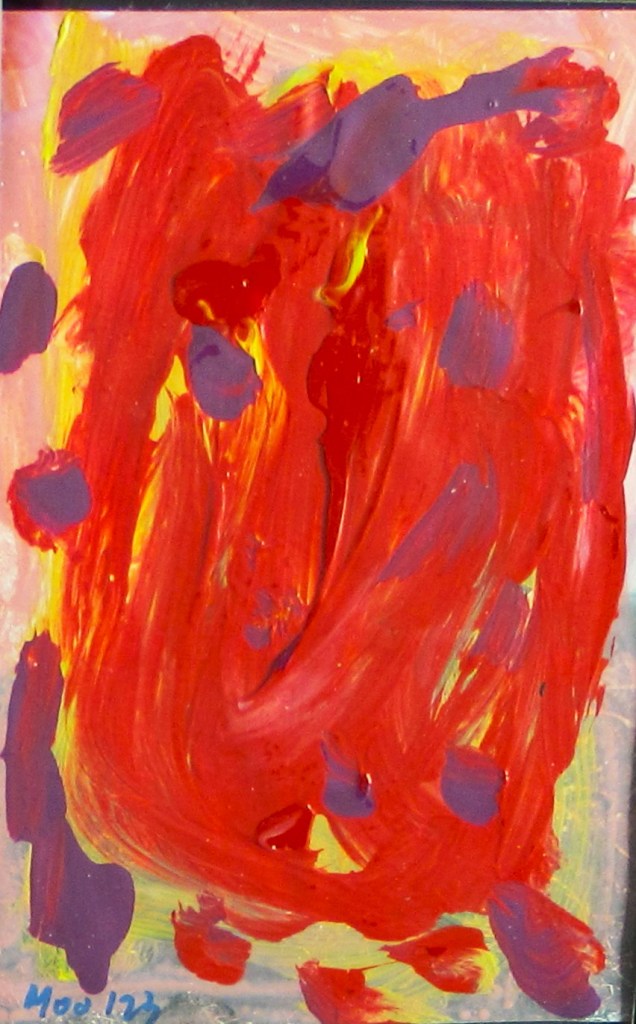
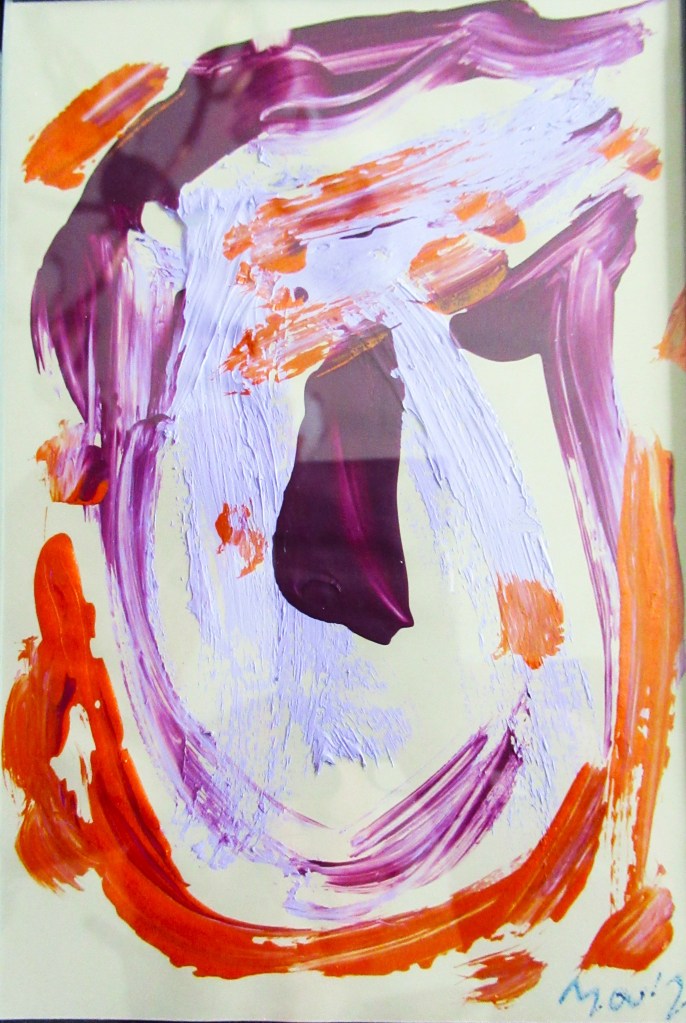
World Within

World Within
Anam Cara, p. 15

I have rediscovered a world within me,
a secret world where I walked as a child,
a world that nobody else has ever seen.

When I was young, that world absorbed me.
In it, I went round and round on roundabouts,
and travelled high and low on swings and
swing boats, with their rough ropes.

Alas, as always, there were rainy days.
Then the sun would wear his hat but I knew
he would come out later and join my play.

Sometimes, in the summer, thunderstorms
would roll around and rattle our corrugated roof.
Dai Jones’ cows would rush through the field,
seeking shelter from the wind and rain.

In those days, every cloud had a silver lining.
I weathered tough times, waiting patiently
for the sun to return and light up the world.

One day, I don’t remember when, someone,
I don’t know who, slammed the door and shut
me out from that world. I spent my whole life
searching for it. At last, I have found it again.

Click here for Roger’s reading.

True Names

True Names
Iron John, p. 236

No one will know our true names
until after we have left this place.

Like that elusive moon in tonight’s sky,
our paths will be visible, seen, but not heard.

Orion herds the stars, steering them westwards,
away from the sunrise, to moon’s golden circlet.

So much has been lost, so many of us have gone,
leaving us to mourn unspoken thoughts, silent words.

In spring, sometimes, we can hear voices whispering
to us among burgeoning blossoms and leaves.

Who will bear witness to lovers’ wishes and desires
when the great separation springs upon them?

Who will sing songs, give speech to the little children
taken before their time and lost in the silent night?

Click here for Roger’s reading.

Questions

Questions
Four Elements, p. 137

After my mother died,
I lit a candle in every church,
a real bees’ wax candle,
not those tiny electric lights
that glow for a little while,
when you insert money
in the insatiable slot.

Like the minuterie
on each landing of a Parisian
staircase, it gives enough light for
a quick prayer, or a very short
moment or two of silence.

Where does the light go
when the electricity switches off?
Where does the flame go
when the candle is snuffed?
Where did my mother go
when her light went out?

One day, but not too soon, I hope,
I will have to follow her and find
the answers to all of my questions.

Click here for Roger’s reading.

Light Breaks

Bandits

Two shadows,
at three in the morning,
their faces masked,
shifty in the moonlight,
slip soundless over snow,
as they move towards
the bird feeders.

They huddle together,
forming a darker patch.
I watch the feeders move,
but cannot see the seed
nor hear it as it falls.

The feeders empty,
they move again
towards the back porch,
climb the steps,
and settle once more.

I know that by morning,
all traces of seed will be gone,
devoured by Dyson and Hoover,
scavengers and professional
seed removers.

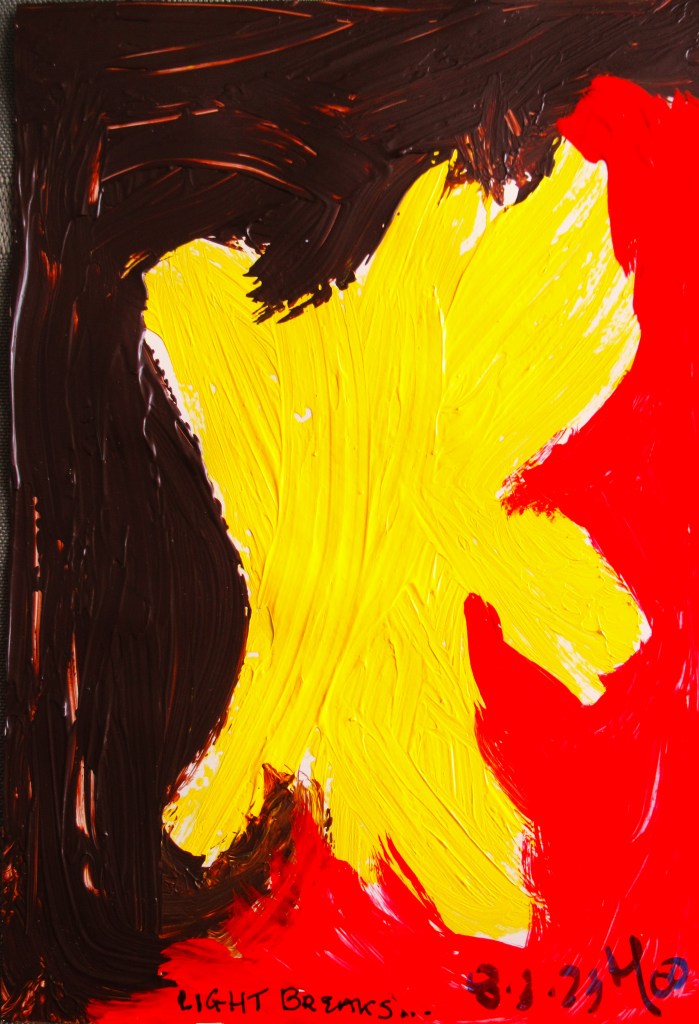
Comment: Light Breaks

“Light breaks where no sun shines…” but sometimes it takes a long time to happen. The name of my blog is rogermoorepoet and it’s main function is to showcase my poetry, above all, to my friends and followers. In my efforts to publish in print form, I have neglected to pay attention to the main function of this blog – poetry. Why? Because when I submit poems I always find the phrase – ‘must be unpublished – including on social media’! So I stopped publishing poetry on my poetry blog and on other social media. Okay, okay. I know. I am an idiot. BUT – light has now broken where no sun shone – Dylan Thomas, of course, another Swansea Boy, and as of today poetry is back. A big thank you to any and all who have been waiting for its return. Give me some encouragement – let me know if you like what I am doing – paintings and poetry!

Click here for Roger’s reading.

Waiting for Godots

Waiting for Godots

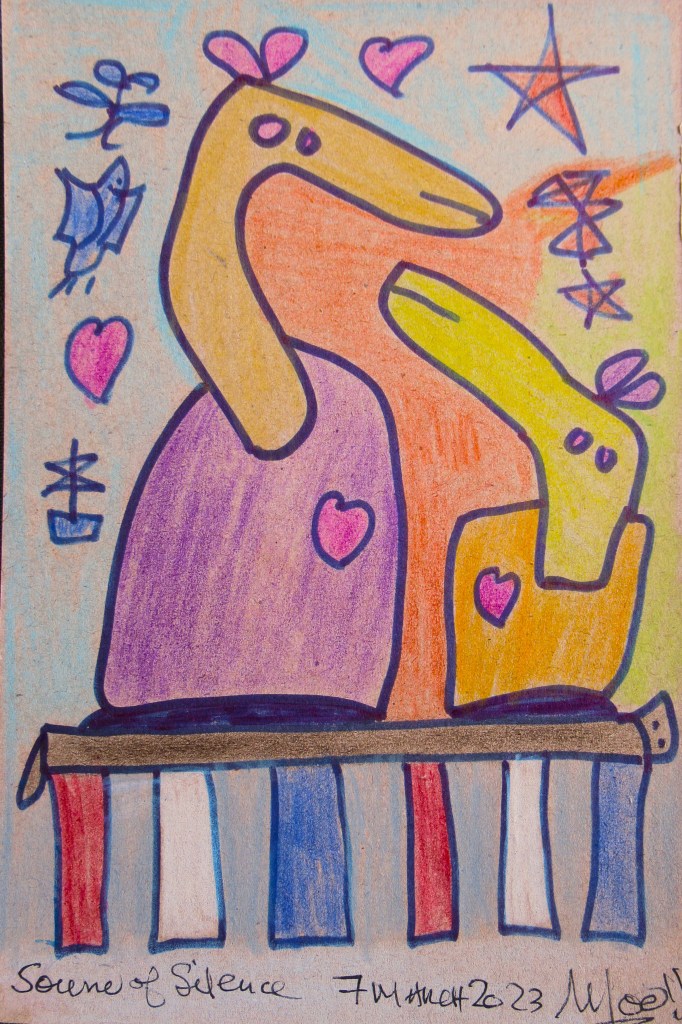
What do authors do when they send manuscripts to agents or presses? They have several choices. For example, they can listen to the sound of silence. Listen carefully to the paining above. What does it say to you? Absolutely nothing. Quite. It doesn’t communicate. It’s the sound of silence.

Another choice, they can read and re-read Beckett’s Waiting for Godot. Alas, in this case there are many Godots out there and all of them are super-busy gazing at their navels – and I don’t mean oranges. Some indulge in the wonderful world of “Mirror, mirror, on the wall…” and we all know what the answer is to that question. And we know what happened to Narcissus when he saw himself in the river water. Or have we forgotten? Our failure to share cultures is also a sound of silence – two solitudes, gazing at each other, neither one having anything in common with the other one, except maybe the weather. And we can’t always agree on that.

A third choice, they can climb into their dustbins, Queen’s English for garbage cans, and stand there waiting for someone to put the lid on so they can go back to sleep. Allusion / elusion – you don’t know what I am talking about? Well, maybe we are living in two separate solitudes. It wouldn’t surprise me in the least.

A fourth choice, they can take up painting, and scribbling, and drawing, and doing all sorts of things. But, if the phone rings and you don’t recognize the number – don’t pick up the phone. It’s probably a fraudulent scam call. And if you don’t know the e-mail address, put it in Spam and then block it. It’s probably some bot from another country trying to trap you into giving them your bank account details and signing your savings away. Whoever it is or they are , I doubt if it’s an agent or an editor!

Tell us about yourself

Tell us about yourself

That is one of the questions I most hate to be asked. What on earth is there to tell? One direction is the Muhamad Ali route – “I am the greatest!” Some people take that route and walk you down the highway of their lives, everything from winning the egg and spoon race (age seven), to coming second in the three-legged race (age 9), to finishing third in the slow bicycle race (age 11). And that’s just the start. A similar route is the 007 route – license to kill – shoot from the lip – a blast from the past – history, herstory, my-story – by me!

No way. My history is a mystery and long may it remain so. There are many magic moments (thank you Perry Como – my mother’s favorite singer) and many tragic moments. Some might be worth mentioning, most I’d rather keep quiet about. I think sometimes of the famous examination question – write down everything you know – except I can’t remember who was examining who, nor why they were being examined. Sounds a bit like the Civil Service to me, before they ask you to swear the Official Secrets Act.

On the other hand, if a person asks me a direct question, I will try to answer it to the best of my limited ability. Who is Lisi? I don’t know. Her identity has baffled the literary critics for close to 400 years and I certainly haven’t been able to solve it. Why did Cervantes write the Quixote? Try asking him yourself – but I guess if he’s been silent since 1616, he will remain silent for a lot longer. Not everyone is – or wants to be – the Memory Man – “We know Easter is a Moveable Feast, when did Easter Sunday last fall on Boxing Day?”

Trick question – Easter Sunday is a race horse, not a holy holiday. Boxing Day, in Britain, used to be the day for point to points and obstacle races for horses. But the Memory Man knew that. He also knew the name of every jockey, every horse, their weights, their odds, the order in which they finished, and the name of the fence which caused Easter Sunday to fall on Boxing Day.

So, tell us about yourself. No. I won’t. I am not the memory man and I will reveal as little as I can. Remember the old song – “Yesterday is history, today is still a mystery, but what a day it’s going to be tomorrow.” Right – now I am ready to tell you about myself. I am not yesterday’s man, I am today’s man, and today is still a mystery. Sorry, I can’t do better than that!

Writing in the Red Room

Writing in the Red Room

Dawn over Kingsbrae, as seen from the writer’s desk in the Red Room in KIRA. “A poet could not but be gay, in such a jocund company.” Wordsworth, thankfully, for how words change their value as language transforms itself and old values and meanings grow wings and flit away.

Gai saber – from Old Provençal: “gay knowledge” or “gay science”, the art of composing love poetry, especially the art of Provençal troubadours as set forth in a 14th-century work called the Leys d’amors. But one doesn’t have to be gay, in any sense of the word, old or new, to write poetry, and it is difficult not to write poetry when the sun creeps over those hills and lights up the room and the bay below.

Warmth and light flood into your heart. The pen fills with words and they splash out over the page, moving the writer as the sun moves, as light moves, as light breaks where no sun shines as yet, but will, soon, so very soon, and here it comes, filling the heart once more with wonderment, the bay with light, and the page overflowing with the joy of light.

To be here is to be honored and privileged beyond words. To be able to share that joy with others is a blessing that many seek and few find, and none possess, for, like fairy gifts, such powers fade away all too swiftly. And, when all is said and done, one can only be humble, rejoice in each moment, and give thanks.

My Teenage Self

My Teenage Self

What advice would you give to your teenage self? In one word – grow up. Useless advice really, because it happens, whether we want it to or not. That said, I have lost so many young rugby players that I coached or played with, to driving accidents and other misfortunes, sometimes self-inflicted via alcohol or drugs, that to say grow up – please! – is so important.

Each morning I read the obituaries in the local newspaper. Afterwards, I look back over the path I have journeyed. If I had perished at the age of the current ‘missing person’ – say, 45 – 50 – 55 – 60 – I think of all that I would have missed in those intervening years. Then I grieve for all that they will have missed in the life that should have lain ahead of them.

“Don’t cry over spilt milk” – Old Welsh Proverb. And no, we mustn’t cry over what is lost. We must celebrate what has been achieved, Dylan Thomas (1914-1953), one of Wales’s greatest Anglo-Welsh poets, dead at 39 – what other glory may have lain ahead of him? Garcilaso de la Vega (1501-1536), one of Spain’s purest and most innovative poets, dead at 35. What more might he have written in an extended lifetime? Federico Garcia Lorca (1898-1936), executed, many say tortured and murdered, at the age of 38. Think of the theatre, the poetry, the Gypsy Ballads, the songs of a dark love – what more did he have, hidden inside him, that was never allowed to spread its wings and fly out into the light of day?

So, I would give to my teenage self, the same advice that I would give to any teenager – grow up – please, grow up, don’t go too soon, – and please grow into that unique and wonderful being that you have the potential to be.

A Very Spanish Omelet

A Very Spanish Omelet

Spanish Omelets – I learned how to cook them in Santander, Spain, when I was attending summer school at the Universidad Internacional Menéndez y Pelayo. No – I didn’t learn at the university. My landlady taught me. She always left me an egg and a potato for supper. The first night she showed me how to cook a tortilla española. She showed me how easy it was – and from then on, she left the ingredients out for me and allowed me to cook the nightly omelet for myself.

Ingredients: splash of olive oil, pinch of salt, 1 potato (peeled, diced, or sliced), 1 egg.

Preparation: heat frying pan, put in the olive oil, let it warm, add the diced potato, add pinch of salt (to taste), fry until golden brown (or to taste) stirring all the while. Beat egg in a bowl. Add beaten egg to fried potatoes to make omelet. Turn omelet over in pan to cook both sides.

Seems simple, eh? But not so fast. Olive oil: I prefer Spanish olive oil, of a good quality. Other national olive oils will serve just as well, but they will change the taste of your omelet. Pinch of salt: now that’s easy. Or is it? I prefer pure sea salt. However, check the chemicals listed on the side of your salt box. Some add iodine, others sugar. No two salts are the same. Your omelet will change taste with the salt you choose. Gets complex, doesn’t it? Nothing complex about a potato, is there? But kind of potato will you use? The Universidad de la Papa in Peru lists approximately 80 different kinds of potato. Each kind will change the taste, and the texture of your omelet. Dicing or slicing? The cut of the potato will also change the taste of the omelet. When we took omelets to the beach in Spain, we always knew who had made the omelet according to the way in which the potato was sliced. Thin slices or squarish chunks? Regular cut or cut in irregular fashion? Sliced then chopped smaller? And as to the potato prior to frying, par-boiled or uncooked? Both ways lend a different texture to your omelet. De gustibus non est disputandum – there is no arguing about taste. There is nothing as simple as an egg – really? White shell or brown? Pale yolk or dark? Free range or battery hen? Fresh or, well, just hw fresh are some fresh eggs – “Eggs from Australia, fresh as the morning” -? Guess what – you omelet will change in taste, texture, and color according to the type of eggs that you use and the chicken that laid them. I wrote Add beaten egg to fried potatoes to make omelet – very true. But the good cooks that I copy actually add the hot fried potatoes (with as little oil on them as possible) to the whipped egg, and allow them to settle and gel together before returning the mixture to the pan. Not so simple then, this omelet cooking. Experiment. Try different methods and different blends of the four basic ingredients. When you find the blend you like best, stick to it.

Cebollista o anti-cebollista – the annual tortilla cooking competition in Galicia permits only four ingredients, as listed above, in their omelet entries. They do not permit the use of onions / cebollas. If you do wish to add an onion to the potato mix as it fries, you may most certainly do so. But the same cautions apply to onions as to potatoes. Be aware of what you are using and how you are using it. And whether you choose to use onions, or not, remember you have chosen a side in an ongoing war – cebollistas contra anticebollistas! Most people are one side or the other, rarely both.

Other things often appear in Spanish Omelets, sometimes under one name, sometimes under another. Next time, if any interest is shown in these recipes of mine, I will elaborate more on The Very Spanish Omelet.