Intertextuality

Intertextuality

Wednesday Workshop
25 August 2021

            This is another academic word that has a simple meaning. In essence, it means texts talking to texts. Quevedo (1580-1645) writes ‘escucho con mis ojos a los muertos’ / ‘I listen with my eyes to dead men.’ He is suggesting that, each time we read a text written by another person we enter into a dialog with that text and that author. His metaphoric conversations with the writings of the long-dead Seneca become intertextual the moment he put pen to paper and wrote about them.

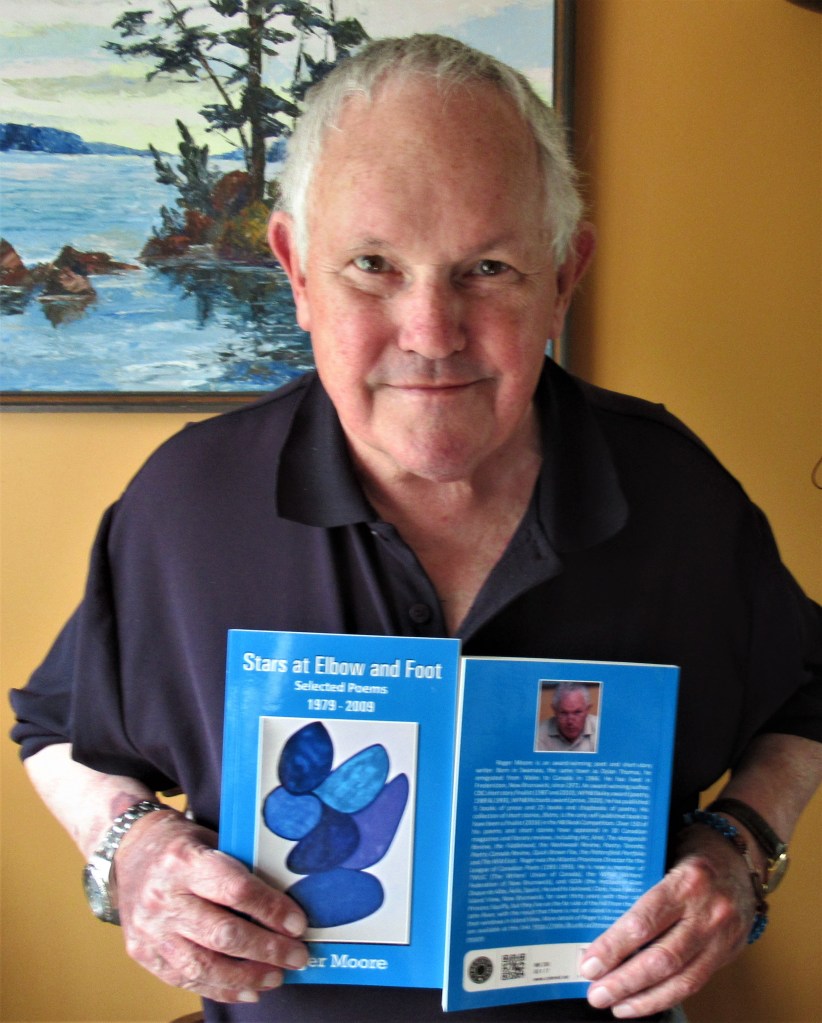
This intertextuality is a key component of my writing.  You may not recognize all the phrases that I have used previously by other writers. I do. Some other readers will. Just take, as an example, the titles of some of my earlier books. The title of Broken Ghosts (Goose Lane, 1986) comes from these lines penned by the Swansea poet, Dylan Thomas (1914-1953). ‘Light breaks where no sun shines; / where no sea runs, the waters of the heart / push in their tides; and, broken ghosts with glow-worms in their heads, the things of light / file through the flesh where no flesh decks the bones.” Stars at Elbow and Foot, the title of my Selected Poems (Cyberwit.net, 2021) was also inspired by one of Dylan Thomas’s poems. “And death shall have no dominion. Dead men naked they shall be one with the man in the wind and the west moon; when their bones are picked clean and the clean bones gone, they shall have stars at elbow and foot.” The title of Though Lovers Be Lost (Kindle, 2016) also comes from this same poem, one of my favorites, obviously.

Sometimes readers are aware of these intertextual clues that I sow throughout my poems. Sometimes not. It doesn’t matter. There is a resonance in such chosen words and that resonance is there, irrespective of whether you are aware of the word-source or not. That said, the recognition and acknowledgement of intertextual relationships expands the poetic meanings of the creative world even further. It also establishes verbal links between author and author, epoch and epoch, genre and genre, thus establishing a wider intertextual network and a stronger chain of linked literary thoughts and meanings. In our creative journeys, we rarely walk alone, whether we are aware of it, or not.

The art of writing poetry about paintings is known as ekphrasis – which basically just means a verbal description of a visual work of art, whether it’s real or imaginary. The conversion of the visible (painting) to the printed page (verbal) is another link in the great chain of intertextuality, for paintings, too, are narratives with a different form of text. Other component parts are audible to verbal (alliteration, onomatopoeia), touch and feel (tactile) to verbal (as in synesthesia or the mixing of the senses) and the transfer of taste to verbal forms. Many of these transitions and transformations are present, not only in my own poetry, but in surrealism (verbal and visual) as well.

Quack!

Quack!

A duck, in cricket, means the batter has been dismissed without scoring. The 0 resembles a duck’s egg, and hence score of naught is known as a duck! A golden duck means the batter has been dismissed first ball, without scoring, a sad fate indeed. A King Pair is first ball in each innings of a four innings match (two per side).

My cartoon shows an English cricketing duck carrying his bat through a golden shower of life’s purple patches. There are several clichés and double entendres in this title. First, of course, the ignominious duck. Carrying his bat: this has a double meaning (a) to literally carry a cricket bat, as this duck is doing, and (b) to open the batting and carry your bat throughout the innings, un-dismissed, although the other ten wickets have fallen around you. To carry your bat for a duck is as near as impossible as it can possibly be. A golden shower: alas, we are all now familiar with the pornographic version. Some will be familiar with the myth of Jupiter descending as a shower of gold. The golden shower here also represents the shower of golden ducks that has currently descended upon the English cricketing team. Purple patches can be good. However, a purple patch of golden ducks is only good for the opposition bowlers, if you are on the batting side.

England top order quacking and creaking into history of the duck: this article in Tuesday’s Manchester Guardian cricketing section will explain the makings of current duck history for all who are interested. Equally interesting are the double meanings (a) within the verbals of the above cartoon and (b) within the visuals of the drawing itself. For example, the golden duck holes / eggs pecked in the bat, the mingling of gold and purple in the shower falling, the duck eggs woven into the batter’s shirt…

So, here we go, swinging low, swinging to miss, and swinging into history, where batter itself is a neologism replacing batsman as a non-generic term for those who bat, much as bowler, the man, not the hat, is a non-generic term for those who bowl, or fielder for those who field. Now, what on earth are we going to do with ‘gloveman’? Glover, perhaps, or wicket-person, or a return to wicket-keeper, or just a limited keeper? Language is so lovely and the mixture of language and cartoon is is doubly good, as long as everyone is bilingual and can entendre.

Dance of the Snow Flies

Dance of the Snow Flies

“When the snow flies…” they keep saying.
I have seen blackfly, felt them nesting in my hair,
picking painlessly at my scalp, until, next day,
the itching begins and the bites get scratched,
one after another, until they turn into scabs.

But I had never seen a snow fly, hard as I tried.
When the geese fly… yes, I have seen and wondered
at their spring invasion and their autumn retreat.
I have marveled too at the goslings’ rapid growth,
those golden fluff balls taking first to the water,
and then one day, suddenly, they rise in the air.

Last year, in a moment of madness, I stood beneath
Aurora Borealis and marveled at the sky’s flickering
colors. The light became sound and it was then,
astounded, I saw them dancing, those snow flies,
dancing me senseless, in their rainbows of light.

Listen to the podcast here.
Dance of the Snow Flies.


Comment: “La Poesía se explica sóla, si no, no se explica” — famous words by Pedro Salinas the great Spanish poet of the Generation of 1927, who taught at Johns Hopkins University. So, I will not attempt to explain my words. They stand for themselves, or not, as the case may be.

However, I will venture into the area of the cliché and the commonplace. People use so many phrases without thinking about what they mean. To examine the cliché and explore its meaning is a delight. What are snow flies? And what will they do when that moment of their release comes about? When the snow flies dance beneath the Northern Lights on a late fall night in New Brunswick, they become visible to the watchful human eye. And now you know what happens “when the snow flies… dance!”

The Origin of the World

Dawn from the Red Room at KIRA. Another form of birth.

Spotify
Remember to scroll down to the correct episode.

The Origin of the World
Gustave Courbet
 
L’Origine du monde

The origin of the world and where I came from,
her deep, moist cave that cast me from dark to light.
She loved me, she said, depriving me of her warmth,
leaving me to go back to her lover, loving him more.

Was it guilt that drove her to drinking whisky?
A forty-ouncer a day at the end, sometimes more.
She would wake in the night, wander the house,
banging against chairs, tables, walls, and doors.

She ran up bills in local shops, and the keepers
would dun me for the money she owed. She also
borrowed cash and some days her fingers were bare.
She left pawn shop IOUs on the table and I drove

 into town to redeem her rings. Once, in a drunken
frenzy, she cursed her only child. A mother’s curse is a
terrible thing. Living albatross, it claws lungs and heart.
Its weight drove me to the bottle. I too sought oblivion.

Joy came when blackness descended, the albatross flew,
amniotic waters rocked me in warmth and comfort,
and my body’s boat floated once again on an endless sea.
Reborn each day, mornings cast me back from dark to light.

Comment: Here is the link to the DiversityTV reading of The Origin of the World. The Origin of the World begins at 28.40. I will attach my own reading from Spotify, just as soon as I complete it. I always find it fascinating to compare the way others read with the way I do. meanwhile, I would like to thank Alexandro Botelho for his invitation for me to participate in his DiversityTV show. I enjoyed his reading very much and I wish him all success with this venture.

DiversityTV

Poetry Readings

DiversityTV
Poetry Readings

In case anyone is interested.

Saturday – LIVE “Writings on the Wall” | Poetry & Creative Writing 8/21/21
https://www.youtube.com/watch?v=LKuNHs6nQRo

Sunday – LIVE “Writings on the Wall” Europe | Poetry & Creative Writing 8/22/21
https://www.youtube.com/watch?v=jaT5L1PQhAk

There will be more Moore poems later this week.

Sense and Nonsense

A whole lot of pens. But will they write one word of poetry?

Sense and Nonsense
Wednesday Workshop
18 August 2021

Iterative Thematic Unity

            Iterative thematic imagery is complicated term, used by academics, for a literary device that is really very simple. When the same or similar images are used again and again in a text this is repetition or reiteration, hence iterative. When they are bound thematically or within the associative fields already present in the poetry, then the repetition is said to be thematic. A work’s unity may be found within the three classical unities of time, space, and action, or it may be found within the imagery that links and unites. It seems complex, but it isn’t really.

“Now you are a river flowing silver beneath the moon. High tide in the salt marsh: your body fills with shadow and light. I dip my hands in dappled water.” The key images fall into two categories, (1) water: river / high tide / salt marsh / water and (2) light: silver / moon / shadow and light / dappled. Now the sense of the words becomes clear. You / your body is likened to a river seen in the moonlight. It can be touched: I dip my hands. This adds an extra sensory dimension and the depth of the images is apparent. And no, it is not a simple message, but it can be decoded and enjoyed because now you can make it yours.

Sense and Nonsense

            When we talk poetry, what do we mean by sense and nonsense? Let us begin with automatic writing. Automatic writing is nonsense. Put your pen on the paper, do not let it off, write for five minutes, whatever comes into your head. The Surrealists published these thoughts, however distraught and distracted as meaningful poetry. Major poets (Lorca, Paz) have used these techniques to engender metaphors and images. However, they have searched among their subconscious thoughts and have rejected the dross to choose the genuine images that enlighten the inner world.

            Sense or nonsense? “Eye of the peacock, / can you touch what I see / when my eyelids close for the night?” Key images: eye > see > eyelids > and these are linked to the eyes of the peacock, as displayed on his feathers, and this links to the ancient tale of the Argos and the Argonauts, and to the person who closes his eyes to sleep for the night, and the sense that we can touch (tactile) when we dream (visual), a mixing of the senses. The straightforward logic of the nightly news? Definitely not. But the logic of the subconscious world, of the dream world as defined by Carl Jung? Definitely. These words contain internal meanings that are different for each one of us. Logical meaning? Definitely not. Internal sensation that may generate ease or unease? Definitely. Sense or nonsense? That will depend upon the readers and how they react not in their logical minds but in that deep-seated region of subconsciousness where all imagery is related to what Carl Jung calls the racial subconscious.

            Are there words or ideas here that you do not understand? Names and theories that you do not know? Literature in general and poetry in particular take you to places where you have never been and to places that you might never have thought of visiting. However, these are lands that will open their delights before you, if you deign to open up heart, mind, and eyes, and venture out to explore them. Use your dictionary, your thesaurus, your google search tool, and expand your verbal and linguistic horizons. Poetry is not an advert. It doesn’t sell you anything. But it can and does open new worlds and it encourages you to explore old worlds set within you. It will not persuade, cajole, and limit your mind and your choice, rather it will embolden you and help to open new horizons.

Calling It a Day

Calling it a Day

This auriferous sky, sewn with sharp sequins.
Is there a warp, a leaning towards meaning,
a lurch maybe towards the moon’s dark side?
Questions: knights-errant questing for answers.

Who planted our DNA into that first Garden?
Or did the garden fill us with its own seeds?
Why did those little plants take root and grow?
Why do they now wander everywhere, restless?

This auriferous sky, sewn with sharp sequins.
Is there a warp, a leaning towards meaning,
a lurch maybe towards the moon’s dark side?
Questions: knights-errant questing for answers.

Rampant feet patrol our castle’s heights
while we seek instant gratification, swift
possession, our fingers probe each passing
cloud, reaching for all, but grasping none.

A satellite glides its razor edge, slices
the night’s eye into pin pricks of light.
The moon balances her orange unicycle
on thin black lines, hills edged with trees.

Lesser incandescence of a departed sun,
that low, lone moon slowly climbs the sky.
Released from their earthbound burdens,
who knocks this night at heaven’s gate?

Here on the back porch, midnight slowly
covers me with its dark gray cape of grief.
My grief is your grief, your grief is mine, all
grief is one, why do we all then grieve in vain?

A Theory of the Absurd

A Theory of the Absurd

I wonder what I’m doing here, so far from home, sitting
at the bar, with my beer before me, my face distorted
in half a dozen fairground mirrors, surrounded by
people half my age, or less, all smoking, cursing, using
foreign forms of meta-language, gestures I no longer recall:
the single finger on the nose, two fingers on the forehead,
the back of the hand rammed against the chin with a sort
of snort of disapproval. It’s way beyond my bedtime, yet
I am held here, captured, body and soul, by foreign rhythms,
unreal expectations of a daily ritual that runs on unbroken
cycles of time: morning brandy, pre-lunch wine and tapas,
home for the mid-day meal, a brief siesta, back to the café
for a post-prandial raising of spirits, more blanco, then back
to work at four and struggle on until seven or eight when
the bar routine begins again with pre-supper tapas and tinto.
Who am I? What am I? Where am I going? I wander, restless,
 streets and squares, enter other bars and restaurants, consume
verdejo, manzanilla, tinto de verano, the original and many
 falsifications, in corner bars, on patios, sampling liqueurs,
cognacs and coñac, Fundador, Carlos Quinto, Torres Diez,
sol y sombra, Cuarenta y Tres, pasteles con café quemado.
Time, comprehended in this new life-cycle, lacks meaning.
Time, in a cycle I have long abandoned, is meaningless too.

Man from Merthyr

Man from Merthyr

Memory loss punched holes in your head
and let in the dark, instead of the light.
Constellations faded from your sight,
erased by the arch-angel’s coal-dust wing.

 “I’m shrinking,” you said, the last time I saw you,
you, who had been taller, were now smaller than me.

 Tonight, when the harvest moon shines bright
and drowns the stars in its sea of light,
I will sit by my window and watch for your soul
as it rides its coal-fired rocket to eternity.

My eyes will be dry. I do not want pink runnels
running down this coal-miner’s unwashed face.
I’ll sing you a Welsh lullaby, to help you sleep.

“When the coal comes from the Rhondda
down the Merthyr-Taff Vale line,
when the coal comes from the Rhondda
I’ll be there.”

With you, my friend, shoulder to shoulder.
“With my golden pick and shovel, I’ll be there.”
Farewell, my friend, safe journey, sleep deep,
as deep as a Rhondda coal mine may you sleep.

Survivors

Survivors

Last night’s rainstorm shrank the house.
We closed down rooms
and now the walls are closing in.
There’s so much we no longer use, nor visit,
so many rooms we no longer enter.

Almost all our friends downsized long ago.
We are the holdouts. We love it here
in this big house with its lawns and trees
and flowerbeds with bees’ balm, butterflies, birds,
and the yard abuzz with sunshine and bees.

But now we are starting to throw things out.
Maybe we’ll move, next summer perhaps,
or maybe not. For now is the time of indecision.

Like friends of the same age,
we travel the lesser road of memory loss,
a name and a face here,
a date or phone number there.

Perhaps, when the time comes,
we will have forgotten how to move.
Meanwhile, the mandatory old man’s question:
‘where did I put my glasses?’