Les croulants

Les croulants

That’s what they called the older
generations, in Paris, in 1963, when
I lived there, in St. Germain-des-Près.

Now, a member of that generation,
I remember those words and see myself
crumbling, failing, falling slowly down.

A façade, it’s all a façade. Here I am,
white-haired, wrinkled, watching time’s
oxen plowing furrows in my face as
winter’s snow layers a silvery thatch
of patchwork hair upon head and chin.

How much longer can I sustain my life,
exist in this metatheatre of give and take,
where each day takes its toll, and I give
away bits of myself, slowly, reluctantly,
sloughing them, snake-like, to dance,
then vanish, into the gathering dark.

Author’s Note
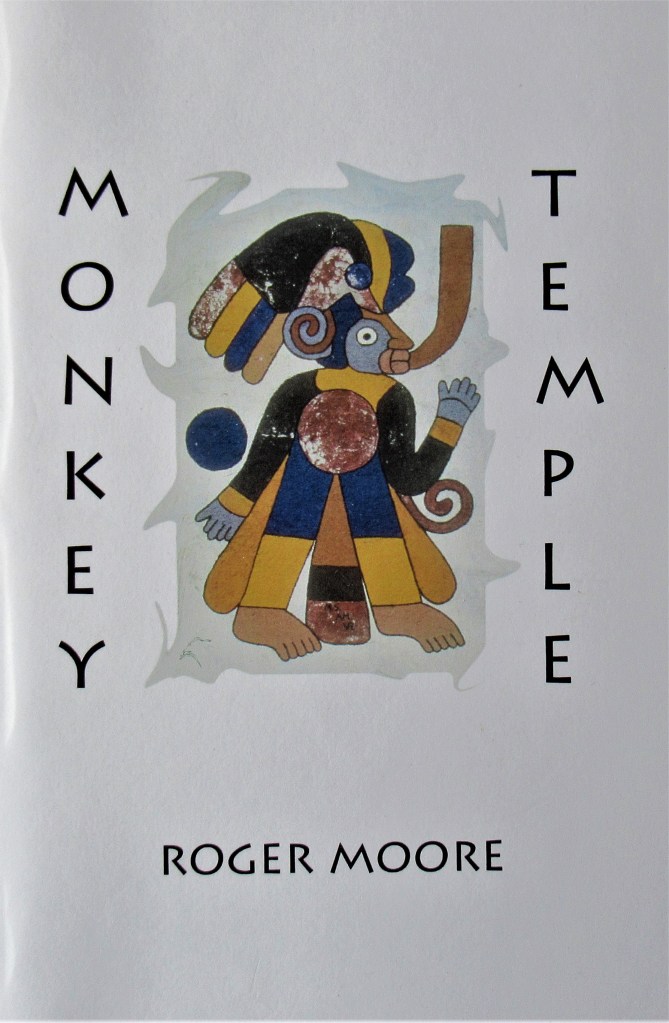
I used this painting as the cover for my novel People of the Mist.

People of the Mist
A Poet’s Day in Oaxaca

Click here to purchase this book.

Themes from this poem can be found in my poetry collection Poems for the End of Time. It is a series of metaphysical meditations written while listening to Messiaen’s Quartet for the End of Time. It is followed by Lamentations for Holy Week, a sequence based on the Spiritual Exercises of St. Ignatius of Loyola, as imitated by Francisco de Quevedo (1601 – 1613) in a series of poems composed during Holy Week. This poetry is written from the heart and expresses the authenticity of the poet’s being. Here, the poet indulges in a dialog with his time and place – much in the manner outlined by Mikhail Bakhtin in his theory of Chronotopos. This poetry is not written for the simple minded. Rather it invites the reader to explore the nature of the world, the philosophy of time and place, and the metaphysical exercises necessary to prepare for the inevitable end of time.

Poems for the End of Time
and
Lamentations for Holy Week

Click here to purchase this book.

Souvenirs

Souvenirs

Where have they gone,
the old days, the old folk,
the old ways of doing things?

I search for them, day after day,
but my cell phone isn’t
the old-fashioned circular dial,
nor the pick-up phone
with the shared party line,
when everybody listens in.

The garage is a mad hatter’s
maze of a workshop,
in which things grow legs
and walk this way, that way
every way to Sunday,
constantly getting lost.

I think I can hear them.
chittering, chattering.
but I cannot see them
nor hold them,
even though I would like
to clutch them tight.

Bats in the belfry,
and in the attic
mislaid items,
pens, ink, paints,
a tuck box, with keys,
a cricket bat,
cracked and yellow,
abandoned,
and forgotten.

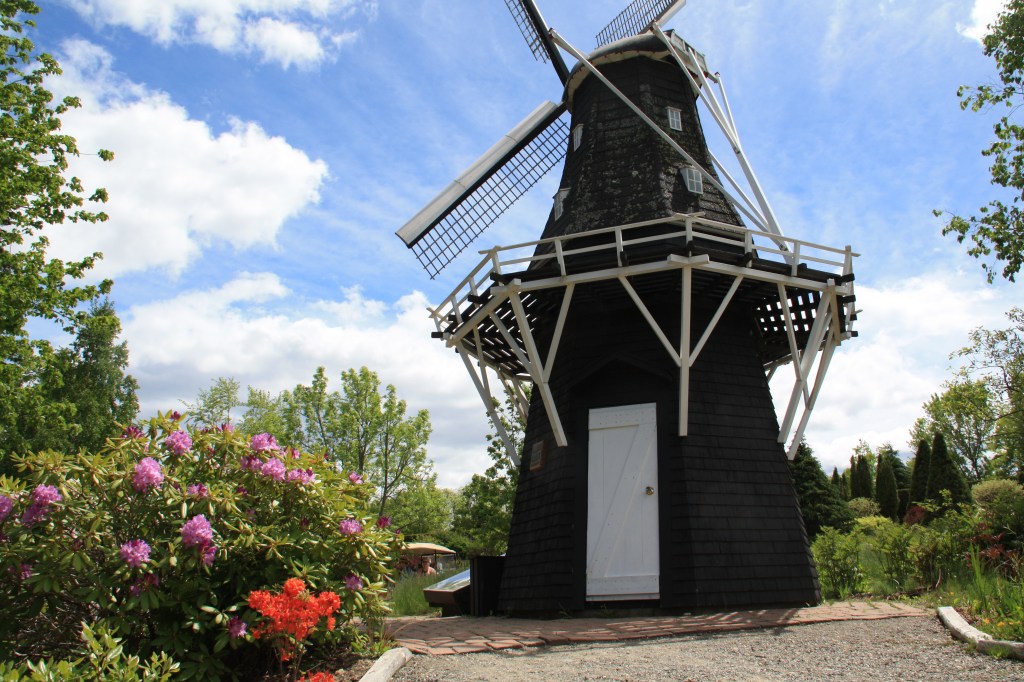
Windmills

Windmills

Only the pendulum clock
disturbs the silence
as the slow stars circle
and the moon hides
its face beneath
seven excluding veils.

Tranquility finds me,
seated here, head in hands,
contemplating the complicated
dance steps of a terra-centric
universe where planets weave
an intricate back and forth
to justify the falsehoods
of misguided mistakes.

Men, confident in their wisdom,
know that all is well,
that their faith in the old gods,
the old books, the words
that were written, in stone,
before the modern world began,
need no rethinking.

Those whirling sails,
imprinted on the questing mind,
are a giant’s arms, those sheep
an enemy army cloaked
in dust, coats of arms visible
only to the far-sighted
whose eyes defy vision’s laws.

Right, they were then.
Right they are now.
Nothing changes. Nothing
can possibly change.
Sheep are the enemy
and windmills wait to invade
the unsuspecting mind.

Comment: The history of Don Quixote and its reception in Spain is quite interesting. I was very sorry to read that Cervantes’s language is now considered so antiquated that interpreters are needed. I actually have a cartoon version of his quests – a picture reader, so to speak, very brief, because each picture is worth a thousand words. I have not yet seen the simplified text, rewritten with today’s reader in mind.

Don Quixote still holds many lessons for this modern world of ours and is definitely worth re-reading for, as Soren Kierkegaard (1813-1555) wrote: “There are two ways to be fooled. One is to believe what isn’t true; the other is to refuse to believe what is true.” Don Quixote, the character, threads a narrow path between those two extremes, as do many of the other supporting characters, some of whom use metatheatre for their smoke and mirror Wizard of Oz trickery. And remember, or forget at your peril, nihil sub sōle novum – there is nothing new under the sun. And yes, history does repeat itself, as you will see if you read (or re-read) Cervantes’s master piece.

Hide and Seek

Hide and Seek

Pictures and memories play hide and seek.
They hunt the slipper that hides in the words
that slither and slide across my page.

They long to emerge, fully formed, and to step,
without effort, into your mind. They want
to linger there, to baffle, taunt, and haunt you.

Digging through the verbiage, a thought,
a metaphor, a grouping of words will join and
rejoin. This is the grit that the oyster slowly shapes
into the pearl of great price that glows so bright.

Consider the opal. Plain at first sight, yet changing
color, shimmering in sunlight, a chameleon
adapting to mood and shadow, its moon dance
hovering, a butterfly over burgeoning blossoms.

Who could ever forget, once seen, star light
illuminating the bay, the moon gilding the sea,
those summer nights, our secret love flowering.

The veiled will unveil itself and tease its way,
its path over the sparkling waters of the bay.
Knock and it will open. Seek and you will find.

Comment: I had a specific, named place in mind when I first wrote this poem. Then I realized that my secret place was not necessarily the remembered place of other people who had undergone similar experiences. So, I removed the specific and made it generic.

I know you have been there, to your own special place. A warm summer night. Star light over a bay. Or maybe it was an estuary, or perhaps a river bank? The moon appearing, lighting up the waters. Walking, perhaps, hand in hand. Or sitting, as I remember it so well, in a late-night café, watching the night lights on the fishing boats, as the moon spread its golden carpet over the bay.

Coal Face

And Every Valley

And every valley shall be filled with coal.
And the miners will mine, growing old
before their time, with pneumoconiosis
a constant companion, and that dark spot
on the grey slide of the sidewalk a mining
souvenir coughed up from the depths
of lungs that so seldom saw the sun
and soaked themselves in the black dust
that cluttered, clogged, bent and twisted
those beautiful young bodies into ageing,
pipe-cleaner shapes, yellowed and inked
with nicotine and sorrows buried so deep,
a thousand, two thousand feet down,
and often so far out to sea that loved ones
knew their loved ones would never see
the white handkerchiefs waved, never
in surrender, but in a butterfly prayer,
an offering, and a blessing that their men
would survive the shift and come back
to the surface and live again amidst family
and friends, and always the fear, the pinched
-face, livid, living fear that such an ending
might never be the one on offer, but rather
the grimmer end of gas, or flame, or collapse,
with the pit wheels stopped, and the sirens
blaring, and the black crowds gathering, and
no canaries, no miners, singing in their cages.

Comment: A friend wrote to me about the closing of the pits in Nottinghamshire and how the mining communities had suffered, were still suffering, and might never recover. This poem is the first one in a sequence on the mine closures in South Wales and other mining communities. Poems For the End of Time – the book is available here.

Low Ebb

Low Ebb

We have been apart too long, my love,
night’s dark corridor lying between us
and neither of us approaching the other
when doors close and blinds are drawn.

The way to the heart of the matter is not
an easy path to walk, not any more.
Our secret ways and dreams lie cold
upon chill, empty sheets and pillows.

Each day the tide revives the beach,
flowing out, abandoning its wet debris
for the sun to perform its magic: fresh
seaweed drying above warm sand.

Sea-birds bury their beaks, writing claw
letters as crabs burrow, dig deep, waiting
for the tide to return and re-create
its alternate reality of dreamy waters.

Half of my bed performs its nightly duty.
The other half lies cold, empty, lonely.
No sea-life wanders there, not even in
my most creative dreams of sun and sand.

Comment: The loneliness of old age is compounded by many factors, including ill-health, sleeplessness, and the need to sleep in separate rooms. How many homeless people suffer that loneliness, and more, and at ages much less than ours? And then there’s the distress of trying to live in poverty, to survive from day to day, with safety net that will not protect us, if we chance to fall. A sad world then, as Polly Toynbee points out in today’s Guardian.


Flight

Flight

Such a miracle: those first steps to flight
taken by the cormorant over water.
That first one heavy, creating ripples,
the second one lighter, and the third one
scarcely touching the water.

The need to take flight lies deep within me.
Fleeing from what? Flying towards what?
Who knows? All I know is that the future
lies ahead where my bird’s beak points and
the past, a rippling wake, lies behind me.

That white water, trailing its kite’s tail,
tells me where I have been. Machado’s
voice calls out from the past: “Traveler,
there is no road, just a wake across life’s sea.”

Comment: The photo is a golden oldie, one of the first I ever posted on this blog. The poem is part old, part new. In reality, it is a revision, completed today, of the earlier poem associated with that old blog post. It is interesting to compare the two visions – with those seven extra years of creative experience between them. Let me know what you think!

A special thank you to my long-time friend, Dale Estey, for commenting and suggesting an improvement for the fourth line. Spot if if you can!

Janus

Janus

I walked backwards into my childhood
a step at a time. I failed to find it
where I thought I had left it.

I opened cupboards, doors, drawers,
searched beneath beds, went outside,
rummaged through garden and garage,
and found absolutely nothing at all.

 My past was as dry as a squeezed orange
when the juice has gone and long days
left on the window ledge has dried it up.

I looked in the mirror, and the man
I saw was not the boy I had seen
the day before. How could he be?

Janus, two-faced, looks forwards and back.
I will no longer seek the self that was

I shall accept the self that is, the one that grew
outwards and upwards from the one
that was before. Acceptance. I can do no more.

Underworld

Underworld

In the secret world of my goldfish bowl
I speak in bubbles but only hear silence.

My fish-eye lens bends the pendulum
of the grandfather clock. Westminster chimes,

inaudible, do not intrude. Noiseless are time’s
ripples across the surface of my submarine sphere.

I feel, rather than hear, my troubled heart beat.
The foreboding sounds of distant voices leave

me untouched and becalmed. Rocked in love’s
cradle, these amniotic waters nourish and soothe.

In my beginning will be my end. One day I’ll return
to the beaches of my childhood, where the sun

always shines, and the moon path over the waves
is a welcoming walkway leading to the underworld.

What brings you peace?

Daily writing prompt
What brings you peace?

Septets for the End of Time

I

Crystal Liturgy

Here, in the abyss,
where song-birds pluck their notes
and send them, feather-light,
floating through the air,
here, you’ll find no vale of tears,
no fears of shadow-hawks,
for all blackness is abandoned
in the interests of sunlight and song.

Here, the crystal liturgy surges,
upwards from the rejoicing heart,
ever upwards, into the realms of light,
where color and sound alike
brim over with the joy that, yes,
brings release to head and heart.

Here, seven-stringed rainbows reign,
the everlasting harp is tuned and plucked,
and an eternity of music cements
the foundations of earth and sky.

Here, the master musician conducts
his celestial choir, their voices rising,
higher and higher, until they reach
the highest sphere, and song and voice
inspire, then expire, passing from our eyes
and ears into unbounded realms of light.

Here, the seven trumpets will sound
their furious dance, a dance that will announce
the end of this singer, the end of his song,
but never the end of song itself.