Empress of Ireland

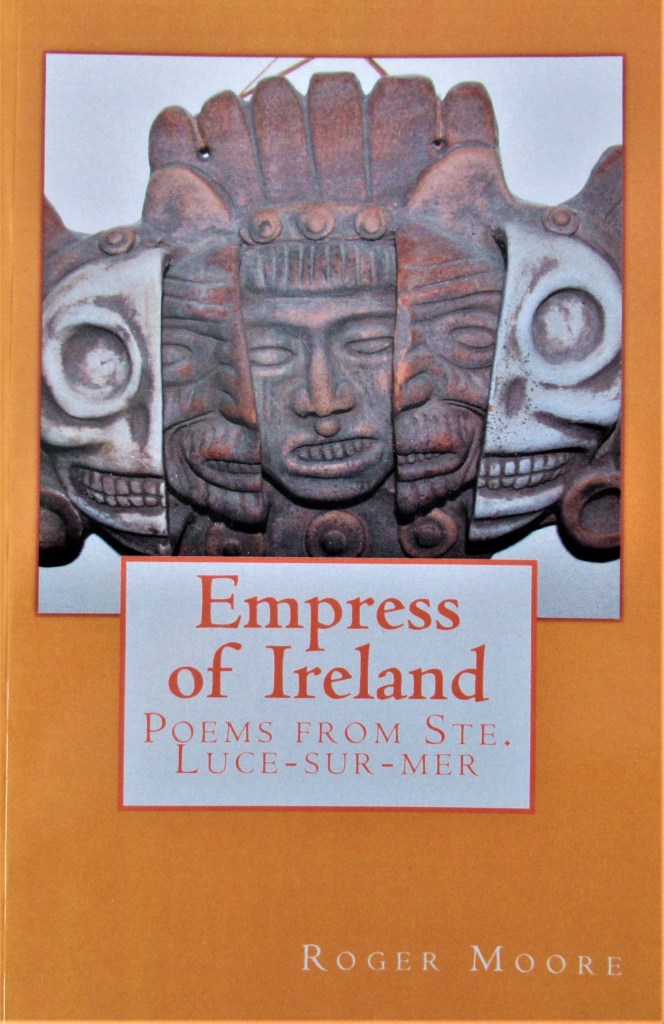
Empress of Ireland
Poems from Ste. Luce-sur-mer

is available at the following link:
Click here to purchase Empress of Ireland

The Empress of Ireland

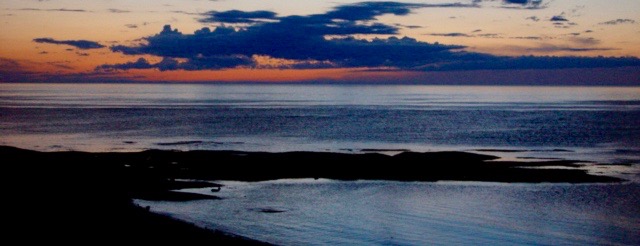
The poems which have come together to form the Empress of Ireland were begun in Ste. Luce-sur-mer, Quebec, in May 2002. It was off-shore from Ste. Luce, in the early hours of the morning of the 29th of May, 1914, that the Empress of Ireland collided, in dense fog, with a converted Norwegian collier whose bows had been strengthened for ice-breaking. There were approximately 15 minutes between the moment of impact (1:55 am) and the moment the Empress caught fire and sank (2:10 am). Although the disaster has received little international attention, more passengers perished in this accident (840) then in the loss of the Titanic (832) or the sinking of the Lusitania (791).

Introduction to the Empress of Ireland

Click on the link below to read an early post with a new sound recording of
A Survivor lights a candle
https://rogermoorepoet.com/2020/11/23/a-survivor-lights-a-candle/

I first heard voices in the cries of the sea birds on the beach at Ste. Luce-sur-mer.

Borne on the wind, over the sigh of the waves, they seemed high-pitched, like the voices of children, or of men and women in distress. These were lost voices, the cries of people alone and frightened by the dark. I heard them calling to me.

That night, there were knocks at my cabin door and finger nails scratched at my window. Tiny sounds, almost beyond the range of human hearing: the snuffling of puppies when they turn over in their sleep and tug at each other, whimpering in their dreams.

“Who’s there?”

I started from my sleep. But there was only the wind and the waves as the tide’s footsteps climbed a moonbeam path to ascend the beach. When I walked on  the sand next day, at low tide, there was a whispering behind my back. Little voices crying to be set free.

“Who’s there?”

A lone gull flew past my head and battered itself against the wind’s cage with outraged sturdy wings.  That night, the mist descended. The church stepped in and out of its darkness and shadows gathered, persistent, at my door.

I walked out into the night and saw a lone heron surrounded by gulls. It was as if an adult, clamoured at by children, was standing guard over the beach. Then I saw the shadows of little people searching for their parents, the shapes of mothers and fathers looking for their off-spring, lost among the grains of sand.

Beyond them, on the headland, the church stood tall above the shadows. I saw grandmothers and grandfathers, their lips moving in supplication, kneeling before the granite cross which stands above the sea. As I approached, they turned to me, opened their mouths, mouthed silent words, then disappeared.  When I went back to bed, faces and voices visited me in my dreams. When I got up next morning, they came to me in the speech of birds hidden in the foliage, in the words dropped by the osprey’s wing, in the click of the crab’s claw as he dug himself deeper into the sand.

“Release us”

“Speak for us!”

“Set us free!”

The words of the M Press of Ire are not my words. They could never be my words. Foundered words, they are, rescued from the beach, and dragged from the high tide mark with its sea weed, carapace, charred wood, old rusted iron, and bright bones of long dead animals polished by the relentless action of wind, sea and sand.
Three Witches

IMG_0252.JPG
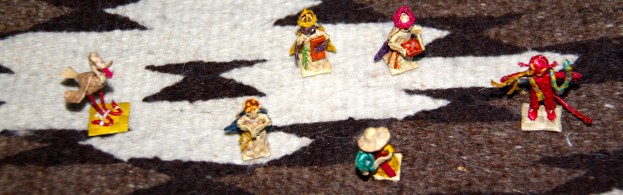
Weavings on a back-strap loom,
figures hand-braided from straw, then painted.
When the witches cast their spells,
these tiny figures dream themselves into life.
We gaze spellbound at their dancing.

Three witches: one spins the yarn,
one measures the cloth,
one wields the black obsidian knife,
trimming each tiny thread.

Infinitesimal clockwork figures
balancing on wool, their mouths opening
and closing, silent, like goldfish.

Wooden teeth comb each thread,
the shuttle always moving, weaving whose fate?

Interlaced castillos, scintillating cities,
grecas floating lighter than this relámpago,
this lightning that lightens the air.

Crazy Glue

The autumn leaves: what does it take with it when it goes? And what does it leave behind?

Crazy Glue

Late last night, a fallen star grazed by the lamp-post. A bouquet of golden sparks flew from an iron tree and sanctified the gutter. The gas lamps sputtered patiently in uniform rows. A scarecrow stuttered into the limelight and shook my hand. She was wearing my grandmother’s Easter bonnet, with all the flowers renewed, but she couldn’t keep my heart from last winter’s left over crumbs. Suddenly a tulip thrust through the concrete. It became as red as a robin and flew into the lounge bar of a public house. The bronze leaf necklace circling my throat filled with a flow of springtime song. My heart stood upright, a warped piano in my breast, and my skeleton tarried at the corner to play knuckle-bones with the wind. Torn butterflies of news fluttered round and round and kissed my eyelids when they closed. Yesterday’s horoscope winked its subversive eye and called to the hermit in his lonely cell: “Look out for the stranger with the tin can alley smile. Tie your heart to the tail of the first stray dog that comes whistling down the street and follow it home to the empty house that breathes in and out, moving thin membranes of memory.”
            That’s where I now live. Upstairs, downstairs, a lonely route I tread while the wind at the window scratches tiny notes. Something breaks loose in the confines of my mind and walks beside me. My twin brother stalks through this silvery sliver of splintered glass, this simian mirror wrinkling our troubled suits of skin. I glimpse the old moon’s monkey face through a broken window. Jagged and thin, it wanders like an itinerant snail, cobbled with clumsy clouds. Once, I descended the playground slide in a shower of sparks. A vagabond in a paving stone sky, I rumbled across metal cracks, a knapsack of nightmares humped on my old man’s back. Tell me: when the snail moves house, who stores the furniture he leaves behind? The hermit crab lurks naked on the beach, seeking new lodgings. Who killed the candle and left us in darkness?
            Two eyes in limbo watch me roll this snowman’s belly of flab across an unknown, clouded room where yesterday I got lost in the mirror. I know how to swim, but I would have drowned, except the light was too shallow and my feet touched bottom when I let the wheels down. I swam on and in looking for a deserted island on which to build my idle sand castle dreams. Two people said they saw my reflection swimming like a goldfish in the silver of that secret space. They said I stared back out at them with circles of longing ringing my eyes; but I laughed when they said they had seen me, for when I looked in the mirror this morning to shave, I just wasn’t there. My razor dragged itself over an empty space and its sharpened blade scraped white music from the margin of a cd rom that spun on edge like dust rings round a vanished planet. Now there is a black hole where my passport photo used to thrive. Someone plucked me from the circle and cut me out in the dance last night. Today I’m looking for a scrapbook in which to stick myself with crazy glue that never, never, ever comes undone.

Chance Encounter

IMG_0138.JPG
“You only find what you leave behind.”

Chance Encounter
(Overheard at the bar)

“Meeting her, unexpected,
with another man,
and me, with another woman,
all four of us looking
bemused by what the other
had chosen in each
other’s absence
— suspense and silence —
then the halted, faltering
politeness of a nod,
a handshake, ships
passing in the night,
signals no longer recognized.”

Angel Choir

Sunset at Ste. Luce. We wait for the choir to arrive. Take a deep breath: it will soon be here.

Angel Choir
(on seeing the Northern Lights at Ste. Luce-sur-mer)
Sonnet

Listen to the choristers with their red and green voices.
Light’s counterpoint flowering across this unexpected son et lumière,
we tremble with the sky fire’s crackle and roar.

Once upon another time, twinned with our heavenly wings,
we surely flew to those great heights and hovered in wonderment.
Now, wingless, our earthbound feet are rooted to the concrete.
If only our hearts could sprout new wings and soar upwards together.

The moon’s phosphorescent wake swims shimmering before us.
The lighthouse’s finger tingles up and down our spines.
Our bodies flow fire and blood till we crave light, and yet more light.
We fall silent, overwhelmed by the celestial response.

When the lights go out, hearts and souls are left empty.
Leaving the divine presence is a gut-wrenching misery.
Abandoned, hurt and grieving, we are left in darkness.

Comment: The Spanish mystics, St. John of the Cross, and St. Teresa of Avila, wrote, in the sixteenth-century, about the ‘dark night of the soul’. That dark night also arrives when the communion with the spiritual finishes and the communicants are left alone, in their loneliness, abandoned to their earthly selves. To leave the divine presence is a heart-breaking, gut-wrenching misery. To turn from the marvels of nature can produce lesser, but still deeply moving feelings of grief and sadness. The secret is to preserve that joy and to carry it with us always, warm, in our hearts. Doing so makes the pain of separation much more bearable.

Why?

Different bird, same question: why? This one is from one of the beaches on the road to North Cape, PEI. Why, indeed?

Why?

In the mud nest jammed tight against the garage roof,
tiny yellow beaks flap ceaselessly open.

The parents sit on a vantage point of electric cable,
mouths moving in silent encouragement.

A sudden rush, a clamour of wing and claw,
a small body thudding down a ladder of air
to crash beak first on the concrete.
  “Why?”

 “Wye is a river.
      It flows through Ross-on-Wye
      and marks the boundary
      between England and Wales.”

And the swallows perch on the rafters
watching their fledgling
as it struggles on the floor:
the weakening wings,
the last slow kicks of the twitching legs.
“Why?”

“Y is a crooked letter
     invented by the Green Man of Wye.”

Comment: This is the original poem, written back in the eighties, wow, that’s forty years ago. I included it in my first poetry chapbook, Idlewood (published, 1991). It was a slim volume, dark green color, typed and photocopied, very humble, but MINE! A couple of years ago I wrote a prose poem, sort of flash fiction, in one of my Welsh sequences and included the story as part of the text. It came to me as a memory yesterday morning, and I posted it on Facebook. Here now is the story. Hopefully, you have just read the poem: I hope you liked it but, as I know all too well, de gustibus non est disputandum. I would like to know if you prefer the poetry to the prose. Please let me know, pretty please?

Why?

“Where are you going?” I ask. “To see a man about a dog,” my father replies. “Why?” I ask. “Hair of the dog,” his voice ghosts through the rapidly closing crack as the front door shuts behind him. “Why?” I cry out. I recall the mud nest jammed tight against our garage roof. Tiny yellow beaks flap ceaselessly open. Parent birds sit on a vantage point of electric cable, their beaks moving in silent encouragement. A sudden rush, a clamour of wing and claw, a small body thudding down a ladder of air to crash beak first on the concrete. “Why?” I ask. The age-old answer comes back to me. “Wye is a river. It flows through Ross-on-Wye and marks the boundary between England and Wales.” The swallows perch on the rafters watching their fledgling as it struggles on the floor, the weakening wing flaps, the last slow kicks of the twitching legs. “Y is a crooked letter invented by the Green Man of Wye,” my grandfather says. “Why?” I repeat. “I want to know why.” Silence hangs a question mark over the unsatisfied spaces of my questioning mind.

Once Upon a Time

Once upon a time …

            Once upon a time, there was a man who carried a large round rock upon his back. It was huge and heavy, like the globe that Atlas carried. One day he felt tired, laid that rock upon the beach at Bocabec, waded out into the Bay of Passamaquoddy, and was never seen again. He left the rock there for my friend to find. My friend called it Magic Rock, but what he did with it and thought about it is his tale to tell, not mine. I must tell another story.
            Once upon a time, St. Patrick arrived in Ireland. He celebrated Easter on the hill above Tara, the royal palace of the ancient Irish kings. Then he walked down the hill to their palace and tried to convert them to Christianity. But that is another story, and it is not mine to tell, even though the name of Tara was given to the red and white house of another friend of mine, red and white, like the dogs and cattle of Ireland. But that’s not my story.
            Once upon a time, a rich and powerful man came to St Andrews and built a summer home on the hill above the bay. Later, another friend of mine purchased it, painted it red and white, and turned it into a wonderful home for guests and visitors. I wanted to tell her story, but it’s hers to tell, not mine. I can only tell my own story.
            Once upon a time, my friend who lives on the shore at Holt’s Point, walked on the beach outside his house and found an enormous, metal ball, weighing almost two hundred kilos. It was almost as big as Magic Rock. It lay there, on the shore waiting for some one to find it. My friend went home, drove back to the beach in his truck, winched the ball onto the flatbed, and brought it home. What he did with it is not my tale to tell. I must tell my own story.
            So, what is my story? What tales do I have the right to tell and how shall I begin my tale? Well, once upon a time, in Ty Coch, a red brick house on the Gower Peninsula, in Wales, a little boy was born … and that is my story … but I will not tell it here and now.  Instead, I’ll tell you another tale. But you will have to wait until tomorrow.

Memories

Memories

I did the memory test today. It’s hard to believe
that tomorrow I may not know where I am
nor what is the day. Others have passed this way,
none to my knowledge in my family. Sorrow gnaws
the red bone of my heart. The lady at the doctor’s
counter says she is seventy. Her bed-ridden mother,
for whom she seeks medicinal solace is ninety-eight.
Her mind, she says, is as sharp as a needle or a knife,
 or a blade of grass. What dreams, I wonder, flit
through her head at night? Does she recall her child
hood with its pigtails, the first young man she kissed,
church on Sundays, the genders carefully segregated,
driving there in the family horse and cart? Thunder rolls
and shakes my world’s foundations; a storm watch,
followed by storm warnings, walks across my tv screen.
Lightning flashes. Aurora Borealis daubs the night sky
north of Island View with its paint-box palette of light.
Memories, according to the song, are they made of this.
But what is this? Is it these shape-shifting, heart-stopping
curtains of shimmering grace? Or is it those darker
shadows cast by firelight on the smoky walls
of a pre-historic Gower cave where my ancestors gnawed
the half-cooked bones of the aurox and never ever
dreamed of Jung’s racial memories as they communicate
information from the unconscious to the conscious mind.

Impressions

Impressions
Early Morning Mass

A single sunbeam:
sharp blade of a heliocentric sword,
it shatters the chapel’s dark.

Fragmented light
speckles white-washed walls.

The priest’s face:
a pallid lily truncated
in the dawn’s pearly light.

A wanderer kneels and prays.
A halo of sunshine
runs a ring around her head.

Her flesh now clutches
a statue’s marble hand.

Her pilgrim palm
presses into granite
forcing warm fingers
into cold stone.

Her veins
weave a warm spell
over frosted rock.

Comment: Revisiting and revising some earlier poems. The early version can be found here. The original poem comes from the collection Obsidian’s Edge, which can be found on Amazon.