Chronos


IMG_0687 (2)

Chronos
(700 BC & 1933 AD)

tub-thumped these clouds
grey-framed skylights
gathering sky

corralled on coral
this ship’s figure-head
mouth open to speak
a foghorn
her bare breasted
Scylla & Charybdis
lighthouse lights

goat-legged beach-comber
wandering a lug-worm beach
avoid those places
where the sea-weed

water the father
earth the mother
false union
engendering an egg
waves breaking
their broken marriage

cyclical the sickle
ticking rocks to sand
time personified

Zeitgeist

IMG_0638.JPG


Zeitgeist

Zeitgeist is a concept from 18th- to 19th-century German philosophy, translated as “spirit of the age” or “spirit of the times”. It refers to an invisible agent or force dominating the characteristics of a given epoch.
Wikipedia 

Those who cannot learn from history are doomed to repeat it.

“Plus ça change, plus c’est la même chose.”

Poems for troubled times.

My current poems are deliberately cryptic. Each one is a mind game I am playing with you. I do not underestimate you. I have placed clues throughout each poem and if you follow the clues you will arrive at many of the poem’s hidden meanings. Some poems are more difficult than others, their meaning more recondite. Others seem very straightforward, yet still contain secrets.

This style of poetry has a long history going back to Anglo-Saxon riddles and way beyond, back into the mists of time. Luis de Góngora (1561-1627) and Francisco de Quevedo (1580-1645) specialized in similar forms of recondite poetry, often based on metaphor and the juego alusivo-elusivo, the game of alluding to something while eluding the act of saying what it is. Jorge Guillén (1893-1984) and Federico García Lorca (1898-1936) also played this game, as did Octavio Paz (1914-1998) and many of the surrealist writers. In the works of all of these poets, the clues may rest in the poem or they may be found in a generic knowledge of the mythology of the poem’s exterior world.

Our world finds itself in an incredible mess right now. Somehow, we have to sort it out. We must pick our ways through the difficulties of these troubled times, as you must pick your way through the intricacies of these poems. Many of you will give up. Some of you, the chosen few, will make your way to the heart of each poem. Remember that images and metaphors tie past, present, and future together. Each word, each image offers a picture that reflects some of the shared realities with which we live.

Remember, as I said above: “those who cannot learn from history are doomed to repeat it” (George Santayana). Otherwise expressed, in the words of T. S. Eliot: “Time present and time past / are both perhaps present in time future / and time future contained in time past” (Burnt Norton). The seeming anachronisms in my recent poems suggest that perhaps all time is ever-present and always one.

Stones (3 May 1808)

IMG_0664 (2).JPG

Stones
(3 May 1808 AD)

stones once thrown
can never be brought back
nor words once spoken
nor the bullet
once released
from musket or gun

here lies who knows who
face down in the dust
shirt soaked in blood
body pierced with lead

nor water time nor love
can ever flow back
beneath that bridge

some kneel some pray
some raise their eyes
to uncaring skies
every one of them dies
shooters
those waiting to be shot

even the soldiers
reloading their guns
never understand
how time’s tide runs
ebbs and then flows
until everyone goes

this you
lying face down
on cobble stones
well know


Comment: 

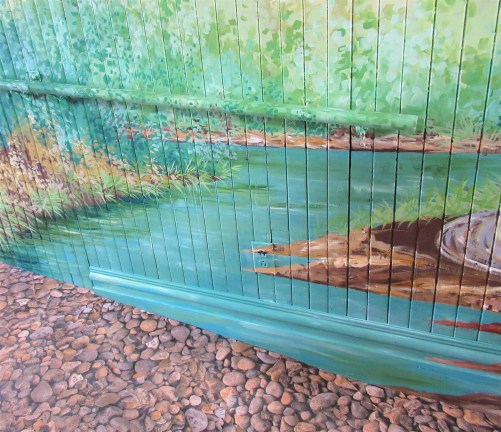
The poem is drawn in part from the Goya painting of the shootings, El tres de mayo de 1808. The painting above is a close-up of Geoff Slater’s latest mural, still in progress, at Macadam Railway Station in New Brunswick. “If only the stones could speak, what stories they would tell.” This re-post was inspired by a visit to Seasons of the Witch on  Mr. Cake’s Cake or Death site with its images of Goya’s Black Paintings. So, we have a continuing Goya mini-Fest, May the Second and May the third.

Tongue-Tied


IMG_0679 (2).JPG

Tongue-Tied
(2 May 1808 AD)

bottle tops unscrewed
tighter than the tightest
oyster refusing to open
pointed knife and scissors

plastic this many layered
onion-skin’s pliant defiance
waging its guerrilla war
against arthritic fingers

words tongue-twisted
damning dark mouths
white picket fences
midnight the faces
lightning the teeth

felonious figures
grimy with grimaces
Mother Hubbard’s
cupboard empty hearts

robin redbreasts
battering heads wings legs
against stony cobbles
if only stones could speak
what stories they would tell
this city this sunny square
anywhere

img_0668-2.jpg

Comment:

El dos de mayo, 1808, marks the start of the Spanish War of Independence. The people of Madrid rose up against Napoleon’s Mamelukes and Goya painted that encounter in his Dos de Mayo. On the third of May, 1808, Goya also bore witness to the shootings when Napoleon’s troops took hostages and shot them. Two great and wonderful paintings which we can celebrate today and tomorrow. Also well worth a visit, today and tomorrow, is Mr. Cake’s Cake or Death site with his blog on Seasons of Witches and his introduction to Goya’s Black Paintings. Another site that merits serious attention is Geoff Slater’s art site.

Dustbin Alley

20180823_152000-1_resized.jpg

Dustbin Alley
(1789 AD)

all the dustbins
dancing down the street
trying to achieve
a spring time copulation
to create more dustbins

you can’t have a revolution
without dustbins
dustbin … dustbins … dirty
dusty dustbins

a sadistic way to look at
basket-bins full of sawdust
heading between potholes
wind-blown bins
a right St. Vitus’s Dance

him sitting next to me
knitting a new red cap
to place upon
the old dictionary
me standing
on Gibraltar’s Rock so fair
this square in Paris
Place de la Bastille
where tumbrils rattle
over cobbles

Old Moll in a Moll’s Cap
toothless fairy
at a Goblin Party
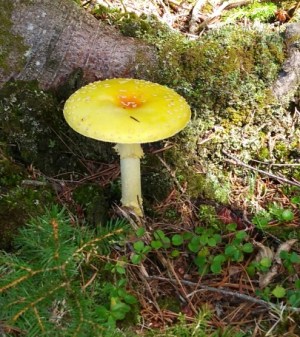
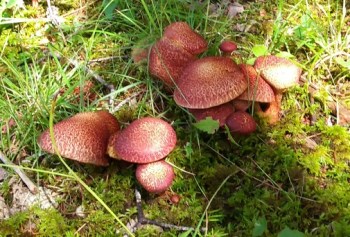
afraid of mushrooms
scared of toadstools
[sick]

20180823_152016_HDR-1_resized - Copy.jpg

Courbet

Courbet
(1944 AD)

a deep moist cave
moss-grown cavernous
casting from night to day

synchronous memories
ascent descent blood scent
ejection rejection

tumbling down falling
insidious angel
no room at the inn
trapped no escape

Hieronymus Bosch
black-winged devils
cloud tormented
descending
anonymous red skies

factory and furnace
foundering foundries
mysterious birth myth
turned into lies

virgin berth
borne with tweezers
untouched the channel
from dark to light

Dark Night


img_0265

Dark Night
(1577-1579 AD)

candlelight
stole the moon’s halo
moth sputtering to its death
this owl high-flying

a cat tears out
mouthfuls of hair
swallows
spits out a hairball
swallows
steal it for a nest

dish and spoon
dance
cats and dogs
rain golden
milky the way
earth’s
thirst is quenched

blind hands
deaf fingers
no longer deft
voices breaking
waves
an unstrung
guitar of sound

fire will one day
come to claim us all

Impact

IMG_0017.JPG

Impact

This photo comes up from nowhere, springs into your half-awake mind, diminishes your reality. W5: who, what, why, when where? But there is no who, save the person bearing witness to this moment in time, and you, the double witness who also contemplates and is therefore complicit.

Do you recognize this scene? Is this a moment in your life? Are you the one who struck the match and lit the flames in the lower corners? And are they even flames? Or are they moments of glory, flashes of fireworks, the world coming alive in a moment of combustion when light and dark are mingled until, fiat lux / let there be light, and the world is reborn, light and form, drawn from darkness, and earth and sea divided into separate realms. In principium erat verbum / in the beginning was the word and the world was born / reborn in this verbal-visual instant between sleeping and awakening, when dreams gain substance and ideas take on form and shape and grow in the observer’s mind until creation sparks into life.

Who now knows what will be, what might be? We see. We bear witness. We paint, draw verbal pictures, take snapshots, unfold our souls, placing them on paper and canvas capturing them by camera in snapshots … but What’s it all about, Alfie? Do you remember the film? The suspension in space, the knowledge that all is absurd, that this is a jigsaw puzzle of the worst kind, with no solution, no answer, and every path bifurcating before us, and each of us wandering in a maze, a labyrinth, with an entrance, but no exit.

Do you think up or down, when you’re floating in a space without gravity, where nothing is substantial and all the rules you ever learned no longer hold? The roller-coaster rolls on and you hang on, and sometimes the sun comes up and sometimes the sun goes down, and is that the first light of morning or is it the last light of day, and how can you be sure?

And where is it anyway? Have you ever been there? And if I told you where it was , what time of day it was, or what time of night, would you believe me? And if not, why not? And who and what am I? And why do you trust what I say? And why would you trust me, when you have never met me, and you do not even know who I am, or where I am, or what I am, and even I do not really know who I am or why I am, and why does any of this matter?

It matters because we need faith, we need substance, we need hope, we need to believe in something other than ourselves and beyond ourselves. We still want to wake in the morning and see the dawn. We want to grasp it in our hands, not just in our minds, and know that there is light beyond this darkness, there is hope beyond this gloom, there are better things ahead. See that forgotten candle? Pick it up. Take that match. Strike it against the box. Now light that candle. Take it out. Show it to other people. Encourage them to light their own candles.

Sometimes we need to enlighten the world, to turn it round, to reject it as it seems to be and to recreate it in our own image.  But take care: the image of the candle is not that of the laser beam or the searchlight. One by one, the small people, we must join together, and like tiny stars and light up the firmament. I cannot do it alone. But together, you, and you, and you, and you, if you walk with me, we can do our best. And that is the best we can do, in this, as Voltaire’s Candide once called it, the best of all worlds and the only one we have.
 

Trains

img_0359

Trains

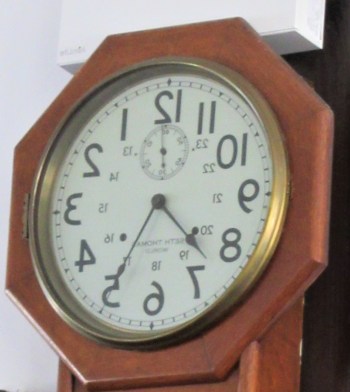
     You took me on holiday to the continent. Railway trains to Austria, Germany, and Switzerland. You loved those trains. I hated them. We stopped in the dark at unknown stations. I’m thirsty, you said. Get me some tea. I left the train, climbed down to the platform, went to the restaurant. I had a fistful of money, but didn’t know what it was worth. Tea? I begged the man behind the bar. My mother wants tea. They all shook their heads and offered me beer. My turn to say no. Coffee?  A pause. Uh-uh. They offered me orange juice, lemon juice, wine, and I finally water. A whistle shrilled. It’s the train, they said waving their hands in the direction of the door. I let them choose the money they wanted.  And something to eat. They gave me a sandwich, a slice of cheese in a baguette, then seized some more coins. The engine hooted, a lonely owl, calling for its lost chick.  I ran out of the restaurant, on to the platform. Carriages moved past, slow at first, gathering speed. The last passengers climbing aboard, the doors closing. I ran. The guard, at the end of the train, blew his whistle, waved a green flag, held the last door open, until I caught up. He helped me onto the train, gifting me with a storm of words in a language I could not understand. The doors between the wagons remained locked. My compartment lay to the front of the train. I couldn’t remember the number of my carriage or my seat. Wagons-Lits? I shook my head. Première classe? I shrugged. Touristique? I nodded. The guard grimaced, led me down the train, unlocked doors in the sleepers, led me on and on, until we arrived at my compartment. Restrained by another guard, you yelled and shed tears as you tried to pull the emergency cord that would stop the train. Ah, there you are. What the hell do you think you’re doing? I was worried sick. You slapped me. Now I stand on a different kind of platform, watching another train pull away. I stand here, abandoned, and watch you slide slowly into an unreachable distance.

Poinsettia

img0137_1


Poinsettia

     You can sense it, you can feel it, the alert spirit that guards this room. Walk in there at your peril. No, don’t. Just stand at the door and observe the poinsettia. You bought her a real one, a year ago, but she forgot to water it and when you visited, leaves and flowers, had crisped and dried, withered and perished. You even found cigarette butts stubbed into the pot’s powdery earth. You bought her another one, this time an ever-lasting, artificial flower, scarlet blossoms of silk with yellow-dotted plastic beads. Today a feather-duster breeze cleanses and enriches the leaves, replenishing their faded splendor. Motes rise, their dancing angels of dust hovering, suspended in a sunbeam that picks out their supple luxury. Their fiery tongues cry out to you from their green plastic pot in this empty room. The plant throbs with a startling vibrancy in this early morning light that enlivens piano keys, table top, and the polished, wooden chair arms you cleaned yesterday.  The poinsettias seem to wring butterfly hands as they gently flap in the breeze from the open window where thin lace curtains twitch, shaping the sunlight into light and shade. Her ash tray sits by the radiogram and awaits her return. That last cigarette, lipstick staining the filter, stubbed out and cold, waits for a companion. Later today, you will go to the hospital and visit her. You do not want to enter this room for its guardian spirit demands solitude and silence. You do not wish to create a disturbance, yet something moves you, and you walk over to her flower. A film of grey cigarette dust rises once more from the silk poinsettia, disintegrates, and dances before you. You bend your head to the silken surface and feel dry leaves brush their butterfly kiss across your cheek as you breathe in the ashen smell of stale tobacco.