Zeitgeist

IMG_0638.JPG


Zeitgeist

Zeitgeist is a concept from 18th- to 19th-century German philosophy, translated as “spirit of the age” or “spirit of the times”. It refers to an invisible agent or force dominating the characteristics of a given epoch.
Wikipedia 

Those who cannot learn from history are doomed to repeat it.

“Plus ça change, plus c’est la même chose.”

Poems for troubled times.

My current poems are deliberately cryptic. Each one is a mind game I am playing with you. I do not underestimate you. I have placed clues throughout each poem and if you follow the clues you will arrive at many of the poem’s hidden meanings. Some poems are more difficult than others, their meaning more recondite. Others seem very straightforward, yet still contain secrets.

This style of poetry has a long history going back to Anglo-Saxon riddles and way beyond, back into the mists of time. Luis de Góngora (1561-1627) and Francisco de Quevedo (1580-1645) specialized in similar forms of recondite poetry, often based on metaphor and the juego alusivo-elusivo, the game of alluding to something while eluding the act of saying what it is. Jorge Guillén (1893-1984) and Federico García Lorca (1898-1936) also played this game, as did Octavio Paz (1914-1998) and many of the surrealist writers. In the works of all of these poets, the clues may rest in the poem or they may be found in a generic knowledge of the mythology of the poem’s exterior world.

Our world finds itself in an incredible mess right now. Somehow, we have to sort it out. We must pick our ways through the difficulties of these troubled times, as you must pick your way through the intricacies of these poems. Many of you will give up. Some of you, the chosen few, will make your way to the heart of each poem. Remember that images and metaphors tie past, present, and future together. Each word, each image offers a picture that reflects some of the shared realities with which we live.

Remember, as I said above: “those who cannot learn from history are doomed to repeat it” (George Santayana). Otherwise expressed, in the words of T. S. Eliot: “Time present and time past / are both perhaps present in time future / and time future contained in time past” (Burnt Norton). The seeming anachronisms in my recent poems suggest that perhaps all time is ever-present and always one.
Grand Finale

IMG_0646 (2).JPG

Grand Finale
(Moscow 1812
&
Moncton 2015)

survey the battlefield
muskets primed
three shots a minute
cities burning
hamlets and villages

world-viewed
through a monocle
stand to attention
be-whiskered faces
small narrow minds
wine glasses raised
gay colored uniforms
dazzling decorations
marvelous medals

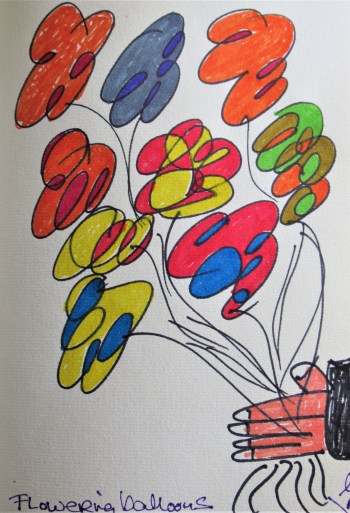
balloons blooming
gaudy their globules
pins at the ready
no flash but a big bang

glorious martial music
tintinnabulations
church bells ringing
carillon and cannon
magnificent the music

written cryptic
recorded alive
heard played seen
in  memory’s mind’s eye
again and again


Tongue-Tied


IMG_0679 (2).JPG

Tongue-Tied
(2 May 1808 AD)

bottle tops unscrewed
tighter than the tightest
oyster refusing to open
pointed knife and scissors

plastic this many layered
onion-skin’s pliant defiance
waging its guerrilla war
against arthritic fingers

words tongue-twisted
damning dark mouths
white picket fences
midnight the faces
lightning the teeth

felonious figures
grimy with grimaces
Mother Hubbard’s
cupboard empty hearts

robin redbreasts
battering heads wings legs
against stony cobbles
if only stones could speak
what stories they would tell
this city this sunny square
anywhere

img_0668-2.jpg

Comment:

El dos de mayo, 1808, marks the start of the Spanish War of Independence. The people of Madrid rose up against Napoleon’s Mamelukes and Goya painted that encounter in his Dos de Mayo. On the third of May, 1808, Goya also bore witness to the shootings when Napoleon’s troops took hostages and shot them. Two great and wonderful paintings which we can celebrate today and tomorrow. Also well worth a visit, today and tomorrow, is Mr. Cake’s Cake or Death site with his blog on Seasons of Witches and his introduction to Goya’s Black Paintings. Another site that merits serious attention is Geoff Slater’s art site.

Dustbin Alley

20180823_152000-1_resized.jpg

Dustbin Alley
(1789 AD)

all the dustbins
dancing down the street
trying to achieve
a spring time copulation
to create more dustbins

you can’t have a revolution
without dustbins
dustbin … dustbins … dirty
dusty dustbins

a sadistic way to look at
basket-bins full of sawdust
heading between potholes
wind-blown bins
a right St. Vitus’s Dance

him sitting next to me
knitting a new red cap
to place upon
the old dictionary
me standing
on Gibraltar’s Rock so fair
this square in Paris
Place de la Bastille
where tumbrils rattle
over cobbles

Old Moll in a Moll’s Cap
toothless fairy
at a Goblin Party
afraid of mushrooms
scared of toadstools
[sick]

20180823_152016_HDR-1_resized - Copy.jpg

Macadam: Before & After

IMG_0661 (2).JPG

Macadam: Before & After

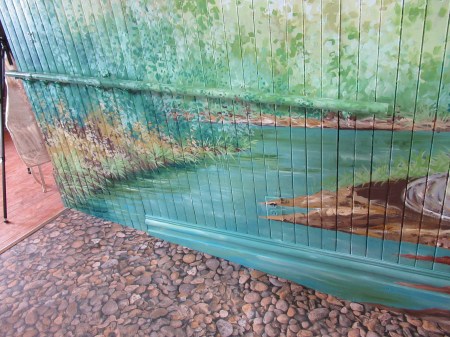
Yesterday, I traveled to Macadam Railway Station to spend a day with two of my friends, Geoff Slater (artist) and Jessi Green (writer). Geoff is painting a mural for the historic building. It depicts an incident from WWI in which Canadian Railway Engineers and troops rebuilt a railway bridge in Northern France that had been destroyed by the enemy. When I arrived in Macadam, Geoff took Jessi and I to see the then current state of his painting (as shown above, Before). After lunch, Jessi and I would discuss sundry writing topics, including when, ho, and what to revise, as well as our various writing  projects while Geoff continued with his painting.

IMG_0663 (2).JPG

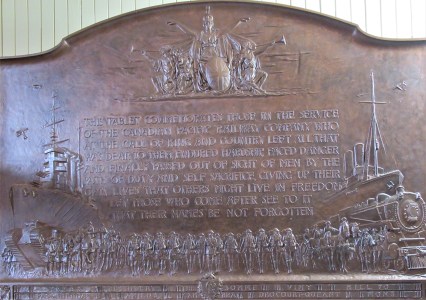
On the wall opposite the mural hangs a plaque dedicated to the memory of those Canadian Railway Engineers, probably the best in the world at the time, who made such reconstruction possible. The juxtaposition of mural and plaque make a fitting tribute to the role of the railway in WWI. The Macadam Railway Station is a protected historical site and a work of art in itself . What a pleasure it was to visit there as an invited guest.

IMG_0683.JPG

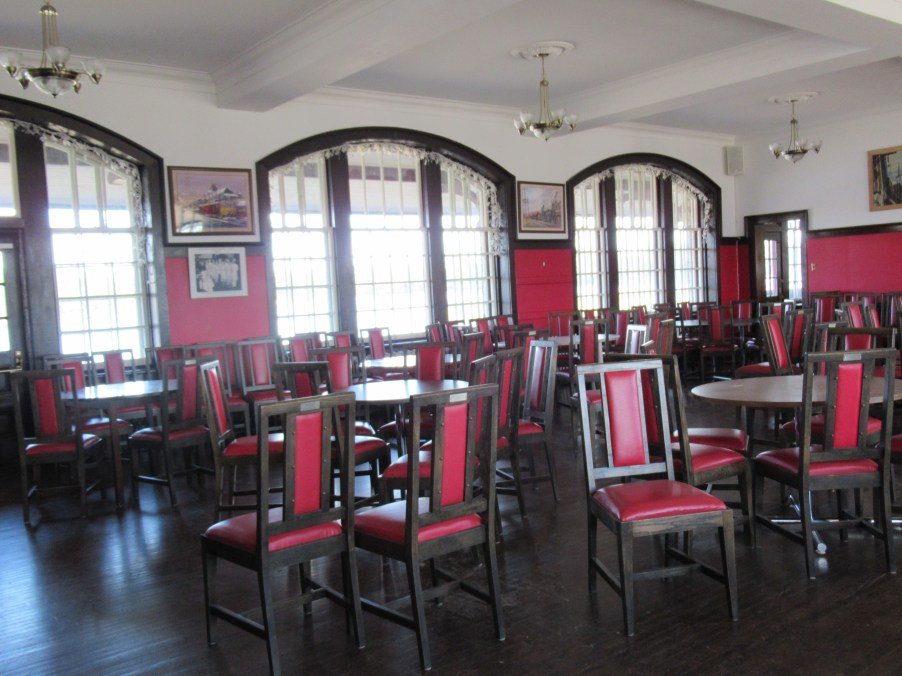
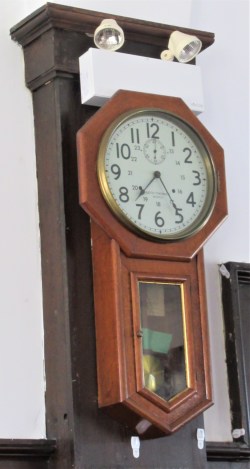
This is the dining room and immediately below you will see photos of the beautiful working bureau, over a hundred years old, and the grandmother clock that hangs on the wall beside the bureau.

IMG_0686 (2).JPG


IMG_0687 (2).JPG

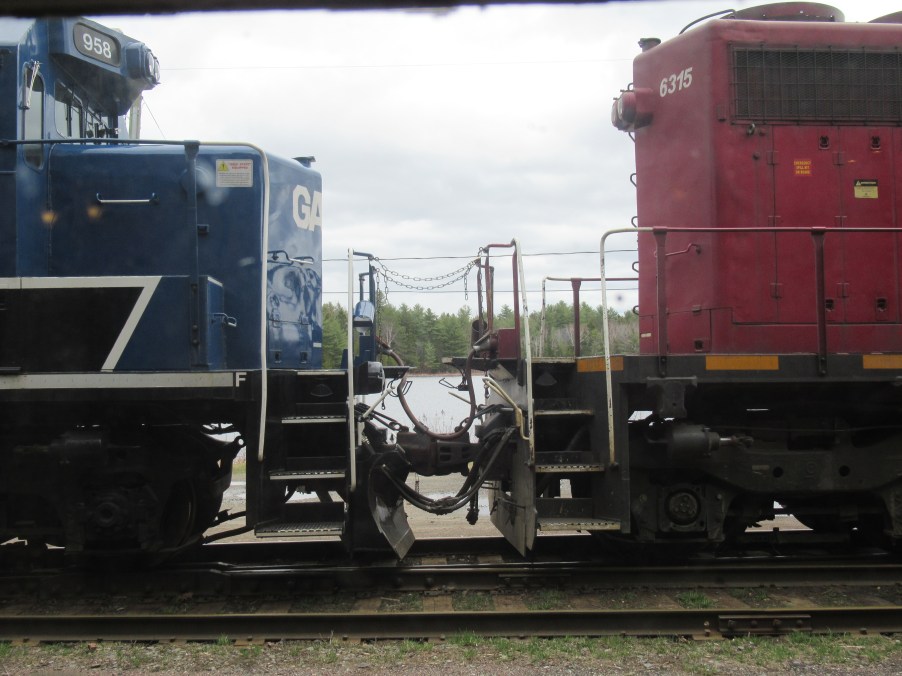
During the afternoon, we were blessed by the arrival of a train. In many ways, it was a ghost train, hauling with it so many memories of the past when railways ruled and train travel was ubiquitous.

IMG_0678.JPG

Before leaving, we paid our respects to Geoff’s painting. He had been busy on the top right corner of the mural and had completed the insertion of the military personnel who were working on the new trestle bridge built to replace the one that had been destroyed. All in all, this was a fabulous day in which art, photography, memory, writing, planning all played a part. Some photos to end with: first of all, a selfie entitled Selfie with Coal Scuttle and wow, did that bring back some childhood memories; and then a close up of Geoff’s work for that afternoon Men on the Bridge. I will end by saying that Macadam Railway Station is a ‘must-see’ visit for all train enthusiasts as well as for the train generation who wish to maintain their links with that past.

IMG_0689


IMG_0664.JPG

IMG_0692 (2).JPG


Night Light


IMG_0535 (2).JPG

Night Light
(1578 -1591 AD)

quiet now the house
staircase winds up
that wooden hill
to Bedfordshire
down to drop
into darkness
wait in peace
starlight will break
its light-waves
over your eyes
into your heart

owls in the gloom
round eyes gleaming
a who-knows-what
what watches
a godsend now
this light house light
its lightning lightening
enlightening

sudden comfort
this hand on my shoulder
these fingers in my hair
this midnight witch
bewitching

Don’t tell me your troubles

IMG_0624 (2)

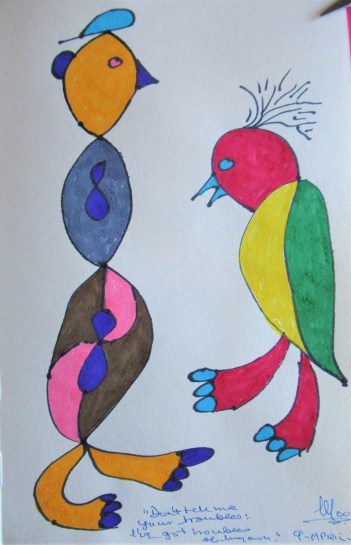
Don’t tell me your troubles

vultures circle overhead
tight-beaked grimacing
ready for any old thing
to drop down and die
leaving them some space
they bounce on the wind
feather-tips poised to plunge

drivers drive dodgem cars
through pot-holed filled
parking lots
bumper to bumper grinding
following each pedestrian
plodding from hospital to car

red alert three bell alarm
an engine starts
reversing lights flicker
someone’s coming out

cock fights dog fights
domestic pussy cats
all booted and spurred
claws out for the bust up
three dust ups already
today

nobody happy
everyone hopping mad
round and round
circling false alarms
sitting waiting
for someone to move

we’ll all be late
for our appointments
no room at this inn
not here not today
my friends no parking

Method & Madness

IMG_0650

Method and Madness
(1729 & 1955-1962 AD)

his dawn chorus voice
woke the wilderness
shook bread down from heaven
to be cast on wild waters

Frocester’s old barn
scything and tithing
Gloucester a stomping ground
walking and biking
wherever he can

a dearly beloved
moved into sundry places
a town mice wandering open fields
harvesting blackberries and apples
gleaning summer seeds
storing them now a country mouse
ready for winter’s dead dreams

he collected dusty parchments
stitched old leaves together
a many-colored coat he made
amid autumn’s sheaves

words fell like rain
formed lines on each page
turned into tunes
that bolstered his heart
marched him steadily onward
mad from stage to raging age

Comment: This is the revision of my previous poem. Any comments on either version gratefully accepted.

IMG_0402 (1)

Madness & Method

IMG_0622 (2).JPG

Madness & Method
(1729 & 1955-1962 AD)

his voice woke the wilderness
shook bread from heaven
he cast it on wild waters

scything and tithing
Frocester’s old barn
Gloucester a stomping ground
walking and biking
whenever he can

dry dusty parchments
old faded leaves
talking together
among the wheat sheaves
Hebrew Greek Latin
vernacular spaces
falling like rain
between words on a page

dearly beloved
moved into sundry places
a town mice stirred into open fields
harvesting blackberries and apples
gleaning like a country mouse
house tumbling wind-blown down

marooned now and listless
an old hermit crab
basking on a sun-dried beach
quilts and crisp  sheets
mermaid-hair pillowed
claws click and comb
fresh footprints laundered
warm summer sands

Footsteps

img_0281

Footsteps
(23 April, 1616 AD)

rain fills the sky
mizzle and mist
low clouds
raindrops

a touch of snow
on trees grass
steady this
accumulation

where now
their warm hearts
their word-wealth

memories wrap
a warm scarf
around your neck

books beckon
let us now
talk with our eyes
to writers

Cevantes Shakespeare
El Inca Garcilaso
and many others
long since dead
though thought and word
their footsteps linger on

Comment:

Today, 23 April 2019, is international book day. We celebrate the works of Cervantes, Shakespeare, and El Inca Garcilasso, all of whom died on this date in 1616. Given the two different calendars, Gregorian and Julian, they actually died ten days apart, but the date was the same. We also support and celebrate all other others on this date, so Happy International Book Day, everyone, and keep writing.