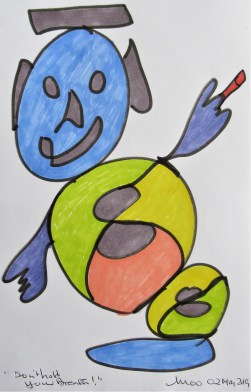
Self-Isolation Day 19


IMG_0718 (2)

Self-Isolation Day 19
Platero yo yo
Meniscus: Crossing the Churn

I am eking out my reading of Platero y yo much as I eke out the food supply: small portions, and a chapter at a time. In the same ay that I am enjoying my food so much more, savouring each mouthful, cutting down on the accompanying wine, tasting life to the full, so I am slowing down my reading. I am learning to enjoy the journey, the perusal of each word, each phrase, the long-drawn out aftertaste of every image, the lingering bouquet of each metaphor. Yes, Platero y yo is a fine wine drawn slowly over the palate to be tasted and tested, not swigged and swallowed.

Not for the first time in my life, I am jealous, jealous of this writer with his Nobel Prize for Literature and his wonderful way of choosing le mot juste, the exact word, with which to illustrate his tales. It is not the Nobel Prize of which I am jealous, but the talent, the skill, the patience, the taste of each word. I wish I could write like that. I wish I could take the world outside in my garden and imprison it on the page.  Imprison: that’s what I do. Juan Ramón Jiménez imprisons nothing. His birds and butterflies fly free. His donkey roams free. His village women, young and old, wander freely across the pages as do the gypsy children and the children of the poor, with their dreams of gold watches that will not tell the time, their shot-guns that will not kill hunger, their donkeys that will carry them to a pauper’s death. Reading at this level, I rediscover my inevitable inability to write the way I want, to capture what I see, to give life and liberty to my words, enchained all, and lavishing in their captivity.

There is, of course, an alternative, one of which I am also incapable: to create a new world. I know of few people who are capable of doing that. Tolkien, of course, created Middle-Earth, the Shire, Mordor, Gandalf, and the Lord of the Rings. Rowland created Hogwart’s and the world of magic that surrounds Harry Potter. Closer to home, Alexandra Tims created Meniscus, a planet that travels around twinned suns and is in turn circled by two moons. Here water effervesces and flows uphill or generates dramatic water-climbs and lake-like churns.Erosion occurs by wind-scour and frost-heave. It holds predators (slear-snakes and kotildi) and humans have been brought her, as slaves, from earth itself, to eke out a miserable existence amidst the dystopia created by Dock-winders, Gel-heads, Argenops, and the Slain.

What I love about this series includes the invented language, the flora and the fauna, the wonderful drawings and maps that occur regularly throughout the books. This is no Middle-Earth, a recognizable world inhabited by humans and figures of magic drawn from our own legends and mythologies. It is a flesh-and-blood creation of something new and startlingly different.

Wolfgang Kayser suggested, a long time ago, that there were three types of novels: novels of action (the easiest to write, if you have that calling), novels of character (the development of an individual or a series of individuals), and novels of place (where the world, or a small part of it, is captured in detail). Occasionally, a great novelist, and Miguel de Cervantes was one of those, manages to write a book (Don Quixote) that contains all three of these features. Mikhail Bakhtin talks about ‘man’s dialog with his time and place’. Well, Ms. Tims has created ‘a woman’s dialog with her created time and space’ and I, personally, am so very happy that she did so.

Comment: [added 27 March, 2020]
Meniscus: Crossing the Churn can be found at
Here are the other books in the series.
Book One – Meniscus: Crossing The Churn

Book 1.5 – Meniscus: Forty Missing Days
Book Two – Meniscus: South from Sinta
Book Three – Meniscus: Winter by the Water-climb
Book Four – Meniscus: The Village at Themble Hill
Book Five – Meniscus: Karst Topography
Book Six – Meniscus: Oral Traditions
Book Seven – Meniscus: Encounter with the Emenpod

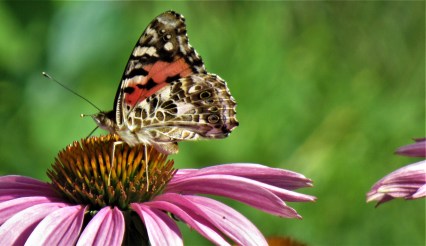
 

CV-19 Week 3 Day 3


IMG_1337 (2)

CV-19 Week 3 Day 3
A Change of Scene

Nothing serious happening with this change of scene, but this morning I put Phillip Larkin on one side and turned to a new book, Neil Sampson’s Apples on the Nashwaak (2019). This may be just the read you need in times like these. An excellent foreword locates the text of Neil’s narrative poem(s) in the long line of European narrative poetry. Neil’s introduction places his text in his own life on the land where he lives and wanders in Upper Durham, above the Nashwaak River. The text itself places us, as readers, in the long successions of repeated lives and deaths that mark the early settlements in New Brunswick, Canada. And yes, we have passed this way before, for better or for worse.

This is not a re-statement of ‘mal de todos, consuelo de tontos‘ / shared ill’s are a fool’s consolation. The colored apples on the stark tree that adorns the cover are a statement of hope, long term hope, even among the bleakness of difficulties, tragedies, and deaths. Like it or not, these things happen, and yes, there are survivors. Hopefully, there will always be survivors. And thus we must always live in hope. It is one of the threads that come through Neil’s poetry.

Only four trees are still alive.
The last of that first
generation
ponder existence and being
unable to walk
— no chance of pilgrimage —
have seeded their hope of redemption,
in Self.

Sounds like us, tucked away at home for three weeks and three days now ‘unable to walk’ outside and with no immediate ‘pilgrimage’ in sight or ‘hope of redemption’. Yet we sit here, un-suffering, following the news on television and radio, talking with friends on the telephone, reaching out to loved ones, near and far, on Skype, e-mailing and encouraging fellow un-sufferers, house bound, like us, ‘Children / hugging the chimney, // warm long after / the embers had died’.

Wait! In the orchard!
There’s One who’s come to call.
Those four pioneers
cankered with rot;
bark-skinned, limbs,
thin, draped in swags
of moss —

they know
who He is.

Enough for now, Neil. I shall read your book today and perhaps tomorrow, and then I will move on with head held high and hope in my heart. Thank you for your words. They are doubly meaningful at times like these reaching out to us with comfort, love, and understanding, and warming our hearts.


CV-19 Week 3 Day 1

IMG_1058 (2)

CV-19 Week 3 Day 1

So, yes, I am starting the third week of my self-imposed isolation. I am also in the first week of an imposed provincial State of Emergency. What I was doing willingly before, self-isolation, has now become law, self-isolation by edict.

It seems a minor change, but it isn’t. Whereas before I was happy not to go out, now the very prohibition makes me want to go out. Yes: I now want to be out there, wandering the now-empty streets, shopping in the now-closed stores, and visiting the newly locked and barred bars and restaurants.

This situation reminds me of the word-games we used to play as children in which you were given a word which you mustn’t use and then you discovered that you really, really wanted to use it, simply because you had been told not to. One such banned word, in my childhood, was bloody. All the grown-ups used it, but it was forbidden to the little children. Bloody hell, we thought. Or bloody nice weather, we said to friends of our own age. Then, if our parents caught us using the forbidden word, out came the carbolic soap and it was mouth wash time again. Yuck: I have never forgotten the taste and smell of that carbolic soap.

We devised schemes for getting round the prohibition. I guess children of all ages devise schemes for breaking down prohibitions. That’s why so many soldiers in WWI used to ‘break out of barracks’ as they resisted the imposition of nightly curfews with their locks and keys. “Oh we’re breaking out of barracks,” they would sing, “as we have done before.” Then came the other verses. “Take his name and take his number.” “Up before the CO.” “Forty days in prison.” Back to bread and water, as we have done before.”

So, when my mother took us to the butcher’s shop one day, we were all primed. “Look at all that bloody meat” we cried out , shrieking with laughter and rolling all over the saw-dusted floor. My mother was furious, but we were spared her wrath as the butcher, and his other customers, found it so amusing.

But CV-19 (Corona Virus \ Covidis 19) is not so funny and the punishments are much more drastic than a simple carbolic soap mouth wash session. That said, the itch to break the prohibition is so much stronger now that the law is provincially enforced and not self-imposed. That said, these are rules well worth following. Nobody wants to catch this and, much more important, nobody wants to be responsible for passing it on to somebody else, especially if that somebody else is in the target range for a serious, perhaps fatal, bout with the virus.

Funny old world, eh? And some funny old people living in it.

Wannabe a Creator


IMG_1047 (2)

Wannabe a Creator?

            Not everyone can be a creator, not because they cannot create, but because they do not believe in the powers of creation, the strength of the tsunami, of that tidal wave that sweeps us creators away and drives us into the blackened spaces of our inner minds where a dark sun shines its coal black light and shadows dance their will o’the wisp dance and lead us on and on until we have caught our dreams, squeezed them dry of their nothingness, and turned them into the stuff of an actuality filled with new life, a new reality, a new creation, something that is really ours, yet that will only truly live outside ourselves.
We gaze at each new creation for a moment, in astonishment, then position it in its cradle of reeds, place it in the running river, push it out into midstream and eyes, filled with tears, we wish it ‘god speed’ and send it spinning on its way to who knows where? Our hearts fill with hope as we watch it float away to make its own life, sink or swim, on this sea of sorrows, where someone, downstream, may bend to the waters and speak the magic words and tell a tale, our tale, their tale, or whatever they then deem the new tale to be.
Now, in our time of trouble, is the opportunity to dig deep, to mine our unconscious, to discover and re-discover our innate creativity. Take out that note-book, that pencil. Find that old sketch-book. Bring tat camera back to life. Above all, take the time to be yourself, to remember who and what you are, to re-discover your self and, wherever possible, take this opportunity, for it is an opportunity, to build the new self, the one you still wish to be. There are no greater mortal creators than those people who can create themselves anew. Now is the time to dream ourselves a new and better reality. Now is the time to drop the wannabe and to become a true creator.

Comment: I am taking the time now to multi-task my reading. This means starting and restarting several books at once and then shuffling the readings and pausing a while as I contemplate the pages. More on this tomorrow. Join me then.

Creativity

IMG_1526 (2)

Creativity

When creative artists get together they talk and walk and hug and hold and discuss so many things, like how the creative spirit can inflate the body and send it soaring like a trial balloon, how listeners can be swept away by a magic vortex of voice, and how time and space can be suspended in the glories of creation that spin a web of forgetfulness around us and makes us disregard who and what we are as we forge new worlds.
Dark earth-spirits of love, want, and creation, hold us captive and drive us onward and inward until we give birth to that which was waiting patiently to be born, even though we never knew that the seed had been planted. “What is this?” we ask as we survey the new-born entity fresh on the page, held in the hands, suddenly full of life and breathing on its own, a thing of beauty, an essential being. It makes complete sense as we struggle to hold it as it grows and transforms from internally ours to eternally theirs, a product of our mind and body now belonging no longer to us but to the world beyond us.
We long to know its fate, to watch it as it walks along its path, its destiny now in its own hands. “What is it?” people ask as we stand still and know not what to tell them. Some sigh, some mutter ‘nice’, others just turn and walk away, lost in a self-created labyrinth of cul-de-sacs, dead end streets, and black, blind walls. Many go back to their two-thumbed clicking and surf the networks, bereft of the imagination to see and explore that which has been thrust fresh before them, this new-born babe beautiful in its swaddling clothes, a new creation.

Comment: The photograph … a geranium against the snow. Truth and beauty can survive even the hardest winters. As true creative artists we must be prepared to fight for our creative ideals. When the skies seem to be at their darkest (see my recent posts Poem from the Cree, Co-[vidi]-s and Outrageous Fortune) that is when we must strive to re-create the light, not just for ourselves, but for others as well.  

Le Pont Mirabeau

Le Pont Mirabeau

Beneath Mirabeau Bridge flows the Seine
and so does our love
must I be reminded yet again
that happiness always follows pain

Let night descend let the hours sound
the days go by … I’m still around

Hand in hand let us stay here face to face
while beneath the bridge of our arms
like flowing waves our gazes interlace

Let night descend let the hours sound
the days go by … I’m still around

Love flows away like waves that flow
love flows away
hope fills us with dismay
and life passes slow

Let night descend let the hours sound
the days go by … I’m still around

Days and weeks flow by bye bye
along with former loves
and past times that did fly fly fly
they will never come back again
Beneath Mirabeau Bridge flows the Seine

Let night descend let the hours sound
the days go by … I’m still around

Comment: I spent the school year in Paris in 1962-1963 and I have always wanted to translate Le Pont Mirabeau from French into English. Today, I found both the time and energy to do so. It’s not a great translation, but it is mine. It also contains new revisions from an earlier post but note that the links in the earlier post no longer function. Click on the link above to get the French original.

Poem from the Cree

IMG_1056 (2)


Poem from the Cree

The Cree have retreated from the streets.
Their violinist has taken time out, leaving
his last notes dancing from a street lamp.
Only the Fire-Brave remains, inhaling thick
black oily smoke. He juggles twin balls of fire.

Bones gather together to gather dry dust. Hollow
metal buffalo: a cold wind blew and plucked out
his heart. Five climate controlled pedestrian
walkways cross the prairie, linking building
to building. A glass wheat field shimmers
and tinkles to the rhythm of air conditioning.

The black cow, cast iron hide set free from rust,
ruminates behind its plate glass window.
The night wind whisks white buffalo bones
pale across the sky. Oskana ka asasteki.

With these words, I will leave you, suddenly,
abruptly. A light going out. Now I am here.
Oskana ka asasteki. And now I too am gone.

PEI + bockle 2008 059

Continue reading →

A Rare Visitor

IMG_1672 (2).JPG

A Rare Visitor

The rare Red Plastic Flamingo drops in to visit. He isn’t seen very often, especially in cold weather, for he should be flying somewhere in the Caribbean. It is cold here: you can see the snow outside. It probably drove him in to seek refuge inside in the warm.

The Red Plastic Flamingo is a strange bird, being land bound rather than aerial. He has four legs, as you can clearly see in the photo and is capable of running at great speed, faster than the fastest greyhound. It is rare and unusual to catch them in pensive pose, as here. Usually they are just a blur of movement, a moment of madness captured briefly flashing through the yard.

Rare Bird Alert: keep your eyes open. You may find one living close to you.

Creating vs Revising

IMG_1095 (2)

Creating vs Revising

The introductory picture (above) shows revisions made to my painting by my three year old grandchild!

1. As I read my early morning messages, I realize that there are two very different processes involved in creative writing: creation and revision.

In terms of creation, I follow Graham Green and Steven King: write 500 words a day, regularly, about two pages. Then, next day, re-read them and revise them. Then continue with the next two pages. This allows a steady accumulation that is usually somewhat under the writer’s control. It also allows the writer to go back and revise while creating: an important step for both King and Green.

In terms of revision, once the book or story or manuscript is complete, different processes emerge. One is to leave some time for the manuscript to settle: this also works chapter by chapter during the writing process. The other is to start again and apply the revision process as outlined in the First Five Pages.

Each one of us will be on a different stage of what is, I hope, an enjoyable creative experience. Part of the fun is also finding out what works for us; and by us, I mean each one of us. And yes, we all need those words of encouragement … so hang in there… have confidence … and be creative …

As for revision, I started by reading The First Five pages and found that this made the revision of my own manuscript much easier. The First 5 Pages deals with items one by one and in order of priority; it also allows you, as a writer / reader / adviser to have a clear idea of where you are going with the revisions, what you are doing, and why you are doing it. I also perused other online links and found them quite useful, especially those that referred to the revision process. I recommend searching for such links, in particular, the one that tells us never to give up.

Burroway for me is an adventure. I find that when I am reading the theory, I have a tendency to get confused and lost. In addition, I do not always agree with her analyses of the chosen snippets of text. I understand what she is saying, but I do not always agree with what she has said.

Selected stories themselves are something different. Reading them allows me to gain a perspective on what I am doing and how I am doing it. Thus I can say: I can do that; or I’ve done that; or I wouldn’t want to do that. The stories then come over as a reflecting mirror in which I can see aspects of my own writing, however beautified or distorted. The theory, on its own, leaves me cold and often confused. Other people’s creativity is inspiring.

The secret, in my opinion, is to relax, to be yourself, and to continue writing as you want to write while paying attention to the small details of which I am becoming more and more aware of every day. We are all creative — or we wouldn’t be here, reading this, doing this course. The secret is to develop and polish our own creativity. We must also learn to develop our own voices and to have confidence in those creative sparks that dwell within us.

2. Writing the introduction last is a standard procedure in academia. This is partly because it isn’t until the end of the research / study that the writer really understands the substance and the intent of what s/he has been studying. Also, it is only when the work is finalized that the appropriate conclusions can be drawn and the route that one has taken can be established.

As for the order in which revisions are made, there are many rules and circumstances can change. Even when there doesn’t appear to be a plot, as such, there is a chronology and chronology can be used as a substitute for plot. There is probably some form of evolution throughout the chronology, and that should be kept in mind, too. In addition, I would assume that as the learning process “bites” so we will be better able to make our own judgement calls. The art of good teaching is to eliminate the need for a teacher.

3. Changing the perspective: letters work: they can be found, sent, received, or discovered. The identity of the writer / receiver is also interesting.

In the 13th Story, the novel which I am currently reading, the principal narrator investigates / researches her subject in local libraries, the Who’s Who, a graveyard (reading the tombstones), and many different places. She also visits the local newspaper archives and interviews other characters in the novel, much as a newspaper reporter might.

Just read, think, learn, absorb, and, above all, remember to reject that which doesn’t suit you!

Good Morning, Mourning Doves

IMG_1676 (2).JPG

Good Morning, Mourning Doves

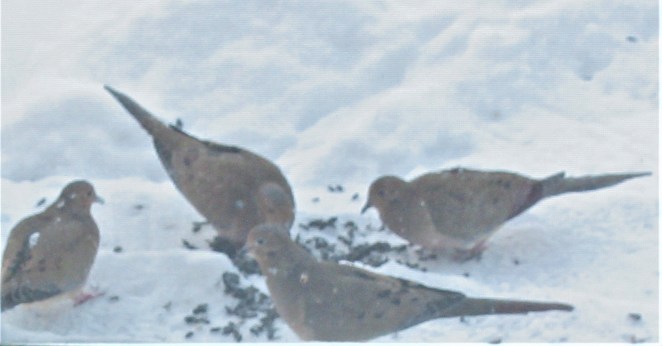
They sense the snow storm on its way and come in early to feed while they can. Strange birds they are, so twitchy, so flighty. Eyes on the sides of their heads, all standing and pecking at different angles, a total world view. At the first sign of movement,the twitch of a curtain, a shadow on the floor, they give a sharp piercing call and fly in all directions. Sometimes, the shadow of the hawk falls over the feeder. Then they scatter. An individual may perish, but the flock survives.

When they leave, we throw out seed. But the yard is silent and they won’t come back, not for a long time. In the meantime, in comes that big, fat, grey squirrel and look, there’s a mourning dove in mourning for his long-lost, squirrel-gobbled breakfast!

And they are so difficult to photograph. Since the slightest movement scares them away, I must try from a distance, sometimes in not very good light. They can be so subtly beautiful, but oh dear, they can also be so dumb!

IMG_0437 (4)