Migrants

Meditations on Messiaen
Why do the people?

4

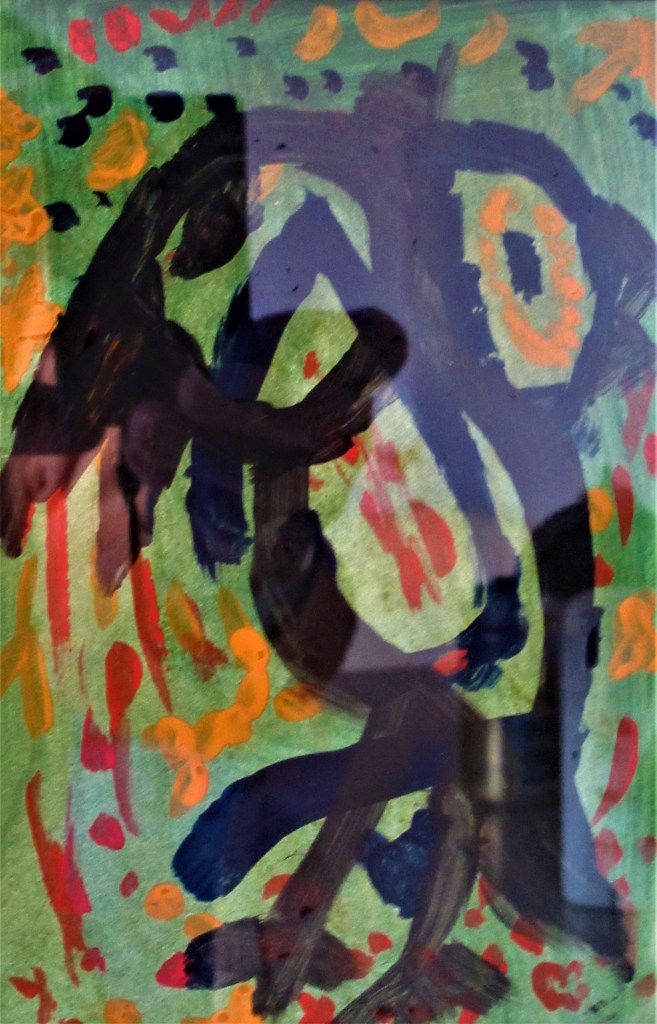
Migrants

Think natural disasters. Think famine,
wars, violence, plague. How our world changes
when refugees arrive, blend, contribute,
offer so much, their languages, cultures.

Yet we still exploit them, stealing subtle
things, their identities, their energy,
their ability to adapt, to give
so much and really to take so little.

Who would want to build a wall,
to reject them, to deny entry?
Maybe a million Indigenous people
can actually claim the right

to belong here. Most of us are immigrants,
late-comers in one way or another.
To accept, to grow together in peace,
to establish a nation where people

need not fear imminent expulsion
for the color of their skin, their language,
their religion, their political thoughts,
the fact they may not even vote for us.

Click on the link below for Roger’s reading.

Migrants

Carpe Diem

Carpe Diem

Seize the day. Squeeze this moment tight.
Nothing before means anything. Everything
afterwards is merely hope and dream. 

A tiny child, you chased wind-blown leaves
trying to catch them before they hit the ground.
Elf parachutes you called them and trod with care

so as not to crush the fallen elves as they lay leaf-bound.
I stand here now, a scarecrow scarred with age,
arms held out, palms up, in the hope that a leaf

will descend, a fallen sparrow, and rest in my hand.
When one perches on my shoulder and another
graces my gray hair, my old heart pumps with joy.


Comment:
Coming soon to a garden near you!

Listen to the podcast
Carpe Diem

Pianissimo

Pianissimo


            You sit at the piano, my old piano, still extant in my father’s house, yet soon to be given away, though we don’t know that yet. It’s an upright, iron-frame Bechstein, a piano that I was given when I was the same age as you are now. Handel’s Largo, the Harmonious Blacksmith, hours and hours of scales. They locked me in the front room, my mum and dad, and there I stayed for an hour, two hours, or more. I came to hate music. As soon as I could, I gave up the piano, I rejected piano practice, I turned my face away from the discipline of the lock up.
            Now, I listen to you. Your untaught fingers tickle the black keys, then the white keys, one after another. You are six years old. You’ve never had a lesson, but you have music in your blood and some residual instinct latches on to rhythm and sound. Your fingers are long and supple and your touch is light, so much lighter than mine used to be, and now, on the deep bass notes of the left hand, your stronger hand, you pound away, awakening the dark ghosts of soul music that pour through my memories awakening echoes in this piano.
            I think of you as a jazz musician. Thelonius Monk, perhaps, a tinkle here, a light touch there, now a chord or two, inexplicable, and who would want to explain. It is a joy to sit here, to see your smile of absolute absorption. Mood music you call it, and today your moods are as dark as the shadows that tug at my heart, and as light as the sunlight that floats through the windows and makes the dust motes sparkle. It also frames a halo round your head. You hum to yourself as the morning sunshine fragments into colored gems and you sculpt your rainbow of sound.
            “Stop that noise. You’re driving me mad,” your grandfather, my father, stumbles into the room. He has taken his last cigarette out of the packet and the white cylinder hangs down from his lips, like an extraneous chalk outcrop hanging from the lip of an errant teacher. He pats his pockets. “Where are my matches? Has anyone seen my matches?”
            “They’re on the table in the kitchen,” I reply. “Where you always put them.”
            “I thought I left them in here,” my father leans on his stick then turns and stumbles out of the living room and into the kitchen.
            You hop off the piano stool, take the matches from your pocket, and carefully place them on the arm of your grandfather’s favorite chair.
            “Sssssh!” you say, putting a finger on your lips. Then you skip back to the piano and start playing pianissimo on high notes that float like tiny raindrops of sound produced by miniscule angels.          
            Your grandfather returns, glances round the room, spots the match box, and pounces upon it, a caged tiger finally served his red meat.
            “That’s funny,” he mutters. “They weren’t there a moment ago.” He takes out a match, strikes it, lights up his cigarette, inhales a lungful of smoke, then exhales it in a great locomotive puff of cloud. He grimaces at you through a haze of smoke.
            “There’s nice music you’re playing.”
            Your young lungs, unaccustomed to a house of smokers, can’t cope with this thin, grey, choking cigarette waste. You stop playing, put a hand over your mouth, and start to gag.

Listen to the Podcast here:
Pianissimo

Crocodile Tears

Crocodile Tears

The crocodile lives in the wind-up gramophone. The gramophone lives in the top room of the house. The boy winds up the gramophone with a long brass handle, round and round, till the spring is tight. A tight spring frightens the crocodile and he sits quietly in his cage. But as the record goes round and the spring loosens up, the crocodile roars and demands to be freed. He’s the Jack that wants to jump out of the box. His long-term dream is to eat up the witch who looks out of the window and watches the boy as he plays in the yard.
            Last week the boy decided to dig. He picked up a spade and dug a deep hole that went all the way down to his cousin in Australia. The little dog laughed and joined in the fun, scraping with his front paws and throwing earth out between his back legs like happy dogs do. The witch in the window cackled with laughter and the rooks in the rookery rose up in a cloud and cawed in reply. Only the boy is able to see the witch and he only sees her when she sits in the window. But he knows she wanders through the house, and the air goes cold when she enters and exits the rooms, especially when she brushes past the boy and sweeps his skin with her long, black gown.
            When the boy got tired of digging, he drove the spade into the ground and left it standing by the hole. When his father came home it was well after dark. He didn’t see the hole but he saw the spade. So he didn’t fall in to the shaft of the coal-mine that went down to Australia. No free trip to the Antipodes for that unlucky dad. He beat the boy for that, for digging that hole. Then he beat him again for lying because the hole didn’t go to Australia. Australia was too far away and the angle was wrong. The boy laughed when he saw that his dad didn’t know where Australia was.
            “Ha-ha,” he laughed. And his dad beat him again, this time for laughing.
            Sometimes at night the boy can hear rats running through his bedroom walls. They scuttle and scuffle as they hunt through the guttering. The crocodile growls from time to time in that upstairs room. The witch cackles with laughter. The boy puts his head under the blankets and cries himself to sleep. Sometimes he wishes the crocodile would come and eat up his dad. But he loves his dad like the dog loves his dad even though his dad beats both the boy and the dog. Sudden beatings, they are, that arrive without warning: hail and thunder from a sunny summer sky.
            “Well, you’re not laughing now,” his father announces as he beats him one more time. “A beating a day keeps disobedience away. There will be no disobedience in this house.” When the father beats the boy, the dog cowers beneath a chair. The boy hears the crocodile growl and smiles through the tears as he wipes salt water from his eyes.
            “Are you laughing at me? I’ll make you laugh on the other side of your face,” the father taunts the son and beats him again.
            The crocodile growls. The old witch cackles. The rooks in the rookery rise up in the air and the father’s hair stands up on end like it does when lightning lights up the sky, and thunder rolls its drums, and the sky’s wheels rattle like an old warrior’s chariot whose wheels have not been greased. The veins stand out in his father’s cheeks as the old man once more raises his hand to the boy.
            The old man tells the same old jokes again and again. The boy must always remember to laugh at them as if he had never heard them before. If he doesn’t laugh, his father gets angry. Some of the jokes are good, and the boy likes the one about the Catholic with the pet crocodile who goes into a bar in Belfast and asks the barkeep if they serve Protestants. ‘Of course we do,’ says the barkeep. ‘Good,’ says the man. ‘I’ll have a pint of bitter for myself and a Protestant for the crocodile.’  Or is it the one in which the Protestant goes into the bar and ask the barkeep if they serve Catholics … anyway … whatever … one night, the boy dreams and it happens like this. The crocodile escapes from the gramophone. The witch hands the boy a leash and a collar and between them they restrain the crocodile.
            “Walkies?” says the boy.
            The crocodile nods his head and crocodile and boy walk down the street to the Kiddy’s Soda Fountain on the corner. When the boy walks in with the crocodile, the waitress raises her eyebrows and opens her mouth.
            “Do you serve grown ups in here?” the little boy asks her.
            “Of course we do,” says the waitress.
            “Good. I’ll have a glass of Dandelion & Burdock for myself and a grown-up for the crocodile. Please.”
            The witch says grace, the boy sips his Dandelion & Burdock, and they all shed crocodile tears as the boy’s pet crocodile chomps on the fast-disappearing body of the boy’s dad.
            Next morning, the boy wakes up. The witch and the crocodile are sitting on his bed.
            “I had a funny dream last night,” says the boy.
            The witch cackles. The crocodile burps, then sheds crocodile tears. The boy starts to laugh. He laughs until he cries and then the witch sheds crocodile tears too.

Quack!

Quack!

A duck, in cricket, means the batter has been dismissed without scoring. The 0 resembles a duck’s egg, and hence score of naught is known as a duck! A golden duck means the batter has been dismissed first ball, without scoring, a sad fate indeed. A King Pair is first ball in each innings of a four innings match (two per side).

My cartoon shows an English cricketing duck carrying his bat through a golden shower of life’s purple patches. There are several clichés and double entendres in this title. First, of course, the ignominious duck. Carrying his bat: this has a double meaning (a) to literally carry a cricket bat, as this duck is doing, and (b) to open the batting and carry your bat throughout the innings, un-dismissed, although the other ten wickets have fallen around you. To carry your bat for a duck is as near as impossible as it can possibly be. A golden shower: alas, we are all now familiar with the pornographic version. Some will be familiar with the myth of Jupiter descending as a shower of gold. The golden shower here also represents the shower of golden ducks that has currently descended upon the English cricketing team. Purple patches can be good. However, a purple patch of golden ducks is only good for the opposition bowlers, if you are on the batting side.

England top order quacking and creaking into history of the duck: this article in Tuesday’s Manchester Guardian cricketing section will explain the makings of current duck history for all who are interested. Equally interesting are the double meanings (a) within the verbals of the above cartoon and (b) within the visuals of the drawing itself. For example, the golden duck holes / eggs pecked in the bat, the mingling of gold and purple in the shower falling, the duck eggs woven into the batter’s shirt…

So, here we go, swinging low, swinging to miss, and swinging into history, where batter itself is a neologism replacing batsman as a non-generic term for those who bat, much as bowler, the man, not the hat, is a non-generic term for those who bowl, or fielder for those who field. Now, what on earth are we going to do with ‘gloveman’? Glover, perhaps, or wicket-person, or a return to wicket-keeper, or just a limited keeper? Language is so lovely and the mixture of language and cartoon is is doubly good, as long as everyone is bilingual and can entendre.

Dance of the Snow Flies

Dance of the Snow Flies

“When the snow flies…” they keep saying.
I have seen blackfly, felt them nesting in my hair,
picking painlessly at my scalp, until, next day,
the itching begins and the bites get scratched,
one after another, until they turn into scabs.

But I had never seen a snow fly, hard as I tried.
When the geese fly… yes, I have seen and wondered
at their spring invasion and their autumn retreat.
I have marveled too at the goslings’ rapid growth,
those golden fluff balls taking first to the water,
and then one day, suddenly, they rise in the air.

Last year, in a moment of madness, I stood beneath
Aurora Borealis and marveled at the sky’s flickering
colors. The light became sound and it was then,
astounded, I saw them dancing, those snow flies,
dancing me senseless, in their rainbows of light.

Listen to the podcast here.
Dance of the Snow Flies.


Comment: “La Poesía se explica sóla, si no, no se explica” — famous words by Pedro Salinas the great Spanish poet of the Generation of 1927, who taught at Johns Hopkins University. So, I will not attempt to explain my words. They stand for themselves, or not, as the case may be.

However, I will venture into the area of the cliché and the commonplace. People use so many phrases without thinking about what they mean. To examine the cliché and explore its meaning is a delight. What are snow flies? And what will they do when that moment of their release comes about? When the snow flies dance beneath the Northern Lights on a late fall night in New Brunswick, they become visible to the watchful human eye. And now you know what happens “when the snow flies… dance!”

Patience

Thursday Thoughts
Patience

Patients must be patient.
The waiting-room
is where the doctor
makes them wait.

My father waited, patiently,
to see the specialist.
At the stroke of noon,
nurse told the waiting patients
not to wait patiently
and to all go home.

“Come back next week,” nurse said.
“What’s up?” I asked.
“The doctor,” she said,
“has a very important meeting.”

I hurried for a taxi.
My father on his Zimmer
followed slowly behind.
On the hospital steps
I met the doctor.

“Damnation!” he said,
into his cell phone.
“I’m going to be late
for that appointment.
I’ve left my golf clubs behind.”

Thursday Thoughts: I remember that day well. My father was due to visit the hospital for his appointment with the stroke specialist. I wanted to drive him there, but he insisted on waiting for the old folks’ ambulance. It was due at 9:00 am and his appointment was for 10:30 am. We waited patiently, watching the hands on the clock moving slowly round. 9:00 > 9:15 > 9:30 > 9:45. “I can drive you,” I said. My father shook his head: “If I don’t take the ambulance, they won’t come to pick me up again. They’ll say I have other means of transport.”

The ambulance / ambwlans (in Welsh) arrived just before 10:00 and dad was sure they’d make his appointment time. Except there were still empty seats and that meant more passengers to pick up. Used to the system, my father waited patiently while I got more and more frustrated. Finally, the ambulance was full and we made our way to the hospital, getting there about 10:45. “Run,” my father said, thrusting his appointment papers at me, “tell the nurse I’m on my way.” Run I did. When I got to the waiting room, I found it full of people with never a chair for my father to sit on. When he arrived, a younger patient offered him his seat and he flopped down into it.

Names rang out. Patients disappeared. Some returned to the waiting room, then walked out. Some didn’t return. At 11:15 my father demanded tea. I got him a cup. At 11:30, a man stood up and started to preach to his captive audience. “Does that every week,” dad muttered in my ear. “He’s mad.” “You can’t take it with you,” the preacher thundered. “There aren’t any pockets in shrouds.” People fiddled and looked uncomfortable. Most had teacups perched precariously on saucers, and some rattled them, whether in applause or anguish, I still don’t know.

Then at noon the nurse appeared and announced what you have read above. “Dr. XXX’s patients: you can all go now. Dr. XXX has an important appointment. Come back next week.” My dad pushed me. “Run,” he said. “Get a taxi. They’ll all be wanting one and by the time I get there there’ll be none left.” That was the only visit I made with my father to that particular hospital. I had so many questions to ask that specialist, but, alas, I never met him.

What I did learn was that patients must learn patience. Hospitals, like airlines, run to their own schedules. A sign should be placed above every hospital door. “Abandon hope, all ye who enter here.” Just a thought, nothing more. The delays in all our medical systems, caused by the Covid-19 pandemic, have been disastrous for many people, especially the old. Missed appointments. Delayed and cancelled treatment. Long waits and delays. The medical staff have been placed in such stressful conditions. Many are finding it difficult to cope with their inability to fulfill their desires to help their patients. Many are so stressed out. Two of my own doctors have cried when talking to me. I think of it as Covid Collateral Damage, CCD, just like the Colony Collapse Disorder that wiped out our bee population a few years back. Now we are the bees and hospitals and nursing homes are the hives.

Looking back, that morning spent waiting with my father, was a lesson in what old age has in store for us Golden Oldies as we age. Patience: as patients, we must learn patience. And remember, as Bette Davis once said “Old age is not for cissies.” And those are my thoughts for today!

Prostate

Prostate

Pictures and models.
1 Prostate: normal size and shape.
2 Prostate enlarged.
3 Prostate enormously enlarged.
4 Prostate lumpy, malformed,
          cancerous, and me prostrate.

Lumpy and treacherous:
a gross shape growing
its grossness within me.
Gross, but mine and a vital
part of my living body.

A mad world this, twisted
time and fairground mirrors
distorting everything, and me
grossed out by the mechanical
clockwork, tick-tock, snip-snap,
removing samples for some
lab to examine and test.

“Give them back!”
I want to scream.
I guess I’ll get them back
on Judgement Day,
when the body resurrects
and I am whole again,
warts, cancer, and all.

Meanwhile, the biopsy’s done.
I get up from the bed
and the nurse hands me a towel
so I won’t drown my sorrows
in my body blood, a crimson
tide, ample, thick, flowing red.

Comment: After a couple of phone calls, some e-mails, and some messages on Facebook, I realize that some of my friends are actually following this blog and reading it. Thank you for the care and attention you have shown me by writing or calling to inquire about my health. All is well. I visited my urologist yesterday for a regular check-up and sat there a little longer than usual, waiting. Never one to waste time, I studied the things in the office and discovered a model prostate over which I could run my fingers (I didn’t!). It showed the four stages of prostate enlargement and cancer development as outlined above. I had no paper with me, so I jotted down four poems on the back of the paper bag in which I carried the injection I would later receive. This poem was one of them. The reference to Judgement Day and the recovery of body parts comes from one of Quevedo’s Suen~os, El suen~o del infierno, I believe. Anyway, my apologies, if I have worried you. I am fine, thank you. However, as Quevedo also wrote, “The day I was born I took my first step on the road to death”. Alas, I too am one of Dylan Thomas’s ‘poor creatures, born to die,’ as are we all. If not now, when? Not too soon, I hope. Blessings and thanks to all who read this. Take care and stay healthy.

Monkey Presses Delete

Monkey Presses Delete

Monkey loves walking behind the gorillas.
The gorillas break and enter:
and when they do, monkey simply points
and gorillas do their thing:
it’s that simple …

Monkey has a code word
that he took from his computer course.
“Delete!” he says with delight
and the gorillas delete whatever he points to.

Monkey loves burning other people’s books.
He also loves deleting parents
especially in front of their children,
and deleting children in front of their parents
can be just as exciting.

The delete button excites monkey:
maneuvering the mouse
tightens his scrotum
and he feels a kick like a baby’s
at the bottom of his belly
as he carefully selects his victim and
“Delete!”

The gorillas go into action:
ten, twenty, thirty, fifty, seventy years of existence
deleted
with a gesture and the click of an index finger
pointed like a gun.  

In Praise of the Other

In Praise of the Other
A Thursday Thought

I have lived with the Other.
He treated me well.

To him I was the Other,
yet he fed me when I hungered,
gave water when I ran dry.

I fell ill and he cared for me,
nursed me back to health.

He taught me his language,
culture, history, and skills.

He loved me, never forced me
to forget myself and become
something I could never be.

He made me what I am today:
a believer in humanity,
not man’s inhumanity to man.