Niche

Jane gave me the honor of writing the foreword to her book and I did so with great pleasure.

Jane Tims: Niche. KDP.
Book Review

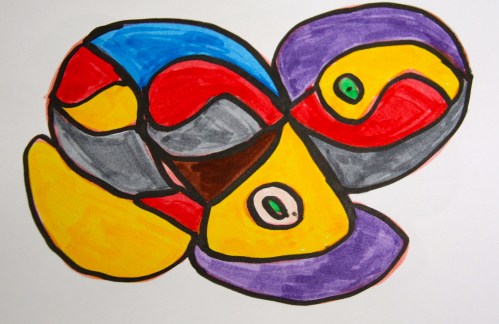
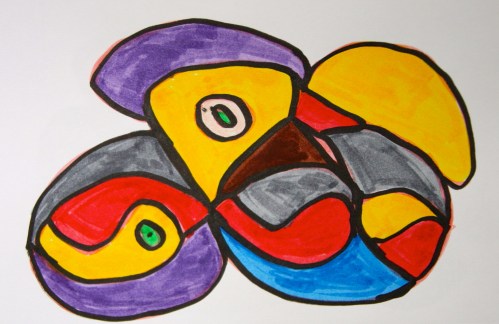
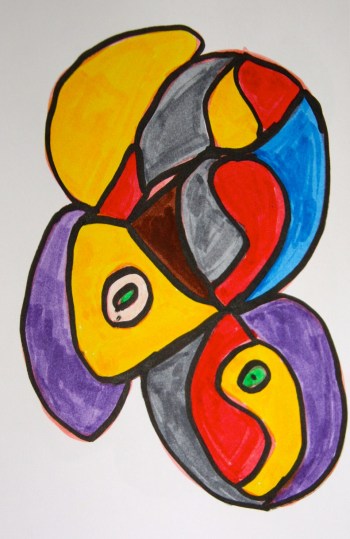
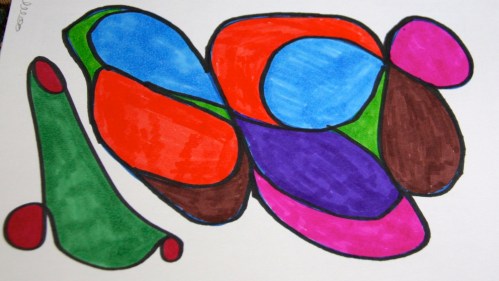
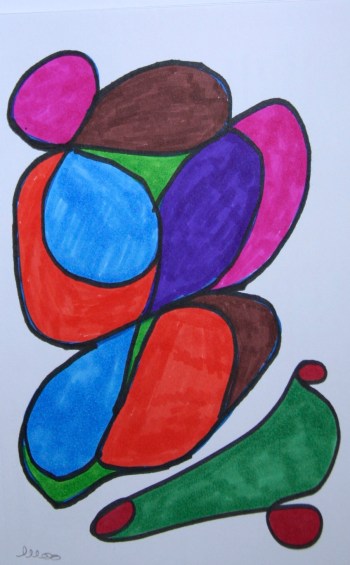
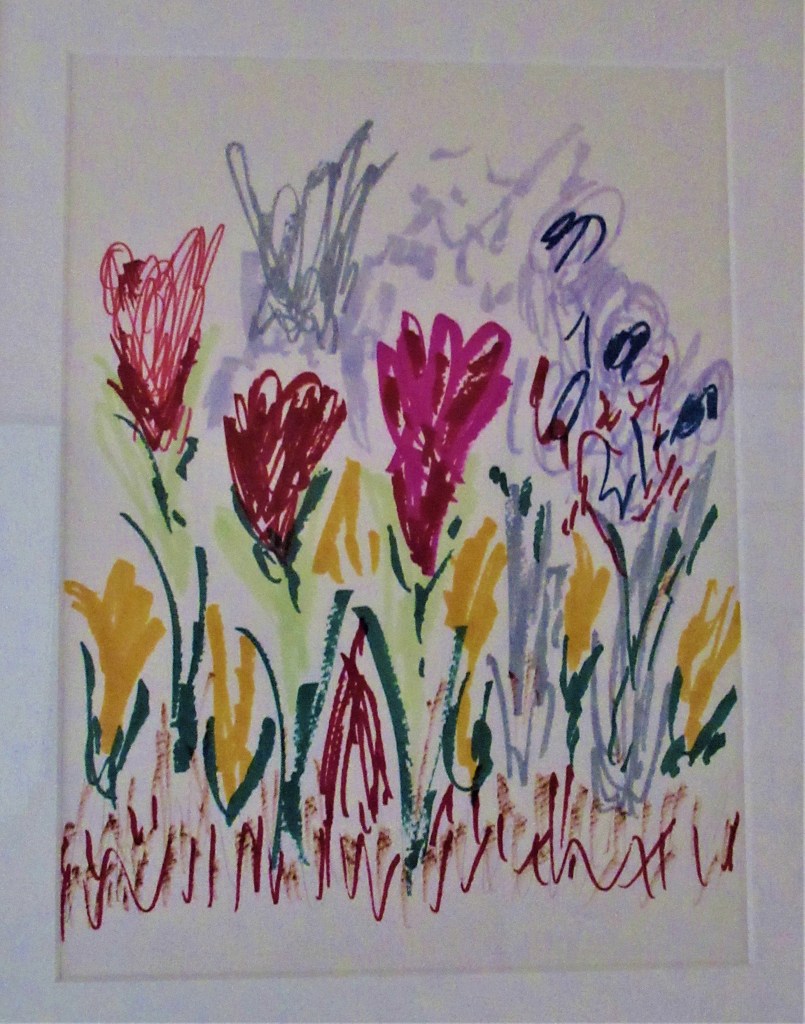
Niche, the fourth poetry book published by Jane Tims, is a neat configuration of six segments that elaborate and illustrate the poet’s original definition of the multiple meanings of her title word niche. It is very difficult to separate the author from the act of narration as her keenly observed and skillfully executed drawings, together with their verbal representation on the page, are so autobiographical and so much an extension of her artistic and professional abilities that the objective separation of writer and text is scarcely possible. It is hard to forget that Jane Tims was, and to a great extent, still is, a highly competent professional botanist. The harnessing of the professional botanist, with her unique drawing skills and scientific knowledge, to the poet and auto-biographer is a key factor in the reading and interpretation of this text in which acute observation blends with an intimate knowledge of the observed botanical world, both flora and fauna, and this allows the poet, in her role of poetic narrator and lyrical voice, to weave a network of poems that are, at one and the same time, objective and intensely subjective.

The author emphasizes this when she writes in the Preface that “In biological terms, the niche is the quality of a space occupied by a living thing, the sum total of physical, nutritional, biological, psychological and emotional needs gathered together in one place.” She also reminds us that in human terms “niche can be a metaphor for home, community or personal space” and it is within these metaphoric spaces that the poetry text is elaborated. The text becomes a linked mixture of visual drawings, iterative thematic imagery and associative fields, all centred on the multiple meanings of niche. These terms are both biological and human in nature and the poet’s named world meets at this juncture between the human and the natural.

The section occupying space (1-19) bears the subtitle satisfying need and begins with a setting out of what this means in the following 12 poems and 4 accompanying drawings. The poem ‘apples in the snow’ with its companion drawing stands out for me. The section strategy, subtitled solidifying position (21-43) outlines in poetic terms, how plants, animals, and humans ensure their own survival. The section praying for rain, subtitled, avoiding danger and discomfort (45-68), offers views on discomforts and dangers. It also opens the discussion—relocate or stay where we are? The section mapping the labyrinth or places I have occupied (69-83), which contains the wonderful sentence “When I get lost on the road ahead, I look to the road behind me,” throws open the multiple meanings of home. The section new ways for water, subtitled coping with change (85-98), offers a double landscape, first, external, the things seen, touched, examined, remembered and described, and then the internal landscape that reflects upon them and is reflected in them. Finally, forgetting to move, with its subtitle getting comfortable (99-111), presents an autobiography that links observer (the twin personage of author and narrator) to observed (nature, both flora and fauna, and the added element of autobiography and self) via the symbiotic relationship of botanist to botany.

Two moments stand out for me. (1) Sadness is in seeking the space that is never found. (2) Loneliness is in trying to return to a space once occupied but no longer available. The whole concept of the Welsh word hiraeth is summed up in these two lines. Carpe diem, Jane Tims’ poetry indeed seizes the day and, with its minute, intense observation, it preserves so many precious moments. It also pays attention to that which has been lost, those moments that are irretrievable. They will vary for each reader, but hopefully, like me, you will take great pleasure in discovering them for yourself.

Comment: Brian Henry of Quick Brown Fox picked up this review and published it on QBF. Thank you, Brian and thank you Jane, you both do me great honor. Here’s the link: Niche on QBF 14 March 2021

Crazy Glue

The autumn leaves: what does it take with it when it goes? And what does it leave behind?

Crazy Glue

Late last night, a fallen star grazed by the lamp-post. A bouquet of golden sparks flew from an iron tree and sanctified the gutter. The gas lamps sputtered patiently in uniform rows. A scarecrow stuttered into the limelight and shook my hand. She was wearing my grandmother’s Easter bonnet, with all the flowers renewed, but she couldn’t keep my heart from last winter’s left over crumbs. Suddenly a tulip thrust through the concrete. It became as red as a robin and flew into the lounge bar of a public house. The bronze leaf necklace circling my throat filled with a flow of springtime song. My heart stood upright, a warped piano in my breast, and my skeleton tarried at the corner to play knuckle-bones with the wind. Torn butterflies of news fluttered round and round and kissed my eyelids when they closed. Yesterday’s horoscope winked its subversive eye and called to the hermit in his lonely cell: “Look out for the stranger with the tin can alley smile. Tie your heart to the tail of the first stray dog that comes whistling down the street and follow it home to the empty house that breathes in and out, moving thin membranes of memory.”
            That’s where I now live. Upstairs, downstairs, a lonely route I tread while the wind at the window scratches tiny notes. Something breaks loose in the confines of my mind and walks beside me. My twin brother stalks through this silvery sliver of splintered glass, this simian mirror wrinkling our troubled suits of skin. I glimpse the old moon’s monkey face through a broken window. Jagged and thin, it wanders like an itinerant snail, cobbled with clumsy clouds. Once, I descended the playground slide in a shower of sparks. A vagabond in a paving stone sky, I rumbled across metal cracks, a knapsack of nightmares humped on my old man’s back. Tell me: when the snail moves house, who stores the furniture he leaves behind? The hermit crab lurks naked on the beach, seeking new lodgings. Who killed the candle and left us in darkness?
            Two eyes in limbo watch me roll this snowman’s belly of flab across an unknown, clouded room where yesterday I got lost in the mirror. I know how to swim, but I would have drowned, except the light was too shallow and my feet touched bottom when I let the wheels down. I swam on and in looking for a deserted island on which to build my idle sand castle dreams. Two people said they saw my reflection swimming like a goldfish in the silver of that secret space. They said I stared back out at them with circles of longing ringing my eyes; but I laughed when they said they had seen me, for when I looked in the mirror this morning to shave, I just wasn’t there. My razor dragged itself over an empty space and its sharpened blade scraped white music from the margin of a cd rom that spun on edge like dust rings round a vanished planet. Now there is a black hole where my passport photo used to thrive. Someone plucked me from the circle and cut me out in the dance last night. Today I’m looking for a scrapbook in which to stick myself with crazy glue that never, never, ever comes undone.

Daydreams

Duermeivela: that time when the waker dreams he is waking, yet is still asleep. His mind wanders through a labyrinth of old memories, streets and squares, myths and legends. It is a mythical time of great creativity. To wake up from it is to be filled with hiraeth: a longing for all that is lost and can never be recaptured.

Daydreams

The alarm clock shuffles
its pack of sleeping hours:
a clicking of claws,
needles knitting outwards
towards dawn’s guillotine.

A knife edge
this keening wind
sharpening my bones
tingling fingers and toes.

Ageing eyes refurbished
in the morning’s sky fire.
Ravishing rainbows
dazzling the eyelash of day.

Old myths grow legs.
They wander away
to gather in quiet corners,
where the wind weaves
dry leaves into endless
figures of eight.

 An old man now,
I dream of white rabbits,
running down tunnels,
escaping the hunter’s hands.

When my dreams break up,
they back into a cul-de-sac:
a wilderness of harsh black scars.

Scalpels, my finger nails, carving
red slashes on white-washed walls,
trenchant shadows, twisted dancers,
old warrior kings
bent into pipe wire shapes.


Black Angel

from an original painting by Rogier van der Weyden (1399/1400-1464)

Black Angel

You cannot hide
when the black angel comes
and knocks on your door.

“Wait a minute,” you say,
“While I change my clothes
and comb my hair.”

But she is there before you,
in the clothes closet,
pulling your arm.
You move to the bathroom
to brush your teeth.

“Now,” says the angel.
Your eyes mist over.

You know you are there,
but you can no longer see
your reflection in the mirror.

Comment:

I first saw the Black Angel in Aldebarán’s cultural store in Ávila (2006). She sat there, in the shop window, along with several other angels, and I worshiped her from the distance of the street. Her image was taken from an original painting from Rogier van der Weyden (1399/1400-1464). This was turned into a 3-D image and then converted into the statue I saw in the shop window.

I brought the statue back to Island View, placed it on the shelf above the fireplace, where it still rests, and wrote several poems on the theme of Angels. I gathered them together in a chapbook entitled All About Angels that I self-published in Fredericton in 2009. The chapbook was dedicated to Clare’s great-aunt, D. E. Witcombe who departed this world on October 15, 2008.

All About Angels was also based on a book of a similar title, Sobre los Ángeles, written by Rafael Albertí, one of the major poets of Spain’s Generation of 1927. I avoided the ambiguity of the Spanish title — Sobre (in Spanish) can mean Above or Beyond as well as About — by limiting my own title to All About Angels.

For Carl Jung, angels are the messengers sent to inform people of the state of their world. For me, they are also the wild creatures that inhabit the world around me and often take the form of chickadees, crows, mourning doves, woodpeckers, deer, foxes, chipmunks, the occasional bear, and other spiritual creatures. They can be best seen in those moments of solitude when we are most open to the natural world around us. Then, and sometimes only then, we can hear the urgent messages they bring.

Alebrijes

Alebrijes

alebrije2
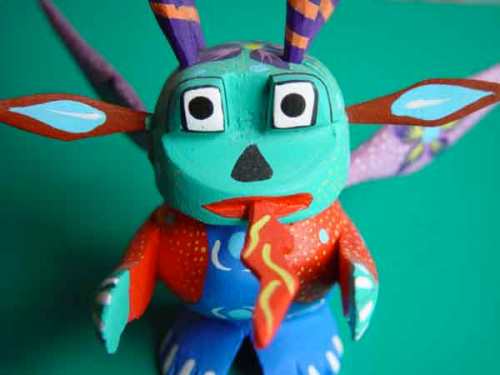
This is one of the first alebrijes I bought in the zocalo (main square) in Oaxaca. He has lost his ears and probably his tongue. They started falling out so we wrapped them up carefully and now we can’t find them. He’s still a happy chappy, hough, and has been in this house for a quarter of a century. Happy Birthday Alebrije!

     Alebrijes step out from dried wood and stand in the shower of paint that falls from the brush’s tip. Yellow flash of lightning, pointillistic rain, garish colors that mirror those of the códices. The carvings take the form of fantasy figures, anthropomorphic animals, and mythological creatures.
Sometimes one individual selects the wood, carves it, then covers it in paint. Occasionally an entire family takes part in the work of making the alebrije. One person collects the wood and prepares it for carving. Another carves and sands it. A third works on the undercoat, and a fourth applies the final patterns of paint.
The great debate: does the form in the wood reveal itself to the carver or do the carvers impose their own visions on the wood? In the case of the team, do the family members debate and come to a joint conclusion?
These thoughts, exchanged with wood-carvers in Oaxaca, have led to a series of interesting conversations. What exactly is creativity? Where does it come from? Do we, as artists, impose it upon our creations? Or do we merely observe and watch as new ideas float to the surface of our minds? How does the creative mind really function? And, by extension, how much of the sub-conscious creative sequence can be placed into words?

Alebrijes

 Are they half-grasped dreams
that wake, wide eyed, to a new day’s sun?

Or are they alive and thriving
when they fall from the tree?

Does the carver fish their color and shape
from his own interior sea,
or does he watch and wait for the spirit
to emerge from its wooden cocoon
to be reborn in a fiery block of color?

Daybreak:
in a secluded corner of my waking mind,
my neighbor’s dog greets the dawn with sparks
of bright colors born from his bark.

My waking dream: dark angels with butterfly bodies,
their inverted wings spread over my head to keep me warm.
In the town square, the local artist plucks dreams
from my head and paints them on carved wood.

IMG_0299
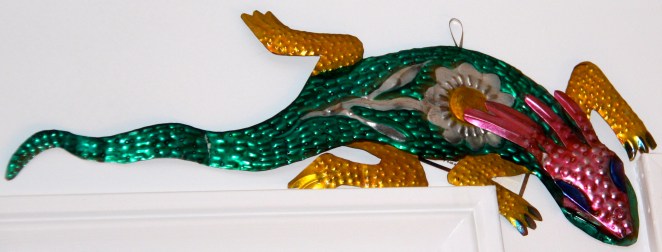
Our house iguana: he is not an alebrije, but is made out of painted metal foil, carved first, and then decorated. He’s the one who guards the front door and falls upon unwanted intruders when they least expect it. Never stay home alone without one, or two, or more. But watch out if you have too many and they get hungry.

Special Angels

IMG_0130
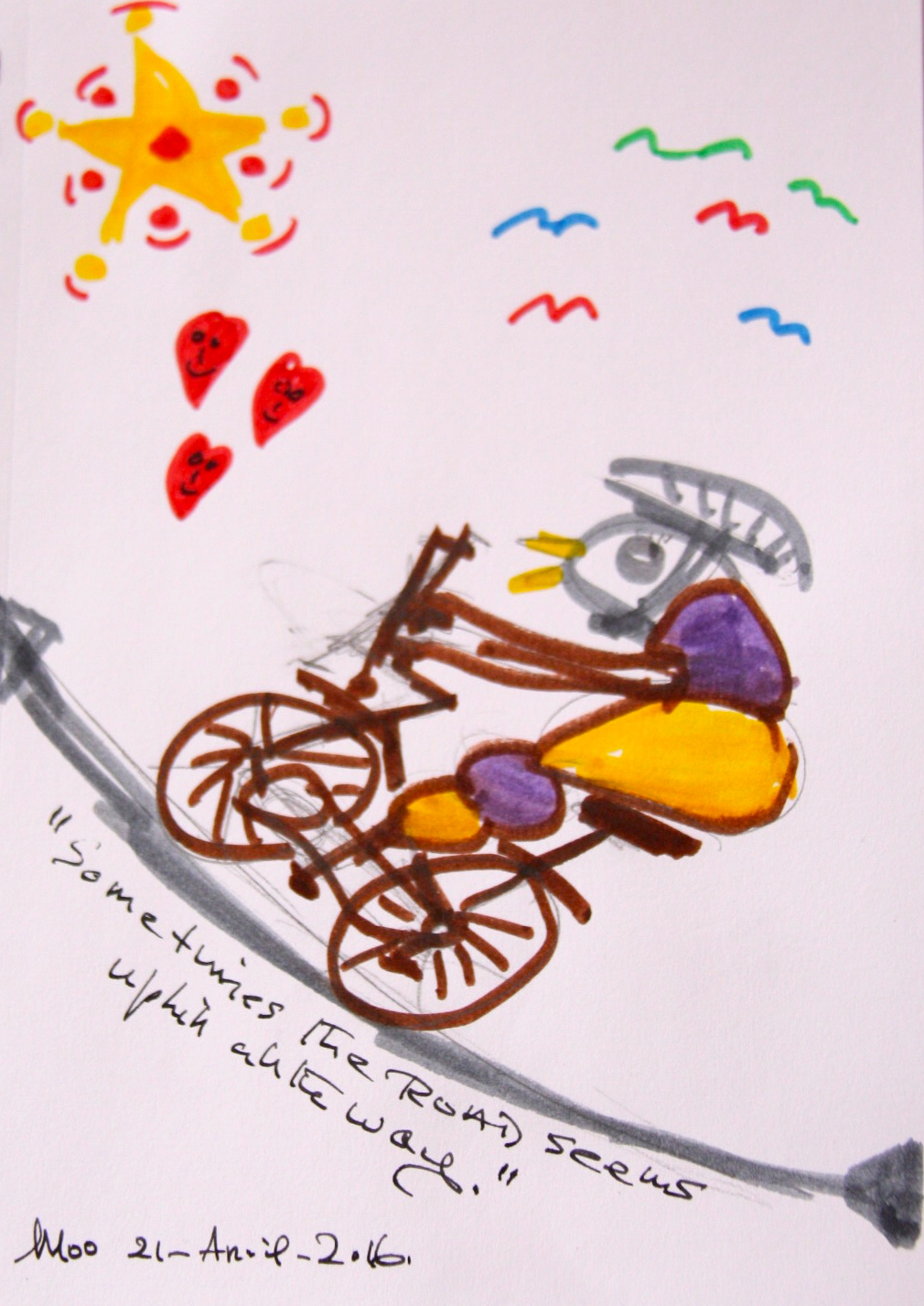
Another golden oldie and, with the snow fallen and my back aching, it does sometimes feel like it’s an uphill battle. There are always angels at the roadside, though, and some have called and offered to help. Thank you, special angels.

Sometimes the road seems uphill all the way. Lungs burn. Breath comes hot and hard and chunky in the throat. Legs hang heavy, muscles will not obey the owner’s instructions.

Consult the operating manual: “Take a break,” it says. “Rest now. Don’t push too hard.” But to rest is to give in, to come to an abrupt halt, or to drift backwards down the hill.

What stubborn streak is painted so deep in us that it shouts ‘never surrender’ when our most urgent need seems to be to throw in the towel? Is it the urge to get to the top, to see the lower lands stretched out below us? Or is it the mantra of fight the good fight?

Many things can drive us on: a need, a desire, a whim, an urge, or merely a refusal to stop fighting. Some of us will never give up. We will never lie down and curl up in a corner, a dead leaf to be blown hither and thither by the cold night wind.

Look carefully: there are no drugs, no needles, in the biker’s uniform. There is no small accessory motor hidden in the back wheel to help when times get hard.

The mouth is open, the eyes are set on the target, the legs still move, the sun still shines, and three smiling heart-shaped faces cheer the cyclist on.

Who can they be, these three angels at the road side, who can they be? Yet they are there and we are here and the bike is there and the hill is there and sometimes … yes, sometimes, the road IS uphill all the way.

But we keep the pedals turning and we don’t get off our bikes … and that’s life.

Daybreak in the Red Room, KIRA

Dawn from the window of The Red Room, KIRA, June 2017.

Daybreak

… early morning sunshine
creepy-crawly spider leg rays
climbing over window and wall
my bed-nest alive to light
not night’s star twinkle
but the sun’s egg breaking
its golden yolk
gilding sheet and pillow
billowing day dreams
through my still sleepy head …

… the word feast festering
gathering its inner glimpses
interior life of wind and wave
the elements laid out before me
my banquet of festivities
white the table cloth
golden the woodwork’s glow
mind and matter polished
and the sun show shimmering
its morning glory …

Comment: It seems like only yesterday, though three and a half years have slipped swiftly by. Each summer I am envious of those chosen to represent their artistic disciplines at KIRA. The joys of waking in the Red Room and of writing at the desk there will stay with me for ever. It was pleasure and a privilege. And still I live in hopes to see sunrise from the Red Room once more. This poem incidentally is from my poetry collection entitled One Small Corner. It was written at KIRA (Kingsbrae Gardens) in the month of June, 2017. One Small Corner is available on KDP and Amazon. Here is a link to the KIRA Video.

To be a writer ….

Photo by my good friend, Geoff Slater. Books by yours truly, who stayed on the bus and believed.

To be a writer ….

He who would true valor see,
let him come hither.
One here will constant be,
come bad or fair weather.
No line length can him fright,
he’ll with a paragraph fight,
and he will have a right,
to be a writer.

Those who beset him round
with dismal stories,
do but themselves confound:
his strength the more is.
There’s no discouragement
will make him once relent
his first avowed intent,
to be a writer.

Rejections nor bad critics
can daunt his spirit.
He knows he at the end
will a book inherit.
So critics fly away,
he’ll fear not what they say,
he’ll labor night and day
to be a writer.

Comment: John Bunyan tempted me and I fell into temptation. In fact, as my good friend Oscar Wilde once said: “I can resist anything except temptation.” So, ladies and gentlemen, change the he to a she or the pronoun of your choice, turn the writer to a sculptor, stoneist, poet, playwright, painter, novelist, dramatist, comedian, song-writer, singer. Breathe deep. Believe in your own artistic talent and remember: “Genius is 99% perspiration and 1% inspiration.” Remember this too: “You’ll never get to Vancouver by bus, if you get off the bus at Montreal or Toronto.”

Merry Christmas

A forgotten child’s Christmas in Wales.

On the Outside Looking In

As I walked home, it started to snow. Not the pure white fluffy snow of a pretty Merry Christmas card, but the dodgy, slippery mixture of rain, snow, and ice pellets that turned the steep streets of Swansea into ice slides and traps for the elderly. I turned up the collar of my coat, bowed my head, and stuffed my hands into my pockets. Two houses before my own, I stopped in front of our neighbor’s house.
The window shone, a beacon in the gathering dark. I drew closer, pressed my nose against that window and looked in. A Christmas tree, decorated with lights, candles, more decorations, a fire burning on the hearth, two cats curled up warm before the fire, presents beneath the tree, stockings hanging from the mantelpiece. For a moment, my heart unfroze and I felt the spirit of Christmas. Then I thought of my own house. Cold and drafty. No lights, no decorations. No fire. The snowball snuggled back into my chest and refused to melt.
            When I got home, our house stood chill and empty. My parents were out at work and the fire had died. Nothing was ready for Christmas. I sat at the kitchen table, took out my sketch book and began to draw, then color. When my mother came home, I showed her my picture.
            “Very nice,” she said without looking up.
            “But mum, you haven’t really seen it.”
            She stared at the picture again. This time, she saw the Christmas tree and the lights, the cats before the fire, the candles burning on the mantelpiece, the decorations and the presents wrapped and waiting beneath the tree. But she never noticed the little boy standing outside the house in the falling sleet, cold and shivering, peering in through the window.

Comment: Everyone remembers Dylan Thomas’s story A Child’s Christmas in Wales, but not all Welsh Christmases are like that. This is the story of a forgotten child’s Christmas in Wales. It is a story about a latch-key kid, left alone at Christmas to fend for himself. I enclose the drawing he did and I dedicate the story to anyone who is alone this Covid-19 Christmas. Christmas spent on your own is not much fun. Looking through another’s window, from the cold street outside, is not much fun either. So, at this time of year, let us remember those who are lost and lonely, those who need a kindly smile and a helping hand, those who do not have the comfort of family and friends, a warm wood fire, or a cat or a dog to snuggle up to them, to lick them, and to wish them ‘all the best’ in the languages that all animals speak on Christmas Eve, and sometimes into Christmas Day. Phone a friend, nod to a neighbor, and may your Christmas season be filled with joy.