Clepsydra 45 & 46

45

… I enter ancient rooms
     on the walls
          pale ghosts walk
               flickering shadows

why am I tongue-tied
     why do I struggle
          a fly in a spiderweb
               to make myself heard

I long for
     the freedom of flight
          for culture restored
                    for a return
                         to my own lost world

I grasp at shadows
     reaching out
          for the ones I know
                         are no longer there …

46

… how deeply time’s wounds

     have cut and carved
          through my flesh and bone

               into the embers
                    of that slow-burn fire
                         they call the heart

some days those wounds
     neither ache nor itch
          but in moments of madness
               a knife-edged finger nail
                    careless in the dark
                         opens them up

they throb again
     and begin to bleed afresh …

Commentary:

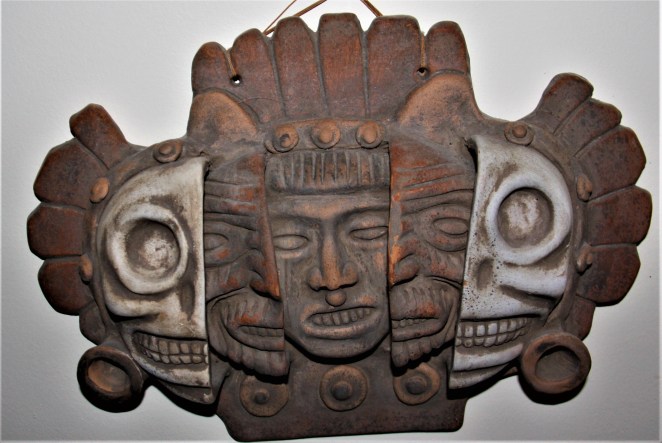
” … on the walls, pale ghosts walk flickering shadows – I grasp at shadows, reaching out for the ones I know are no longer there …” Vanity of vanities, all is vanity. For in much wisdom is much grief, and he who increases knowledge increases sorrow.

” … the embers of that slow-burn fire they call the heart … ” Pulvus eres et pulvus eris. Just another shadow on life’s wall.

Clepsydra 43 & 44

43

… a mouth stopped with silence
     a pen that can’t write

a river that won’t flow
     no safe place at night

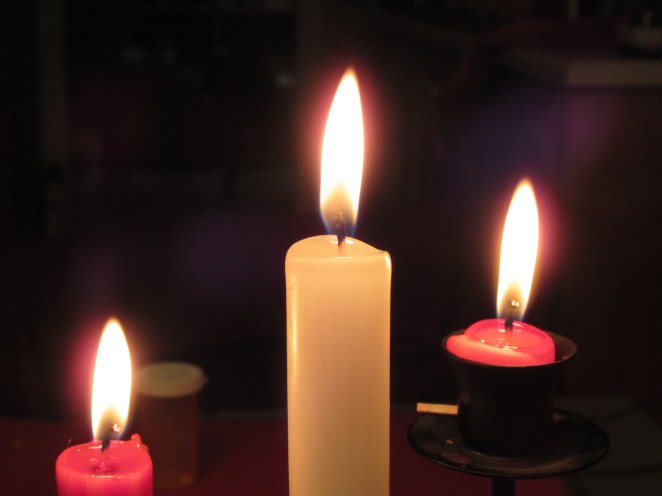
when I lit that candle
     I turned out the light

and sat in the stillness
     all flickering with fright

to whom can I turn
     to make things right

silent in the darkness
     I yearn for a light

a moth in life’s flame
     I flare and burn bright
 
scorching a hole
     in the shade of the night …

44

… but to lose my language
     is to lose my butterfly soul
          as it flutters to reach
              life’s sweet-scented rose

does the soul leave
     the body at night

released from its prison
     of earthbound clay
          does it wander
               in dreams
                    among the stars

Commentary:

“Cette plume n’est pas une plume.” This pen is not a pen. A mere photo of a pen, and I won’t be able to write a word with it. Nor will you. Not that it matters, for we are nearly at the end of our journey. Only eight more sections remain, and then the poem will be done.

I thank all of you who are travelling this road with me. Not much longer. The poem is coming to its end.

Clepsydra 39 & 40

39

… all too soon I too shall move on
     leaving behind me
          fading memories and cloud shadows


yet I recall
     standing beneath the cathedral’s
          great rose window
               on a sunny day
                    my body dressed
                         in a harlequin suit
                              of glistening lights 

in such splendour
     mortal things like words
          cease to flow

I held my breath
     shocked by an enormous presence
          that filled me then
               as it does now
                    with the knowledge
                         that nothing happens in vain …

40


… illumination
     I must find it for myself
  were another to tell me
      where it dwells
            its light would be untrue

only I can strike the match
     ignite the flame
          and trap its warmth
              in my body’s bone cage

when it flowers within me
     I’ll need no candle
          not even in the darkest mine

in Alma, I have seen
     the tide lower
          Fundy fishing boats
               down into the mud

like those boats
     I lack the power
          to resist both time and tide …

Commentary:

I asked Moo for a painting of boats from Fundy, preferably from Alma, lying on their sides at low tide. “Let me see what I am meant to be illustrating,” he said. He read the above excerpt from Clepsydra and told me “You’re navel gazing again. I thought I told you not to do that. Now, have I got a painting for you.” I didn’t dare refuse to post it – he’s had a bad couple of days and it has sharpened his sense of humor – so it’s here it is. Moo calls is – now don’t laugh – Naval Gazing.

“Nothing happens in vain.” So maybe I was predestined to ask Moo for a painting he didn’t have and to end up with one that tickled his fancy. Now that set off a light bulb in my skull. Mr. Dimwitty came to his sense – I have been navel gazing. Naughty, naughty. How many of you remember Mr. Dimwitty, the not too bright schoolmaster on BBC radio? Hold up your hands, and I’ll count them.

Meanwhile, things happen to Moo and me, and like the boats on the Fundy, we lack the power to resist both time and tide. And that’s why we help each other, carry each other along. “We few, we few, we band of brothers.” That was Shakespeare. Nowadays we have to say “we band of siblings.” It pays to be inclusive. Speaking of bands, I saw a man walking down Main Street yesterday, blowing a rubber trumpet. I asked him what he was doing and he told me that he was looking for a rubber band. Joy to the world and help spread the joy. If you don’t like joy, spread Marmite. And if you don’t like Marmite I am sure you’ll love Vegemite. Ma might, but Pa won’t. That’s why it’s not called Pa-mite.

Writing in the Red Zone

Writing in the Red Zone

The Red Zone:
it’s a familiar concept.
Monday Night football
talks about it all the time.

“Success percentage
in the Red Zone,
offense and defense.”

It’s not just football.
Other sports, soccer, rugby,
have their red zones.
So does life, my life,
for better or for worse,
and now I know I’m in
the Red Zone.

I can see the goal line.
I can feel the tension rising.
I know the clock’s ticking down.
I can sense it, but can’t see it.
I no longer know the score,
and I don’t know whether
I’m playing offense or defense.

They tell me it’s a level playing field,
but every day they change the rules,
and today I wonder what the heck’s
the name of the game I’m playing.

Clepsydra 35 & 36

35
… to save myself
     I must grasp it firmly
          as I would a nettle
               not with my hands
                    but with my teeth

but my hands are tied
     behind my back
a cloth is bound
     over my eyes         
          and I cannot see … 

36

… I struggle and squirm
     until released
          I float ashore
               and stand on the sea wall
                    calling out to the moon
                         begging her not to hide
                              her scarred face


I entreat the ebbing tide
     to carry me with it out to sea
          past the island
               beyond the lighthouse
                    into deep water

waves stronger than any

     thing I have known
          thrust rough fingers
               under my arms
                    lift me up
                         then drag me down

to the depths
     where I can finally rest
          in peace …

Commentary:

Mors omnia solvit – death solves everything. But does it? What about the crossword, the jigsaw puzzle, the unsolved ? What about the problem of life itself? What is it? How does it function? And what is that poor bird doing lying on its PEI beach half-covered in sand? What problems did he have solved?

” my hands are tied behind my back, a cloth is bound over my eyes and I cannot see” …  so how can I tell where I am going and why I am going there? Simple questions – yet there are no answers, none that are given to me anyway. And who am I to reason why? Is my detiny, as always, to just do and die?

I do not know. The bird on the beach does not know. The ebbing tide doesn’t know, or care what it carries out with it. And what are we anyway? Why do we search for meaning in the meaningless? For answers in the absurd? And why does Sisyphus roll his rock up the hill, release it, then walk back down, pick it up and carry it up again? And why must we imagine that Sisyphus is happy? Our daily work – ce boureau sans merci – why should we be thankful for it?  Because there is nothing else? Because otherwise we would be abandoned? Or just because?

Oh, ho-ho-ho-ho, tell me if you know, who the… where the … why …. the what for … where did that one go? Even poor old Alf and dear old ‘Erbet, somewhere on the Somme, didn’t know the answer to that one. And they had their little dugout made a mess of by a bomb. Well, at least they found another hole, but when that other shell went over, it left them still wondering! And don’t we all?

Memories

Memories

All that remains of you: memories
and these swift-flowing rivers of blood
embodied within my flesh and skin.

A lifeless kite, each word I write,
too heavy to rise. Each sentence,
a wasted movement of lips and tongue.

And you, a black and white snap-shot,
of blooded washing hanging on the barbed
wire fence we grew each day between us.

Today, sunlight streams through stained
glass windows of the house you no longer
inhabit. Dust rises from artificial flowers.

Your poinsettia’s dry silk leaves, now mine,
brush a taut, barren kiss against my face.
I dream of the drowned lying cold on a beach.

Fresh memories pound through my head.
Waves on a rocky shoreline. Each word
a grating grind of shingle and sharp stones.

Commentary:

Moo calls it going Bodmin but the idea comes from Doc Martin and Porthwen. People lose their minds, their directions, and end up ‘going Bodmin’. This means they wander about, lost, on the Bodwin Moor and can’t find their way home. As we age, it happens to many of us. Not only do we go Bodmin, but our memories betray us. Sometimes we remember what we did as children, but forget what we did a few moments ago.

WWI – my grandfather told me all about it. “We’ll hang out our washing on the Siegfried Line, have you any dirty washing mother dear?” Or worse, “If you want to find the Sargent, I know where he is, he’s hanging on the old barbed wire.” Unbroken wire, covered by enemy machine guns, we who die like cattle – such bitter memories. And the French, walking to the front, baaing like lambs being led to the slaughter, decimated, one in ten (10%) being shot for cowardice or insubordination. “If you want the whole battalion, I know where they are, they’re hanging on the old barbed wire.”

And now you must think of the barriers, the fences, that we grow between us, day after day, as we grow old, and older. Artificial flowers, houses we no longer inhabit, dust motes floating in the air through rooms well-remembered, but no longer open to us. “Each word, each memory, a grating grind of shingle and sharp stones.”

Look at them, those lost people, those forgotten faces. You may even recognize one or two of them. Listen – well-remembered voices, bugles calling from sad shires, and every night, a drawing down of blinds.

Clepsydra 31 & 32

31

… I become more aware
     of the world
          outside my mother’s womb

I listen to the house’s heartbeat
     the occasional creak
          intruding rarely
               the house inhaling
                    exhaling

 I pay attention
     to my own bodily sounds
          my heart rate slowing
               increasing

now I can hear
     the faint tick-tock
          of a distant clock

a sunray illuminates
     a dust mote
          that dances before my eyes

light without sound
     silent butterfly wings
          seeking celestial light …

32

… did I write
          these words for me
               or did I write them
                    for someone else

does it matter
     when the only thing that counts
          is the beauty released,
               when the butterfly breaks free
                    and takes flight …

Commentary:

“The only thing that counts is the beauty released when the butterfly takes flight.” Sounds beautiful, doesn’t it? Just like the old poetic adage “beauty is truth and truth beauty.” But is it true? There are some very ugly truths and it is very hard to beautify them, even though we do our best to do so. I have always hated simplicities like “lipstick on a pig” or “silk purse out of sow’s ear”. And then there’s ‘a rose by any other name would smell as sweet.’ Probably true. Yet an ugly truth is still an ugly truth however much the spin doctors try to spin it.

And for whom does a poet (he in this case, the poet being me) write his poetry? Did I write those words for me, or for someone else? Good question. I certainly wrote them in the hopes that someone, somewhere, perhaps you, whoever you are, might read them. But I don’t know you, can’t know you, how could I know you? But if I don’t know you, how could I write for you? Did Cervantes write the Quixote for himself, or for his readers? And who were his readers, did he know them? He certainly didn’t know me, because he passed away on April 23, 1616, same date as William Shakespeare and the Inca Garcilasso de la Vega. The same date, you notice, but not the same day! Puzzle that one out, if you will. Meanwhile, he died 328 years, give or take a month or two, before I was born, so I don’t think he had me in mind as he penned his words, much as I didn’t have you (specifically) in mind, as I penned mine.

Carpe diem – seize the day. Don’t wase it on such idle philosophical speculations. Speculation / peculation – go buy yourself a lottery ticket – you may even win the jackpot. Of course, if you wish, you can be like me. I never buy lottery tickets and that would put money in my pocket every week (think of it as winnings!) except I never take it out. And remember – “Keep your water weak and your cider strong, keep your hands in your pockets and you won’t go wrong.”

Clepsydra 30

30

… but before all that
     did I emerge slowly
          from the grain
               of a granite heart
                    as a sculpture
                         emerges from stone

I broke out of a silent world
     left the flesh-and-blood house
          where my mother lodged me
               abandoned that amniotic silence
                    broken only
                         by my mother’s heartbeat

my own heart
     responded to that rhythm
          until I materialized
               and slipped into
                    this waiting world

only to be held at the hips
     trapped
          a climber in a cave
               half out
                    yet not able to break
                         completely free

and me
     visited all my life
          by the nightmare
               of that pincer grip
                    until the doctor
                         forceps in hand
                              pincered me
                                   and drew me forth
white meat
     from a reluctant lobster’s claw
          silent
               dangling upside down
                    a special lobster
                         blue at the bottom
                              red at the top
                                   breathless
                                        motionless

until that first slap
     broke the silence
          and wailing
                I came into
                     that waiting world …

Commentary:

Nice painting, Moo. I like that. Its original title is Walking on Air, and I guess that’s what it might have felt like, dangling up side down, held by my feet, trying to walk on my hands, and look at all those suggestive colours. Colors / colours – English or Canadian? Does it matter? Red is still red and a rose by any other name would smell as sweet.

“Vanity of vanities, all is vanity.” Ecclesiastes, if I am not mistaken. “Great knowledge brings great grief; for in much wisdom is much grief, and he who increases knowledge increases sorrow.” So, we live and we learn, but what do we learn? Only the wisdom of all the wise people who walked this way before us. “In my beginning is my end …” – T. S. Eliot – “and in my end is my beginning.” In blood we begin our days, and in blood will we end them, just as the day begins with the spilling of the sun’s blood and ends in an evening of glory. Except when it’s cloudy, and then, of course, we have to guess what’s happening.

Guess-work – we guess how it began and we guess how it will end. And there’s the Clepsydra for you – drop after drop of water and people gathering knowledge, only to know how little they know, for, as Erich von Richthofen said, in the Medieval Course at the University of Toronto, a long time ago, in the 60’sixties of the last century which was also in the last millennium – “The more I know, the more I realize how much I don’t know.”

Clepsydra 28 & 29

28

… diagnosed
     with a terminal illness
          called life
               I know it will end
                    in death

I have seen many
     pass that way
          two-legged humans
               four-legged friends
                    and none have come back

I recall
     holding the dog’s shaved paw
          while the vet slipped
               that last redeeming needle
                    into the exposed vein

the dog’s eyes
     pleaded for release
          her tongue licked my hand
               oh so trusting
                    even at that
                         for me
                              so bitter end

and did the poor dog know
     what was coming
          did she live her life
               as I have led mine
                    waiting for that last word
                         to be spoken
                              the last order given …

29

… two of us
     me and my death
          walking side by side
               everywhere
                    sharing the same bed
                         sleeping between
                              the same sheets

I wonder if
     we dream
          the same dreams

my death
     how would I greet him
          when he came
               as executioner
                    not friend

I re-create him as a man
     or as a dark angel
          with all-comforting wings

is he open-eyed,
          while I am blindfolded
               not knowing the way
                    afraid of falling

this death
     is it cruelty
          or merely love               

the path is ahead is new
     and totally unknown …

Commentary:

Many of the images in these two pieces are exercises in intertextual examples, Stanza 29 in particular, drawn from the Neo-Stoicism of Francisco de Quevedo (1580-1645). His advice, set out in poem after poem, is to embrace death before it comes. Prepare for it, mentally, and be aware that it is the natural end of life. As Dylan Thomas also writes, “Every morning when I wake, oh Lord this little prayer I make, that thou wilt keep thy watchful eye on all poor creatures born to die.” The Dunvant Male Voice Choir gives us this version of it. Remember to turn your sound on! I like this version, not just for the music, but also for the views over one of my favorite childhood beaches, Rhossili and the Worm’s Head, not far from my home in Gower.

As I grow older and creakier, as my ailments accumulate, one by one, so I realize that indeed I have been “diagnosed with a terminal illness called life.” It’s funny to think of life as a terminal ailment. “Take two Tylenol and when you wake up tomorrow morning you’ll be feeling much better.” And yes, like every sane person “I know it [this terminal ailment] will end in death.” So, don’t be sad. Carpe Diem – seize each day and enjoy every one of them to the best of your ability. Remember the inscription on the Roman Sundial – horas non numero nisi serenas – I count only the happy hours. Whatever you do, have no regrets. If you do have some, make your peace with them now – or as soon as you possibly can. And, when the call comes, go willingly. Step with pride and joy onto that new and unknown path that will lead you to an eternity of joy, acceptance, and love.
                   

Clepsydra 27

Clepsydra 27

… the museum closes its doors
     inside the clepsydra murmurs
          on and on

evening falls from the sky
     in great cataracts of light
          stars flare like candles

who will see
     that last drop of water
          trembling at
               the clepsydra’s edge,

who will snuff out
     that last flickering
          flame of my life
               as the final verses
                    of the children’s song
                         loom closer

Here comes a candle
     to light you to bed.
          And here comes a chopper
               to chop of your head…

Commentary:

Moo got it right this time – “evening falls from the sky in great cataracts of light, stars flare like candles …” Lovely painting of a star ‘flaring like a candle’ against the evening sky. I think he called the painting Affirmation. Yup, he’s nodding his head, and he has his eyes wide open. He’s not dropping off into one of those drowsy moments of old age. Too early in the morning to do ‘noddy’ I say. Oh-oh, there he goes. It’s Billy Cotton Band Show Time … “Wakey-wakey!” Now how many of you remember the Billy Cotton Band Show on BBC Radio on Sunday afternoons, just as people are dropping off to sleep after the enormous Sunday dinner and dessert? Hands up if you’re over eighty and remember that. Oh dear. Not a good idea. Moo’s hand’s gone up and he’s still got his eyes shut. Ah well, appearances aren’t everything.

And look at that comma after – the clepsydra’s edge, (line 10) -. The one that got away. There’s always one that gets away, no matter how hard we try – and try we do. Clepsydra is meant to be a single sentence, with no punctuation other than an ellipsis at the beginning and end of each sequence. And what have we here? A common or garden comma, growing like a large, spring dent-de-lion / dandelion in the middle of a patch of flowery images and metaphors. Out, out fowl spot! What bird was that? A Flying MacBeth just dropped something on my windshield. ‘What a foul fowl was that fellow,’ said the soccer referee pointing to the penalty spot. A round spot with a whale of a tail.

“Any questions?” I asked my students at the end of class one day. A brave young lad raised his hand. “I have a question, sir?” [I liked it when they called me, sir. It happened about once or twice a year. I always knew something drastic was about to happen when I received a knighthood.] “Ask away,” I replied. “What the heck are you on? I’d love to have some of that. Can you give me some, sir!” Two knighthoods in one day. I’ll be a KG next, instead of an RG. I bet you don’t get that joke! Answers by snail mail and dog sled, please!