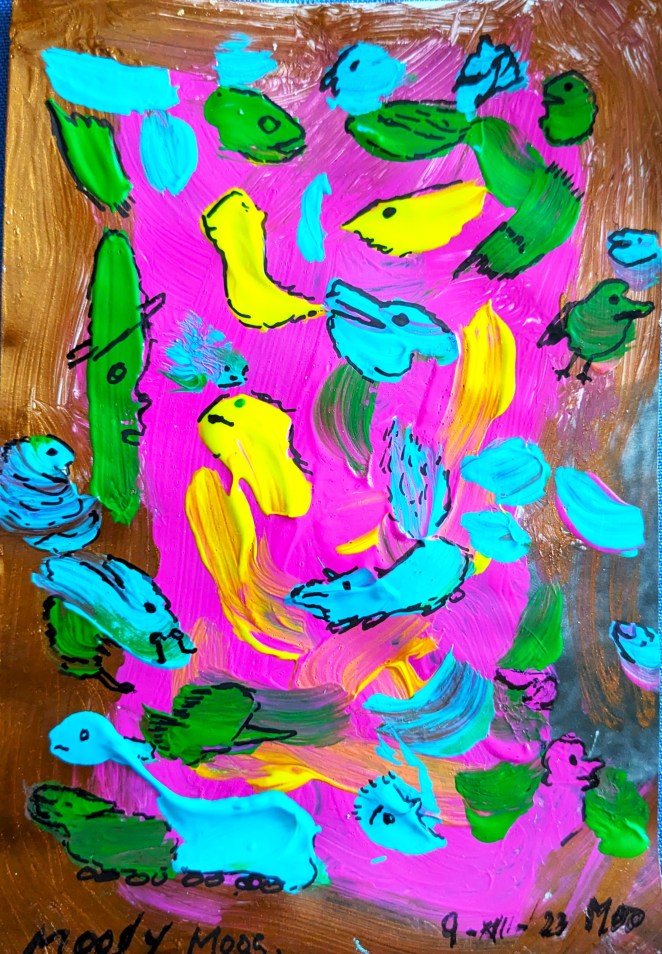
Rage, Rage 34

Rage, Rage
34

A squiggle of spaghetti
or twisted noodles,
that’s what my brain
has become.

My second-hand mind
is a hand-me-down,
an antipersonnel bomb
from another place
and a distant time.

Blind, in so many ways,
with nowhere I want to go,
my soon-to-end days
lie humped on my shoulders,
weighing me down
as I limp along.

Comment:

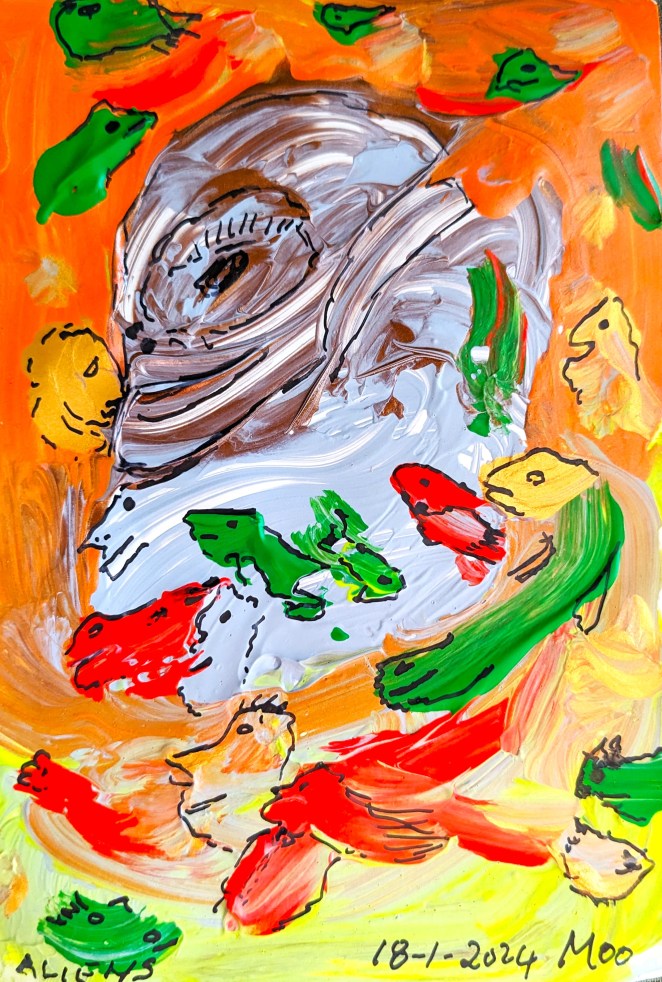
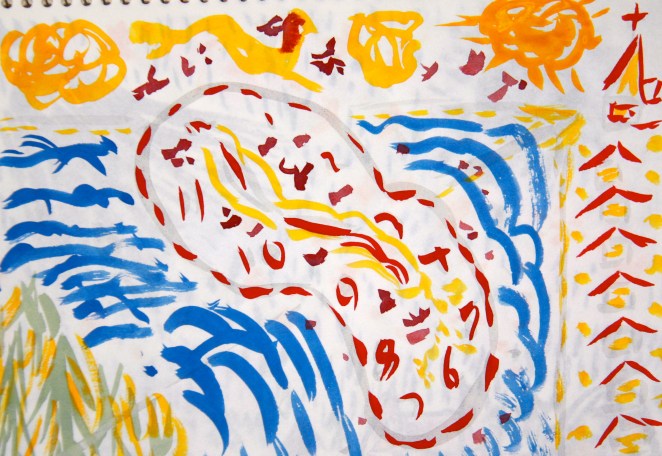
You can blame my friend Moo for the painting. “That’s my view of your brain,” he told me. “A squiggle of spaghetti or twisted noodles.” I think his painting looks like what my Beloved, courtesy of Corrie Street (as was), calls a Spag Bowl. Funny how easy it is to become muddled and confused as we age. Did I shut the back door? Double-check. Yes, I did. And you can multiply that to the power of N (or DR – for don’t remember!). And what about those windmills that wave their arms in my mind? Will that be cash or “Charge!”

Re-reading the Quixote, side by side with a very good friend, I forget some of the ideas that I once had. I try to read my penciled marginal notes. What fun! First, I can hardly read them. Second, I can hardly understand them. And third, I have to reinvent what they might possibly have told me. All good fun. But sometimes, at the end of a session, my mind feels like the bodies of Don Quixote, Sancho, and Rocinante, after their meeting with the Yanguesans – battered, bruised, and beaten! Why, can someone kindly tell me, did Cervantes treat his two main characters to such frequent and brutal assaults?

Ah well, Friday today, and Friday is fish – not Spag Bowl. Are scallops fish? Not when they are sliced off your body with a razor-sharp sword. But then, I doubt if Quixote’s sword was razor sharp. It was probably vencida de la edad – conquered by age – just like he was. Conquered? No, not yet. Happily, I just limp along, however slowly. Ah yes, I forgot. I need a name for my Nexus. Maybe I’ll call it Rocinante, like DQ’s horse.

Rage, Rage 30 & 31

Rage, Rage
30

A pack of miniature wolves
infiltrated the midnight forest
flourishing in my other lung.

When the pibroch played,
they pointed their noses
at the spot where the full moon
would have been, if
I had invited her in.

They mingled their howls
with the bagpipes’ caterwaul
and I lay awake all night
with my heart beating
arrhythmic suspicions
on its blood red drum.

The drum played,
the pibroch wailed,
the wolves howled,
my body lay scarred by
an absence of sleep
and the presence of moonlight
that drove stars from the sky
and filled the room with shadows
and shifting shapes.

31

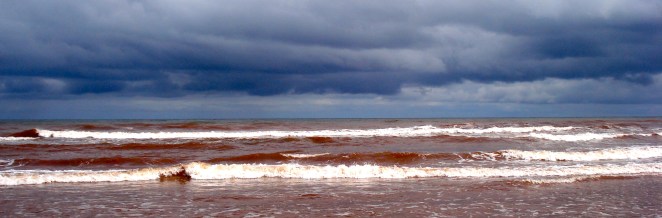
The full moon drew up water,
imposed high tides,
drew the wolves
by their drawstrings
out of my chest.

The piper paid his rent,
packed up his pipes,
took a sip of his whisky,
Bell’s – ‘a drop before ye go,’
and marched away,
leaving me alone.

Now silence rules my lungs.
Five deer stand silent
in the woods beneath my window.
I watch them watch the piper
pipe himself away.

It’s all over now,
the cough, the splutter,
the aches and pains
that told me I was alive.

I miss
the swish and roar
of my incoming,
outgoing breath.

Comment:

The piper marched away, leaving me alone. That’s the funny thing about pain, especially in our old age. It lets us know that yes, we are still alive. I know we are better off without it, but when it is there, it is better than the emptiness that will follow when we slip into the dark night that awaits us. Or perhaps it will be the golden dawn of another age. Many people tell us many things, but I don’t know how many people really and truly know. As I get older, I speculate more and more.

I once asked my grandfather if he was worried about dying. He looked at me for a long time. Then he said, “Well, one thing’s for certain. I know I am going to die. I’ll die if I worry about it and I’ll die if I don’t worry about it. So why worry about it?” He was a wonderful man with a wonderful attitude about so many things. But then he had survived the trenches in WWI and there weren’t many things he hadn’t seen. He rarely talked about it, but when he did, he told the most wonderful stories. And he sang all the old WWI songs too. A one man entertainment act for the small boy that would climb up onto his lap and say “Grandpa, tell me a story….” and he would begin “Once upon a time…” and that was the start of the magic.

And it’s the magic that we need. The magic that is so often missing in this age of information overload. “What is this life if, full of care, we have no time to stand and stare.” Nor do we have any time to crawl into grandpa’s lap and seek those magic words – the words that start the willing suspension of disbelief – “once upon a time, a long time ago …” And, with a wave of the magic wand we are transported into a wonderland of dream and magic.

Book Burnings

Book Burning

A sharp-edged double sword,
this down-sizing,
this clearing out of odds and ends.

Library shelves emptying.
books disappearing, one by one.

So many memories
trapped between each page,
covers, dust-bound now,
dust to dust and books to ashes.

Sorrowful, not sweet, each parting,
multiple losses, characters
never to be met again,
except in dreams.

Heroes, thinkers, philosophers, poets,
their life work condemned to conflagration.

Alpha: such love at their beginnings.
Omega: such despair,
with Guy Fawkes celebrations
the means to their ends.

Word-fires:
the means of forging
those book worlds that surrounded us.

Bonfires:
the means to end them.

Steadfast, the book-fires,
flames fast devouring

all but an occasional volume
snatched by burning fingers,
from the flames.

Comment:

Funny things, book burnings. Why would anyone burn anything as innocent as a book? Good question. Yet people do. And people always have.

I think back to Don Quixote I, 6 and the Scrutiny of the Library. The Priest and the Barber go through the mad knight’s library and one by one examine the books of chivalry and either spare them, or cast them into the flames. This, in itself is a parody of some of the judicial actions of the Spanish Inquisition. In particular, any book that they considered to be unsafe or heretical went into the flames. Our Spanish Knight, of course, went mad through reading too many books of chivalry – and his brain dried up so that he totally lost all reason.

It is very interesting to read which books were spared and why. Equally interesting to find that many were burned on aesthetic grounds – they were not well written, or they were boring. Fascinating.

Fascinating too the book burnings that took place in Mexico during the Conquest of that country by the Spanish Conquistadores. Many pre-Columbian codices were burned. Priceless treasures and histories lost forever. Some, I think the Vindobonensis, still bear the marks of the flames when they were pulled from the fire in an effort to save them.

Moo tells me that my books will never be burned. And I am thankful for that. I asked why they wouldn’t be and he replied that nobody reads them anyway! Not such a comforting thought. So, in an effort to keep me happy and to preserve my books from the flames, another of my friends laid them out on the beach at Holt’s Point, New Brunswick. They certainly won’t burn when the tide comes in.

More important, I see that junk from Canadian Beaches, dated about 1960, has just arrived on the shores of the European continent, sixty plus years later. So – a floating book, a message, perhaps, in a time-bottle, destined to achieve immortality and live for ever. What a comforting thought for those of us who believe in the time and the tide that wait for no man! But they both might wait for his books.

Bleak Mid-Winter

Bleak Mid-winter
from
All About Angels

The reverse side of a tapestry this fly-netting,
snow plugging its tiny squares,
clotting with whiteness the loopholes
where snippets of light sneak through.
Black and white this landscape,
its colorless contours a throwback
to earlier days when dark and light
and black and white held sway.

Snow piled on snow.
The bird-feeder buried and buried, too,
the lamps that can no longer shine
beneath their cloak of snow.

The front porch contemplates a sea of white,
wave after wave cresting whitecaps,
casting a snow coat over trees
with snow-filled nests standing
shoulder-deep in the drifts
while a slow wind whistles
and high and dry in the sky above
the sun is a pale, thin penny
drifting through ragged clouds
hat threaten to bring more snow.

Comment:

A Golden Oldie, or rather, a Black and White Oldie, from when New Brunswick winters were colder and much more snowy. The iterative thematic imagery in the poem links to the hymn, In the bleak mid-winter. There are several reminisces of the hymn within the above lines.

It used to be sung as a an entry hymn in the Christmas Carol Services at King’s Stanley Church, along time ago, when I was in school. The procession would exit the vestry and move slowly though the church towards the altar. The first verse of the solo was sung solo. Then a duet followed. Then the whole choir joined in. I remember doing the solo one year, when both our lead singers were stricken with some form of laryngitis. We drew lots and I got the short straw.

The unique drum accompaniment that day was the sound of my knees knocking together, backed up by the loud beating of the heart in my chest. I preferred hiding in the choir, to stepping up out front and leading it.

Last year, we used our snow blower on three occasions. This winter, we have yet to use it. If during the next month or so I am forced to wake it up and shake it out of its cobwebs, I will be sure to sing “In the bleak midwinter” as I plow my drive. Alas, there will be no choir to accompany me. Those days are long past, and in the past they must remain, as the Flower of Scotland reminds us. They will be singing that in Edinburgh on Valentine’s Day. And Scotland will need a strong brave set of hearts to upset the invading armies from south of the border.

Losing Your Language

Losing Your Language

To lose your language is to lose
your butterfly soul as it flutters
to reach life’s sweet-scented rose.

So much butterflies see at night,
released from their earthbound bodies,
roving in dreams, among the stars.

They enter ancient rooms where friends,
return at night, pale ghosts outlined
among the wall’s flickering shadows.

You, tongue-tied and silent, earth-bound
indeed, are as small as a fly, struggling
in a spider web of voiceless words.

You yearn for the freedom of flight,
for the liberty of culture restored,
for the return of your own lost world.

Comment:

Tongue-tied and earthbound – it happens. The ties that bind snap one day, the kite takes flight and is soon lost among the clouds. What happens when the river runs underground and we lose sight of everything we once knew it by? No more trout, the waters ripping as they rise to the flies. No more tinkle of water over stone, or the rushing roar of the spring freshet. No mor coolness beneath the trees. Ephemeral beauty – here today and gone tomorrow. A moment rejoicing, and a lifetime lamenting. Sorrow, like tears, is in all things.

Carpe diem – seize the day. Sip slowly at beauty’s cup. Enjoy life while you can. Make the most of every hour of sunlight and, like the sundial, count only the happy hours. And make each one count.

Rage, Rage 25

Rage, Rage, 25

A carton of eggs,
milk left behind,
a walking stick

abandoned on a cart,
discovered
in the lost and found
in the supermarket.

My cousin’s face,
her daughter’s name,
the parking spot
where I left my car.

Time and place
wave goodbye
and are quickly gone.
So much has become
ephemeral.

“What day is it today?”
I check my watch
for the third or fourth time.
I forget phone numbers.

I look at photos
but they are blank spaces,
gaps in the photo album.

Scenes on the tv screen –
“I recognize those faces,” I mutter,
“who are they?

Where did I see them before.

Comment:

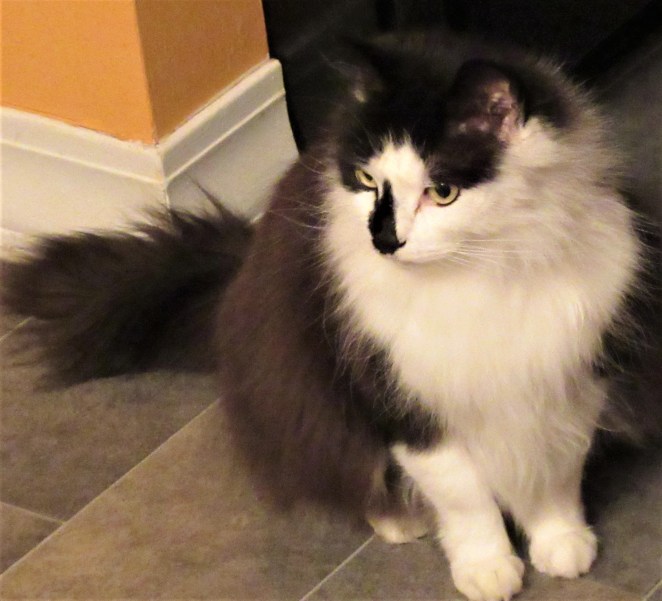
Ephemeral – “Something that is fleeting or short-lived is ephemeral, like a fly that lives for one day or text messages flitting from cellphone to cellphone.” Heraclitus says we can never step in the same stream twice – because the waters are not the same and neither are we. We change, things change. They do not stay the same. Here today and gone tomorrow. Like the flowers our kind neighbor brought us when our kitty cat passed away last week. She, too, was ephemeral. Just like the flowers. Just like us.

Some things leave us with sorrow – our pussy cat was 18 years old, and her passing took away her pain. Yet she still left us sad and grieving. And those 18 years seemed to pass in a dream. Where did they, where did she go? There is sorrow too in memory loss. The days of our lives, once fresh their memories, now filling with a sadness as we try to recall them. Memory loss – one of the great sorrows of aging.

So many things slipping away. Seasons passing. Daylight hours waning then waxing again, just like the moon. Water between fingers. Grains of sand through the hour glass. So many blank faces in the photo album. “Who is that?” “I can’t remember.” More and more of the family names fading away, slipping into the distance. And all too soon, we shall join them, leaving an empty nest, for, as Cervantes once wrote – “No hay pájaros en los nidos de antaño” there are no birds in last year’s nests.

Rage, Rage 24

Rage, Rage
24

Breakfast time –
butter-fingers:
slippery tableware
totters and falls

A delicate cup
hovers
over the table cloth,
a flying saucer
poised in flight.

It crashes down
and its broken body
rests in pieces
on table and floor.

Bottle tops
screwed up too tight,
or cold from the fridge,
refuse to undo.

Plastic wrappings,
defy all efforts
of inarticulate,
arthritic fingers

So many slips, now,
between cup, fingertip,
and trembling lip.

Comment:

Moo is sulking. He decided that he had no paintings with grubby little insensitive fingers in. Go find another friend, he told me, if you’ve got one, and we’ll see what that one can do to help. So I checked and found this lovely pair of gloves, photograph by Geoff Slater, himself an established artist – which is more than I can say for Moo. Now, now. Cool down. No point in opening hostilities. Especially at your age. Okay, okay. Sorry, Moo. But I do love Geoff’s photo. It is an example of what my hands feel like when I am in arthritis mode. Or should that be arthwrongus? Those cups and saucers are very unstable. Well, don’t shake the table, and keep your relationship stable. Or you’ll be coughing and stamping like a hoarse.

Puns are the lowest form of wit. So – is arthwrongus a pun? If so, it strikes me as the highest form of neologism-style wit. And yes, arthwrongus certainly is what I feel when I knock things around, spill drinks, and generally make a mess of the table cloth. There doesn’t seem to be anything right about that.

And it’s getting worse. Yesterday, I spilled the ink when I was refilling my fountain pen. The day before, I had a cheap bottle of wine – it lasted three days – but on the third day, I knocked the penultimate glass all over the new table cloth. That was a disaster, for the table cloth, a blessing for me. Good riddance, I said. I threw away the last of that bottle and opened a new one to celebrate. And this time I chose a decent wine.

And I guess that’s the secret of growing old. Turning our disasters into opportunities. I like that idea. Maybe I’ll tell you about some more disasters another. But first, I’ll apologize to Moo and see if I can get him painting again. He doesn’t work well with a sulky paintbrush!

Rage, Rage 22 & 23

Rage, Rage,
22

I trace dark contours,
scarred desiccated lines
blurred on the back
of my wrinkled hands.

Blood maps, they are,
unremembered encounters
with immovable objects,
wounds that bleed freely,
deep below the surface,
subcutaneous.

23

When I dream,
I imagine the sky
to be a crystal ball,
twinkling with stars
that tell the time
and my fate.

With silent steps
they creep and steal
hours, days, weeks, years,
whittling my life away,
splintering it
a little bit more
every day.

Time, like golden sand,
trickles through
night’s fingers.

I hold in my hands
an hourglass
through which my life,
secretly, silently,
slides down
and trickles away.

Comment:

“Unremembered encounters with immovable objects,” – oh dear. Anti-coagulants, blood-thinners for short. Moo’s skin is dry anyway. Now that he’s on anti-coagulants, he bruises every time he bumps into something. And Moo bumps into things. He’s one of those people who fall out of bed and go bump in the night. How do I know? He stole my teddy bear and my teddy bear told me. Anyway, his cardiologist calls it collateral damage. A sort of side dish that arrives when ever he stumbles into anything. That’s Moo, not the cardiologist.

As for me, I miss the old myths. I love the idea of the platonic, terra-centric universe. The planets move back wards and forwards around the earth in a slow dance. In order to dance, you need music. So the Platonic creator is a master musician who pays the harp. The stars dance to his music. Fray Luis de León uses this Neo-Platonism in his poetry. For him the sky is ‘un gran transunto donde vive mejorado todo lo que es, lo que será, y lo que ha pasado’. – a large space where, much improved, dwells everything that is, that will be, and that ever was. A lovely thought. Nothing is lost. Everything is saved – but in a state of betterment, all mistakes erased.

Moo would like that. His collateral damage all turned back into perfect skin. Oh dear. He wouldn’t be happy. He’d have nothing to paint. I am sure he paints his bruises when he runs out of inspiration.

Cribbage

Cribbage

Red and white markers
chase each other
along the S bends,
past the skunk lines
to the final straight
where a single space
awaits the winner.

I don’t remember
who won, nor do I care.

We shuffle the cards
and deal again
as we wait for sleep
to descend and bless us.

We fast, tonight:
no food, no water.

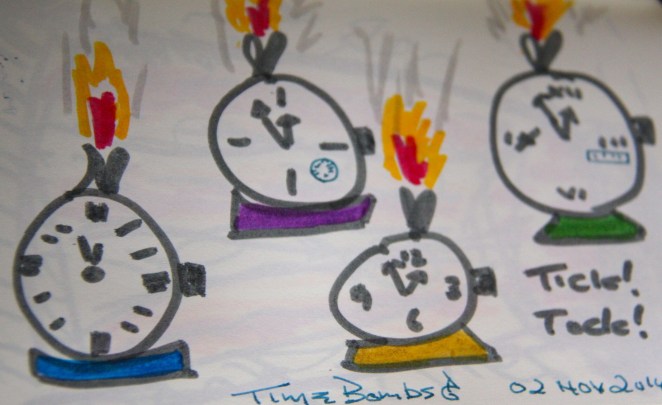
When midnight strikes,
we put away the deck
and pegging board,
and bid each other
goodnight.

Sleep well if you can,
my friend:
morning will bring
a much more serious game
that neither you nor I
can afford to lose.

Comment:

A Golden Oldie from 2015. We were both receiving treatment for cancer, in Moncton, at the Georges Dumont Hospital. We both had sessions the next day, he had opted for surgery, while I was undergoing radiation treatment. We could not sleep, and so we sat up and played cards. It helped reax both of us and we talked while we played. I do not remember the conversation – nor the cards – just the immense peace and brotherhood that wrapped itself around us as we waited together.

A little later, we both left the hospital and we never met again. I remember how he played cards, his pegging skills, his ability to read the hands. But I can’t remember his face, or his name. Yet here he is, a ship that passed me, nameless now, in the night, and still, I hope sails on.

Looking back on those days – I remember such closeness in the Auberge, such camaraderie. Those who had been there longest sharing the secrets of survival skills with the newest arrivals. One of the greatest joys for me, was to meet with so many wonderful Acadians – male and female – who shared their language, their knowledge, and their culture. I remember the quilting sessions, the gossip around the table – and I was the only man in the group. The ladies wanted to know where I had learned to sew so well, but I fudged the answers and wouldn’t tell them. I still keep that knowledge to myself. I remember, too, the painting sessions. And the musical evenings with dance and song. So much encouragement, so much fun – and all in the face of disaster, for not everyone survived their treatment. As for me, I was one of the lucky ones. And I recall those days as blessed, in spite of the fear and sometimes the pain.

Ice Storm

Ice Storm

This month and my life
are nearly done.

Sun strengthens in the sky
but birds ice up
in spite of feathers,
fluffed like eider downs.

Man alone,
within warm walls,
can bravely laugh
at winter’s squalls.

But oh, if the power fails,
if wires are tumbled
by winter’s gusting gales,
man’s heart no longer
fills with ease.

He sits at home
in the cold and dark
while all around him,
ice covers the land
and even fire dogs
freeze.