Latch-Key Kid

Latch-Key Kid

In one room in my head, I stand on a stool beside my father’s mother helping her to mix the cake she will later bake in the wood-fired oven of her black, cast-iron stove. Every time she mixes a cake, she places a small piece in a dish and bakes it just for me. As a child, I spent hours in that kitchen, watching her cook. When she boiled vegetables, she never threw out the vegetable water, but used it for boiling other vegetables or for making rich, thick, delicious gravy.

Later, with both my parents working, I became a latch-key kid. I spent all day in an otherwise empty house and cooked my own breakfast and lunch. I also prepared supper for my parents so that it would be waiting when they came home. I grew up loving to cook.

When I went abroad to spend my summers in Spain or in France, I spent as much time as possible in the kitchens, watching, listening, learning. The women always had time for a small child. Then men seldom did. Children should be seen and not heard. They just got in the way. That was the male attitude. I learned so much in those kitchens.

Later, in Santander, my landlady would place one egg, one onion, and one potato beside the stove. It didn’t matter what time I came back from a night out with the boys, my supper was there, a Spanish omelet, una tortilla Española, waiting for me to cook it. Sometimes she left me a piece of chorizo, but I preferred the omelets. I did enjoy making shapes and designs out of the chorizo – that was always fun.

Not many people knew about my cooking skills. One of my aunties always cooked for me. She told me that her husband didn’t even know how to boil an egg. The men in my family seldom cooked, except for my maternal grandfather, who learned how to fend for himself in the trenches and dug-outs during WWI. He taught me how to make stews and soups, rich and nourishing, and always better on the third day. He also told me what he put in them – and you wouldn’t want to know about what he hunted and scavenged to stay alive in those cold, dark days. Nowadays, so many of us just don’t know how lucky we are. I do know how happy and lucky I am, not to be homeless, not to be living out on the streets, dependent on soup kitchens, charity, and fighting the elements just to stay alive.

Carved in Stone 51 & 52

Carved in Stone
51

Time, shape, and location –
the Templars’ Castle
in Ponferrada,
considered impregnable,
but it had no water works,
no moat.

Napoleon placed his cannon
on the hills above
and fired down into the bailey,
shattering walls, gates, and doors.

Again, only the ruins remain
inhabited by choughs
that nest in the walls,
and rise up in stormy clouds
when visitors disturb them.
 
I go there on a sunny day
and wonder when the castle drowses
if it dreams of its former glories,
ground down into the dust.

52

I climb a ruined wall
and watch white clouds
as they gather over the hills,
then roll down into the valley –
a cavalry charge of plunging horses.

So easy to see
Santiago Matamoros,
St. James the Moor Slayer,
descending from the clouds
to rescue the Christian army.

I study the skies
and see something secret,
almost mythical,
carved from the mists of time.

But this not my land
and these are not my people
nor my legends.

I sense I am not welcome here,
that I can never belong,
and I decide to move on.

Commentary:
“I sense that I am not welcome here, that I can never belong, time to move on.” Sad words – but we live in a world that, all too often, has turned its back on people. More, it has turned them into numbers and statistics, and number sand statistics are not flesh and blood. Tragic really. And doubly tragic the labels that are stuck on people. So hard to get off, those sticky labels, for they are designed not to come off easily, but to linger, like sticky plastic wrappers in the grocery store.

James Bond – 007 – interesting – but I am not a number, though I have had numbers attached to me all my life, as have you and all the people you know. Number plates on cars, telephone numbers, Medicare numbers, dental care numbers, bank account numbers, driving license numbers, student numbers, graduate student numbers, library card numbers – and now passwords, a mixture of numbers, letters (small and capital), and signs, all jumbled in such a way as to make things inaccessible for those who do not know the numbers. An alien world, my friends, for the numbers, those numbers, are much more important than we are, and each of us, like it or not, is reduced to a number, or a label, or a recognizable feature or nick-name.

So, how do we belong? How do we fit in? How do we survive? If we are lucky, we have small communities that thrive around us and look after us. But sometimes we are left alone. All alone. And then we have nothing to belong to, no sense of being, of belonging, no sense of a valued place in life, of being worthy. And when our worthlessness sinks in, then we sink lower, and lower, and we wake up one day and realize that it is all over and that the end is near, for we have nothing, not even the desire to live on.

Carved in Stone 50

Carved in Stone
50

Here, in the castle of my own home,
I sit and write and patiently wait
for the enemy’s superior forces
to arrive and overwhelm me.

But death is not the enemy.
He is the friend
who has walked beside me
every day, since the day
that I was born.

I know him and I trust him,
though I am unaware
of when he will come to call
and I am ignorant of the shape
he will finally take.

Commentary:

Francisco de Quevedo, the 17th Century Spanish Neo-stoic and Metaphysical poet, wrote “the day I was born I took my first step on the path to death.” And so it is, with all of us. Sometimes we are able to choose our paths, sometimes they are forced upon us, sometimes they appear – with choices – and we make our selection and move on.

There are so many roads to travel. For Antonio Machado (Spain, Generation of 1898) there is no road. There is only a wake upon the sea – “Caminante, no hay camino, solo hay estela sobre el mar.” We must look back, to see where we have come from and where we have been. But there are many other possible paths, beside that of the sea – gravel paths, cobbled ways, log trucking roads in the Canadian Forest, cattle roads, transhumance roads, winding roads, straight Roman roads, roads that run up hill, down hill, or twist and bend following the paths of rivers.

The picture above shows the old Roman Road that leads to the Puerto del Pico, in the province of Avila. It followed the contours of the hill and formed part of the Ruta de la Plata, the road that took Latin American silver from Seville to the Spanish capital in Madrid. Look carefully and you can see the modern highway that runs parallel to the old Roman road. Nowadays, that older road is used for transhumance, the movement of cattle from the valleys in the winter to the hills in the summer. The same road, the same pass, so many different uses, and the road a wake upon the path of so many lives.

Carved in Stone 44

Carved in Stone
44

The old man, withered,
last house on the left,
leaning on his garden wall,
coughing, spitting up
coal dust and blood.

He’s not old, when you get close,
just grown old, underground,
where emphysema
and pneumoconiosis
devour men and boys.

He spits on the side walk.
Mining souvenirs,
Max Boyce calls them,
and they appear
every time the young man,
turned suddenly old,
starts to cough.

He can’t walk far,
wearing carpet slippers,
soft and furry,
just leans on the wall.

He fell, or was pushed,
into the trap at an early age,
when the coal seams
had grown so thin,
that only a small boy
could kneel before
the coal black altar
of the underground god
and, with a pick and shovel,
he learned to carve and shape
the long, slow death
contained in those seams.

Commentary

Moo’s painting, Coal Face, adorns the front cover of Carved in Stone, Chronotopos II. Coal Face is not the denigration of Black Face, white men pretending to be black by dyeing their faces, although they have some similarities. In Welsh Mining, the coal face is where the men used to dig when, with their shovel and their pick and their little lamp and wick, they knelt to dig out the coal. Knelt, because there was no standing room, deep down underground. Then, when the seams grew thinner, and the men could no longer reach them, the young boys were sent underground.

A day underground left men and boys with coal dust seamed into their bodies, especially their hands and their faces. Hence the triple meaning of black face – where the coal is dug, what men and boys looked like after a day’s work, and the blackening of their faces by white men, for the fun of it.

Faces are one thing, coal dust in the lungs is another. The result – emphysema and pneumoconiosis devour men and boys. Black lung, some call it. “And every time he coughs, he gets a mining souvenir” – a black spot coughed up on the sidewalk – Max Boyce.

Child labor, minimum wage, living wage, work that kills, slowly and silently, – what can I say? Forgive me, for I can say no more.

Carved in Stone 42

Carved in Stone
42

After school, in a cul-de-sac
that backs on to the railway yards,
the street boys show me
how to hold a knife,
how to approach a man,
how to ask for a light,
for a forbidden cigarette,
while other boys,
knives in hand, lie in wait
to ambush the victim.

How old am I?
Five or six.

I would go to Woolworth’s
with my friends and distract
the shop girl while the others
stole whatever they could.

Then we would go
to the public washroom,
boys and girls together,
and share the spoils.

Something for everyone,
and everyone sworn to secrecy,
a blood cult, knives
or razor blades inserted,
and wrist pressed to wrist.

Commentary:

Free will or determinism? How does one escape from the back-street poverty of a run-down neighborhood and emerge from the shadows to bask in the light of the sun? Or is it all a dream, a made-up picture of a childhood that never was in a neighborhood that never existed? Vanishing point – the railway tracks fading away into the distance. Point of vanishing – to lose oneself in the mysteries of a past that never was in order to establish a future that never will be. Dream, dream, dream – all I have to do is dream!

And then there are the nightmares, when the dreams are true and the memories are so exact that you can see the blood on the razor blade and feel the almost silent slash of this particular slice of life. Secrecy – and who can tell whether I am telling the truth, or not, here in a foreign land, not the land of my fathers – and I only had one father, that I am aware of, and one mother too – where nobody knows me and the children from that imagined back street would never think of visiting.

For Jorge Luis Borges, whom I met twice, once in Bristol and once in Toronto, – Canada was a land so distant and so cold that it lacked reality. And thus I can dream my dreams, rewrite my past, reimagine myself, in whatever way I want to and I can vanish at any vanishing point I choose and emerge wherever I want to, and do it over and over and again, and who knows the truth? Over the points, over the points, and Liza none the wiser, whoever Liza happens to be!!!

Carved in Stone 35

Carved in Stone

35

My eyes draw sound
out of the white space
of silence.

Silent the pen,
gliding smooth,
over unlined paper,
a skater leaving marks
on fresh ice.

Each mark is a signifier,
or a series of signifiers
constituting a signified,
a message engraved
in the reader’s mind.

Commentary:

Each mark is a signifier, part of a series of signifiers constituting a signified, a message written on paper, then engraved in the reader’s mind. But, of course, the message has to be read, and the reader has to be diligent enough to burrow into the meaning of the message. And what is the meaning of meaning? Ah, we have been down that rabbit hole before and Alice has been through the looking glass, and we have seen ourselves in our daily mirrors, slowly fading as the years go by.

A skater leaving marks on fresh ice or a stone cast into a pond, with multiple meanings, multiple ripples moving slowly outwards, to end up where? Who knows? Not me. I only know that the thrown stone, like the spoken word, can never be recalled. And there’s a 2,000 year history behind those words. Each word a stone, and each stone leaving its mark on many people of many cultures and multiple languages, though English is the language in which I now write.

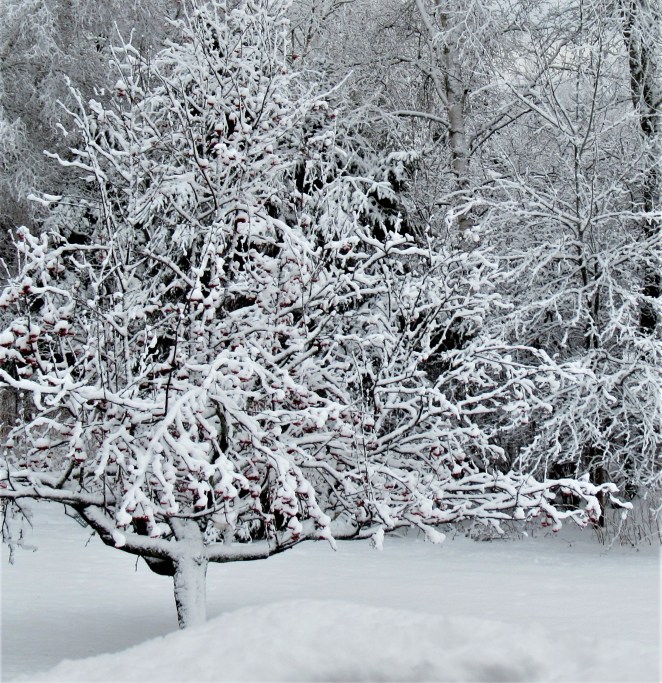
Frost and snow here this morning. Not much, just a dusting. I looked out of the window at the crows’ prints on the white surface of the garden. My eyes drew silence out of the white space with its runic language written by the crows.

The meaning of meaning – tell me, if you can, what did they say? What did they want from me? What did they mean?

Carved in Stone 33

33

A child’s swing in the orchard
hangs below the apple tree.

Early bluebells
tinkle in the hedgerow.
Why do foxes wear gloves,
I ask, in my innocence?

My grandmother,
a young woman once more,
stands in her kitchen
humming her morning music
while she bakes the day’s bread.

My grandfather,
skeletal in the evening sunshine,
shifts his long, black shadow
from side to side
as he scythes the grass.

34

Time’s fragility
dwells in all our bones,
but rarely in our minds.

I look at them,
those twin tomb stones,
with names and dates

time-worn now,
carved into their stone.

I blink, as they sway
in the twilight
of my own
fast failing eyes.

Commentary:

A Mexican Mask outlining a person’s three three ages. The small, pearl in the centre – seed of the child. The central face, bearing the pearl beneath the nose – youth and beauty. The second face – old age. The white skull – the individual’s death. How quickly life passes. I turn and look, and so many ages have passed me by. And so it is with all of us.

One of my friends dropped in to see me today. I coached him rugby (Jeux du Canada Games, 1985), when he was 18 years old, heading for 19. Now he is 59 years old and heading for 60, if he hasn’t already left it behind. Oh the memories – tread softly, for you tread on my dreams (Yeats). And it is so easy to substitute memories for dreams.

Time’s fragility dwells in all our bones, but rarely in our minds. Alas, in our minds as well. I notice how forgetful I have become. I see life my past as a railway track, the two rails joining, undivided, as they fly into the distance. “Railway train, running down the track, always going on, never turning back – choo-choo – I’ve got a one way ticket to the blues.” I remember the words and the tune, but I don’t remember who sang. Clearly time’s fragility is beginning to enter my mind as well.

Carved in Stone 30 & 31

Carved in Stone

30

A well of beauty dwells within me,
not skin deep, but buried, arcane.

A flickering candle
tethered to an altar,
shimmers at midnight,
when the Latin mass is said,
bringing me light.

In the dark, canonical hours,
shadows move beside me
as I walk long corridors
from dormitory to a chapel
filled with heady incense.

31

I kneel, dumb-founded,
as candle flames wax and wane,
their brightness enhanced
by the midnight magic
that turns doubters into believers.

Spell and symbol, each candle a star,
shining, twinkling, in a galaxy of light,
and everywhere, the incense,
overloading my brain, releasing me
to revelations way beyond
muttered responses, mumbled words.

A world of inner darkness,
yet heart and soul soar together
up to the altar’s immortal light.

My shadow flickering
on the corridor walls,
as candle in hand, half-asleep,
I return to my cold bed
where the long, chill snake
of the bamboo cane
reminds me of tomorrow’s
flagellation.

Commentary:

Shadows on the wall or candles – with which should we start? Verbal and visual – how do they blend and knit together? Does my visual take away from your visual, or does it enhance it? To what extant does my verbal and the commentary on my verbal change the nature of your original thoughts when you re-create, within your own mind, my images, both verbal and visual?

Verbal and visual – now add the sense of smell. “The incense, overloading my brain, releasing me to revelations way beyond muttered responses, mumbled words.” And now remember that I was only six or seven years old when I experienced these things. Add the Latin mass, only half understood, the cold, damp feel of walls and wood beneath the hands. A world of inner darkness, yet heart and soul soaring together up towards the altar’s immortal light.”

My words are black print on white paper. My memories flare – an aurora borealis of senses sent crackling down the spine, in and out of the mind, tumbling the brain into a world … what sort of world? An unimaginable world. One never forgotten. One never re-recreated. One that never existed. One that never could exist. One for which the young child, six or seven years old, yearns for the rest of his life. His unsatisfied life. His unsatisfying life. His meaningless life. His absurd life.

Oh pity the poor puppy, not knowing what he has done wrong, not knowing how to put things right, always inadequate, whining and cringing at his master’s feet. And always, “that cold bed where the long, chill snake of the bamboo cane reminds me of the next day’s flagellation.”

Carved in Stone 27

The philosopher in search of his stone.

Carved in Stone

27

Miguel de Cervantes –
I read and re-read his words,
envious of his ability to reach out
with language that thrills me still.

I see him as a total entity,
while I see myself in pieces,
broken, unable to express
the simplest thoughts.

As I age, I sense the water
slipping from the water-clock,
the candles burning lower.

I still cannot make the mark
I want to make, for they are beyond me,
those marvelous word-worlds.

My words are mortal, his are immortal.
Mine just ink stains on a humble page,
his cast in print, but crafted to last forever.

As I bear witness to those powers,
so much greater than mine,
my eyes fill with tears.

Commentary:

They are beyond me, those marvelous word-worlds. Indeed they are. But I do not seek to create ‘a marvelous word-world’. I am happy with ‘ink stains on a humble page’. I seek to reach out and find those one or two people who accept me for what I am and find their own selves in a small corner of the tiny gardens I discover or create. Not a world, then, but a tiny corner of my own world, described, and offered to those who have eyes to see and ears to hear and hearts and minds to feel and understand.

And what is this infatuation with the poem itself? I no longer write individual poems, I write sequences of linked poems, a set of poetic narratives, if you need to find a label for what I am trying to do. Cervantes once wrote “La épica también puede escribirse en prosa.” / Epic poetry can also be written in prose. What happens if we reverse that statement and say – “A narrative sequence can also be written in poetry.” Interesting, eh?

And what is this desire to leave something, some trace of us, behind? I cannot answer that question. The answer will vary for each one of us, and for each fall wall flower perishing against the garden wall. I look at the homeless, pushing their grocery carts, head down. Their existence is as important as mine. Their desire to survive, for another day, another week, another season – and winter is coming one – is more powerful than any poet’s desire to leave a work – a magnum opus – to celebrate their lives.

And yes, my words are mortal, as I am mortal, as Miguel de Cervantes and all the great writers were mortal. Patrick Lane once told me that if poets leave one poem behind them that is remembered, they have done well. Even the greatest poets, and you can check this in the anthologies over the ages, rarely leave more than ten or a dozen memorable poems. As for me, I am happy to say that I have never had a poem included in an anthology. Not to my knowledge anyway.

And what does Magnum Opus actually mean? I leave you with the quote from Wikipedia set out above. Click on it, and find yet another way to distract, deflect, and change the direction of our lives! Given that road, who would ever want to walk it to its end?

Carved in Stone 23 & 24

Carved in Stone

23

It isn’t true that art
lives longer than life,
for all too often art and artist
are destroyed together.

Words, all words,
and words emerge
from the silence of blood,
bone, and stone, breaking
that silence the day they are born,
and the word once spoken
cannot be recalled.

24

Here, among the ruins of my life,
I have learned how to be alone,
how to sink into silence,
how to smother at birth
that world of words,
and that world, still-born,
becomes a lost world
whirled on the silent wind that fans
the unborn fires within.

I sit here
brushed by a tadpole’s solitude
as it swims through the sultry silence
of blood, bone, and stone,
into its own metamorphosis.

The wind that blows unspoken words
tugs at the spider web of my mind
twisting and untwisting
its frayed, fragmented ends.

Commentary:

The fragility of life. The single puff that turns the dandelion into a dandelion clock. The multiple puffs that dowse the candles on the birthday cake. And then, one day, there are no more candles, no more cakes, just the heart ache of multiple absences, family and friends all gone and each of us alone with our individual loneliness.

That’s when we finally turn in and seek the inner roads that lead us to ourselves. The selves that were, the selves that are, the selves that always will be. Crack the walnut – inside is the map of a brain – your brain? If it is you will have found yourself in this labyrinth. But if it is the brain of another, you must not give up, you must seek yourself, walnut after walnut.

And when you go to the library, you must check book after book, because one day, if you are lucky, you will find the book of your life and it will tell you who you were, what you are, and what you will always be.