Name the most expensive personal item you’ve ever purchased (not your home or car).

Daily writing prompt
Name the most expensive personal item you’ve ever purchased (not your home or car).

Name the most expensive personal item you’ve ever purchased (not your home or car).

I began by checking the meaning of item and found the following – an individual article or unit, especially one that is part of a list, collection, or set. Then I started to think about the meaning of meaning. Is an education an item? Is it an individual unit? Can it be considered part of a list, collection, or set? Let’s put it this way – I started school when I was four years old. I continued until I was 18. Along the way I collected many items of knowledge and many certificates to prove it. Then I went to Paris for a year to perfect my French – now that was an expensive adventure, I can assure you of that. Next came Santander, Spain, for a whole summer, to do for my Spanish what Paris had done for my French. I guess I didn’t really pay for these items, as my parents did, though I helped a little, with odd jobs here and there.

These adventures were followed by 3 years of undergraduate studies. They were covered in part by my local government authority, for which I am eternally grateful, also by my parents, and then I too assisted, again with odd jobs and summer work. Next came graduate school, at the University of Toronto. This was financed by my earnings as a Teaching Assistant and then a Teaching Fellow. My beloved and I got married in Canada, and she found work and also assisted with graduate school and the general cost of living. Assisted? She carried me along when the work load grew too heavy.

Then there was a Canada Council Doctoral Fellowship that helped finance two more years of study in Santander, Spain, where I completed manuscript research at the Biblioteca Menendez y Pelayo. This was followed by my first job, as a lecturer, at the University of New Brunswick, Canada. I taught full-time while completing my doctorate, but my education did not stop there.

I pursued coaching certificates with the National Coaching Certification Program of Canada and soon related coaching methods to in-class teaching methods. This revolutionized my teaching. As did a Certificate in Multi-Media Studies (at UNB), followed by courses in Digital Film and Video. Then came a Teaching Certificate from IATHE – the Institute for the Advancement of Teaching in Higher Education (based in Ottawa, but no longer extant). My Certification process was topped off by a Certificate in Creative Writing from Humber College, Toronto.

All of these degrees and certificates cost money. All contributed to the list of items that go together to form my education. But a personal education, in the meaning I give to the word, goes way beyond an accumulation of certificates. It is a life -long process of growth, personal development, and understanding, of reaching out to other human beings and helping them to create their own lives and their own paths to life-long learning.

Has this been expensive? You bet it has. But its worth is priceless compared to remaining static and enmired in a past knowledge that never develops and never grows, as sometimes – I might even write ‘often’ – happens when learning stops with the acquisition of the Ph.D.

When asked what I teach, my reply is always the same – “People, real, live people.” And that is something that I continue to do whenever and wherever I can. “To know the cost of everything and the value of nothing” – I scarcely remember – nor do I care to know – what cost I paid for each step along a road along which I am still travelling. But I do know and totally appreciate the value of the continuing education that I working so hard to buy.

What was your favorite subject in school?

Daily writing prompt
What was your favorite subject in school?

What was your favorite subject in school?

I never had one. I hated every school I attended with a passion. I hardly passed an examination during my school days and I remember, in Mathematics, dropping from Level I, to Level II, to Level III. I failed the first exam in Level III and earned this comment on my school report “Now I know why he descended to Level III.” I still have those school reports, incidentally, complete with the signatures of the Masters of my – limited, very limited – universe. How I appreciated Pink Floyd’s The Wall, when I first heard it. “We don’t need no education, we don’t need no thought control, no dark sarcasm in the classroom, hey, teacher, leave those kids alone. You’re just another brick in the wall.” And yes, I built walls around me, many of them. But I survived.

Another comment from that report: “He has read widely and indiscriminately – I do hope it has done him some good.” That reading included the complete works of Jean-Paul Sartre and Albert Camus, lots of Andre Gide, the theatre of Jean Anouilh – some of which I saw live in Paris -, an immersion in the Existentialist philosophical movement, the complete plays of Corneille, Moliere, Racine, Beaumarchais, a variety of French Poets, including Apollinaire and Jacques Prevert, a selection of Spanish poets, novelists, and playwrights, and a series of modern-(ish) British poets, including John Manley Hopkins, Wilfred Owen, Dylan Thomas, Vernon Watkins, and ‘indiscriminate others’! I wrote a great deal of poetry at that time, some of it in imitation of Francois Villon and Gilbert Chesterton (of whom I read many works as well).

Alas, my enthusiasm was not appreciated, especially as I scorned many of the texts that I was forced to read for my examinations. I should add I also scorned the limited, authoritarian interpretations of them that were forced upon us. The slavish imitation of ‘teacher’s remarks’ gained an A+. Any attempt to think outside the authoritarian boxes built oh so carefully for us, earned an F-.

But, if I had to choose one subject, it would be Myself. Protecting that self, developing that sense of self, growing into myself, understanding myself, and finally, having left those schools, those ideas, and that country far, far behind me, becoming the self that I am – and have always wanted to be. “What do you want to be when you grow up?” “I just want to be me.” And I am, thank heavens. And it’s a good job too, for, as Oscar Wilde once said “Everyone else is taken.”

What will your life be like in three years?

Daily writing prompt
What will your life be like in three years?

What will your life be like in three years?
Well now, that depends on several things. I love the fall. Who doesn’t love the fall in New Brunswick? The trees changing color, warm by day and cool at night, then the leaves falling off the trees and blowing here and there with the wind. I stood in the garage yesterday and listened as the north wind herded rustling, complaining Maple leaves down the roadway past my house. The sound of dry leaves bouncing and skittering. Pure fall magic.

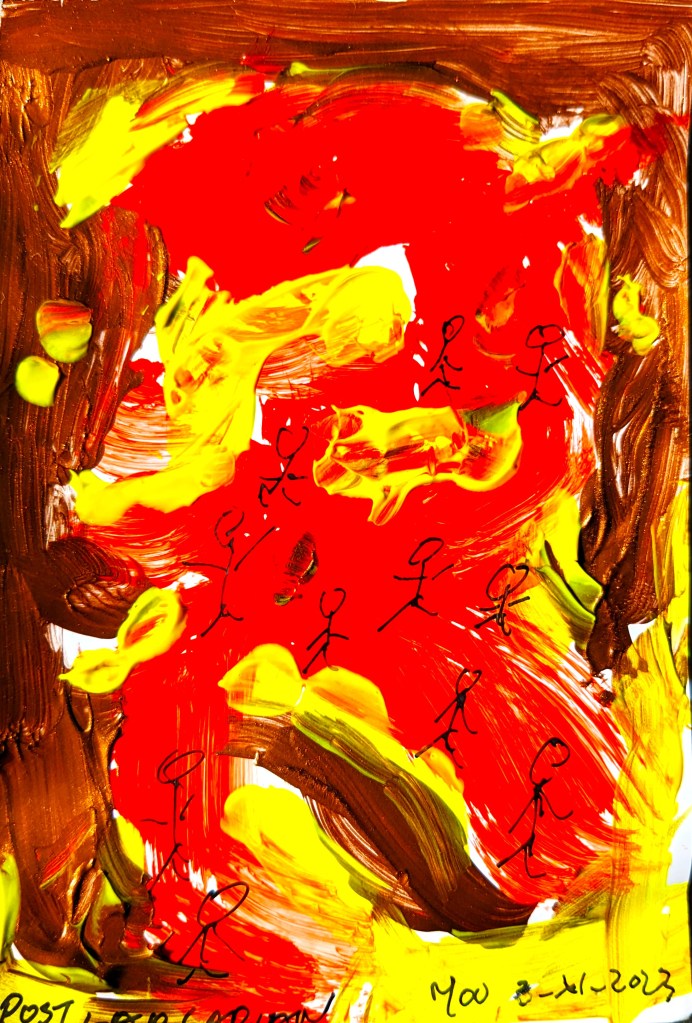
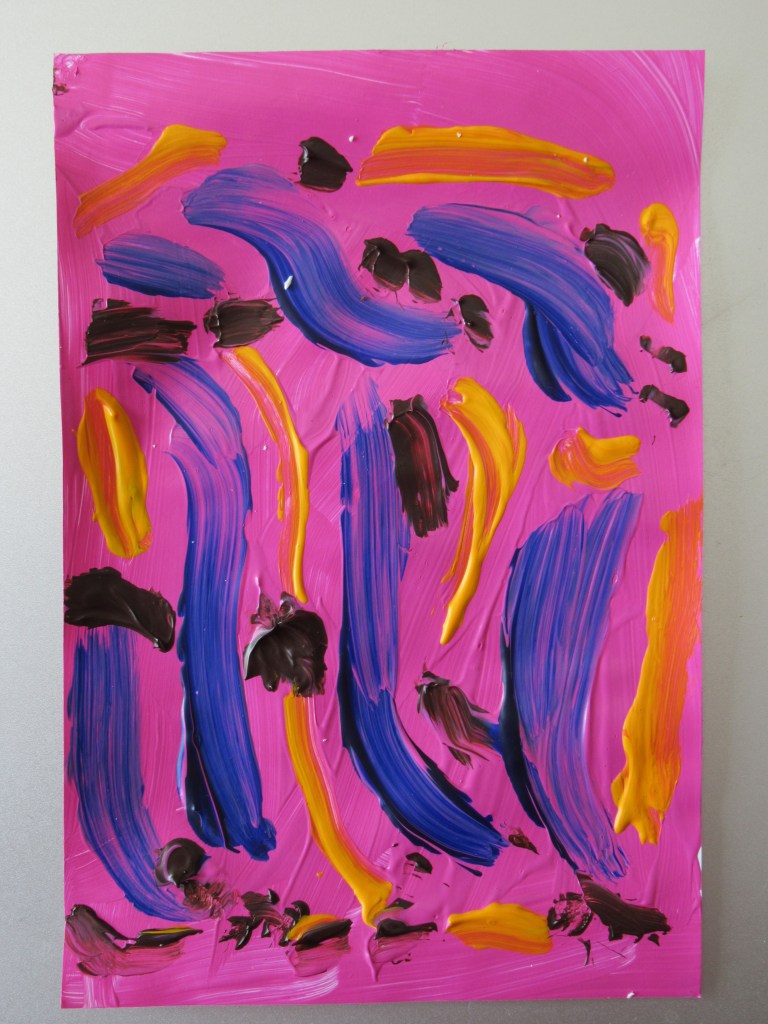
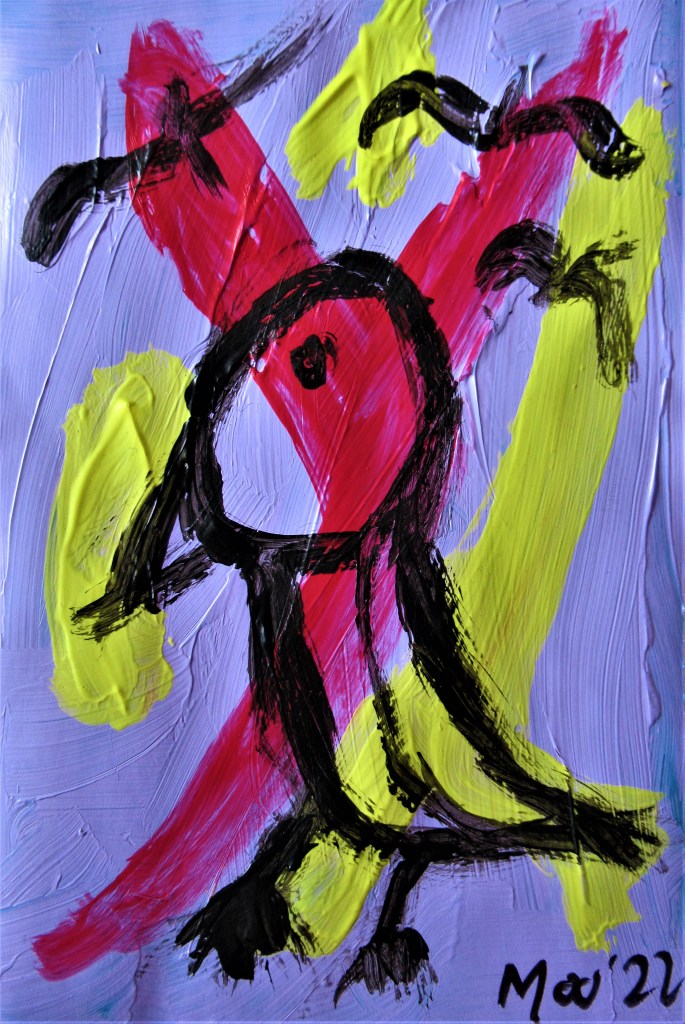
But when I fell on Thursday night, it was a different kind of fall. One moment I was a tree, standing free on my own two feet, the next I was a sawn-off log, tumbled to the ground. When trees fall, they often bleed bark or sawdust, if they are sawed. I just bled blood. On the floor boards, on the carpet, on my shirt. I had just painted the painting above – Prelapsarian – and there I was, lying on the floor, having fallen myself.

And there I lay, fulfilling my own prophecy – Postlapsarian – lying bleeding on the ground. The fall was stunning and I was stunned. I managed first to roll over onto my tummy. Next I managed to get into the push-up position and from there I was able to draw my knees up. Kneeling, I reached out to the spare bed and started to try and haul myself to my feet. But I was spent and exhausted and drained.

I called out and Clare, dear woman, came to my rescue. She helped me to my feet, staunched the bleeding, mopped up the floor, and the carpets, and me. Then she went to the medical chest and bandaged me up so I would heal and wouldn’t bleed all over the bed and my pajamas. What a mess. What a bloody mess – and no, I am not swearing, I am only telling you what I saw. Blood everywhere.

So, what will my life be like in three years? I hesitate to think about it. Maybe I’ll be in a garden somewhere, helping the trees to grow their leaves, so that the life cycle may continue. And maybe not. Right now, I feel very, very fragile. I just don’t want to think beyond the current moment.

What major historical events do you remember?

Daily writing prompt
What major historical events do you remember?

What major historical events do you remember?

Interesting question, but very problematic. How do I define a “historical event”? What exactly do I mean when I say “I remember”? Max Boyce had a lovely song in which the chorus was “I wuz there.” If everybody who says they saw Llanelli defeat New Zealand in 1973 at Stradey Park had been there, there would have been 300,000 people pressed into a ground that held about 15,000. But, as Max Boyce sings, “I wuz there”. Well, in spirit, anyway, and I have seen the film several times. I also remember watching Jim Laker’s 19 wickets in the 1956 cricket Ashes. I watched that match on B&W TV. Does that count as an historical event that I remember?

How about the Battle of Hastings, 1066? In 1966, I ran in a road relay that led from Bristol to Stamford Bridge, where Harold defeated Harald Hadrada, down the main highway to The Trip to Jerusalem, where we stopped for a pint, down to Hastings, where we re-enacted the battle that saw William the Conqueror take the throne. Several of the runners wore Saxon uniforms, a couple even had long, blonde hair. We re-enacted two battles. Does that mean I remember that historical event?

Let us talk about Stonehenge. I first went there when there were no railings, no fences, and when sheep and cows could safely graze. I remember it well. And I remember creatively re-constructing, with my grandfather, the digging of the post-holes, the raising of the stones, the transportation of them, by ship and log rollers, from the Prescelli Mountains in Wales to their current resting place. As Max Boyce says, in my own mind, I was there. I was there too at the destruction of Maiden Castle. The first book I ever bought, age about six, was Sir Mortimer Wheeler’s autobiography, Still Digging. I can still feel that Roman ballista arrow going through the victim’s backbone. Does that count as a memory, as a presence, as a moment of reality?

The Conquest of Granada, the Expulsion of the Jews from Spain, the later expulsion of the Moors, the Adventures of Don Quixote, the mixing of truth and reality, the questioning of authority, the inquiry into the meaning of meaning, my mother’s sister phoning me after 9-11. “What’s all the fuss about, Roger? There were only three planes. We had them every night, over here, during the London Blitz, for two long years.” What impresses itself upon the human consciousness. How do we remember things and why? The Spanish Armada -there were actually three of them -, the Peninsular wars in Spain, the battles of Trafalgar, Vimeiro, Salamanca… Then we can move on to Vimy Ridge, Ypres – Wipers, as my grandfather called it, his days in the trenches, recounted to me, in the kitchen, day after day, in vivid, lived language that still remains with me. And he would sing – “If you want the whole battalion, I know where they are, they’re hanging on the old barbed wire.” Yes, I was there with my grandfather. I remember it well. The Battle of the Atlantic, the Hunt for the Bismarck, the Battle of Britain – I sat in the cockpit of a Spitfire, a long time ago, during the Battle of Britain celebrations, and I climbed into and walked around the interior of a Lancaster.

Memory and the reconstruction of historic events, some we actually lived, and some we just dreamed of, and some we saw at the movies. What is memory – an actual happening or a creative reconstruct? What is the meaning of meaning? And read Bertrand Russell’s book on the subject before you answer that one. As for me, I was there, standing beside Max Boyce, witnessing the game, though, as he says, “a hundred thousand in the ground, and me and Roj outside.”

What are you most proud of in your life?

Daily writing prompt
What are you most proud of in your life?

What are you most proud of in your life?

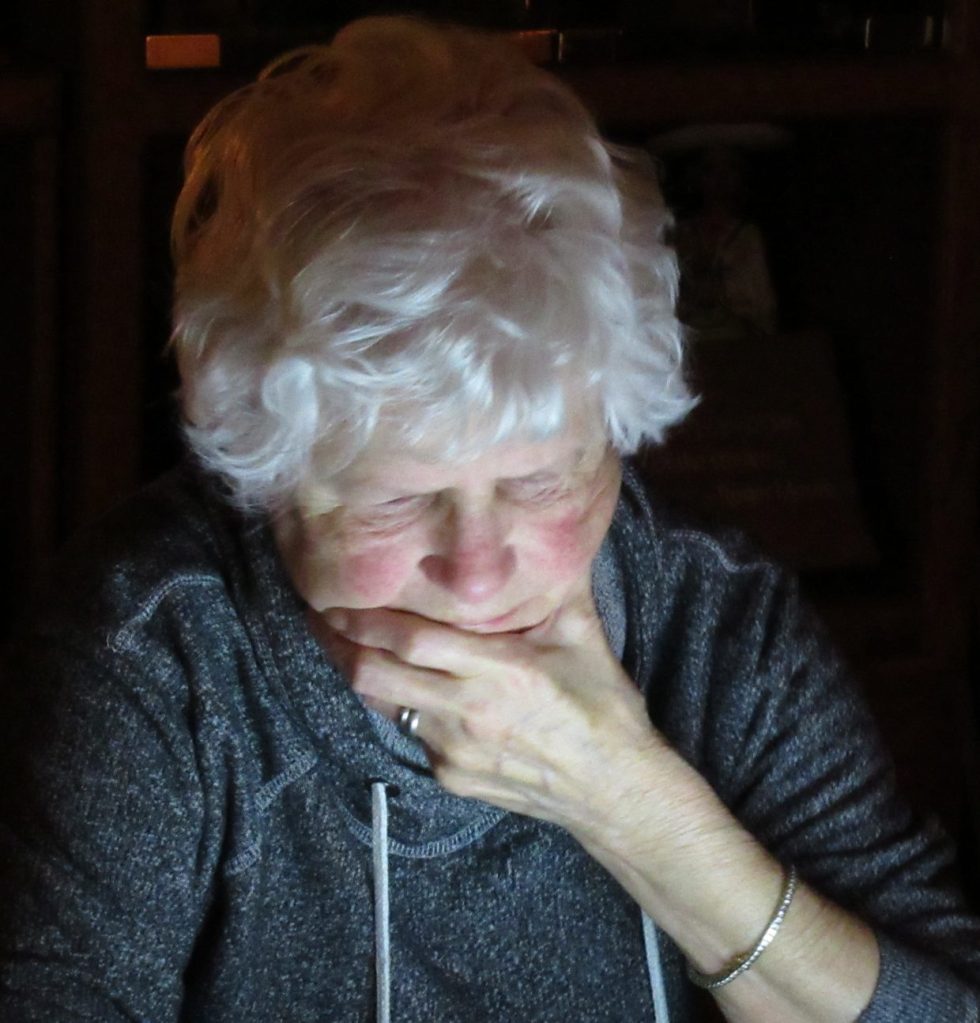
The young lady in the photograph above. We met, at a boarding school dance, in England, when we were both seventeen years old. We have been together ever since. Why am I so proud of her? Let me count the ways.

When she discovered my love of Spain and the Spanish language, she took time out from her own career in order to learn Spanish. When I asked her why she was learning the language, she replied ‘because if I am going to be with you, I want to share your life, and that means loving the things you love.’ We became engaged in Santander, Spain, on her 21st birthday. Then, the following year, when I received an offer to study and teach at the University of Toronto, she promised me that if I called her, she would come out and join me.

I called her as a Thanksgiving Gift from my Canadian family. She packed up her clothes and her career, bought a wedding dress, and travelled to Toronto that December. We got married on Christmas Eve. We had very little money. We didn’t have a wedding photographer. Nor did we have a honeymoon. I guess we never needed one. We had just enough money put by to last us until the end of January. So, First week of the New Year, she set out in search of a job. A qualified Diagnostic Radiographer, she was hired by the Doctor’s Hospital in Toronto, and she financed my graduate studies for the next three years.

Our next adventure was a Canada Council (as it was back then) Doctoral Fellowship that took us back to Spain where I completed the research for my thesis at the local library, with its trove of manuscript documents. We returned to Canada after two years, and took up residence in Fredericton, New Brunswick, where we still live. Her adventurous life led her to a certificate in accountancy, taken via a correspondence course. Then, she presented me with our daughter. We bought an American Cocker Spaniel and she started showing and grooming dogs, becoming Show Secretary of the Fredericton Kennel Club. She trained and groomed two Canadian Champions, an ASCOB (Willy) and a Parti-color (Smudge).

Our daughter decided she wanted to be a gymnast. Parents were requested to ‘get involved’ with the local club and my beloved became a gymnastics judge. She rose in the gym circles and became first provincial judging chairperson and then a nationally qualified judge, officiating at the National Gymnastics Championships and also at the Jeux du Canada Games.

She travelled with me to Oaxaca, Mexico, and fell in love with the Pre-Colombian Mexican Codices that we found there in abundance. She studied them carefully and then taught me all about them. I, in my turn, introduced them to my own students. When I took my first Multi-Media Courses at the University of New Brunswick, she followed them with me. The result was two-fold – our first web page which she built with with HTML, no templates in those early days, followed by our online Quevedo Bibliography. This, about ten years later, morphed into the online searchable data base that she built with the assistance of the technicians at the Digital Library in Harriet Irving Library.

Now, we are growing old together – such sweet sorrow. this Christmas we will celebrate 57 years of marriage. And yes, my beloved is still my most valuable Christmas present – and the person of whom I am most proud. I remember the old Worthington beer advertisement. “Behind every good man, there’s a good woman.” The cartoon shows a lady carrying a bottle of Worthington.

My beloved has stood behind me all my life. She has carried for me, not a bottle of Worthington, but the burden of assisting, helping, encouraging, supporting, carrying the load when it became too heavy for me. She has been a silent partner in so many ways, but one without whom I would be nothing.

Rites of Passage

Rites of Passage

Summer slid silently away. Autumn’s
harvest is upon us. Slowly the mountain ash
is stripped of its fruit, from top to bottom.

Robins flit from branch to branch until
the whole tree shakes with bouncing birds
pouncing on the few remaining berries.

Berries gone now. Leaves will soon follow.
The Farmer’s Almanac forecasts a long, cold
winter, filled with wind, ice, and snow.

All too soon, the deer will appear, ghosting
their silent steps at wood’s edge. They’ll arrive
at dusk and wander all night, just to keep warm.

At dawn, they’ll leave, having exercised their
ancient rites of passage, the routes engraved
in their racial memory since the dawn of time.

When my time is up, I too shall follow them
into the lonely silence of that long, wintry night.
Restless, or at peace, I’ll hope for dawn’s light.

What’s something you would attempt if you were guaranteed not to fail.

Daily writing prompt
What’s something you would attempt if you were guaranteed not to fail.

What’s something you would attempt if you were guaranteed not to fail.

Well, I remember when Arthur Lydiard was coaching Peter Snell, this was back in the early sixties. He ‘allegedly’ said – and I write from a decaying memory – that anyone could be trained to run a mile in under four minutes, using his methods. Next day, it is rumored that a fifty year old man, overweight, smoking a cigar, turned up at training and asked Lydiard to fulfill his promise.

Well, maybe it was Percy Cerruti training Herb Elliott. Same time frame. Different memories. Great coaches and great athletes. So here am I, at eighty (well, nearly), and I have always wanted to run a mile in under four minutes. My fastest time was 4:07 – downhill, with a following wind, during the Bristol University Rag Run (1966 – Bristol – Stamford Bridge – Hastings – Bristol). So, I am guaranteed not to fail, eh? I also hope you will guarantee that I do not fall, eh? And can I use both my canes, or only one, eh?

Okay, so this is how we’ll do it. You load me on the back of a flat bed truck. It has one of those walkways on it, with handrails on both sides, like they use in the rehabilitation centers. I won’t need my canes then. The truck drives a measured mile, in 3 minutes and 59 seconds exactly, and I “run aka speed walk aka speed lurch” all the way, hanging on to the handrails, thus covering a measured mile, in under four minutes, and achieving a life-time goal, attempting which I am guaranteed not to fail.

What was that line from Man of La Mancha aka DQ (and I don’t mean Dairy Queen) – “to dream the impossible dream.” And now, tired from my exertions, I will take a brief siesta and see if, in my impossible dreams, I can bring that time down a little bit lower. New world record, anyone?

What would you do if you lost all your possessions?

Daily writing prompt
What would you do if you lost all your possessions?

What would you do if you lost all your possessions?

When I look at the growing number of refugees across the world, I wonder what would happen if such a disaster fell upon me. Then I look at the forest fires, out in Western Canada, in BC and Alberta, and wonder what we would do, what we would we pack, how would we manage, if the order to evacuate our home came suddenly upon us. When the Bocabec fires burned in New Brunswick, I felt the stress and distress of several of our close friends who were forced to evacuate. Then I thought that, really, it’s not a question of if, but of when. And this was my dream.

            … with my angel … face to face … the one I have carried within me since the day I was born … the black-one … winged like a crow … the one that hovers over me as I lie asleep … the one who wraps me in his feathered wings when I am alone and chilled by the world around me … the one who flaps with me on his back when I can walk no further and who creates the single set of footprints that plod their path through the badlands when I can walk no more …
            … ‘the truth’ my black angel says to me … I say ‘he’ but he is a powerful spirit, not sexed in any way I know it … and yet I think of him as ‘he’ …awesome in the tiny reflection he sometimes allows me to glimpse of his power and glory … for, like Rilke, I could not bear meeting his whole angelic being face to face … as I cannot bear the sun, not by day, and not in eclipse … not even with smoked glass … when earthly values turn upside down and earth takes on a new reality … wild birds and bank swallows roosting at three in the afternoon … and that fierce heat draining from the summer sky … I remember it well … and the dog whimpering as a portion of the angel’s wing erased the sun until an umber midnight ruled … a simple phenomenon, the papers said … the moon coming between the earth and the sun …but magic … pure magic … to we who stood on the shore at Skinner’s Pond and sensed the majesty of the universe … more powerful than anything we could imagine … and the dog … taking no comfort from its human gods … whimpering at our feet …
            … I saw a single feather floating down and knew my angel had placed himself between me and all that glory … to protect me … to save me from myself … and I saw that snowflake of an angel feather bleached from black to white by some small trick of the sunlight … and knowledge filled me … and for a moment I felt the glory … the magnificence … and there are no words for that slow filling up with want and desire as light filters from the sky and the body fills with darkness … and I was so afraid … afraid of myself … of where I had been … of where I was … of what I might return to … of my lost shadow … snipped from my heels …
            … I don’t know how I heard my angel’s words … ‘the time of truth is upon you’ … ‘all you have ever been is behind you now’ … ‘naked you stand here on this shore … like the grains of sand on this beach … your days are numbered by the only one who counts’ … I heard the sound of roosting wings … but I heard and saw nothing more … I felt only midnight’s cold when the chill enters the body and the soul is sore afraid …
            … ‘it is the law’ my angel said … I saw a second feather fall … ‘and the law says man must fail … his spirit must leave its mortal shell and fly back to the light’ … ‘blood will cease to flow … the heart will no longer beat … the spirit must accept and go’ … ‘do not assume… nobody knows what lies in wait’ … ‘blind acceptance … the only way … now …  in this twilight hour …  now when you are blind … only the blind shall receive the gift of sight’ … ‘all you have … your wife … your house … your car … your child … everything you think of as yours I own … and on that day … I will claim it from you and take it for my own … now I can say no more’ …
            … the sea-wind rose with a sigh and one by one night’s shadows fled … the moon’s brief circle sped from the sun … light returned, a drop at a time, sunshine flowing from a heavenly clepsydra filled with light …
            … birds ceased to circle … a stray dog saw a sea-gull and chased it back to sea … and the sun … source of all goodness … was once again a golden coin floating in the sky …
            … on my shoulder a feather perched … a whisper of warmth wrapped its protective cloak around my shoulders … for a moment, just a moment, I knew I was the apple of my angel’s eye … and I hoped and still hope that one day I might meet him again and understand …

What details of your life could you pay more attention to?

Daily writing prompt
What details of your life could you pay more attention to?

What details of your life could you pay more attention to?

I will be eighty next birthday. Sadly, I am aware that my life is moving slowly towards its endgame. The major pieces have left the chessboard and I, the King, shuffle forward, a step at a time, then one to the side, and sometimes one back, as my two faithful pawns age with me. The end is never far away at this stage of the game. One slip, one misjudgment, and it’s checkmate, mate. So – how to respond to today’s prompt?

Quite simply, I am now paying more attention to my death than to my life. I have already updated my will, and I have given power of attorney to a person I trust. I have spoken with my financial adviser, and he has given me a Will Companion. It contains a whole series of details to fill in – bank accounts, passwords, online contacts, clubs, societies, social media, precious objects, and, last of all, a page of funeral instructions. That was an eye-opener – everything from funeral home, instructions for service, cremation of burial, plot number or scattering, church, financial arrangements – well, I didn’t panic, but wow, it made me feel very uncomfortable.

In the first 24 hours after my death, someone will have to make between 40 and 70 decisions, all impacting the manner of my departure. If I want things done the way I want, versus the way they might happen, and if I want to choose burial vs cremation, order of service, hymns, obituary, family friends, acknowledgements, then – according to those who know – I should be doing it now. So, big decision, I went online and studied the recommendations of my local funeral home.

I have already filled in several online pages of forms and I have asked them to contact me, which they will do soon. Then we will talk over all those details that I so desperately want to avoid. But death is inevitable. To face it and accept it and to prepare for it while I am still alive is the bravest and the best and the most sensible thing I can do. So, here I go, paying attention, while still alive, to the little details that will surround my death.

The inevitable? Yes. Above, in the opening photo, you can see a Mexican Death Mask. The small pearl at the centre is the seed from which the baby will grow. The seed is the round spot beneath youthful beauty’s nose. then comes wrinkled old age, and wrapped around is the white skull, the final beauty, which I will never see, but others may. Writing these words, I do not feel sad or gloomy. I have lived in Oaxaca, Mexico, and know the powerful, loving emotions that surround the Day of the Dead. I feel grateful that I have good friends to advise me and to stand by me and my family. And when, not if, the inevitable happens, I will have done my best to be prepared. Pax amorque.

What aspects of your cultural heritage are you most proud of or interested in?

Daily writing prompt
What aspects of your cultural heritage are you most proud of or interested in?

What aspects of your cultural heritage are you most proud of or interested in?

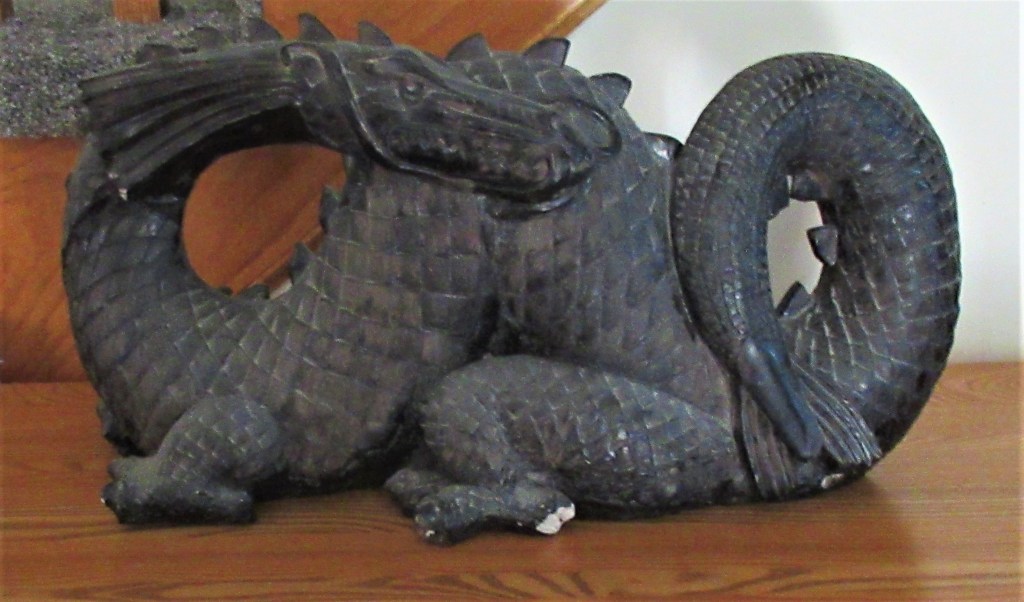
This dragon is not a dragon, well, it’s not a Welsh Dragon anyway. So, let us change the question – What aspects of your cultural heritage are you least proud of? Now that changes the perspective totally. I guess that I am least proud of the fact that, although born in Wales, I was never allowed to speak Welsh as a child. I speak with an English accent because I was sent to school in England so I wouldn’t even speak English like a person born in Wales. I am not proud of that aspect of my cultural heritage.

But I am proud of one little thing that stems from that Welsh cultural heritage – learning how to speak Welsh in my old age. It’s not easy to do that, here in Canada, but the internet carries many blessings, one of which is the learning of ‘foreign’ languages. Strange that Welsh should be considered a foreign language for somebody born in Wales. Something else not to be proud of, I suppose. Here’s my story.

Here I sit, an old man now, in front of my computer, learning at last my mother tongue, Welsh. I have discovered the beauty of simple words, not so much their meaning as their sound, the way they flow, the poetry of remembered rhythms: Cwmrhydyceirw, the Valley of the Leaping Stag, though legend has it that ceirw was really cwrw, and cwrw is beer, and its real name was the Valley of the Brown Stream Frothing like Beer.

Words have their own music, even if you cannot pronounce them properly: Mae hi’n bwrw glaw nawr yn Abertawe / it’s raining now in Swansea. Mae’r tywydd yn waeth heddiw / the weather’s worse today. Bydd hi’n dwym ddydd Llun / it will be warm on Monday. Place names also have their own magic: Llantrisant, Llandaff, Dinas Powis, Gelligaer, Abertawe, Cas Newydd, Pen-y-bont … Meaning changes when you switch from one language to another:  gwyraig ty / a housewife, gwr ty / a househusband, a concept of equality that has ruled Welsh lives since long before Julius Caesar invaded Albion, coming from Gaul with his legions in 55 BC.

The photographer asks me to smile. He wants me to say ‘cheese’ so I say it in French [fromage], then Spanish [queso], then Italian [formaggio]. “No, no, no,” he shakes his head. “I want to catch the real you. Try again.” So I say it in Welsh [caws]. He checks the memory card in his camera and looks puzzled.

“Your facial expression changes each time you speak a different language,” he tells me. “Please, won’t you just say ‘cheese’ in English? I want the real you.”

French, Spanish, Italian, then Welsh: all different and he wants the real me. Each language carves a new a map into my face.  Am I a clown, then, a comedian, a chameleon to wear so many masks and to slip so easily from one to another? And who am I, this stranded immigrant, marooned on a foreign shore that has finally become my home? Who or what is the real me?

“Cheese!” I say in desperation. “Got it,” he grins. “At last, I have captured the real you.”