R.I.P.

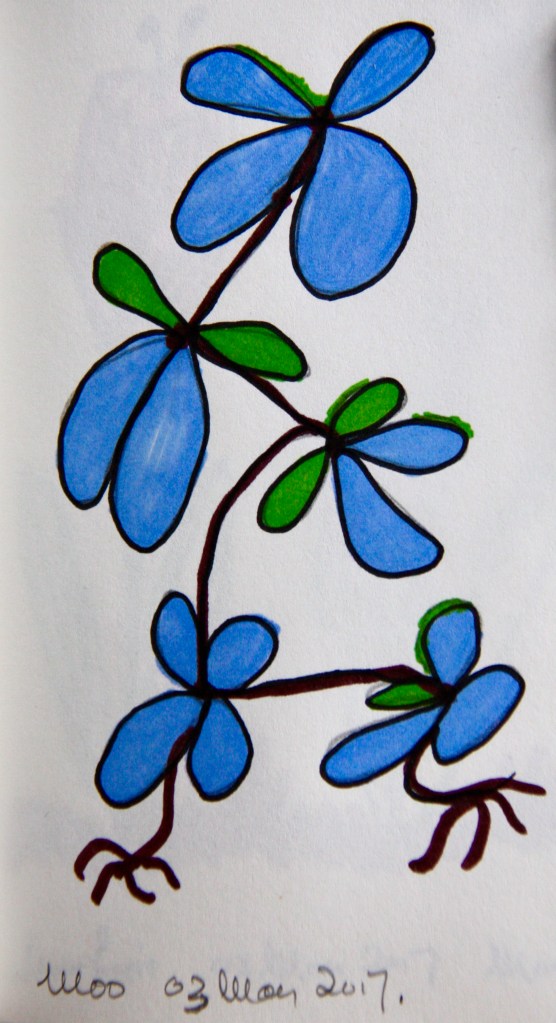
Forget-me-not!

R.I.P.

He was a good man,
and a better friend.
He came over to mow the lawn
and stayed for a beer.
“This is gonna sizzle!”

Some called him uneducated,
no BA, no MA, no LLB,
but he had a golden heart
and a PhD in the school
of life and hard knocks.

I met men like him in Wales,
coal miners in bars,
steel workers on rugby teams,
sheep farmers from the hills
in the big city for the game.

Humble, they were, honest,
hard men, hard working,
intolerant of pretension and fools.
When I went to university,
nineteen and full of ideals,
they pulled me on one side.

“You’re one of us,” they said.
“However high you rise,
don’t lose the common touch.”

I met men like him in Spain,
foot-soldiers from the Civil War,
riflemen, dynamite throwers
with their skills learned
at coal face and quarry.

Machado wrote poems about them:
“Donde hay vino, beben vino;
donde no hay vino,
beben agua de las fuentes.”

Where there is wine,
they drink wine.
Where there is no wine,
they drink water from the fountains.

A good man, an honest man,
an uneducated man, some say,
who taught me more about life
and how to live it
than any university professor.

Comment: I read the obituary of one of my best friends in the newspaper today. He moved away from the neighborhood and we lost touch. But I never forgot him. As I have never forgotten those who shaped me in Wales and Spain. I have forgotten many of their names. But I have never forgotten their faces, nor their words of wisdom. At first, his passing brought a shadow to my life. Then I realized that no, he would not have wanted that. I think now of the good times, the laughter, the joy and, instead of mourning for him, I rejoice in all the goodness he gave me. Rest in peace, my friend. I will forget-you-not.
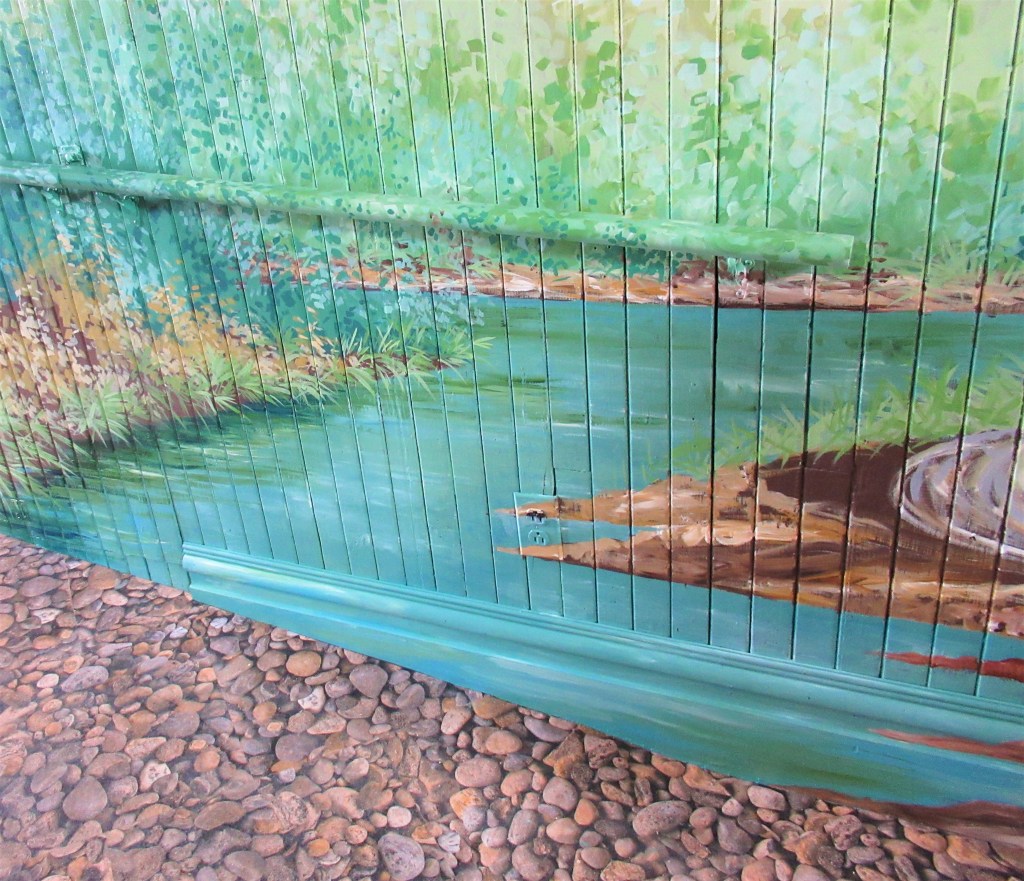
Heraclitus

Geoff Slater’s mural at McAdam Railway Station. ‘You cannot step in the same river twice.’ Heraclitus.

Heraclitus

Nothing will ever be
as it was before.

Time, like water,
like these people marching,
constantly flows,
trickling through my fingers,
uncatchable, unstoppable,
 sand filtering through
the hour glass’ waist.

Water flows, currents shift,
rocks wear down,
banks slide and fall.

“You cannot walk
in the same river twice
nor ever attend
the same demonstration.”

Nor can you recapture
that first, fine, careless rapture,
the touch of that first
drop of river water.

Kneeling by the river bank,
like St. Kevin and his Blackbird,
I cannot recall the river’s name.

Comment: I love the reality of the river, its impressionist style of flowing water, impossible without the enormous presence of Claude Monet and his portraits of the Seine. However, what makes the mural, for me, is the brutal reality that breaks into the painting’s unreality. The boards covering the interior wall, the hand rail blended into the painting, the skirting board, the electric socket. I also like the intertextuality: art speaking to poetry, poetry replying to art, the links to Heraclitus, poetry speaking to poetry, the anonymity of the river, and the further poetic links to Robert Browning and Seamus Heaney. I often wonder if readers and viewers pick these things up. Or do they just speed-read, link to their own experiences, and move on with no further thought? You tell me. But what I will tell you is that artists reaches out to art, poets extend their hands to poetry, and our world is an inter-connected maze of thoughts and ideas, linking and unlinking, occurring and re-occurring, lapping like an incoming tide at the fingers and toes we immerse in those amniotic waters, often so long-forgotten, in which our creativity is berthed and from which it is born.

Absence

Absence

My body’s house has many rooms and you, my love,
are present in them all. I glimpse your shadow
in the mirror and your breath brushes my cheek

when I open the door. Where have you gone?
I walk from room to room, but when I seek,
I no longer find and nothing opens when I knock.

Afraid, sometimes, to enter a room, I am sure
you are in there. I hear your footsteps on the stair.
Sometimes your voice breaks the silence

when you whisper my name in the same old way.
How can it be true, my love, that you have gone,
that you have left me here alone? I count the hours,

the days, embracing dust motes to find no solace
in occasional sunbeams and salacious dreams.

The Exact Word

Le mot juste

Searching for le mot juste
the exact word that sums it all up, 
catches the essence of the thing 
and holds it in the mind forever.

Think flowers. Think scent. 
Think of the limited ways 
we describe how daffodils
lift and clematis clings.

I look across the breakfast table 
and see my wife of fifty years, 
a teenager reborn, walking into 
that café where we had our first date.

I search my memory and my mind 
for the words to describe that beauty, 
that surge of excitement, 
I still feel when she enters the room:

but find I cannot find le mot juste.

Comment: I shortened this poem from its earlier version. You can click on this link to compare the two versions. I am always puzzled by the dilemma of lengthening or shortening. My thoughts center on the longer and shorter versions of some Raymond Carver stories. Follow the editor’s advice and cut all material down to its essential bones or fill out the skeleton with flesh and blood and expand the creative process further. I also think of the exhortation to ‘stay in the moment’. Anything that takes the reader away from the central experience is superfluous. Experienced writers are aware of that moment and its importance. Writers at my stage are often baffled by it and need to be told yes, this is the moment or no, that is not the moment. I guess the more we write, the more we understand the process. Understand: do we work this out consciously or does it develop in unconscious fashion? Are some people just born with those skills or we must work hard to develop them? Sunt rerum lachrimae: tears are in all things and I guess hard work is all part of the process. As I was told a long time ago: genius is 99% perspiration and 1% inspiration. You have to put in the hard work for that little light bulb to go ‘pop’!

Once Upon a Time

Once upon a time …

            Once upon a time, there was a man who carried a large round rock upon his back. It was huge and heavy, like the globe that Atlas carried. One day he felt tired, laid that rock upon the beach at Bocabec, waded out into the Bay of Passamaquoddy, and was never seen again. He left the rock there for my friend to find. My friend called it Magic Rock, but what he did with it and thought about it is his tale to tell, not mine. I must tell another story.
            Once upon a time, St. Patrick arrived in Ireland. He celebrated Easter on the hill above Tara, the royal palace of the ancient Irish kings. Then he walked down the hill to their palace and tried to convert them to Christianity. But that is another story, and it is not mine to tell, even though the name of Tara was given to the red and white house of another friend of mine, red and white, like the dogs and cattle of Ireland. But that’s not my story.
            Once upon a time, a rich and powerful man came to St Andrews and built a summer home on the hill above the bay. Later, another friend of mine purchased it, painted it red and white, and turned it into a wonderful home for guests and visitors. I wanted to tell her story, but it’s hers to tell, not mine. I can only tell my own story.
            Once upon a time, my friend who lives on the shore at Holt’s Point, walked on the beach outside his house and found an enormous, metal ball, weighing almost two hundred kilos. It was almost as big as Magic Rock. It lay there, on the shore waiting for some one to find it. My friend went home, drove back to the beach in his truck, winched the ball onto the flatbed, and brought it home. What he did with it is not my tale to tell. I must tell my own story.
            So, what is my story? What tales do I have the right to tell and how shall I begin my tale? Well, once upon a time, in Ty Coch, a red brick house on the Gower Peninsula, in Wales, a little boy was born … and that is my story … but I will not tell it here and now.  Instead, I’ll tell you another tale. But you will have to wait until tomorrow.

Some People

Some people leave indelible impressions
memorable moments impressed
on memory’s eye or clasped closely
to the butterfly heart caged in its chest
wings wildly beating as it strives for flight

some people cast shadows on snow
leave footprints light as flakes
as they walk across our waking dreams
or call on us in those midnight hours
when their image sears the drowsing mind

Some people set a fire in our hearts
allow us to see things out of sight
to write what we never thought to write
to reach out to the unreachable
to teach what we thought was unteachable

Stars in night’s silence they point the way
lead us on paths we never thought to tread
present us with a thread to lead us
through life’s labyrinths and out
from the darkness into bright light

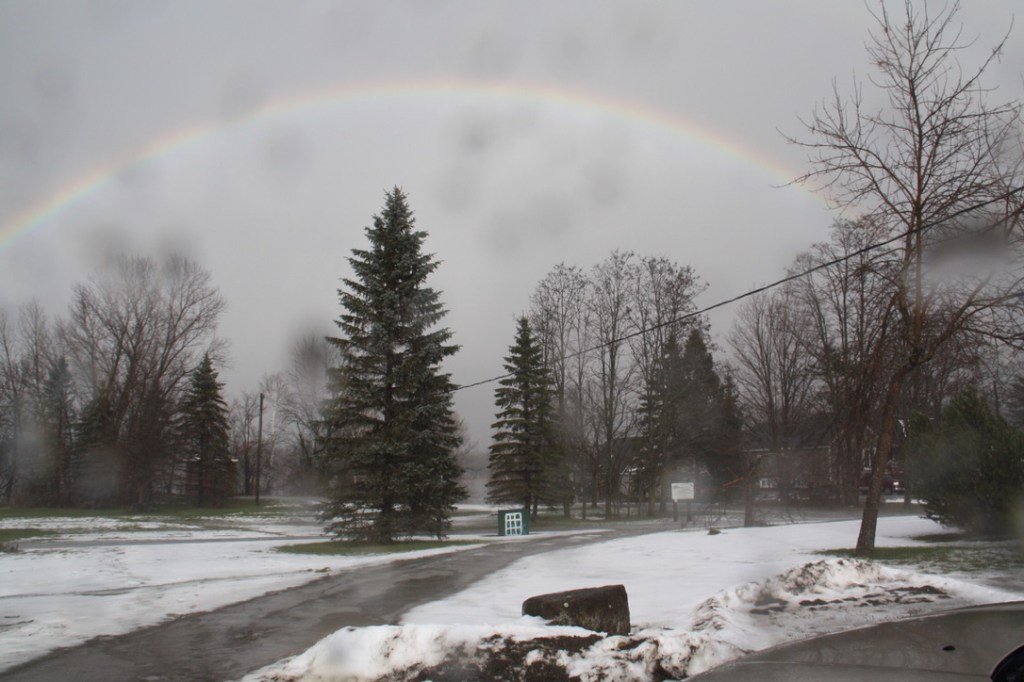
Sometimes they cross the rainbow bridge
before we do and when they go we know
deep down in our hearts that they are there
just out of sight waiting for us ready
to welcome us when it’s our time to go

November 1961

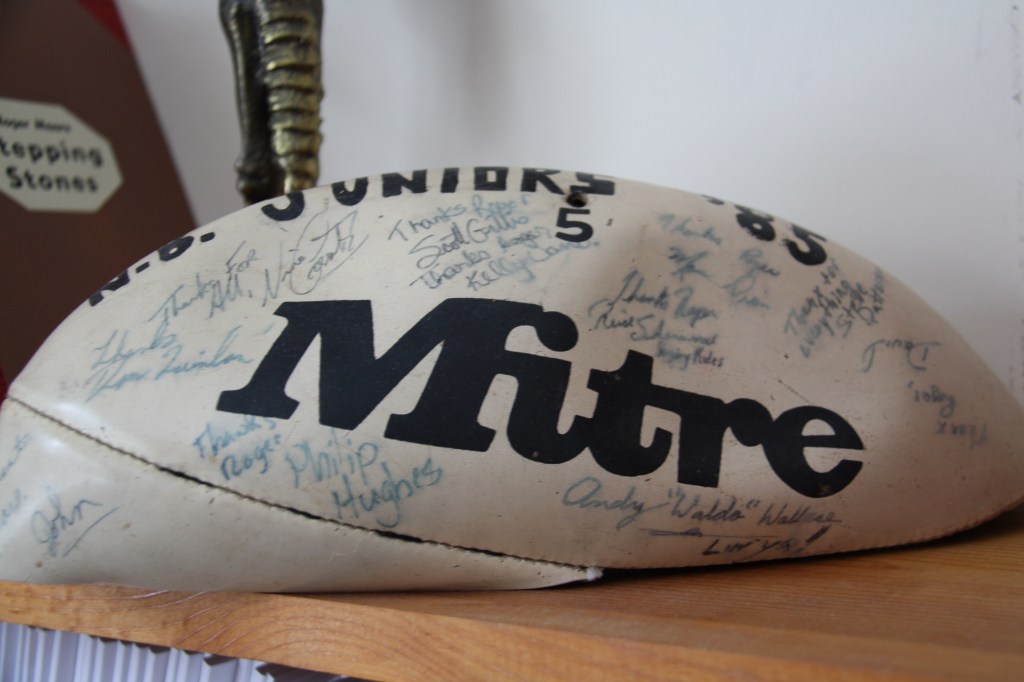
I wondered what had happened to that rugby ball!

November, 1961

November on the Berryfield: duck weather,
we call it, with the rain pouring down
and the watchers standing on WWI duckboards,
chilled their fingers, eyes blinking against the wind.

West Country clay turns rugby boots into leaden
counterweights. Hands stuck in pockets, the railway
carriage where we changed is a distant memory.
The only reality, this wet clay holding us back.

Mouldy and muddy, our rugby jerseys are all the same
and it’s hard to distinguish friend from foe.

Trench warfare, we think, as the two packs strain,
a Roman tortoise, sixteen bodies, thirty-two legs,
crabbing from side to side as they seek a perfection
that will never be found on a day like today.

Rain shrouds the goalposts and the scrum half’s kick
is a yard too far from clumsy, chilled fingers
as they scrabble in vain at this soap-bubble nightmare
we call a rugby ball. Worn-out legs churn through
mud that clutches like an octopus at feet and ankles.

Running rhythms are lost. Wet clay fingers hold us back.
Grey ghosts of ancient alumni raise up our hearts,
help us to haul our opponents’ tired bodies down.

Comment: Just rediscovered this, revised it, and now I am posting it again. The Berryfield is where I played my school rugby. If anyone remembers the Berryfield, or actually played there, by all means drop me a line. That West Country clay mud was the devil. Heavy and clinging, it grew on your boots until they became as heavy as diver’s boots and gradually weighed you down. It was worse for the opposition than for us. We, at least, were accustomed to it. It was even worse for the cross-country runners and I have never forgotten those ploughed clay fields.

Sunday in Wales

To be Welsh on Sunday
(This prose poem should be read out loud, fast, and in a single breath!)

              To be Welsh on Sunday in a dry area of Wales is to wish, for the only time in your life,  that you were English and civilized,  and that you had a car or a bike and could drive or pedal to your heart’s desire, the county next door, wet on Sundays, where the pubs never shut  and the bar is a paradise of elbows in your ribs and the dark liquids flow, not warm, not cold, just right, and family and friends are there beside you  shoulder to shoulder, with the old ones sitting  indoors by the fire in winter or outdoors in summer,  at a picnic table under the trees or beneath an umbrella that says Seven Up and Pepsi (though nobody drinks them) and the umbrella is a sunshade on an evening like this when the sun is still high  and the children tumble on the grass playing  soccer and cricket and it’s “Watch your beer, Da!” as the gymnasts vault over the family dog till it hides beneath the table and snores and twitches until “Time,  Gentlemen, please!” and the nightmare is upon us as the old school bell, ship’s bell, rings out its brass warning and people leave the Travellers’ Rest, the Ffynnon Wen,  The Ty Coch, The Antelope, The Butcher’s, The Deri, The White Rose, The Con Club, the Plough and Harrow,  The Flora, The Woodville, The Pant Mawr, The Cow and Snuffers — God bless them all, I knew them in my prime.

Comment: I wonder how many other ‘serious drinkers’ or ‘amateurs’ remember these pubs and clubs. And, oh yes, there were so many more. The Mexico Fountain, The Tennis Court, The Old Market Tavern, The New Market Tavern, The Load of Hay, all those many colored dragons: green, black, blue … the Three Lamps, the Cricketers, the Villiers Arms, the Birchgrove Arms, the Rose and Shamrock, several Red Dragons, the Church, the Black Swan, I can’t remember how many different Georges, and Kings’ Heads, the Vine Tree, the Sun, the Oak tree, the Penguin, the Naval Volunteer, the Quadrant, the Coronation Tap, the Mauretania, The White Horse, the Black Horse, the Old Grey Mare … so many memories, and all deniable, and I’ll never forget the Wheelbarrow Race (ask me about it), nor Pickety Witch, one of those pubs at which I never stopped!

Downsizing

Books abandoned on the sea shore of life.

Downsizing
Francisco de Quevedo

I chose each book, held it in my hands for
one last time, then placed it peacefully in
its new resting place. Old friends, they were …
I broke that friendship and set my friends free
to fulfill their promised afterlife on
another reader’s shelves.

Mind to mind, though they had
lived five hundred years ago,
I strove to engage them in lively
conversation, Bakhtinian dialogs
within our time and space, and
that space my basement library.

I loved to hear their lilting speech,
to listen to their wisdom with open eyes
and mind. I answered them with words
I quickly pencilled on each page.

One day, a man arrived from the university.
He carried them away in a delivery truck
and they were borne to a wider world.

If you see on, bless it, read it, cherish it.
Blind now my eyes that devoured their words.
Deaf now my ears that heard the dead,
for I can listen no more.

Note: “Escucho con mis ojos a los Muertos /
I listen with my eyes to the words of the dead.”
Francisco de Quevedo (1580-1645)

With thanks to Nicholas Wermuth, who was kind enough to comment and help me revise and restructure this poem.

Survivor

Survivor

Every day, now he’s learning to speak Welsh,
he finds out something new about his childhood.
It’s not the need to talk so much as the necessity
of diving into himself and mining his memories.

Brynhyfryd / Mount Pleasant.
Pen-y-Bont / the End of the Bridge.
Ty Coch / the Red House.

This latter the house in which he was born,
way out of town, by Fairwood Common,
away from the strafing and bombing.
The war generation of his family all born
in the same in-the-country Gower bed.
No room in war-time hospitals
not even for the birth of war babies.

Three of his brothers did not survive
those rough, household births.
He still bears the forceps’ scars
from the moment the doctor
plucked him out, head first,
and hung him up by the heels,
shaking him, bringing him back to life.

He bears other scars as well
from the survivor’s burden of carrying
three dead brothers for seventy long years,
alive and kicking in the womb-warm
crevices of his still beating heart.