Yellow Bird

IMG_0176

Kingsbrae 5.1.1
5 June 2017

Yellow Bird

Broken-winged, a bird I found,
panicking upon the ground.

I stooped to lift it from the land:
it nestled in my open hand.

A matchstick splint with cotton tied,
a canary cage to rest inside.

With healing done, an open door:
my yellow bird will fly no more.

I take a pencil, draw a tree,
my bird begins to sing for me.

I erase the cage bars, one by one,
paint a lion’s mane of sun.

Now yellow bird sits in his tree,
and sings all day, to inspire me.

Comment: I split the original post into two segments. The first, 5.1.1 is the poem Yellow Bird and the voice recording. The second, numbered Kingsbrae 4.3 Encaustic, contains the summary of the first evening’s artistic discussion.

Ireland in my Mind

Empress 070

Kingsbrae 3.2
3 June 2007

Ireland in my Mind
(for Anne)

That cottage, stony and cold,
on Galway’s shore
where sunsets redden
the bay as the sun’s slow
candle burns low
across untroubled waters.

Overhead, the planets
await their call to emerge
from the sky-dark
and perform their Platonic
dance steps back and forth
as they have always done.

This limestone, barren
at first sight, now teems
with a hidden life that
emerges when the time
is right and its particles
dance their earthly dance,

the one that burgeons
into paint and flows with
beeswax down the canvas
to create a poetry woven
with lichens and moss, as soft
as this Irish accent

that leaves word footprints
and worlds, as dark as song,
with memories drawn, like water
fresh from the well, as starlight
twinkles and the day recreates
itself in memory and dream.

Journal: Last night, a magnificent and very entertaining supper, hosted by Mrs. Flemer, was held for the invited artists and the KIRA Residency Team. Afterwards, the residency group, consisting of Anne (Encaustic) , Carlos (Piper), Elise (Sculptor), Hanna (Cuisine), Roger (Poet), and Ruby (Painter) gathered in the residence at KIRA and began the first of many discussions on the new cultural world we are creating.

Carlos explained, through his interpreter, how he listened to other people’s music. First comes the rhythm. Then the structural division, segment by segment. Finally, there is the melody. In addition, Carlos looks at what techniques and themes he may incorporate into his own compositions. A general discussion followed on the nature of art and inspiration. Included in the discussion was the weight of responsibility that many of the residency artists felt. This was expressed in a need to produce something special while we are here.

This need to produce came in part from the desire to return to KIRA the faith shown in selecting this group of people, most of whom expressed their surprise at having been chosen.  A discussion followed on how each member had felt upon receiving the news of the selection. A fierce desire to repay the KIRA Team with works of value was felt by the chosen artists. However, the artists also realized that while some results might be immediate, the long-term development of the individual’s art, as a result of the KIRA Residency, might take some time to come through. Patience, belief, and envisionment were three of the themes that then surfaced. After all, Rome wasn’t built in a day and Kingsbrae would never be revealed in all its glory on the first day of a 28 day residency.

Anne Wright presented a signed copy of her book Change Artistry to each member of the group. She also gifted us a delightful card collection of inspirational sayings. My own favorite for the day: “There is a thread you follow. It goes among things that change. But it does not change” (William Stafford). Other exchanges of gifts, some visual, some verbal, some musical, will occur, we are certain, throughout this residency.

Kingsbrae 2.1

IMG_0486.jpg

Kingsbrae 2.1
2 June 2017

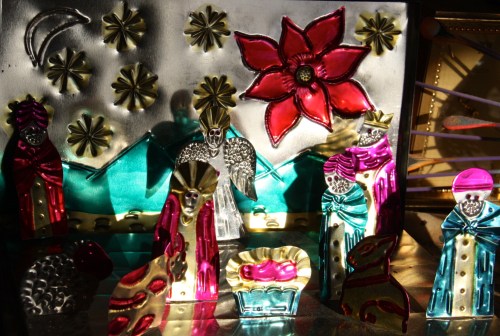
Pan Pipes
(for Carlos)

Lips form to make sounds
and the pan pipes speak
the international language
of love and lost love,
of a breeze through river reeds,
of fire on the snow high above
on Huascaran, Misti,
and wherever the pan pipes
roam, the piper will be at home,
his magic moving hearts and minds,
entering fingers that tap
and feet that move to the music’s beat,
yet beat is too harsh a word
for music that moves
like a breeze through the reeds
to pierce our souls
with its rhythmic breath
of a life now shared
with its mastery of that sacred art
older by far than other music,
save for the tapping
of stone and stick.

Zampoña andina
(para Carlos)

Los labios se comprimen
para formar sonidos
y habla la zampoña
la lengua internacional
de amor y amores perdidos,
de una brisa entre las cañas,
de fuego en las altas nieves
de Huascaran, Misti,
y dondequiera que viaje la zampoña
estará en casa el zampoñista,
su música penetrando
el corazón del oyente
haciendo bailar sus dedos
y danzar sus pies
al compás de la música,
aunque compás es una palabra
demasiado dura para describir
esta música que mueve y nos mueve
penetrando el alma
con el suspiro rítmico
de una vida ahora compartida
con su dominio de esta arte sagrada
más antigua que toda la música
salvo el batir de bastón contra piedra.

Journal: Last night, I picked Carlos up at the airport and we loaded the car. It was getting late, and between thunderstorms, water on the highway, poor visibility, the spring presence of moose on the highway, the gathering dark, and the hydroplaning that was a part of the storm, we decided to spend the night in Fredericton rather than arrive late and in the dark. My Spanish, very rusty, is improving under Carlos’s guidance. I am helping him with his English as he helps me with my Spanish.

This morning we are up early. Breakfast is ready. I will post this and then we will be on our way.


Kingsbrae 1.2

img_0180

Kingsbrae 1.2

Huezeequichi
1 June 2017

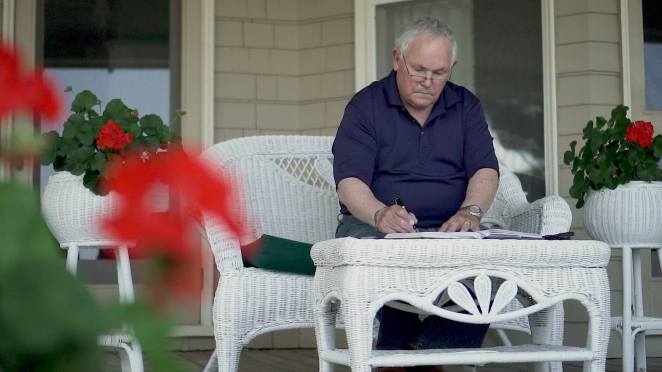
Pen on paper,
words fall like tears,
waters that will erode
the hardest of stones.

 This man bears witness
to thought, word, and deed.

He’s the outsider who sees
the interior world
and drags forth its spirit
for others to see,
not painted in paint,
not sculpted in stone,
no breeze through the reeds,
just words on the page
lined up in thin lines
to flower and flourish
like an army that conquers
the world of the soul,
and leaves fresh foot
prints on eternal snow.

Journal: The packing is being done. I have gathered my books and my writing material, my notebooks, my pens, my colored inks for cartoons, my drawing paper … it is all in a large box that I call my office. Next I must pack the laptop and the files / USBs and music that I need. After that comes camera and accoutrements, including a tripod in case I want some videos. Finally, the clothes that I need, working clothes and something slightly more elegant, not that I have much good clothing that fits me any longer: alas, I have put on size and weight. The ones who wear white coats told me I would … and they were right.

Carlos will be catching the Fredericton plane in an hour or so. I will have supper when I have packed and I’ll go to the airport after supper to meet him. Then I have to decide whether to drive down to St. Andrews tonight or whether to come back home and sleep here. Decisions, decisions: if the flight is delayed, as it often is, then we’ll spend the night here. If we spend the night here, we’ll leave tomorrow and head for St. Andrews early, just after breakfast.

There is so much to do, so much to think about. Luckily, I made a list and I am just following the instructions I gave myself when my mind was calmer.

Huezeequichi: the one who bears witness.

Metaphor: Wednesday Workshop

img_0177

Metaphor
Wednesday Workshop
26 October 2016
Revised
31 May 2017

Metaphors: What are they? I must be honest: I don’t really know. I don’t understand them. I never have. I probably never will. This morning, I determined to find out what a metaphor really is. So I Googled metaphor and came up with the following definitions.

  1. A metaphor is “a figure of speech in which a term or phrase is applied to something to which it is not literally applicable in order to suggest a resemblance.”
    Well, that is pretty clear, isn’t it?
  2. A metaphor is “something used, or regarded as being used, to represent something else; emblem; symbol.”
    No doubts there.
  3. “Metaphor is a figure of speech which makes an implicit, implied or hidden comparison between two things that are unrelated but share some common characteristics. In other words, a resemblance of two contradictory or different objects is made based on a single or some common characteristics.”
    I know exactly what they mean. Or do I?
  4. “In simple English, when you portray a person, place, thing, or an action as being something else, even though it is not actually that “something else,” you are speaking metaphorically.”
    No misunderstanding here.
  5. “A metaphor is a figure of speech that refers, for rhetorical effect, to one thing by mentioning another thing. It may provide clarity or identify hidden similarities between two ideas. Where a simile compares two items, a metaphor directly equates them, and does not use “like” or “as” as does a simile.”
    Slightly clearer, but not as clear as daylight.

I turn to my blog in search of metaphors that I have created in my poetry and read that “The egg of my skull / shows hairline cracks: / tiny beaks pecking / fine-tuned sparks of song”. “This piece,” Tanya Cliff writes, “offers a unique and beautiful perspective on the theme (of birds).” I think I can do without the dull, dry definitions set out in the definitions above and understand metaphor as “a unique and beautiful perspective”. This functions for me. Thank you, Tanya.

Two more sequences, this time from October Angel: (1) she gathers her evening gown / and walks among ruined flowers (Meg Sorick’s choice) and (2) a snapdragon opens / the frosted forge of its mouth / and sprinkles the sky / with ice-hard shards of fire (Tanya Cliff’s choice). I can understand the first in terms of “a unique and beautiful perspective” since the picture of the October Angel is clear in my mind. In addition, evening / evening gown / ruined flowers are particularly evocative. The second sequence is much stronger as anyone who has seen the snapdragon flowers braving the ice and frost will testify.

After thinking about these three examples, I think I can now understand metaphor a little bit better. I would now define a metaphor as “a brief verbal sequence that creates a new reality that offers a unique and sometimes beautiful perspective on something that we have long known and accepted but now, thanks to the writer / poet, see in a different light.”

This personal definition allows us to distinguish more easily between dead metaphors and clichés like dead as a door nail or avoid it like the plague while allowing us to enjoy the permutations that spring from the innovation of the true metaphoric sequence. The metaphoric sequence also allows us to distinguish between a two word metaphor and a series of metaphors that are thematically linked.

From my own poetry, ruined flowers would be an example of the first while the longer sequence a snapdragon opens / the frosted forge of its mouth / and sprinkles the sky / with ice-hard shards of fire would be an example of the second. Iterative thematic imagery, a form of sequenced metaphor chains, then links the whole work, be it poem or longer piece, within an associative semantic field of parallel meanings. This also illustrates the idea of differentiating between the inorganic and organic conceit, where the inorganic conceit is the example of a single, independent instance while the organic conceit is woven into the fabric of the oeuvre.

In the WFNB Workshop on Metaphor, held in Saint John on Saturday, 27 May, 2017, we had a two hour, in-depth discussion on this topic. We began the workshop with a meet and greet and ice-breaker. Then we offered a pictorial definition of a metaphor. We generated a series of dead metaphors, to be avoided like the plague, except where we use them to define a character, or make fun of them, or use them in a new fresh light that resurrects them and brings them back to life. This was a great deal of fun. We then indulged in a series of creative writing exercises that focused on the creation of new metaphors. We finished the workshop with a “song of craze” in praise of the joys of metaphors. What a day!

The structure of the workshop was very simple. We had 120 minute (two hours) and broke them into 3 sessions of 20 minutes, a 5 minute break, 2 sessions of 20 minutes, and  a grand finale composed of 3 sessions at 5 minutes each. The twenty minute sessions broke down into 5 minutes writing, 7 minutes small group discussion (4 participants per group), and 8 minutes full room participation. The five minutes writing centered on each person writing to a topic. Each member of the group then shared what they had written with the other group members. This helped develop individual voices (the theme of the conference) and showed how each individual approached a single topic in a multitude of different ways. A representative piece from each group was then chosen and the writer read the creation to those gathered in the full room participation.

As a result, everybody was actively engaged in the thinking, writing, creating, reading, and critiquing process. A considerable number of what I call “writing starts” were made. Hopefully participants will continue to develop these writing starts and develop something from them, long term.

Weird

img_0380-2

Weird

Weird these words
dropping in inky
drops from pen end
poised above paper:
a variety of poses.

Not for me the key
-board’s voluminous
vocabulary, nor the tap,
tap, tap, fingers on lap
top to search for a word,
an idea, a distraction
just a tap away.

For me, the slow flow
of thought, the clumping
together of the mind’s
pretty litter of ideas
milked slowly, one by
one from a cornucopia:
happy creativity.