Eden 2


20180823_152000-1_resized

Eden 2
(1956 AD)

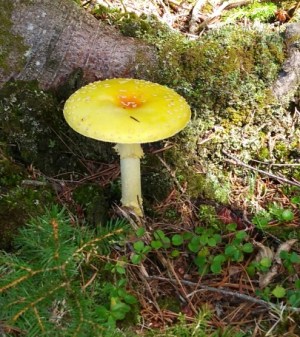
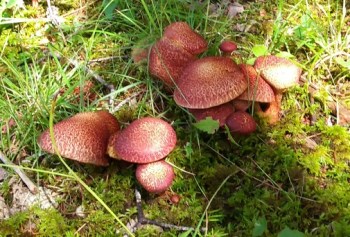
Mushrooms
cremini oysters pearl
love them

love them not
garlic mushrooms
flash-fried
in atomic frying pans

nor magic mushrooms
nor radioactive fungi
spores parachuted down
mushroom grey
clouds

built this berth canal
an umbilical cord
birthing oceanic links
not division
nor destruction

Eden’s Garden
a walk in the park
an earthly paradise
closed to many
open for few

lost now
that projected paradise
not much room
four maneuvers
all things
vanished in a flash
horizon’s banana
split in an instant
everything lost

20180823_152000-1_resized

Eden 1

IMG_0608.JPG

Eden 1
(1956 AD)

wet rags of dirty washing
hang on the Siegfried
line’s barbed wire

flesh rent ripped
broken-glass anger bottled
blood-mottled concrete

bones mixer-crushed
blood sacrifice a keep-safe
ash-cross camouflage
stretched sketched
over grime and crime

heavy the spike-toll
rooted the rock
chips off old blocks
these flint flakes flying

faceless this sphinx
inscrutable smile
where now
sands of the Nile

ample ammunition
beneath this apple tree
flat-footed lame-duck walk
goose-stepped after expulsion

walled this garden
to lock what in
to keep who out


IMG_0591 (3).JPG

Joy & Love

IMG_0194

Joy & Love
(1936 – 1969 AD)

sunbathers sunbathe
swimmers don’t swim
except for one silly fool
in a clear patch of water
swept clean by the current
towed under by the undertow

swimmer fights back
goes against the flow
tires so swiftly
raises his arms
throws up goes under
comes up throws up

a beach ball thrown
misses the target
kicked with more accuracy
a soccer ball heavier
lands by his side
he grasps it hangs on
kicking more slowly

sun-bathers sprint
across sand to the shore
linked hands a life-line
reaching out through the waves
to rescue the swimmer
no longer fighting back

summer-sun kisses
resuscitation
sun-bathers victorious
this great chain of being
restoring humanity
sweet victory of man

Chronos


IMG_0687 (2)

Chronos
(700 BC & 1933 AD)

tub-thumped these clouds
grey-framed skylights
gathering sky

corralled on coral
this ship’s figure-head
mouth open to speak
a foghorn
her bare breasted
Scylla & Charybdis
lighthouse lights

goat-legged beach-comber
wandering a lug-worm beach
avoid those places
where the sea-weed

water the father
earth the mother
false union
engendering an egg
waves breaking
their broken marriage

cyclical the sickle
ticking rocks to sand
time personified

Cogito ergo sum


IMG_0057

Cogito ergo sum
(1812 & 1942-43 & 2019)

I think therefore I am
what I am but what am I

a man who borrows and buys
who runs up false credit

sneaks away from unpaid bills
and reads fake falsifications

or listens to such things on tv
talk shows where noddies nod

finger-talk shaking their heads
and grinning so much people can

even see them smile while chatting
with them on land-line phones

I am at the center of my universe
egocentric terracentric heliocentric

a boiled egg this world a cracked
shell this starry firmament

and me with my silver spoon
poised to dig into worldly riches

stuffing them into my mouth
as I lie in the ripped steaming

horse’s belly behind me dead cities
the whole world flaring into flame

ahead of me this winter snow my fate
an albatross noosed around my neck


Comment:

Poetry is made up of little touches, a metaphor here, a line change there, a word less, an idea more.  As a result, poets dabble with their verses, shifting them around, sliding them about. I call it “shuffle and cut”. Some arrangements are more effective than others; the big question: which is which? Every word-change alters tone, emphasis, meaning, exposition. What, for example,  is the correct place for “the center of my universe”? Should it start the poem? Should it appear in the middle? Which is more effective? While one answer may please one person, that same answer may displease somebody else. As poets, we must make choices, we cannot always “have patience and shuffle the cards”. Somewhere, the cards, like the male deer who visit my garden, must stop. But where do they stop? Where do the words make their final stand?

Cogito ergo sum
(1812 & 1942-43 & 2019)

centered on my universe
terra- helio- ego

I think therefore I am
what I am but what am I

a man who borrows and buys
who sets up false credit

runs away from unpaid bills
reads fake falsifications

listens to talk shows on CBC
tv shows where noddies nod

shake their heads or smirk
grin so much people can

even see them smile while
talking to them on the phone

a boiled egg this world cracked
shell this starry firmament

me with my silver spoon
poised to dig into worldly

riches stuffing them into my mouth
I lie in the warm steaming belly

dead this horse behind me cities
whole worlds flaring into flame

ahead of me this winter snow my fate
an albatross noosed around my neck

IMG_0641.JPG

Zeitgeist

IMG_0638.JPG


Zeitgeist

Zeitgeist is a concept from 18th- to 19th-century German philosophy, translated as “spirit of the age” or “spirit of the times”. It refers to an invisible agent or force dominating the characteristics of a given epoch.
Wikipedia 

Those who cannot learn from history are doomed to repeat it.

“Plus ça change, plus c’est la même chose.”

Poems for troubled times.

My current poems are deliberately cryptic. Each one is a mind game I am playing with you. I do not underestimate you. I have placed clues throughout each poem and if you follow the clues you will arrive at many of the poem’s hidden meanings. Some poems are more difficult than others, their meaning more recondite. Others seem very straightforward, yet still contain secrets.

This style of poetry has a long history going back to Anglo-Saxon riddles and way beyond, back into the mists of time. Luis de Góngora (1561-1627) and Francisco de Quevedo (1580-1645) specialized in similar forms of recondite poetry, often based on metaphor and the juego alusivo-elusivo, the game of alluding to something while eluding the act of saying what it is. Jorge Guillén (1893-1984) and Federico García Lorca (1898-1936) also played this game, as did Octavio Paz (1914-1998) and many of the surrealist writers. In the works of all of these poets, the clues may rest in the poem or they may be found in a generic knowledge of the mythology of the poem’s exterior world.

Our world finds itself in an incredible mess right now. Somehow, we have to sort it out. We must pick our ways through the difficulties of these troubled times, as you must pick your way through the intricacies of these poems. Many of you will give up. Some of you, the chosen few, will make your way to the heart of each poem. Remember that images and metaphors tie past, present, and future together. Each word, each image offers a picture that reflects some of the shared realities with which we live.

Remember, as I said above: “those who cannot learn from history are doomed to repeat it” (George Santayana). Otherwise expressed, in the words of T. S. Eliot: “Time present and time past / are both perhaps present in time future / and time future contained in time past” (Burnt Norton). The seeming anachronisms in my recent poems suggest that perhaps all time is ever-present and always one.

Grand Finale

IMG_0646 (2).JPG

Grand Finale
(Moscow 1812
&
Moncton 2015)

survey the battlefield
muskets primed
three shots a minute
cities burning
hamlets and villages

world-viewed
through a monocle
stand to attention
be-whiskered faces
small narrow minds
wine glasses raised
gay colored uniforms
dazzling decorations
marvelous medals

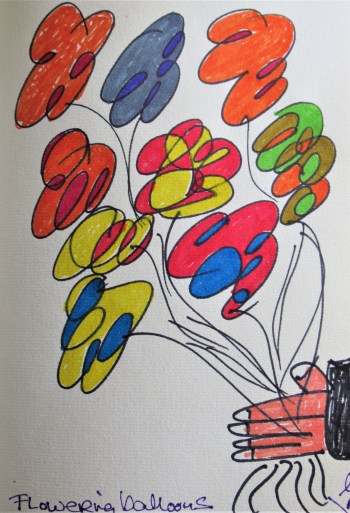
balloons blooming
gaudy their globules
pins at the ready
no flash but a big bang

glorious martial music
tintinnabulations
church bells ringing
carillon and cannon
magnificent the music

written cryptic
recorded alive
heard played seen
in  memory’s mind’s eye
again and again


Stones (3 May 1808)

IMG_0664 (2).JPG

Stones
(3 May 1808 AD)

stones once thrown
can never be brought back
nor words once spoken
nor the bullet
once released
from musket or gun

here lies who knows who
face down in the dust
shirt soaked in blood
body pierced with lead

nor water time nor love
can ever flow back
beneath that bridge

some kneel some pray
some raise their eyes
to uncaring skies
every one of them dies
shooters
those waiting to be shot

even the soldiers
reloading their guns
never understand
how time’s tide runs
ebbs and then flows
until everyone goes

this you
lying face down
on cobble stones
well know


Comment: 

The poem is drawn in part from the Goya painting of the shootings, El tres de mayo de 1808. The painting above is a close-up of Geoff Slater’s latest mural, still in progress, at Macadam Railway Station in New Brunswick. “If only the stones could speak, what stories they would tell.” This re-post was inspired by a visit to Seasons of the Witch on  Mr. Cake’s Cake or Death site with its images of Goya’s Black Paintings. So, we have a continuing Goya mini-Fest, May the Second and May the third.

Tongue-Tied


IMG_0679 (2).JPG

Tongue-Tied
(2 May 1808 AD)

bottle tops unscrewed
tighter than the tightest
oyster refusing to open
pointed knife and scissors

plastic this many layered
onion-skin’s pliant defiance
waging its guerrilla war
against arthritic fingers

words tongue-twisted
damning dark mouths
white picket fences
midnight the faces
lightning the teeth

felonious figures
grimy with grimaces
Mother Hubbard’s
cupboard empty hearts

robin redbreasts
battering heads wings legs
against stony cobbles
if only stones could speak
what stories they would tell
this city this sunny square
anywhere

img_0668-2.jpg

Comment:

El dos de mayo, 1808, marks the start of the Spanish War of Independence. The people of Madrid rose up against Napoleon’s Mamelukes and Goya painted that encounter in his Dos de Mayo. On the third of May, 1808, Goya also bore witness to the shootings when Napoleon’s troops took hostages and shot them. Two great and wonderful paintings which we can celebrate today and tomorrow. Also well worth a visit, today and tomorrow, is Mr. Cake’s Cake or Death site with his blog on Seasons of Witches and his introduction to Goya’s Black Paintings. Another site that merits serious attention is Geoff Slater’s art site.

Dustbin Alley

20180823_152000-1_resized.jpg

Dustbin Alley
(1789 AD)

all the dustbins
dancing down the street
trying to achieve
a spring time copulation
to create more dustbins

you can’t have a revolution
without dustbins
dustbin … dustbins … dirty
dusty dustbins

a sadistic way to look at
basket-bins full of sawdust
heading between potholes
wind-blown bins
a right St. Vitus’s Dance

him sitting next to me
knitting a new red cap
to place upon
the old dictionary
me standing
on Gibraltar’s Rock so fair
this square in Paris
Place de la Bastille
where tumbrils rattle
over cobbles

Old Moll in a Moll’s Cap
toothless fairy
at a Goblin Party
afraid of mushrooms
scared of toadstools
[sick]

20180823_152016_HDR-1_resized - Copy.jpg